Search






A former casa colonica in southern Tuscany becomes a lived-in home once again
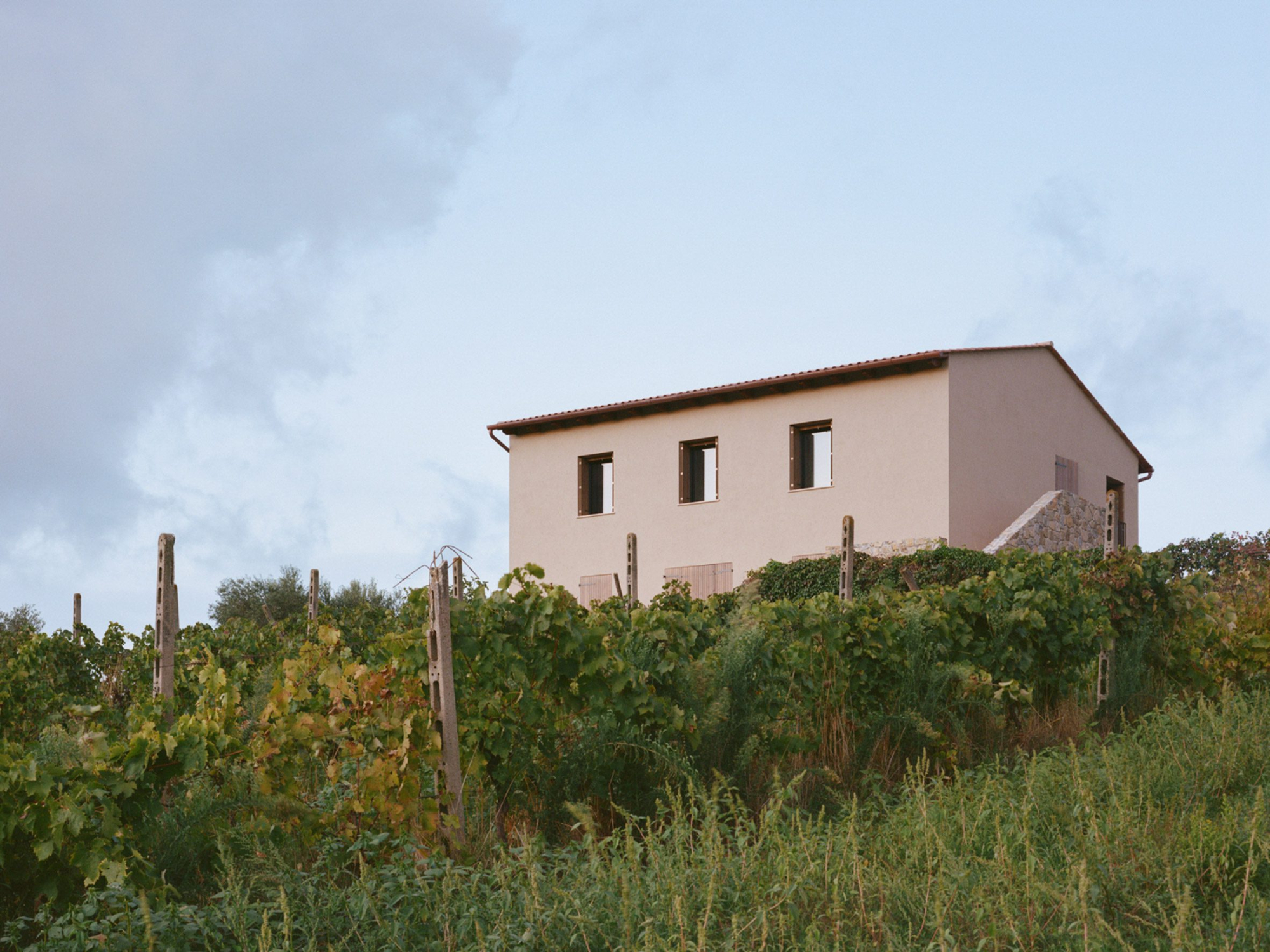
This stone house stands on a rise in Montiano, a small village in southern Tuscany. It’s a casa colonica, a rural building once used by tenant farmers who worked under the mezzadria system—living on-site, cultivating the land, and handing over part of the harvest to the landowner. The structure was typical for its type: two levels, stables and tools below, living quarters above, and an external stair connecting them. The house was solid, but had been left untouched for years.
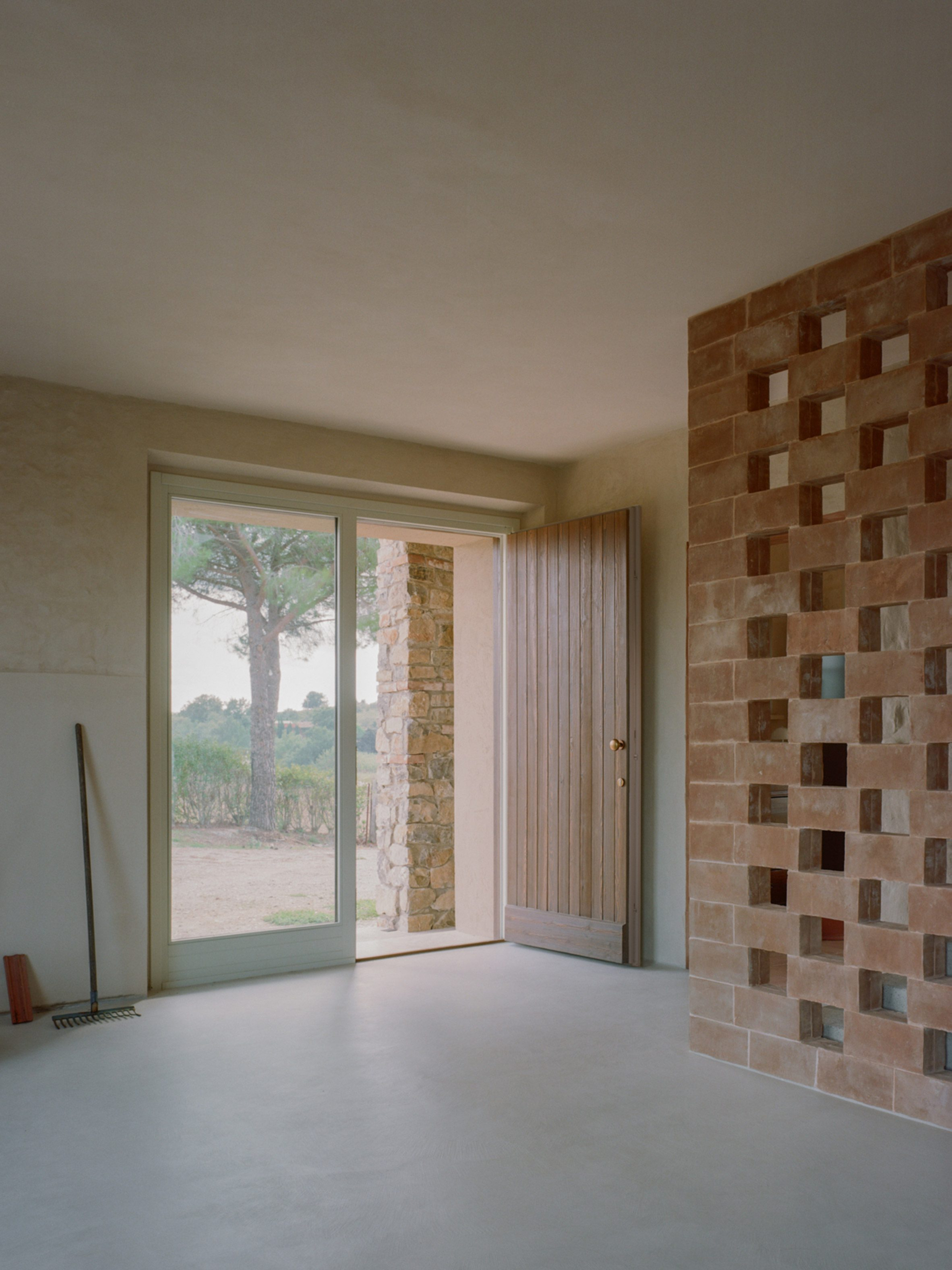
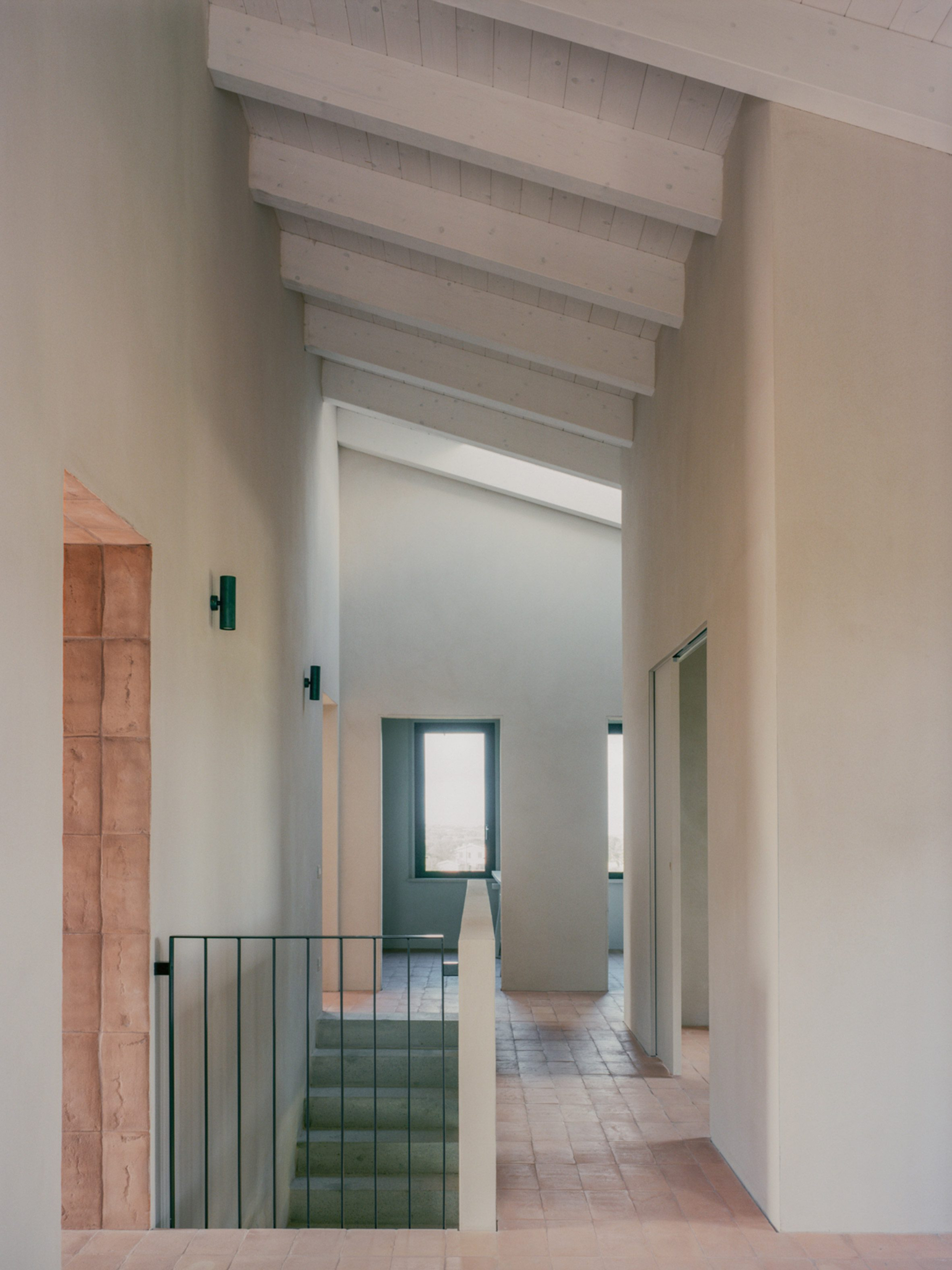
The architects kept its basic shape. The stone and tuff walls remain, and the original stair is still in place. Inside, the layout is mostly preserved, with a few new doorways opened to improve flow. A second stair was added at the center of the house, built in concrete and enclosed by a red brick lattice wall. The pattern is common in rural buildings throughout the region—functional, but also good at catching light and casting it across interior surfaces.
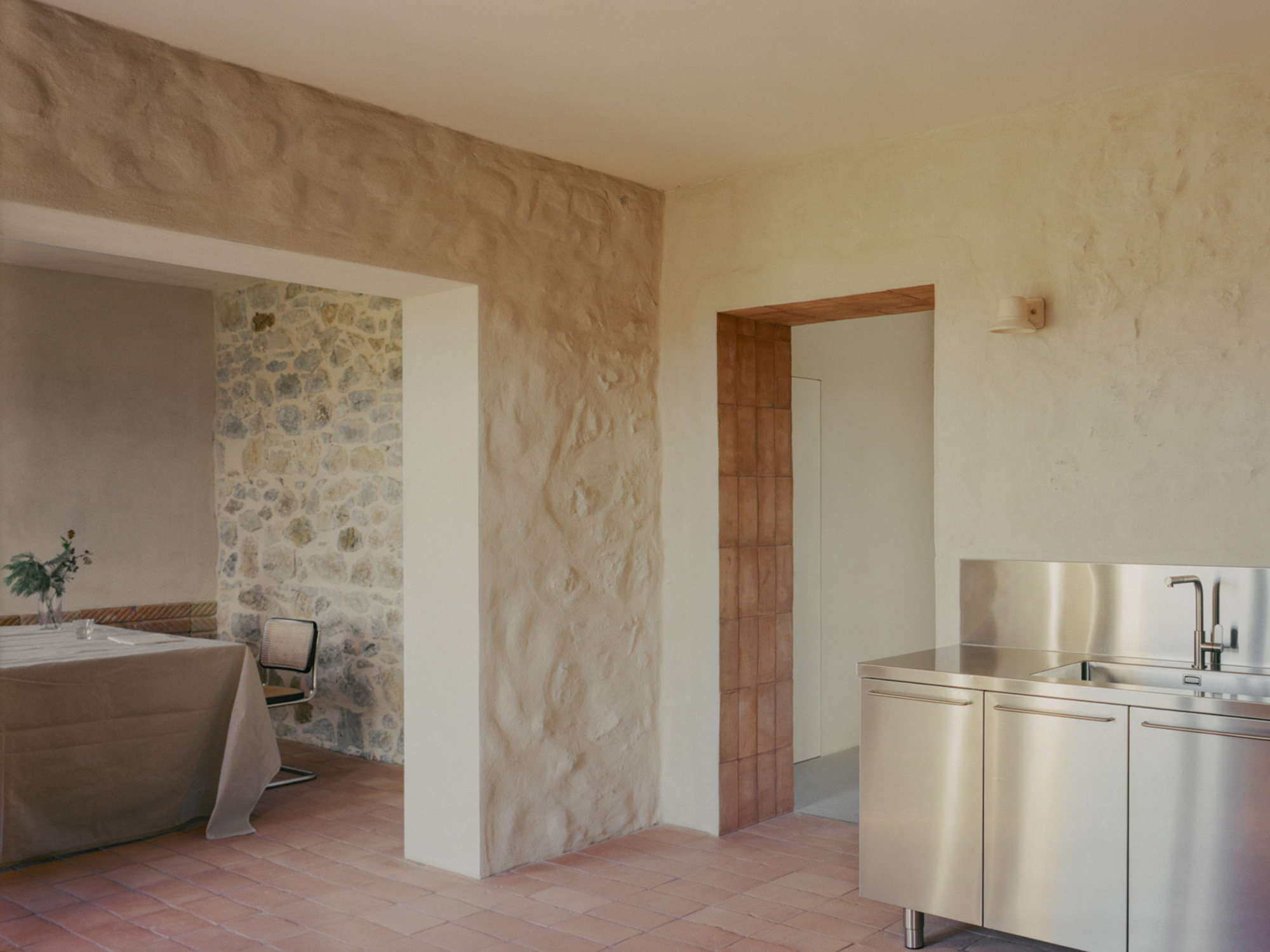
Floors in the kitchen and dining areas are laid in terracotta tiles. The cabinetry is stainless steel, raised slightly off the floor. It doesn’t mimic the old materials, but doesn’t distract from them either. Upstairs, the architects used chestnut wood for the floors. Some walls were left in raw stone; others were plastered and painted. Window openings were expanded, giving the rooms a clear view of the land outside. There’s no emphasis on contrast or nostalgia here. Just a steady, thoughtful way of making the house livable again.
Photography: Lorenzo Zandri