Search






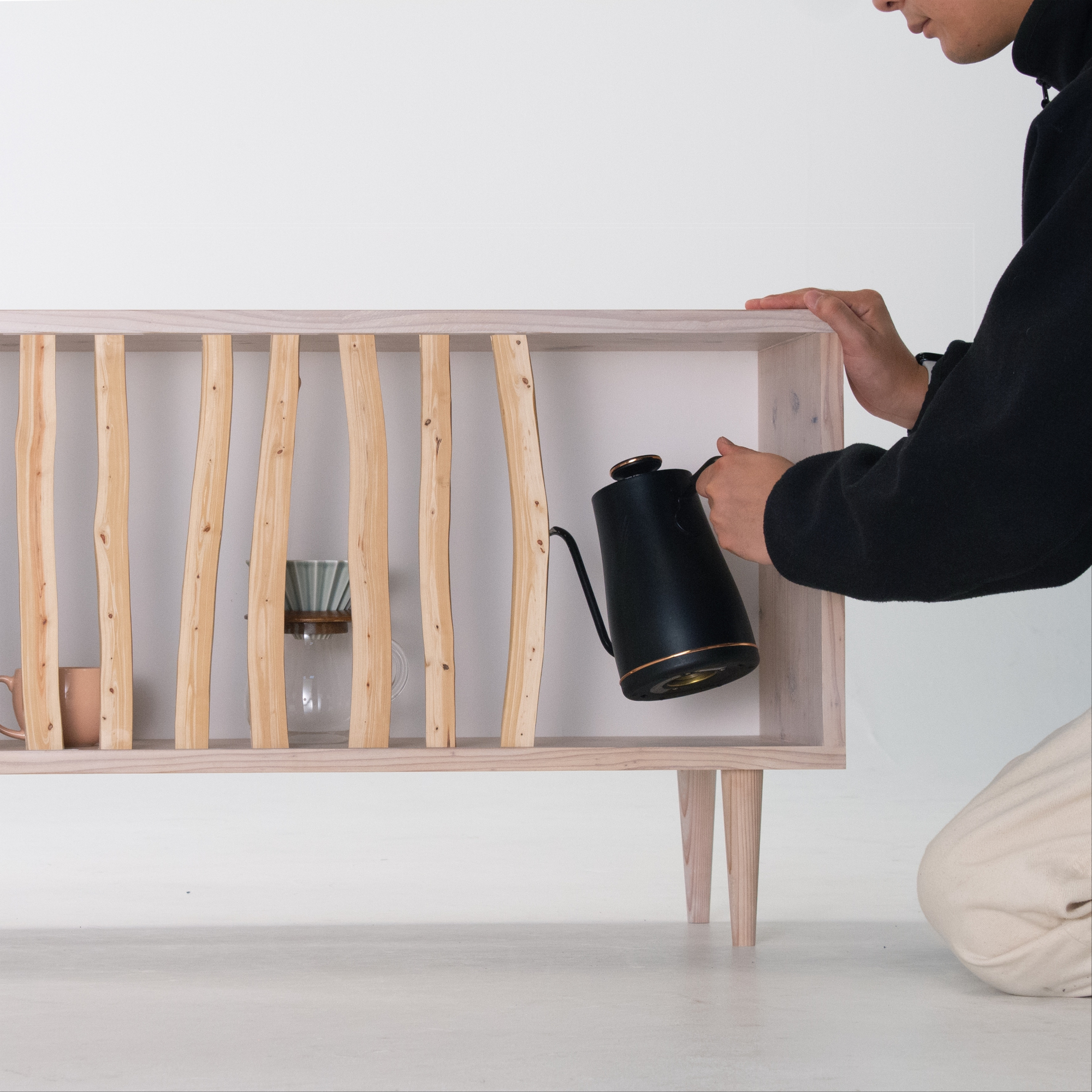
Hayashi explores separation and display through a movable front of Japanese cypress branches.
A lot of Japanese design grows out of everyday spatial habits rather than formal gestures. Storage, separation, and display often overlap, shaped by use more than by strict definitions. Objects tend to remain open-ended, adjusting quietly as routines change. The Hayashi cabinet sits comfortably within that way of thinking, approaching furniture as something that responds rather than dictates.
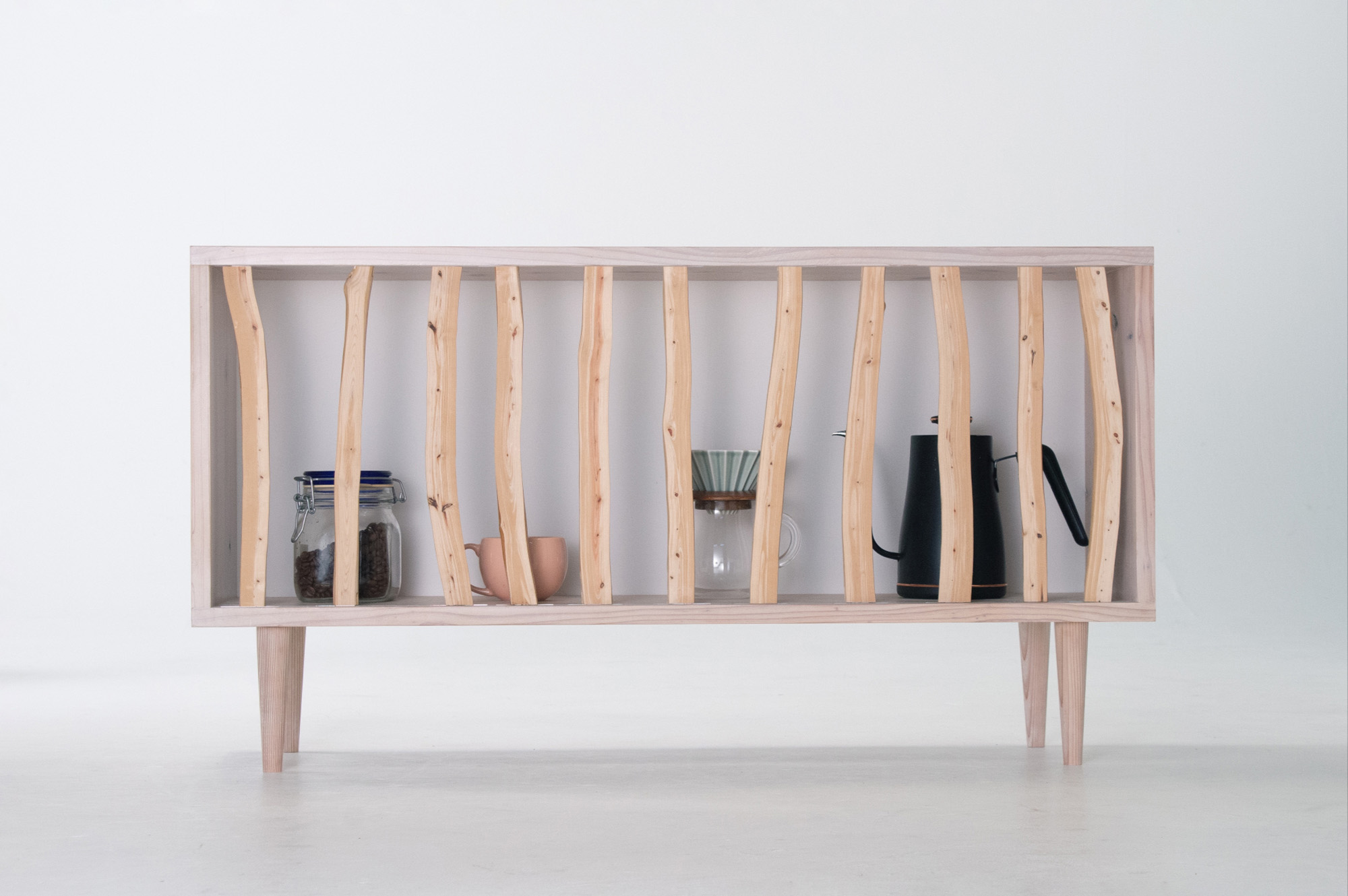
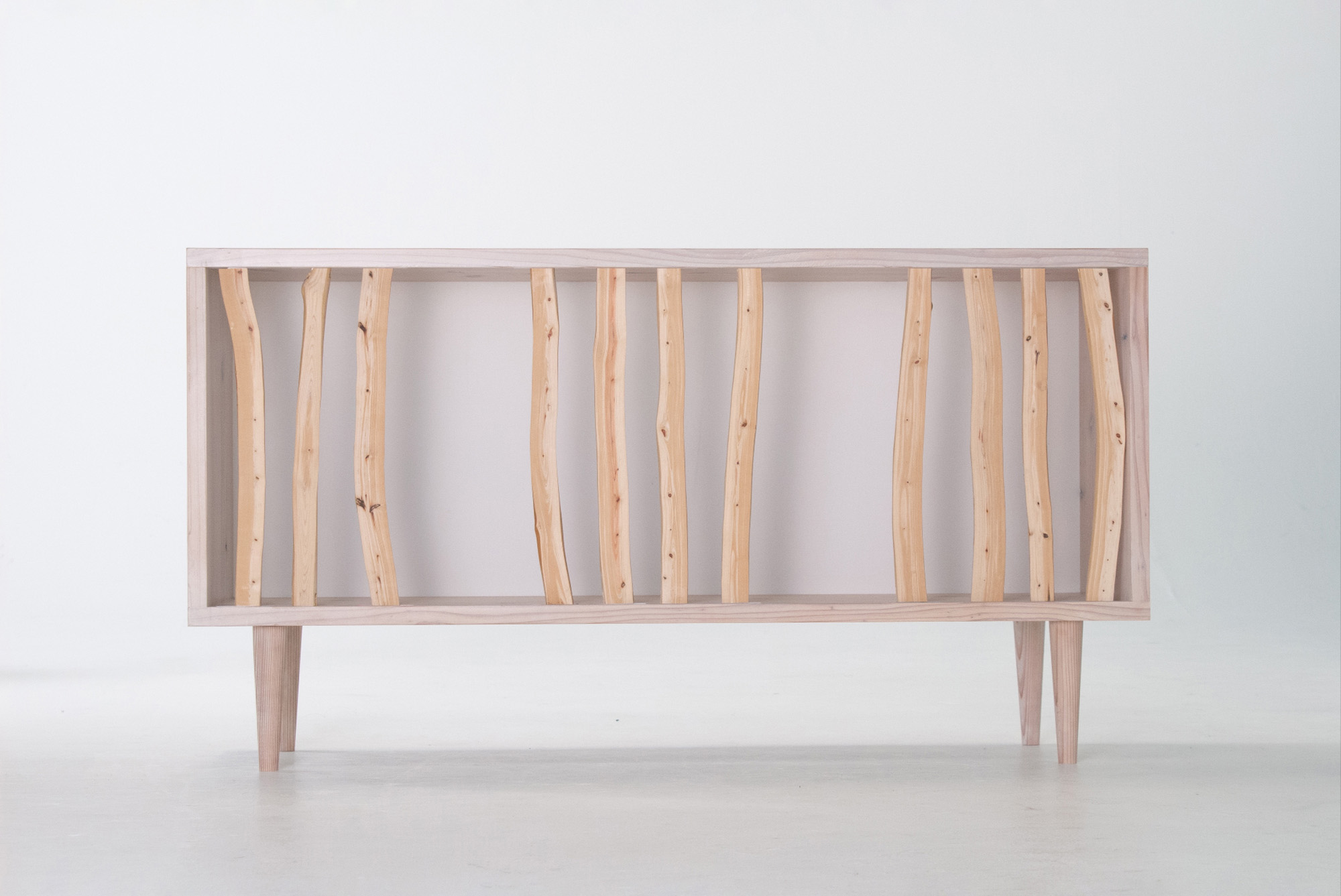
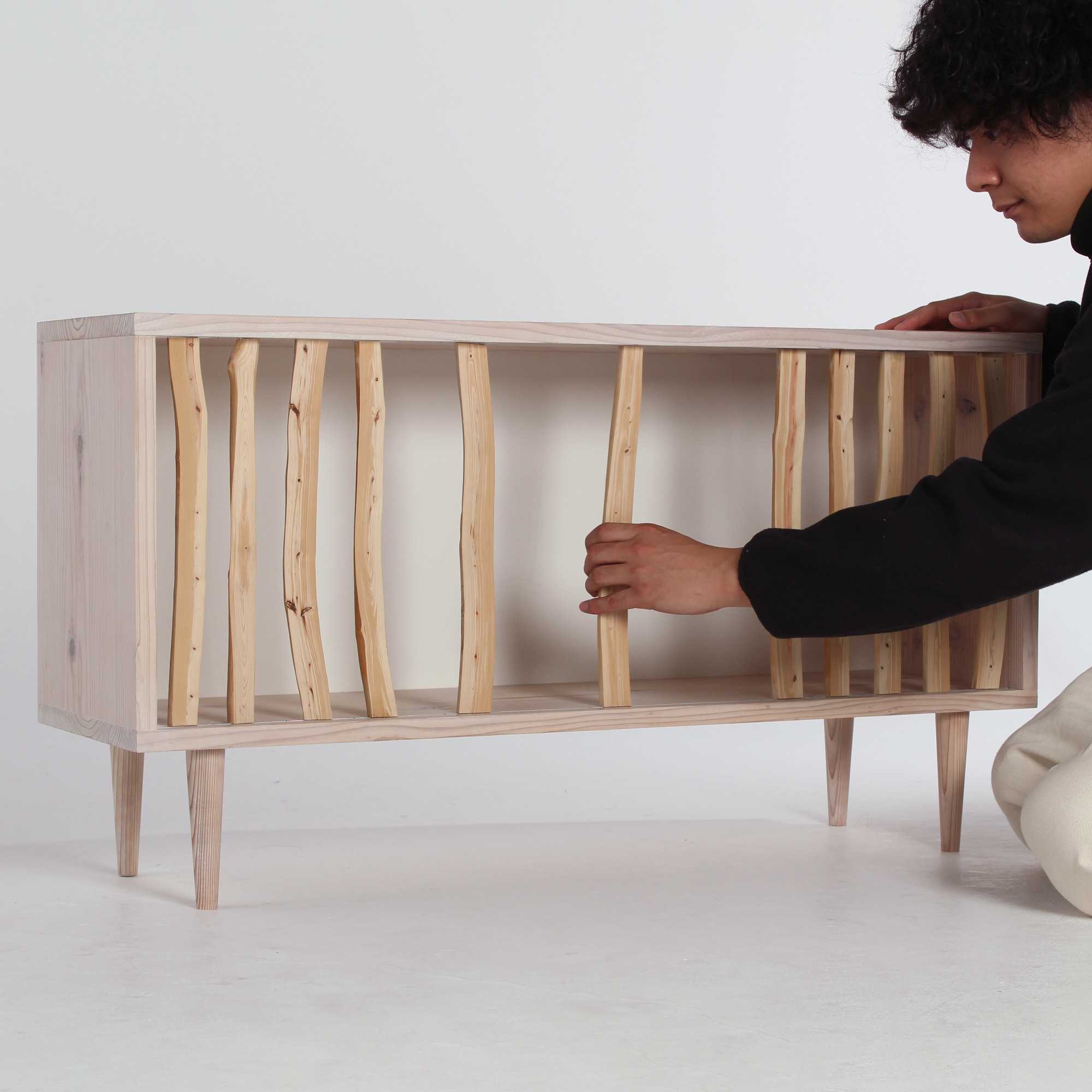
At first glance, the cabinet looks almost like an art piece. A simple wooden frame holds a series of Japanese cypress branches across the front, each one slightly different in diameter and character. The branches drift rather than line up; when you begin to move them sideways, the cabinet shifts between instances of exposure and concealment. Some areas open while others compress, shifting constantly. You don’t configure the cabinet once and leave it alone; you adjust it over time in response to what you use and how often you reach for it.
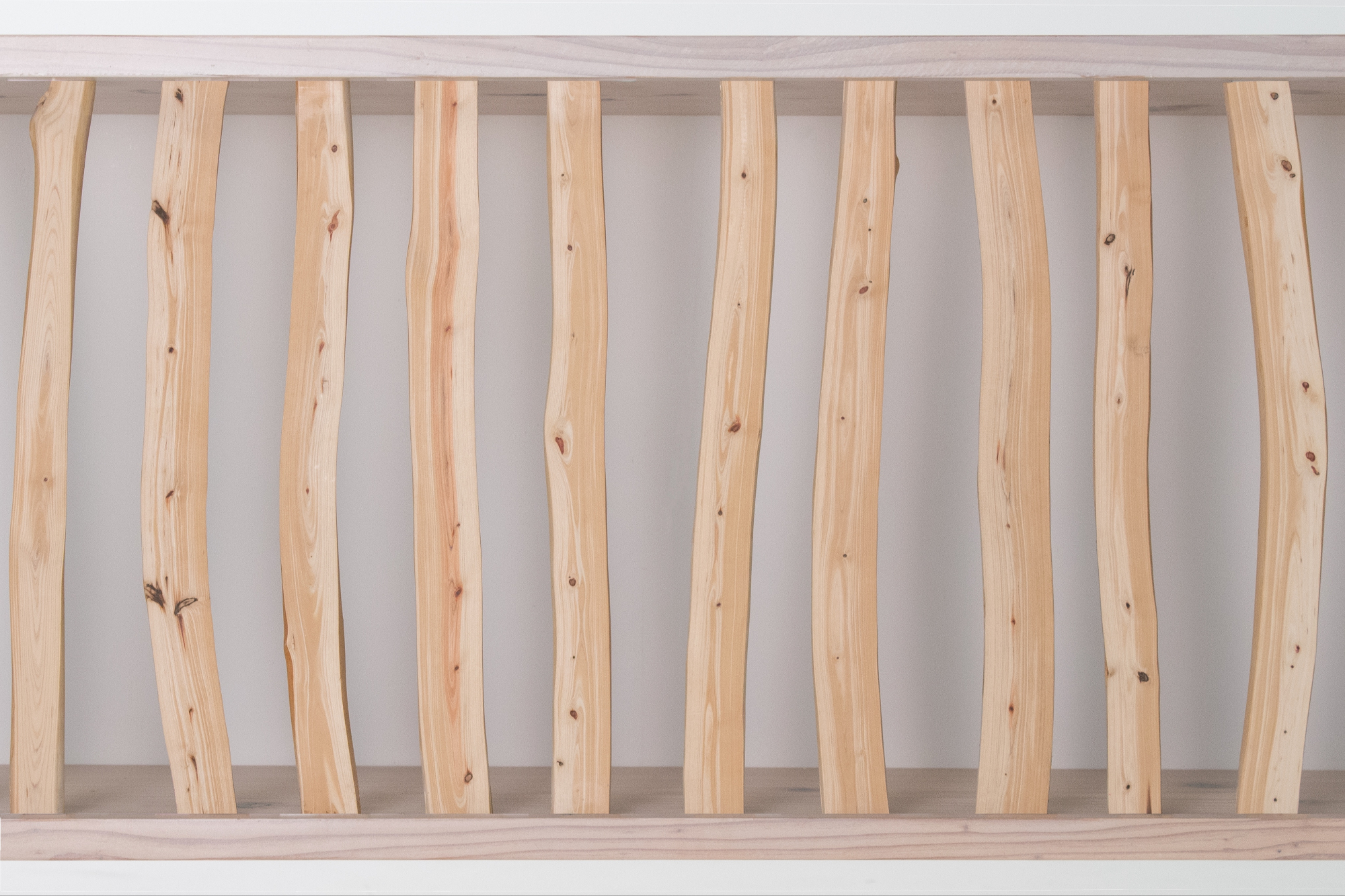
The material choice plays a central role in the design. The branches come from thinned Japanese cypress forests, wood usually left behind as waste. Sugiura keeps them close to their natural state, allowing slight bends, uneven grain, and irregular spacing to remain visible. Light passes through unevenly, shadows shift throughout the day, and individual branches slowly become familiar.
Sugiura’s background at Nagoya University of Arts shows in this material-first approach, which runs through much of his work. Earlier projects like the award-winning Kintoun Kits explored similar ideas through play, encouraging open-ended construction. Hayashi translates that curiosity into a quieter domestic context. In 2024, this ingenious design received recognition from the SIT Furniture Design Award. Photography© Taishi Sugiura.