Search






A contemporary dialogue with history, unfolding room by room.
In the small northern Italian city of Arzignano, AMAA has quietly reawakened a landmark. Caffè Nazionale, once faded behind layers of ad hoc renovation and time, now exists in a delicate state of suspension—part ruin, part stage, part living room for the public. As an example of adaptive reuse architecture, it resists nostalgia in favor of presence. Step through the heavy iron door, pivoted like a hinge between centuries, and you feel it immediately: this isn’t just a restoration. It’s an act of listening.
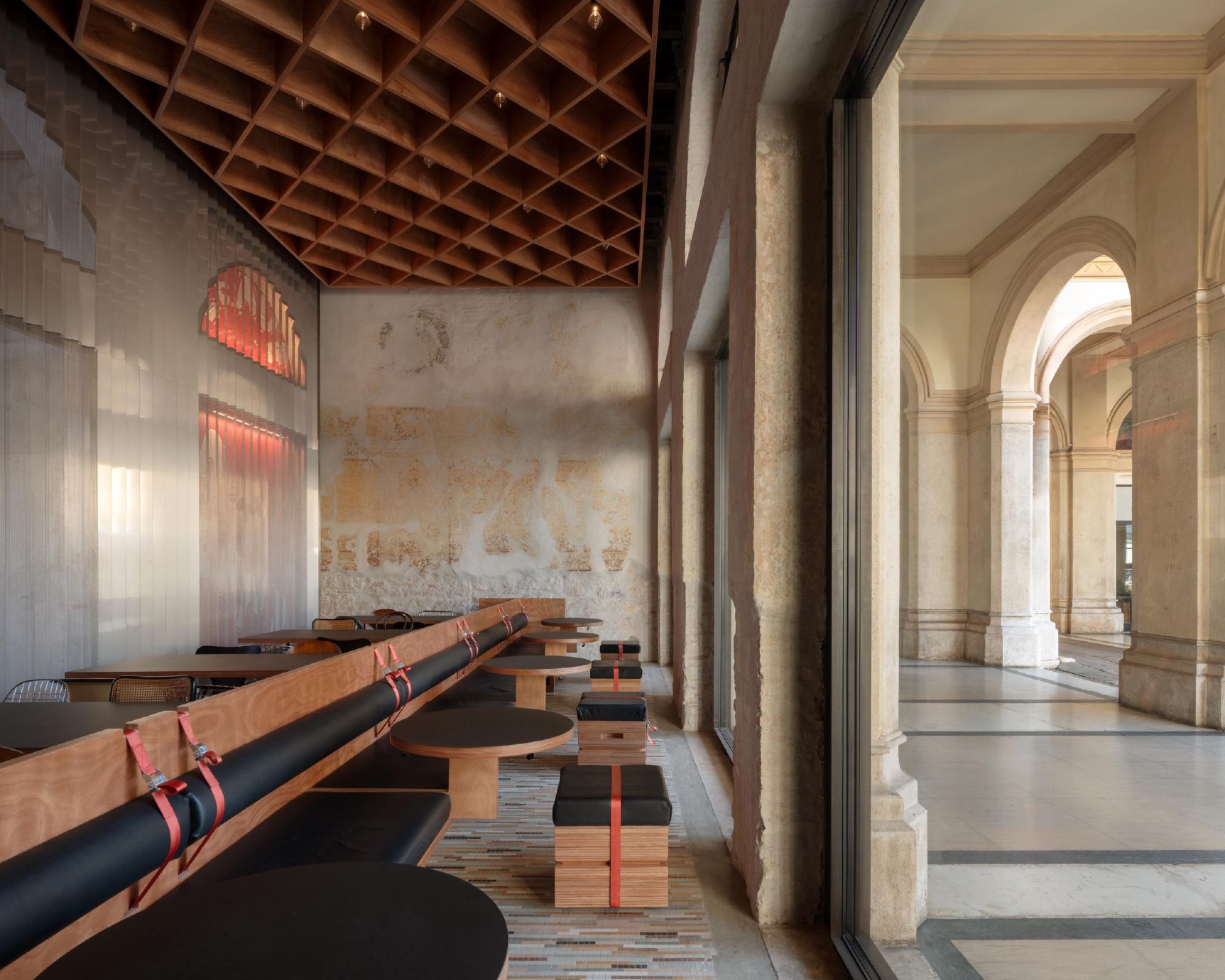
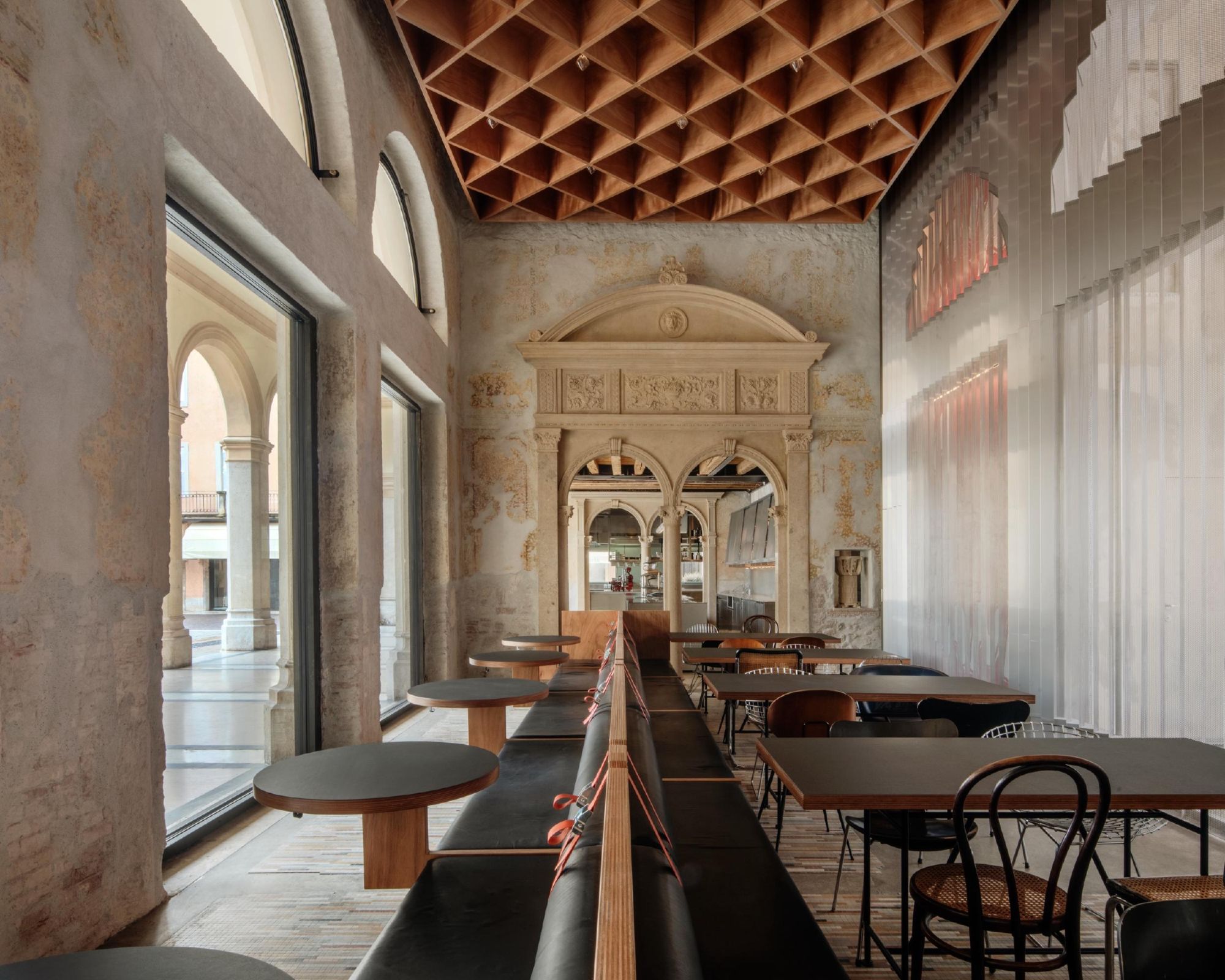
The architects—Marcello Galiotto and Alessandra Rampazzo—didn’t strip the space back to some imagined origin. They let the building speak. Layers of history remain, but shifted. You see traces of old frescoes and unpainted plaster, steel mesh stretched like a curtain between scenes. Light filters through the colonnade, dances across a mosaic floor, brushes past pleated metal panels and lingers in a courtyard reimagined as a birch garden. Every move feels both deliberate and unfinished. Not incomplete—but open.
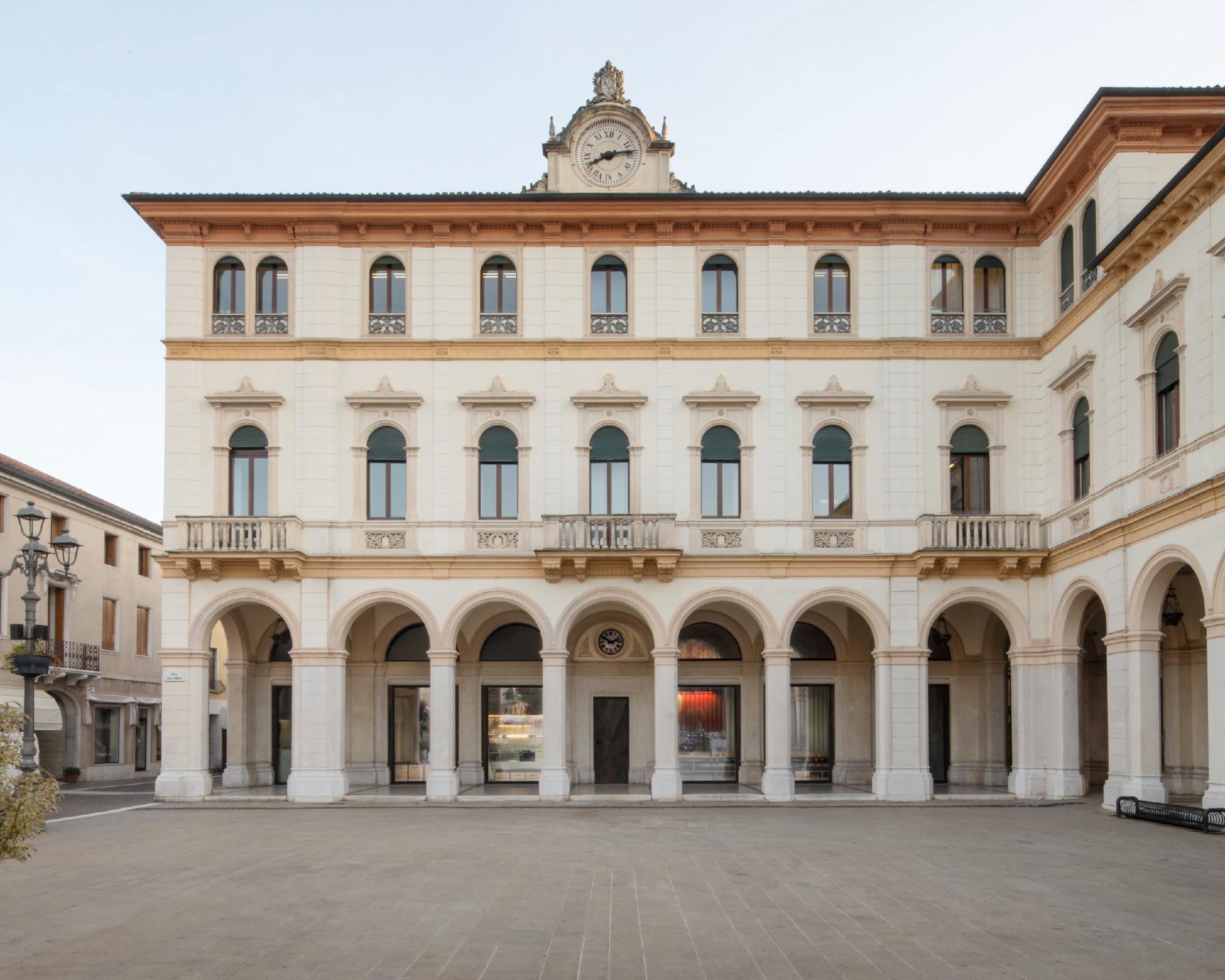
The bar opens toward the square. The open kitchen hums at the corner. A vestibule offers a pause before the garden. Posters by Stefan Marx are pasted like moments on a wall, their ephemerality echoing the raw textures around them. Benches and tables—custom-built with artist Nero/Alessandro Neretti—recall subway platforms and Judd sculptures, grounding the interiors with quiet clarity. Upstairs, a restaurant continues the same restraint. You feel the weight of care behind every junction.
Every part of Caffè Nazionale feels intentional, yet open to reinterpretation. The layers of old and new aren’t in conflict—they move alongside each other. Light filters through the steel mesh wall, touches the coffered ceiling, catches on the mosaic floor. A garden waits just beyond, quiet and unexpected. The architecture doesn’t demand attention; it gives shape to moments—of pause, of conversation, of memory being made. AMAA’s intervention doesn’t dramatize the past. It simply makes space for it to live on, in a new way.