Search






A home built for stillness and scale.
Set at the base of a gully in rural Victoria, the Sawmil Treehouse is both minimal and elevated—literally and architecturally. Designed by Melbourne-based architect Robbie Walker for a client who prioritized feeling over finishes, the structure rises into the trees without disturbing their presence. It’s not hidden, but it doesn’t compete with the landscape either.
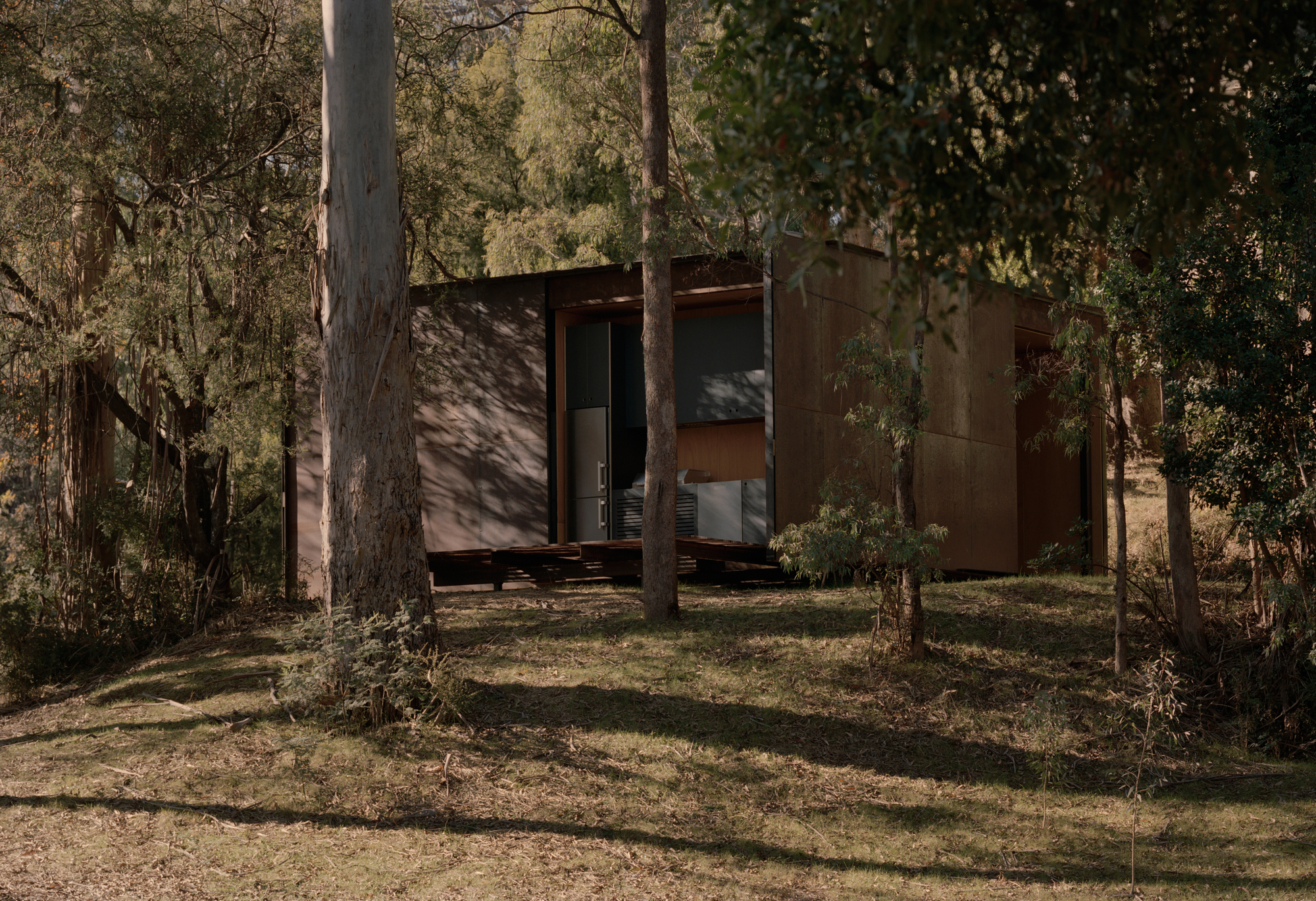
The brief was unusually clear. “Something small to share with my family and friends,” the client said. Over time, she sent the architect photographs—not of fixtures or tiles, but of trees. The trees were the design drivers from the start. The steel-clad structure stands on four slender black columns that evoke trunks rather than piloti. Instead of massing at the base, the form lifts and floats, leaving the ground below almost untouched. The only exception is a small garage and outdoor kitchen tucked neatly into the one flat area on site.
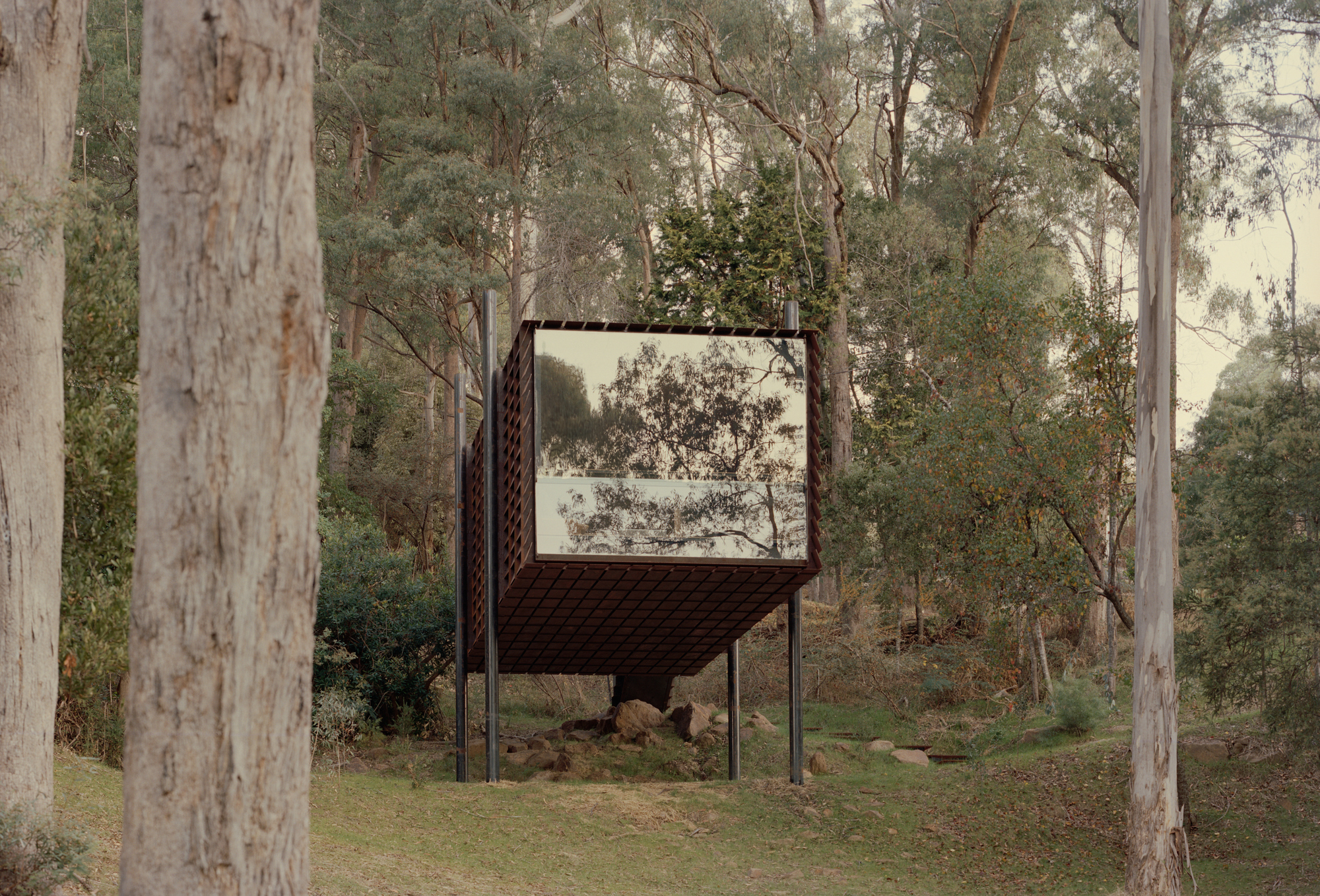
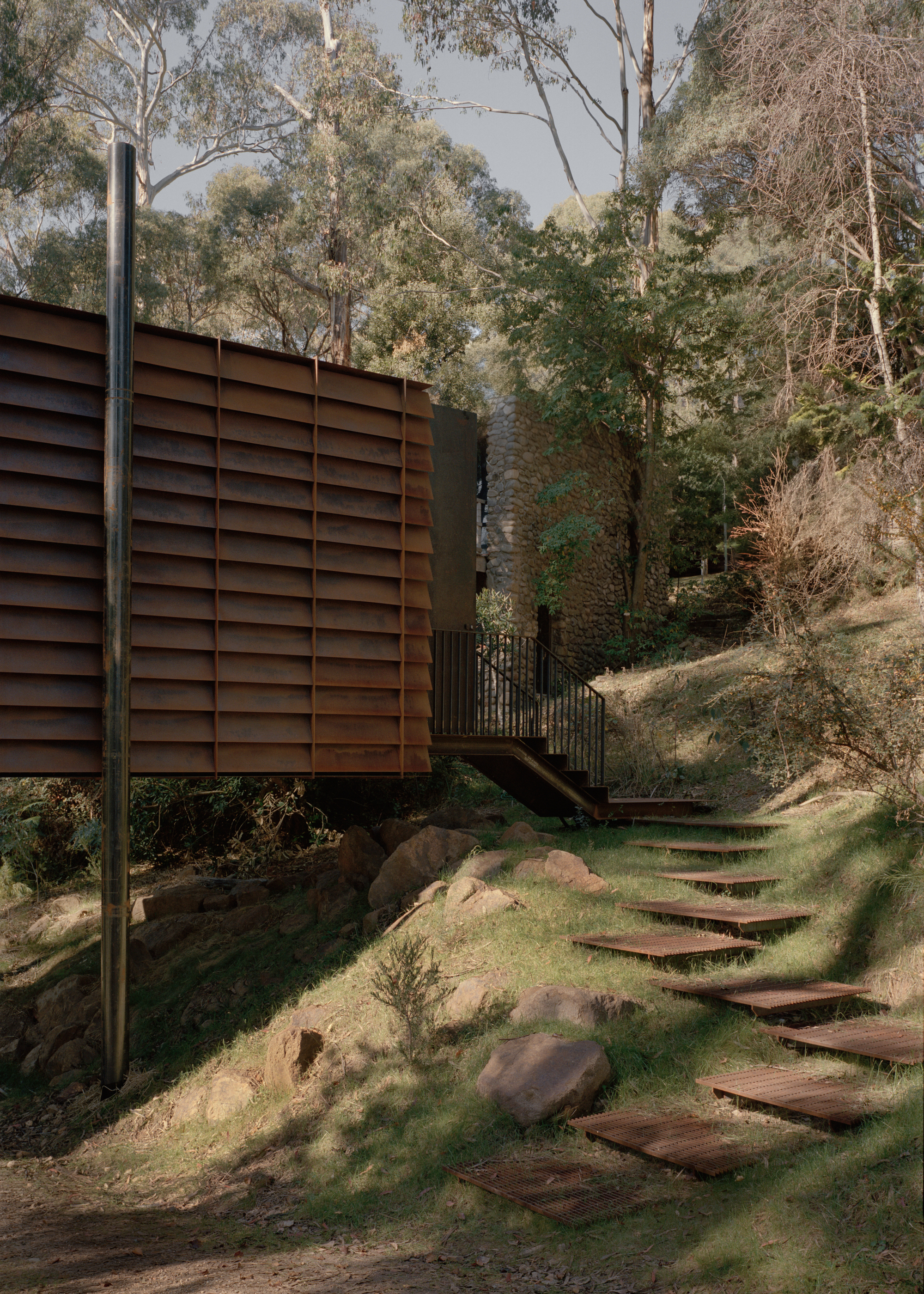
The building is wrapped in deep, rust-colored steel slats, spaced to allow air to flow between them and the insulated walls. This cavity keeps the structure cool in the summer sun while casting soft shadows that shift through the day. From the rear, the façade is opaque, blending with the vertical rhythm of the surrounding trunks. But the front face is fully glazed—a single horizontal plane of glass that reflects the canopy and opens the interior to the forest.
Inside, the palette is radically simple. Timber floors, timber walls, timber ceiling. The tones are pale, and the detailing is spare, but never cold. A long, low sofa and a single lounge chair face the trees. The glass balustrade vanishes into the perimeter, keeping the sightline clean. It’s not designed to impress—it’s designed to disappear the moment you sit down.
Though it contains only a bedroom, kitchen, bathroom, and living space, the house feels generous. Not in square footage, but in how it handles scale and movement. There’s just enough of everything, and nothing extra. The slatted envelope breathes. The interior warms and cools passively. And when the sun moves or the temperature drops, it’s the trees that let you know—not a thermostat.
There’s a kind of architectural bravery in staying small, especially in a culture that so often equates size with value. Financing a one-bedroom home in a rural area isn’t easy. Nor is convincing the system—from planning to resale—that restraint is a virtue. But the result speaks for itself. A home shaped by site and intention, not by convention or resale logic.
And then there’s the light. It falls softly on steel. It moves through timber. It filters in through a rhythm of shadows, not fixtures. The Sawmil Treehouse is, at its core, a conversation between architecture and landscape—with nothing extra added, and nothing taken away that didn’t need to be.