Search






An essentialist approach to architecture, where exposed materials and light define the atmosphere of a rural Italian home.
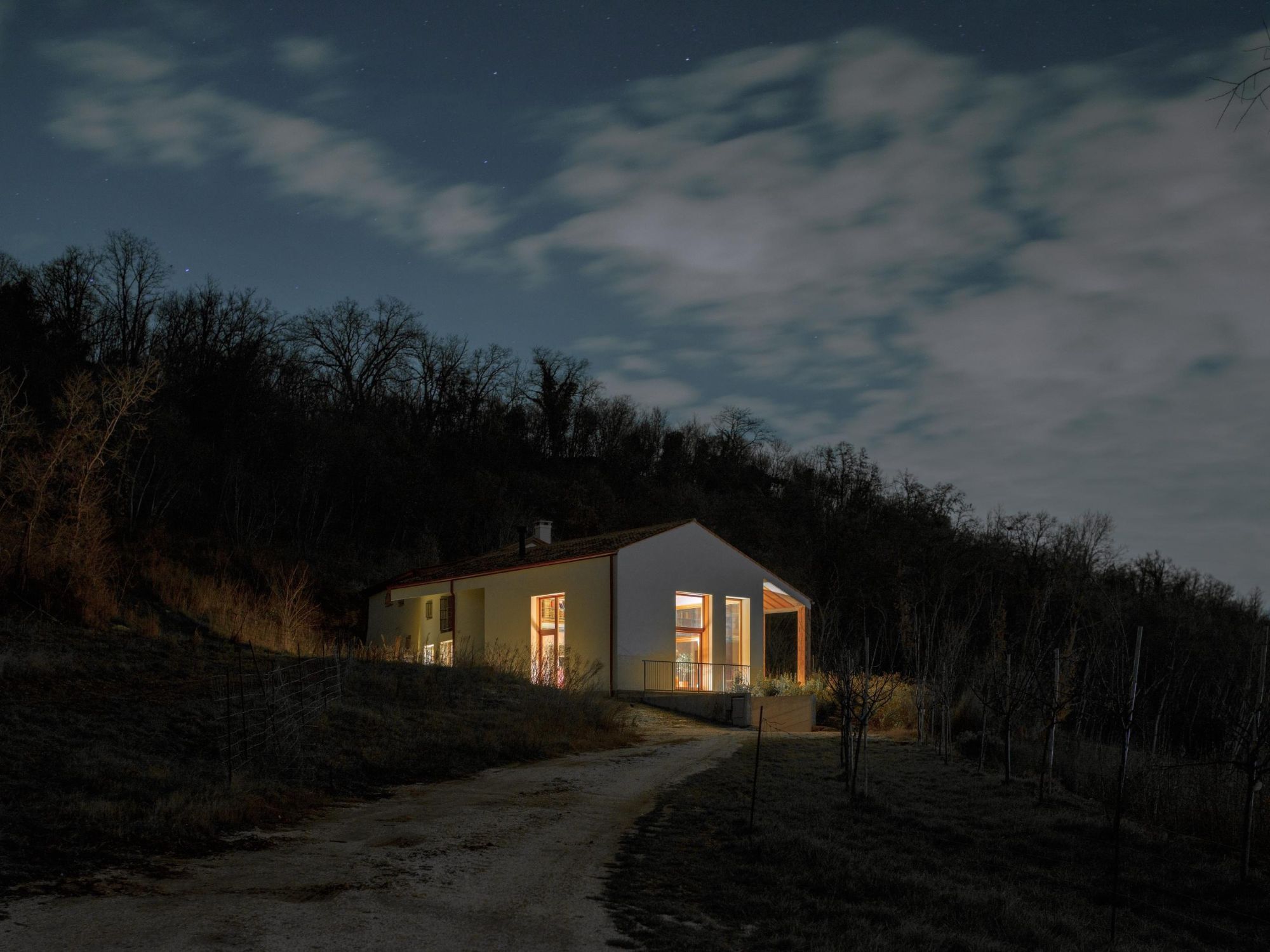
In a quiet hollow nestled among the vineyards of northern Italy, a modest rural building has been reimagined as a tactile sanctuary. Texturised House, designed by Bongiana Architetture and photographed by Riccardo De Vecchi, is both an expansion and a reinterpretation—a contemporary refuge that builds on the character of the original structure while leaning into the expressive potential of raw materials. The project is guided by what the architects call raw purity: exposed surfaces, unpolished finishes, and an intentional reduction of detail. The architecture doesn’t conceal its structure—walls, floors, joints, and seams are treated as part of the composition. Each plane becomes a field of visual and tactile interest, turning construction into a kind of spatial storytelling.
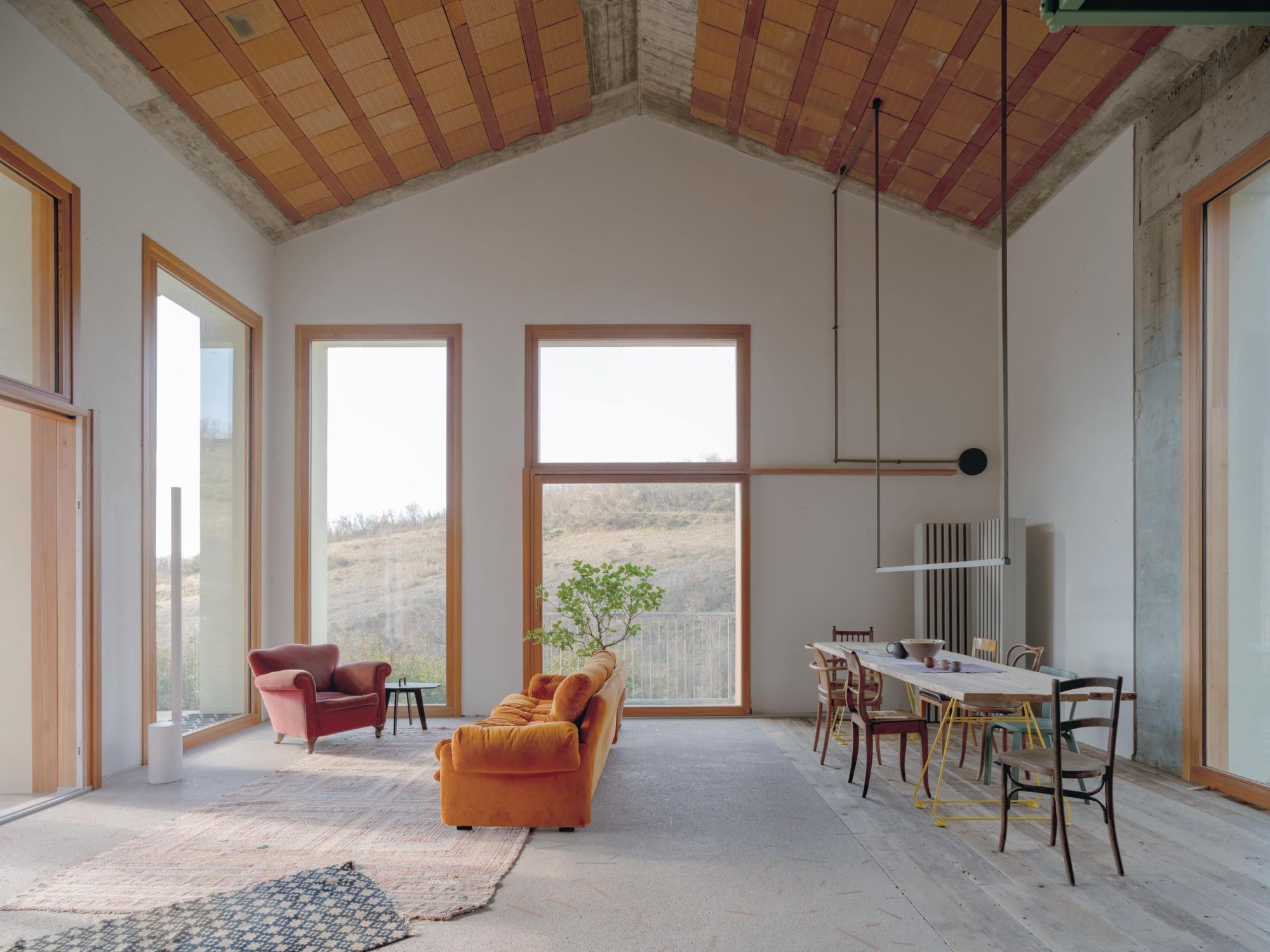
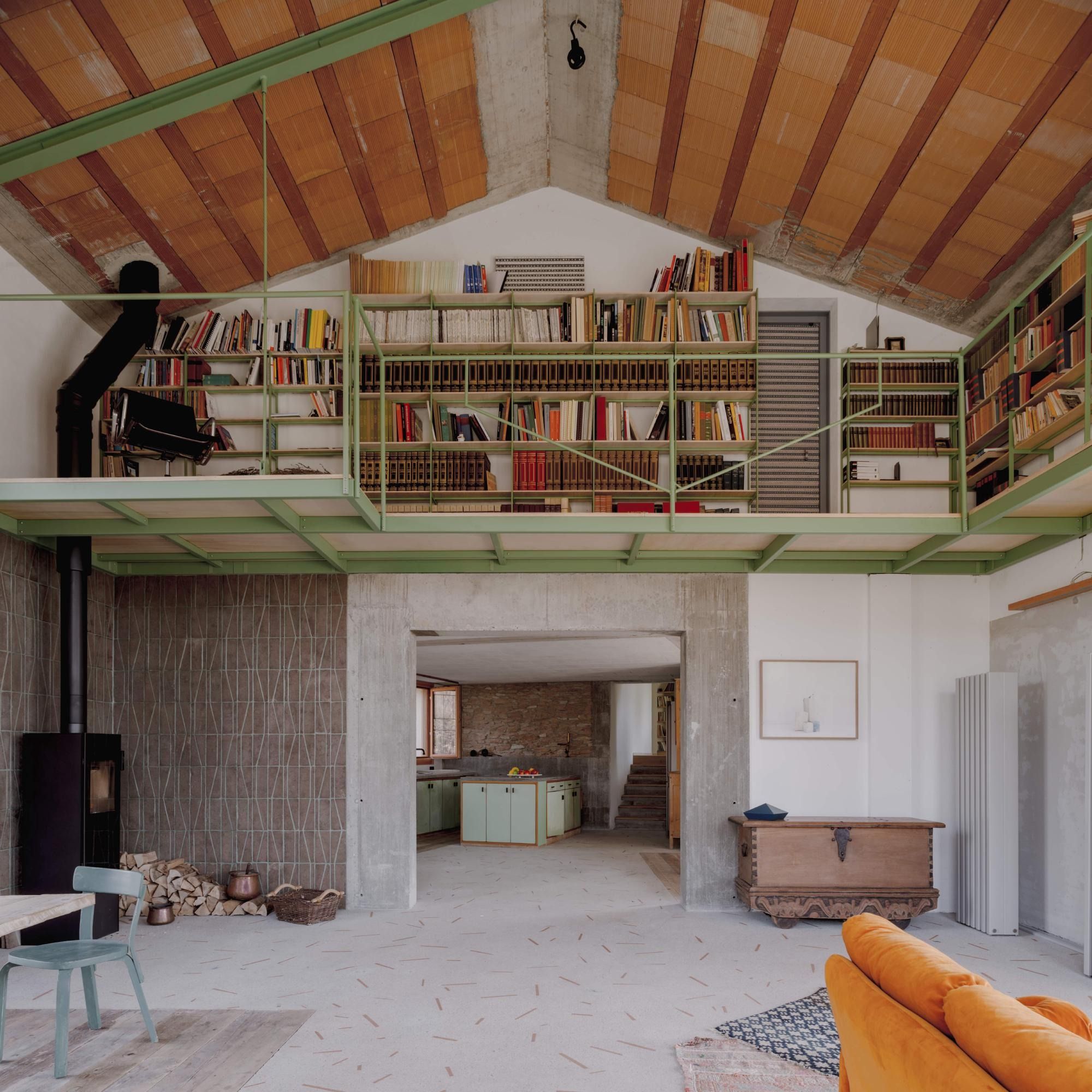
At the center of the home is the transformed barn volume, now a tall, open room that gathers natural light through carefully placed openings. As the light filters in and shifts across the surfaces, it animates the interior with changing shadows and reflections. A steel-framed library floats above the ground floor, introducing a smaller, more intimate zone within the larger space. Fire becomes a subtle anchor across both the old and new sections: the original fireplace remains in place, while the new living area is centered around a cast-iron stove. The surrounding walls are clad in Split terracotta tiles—designed by Bongiana Architetture for Terraformae—where the spacing between tiles forms a quiet visual rhythm across the room.
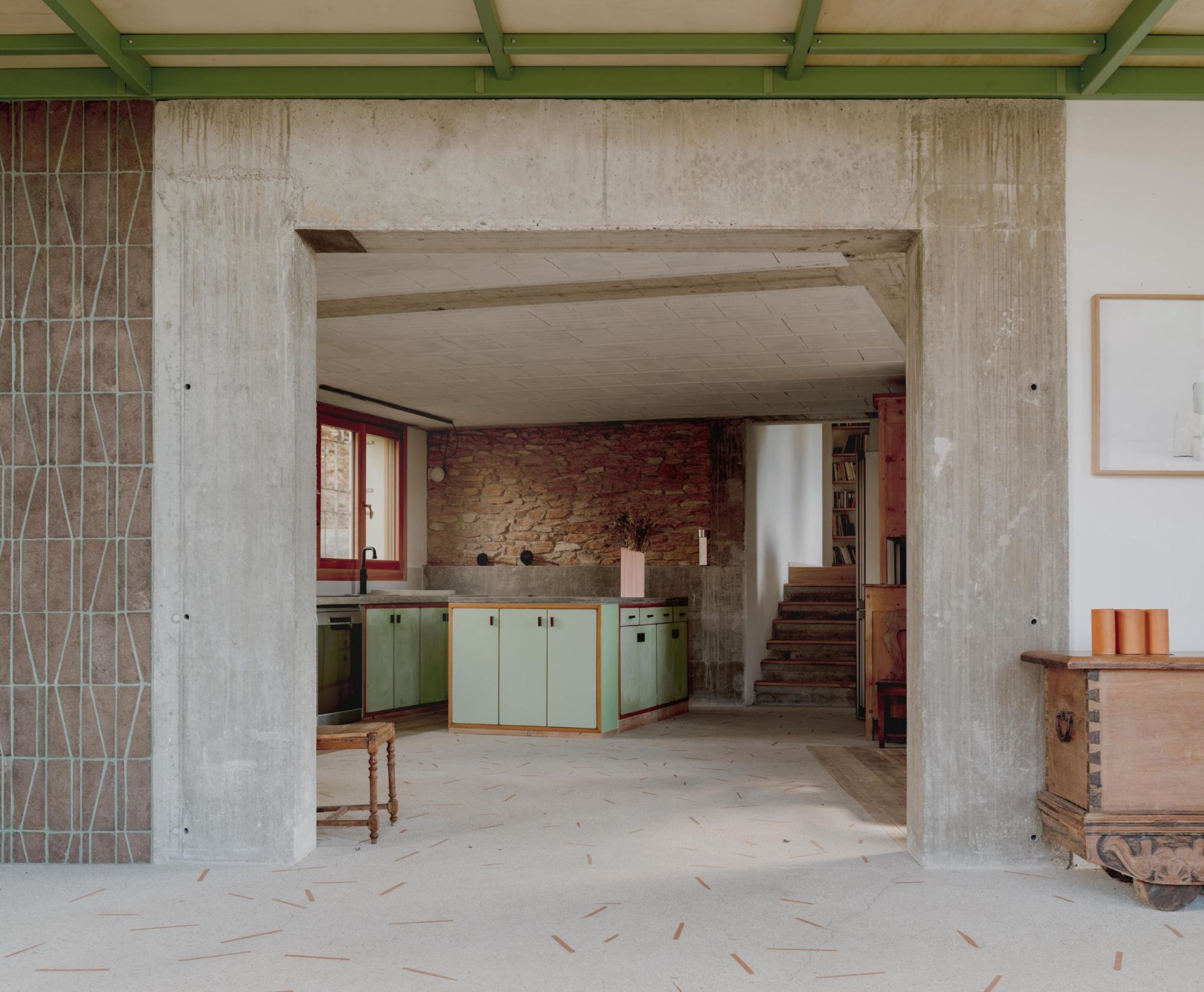
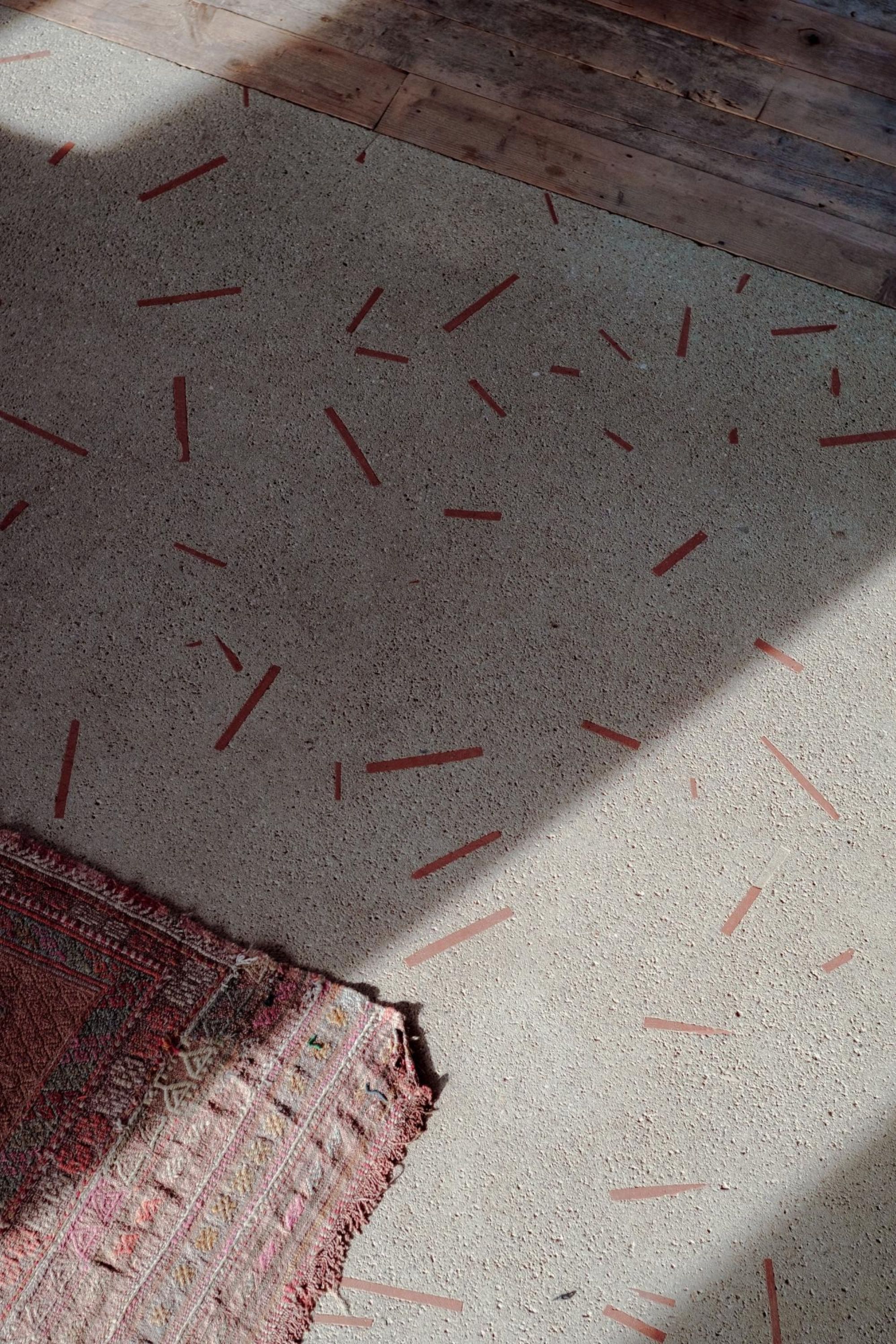
The flooring takes a similar approach—refined but rooted in construction logic. Rather than traditional terrazzo, the architects used poured concrete embedded with slender fragments of terracotta cut from the hollow bricks used in other parts of the house. The result is a continuous surface that connects the new addition with the materials of the build itself. It’s a detail that ties together structure, memory, and reinvention without drawing attention to itself. This same principle continues in the furnishings: reclaimed pieces, including a 1950s kitchen reassembled in the new space, contribute to a lived-in feeling that’s more about continuity than contrast.
Texturised House reflects Bongiana Architetture’s ongoing approach: a careful editing of space and surface, where design choices are distilled, not dressed up. Nothing feels decorative or excessive—everything has its place and material logic. It’s a home shaped by light, structure, and the sensory presence of materials that are allowed to speak for themselves.
Photography by Riccardo De Vecchi