Search






Lovell Burton recasts a low-lying Carlton workers’ cottage as a flexible family home. Twelve loose “squares” gather around a planted courtyard, with pivot doors, an oculus skylight, and reused brick and hardwood shaping light, air, and water.
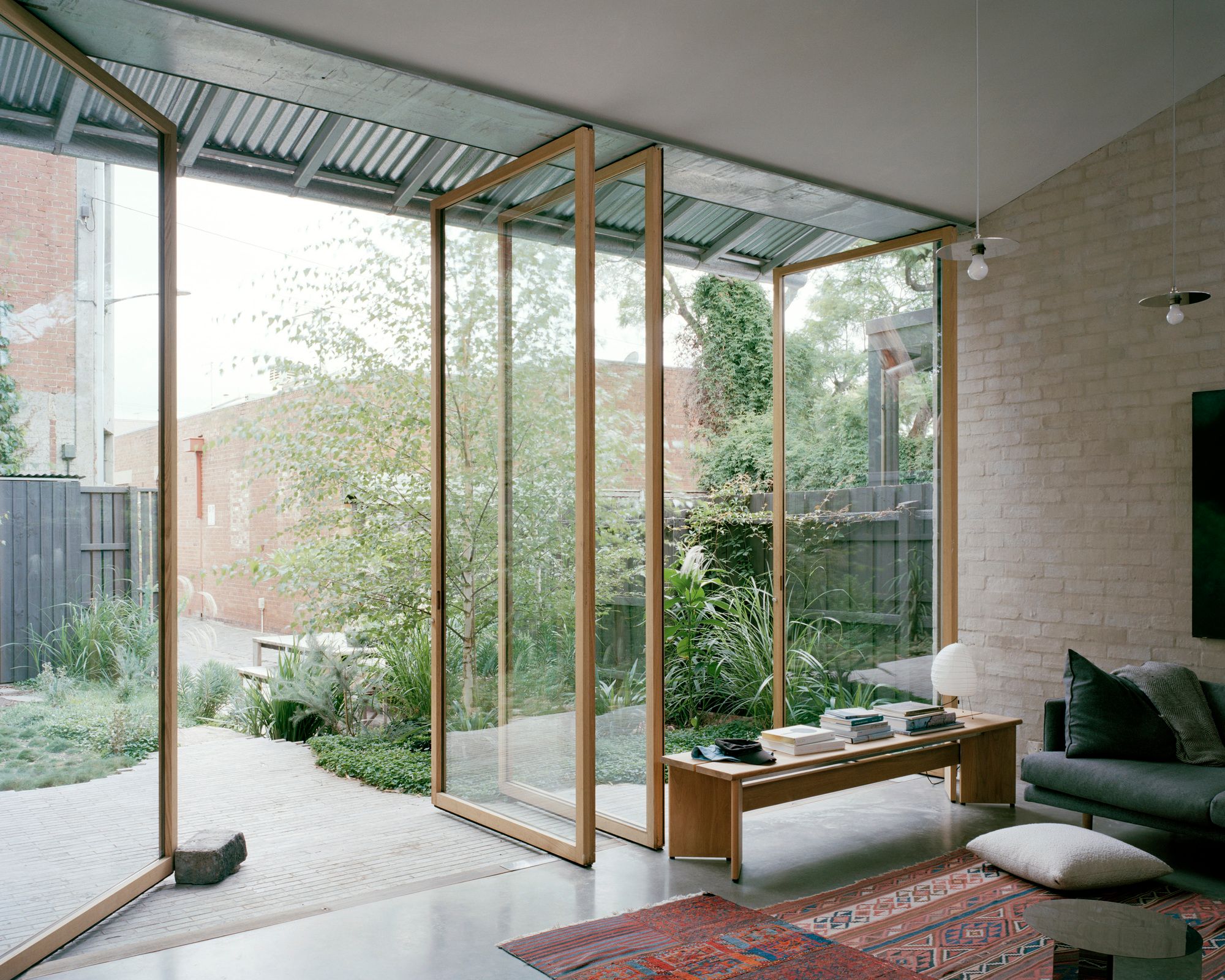
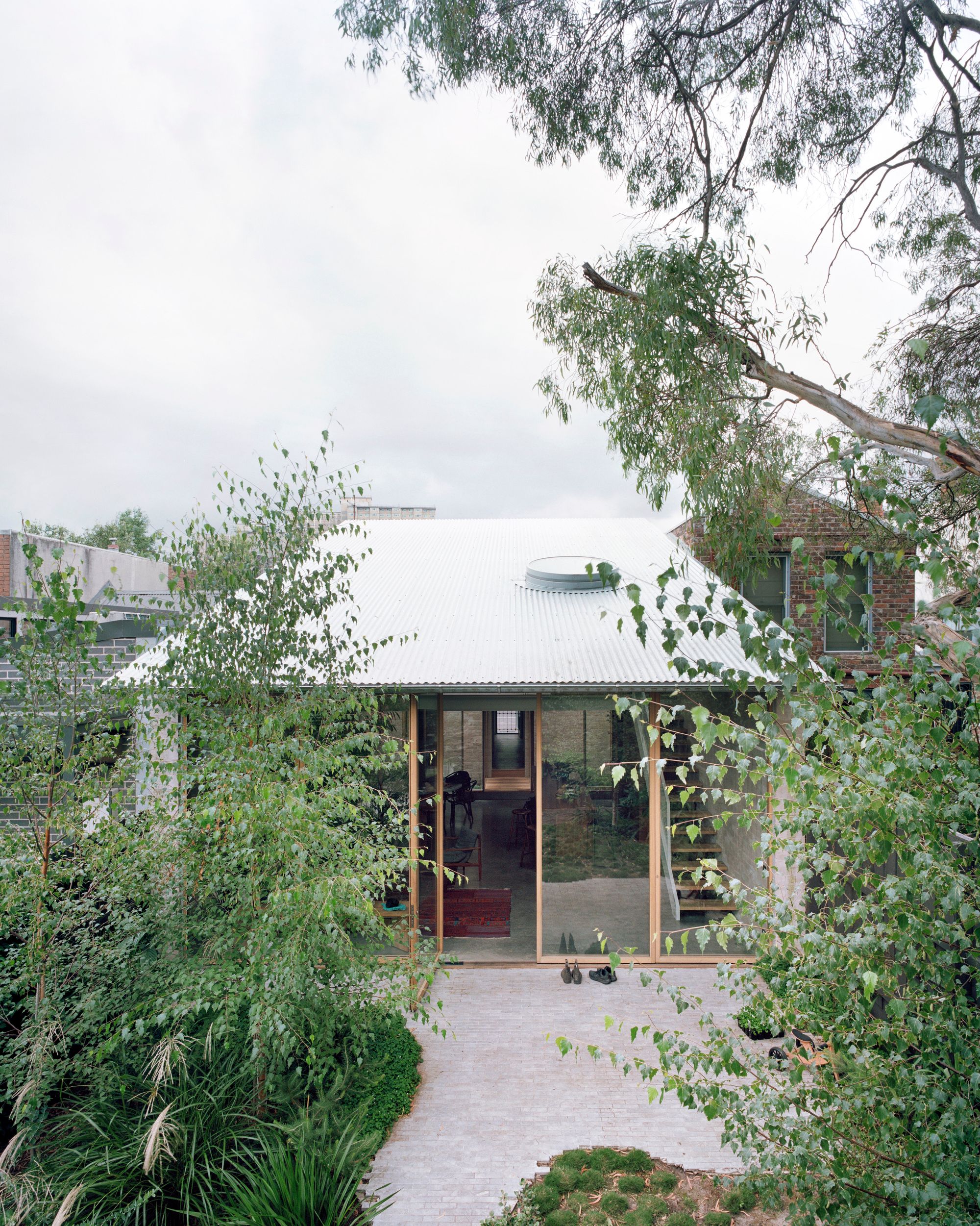
On a small lot in Carlton, Australia, a corrugated skillion roof slides over a garden room. Tall pivot doors in pale timber swing out to a soft, planted courtyard; above, a round skylight cuts clean daylight through the ceiling. The project is a careful re-making of a single-storey workers’ cottage into a 150-square-metre family home that improves light, air, and water performance while keeping the quiet grain of the street.
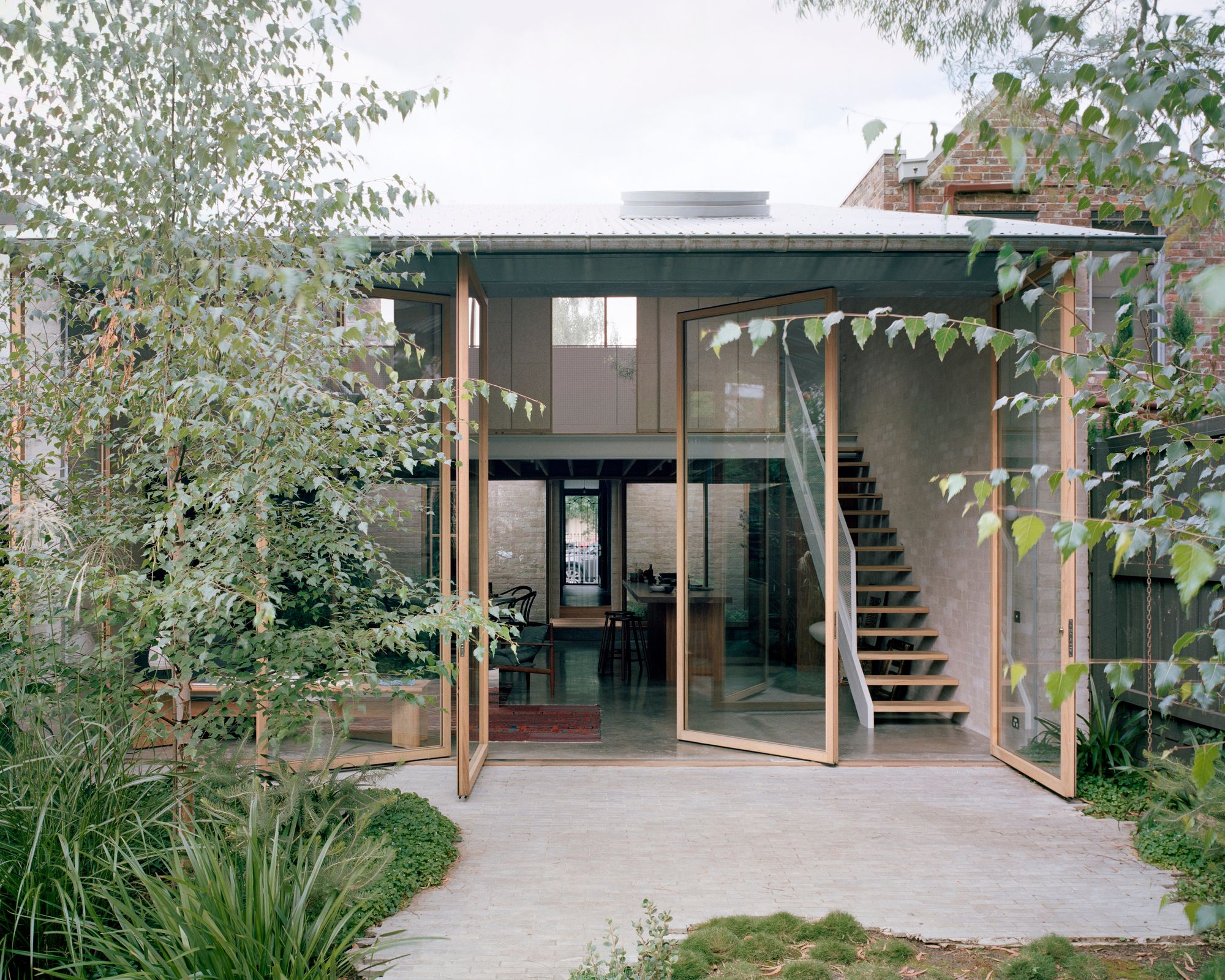
The block sits low in the suburb’s topography—part of an old watercourse that once fed the Yarra—so drainage and moisture were first principles. The architects recast the house as a sequence of twelve loose “squares”: the original cottage to the front; an open, high-ceilinged addition to the rear; and a planted court between them. Canning Street’s urban-forest planting and a mature river gum next door offer shade and habitat; a former hat factory on the rear lane sets a rough, brick-and-tin backdrop that the new work acknowledges rather than hides from.
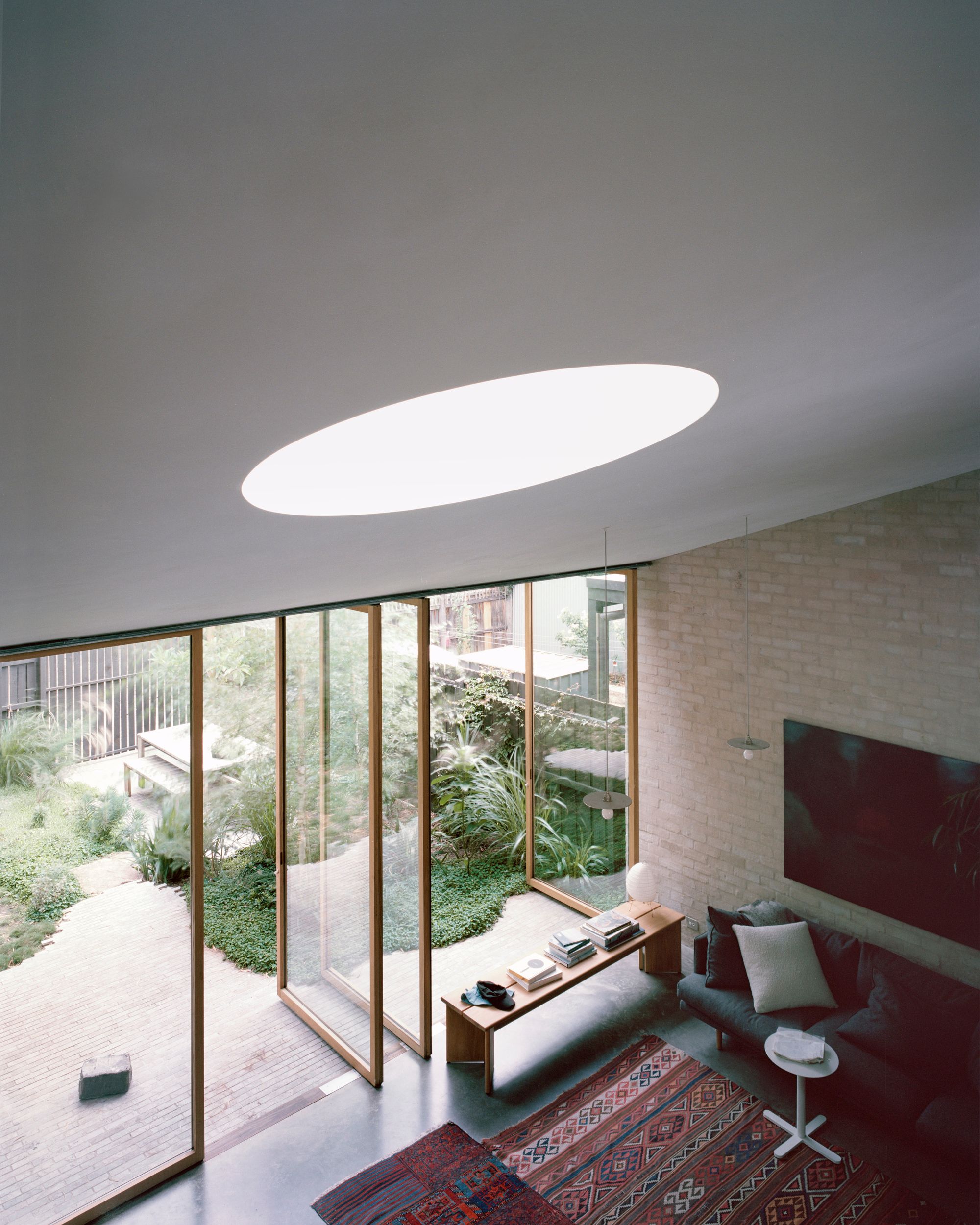
The roof does a lot of work. Its broad single pitch gathers rain for harvesting, tempers summer sun, and lowers the profile to the lane. Inside, the ceiling rises toward the garden and the oculus, drawing the eye up and letting soft, even light wash the room.
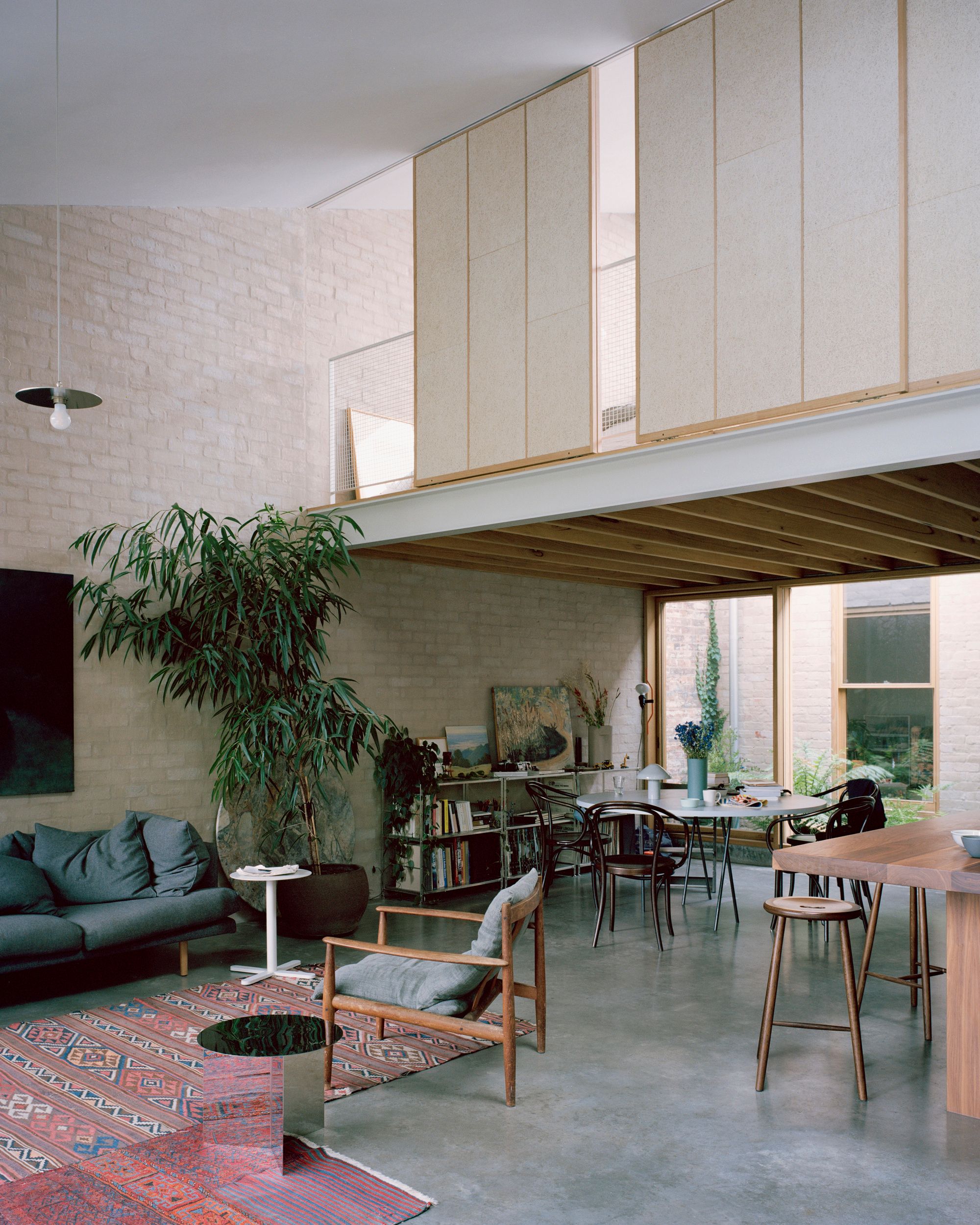
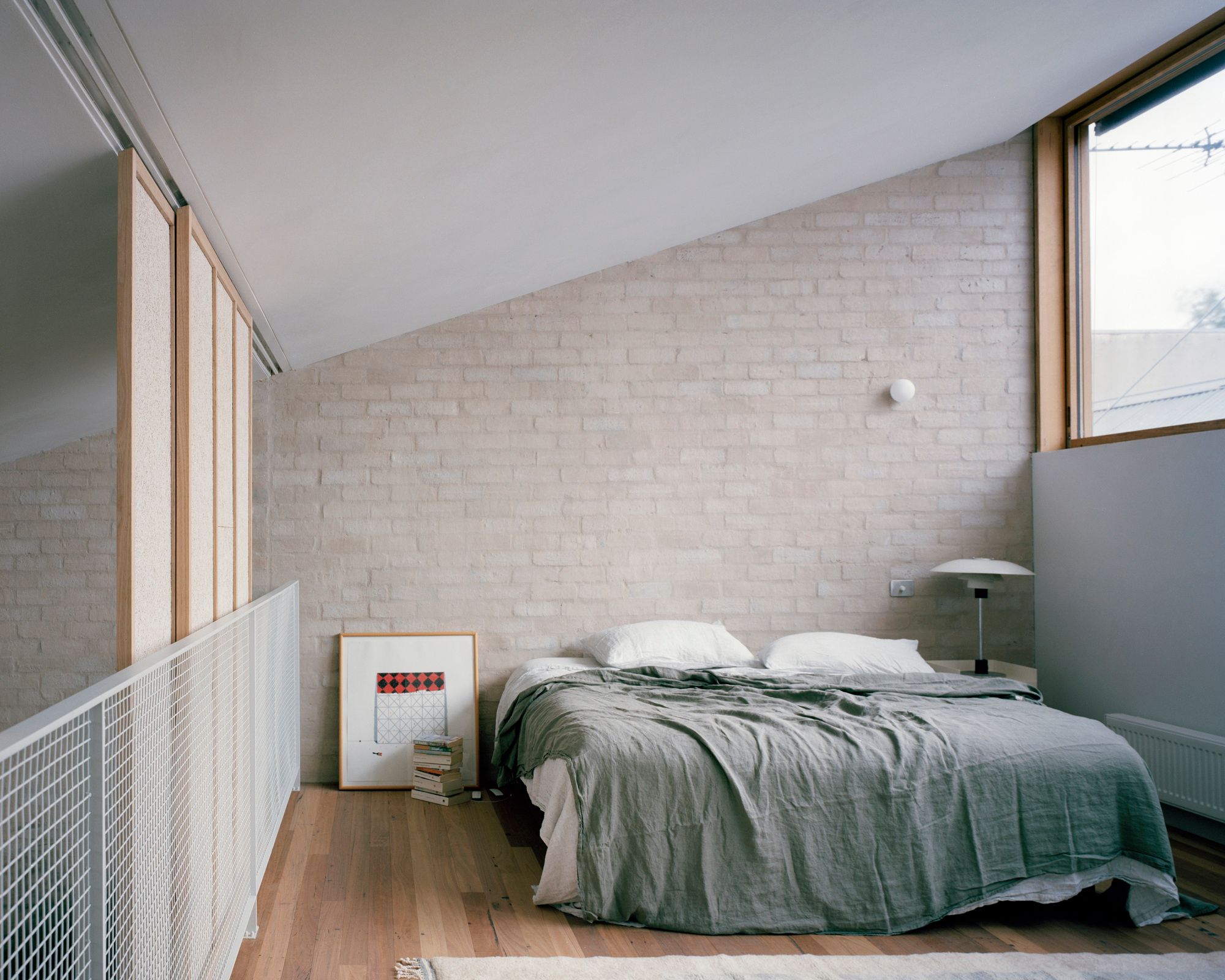
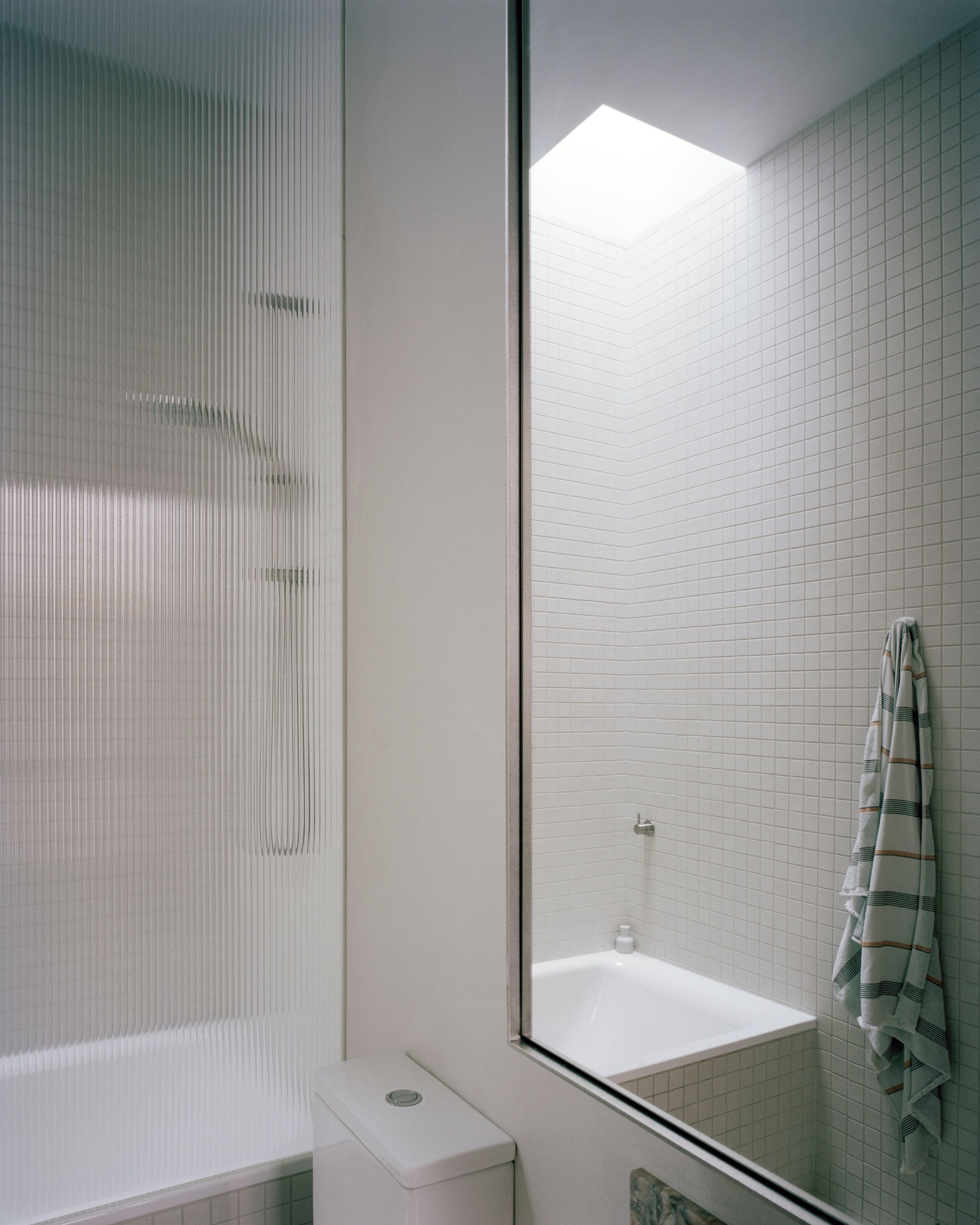
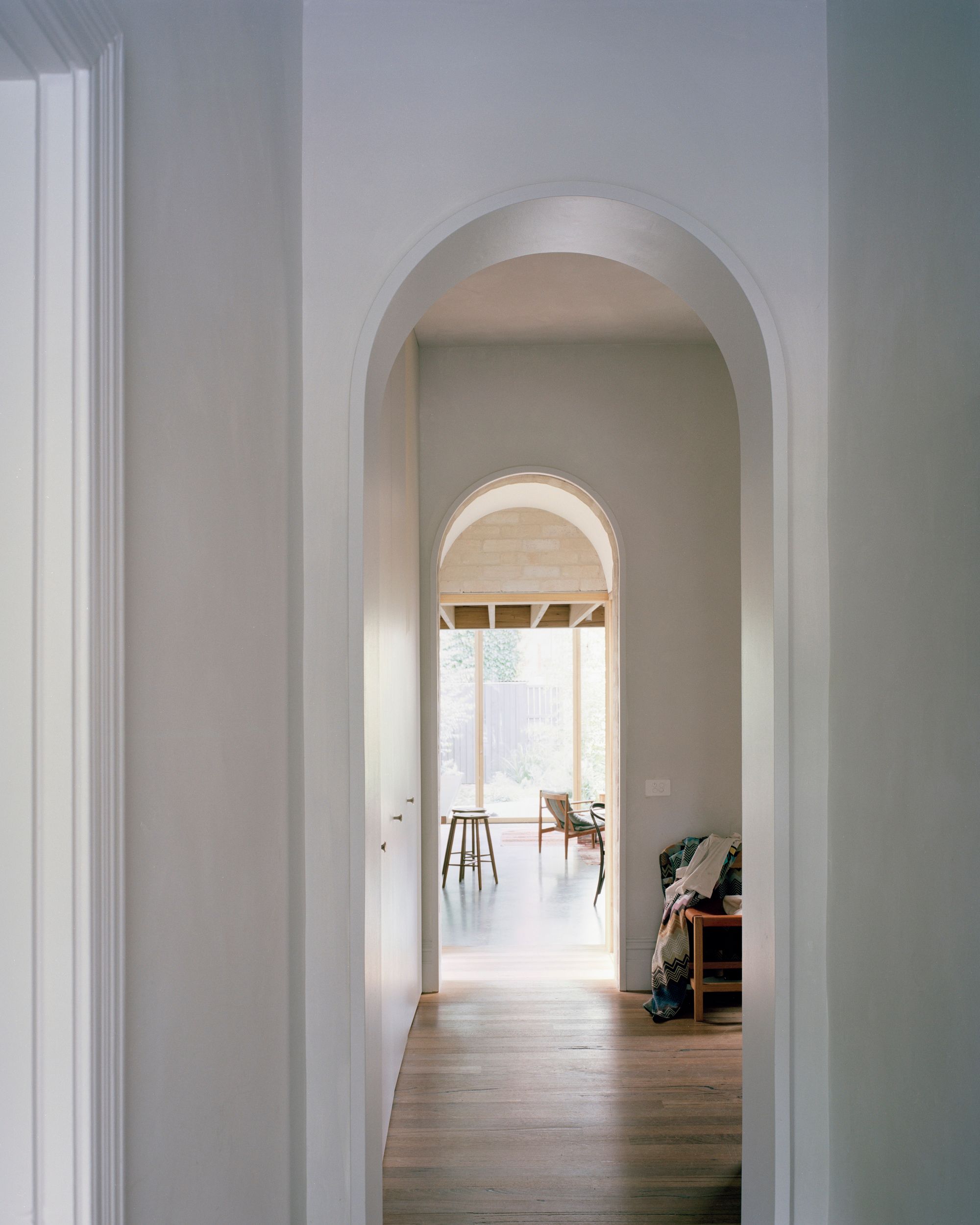
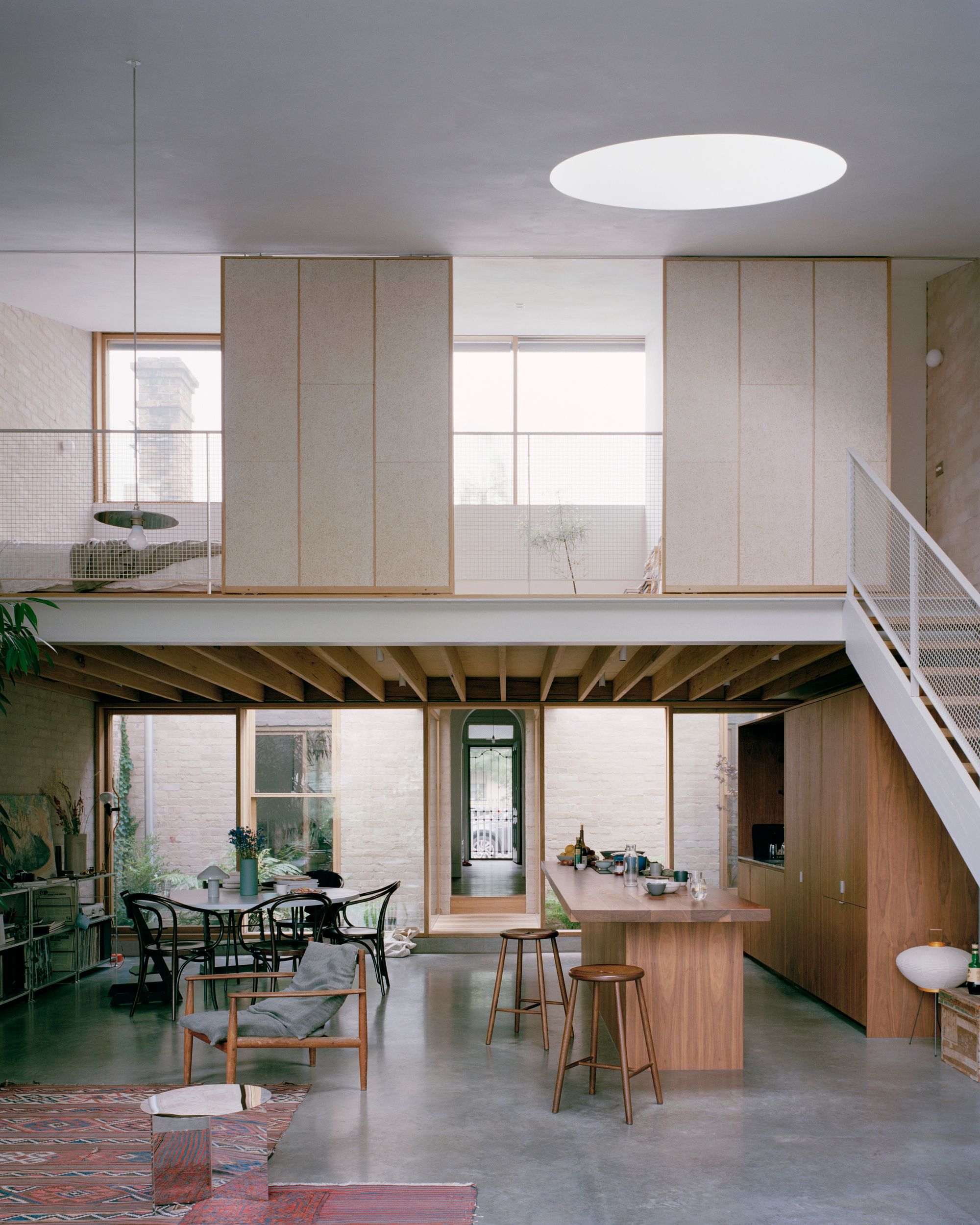
The old front rooms are re-tooled for children’s bedrooms, a flexible study, and wet areas. The floor there was rebuilt as a lightweight timber frame to ventilate the subfloor and manage moisture. Step down a half level and the house opens: kitchen, dining, and living occupy four of the “squares,” with a small mezzanine over the kitchen holding a guest/primary bedroom and bath. Movement is simple and clear—front door to court to garden, with long sightlines through glazed timber frames that make the house feel larger than its footprint.
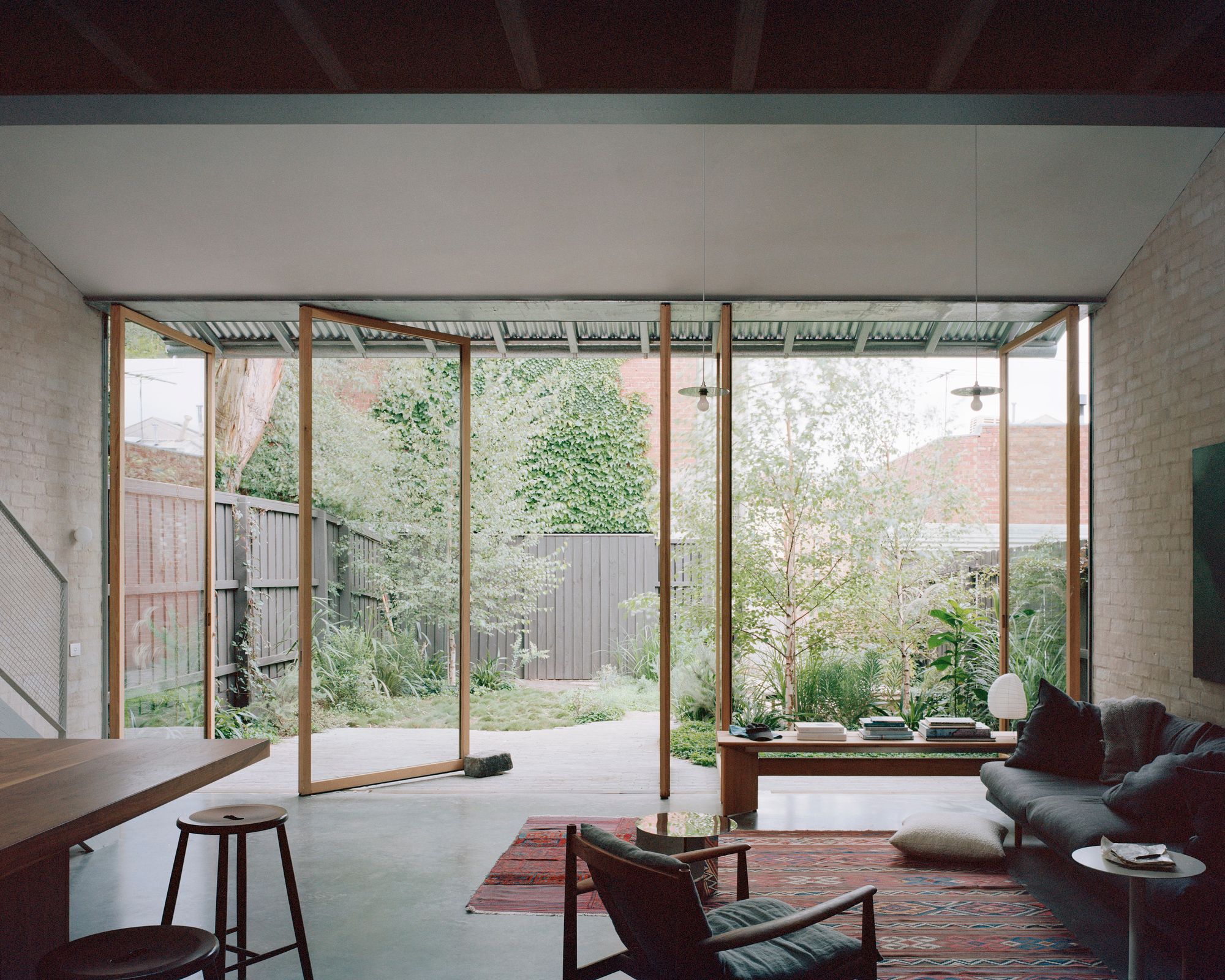
The courtyard is the lungs of the plan. Planting, shade, and night-purge ventilation keep the interior comfortable in summer; in winter the low northern sun reaches across the polished concrete floor. Along the rear, a line of full-height pivot doors lets the façade shift from sealed to breezy in seconds. You read the seasons in the way those leaves move behind the glass and in the easy ritual of propping a door open with the nearest garden stone.
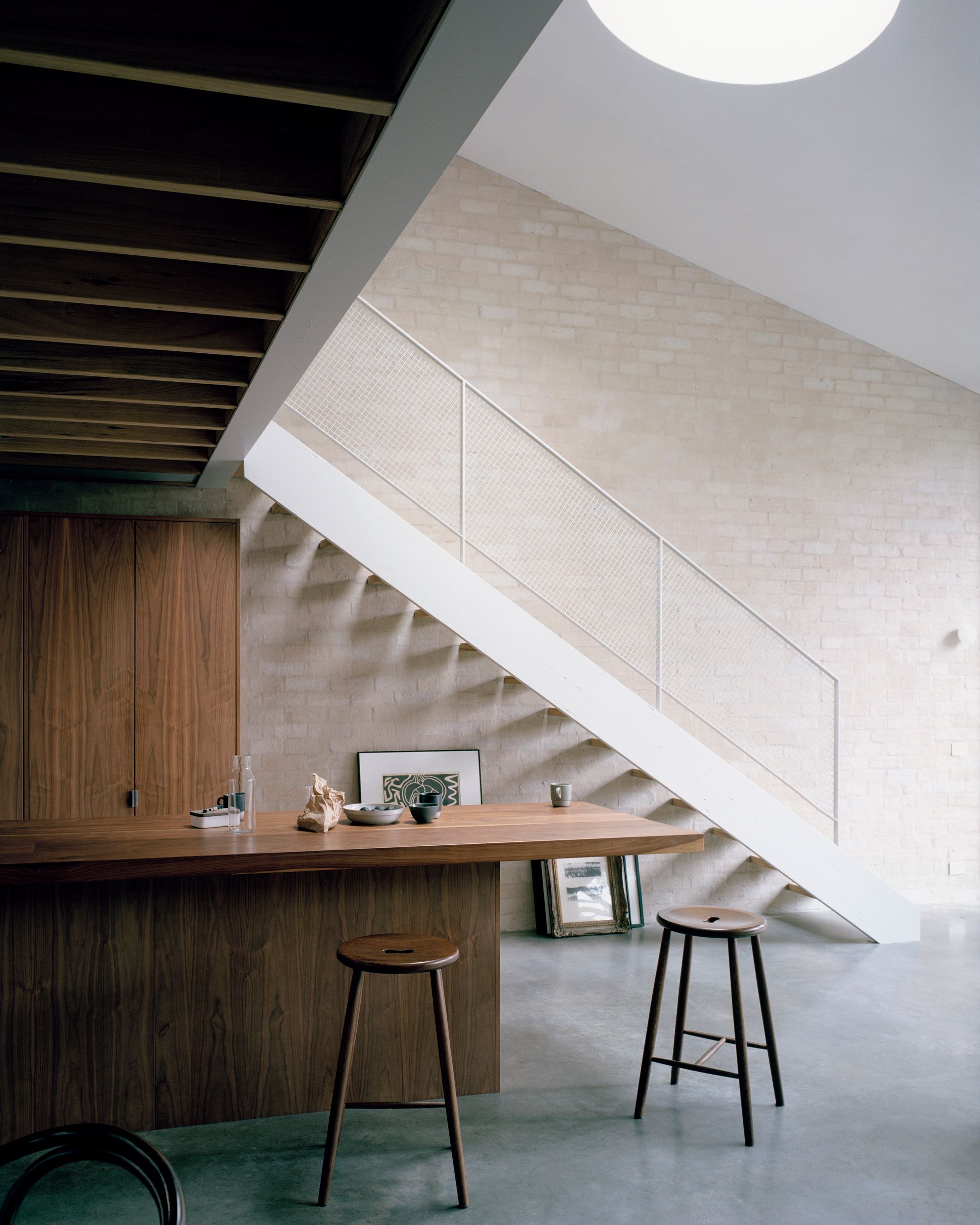
Demolished lean-to bricks return as lime-washed internal walls; the front floor is rebuilt as a ventilated timber frame using repurposed local hardwood. A single walnut island reads like furniture, its overhang set for two stools. Benchtops are cut from a salvaged Pilbara stone slab—dense, cool, and mottled under the oculus. Stair stringers are steel with open treads; balustrades are white mesh. Galvanised corrugate wraps the roof and feeds the rain tank.

The raised ceiling and oculus moderate the interior without drama. Daylight pools on the kitchen island at midday and thins to a cool halo by late afternoon. Underfoot, concrete adds thermal mass to the addition; the front rooms feel warmer and quieter on timber. When the doors are open, you hear the soft echo off brick and planting rather than street noise. At night, small pendant lamps hang low to the bench and table, keeping illumination at the level of hands and food.
Lovell Burton’s framing device—the twelve squares—sets up a home that can rearrange as a family grows. Rooms aren’t locked into labels; the mezzanine can flip from guest room to retreat; the study can become another bedroom; the court can be play space, dining, or quiet gap between two green walls. The architecture doesn’t insist; it supports.
It all resolves in modest details: the slim timber stile of a pivot door, the round of the skylight cutting a soft edge into the ceiling, the way the stair treads stop short of the wall and let light slip between them. Ordinary materials, carefully aligned, doing exactly what they need to do.
Photography by Rory Gardiner. All images courtesy of Lovell Burton Architecture.