Search






Co-living made modern in a project that also revitalizes a landmark building in Bratislava.
Finding an affordable home in a big city is notoriously difficult, whether it’s NYC, London, or Tokyo. Throw in good schools, quiet neighborhoods, and quality interior design into the mix and the task is virtually impossible on a reasonable budget. Co-op apartments and rental housing have emerged as alternatives in this ongoing crisis, each with their own upsides and downsides. BEEF Architekti explores the potential of these solutions with the conversion and revitalization of Metropol, a modernist building in Bratislava, Slovakia. Originally designed by architect Juraj Tvarožka in the late 1920s, Metropol is a landmark in the city and a piece of architectural history that the studio wanted to preserve. A social and cultural hub, the building used to house a cinema and a cafe. Now, it has been converted into a co-living space with 19 apartments and shared common areas.

A sense of togetherness and human connection stood at the heart of Metropol in the past. This is also the case with the new, redesigned building. BEEF Architekti preserved the concept of social interaction, creating co-living spaces that bring together different people with different backgrounds. Affordable and accessible without compromising on quality or comfort, the apartments range from compact units to larger homes. Flexible and open-plan layouts also allow residents to adapt the living spaces to changing needs.
The shared areas include a communal kitchen and a lounge space. Both encourage social interactions and the creation of a stronger, close-knit community where people share resources, live in harmony, and cook, eat and relax together.
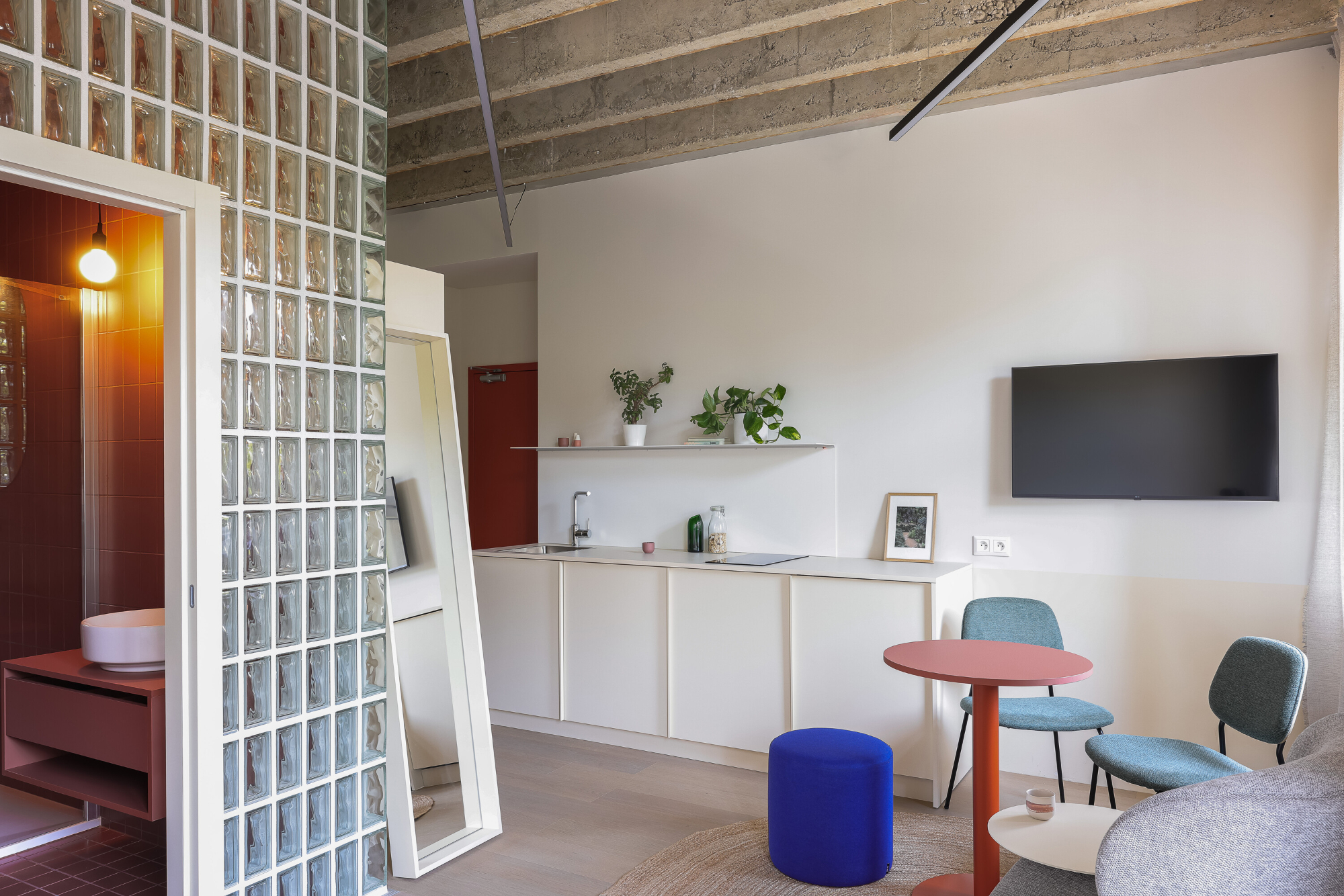
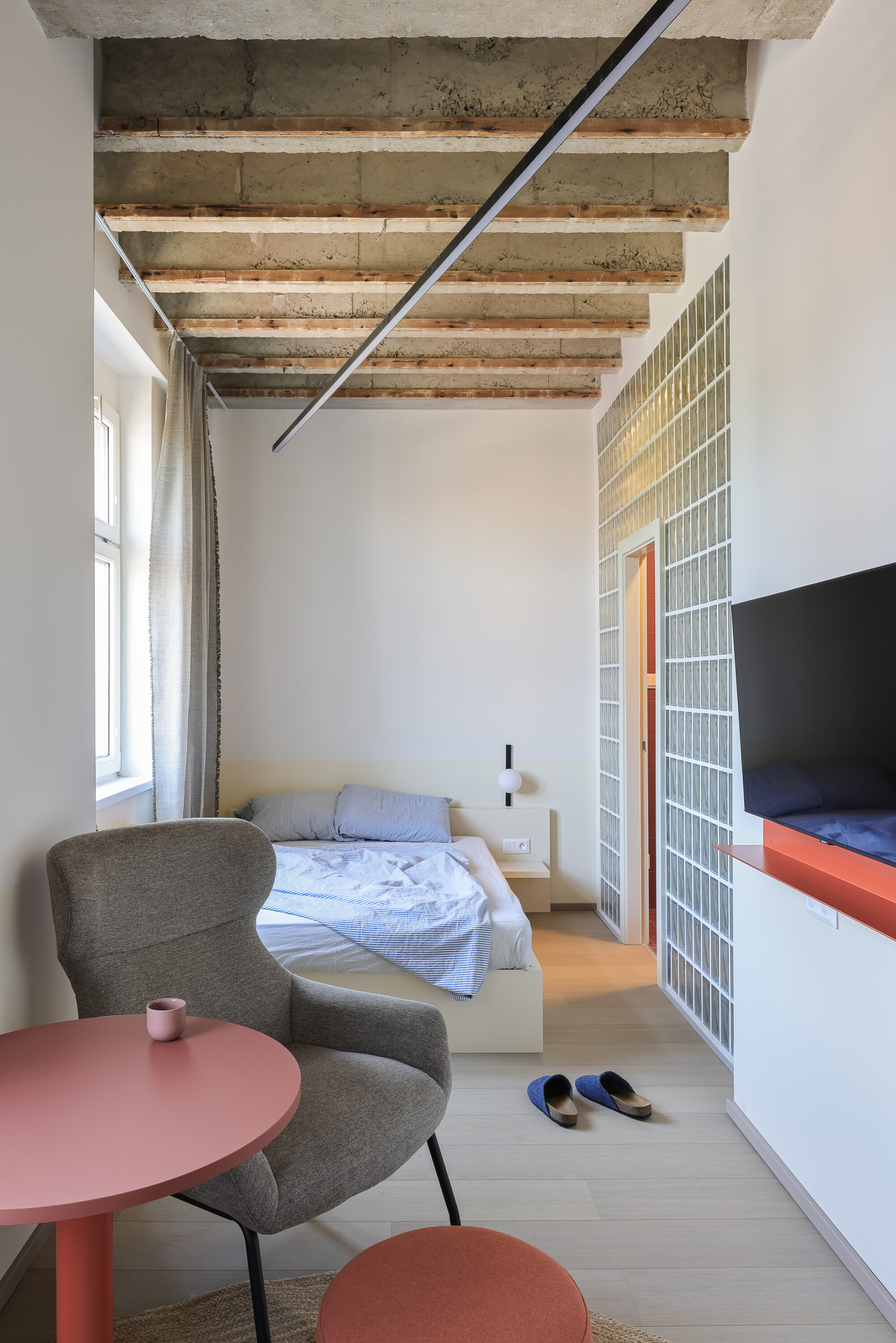
The studio preserved original elements of the Metropol building. Among them, the newly uncovered ribbed ceiling of exposed concrete and the original blue window frames. Light and neural hues of beige, gray and off-white provide the easiest way to personalize the interiors with splashes of color. Wood floors add warmth to the palette, while matte metal details lend the décor industrial accents. For the bathrooms, the architects chose glass blocks that provide privacy and filter the light.
Photographs© Lenka Némethová.