Search






Philippe Malouin’s new espresso maker for Alessi puts the one action you can’t avoid—screwing the two halves together—right on the outside, like a piece of hardware that wandered onto the breakfast table.
A moka pot begins with a small act of trust: you line up two metal threads, turn until they catch, and keep going until resistance tells you to stop. It’s half muscle memory, half superstition—too loose and you doubt the seal, too tight and you wonder what you’ve just done to the gasket. Philippe Malouin’s new coffee maker for Alessi doesn’t try to soften that moment. It enlarges it.
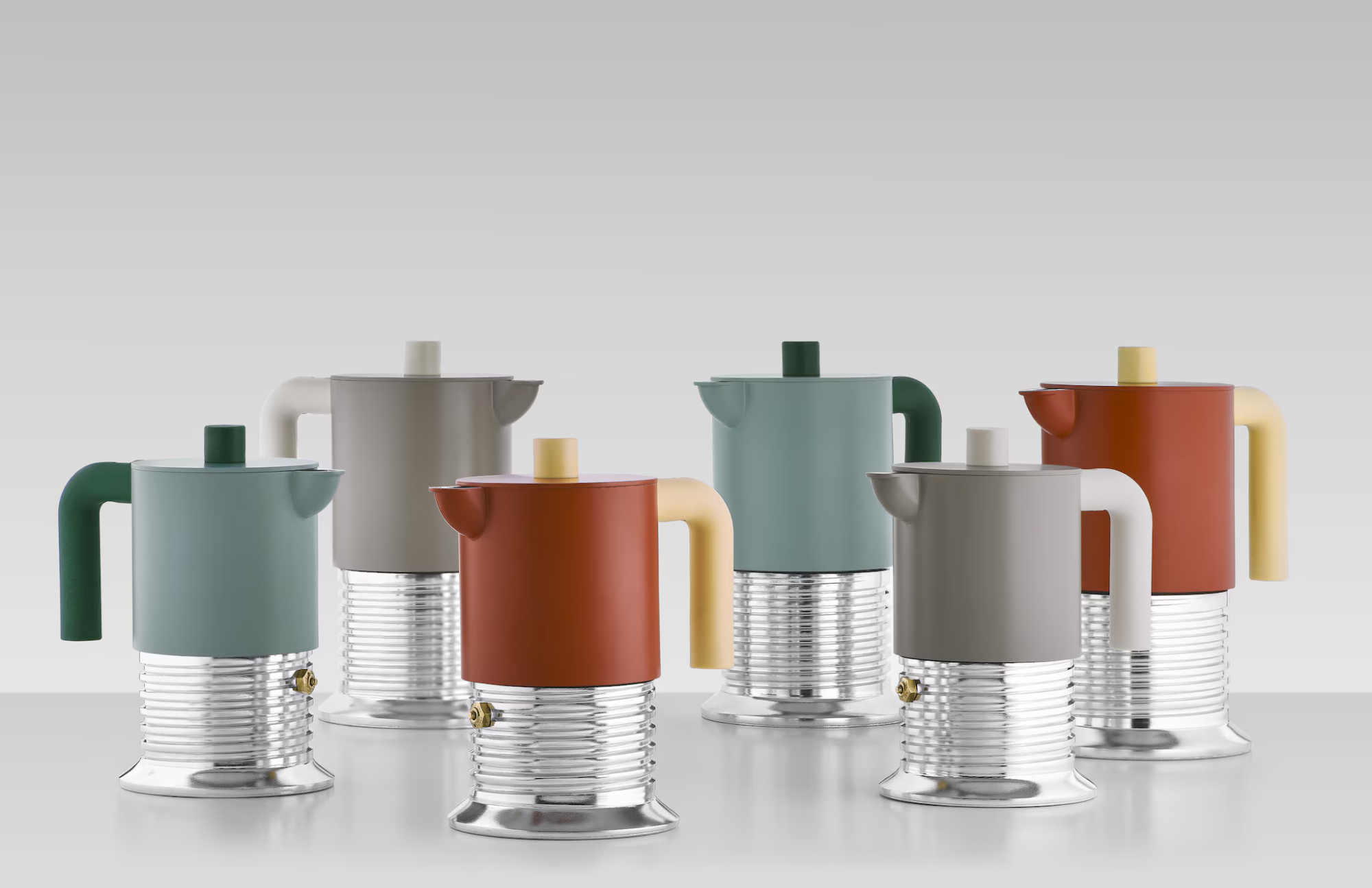
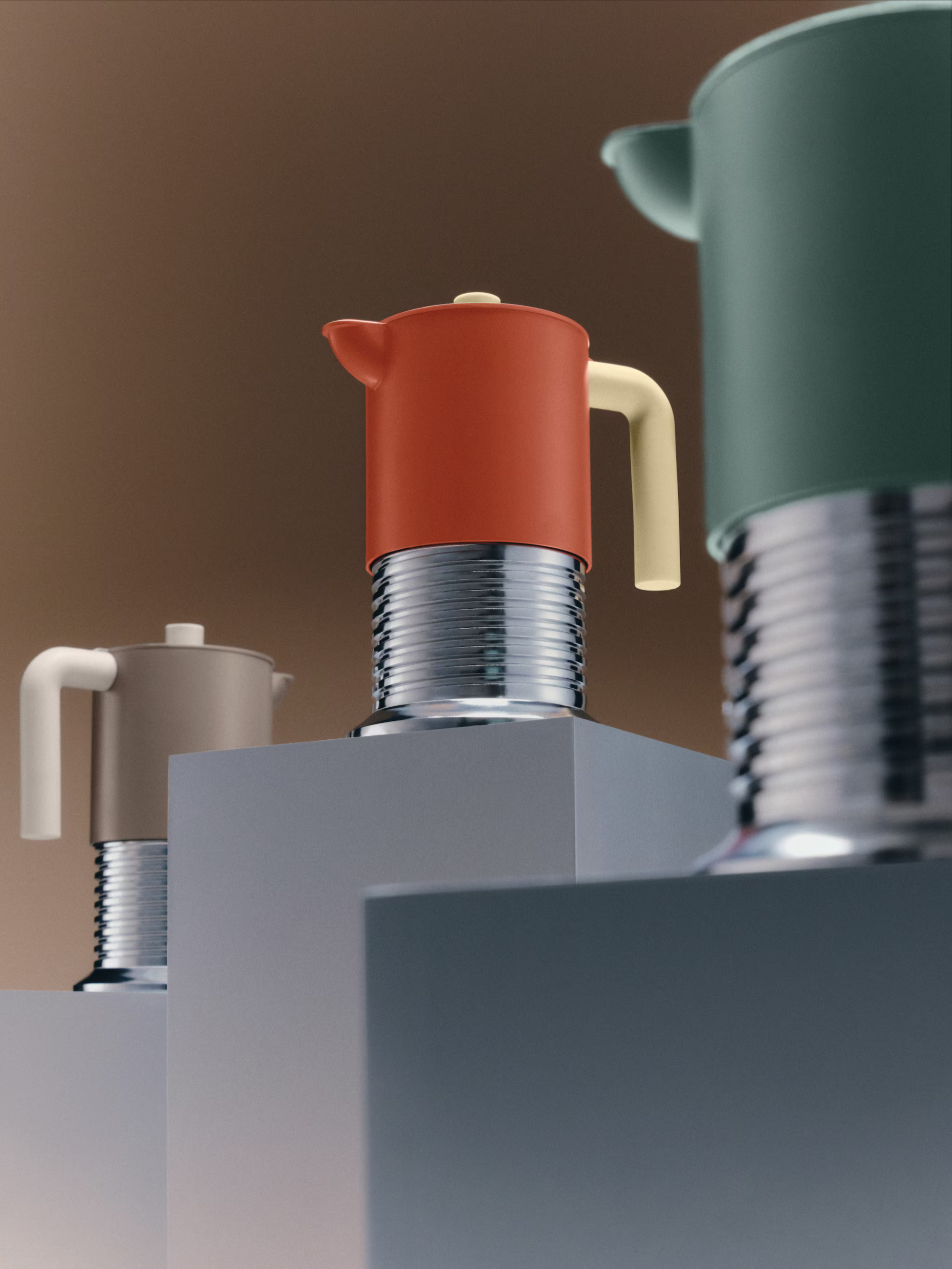
The design is called Vite—Italian for “screw”—and it looks exactly like its name. The lower chamber swells into a pronounced spiral thread, the kind you’d expect to find on a workshop fastener rather than on an object that lives next to a jar of sugar. The body above it turns into a clean cylinder with a sharp little spout; the handle and lid knob arrive in solid, confident colors—forest green, butter yellow, terracotta, slate—like tool grips pulled from a factory floor and made polite enough for the kitchen.

Alessi has been training people to accept this sort of provocation for decades. The company—founded in Omegna, in northern Italy, and still tied to metalwork as both craft and industry—has long treated the kitchen as a place where design can be pragmatic and theatrical in the same breath. Since the introduction of Richard Sapper’s 9090 espresso maker around 1980, Alessi has repeatedly handed the moka pot to designers who understand that an everyday tool can also be a public object, something that sits out and gets judged. Malouin—an Anglo-Canadian designer, trained at Design Academy Eindhoven, with furniture and lighting collaborations that tend to land somewhere between blunt and strangely elegant—fits neatly into that lineage.
What’s different here is how literally Malouin takes the moka pot’s mechanics. Plenty of redesigned coffee makers chase nostalgia, or Italian domestic mythology, or the sculptural appeal of the octagon. Vite heads in the opposite direction: it borrows the visual language of industrial parts because the moka pot already behaves like one. Malouin has described a research process rooted in what he calls “scrapyard works,” starting with discarded metal pieces, recombining them, and letting their logic drive the form. In Vite, that logic ends up right where your hands go: the thread isn’t a hidden interface between two volumes; it’s the main event.
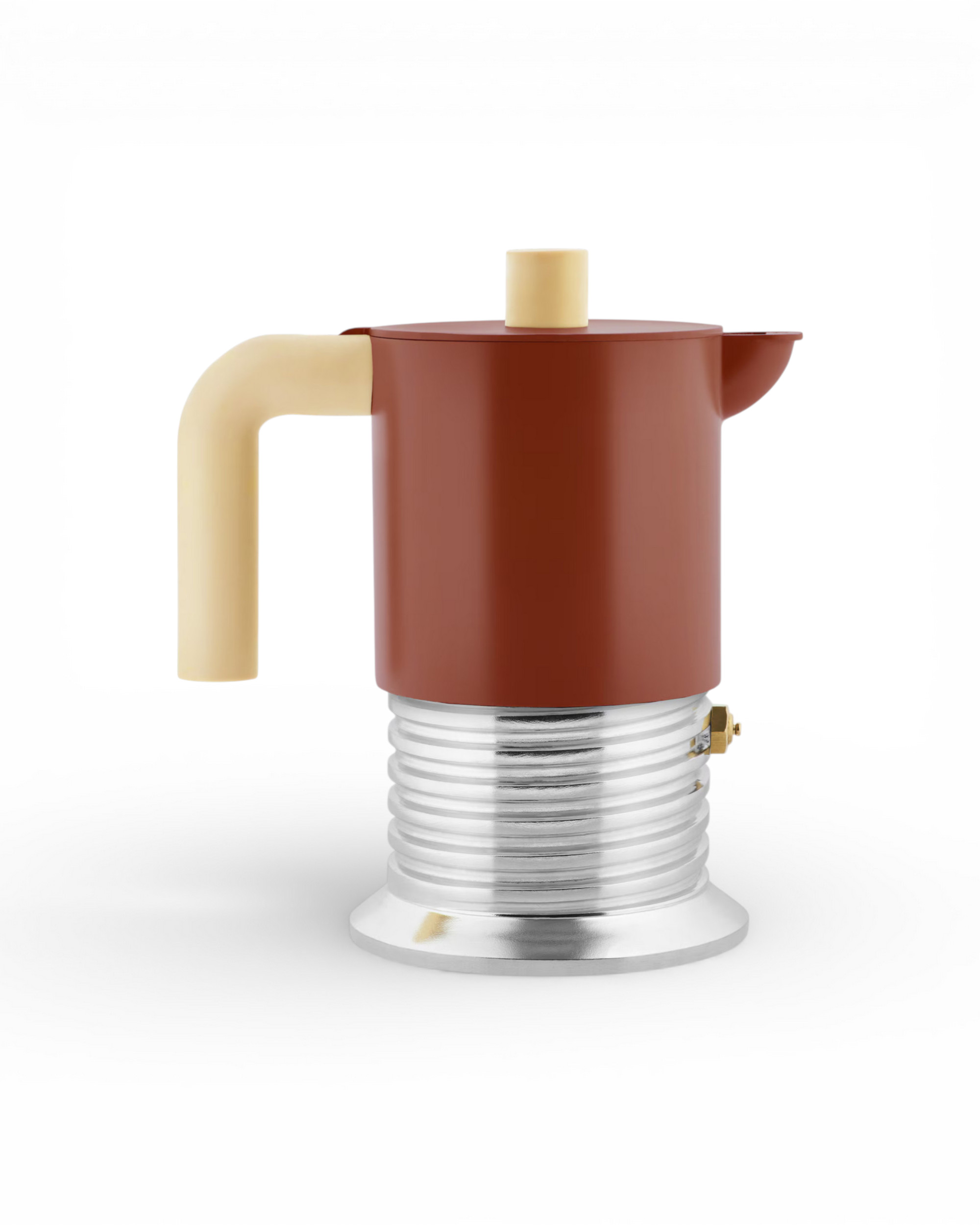
The object itself is aluminum, with the base shaped into a tapered pedestal so it can sit on gas flames and induction cooktops. That pedestal is more than a technical fix. It changes the stance of the pot, giving it the planted, slightly proud posture of equipment rather than cookware. In the product images, the metal thread catches light in tight bands; the painted upper section stays matte and calm; a small brass detail at the side interrupts the silver like a reminder that pressure and heat are still part of the deal. (This is not a countertop sculpture pretending to be a moka pot. It’s still a moka pot.)
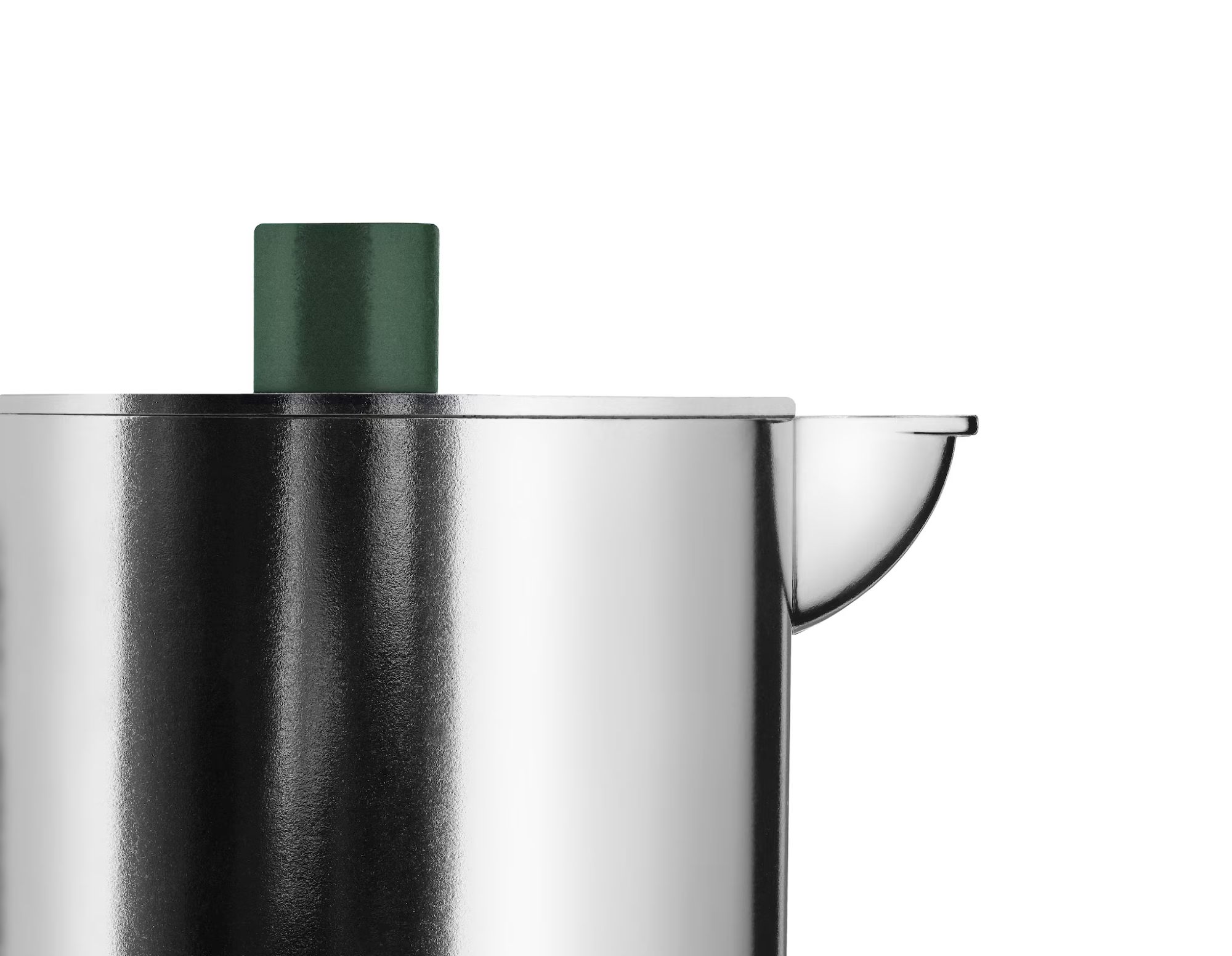
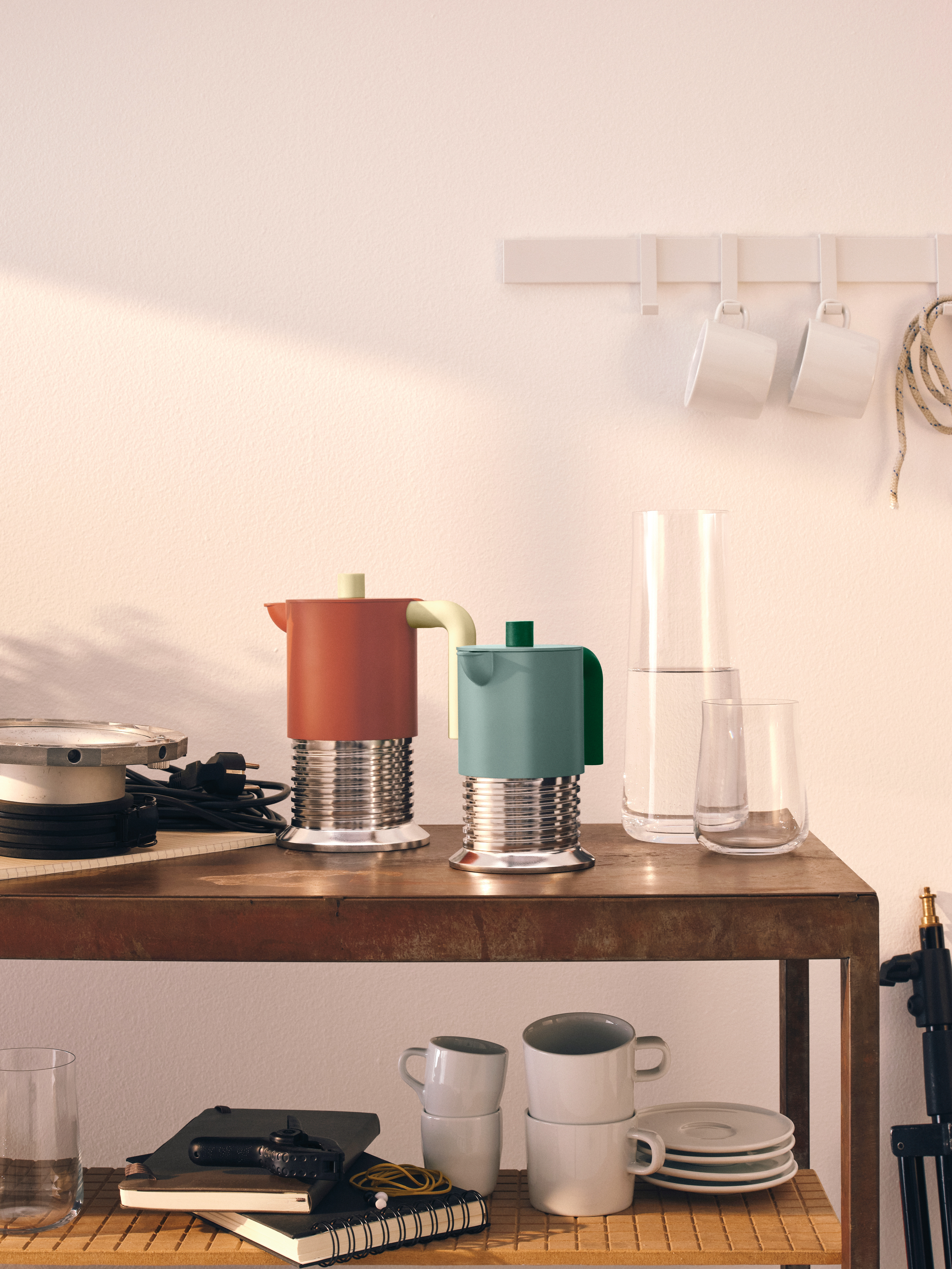
Alessi says the color palette was developed by sampling hues from inside its own workshop—tones pulled from machinery and the factory environment—an origin story that makes sense once you see the pot as a domesticated piece of hardware. In the green-handled version, especially, there’s something disarmingly direct about the contrast: the handle looks like it belongs on a tool you’d hang on a pegboard, while the polished metal body behaves like tableware, reflecting whatever’s around it—your kitchen tile, your morning light, the fact that you’re still half-awake.