Search






Bindloss Dawes reworks a centuries‑old hamlet near Toulouse into a yoga retreat, opening a 300‑year‑old barn to light and view.
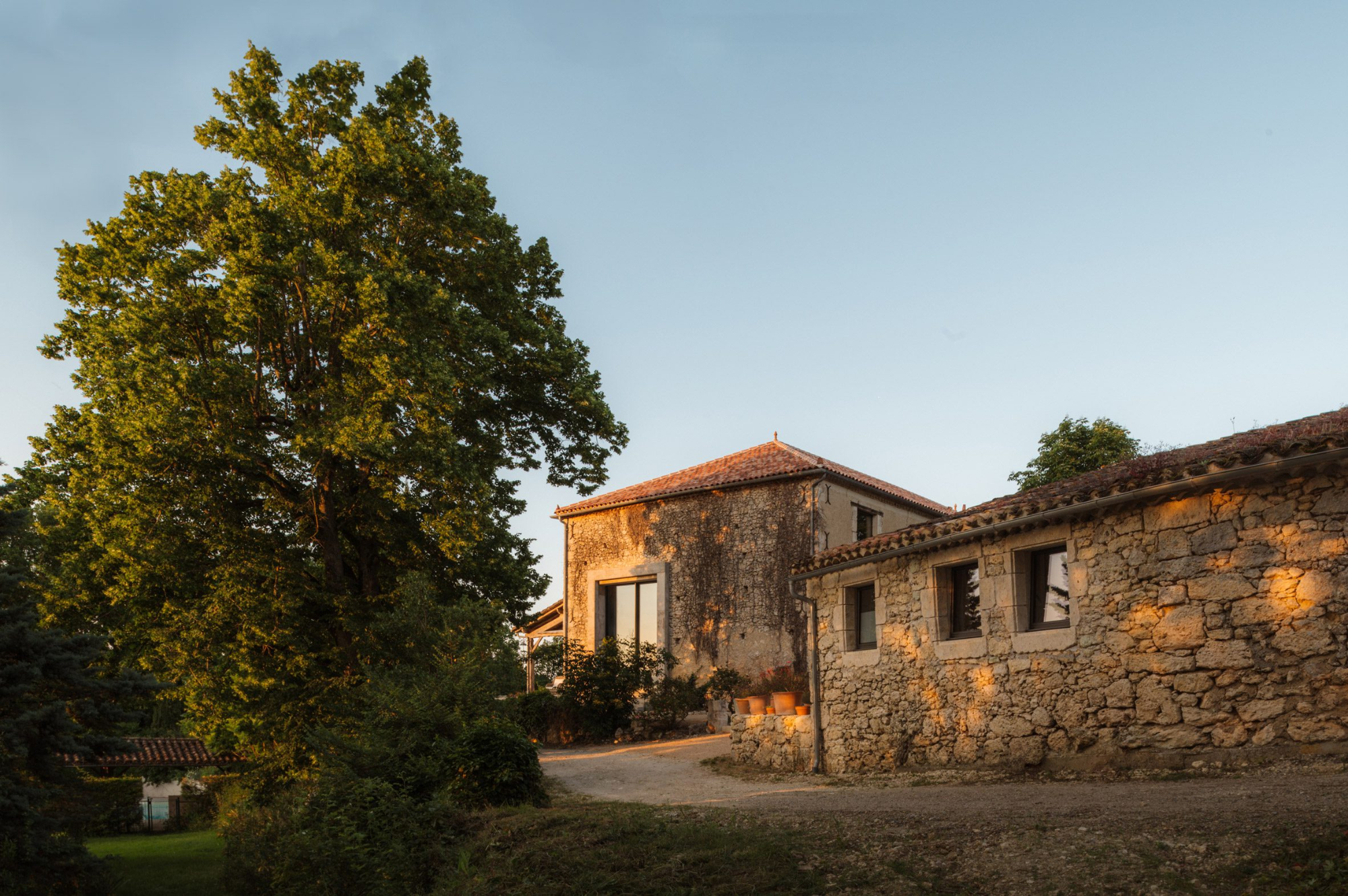
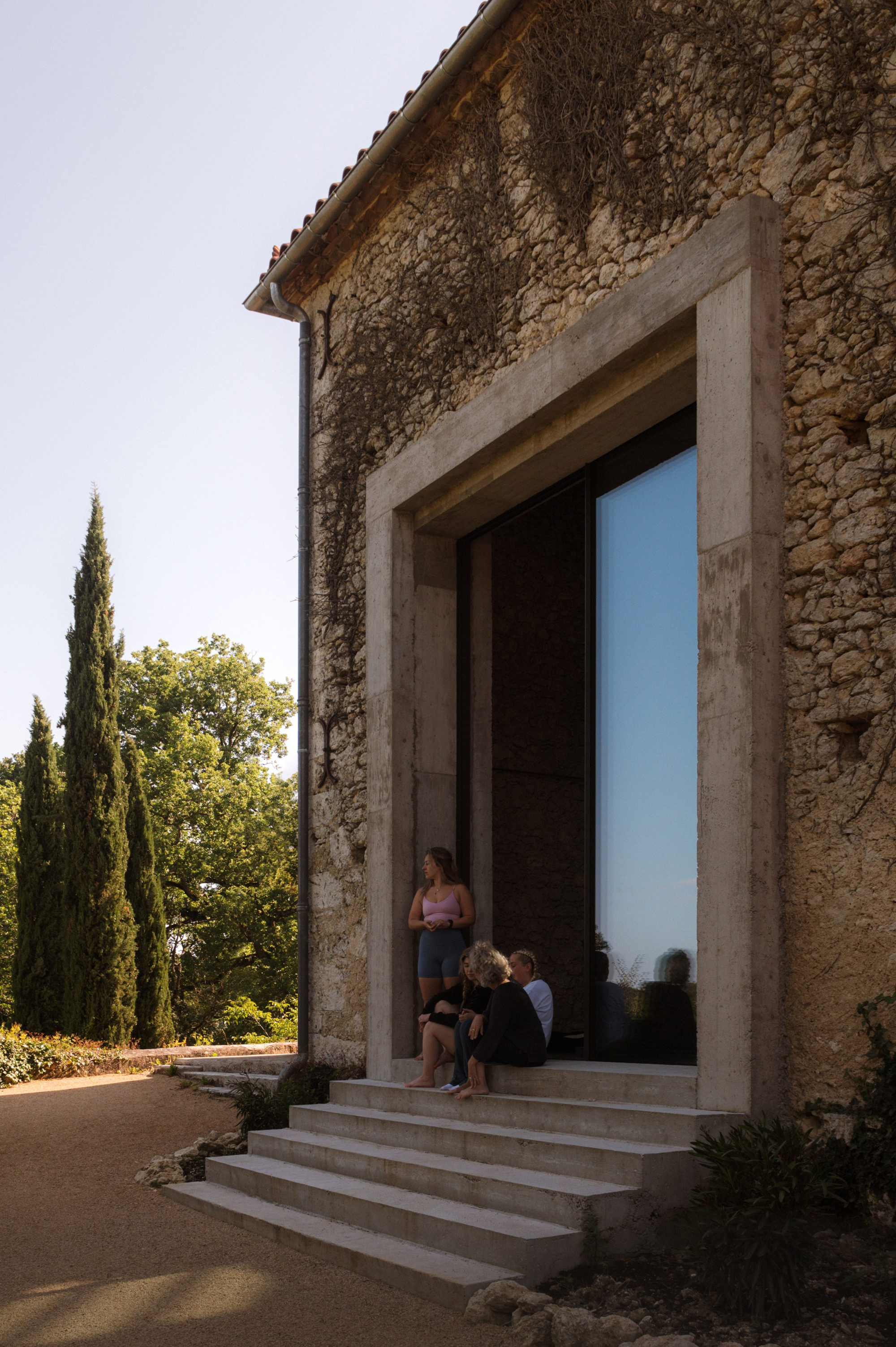
Late sun drops through a four‑meter‑high west opening at the end of a stone barn, laying a wide band of light across the floor. The place is called Amassa—Occitan for “to gather”—and it sits among meadows and oaks between Toulouse and Bordeaux, France. Five modest buildings cluster here; the smaller ones now hold bedrooms and shared rooms, while the barn at the center becomes the main studio. The intent is straightforward: preserve the character that makes the site feel grounded and adapt it for daily use—practice, meals, quiet. The name, the setting, and the plan point in the same direction: bring people together and let the landscape do some of the work.
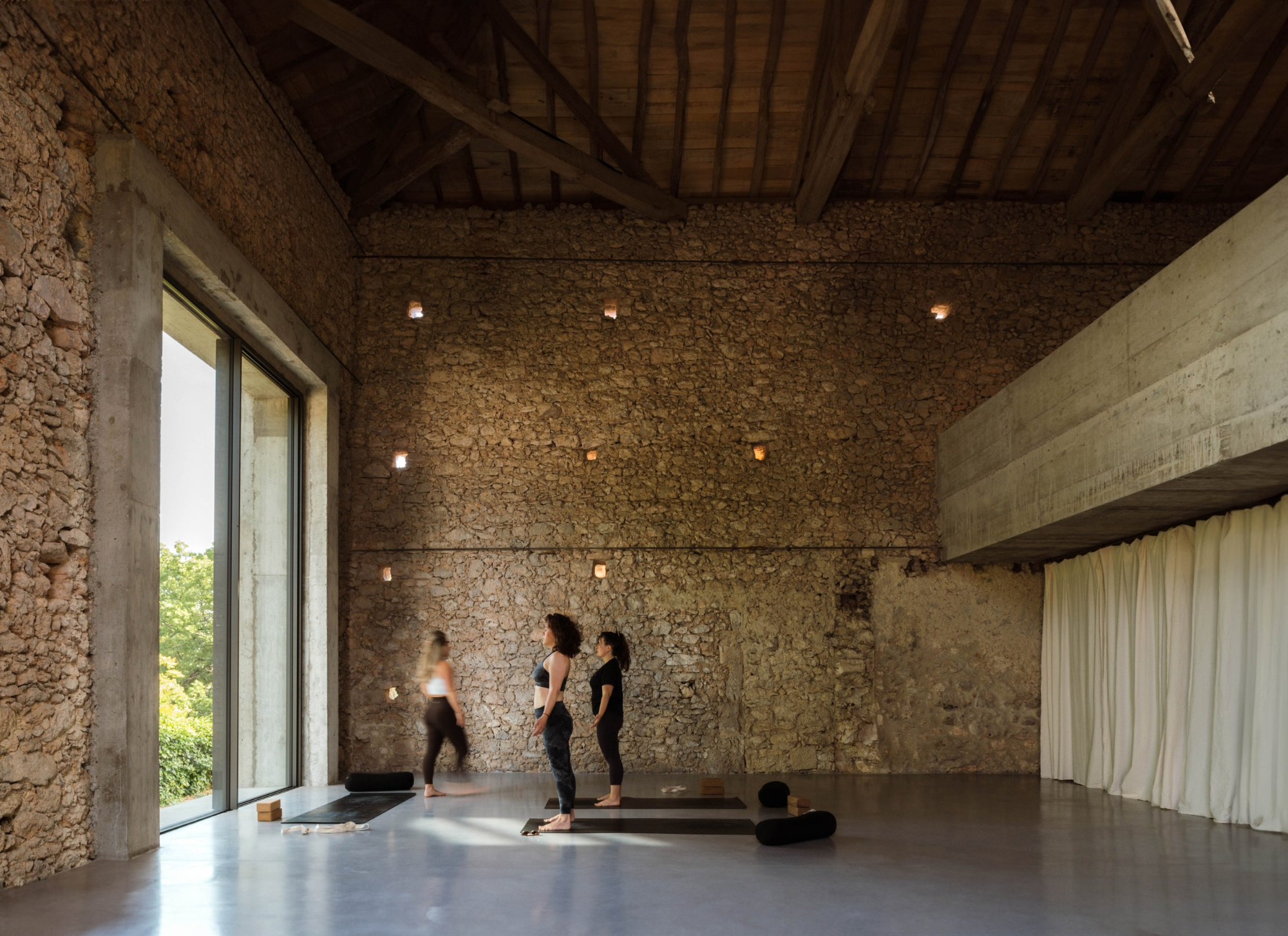
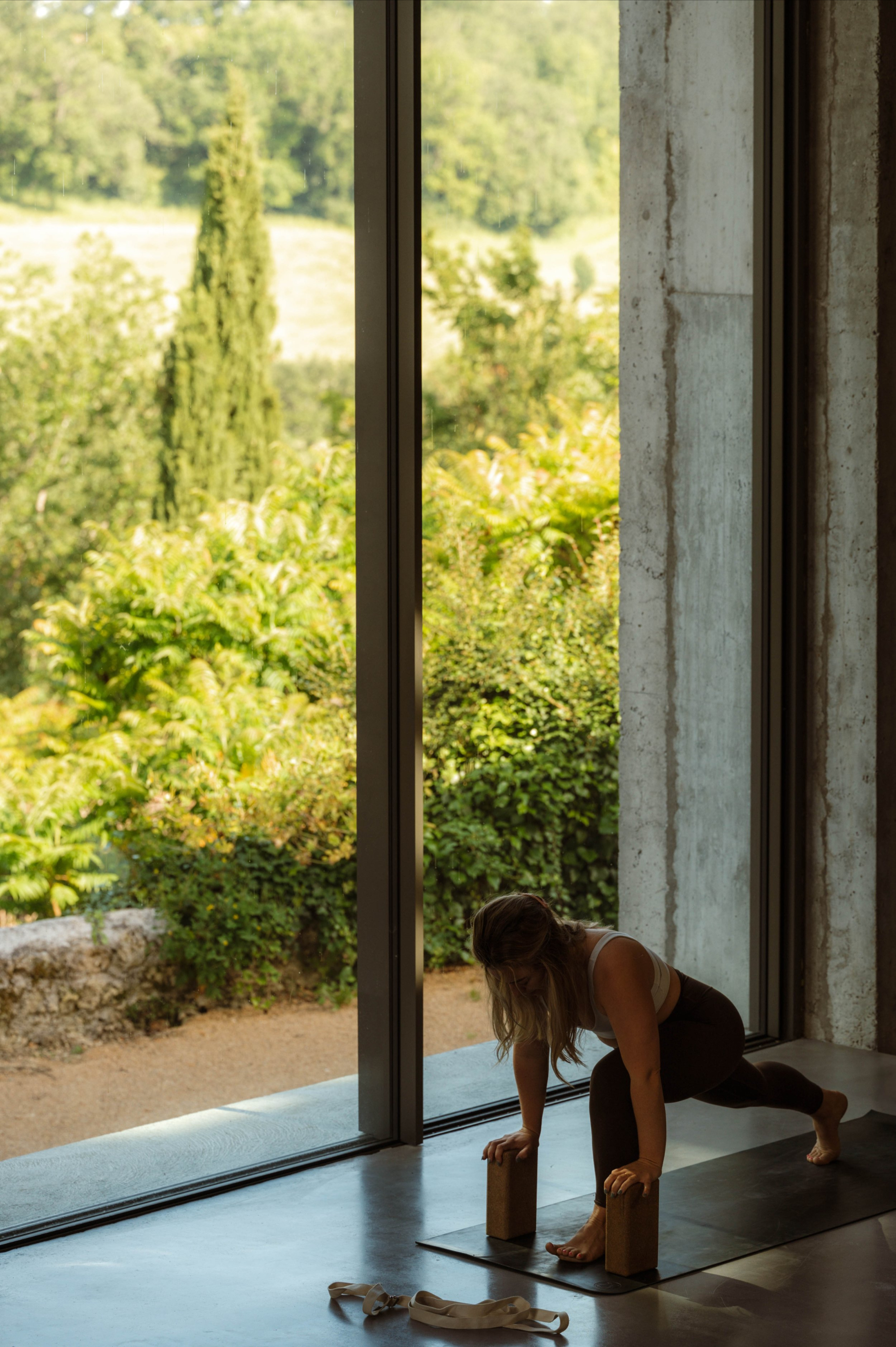
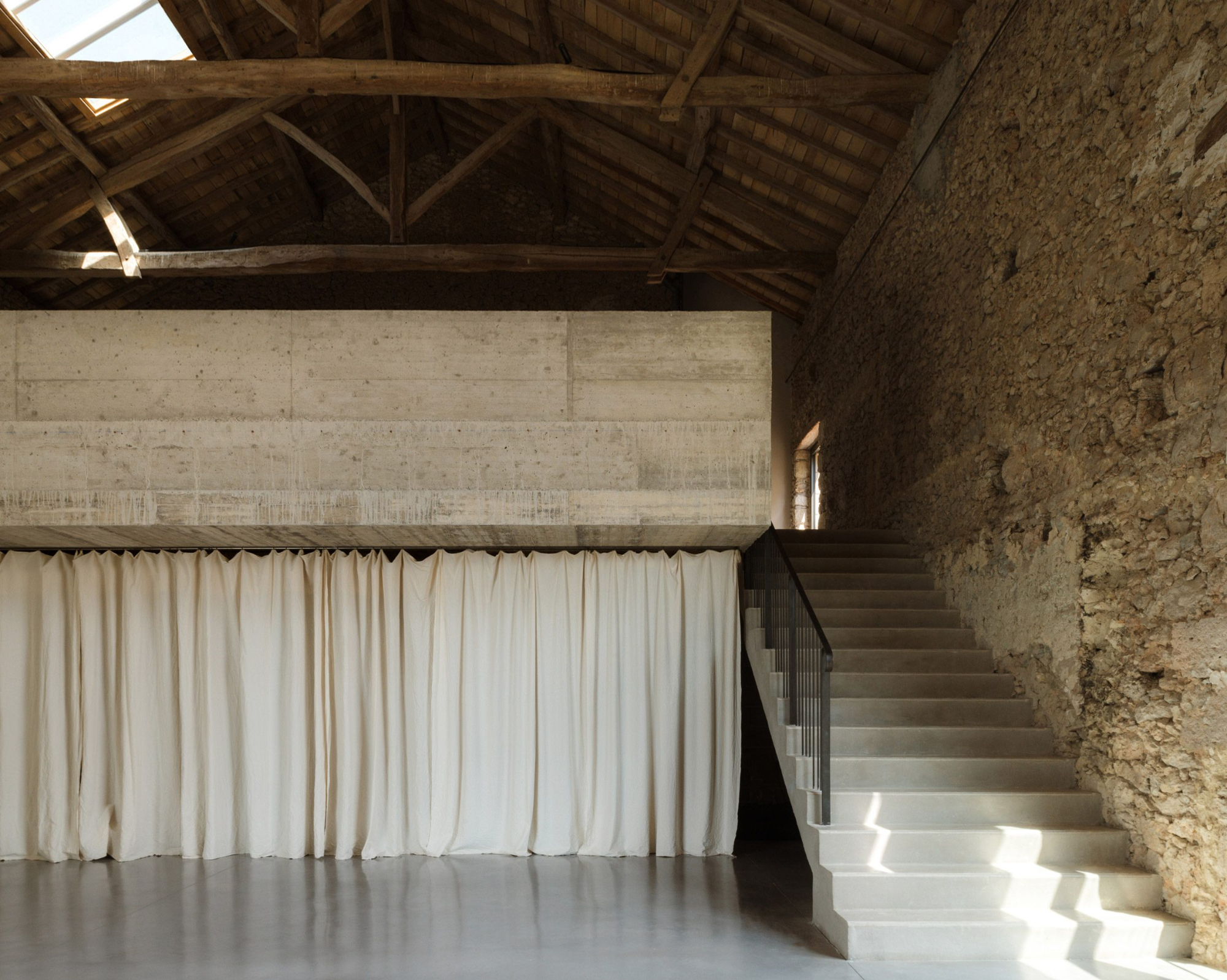
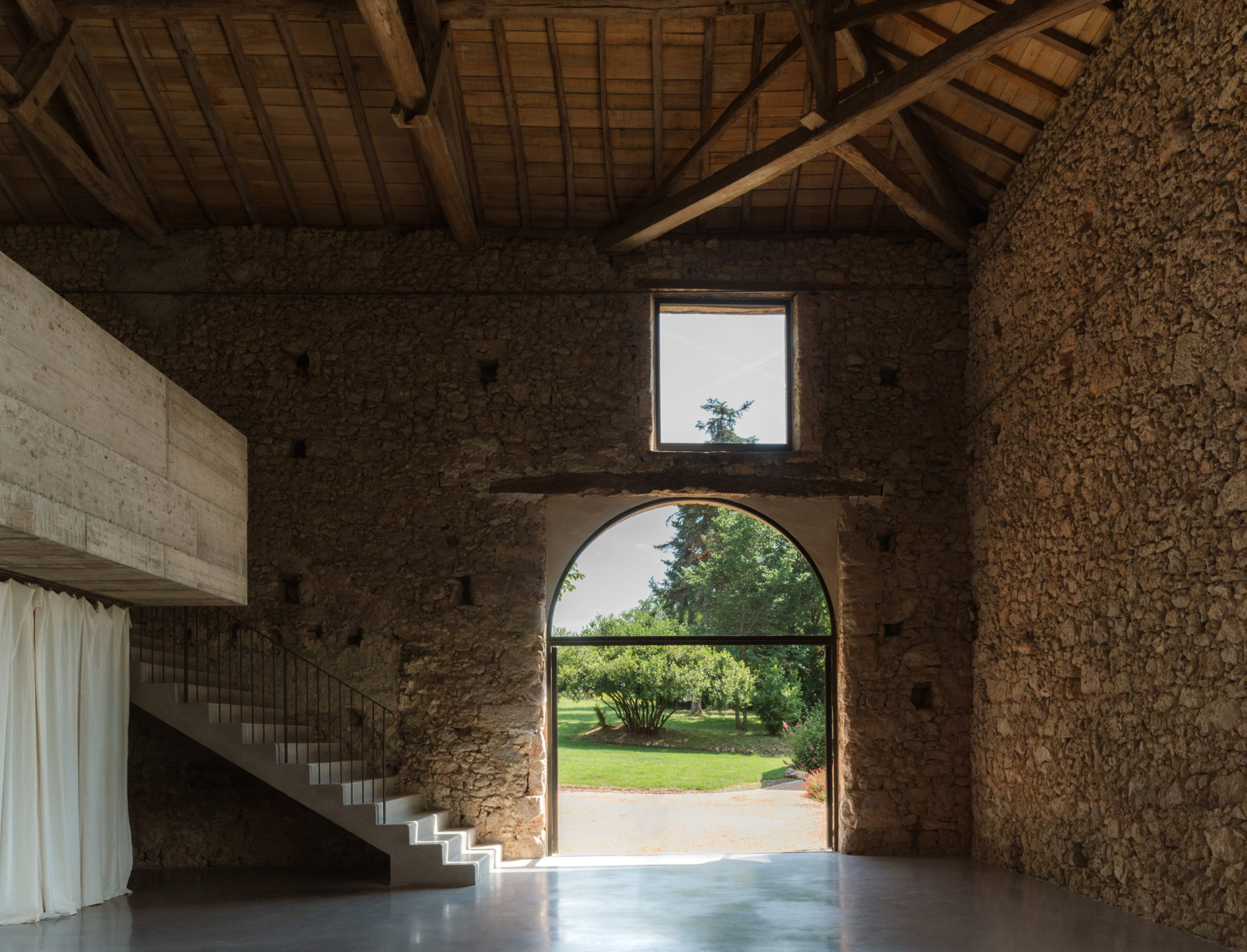
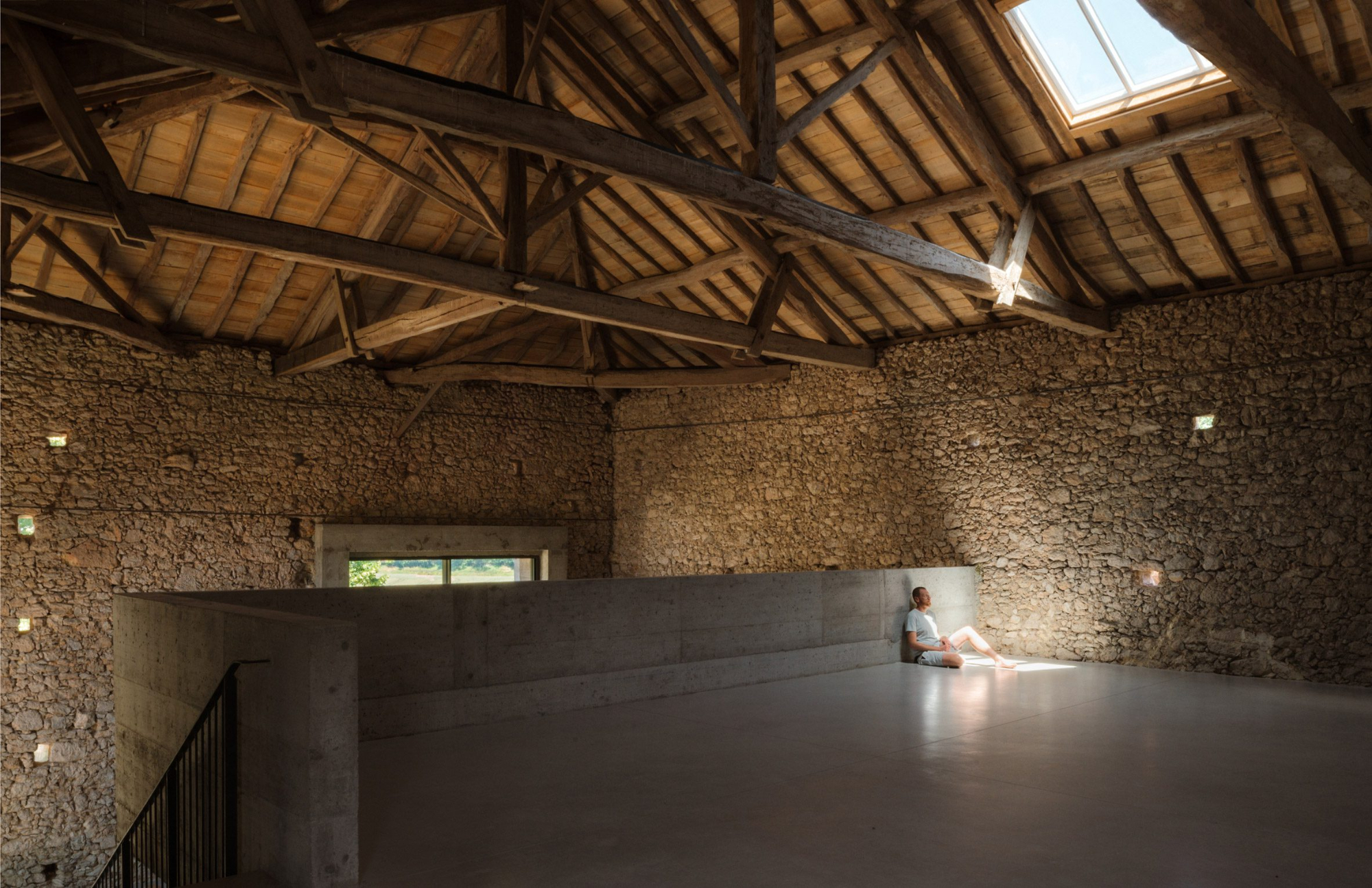
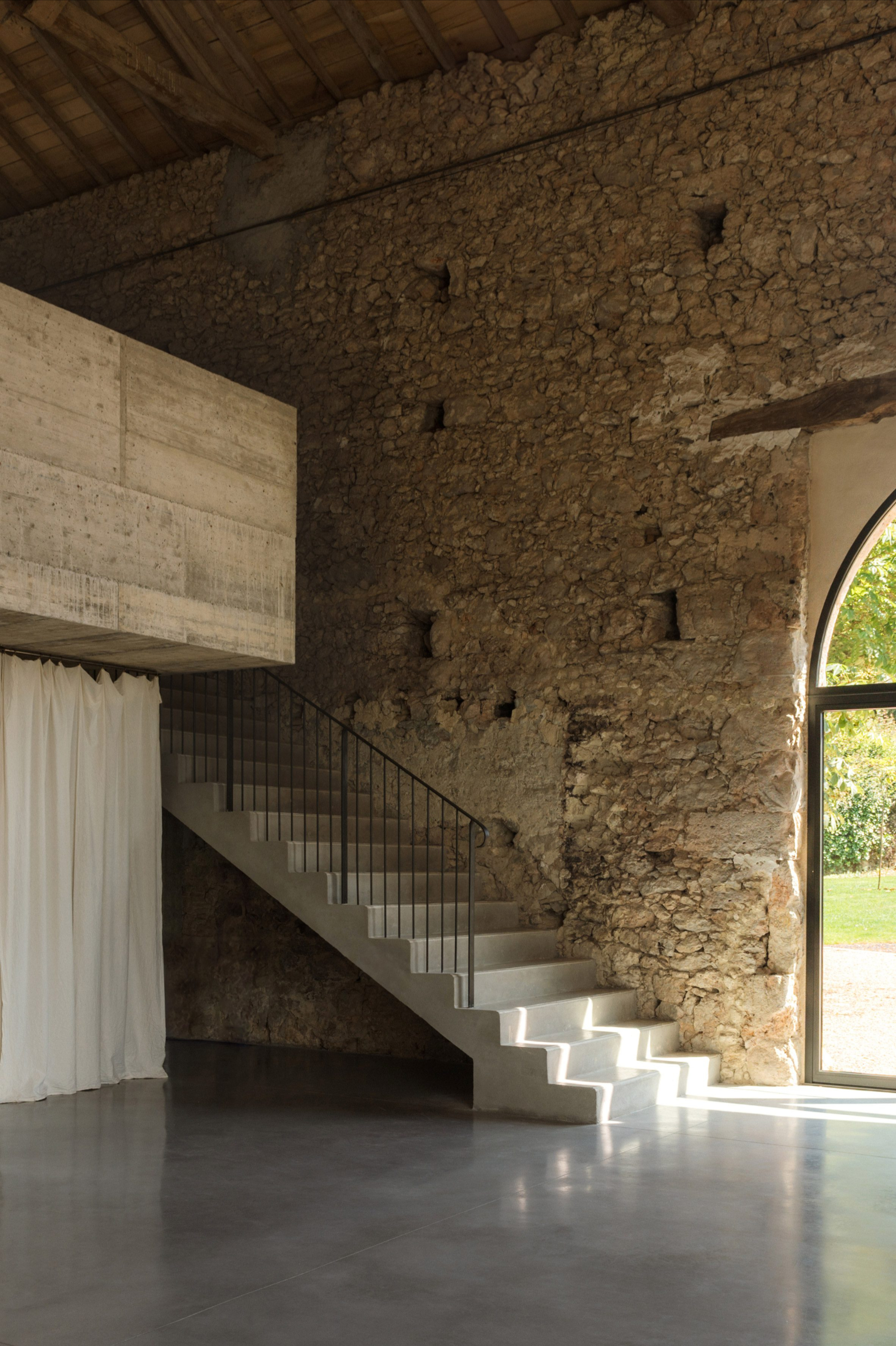
The barn asked for a stronger move. Bindloss Dawes stabilized the old shell with poured‑in‑place concrete, casting a mezzanine that reads like a thick, structural band and cutting that tall west opening, finished with a full‑height sliding door. To form it, concrete was poured inside and out; once cured, the stone was removed from within, leaving a deep reveal that frames sky and field. The mezzanine doubles as a second studio for workshops; from its edge, you look back into the volume and out to the horizon. Concrete’s smooth surfaces meet the barn’s rough stone in tight contact—one material flowing around the other’s irregularities—so the new work supports the old and improves comfort: more daylight, better acoustics, steadier temperature.
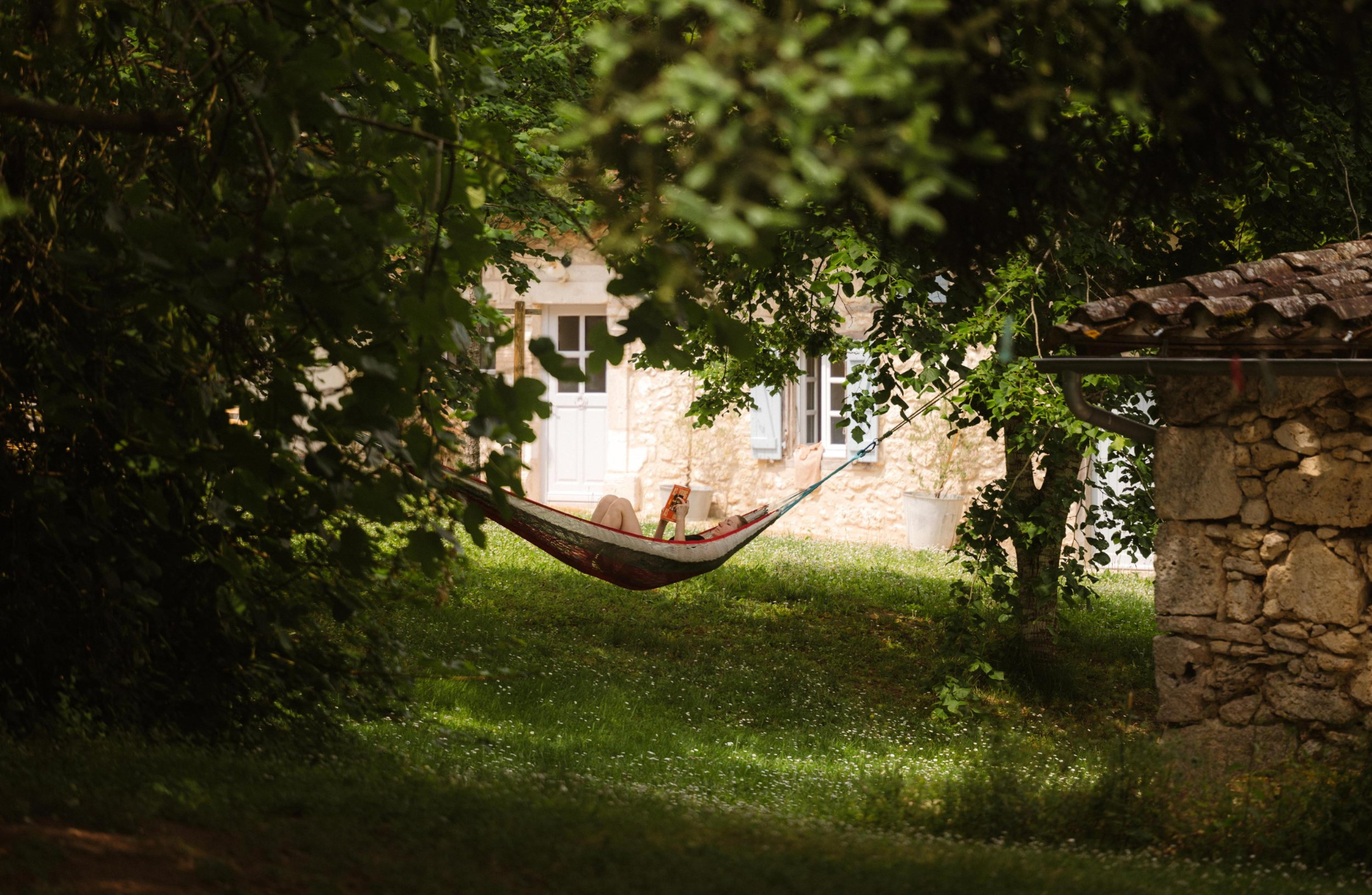
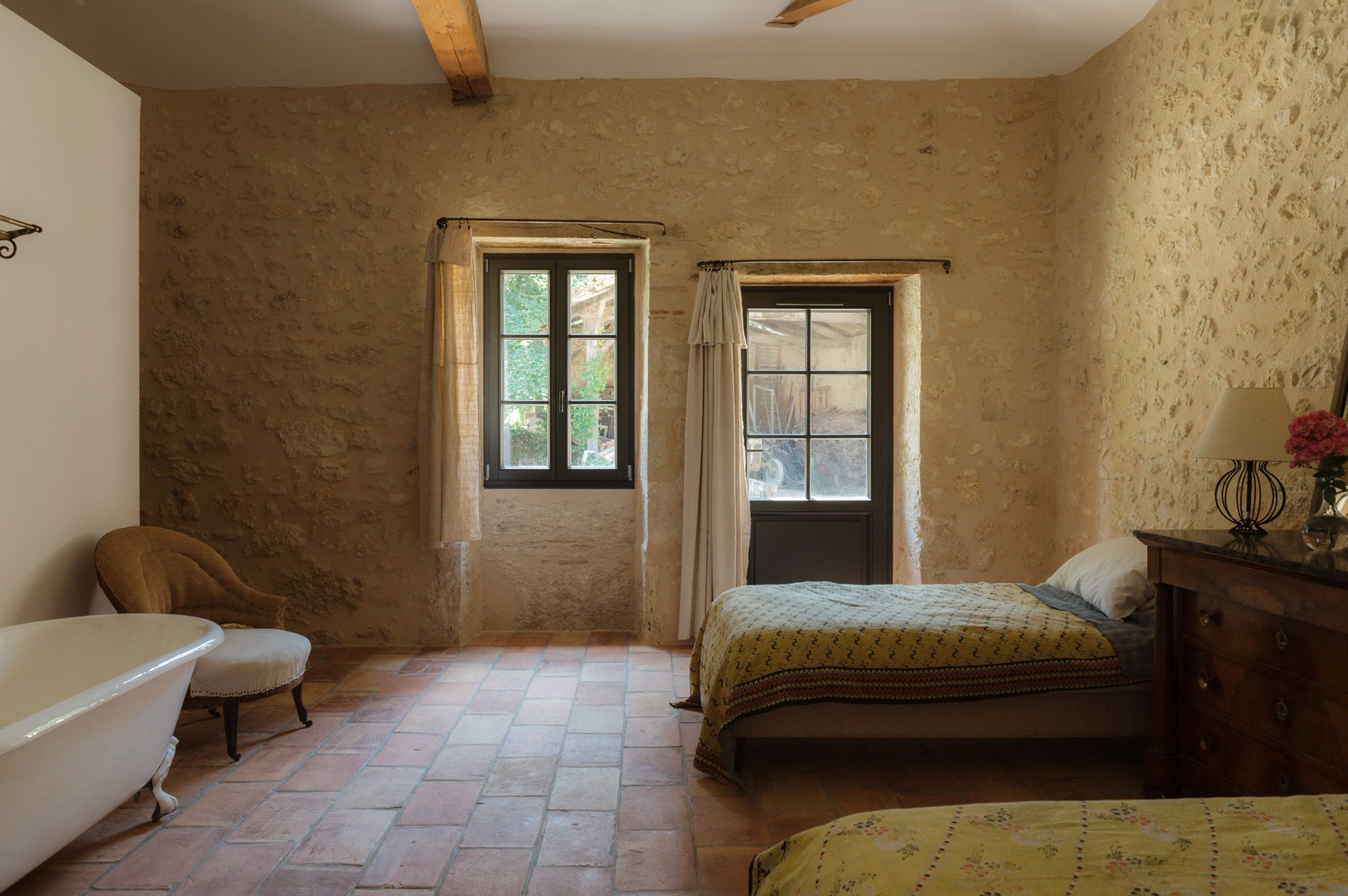
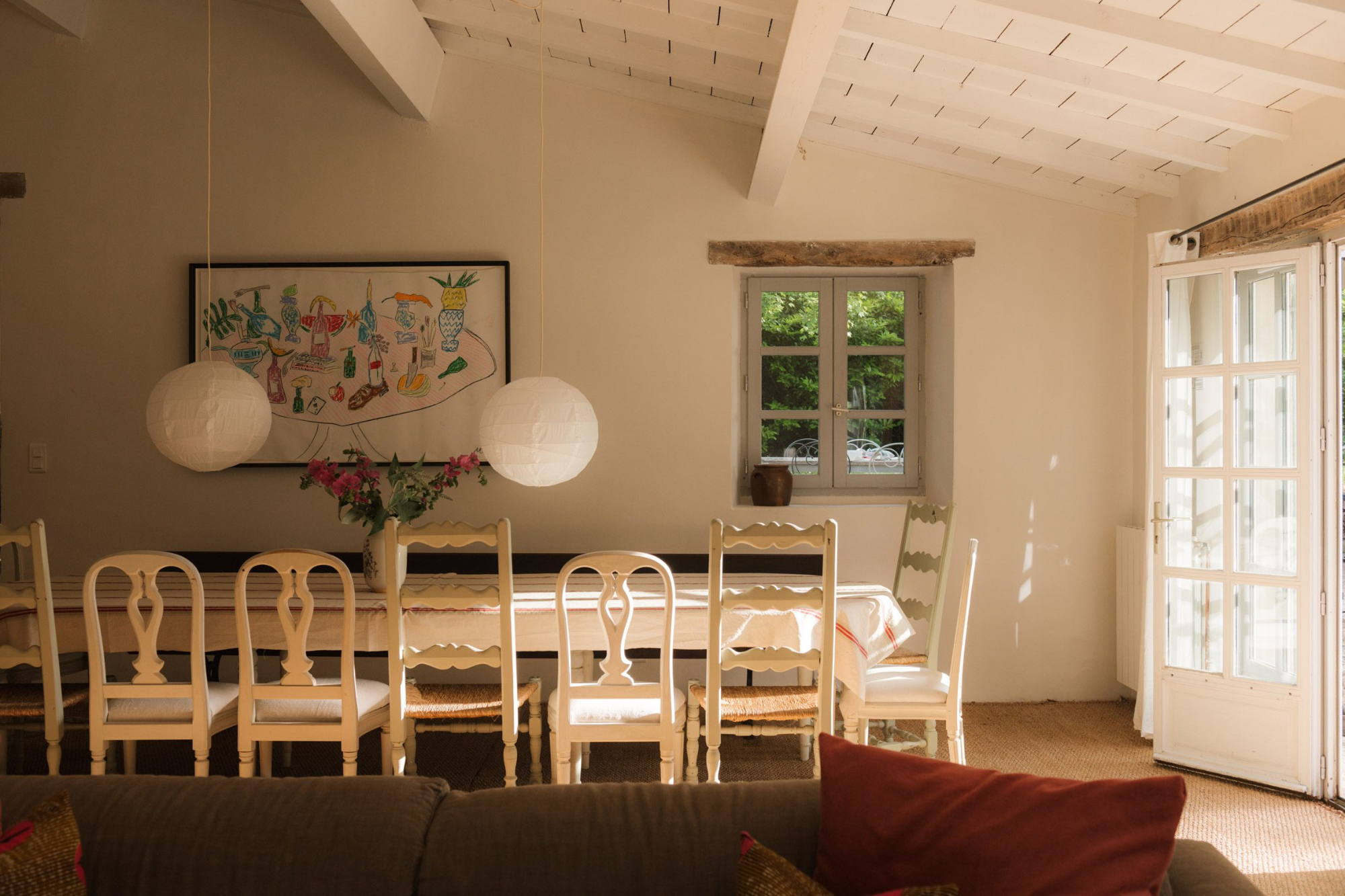
Across the hamlet, the architects kept the touch light: repairs in local stone, timber rafters left visible, interiors pared back to limewash, wood, and a few built‑ins. Outside, a pool, outdoor tables, and hammocks stitch the buildings together without turning them into one thing; you move by short walks—stone underfoot, shade, then open sun. Morning arrives as a pale column through the big opening; in late afternoon, the mezzanine’s concrete edge throws a cool strip of shade across the studio floor. It’s an environment tuned to slow people down: doors slide, cross‑breezes pass through, and rooms reset quickly after practice. The result feels calm because the decisions are clear—use concrete where it can carry the structure and open the barn to the west so the daily rhythm aligns with the landscape.