Search






A contemporary chapel-like retreat stitched into a South-Bohemian château garden.
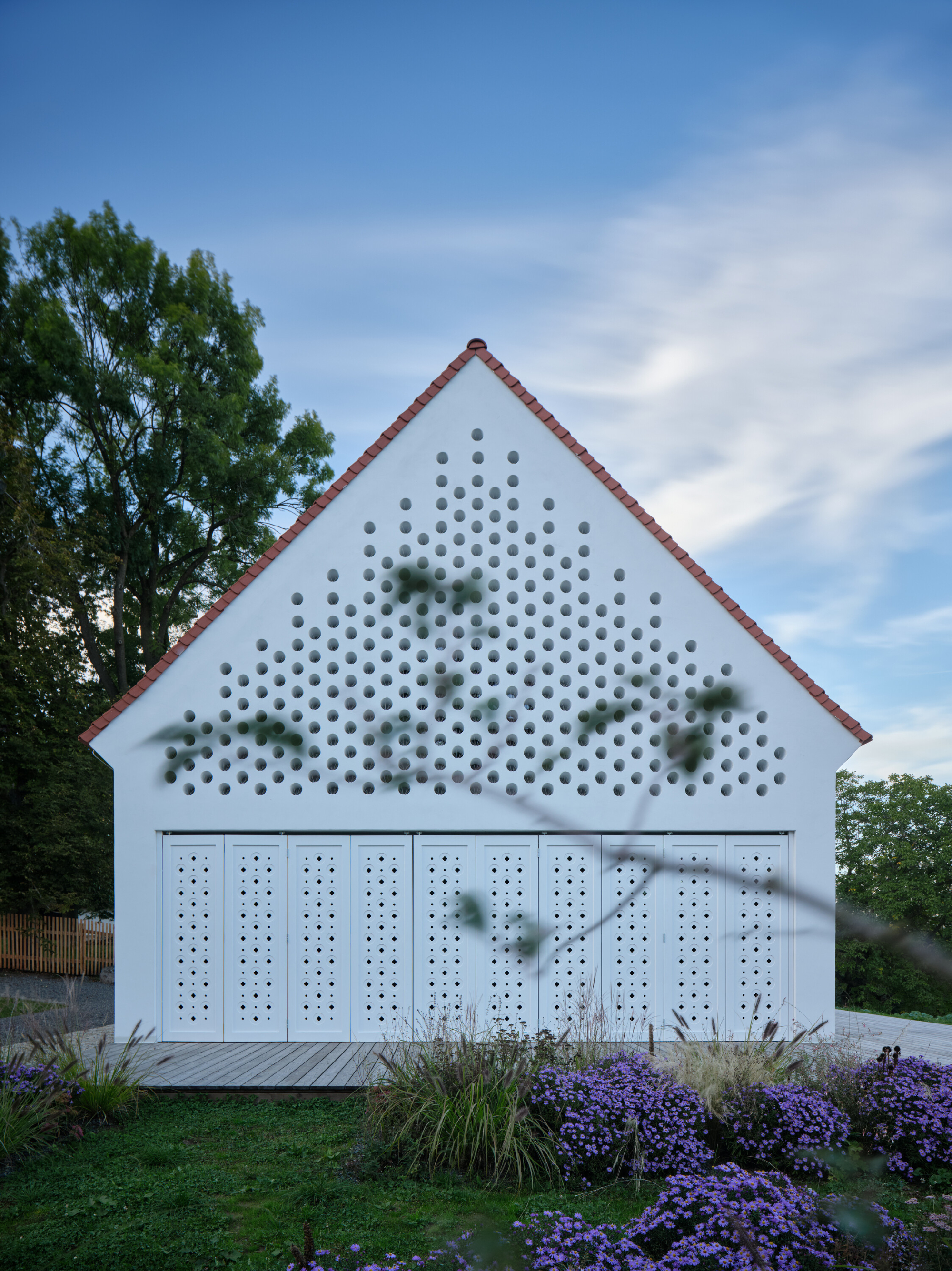
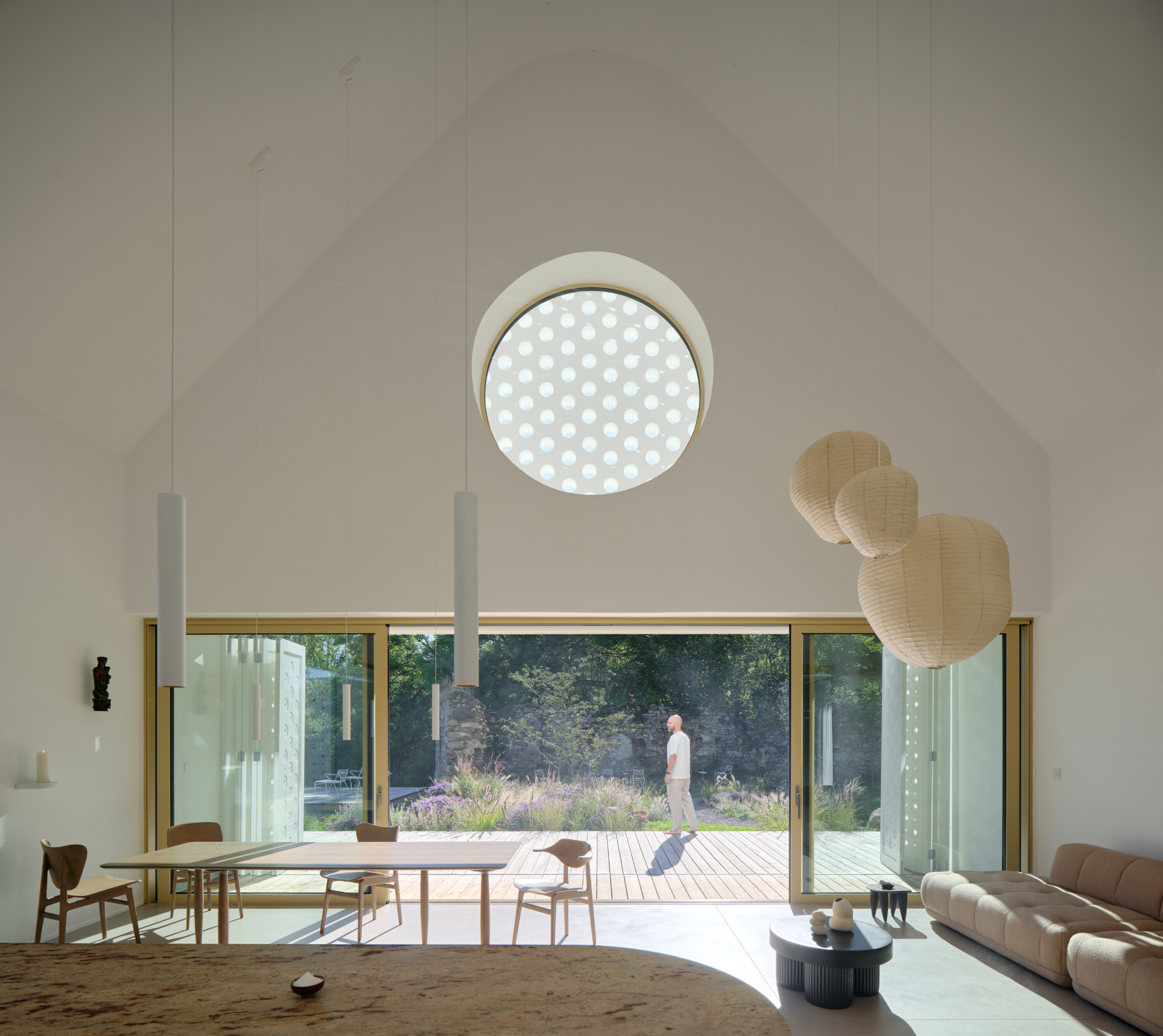
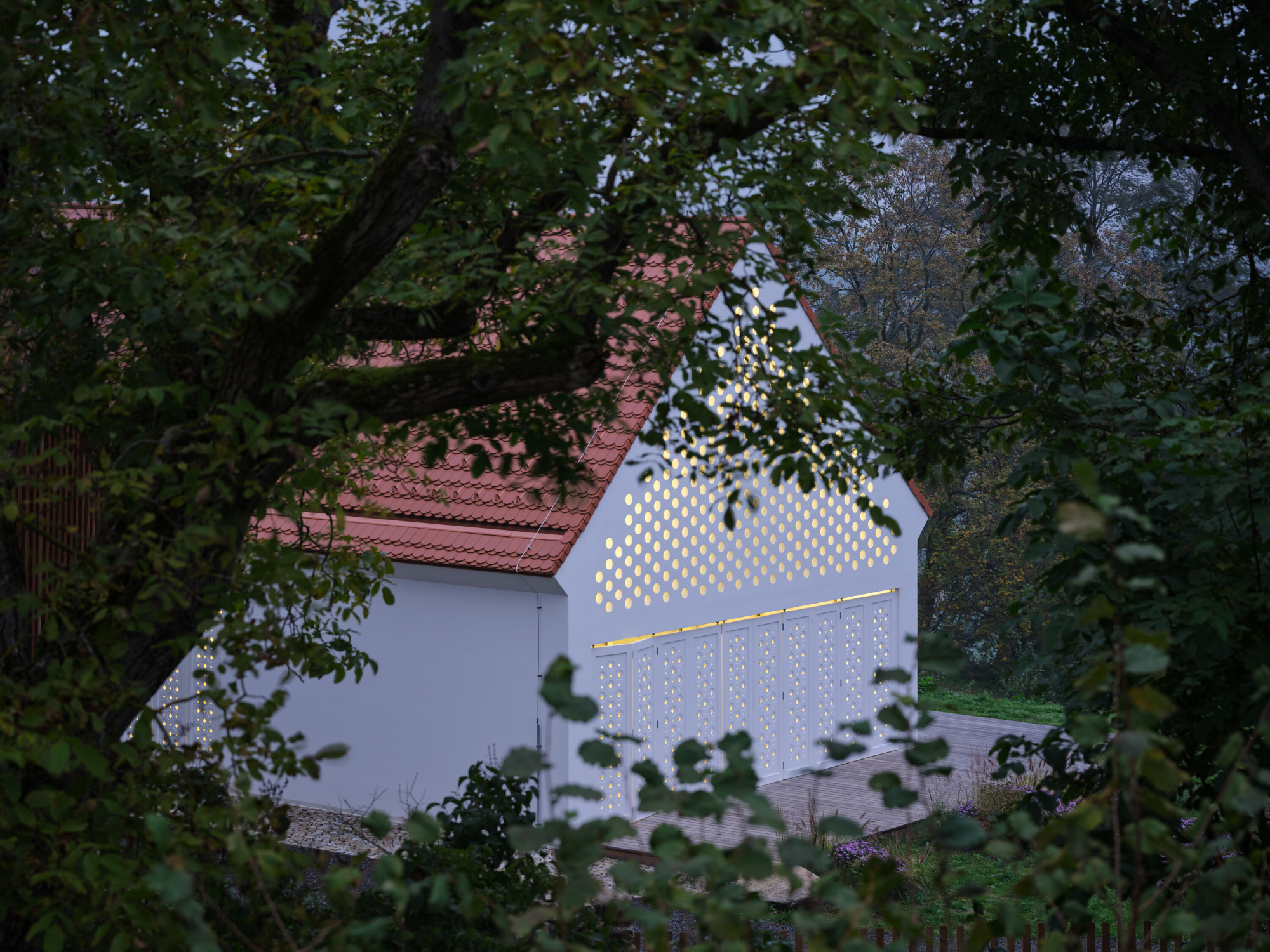
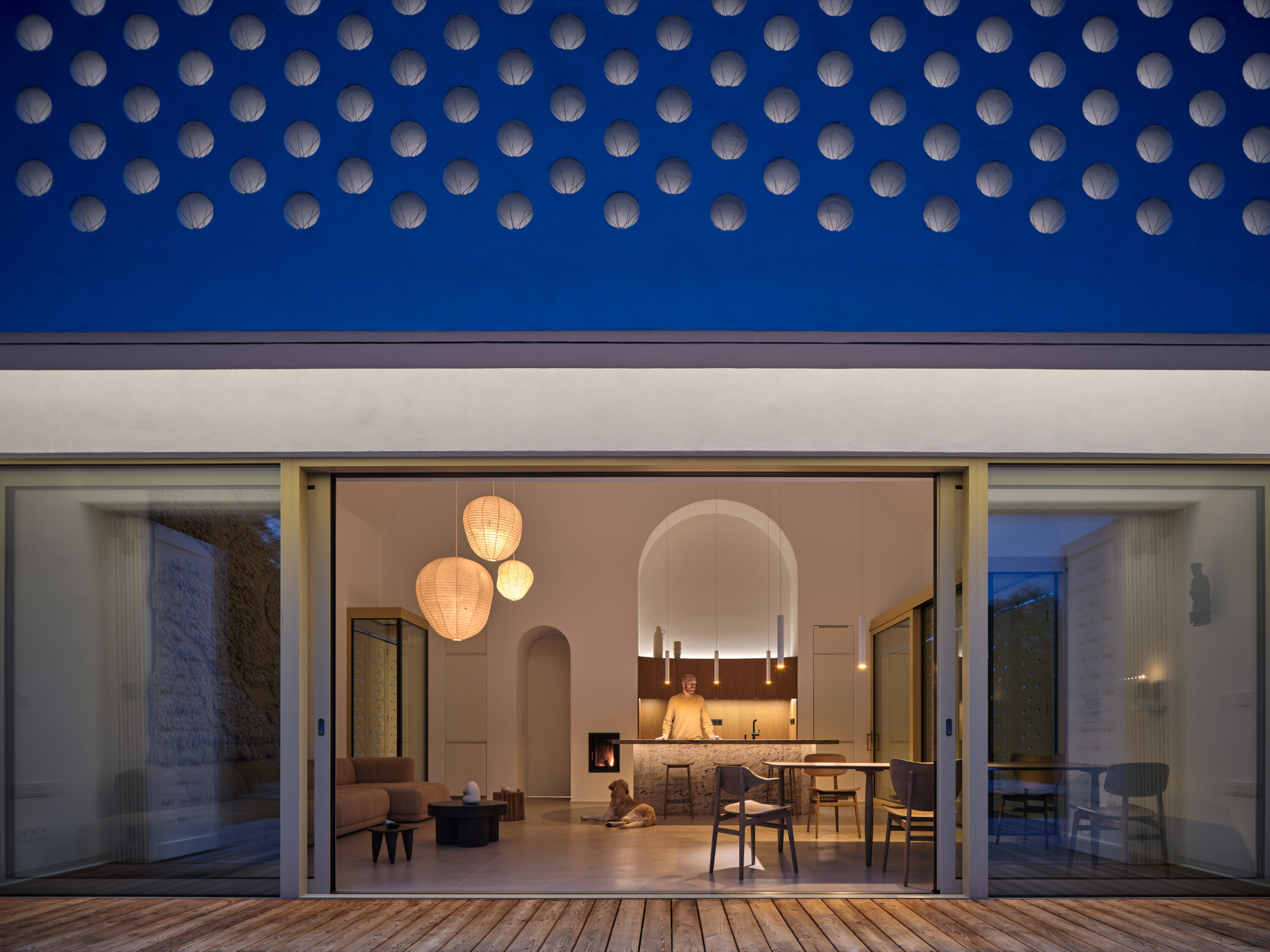
A low white volume now floats where a Baroque barn once stood, tucked behind the château wall of Kamenná Lhota. Architect Jan Žaloudek designed the 171 m² house for his own family, treating the 8,500 m² orchard as collaborator rather than setting. The elongated form and gabled roof bow to local agricultural silhouettes, yet a series of niches and perforations turn the familiar into something closer to sacred architecture. Clefts in each façade work like Baroque reliquaries—entry vestibules, loggias, a vaulted north alcove—allowing the envelope to breathe while modulating sun and privacy. Most arresting is the southern gable: a circular window above a perforated brick screen that filters midday light into the main living space, casting a lattice of shadow across white stucco walls and a seven-metre vaulted ceiling.
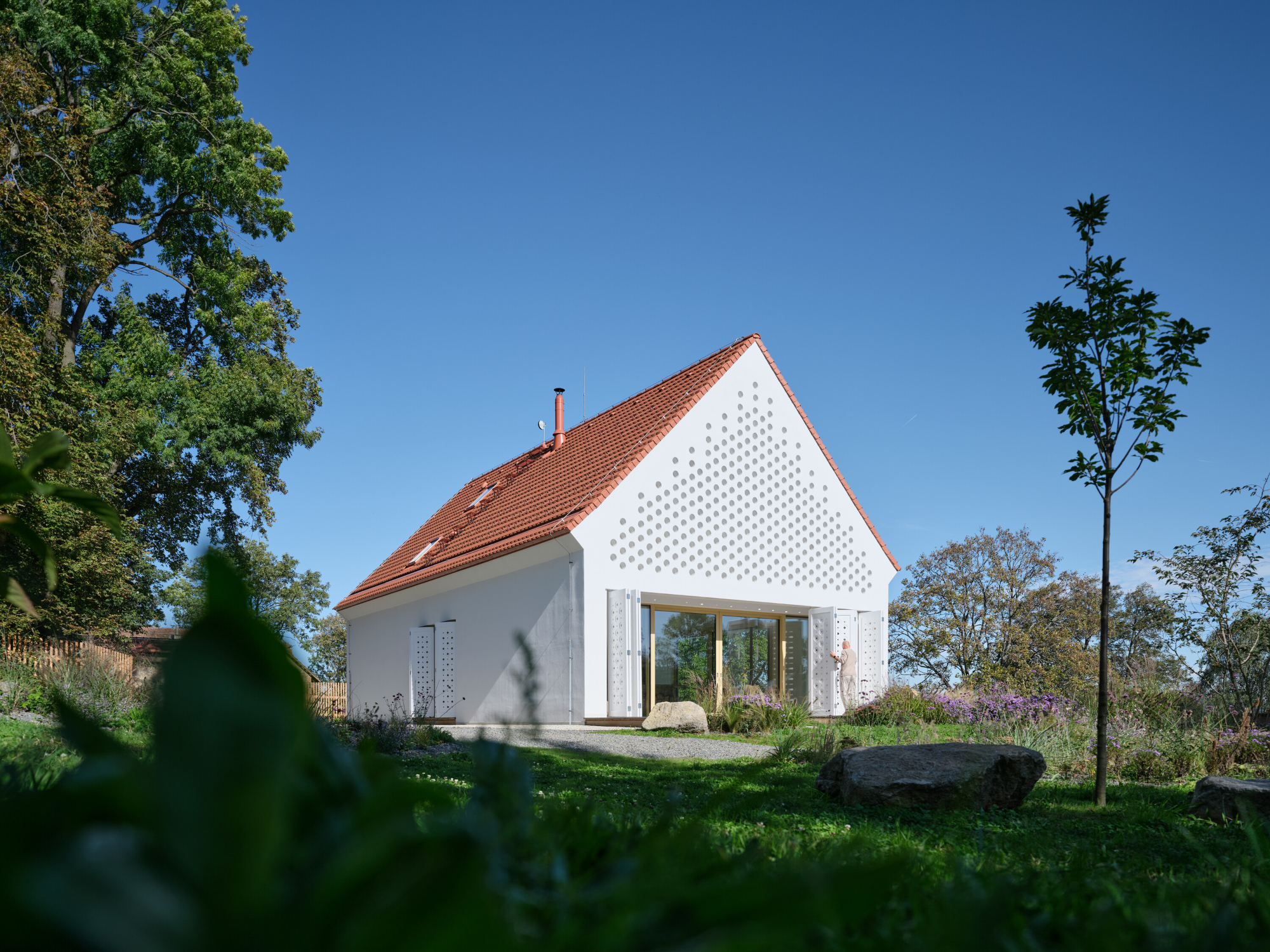
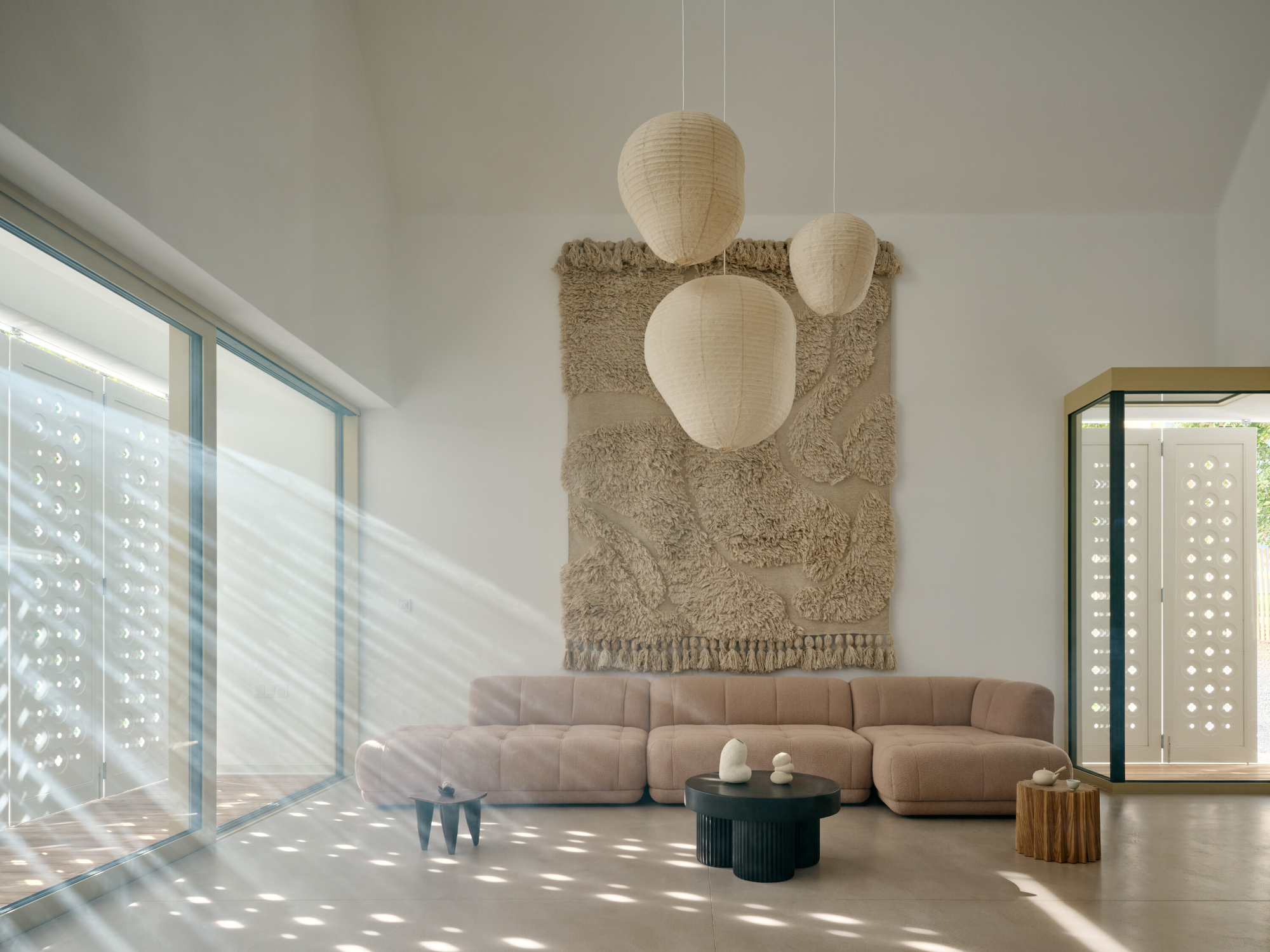
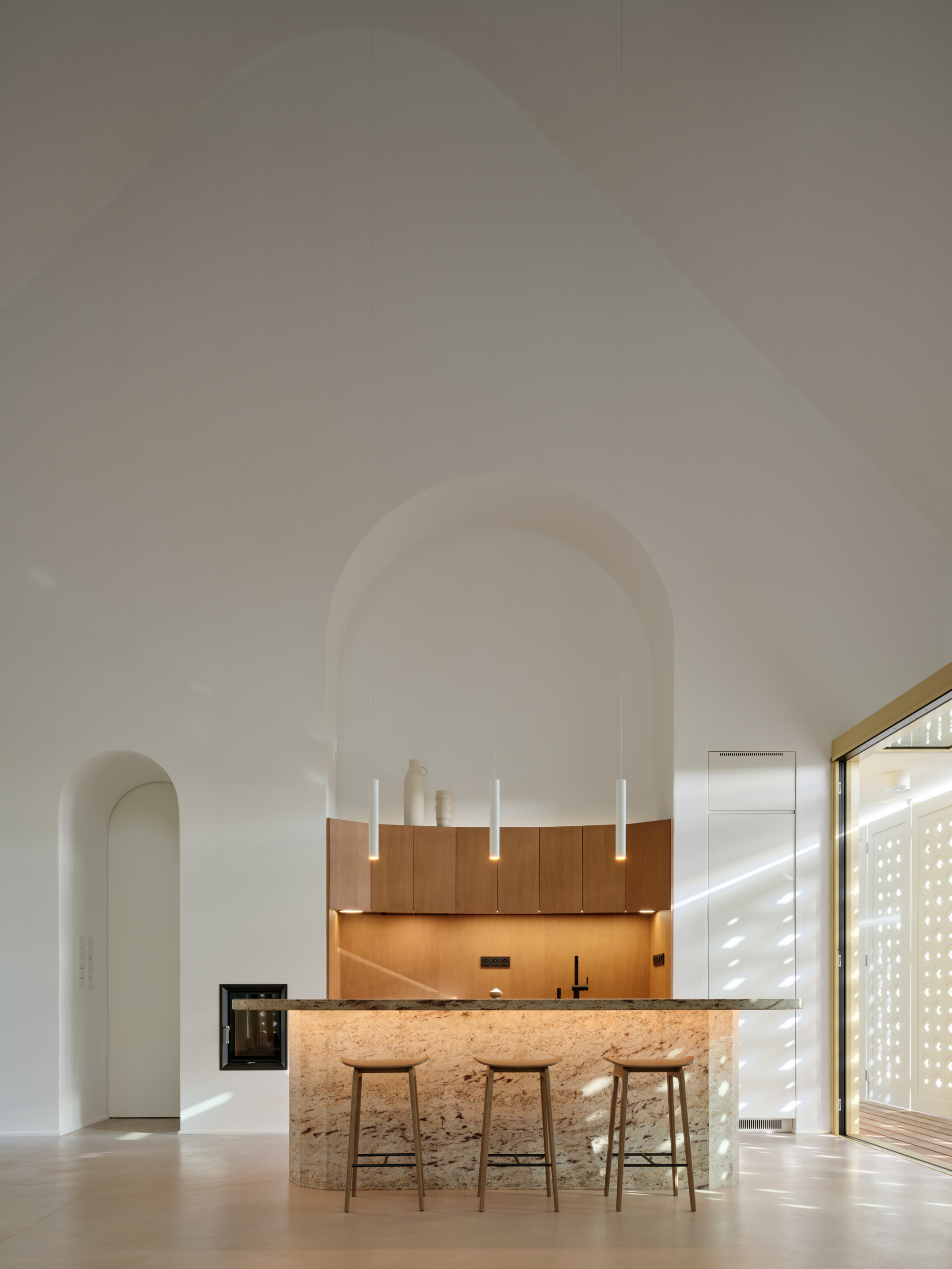
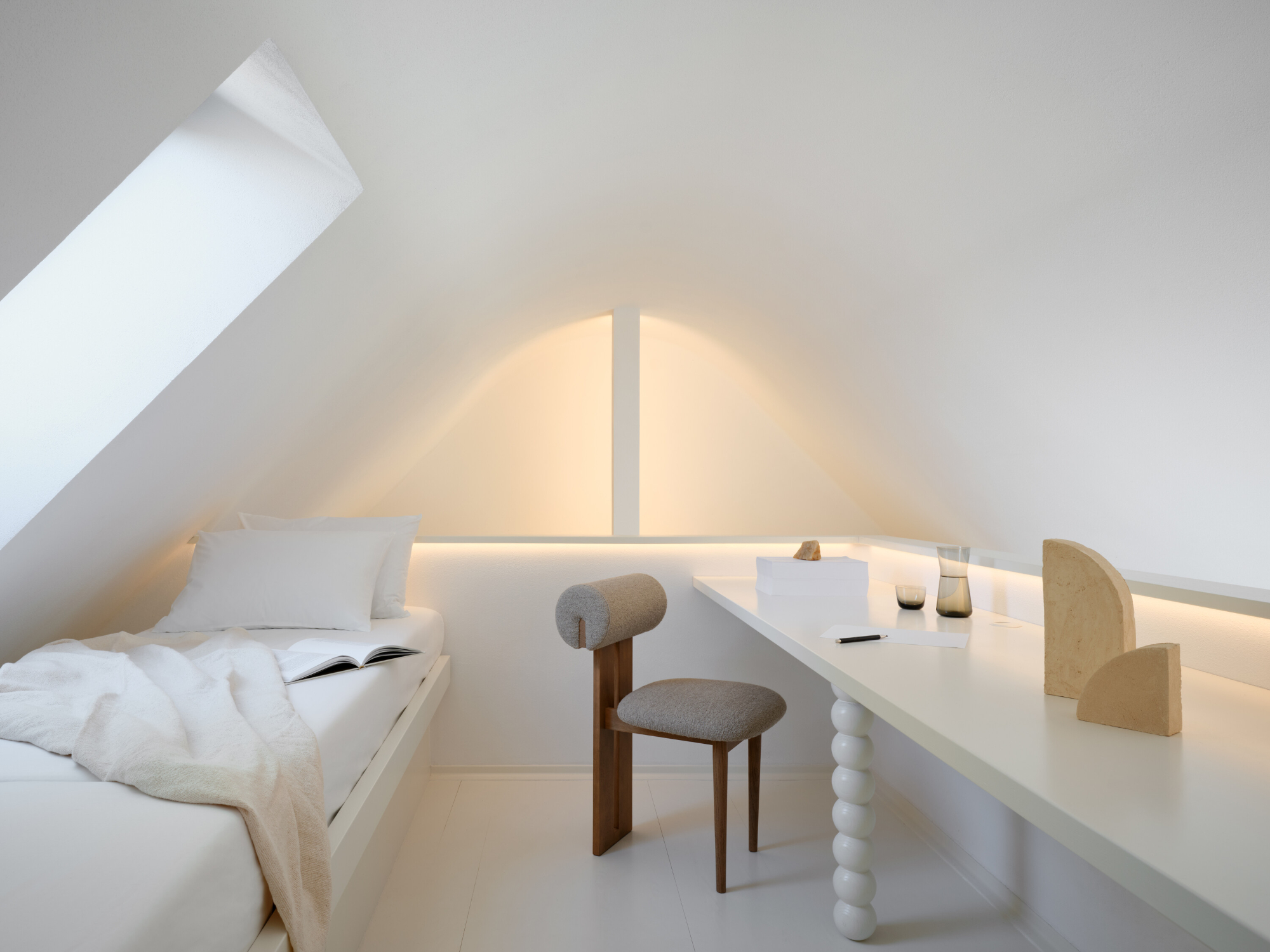
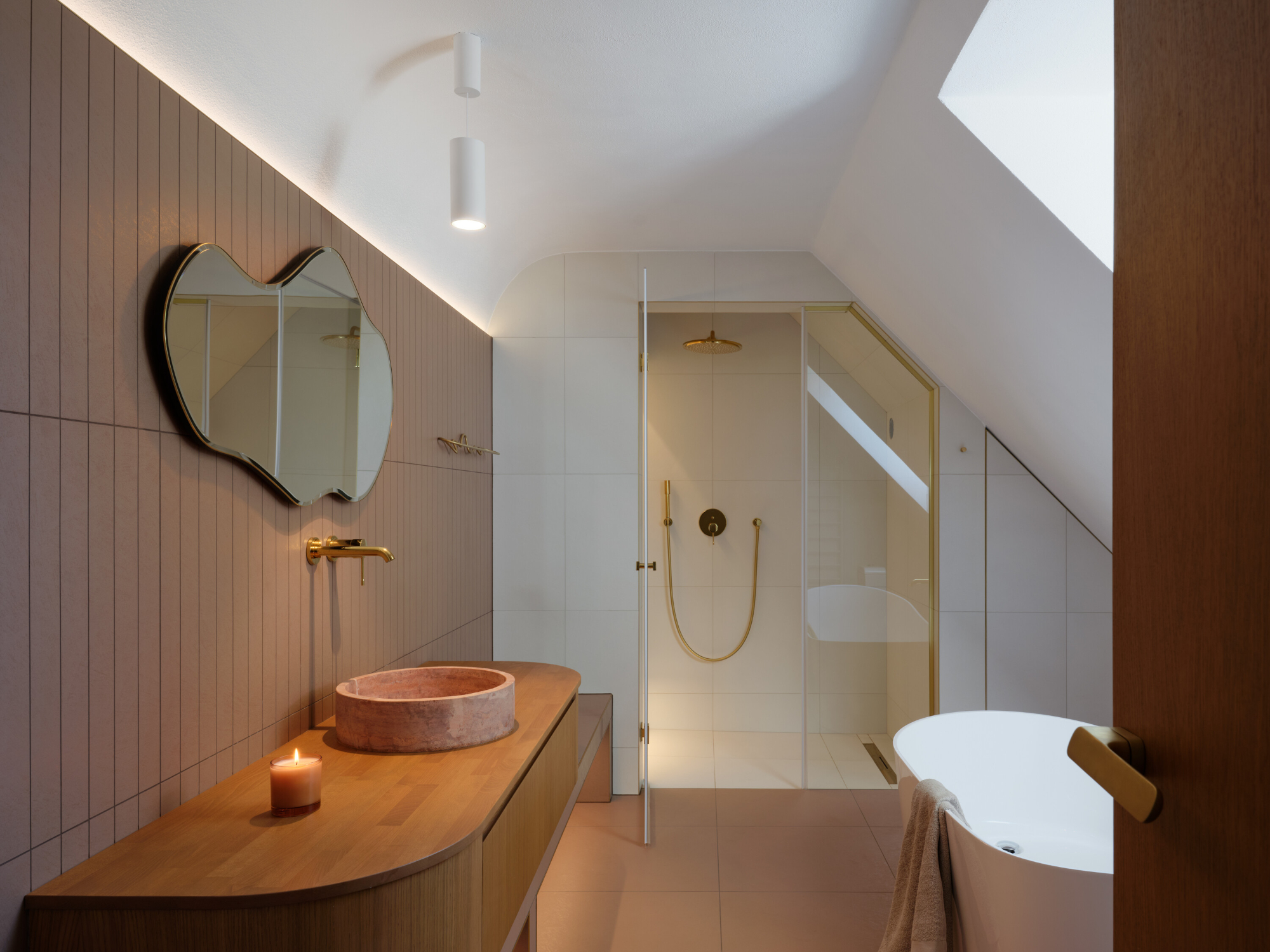
Inside, the palette flips from ascetic exterior to warm cavern. Curved ash cabinetry wraps the kitchen like an apse, anchored by an altar-like island of Shivakashi granite. Living, dining, and reading zones orbit this core, framed by oversized aluminum windows that open directly onto terraces, stone walls, and the ruins of the old barn. Custom furniture—solid-wood beds, travertine plinths for sculptures—extends the architect’s hand into daily rituals, while art pieces ranging from Czech modernism to Noguchi Akari lamps reinforce the house’s role as living gallery. Upstairs, an attic apartment becomes a cocoon for writing and reflection, its small roof windows and arched niches recalling monastic cells. Every surface registers the cycle of daylight; adjustable whitewashed-fir shutters can turn the soaring great room into a dappled chamber or, by night, a lantern that glows back into the orchard.
Material choices ground the poetic in pragmatism. Insulated ceramic masonry and concrete slabs provide thermal mass; a fired-tile roof and green terraces temper summer heat; photovoltaic panels, a rain-water tank, and breathable stucco push the 2025 build toward energy independence. By collaging local craft with quiet technology, Žaloudek delivers a house that feels timeless without mimicry, contemporary without swagger—a private retreat that moonlights as a small cultural outpost for residencies, pop-ups, and workshops. Like the operetta composer Oskar Nedbal, whose name the house carries, it strikes an unlikely harmony: chapel calm, rural toughness, and an openness to whatever creative score its future guests might write.
Photography by BoysPlayNice