Search






Near Byron Bay, Hayley Pryor designs a 21-square-meter relocatable cabin shaped like a rural shed, with a roof opening that brings in light, releases heat, and keeps the sky in view.
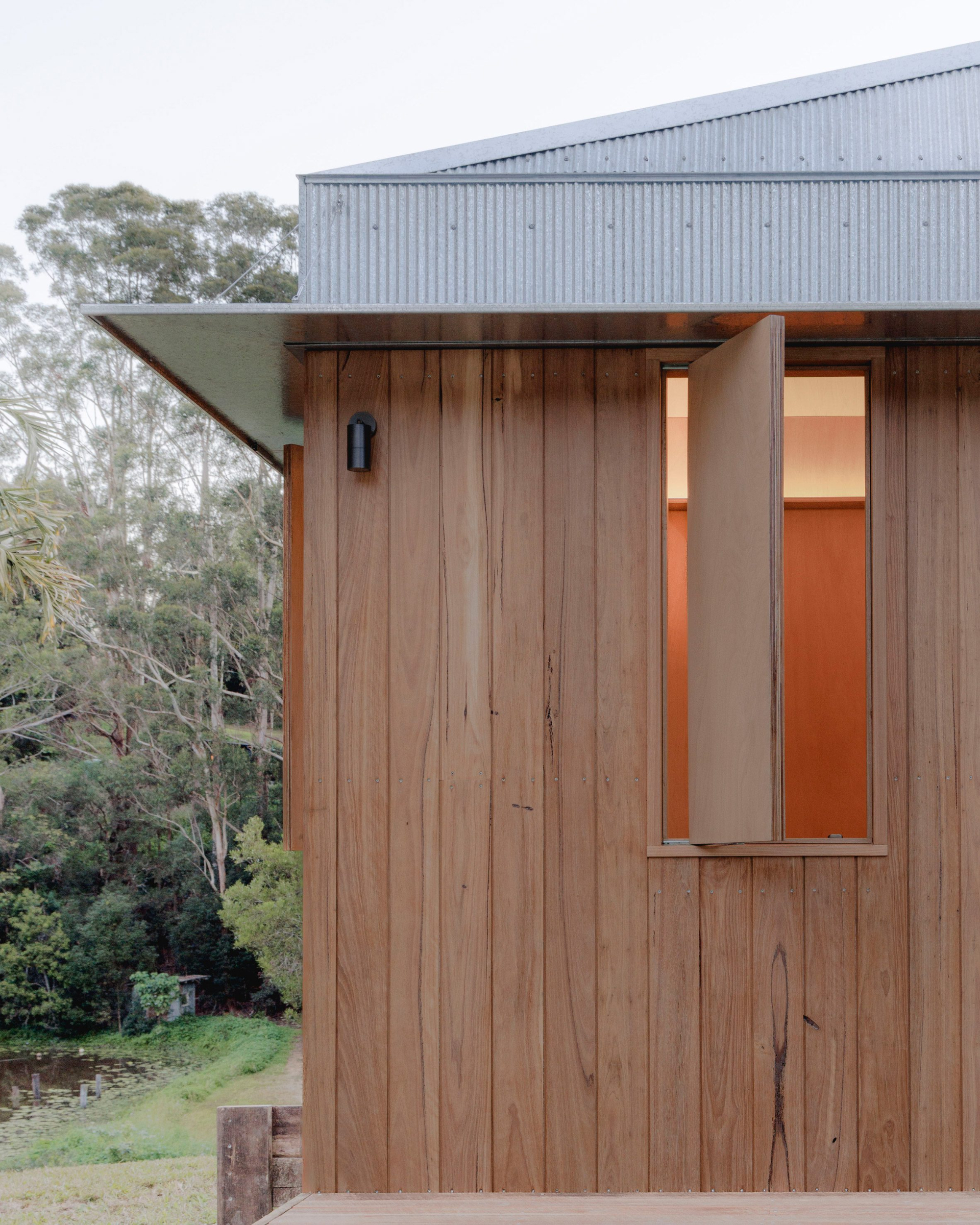
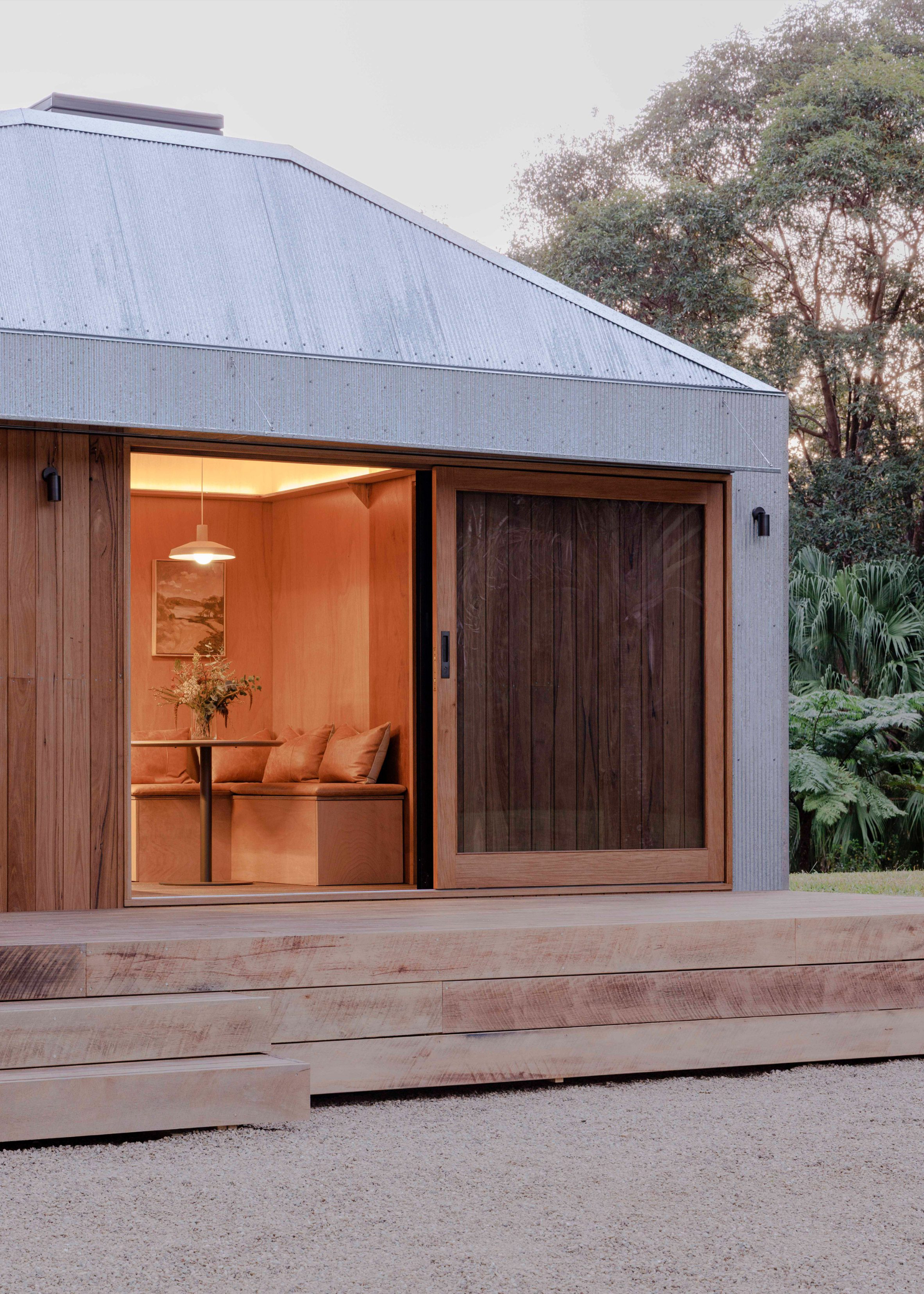
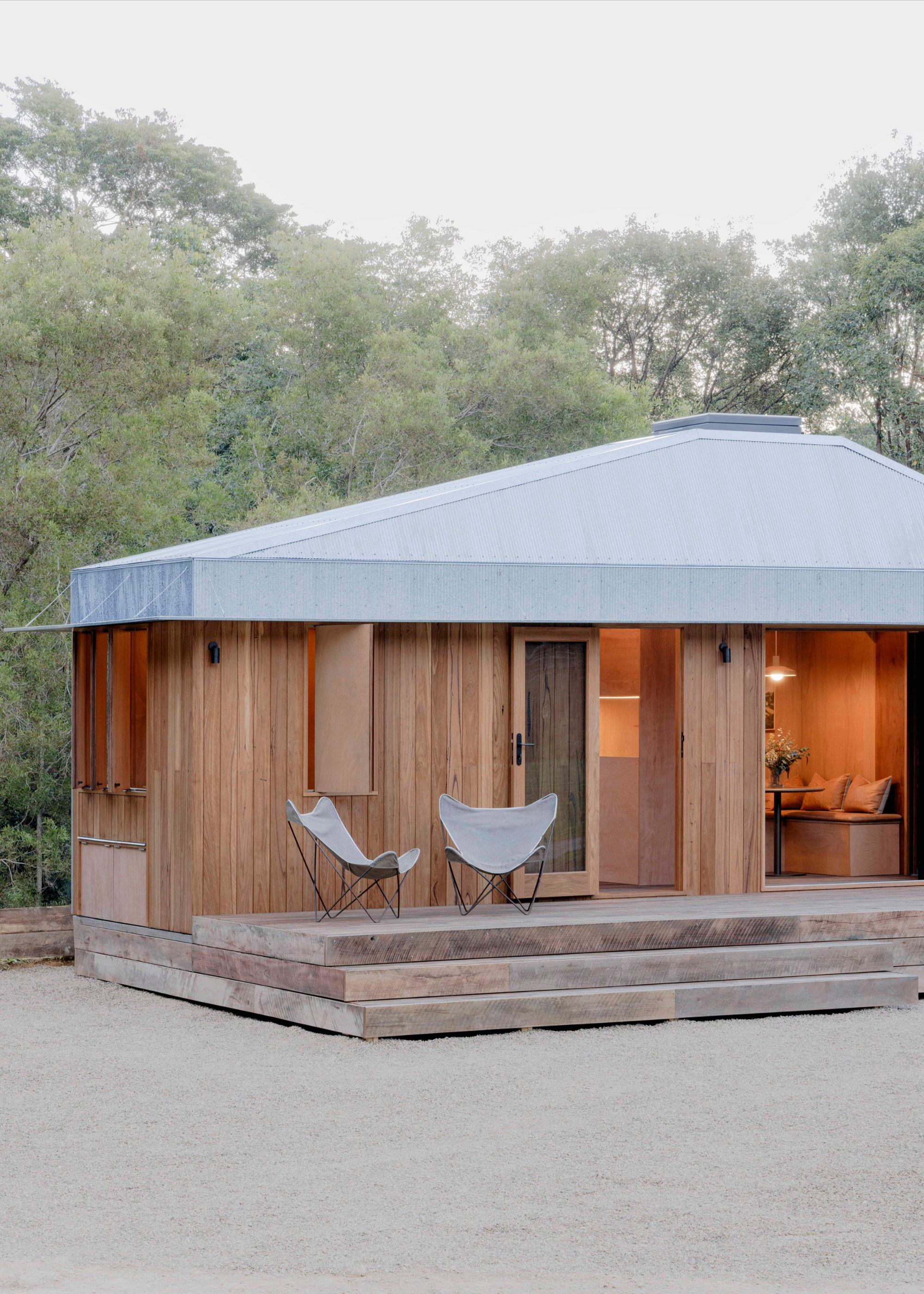
On the hinterland edge of Byron Bay, Australia, The Oculus sits with the plain confidence of a farm building. Its roof is corrugated metal. Its walls are clad in vertical timber. Its footprint is small enough to understand at a glance. Hayley Pryor begins with the language of the Australian shed, not as nostalgia, but as a useful disguise: a modest exterior suited to rural ground, and an interior arranged with far more care than the first impression suggests.
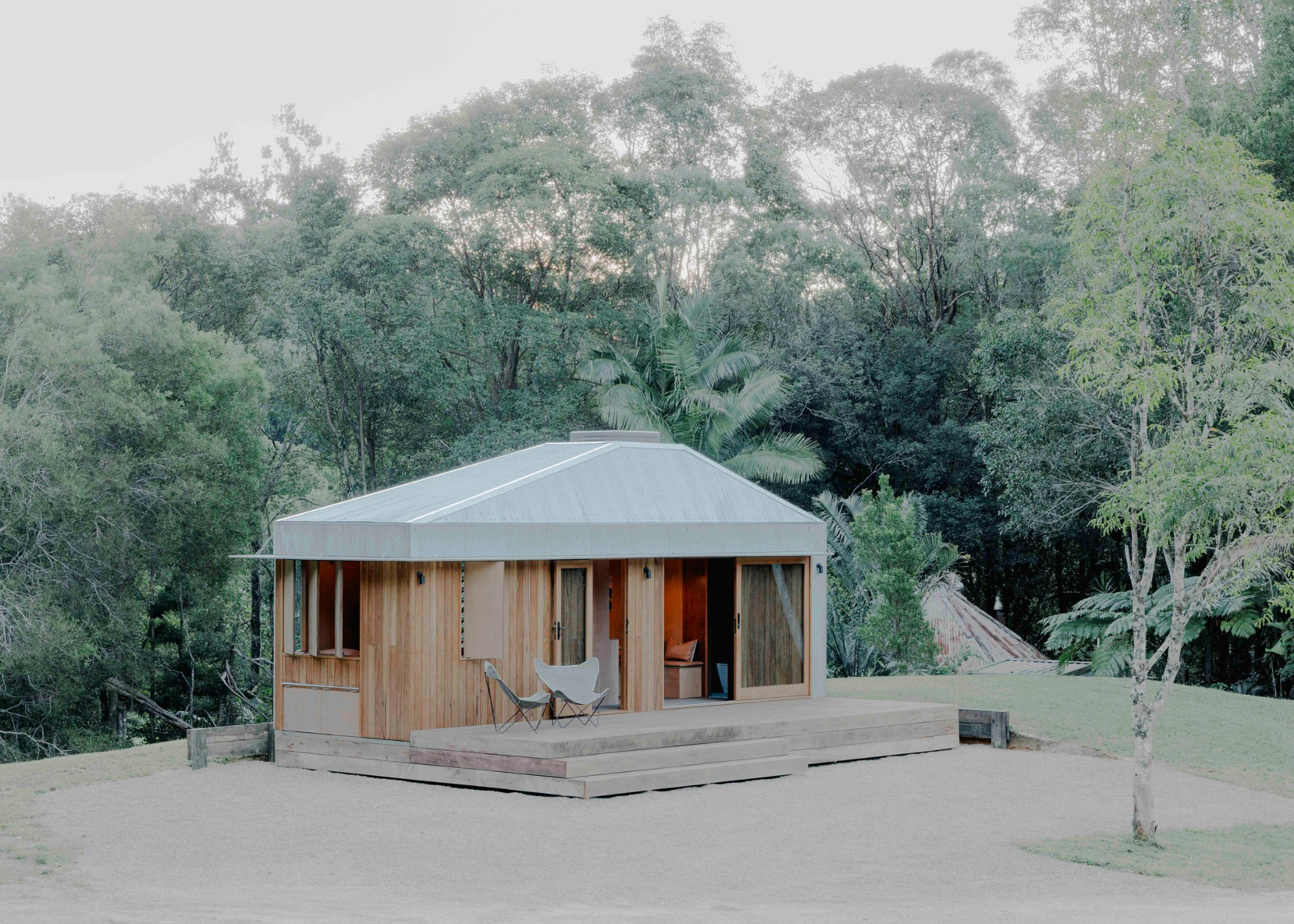
The name comes from the circular skylight at the top of the hipped roof. It is the cabin’s most important piece of infrastructure. Opened, it draws warm air upward and out, working with operable windows and removable eaves to cool the room. Closed, it brings daylight down into the middle of the plan. In the afternoon, the plywood lining turns honey-colored. At night, the roof becomes a small aperture to the weather, the moon, the movement of clouds.
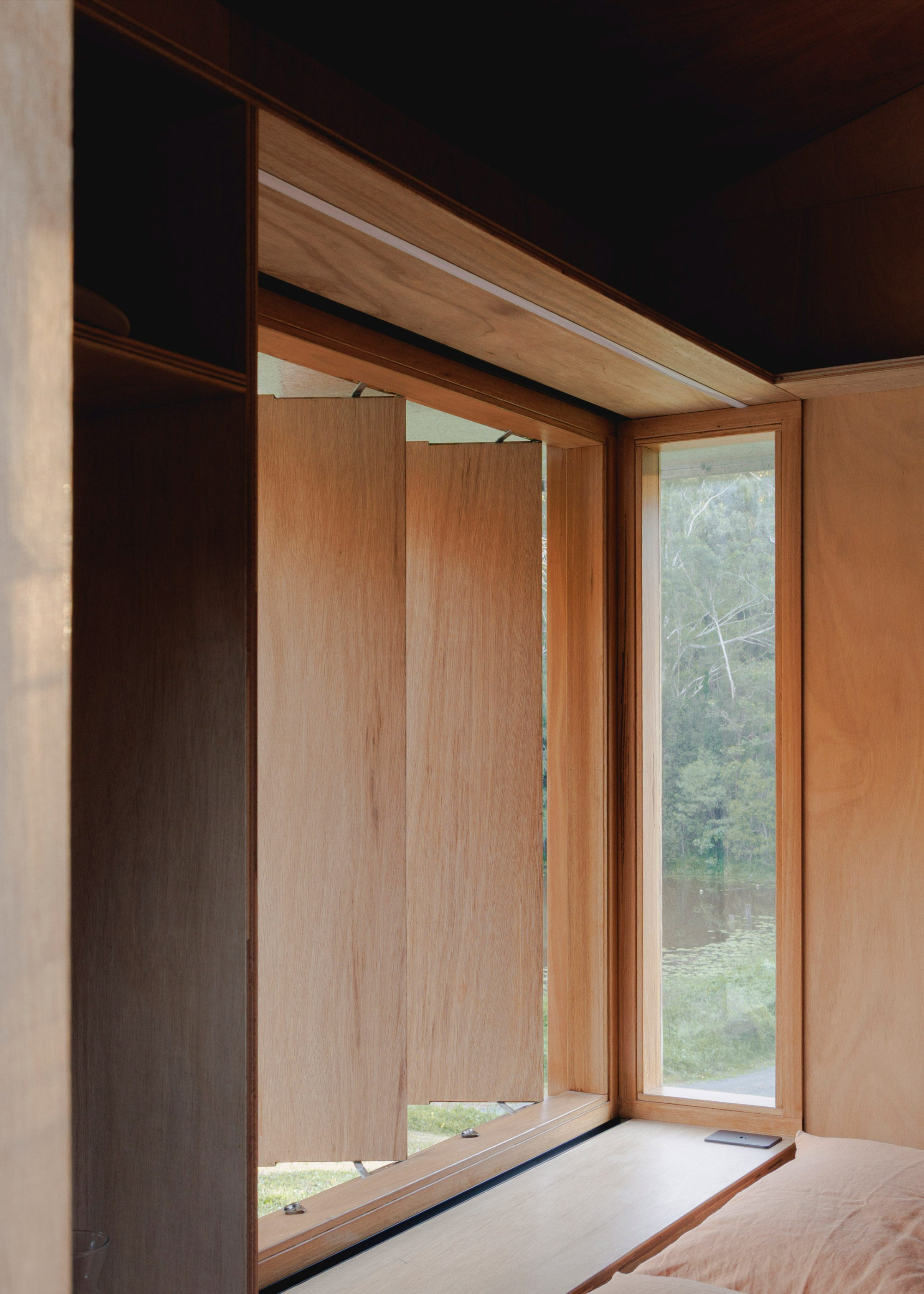
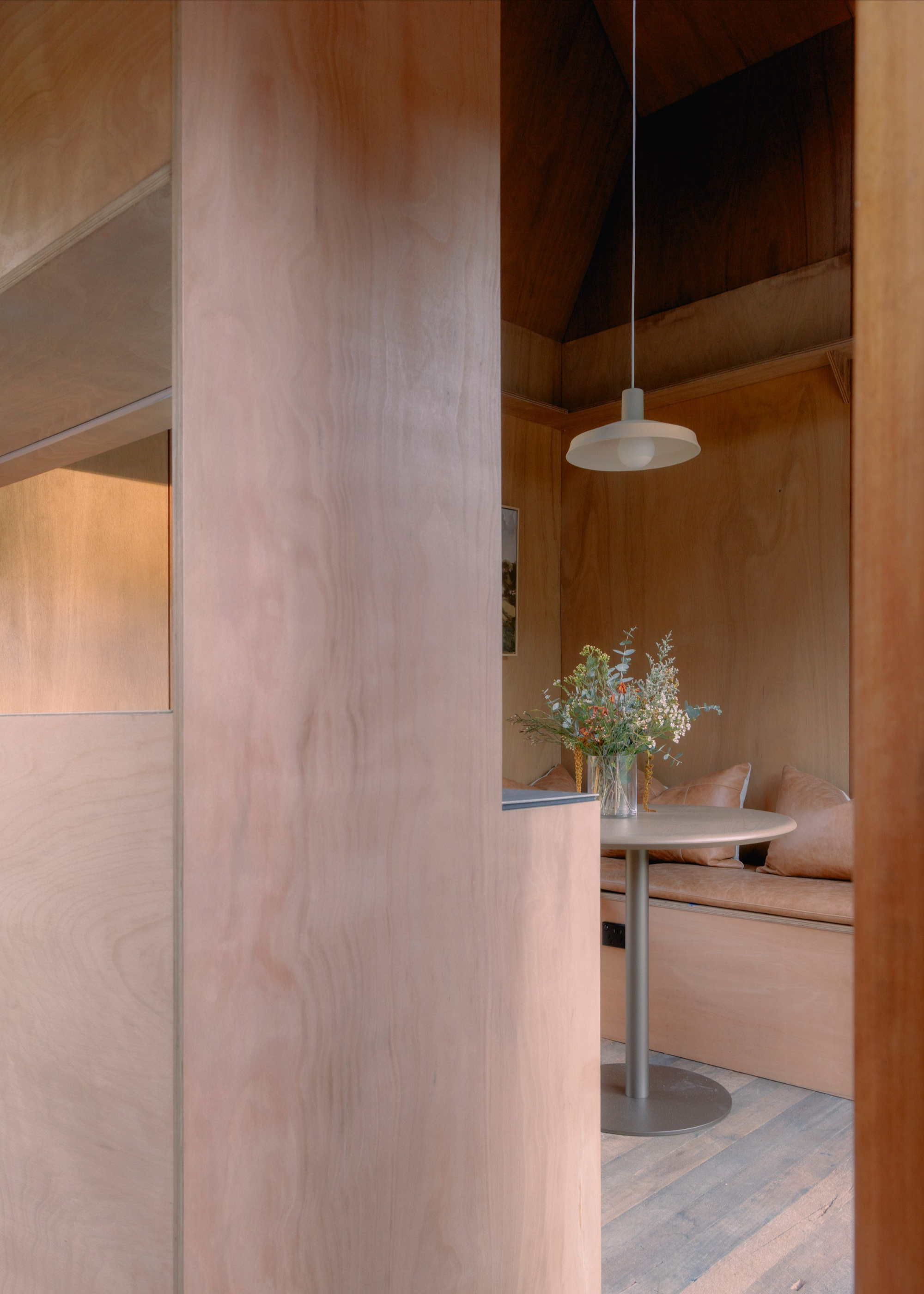
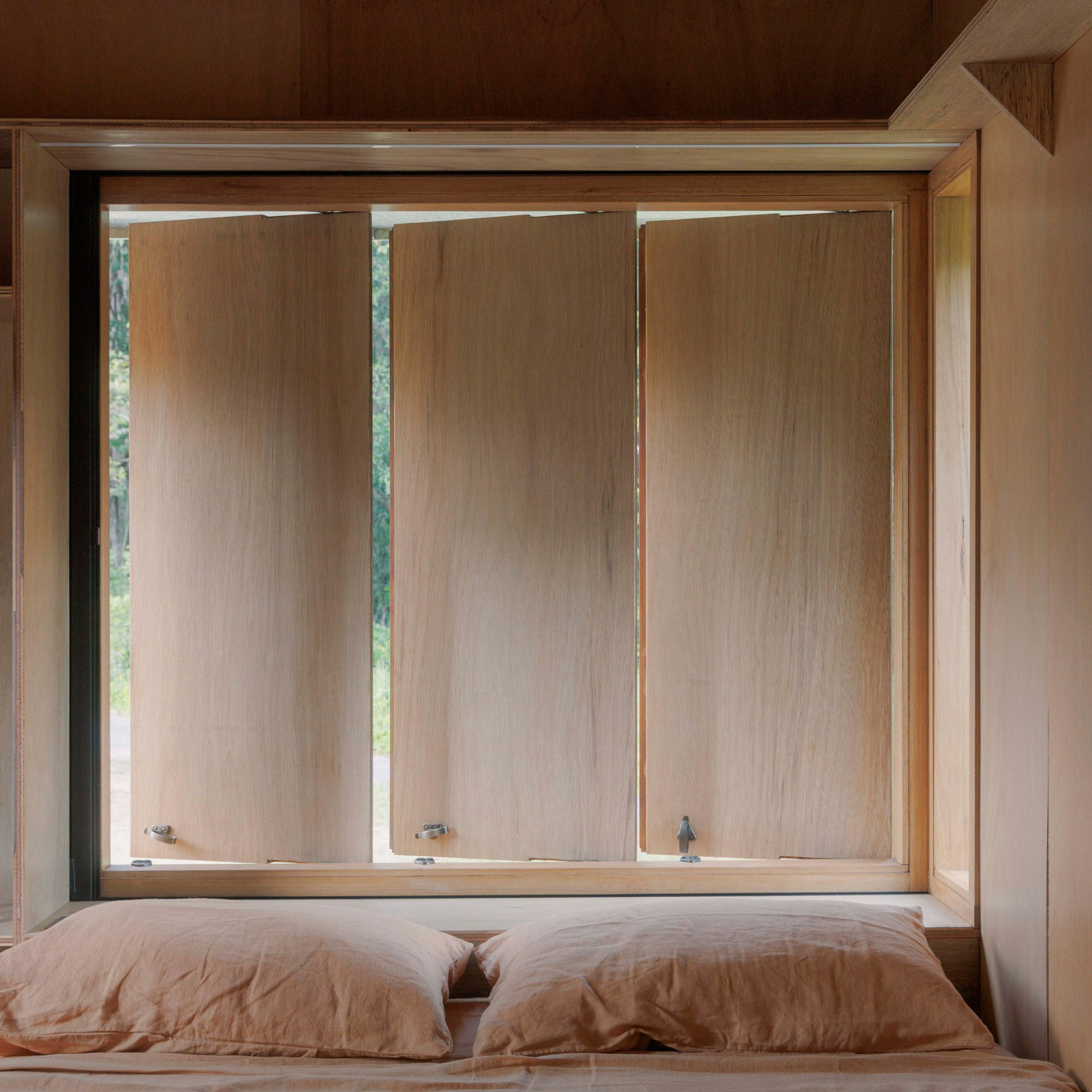
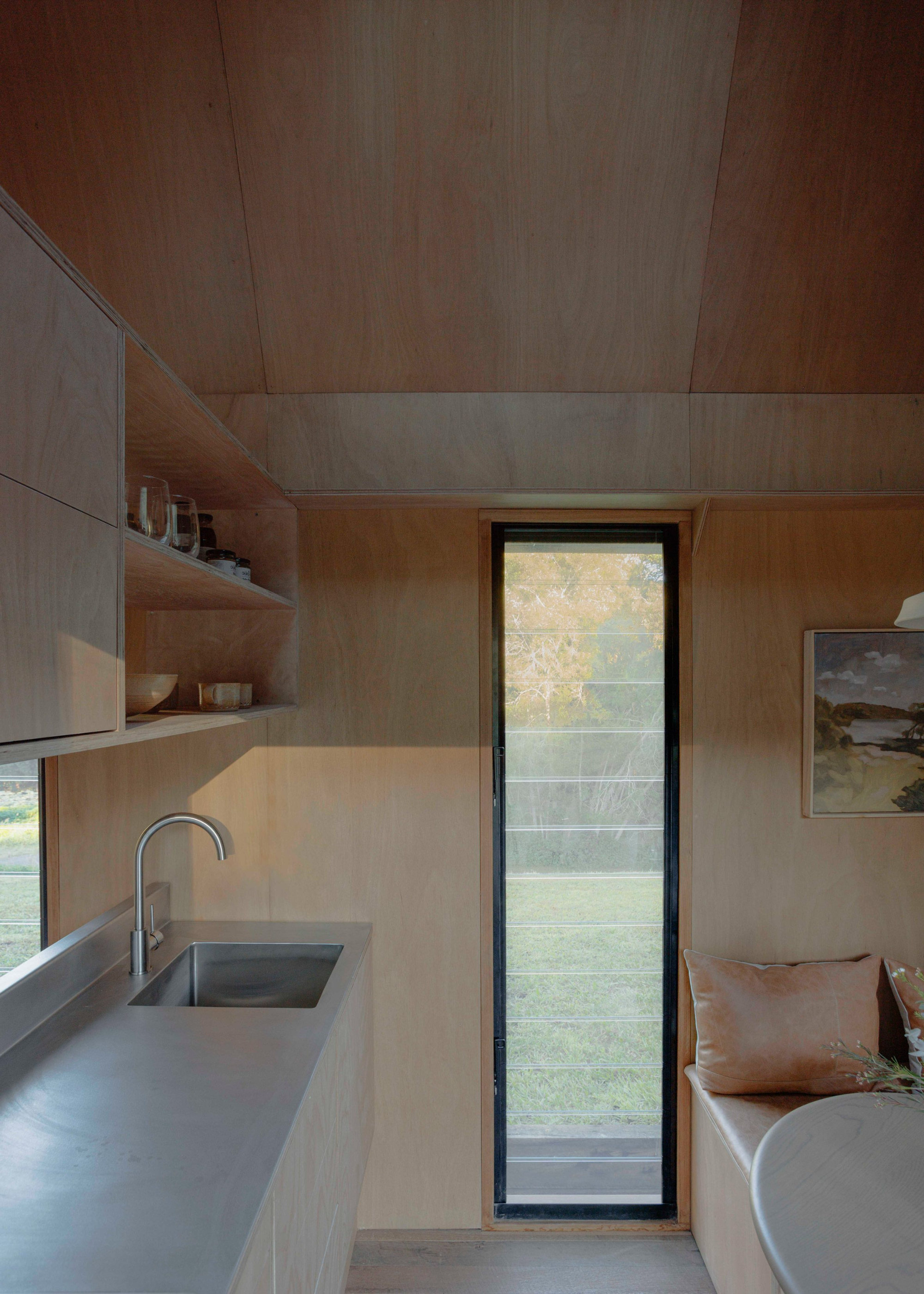
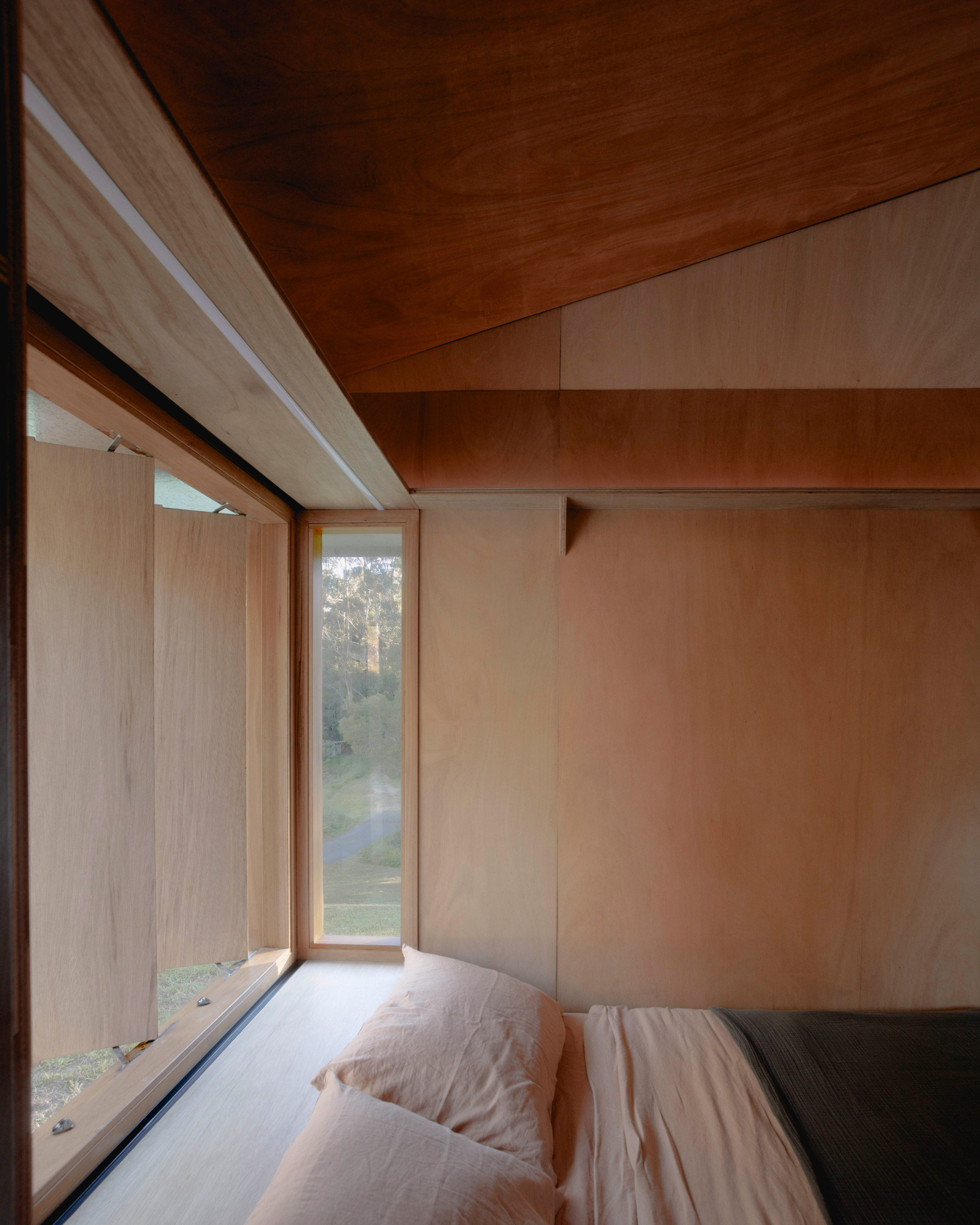
The cabin measures 21 square meters, so there is no spare room for decorative planning. The interior is made from a continuous plywood language: walls, ceiling, cupboards, bench seating, sleeping platform, kitchen, and storage all drawn into the same surface. A bed sits beneath a three-panel casement window looking toward the trees. Opposite, a dining nook holds a round pedestal table, a pendant lamp, and salmon-toned cushions. Terracotta window reveals add warmth without making the room feel styled for its own sake.
Pryor developed The Oculus with Chris King of Retreat House, and the collaboration gives the project its practical edge. The cabin is road-legal and relocatable, designed to be towed without permits and placed according to sun, wind, and view. The eaves can be removed for transport and slotted into custom-welded brackets. This is the part of the project that matters most: mobility is not treated as a novelty, but as a condition that shapes the roof, the shading, the services, and the way the cabin meets a site.
Inside, each daily function has been given a place. The daybed, benches, and counters hold storage. The bathroom sits behind a sliding door and includes an external storage area, useful for equipment that belongs outside the living space. A large sliding glass door opens the main room to a terrace sheltered by the roof, extending the cabin without adding floor area. The plan is small, but it is not mean. It allows for sleeping, cooking, eating, reading, washing, and sitting outside with the door open.
The exterior changes with the light. In the morning, the timber cladding appears pale and dry against the metal roof. By dusk, it takes on a deeper amber tone, closer to the plywood within. The cabin feels at home among trees because it does not ask the landscape to perform around it. It simply takes a familiar rural form and sharpens it through proportion, ventilation, and joinery.
The Oculus is the first made-to-order model from Retreat House. It can be a holiday retreat, a garden studio, a compact dwelling, or a room placed at the edge of a larger property.