Search






A single-level retreat that threads three roofed volumes through a holm-oak grove in the Sierra Norte.
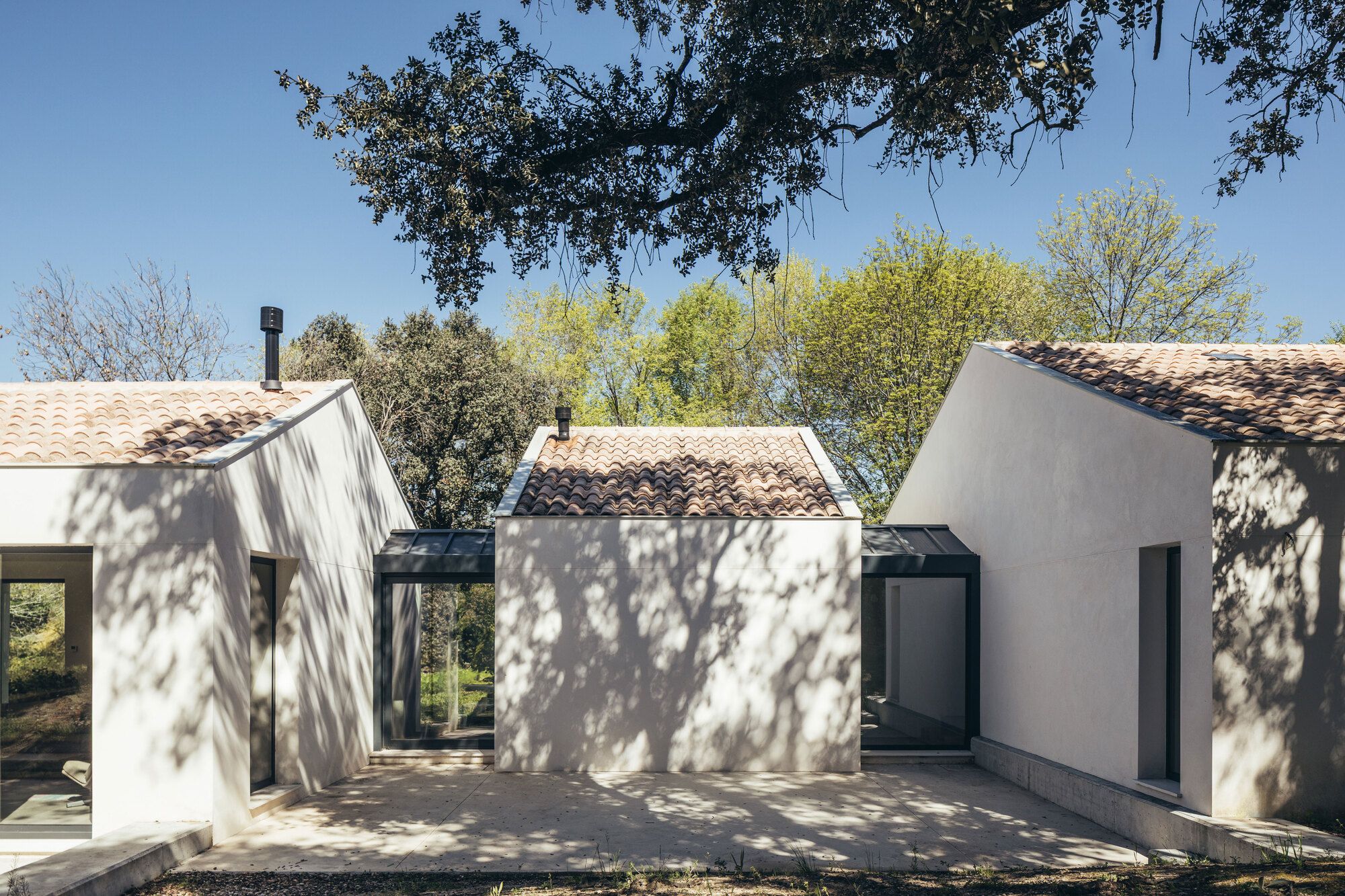
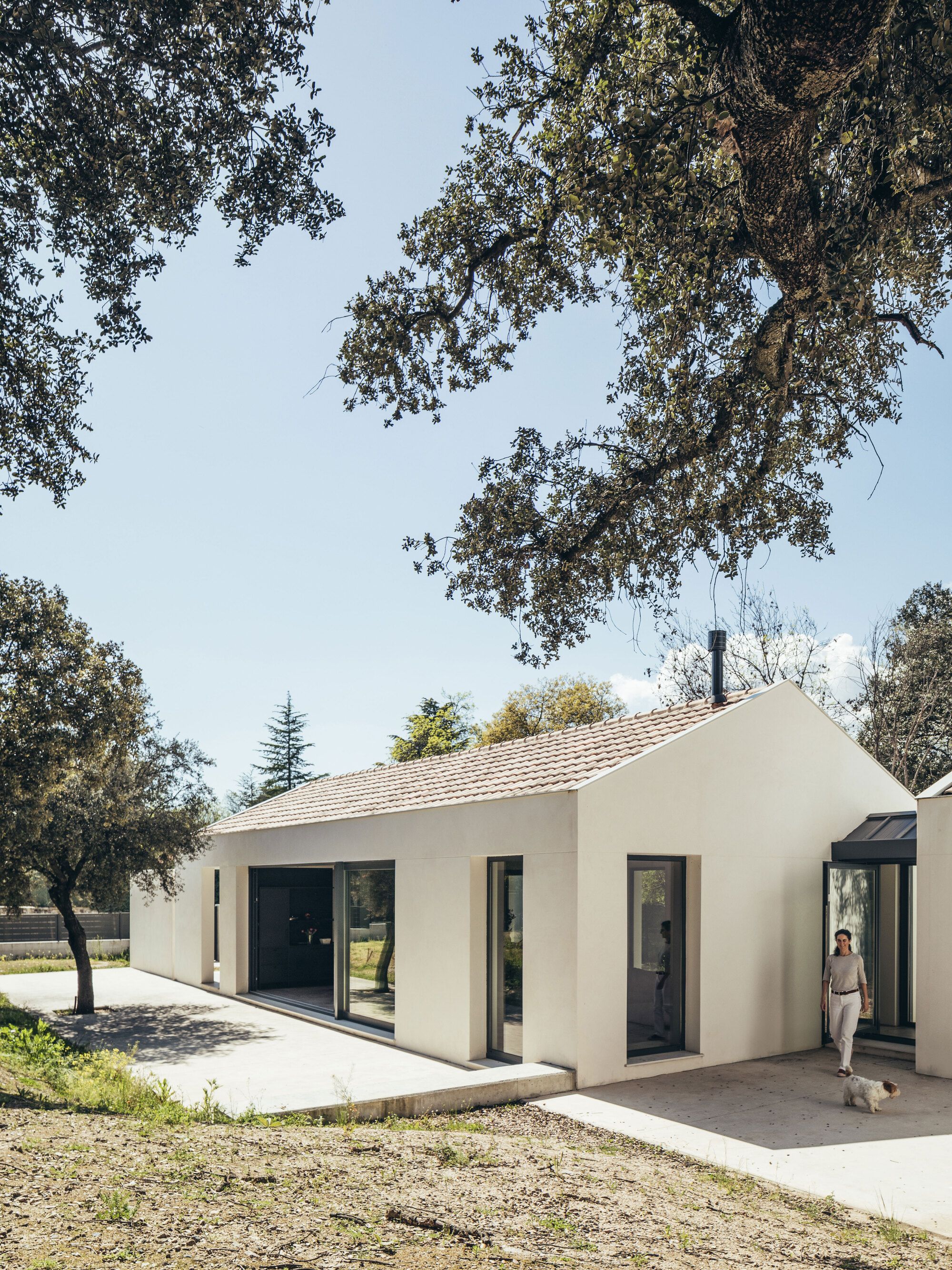
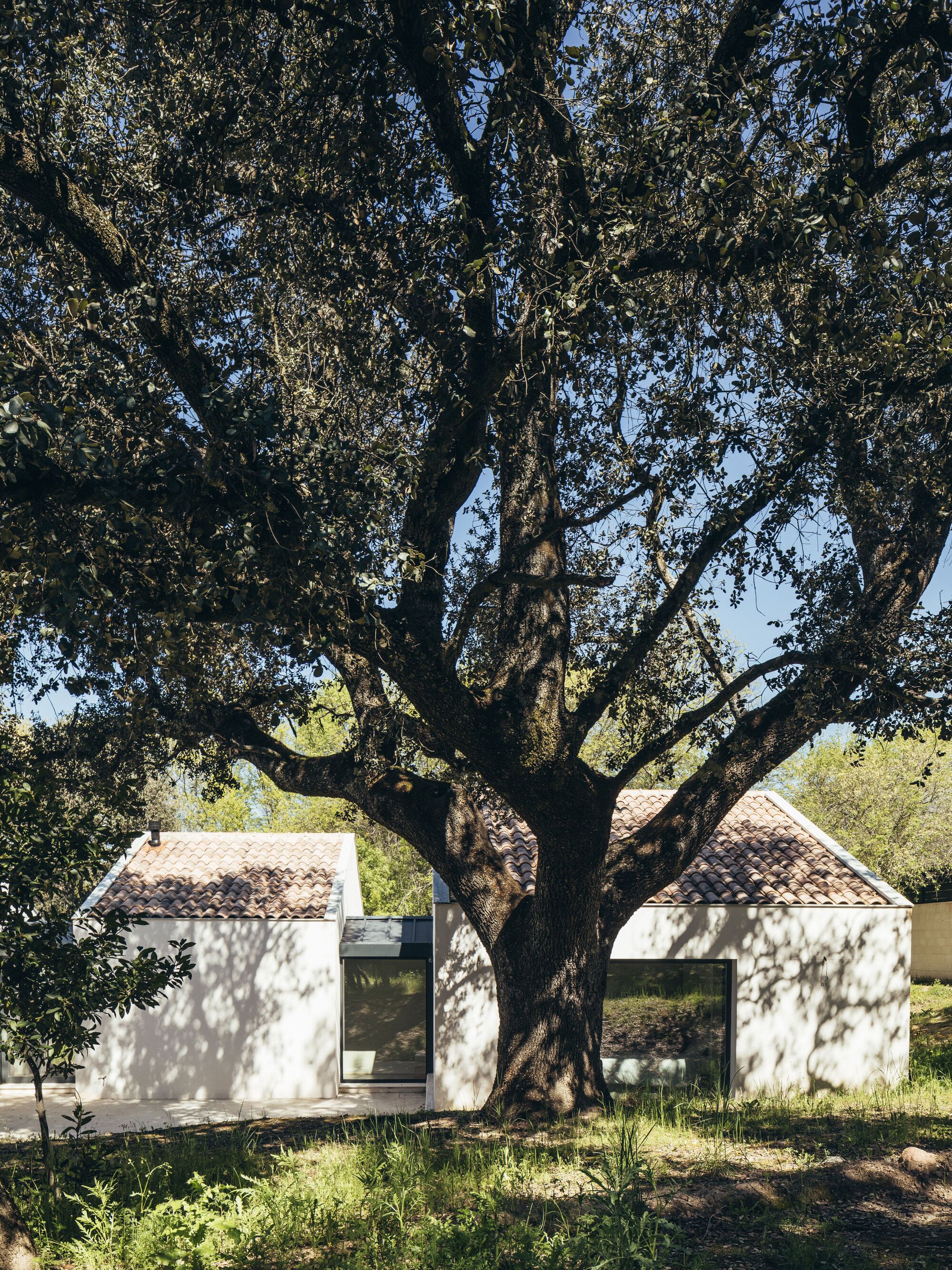
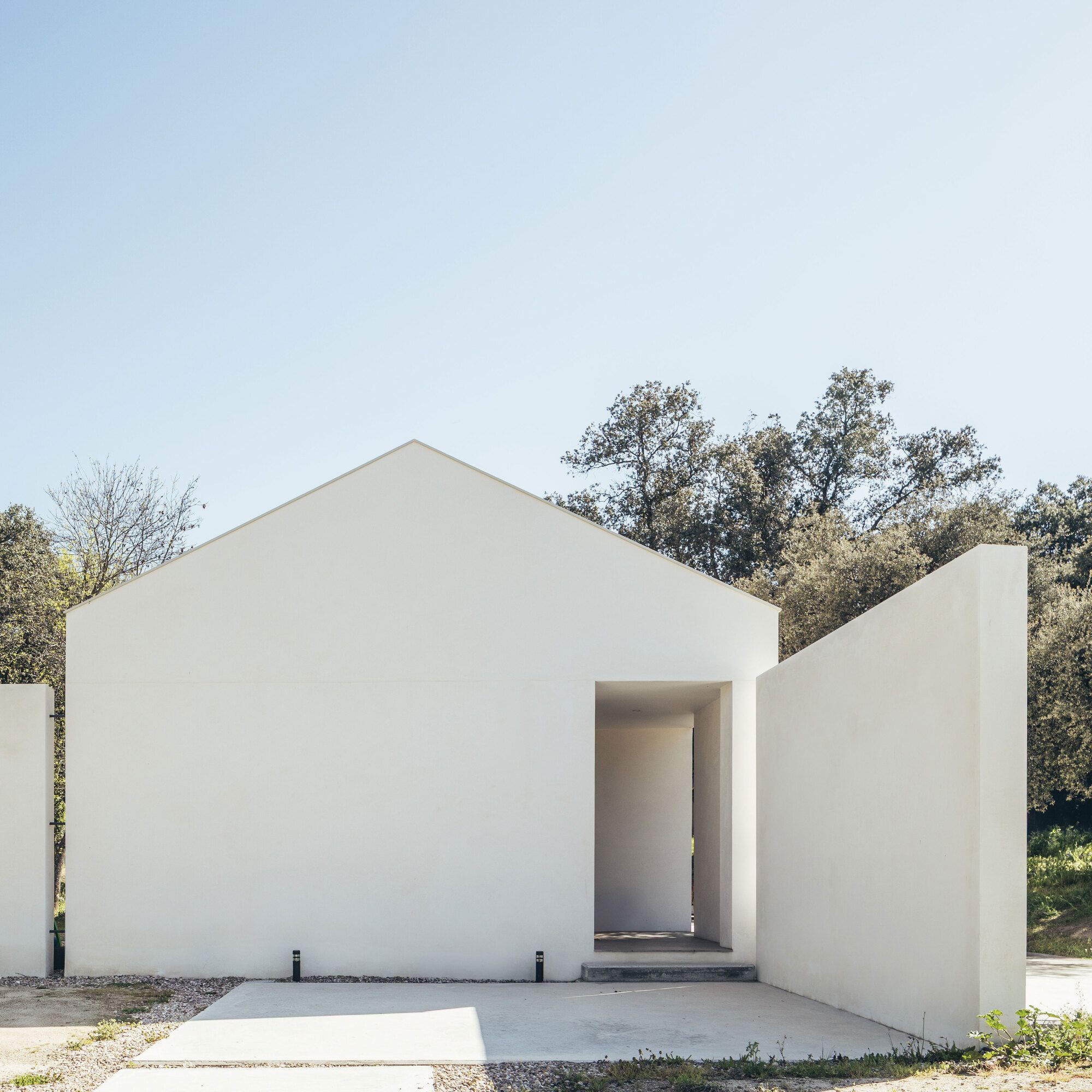
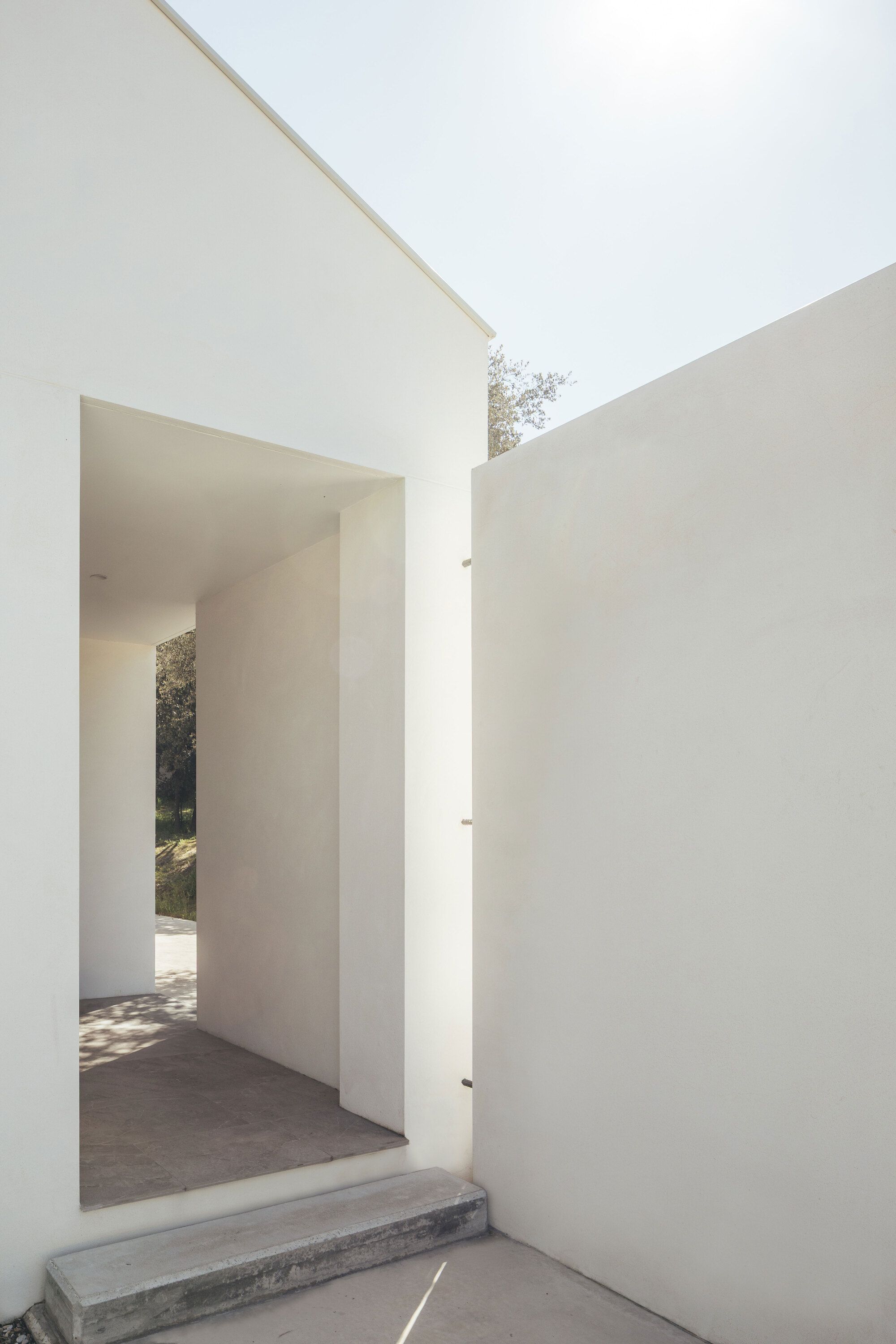
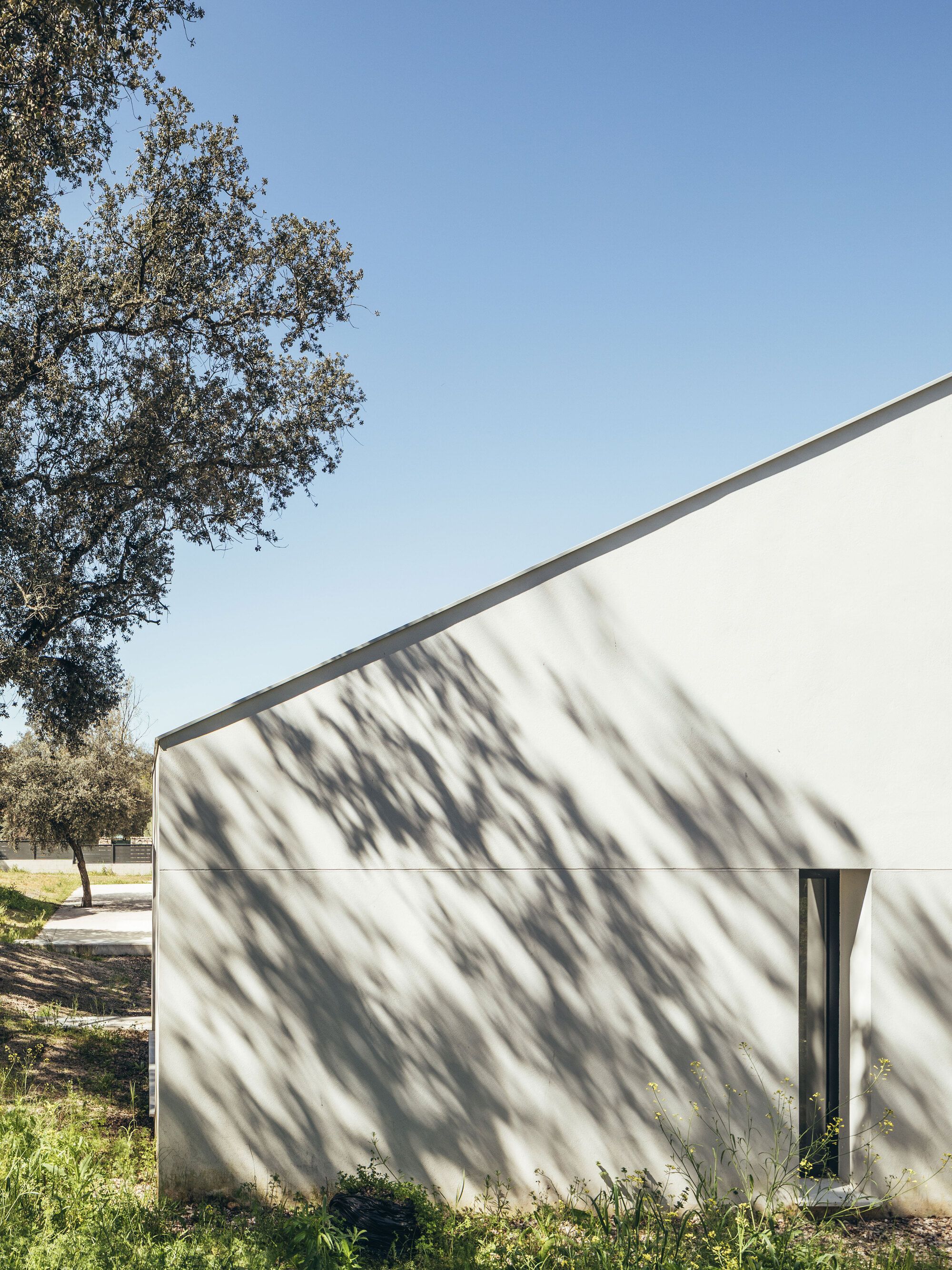
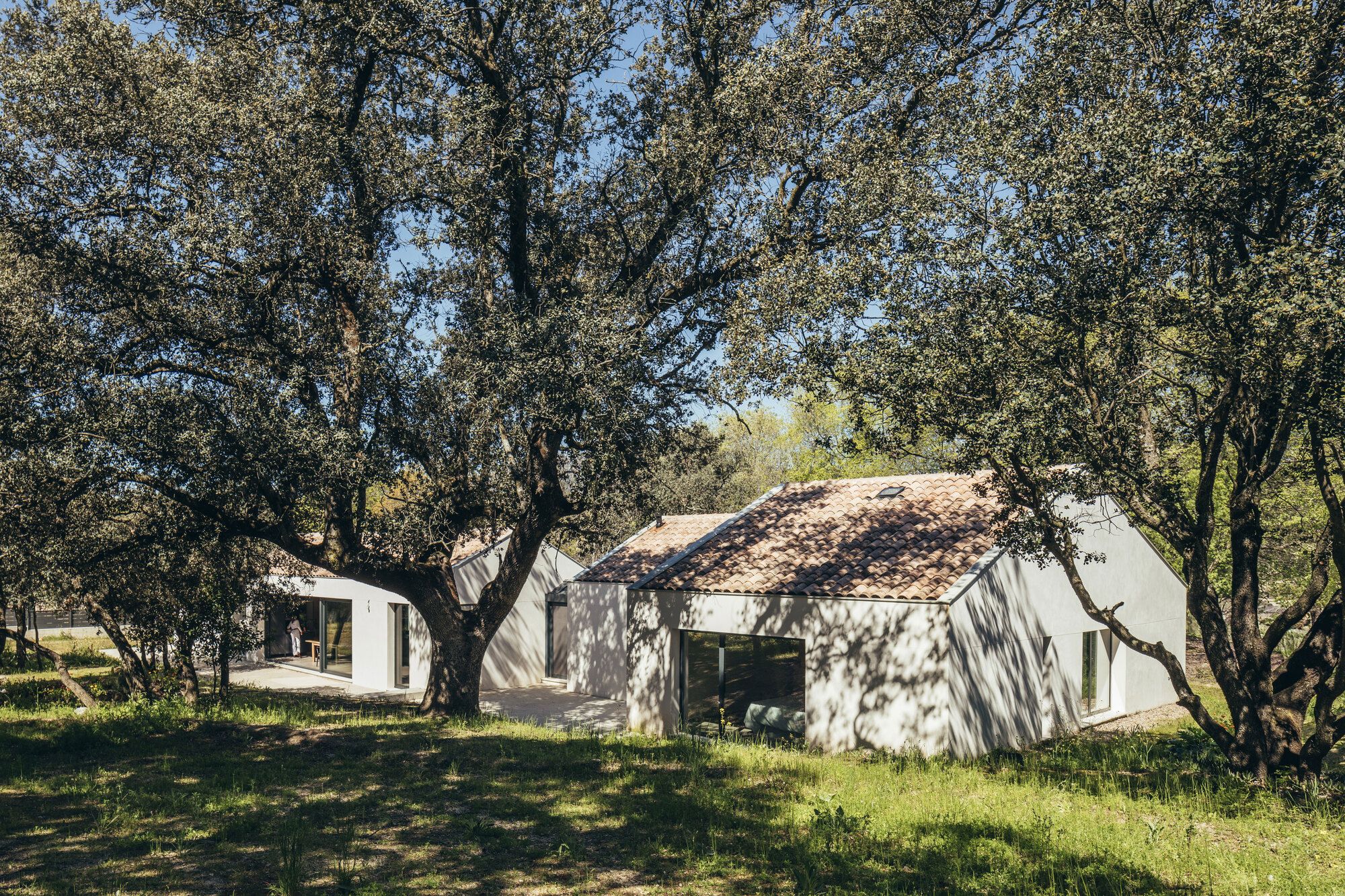
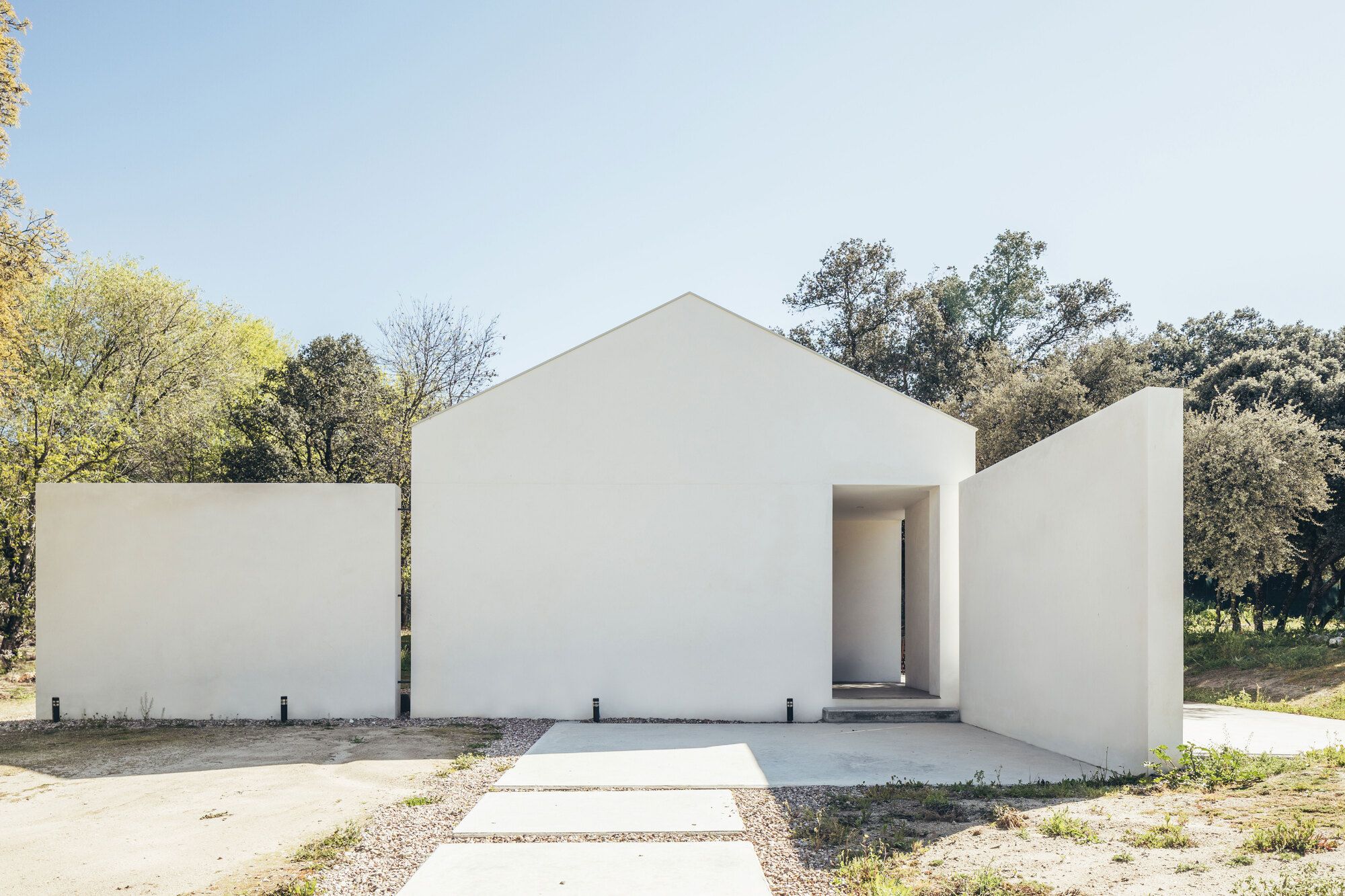
Only the slate of a pitched roof peeks above the oaks as you approach this 2,580-square-foot home north of Madrid. More&Co’s clients bought the wooded lot for its quiet, and the architects responded by letting the trees set the plan. Instead of clearing the site, they slipped three cellular-concrete pavilions between the trunks, stepping each block down the natural slope so floor levels land gently, one after another, without heavy cut-and-fill.
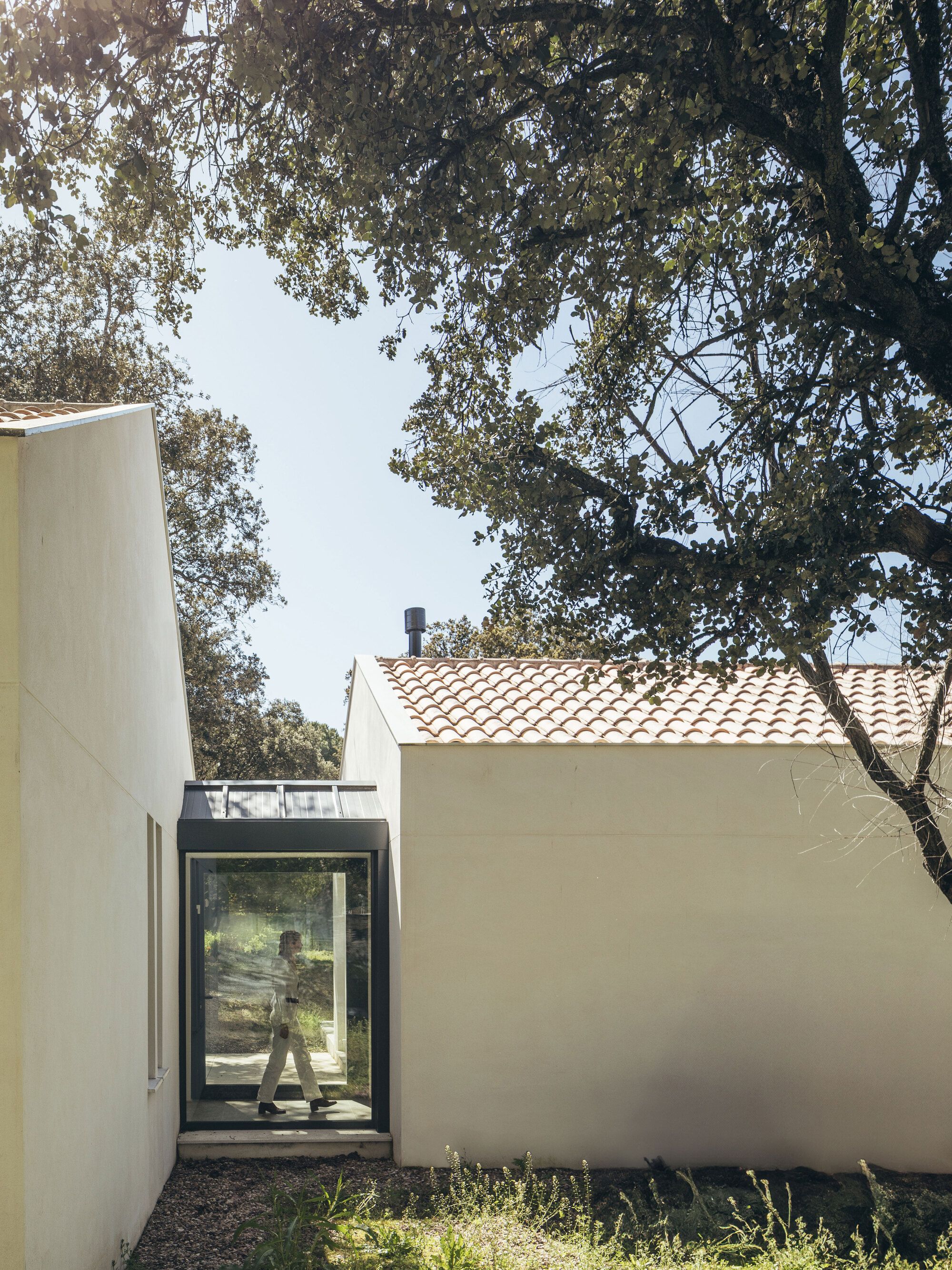
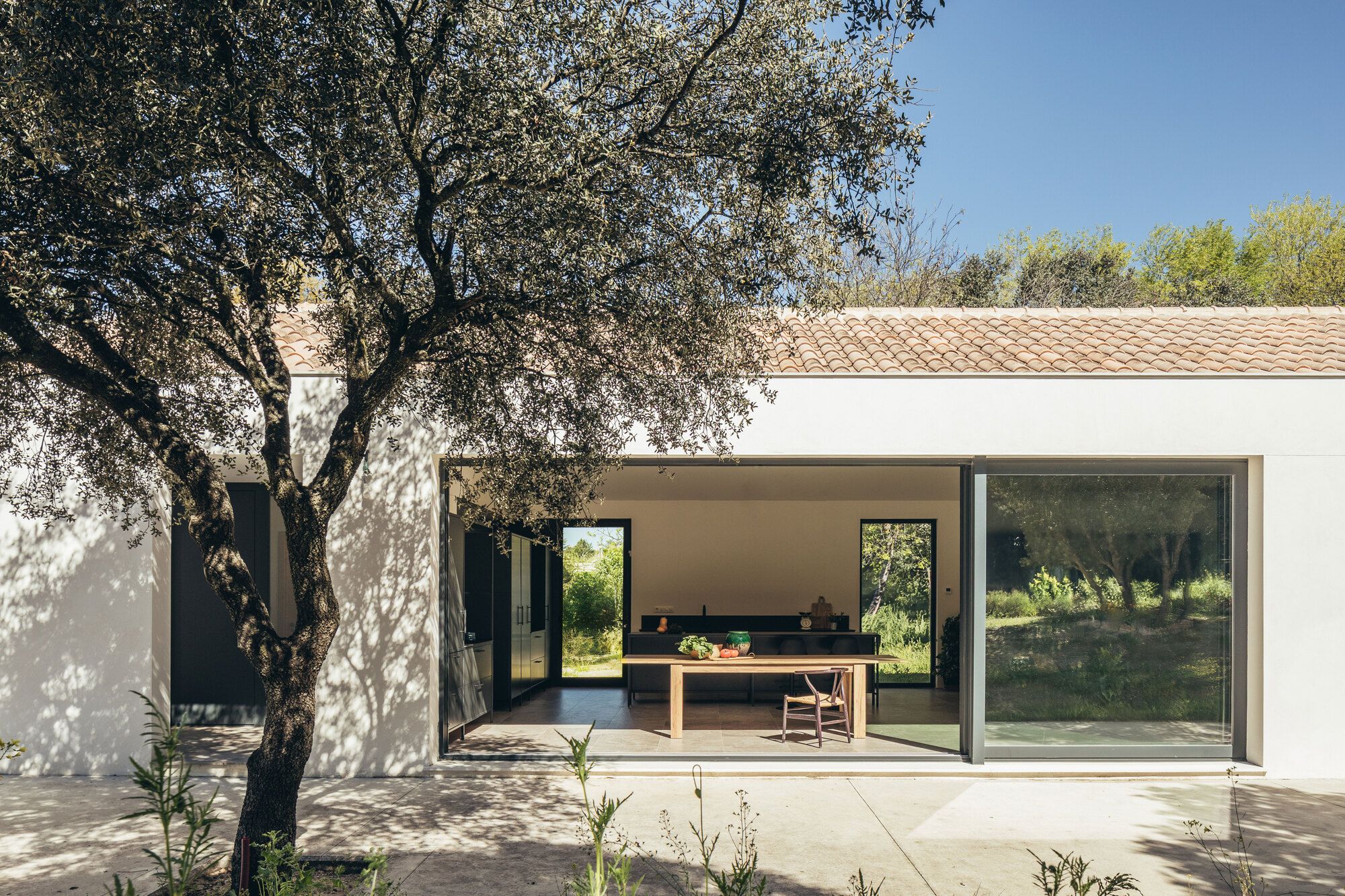
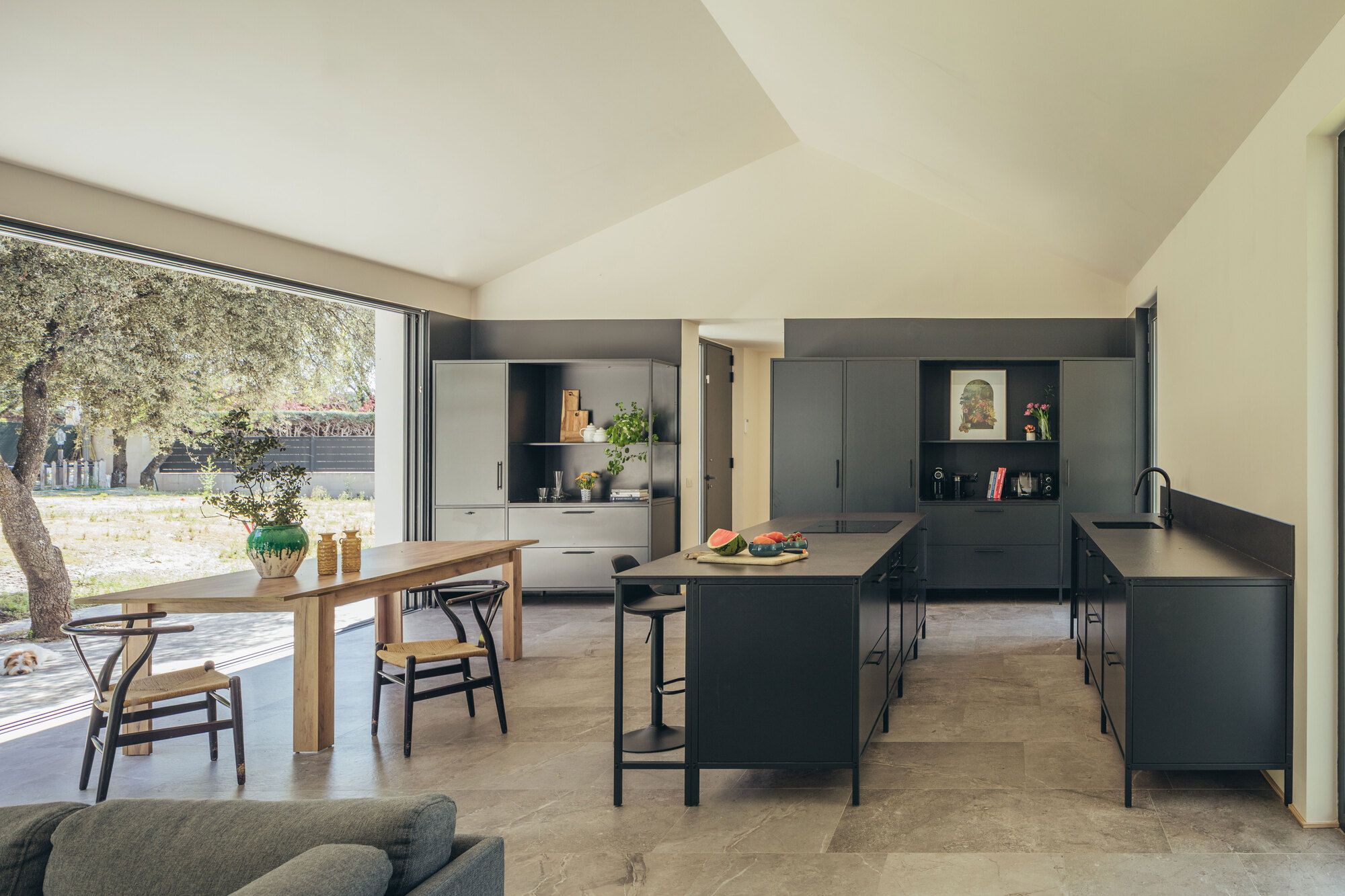
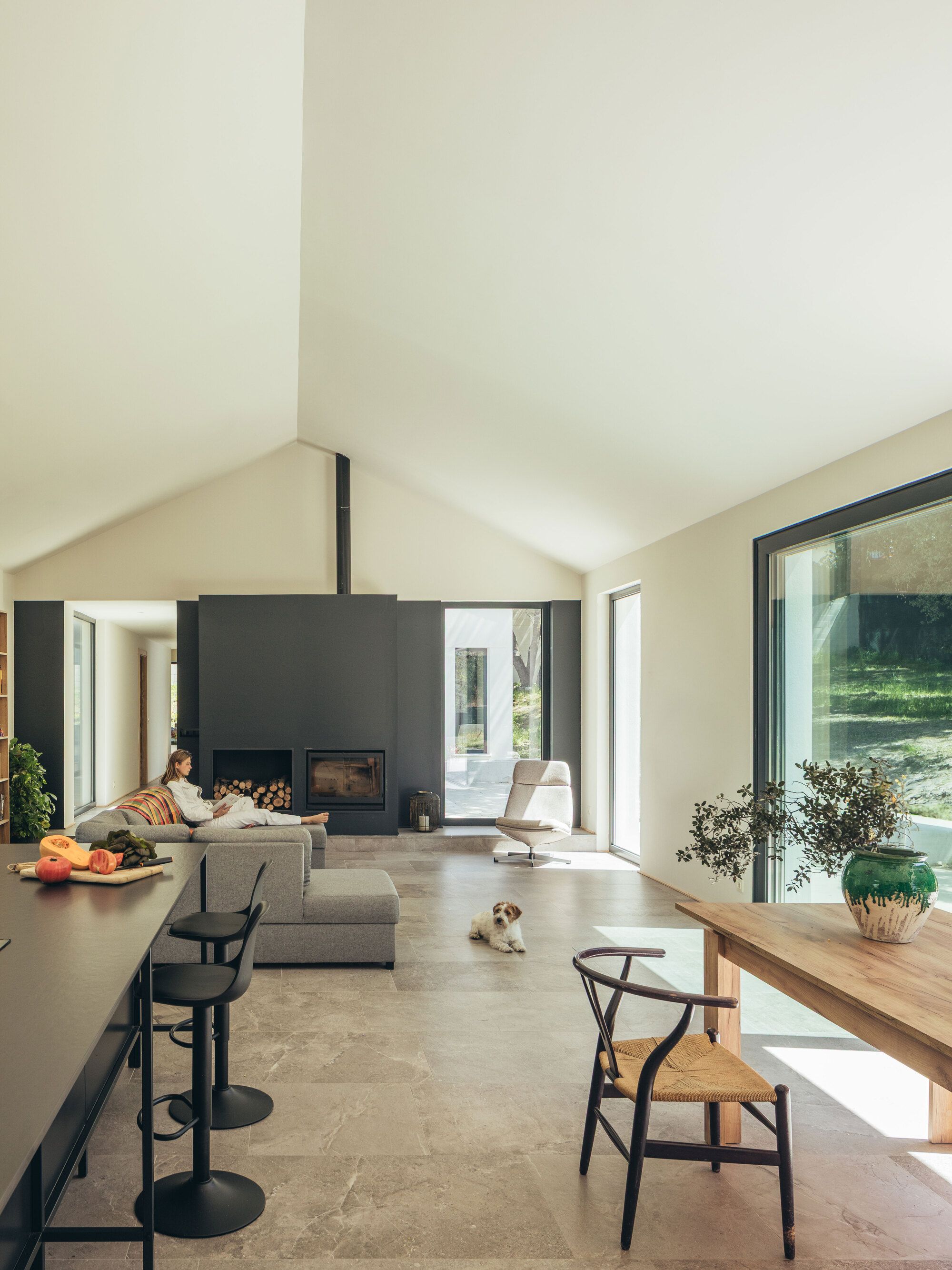
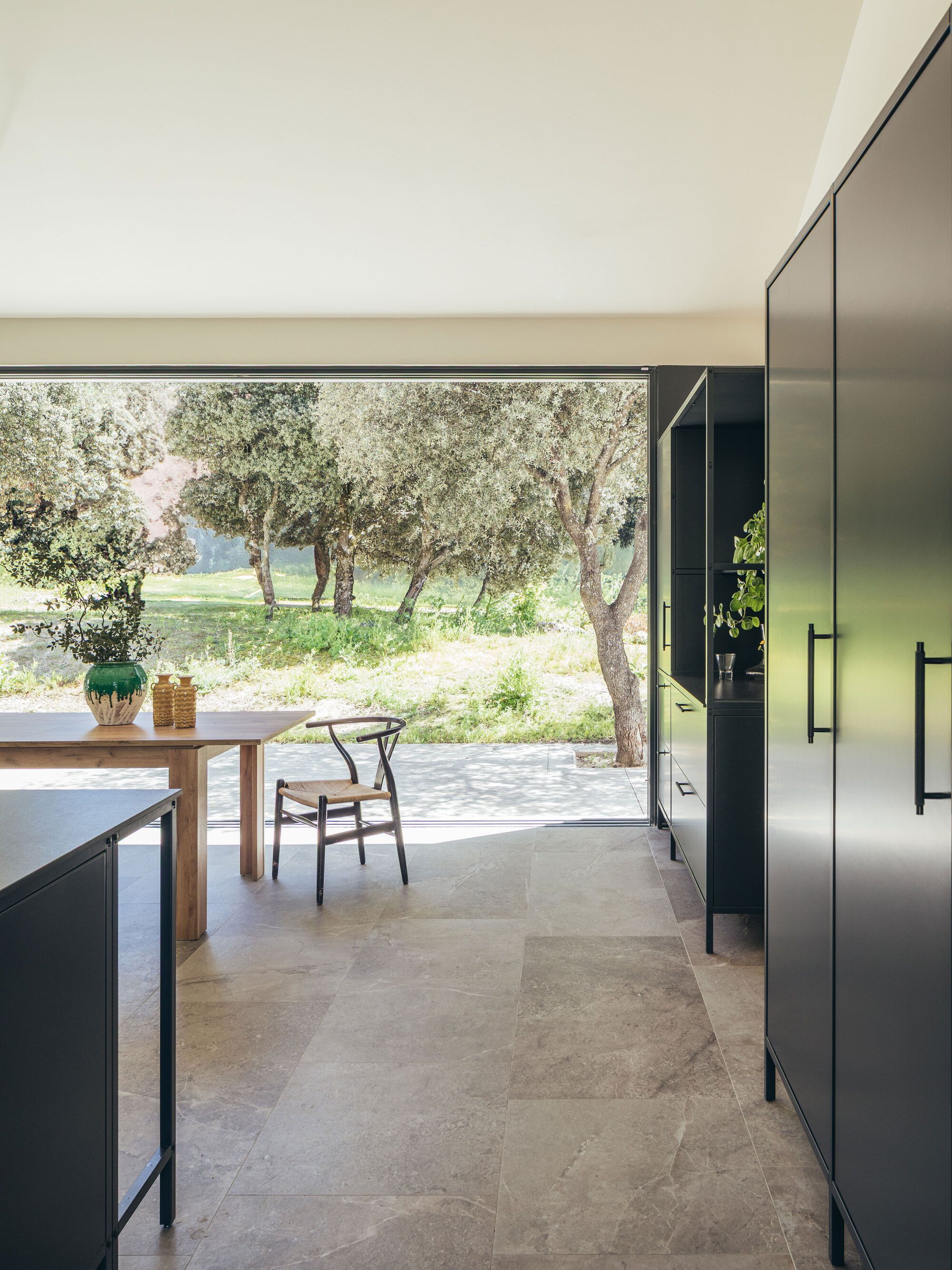
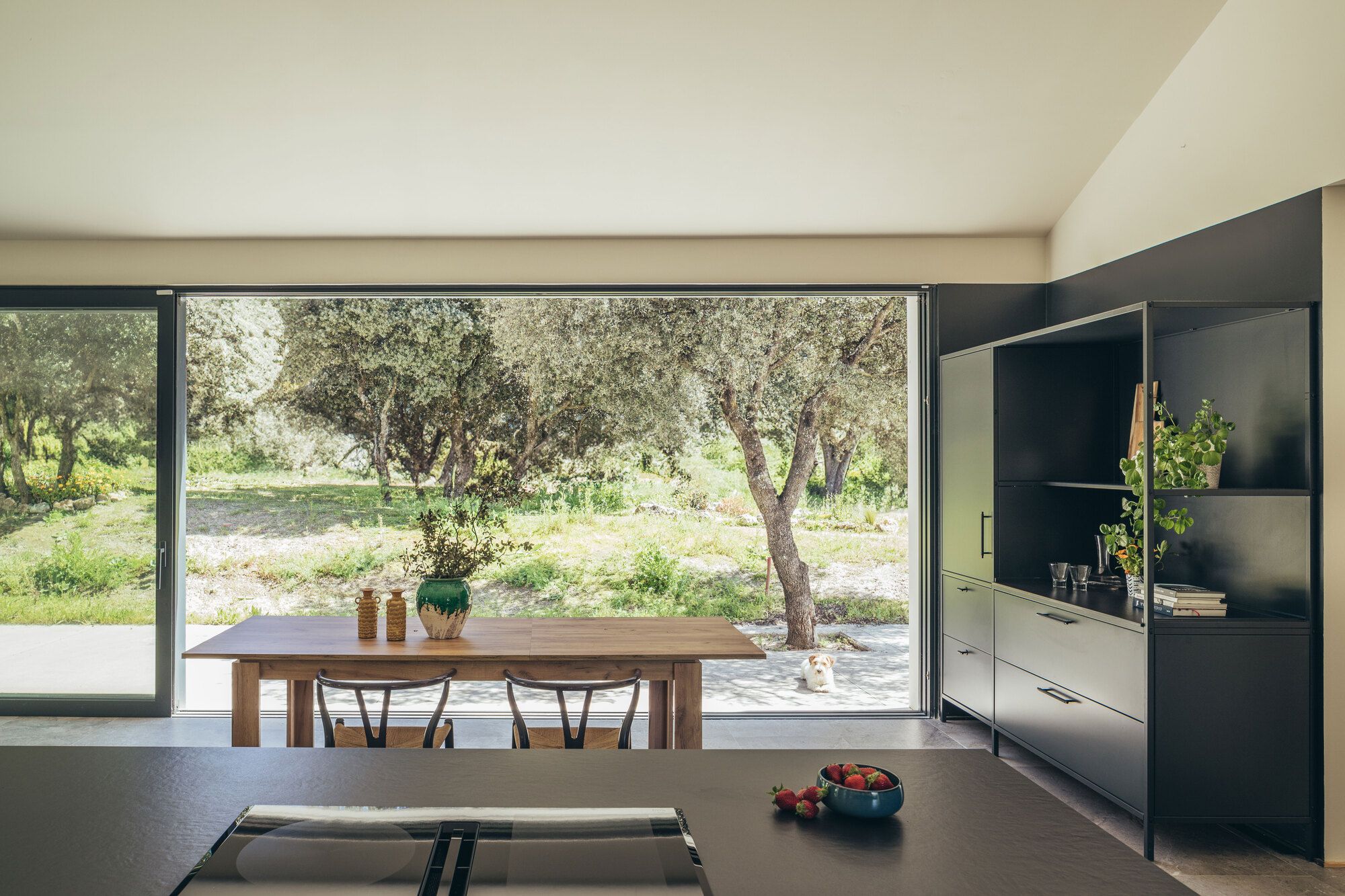
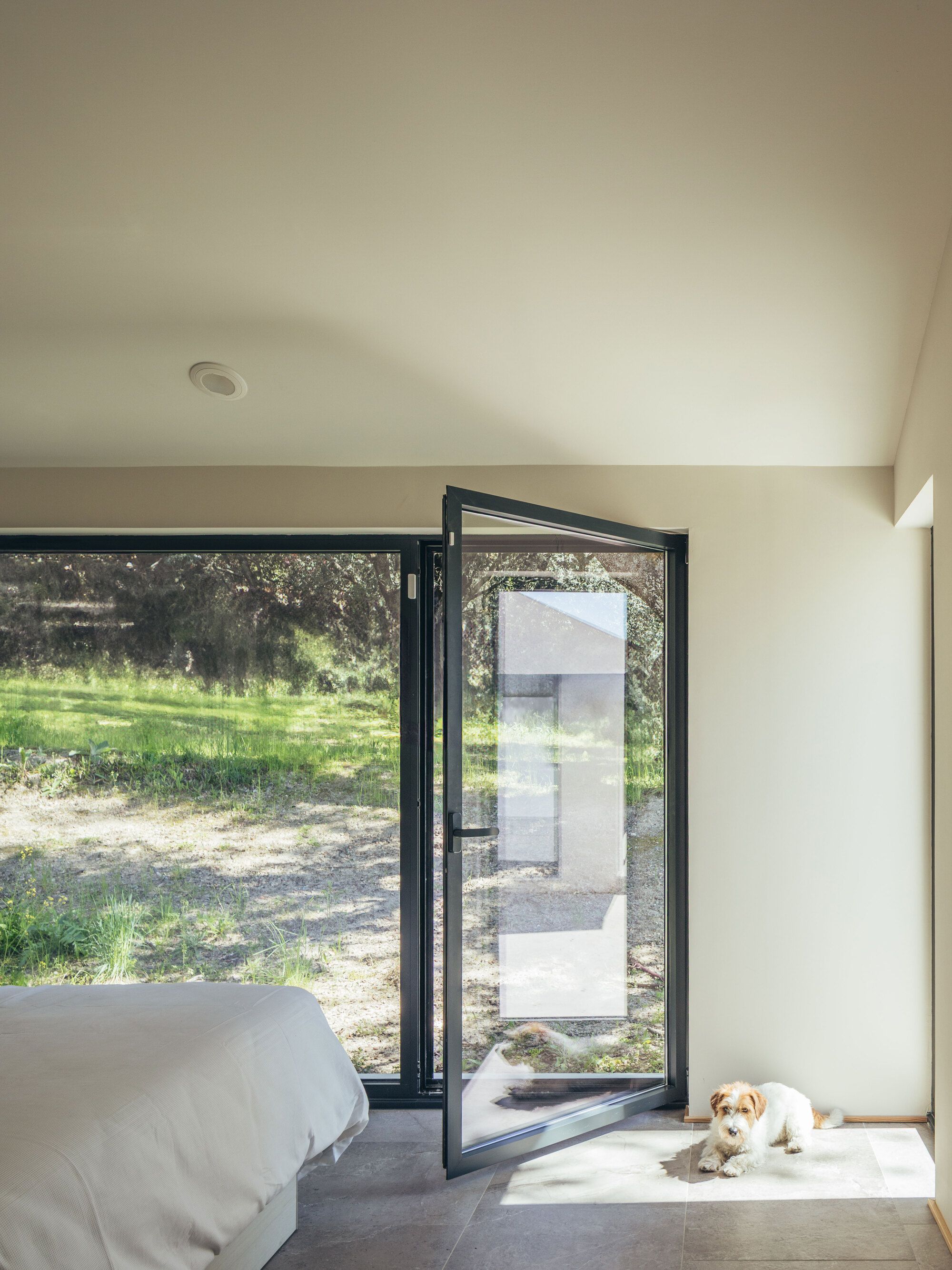
The first volume is for company: living room, dining table, and an open kitchen that faces south toward a sun-lit clearing. Large sliders pocket away, turning the terrace into part of the room when the weather cooperates. Two smaller, slightly offset wings hold the bedrooms. This stagger keeps sightlines clear—no window looks straight into another—while carving out a modest central courtyard. From inside, the courtyard feels less like an outdoor room and more like a widening of the forest floor; there is no hard edge, only scrub limestone, leaf litter, and the next ring of oaks.
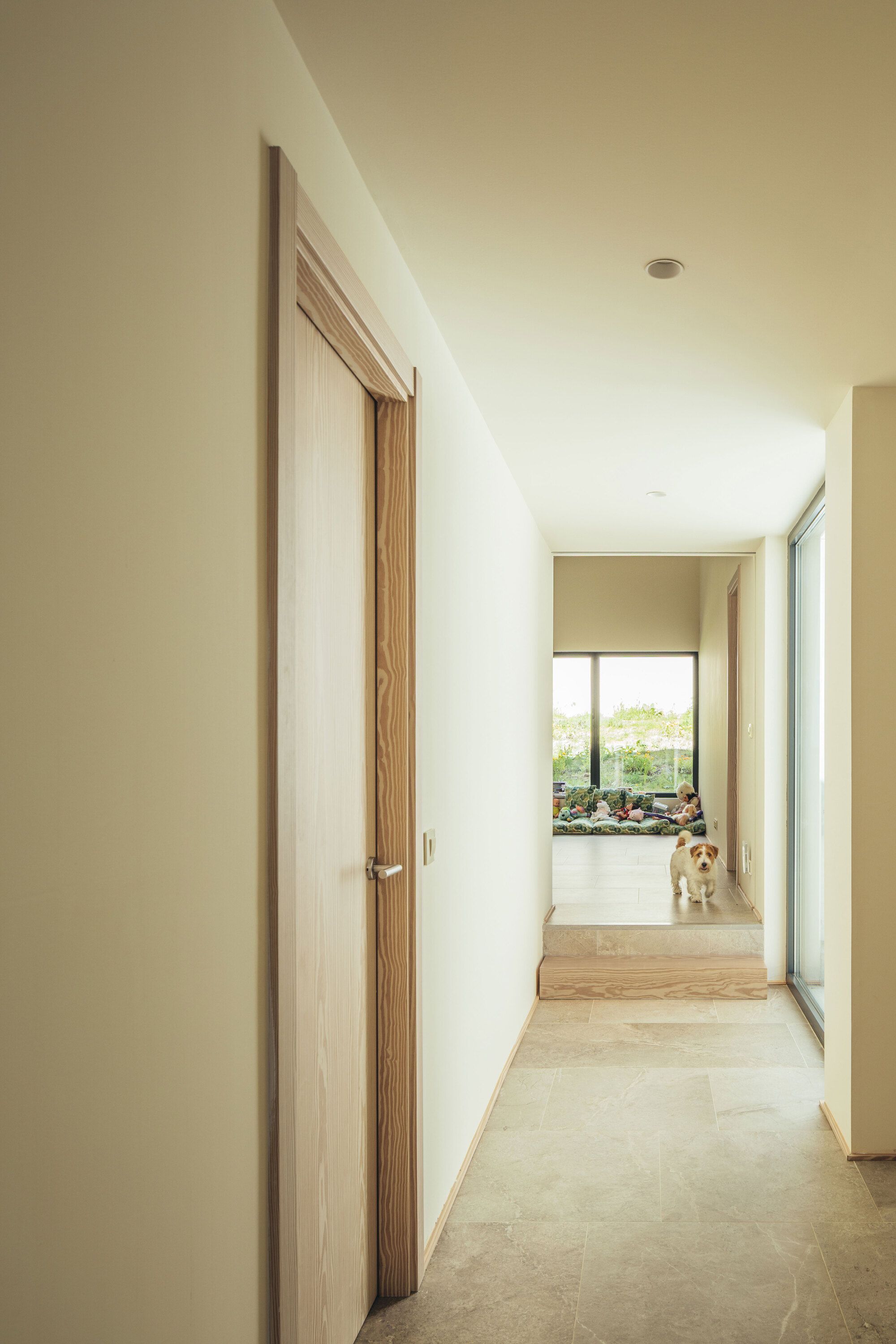
Structure is expressed, not hidden. Load-bearing blocks of aerated (cellular) concrete stay visible on the interior, their pale porosity picking up soft afternoon light. The material adds thermal mass, sound insulation, and fire resistance; underfloor radiant pipes, powered by an air-source heat pump, carry the indoor climate the rest of the way. Windows are aluminium with thermal breaks; mechanical ventilation recovers heat as it exchanges air. The roof wears traditional barrel tiles—fired clay in a dusty ochre that mirrors the local soil—so the house can fade comfortably into its context rather than compete with it.
More&Co’s attention to resource use extends to the custom “Kitchen for Life.” Instead of the usual MDF carcasses, doors and drawers hang from a light steel frame, cutting down on board material and glue. Panels detach easily if the owners ever want to reconfigure the layout, and the open underside keeps plumbing and wiring accessible. LED strips are tucked high under the rafters to reduce glare and avoid lighting the canopy at night, a small gesture toward the area’s dark-sky character.
Walk the stepped section at midday and the temperature shift is telling: living spaces read warm and bright; the bedroom wing, sheltered behind thicker tree cover, lies in mottled shade; the courtyard holds a faint cross-breeze that smells of crushed acorns. The architecture stays in the background, acting as a hinge between under-storey and sky.
For more projects that redefine domestic life through site-specific thinking, browse our archive on contemporary Spanish design.
Photography by Pancho Gallardo