Search






Near Cupar, Scotland, Barboza Blanco Office transforms a roofless stone shell into a one-person riverside dwelling, using timber felled from the forest directly behind it.
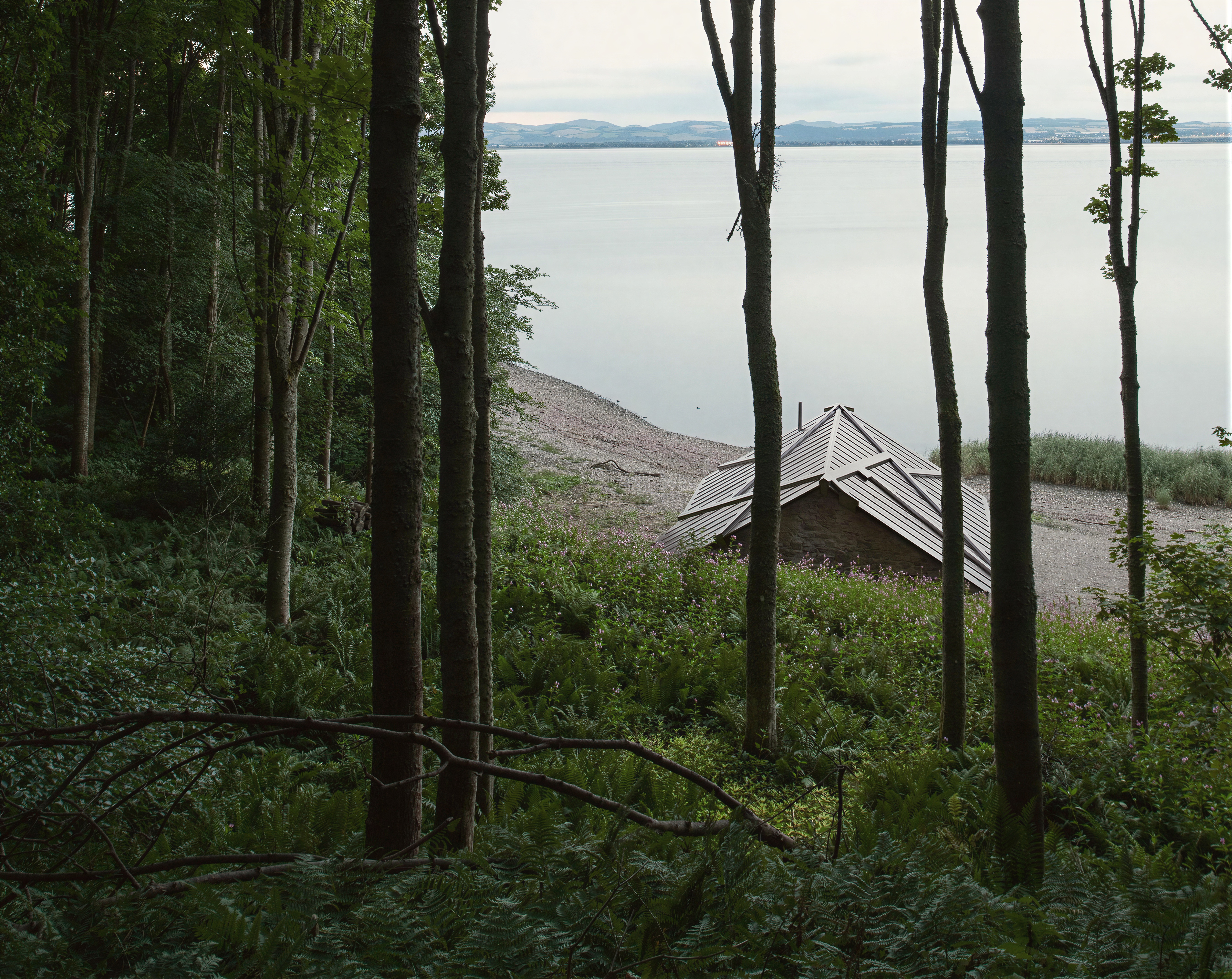
On the banks of the River Tay near Cupar, Scotland, Barboza Blanco Office has rebuilt an unusual kind of boathouse: a tall stone structure with walls up to six meters high and sixty centimeters thick. Its original use remains uncertain, though its scale suggests something more substantial than simple storage for fishing nets. When the client found it, the building had no roof and no easy access. The river lay in front, dense woodland rose behind it, and there was no formal road to the site. What began as a weekend retreat for guests gradually became the client’s own residence for much of the year.
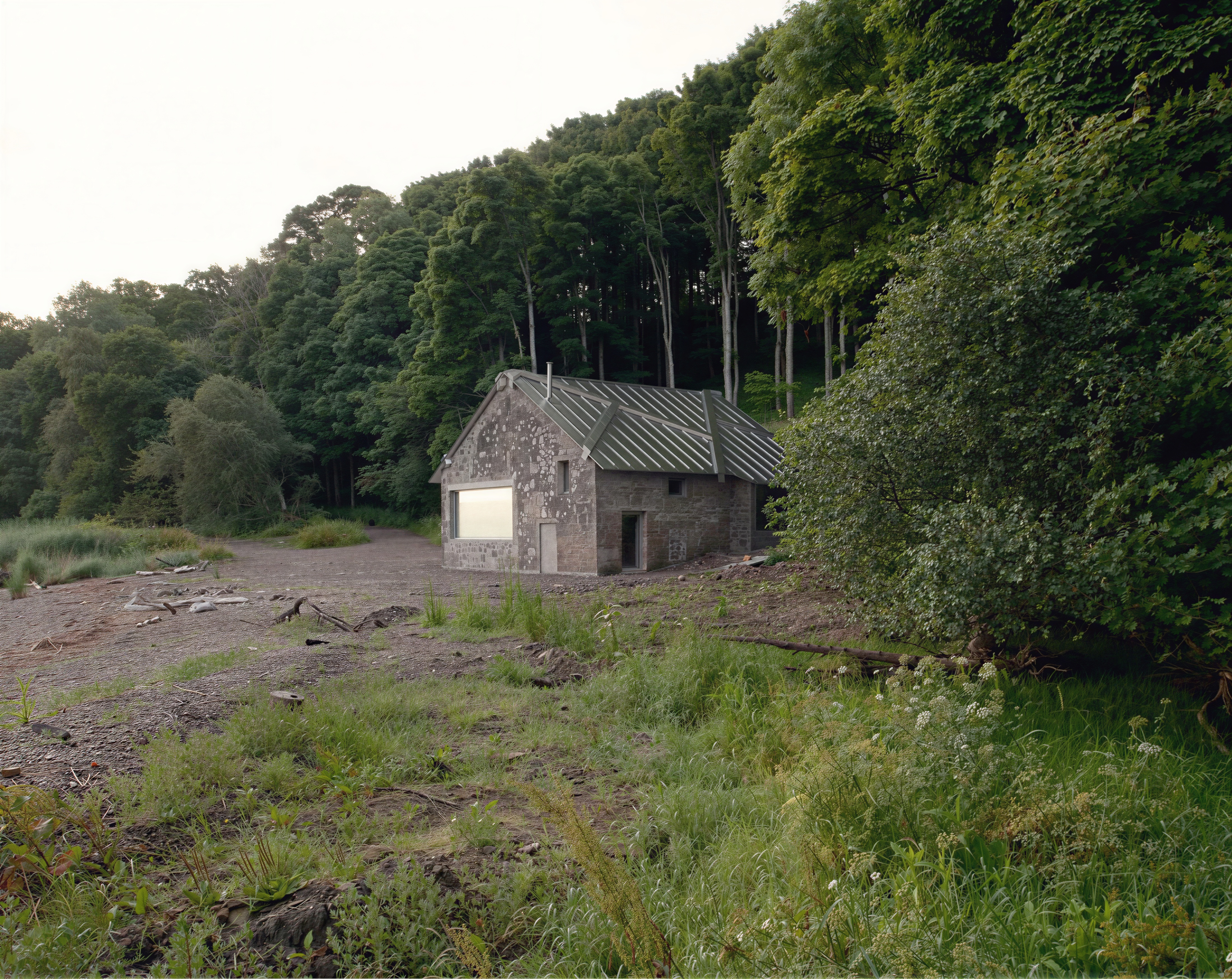
The difficulty of reaching the site shaped the project as much as the ruin itself. For Caio Barboza and Sofia Blanco, whose office had previously worked mainly in north-western Spain, this first construction commission required a direct response to place, labor, and available material. The forest behind the building was already scheduled for clearing, so the architects used trunks harvested just fifty meters from the house. Rather than bring in heavy machinery that would have damaged the forest floor, local forestry workers and logging horses were enlisted to extract the timber. That decision gives the new structure a clear logic: stone retained from the ruin, timber taken from the adjacent woodland, and a corrugated metal roof that completes the volume without disguising its repair.
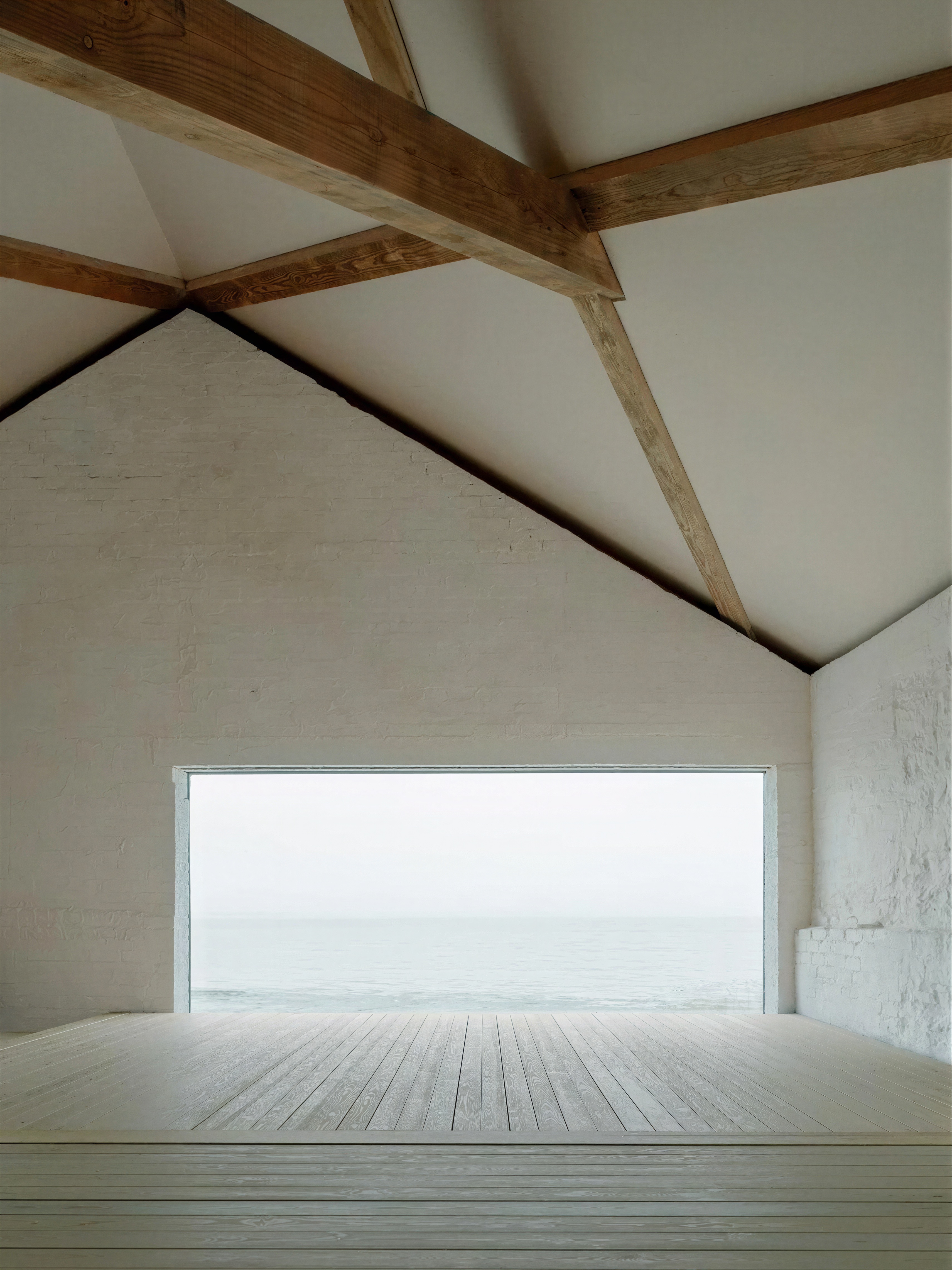
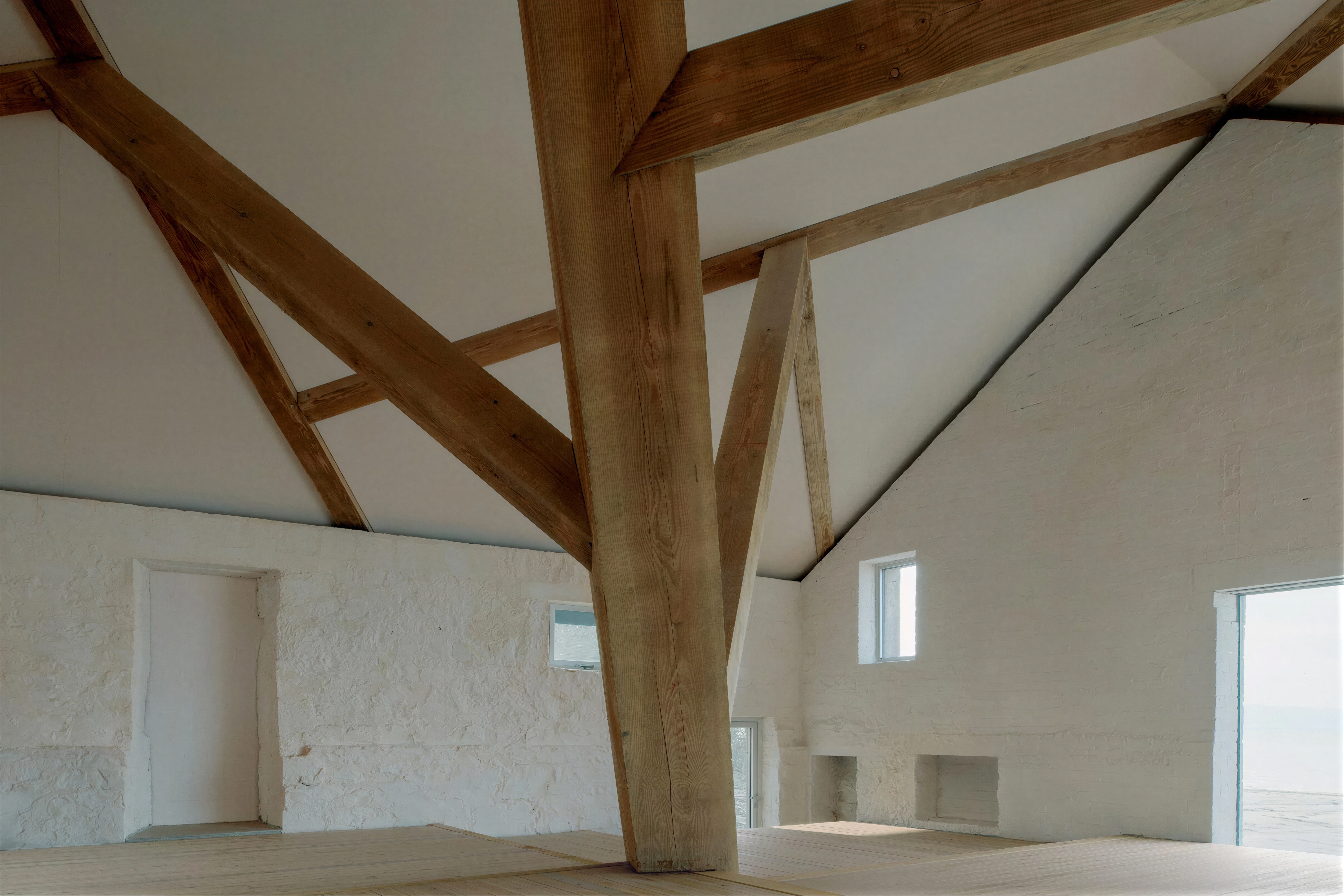
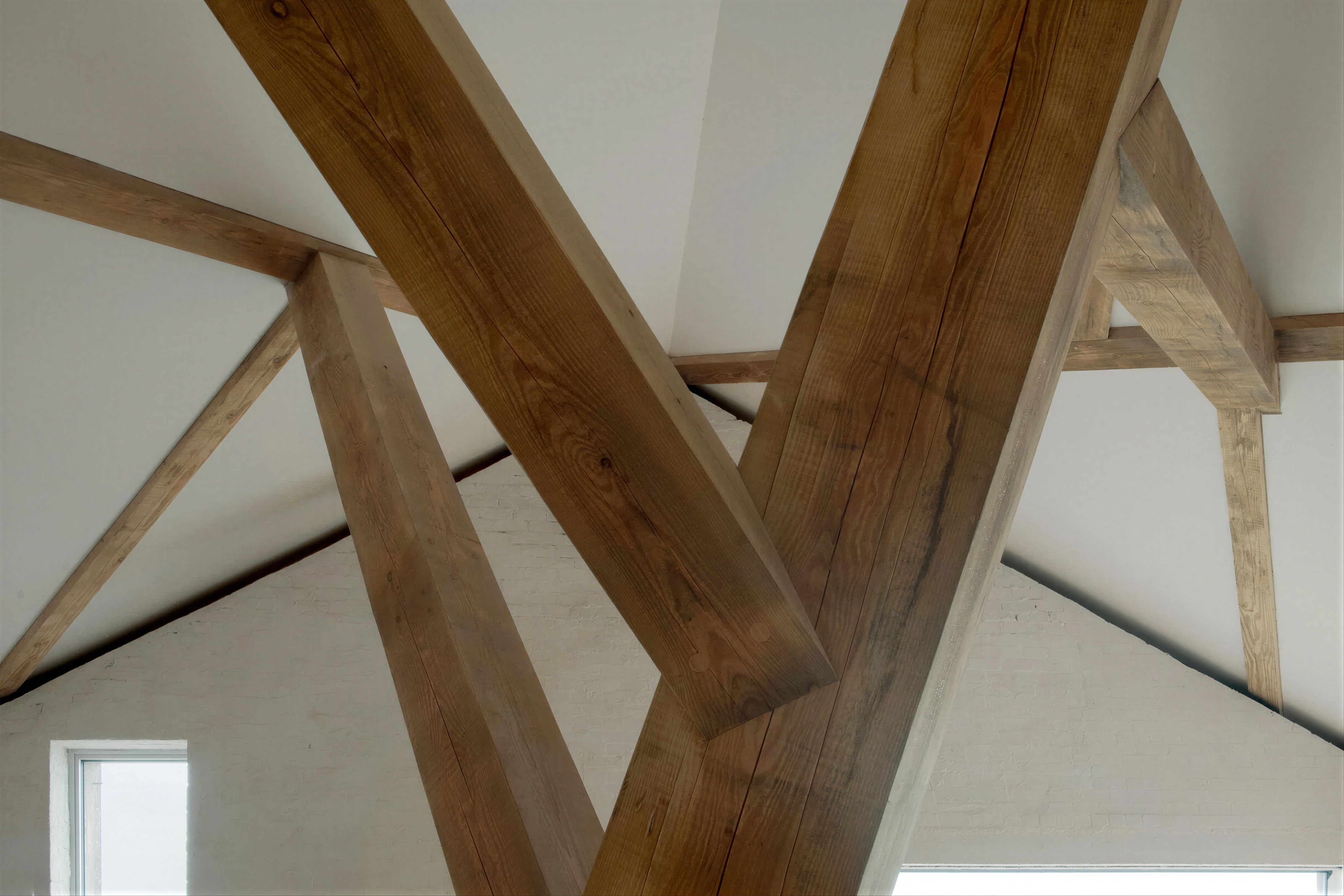
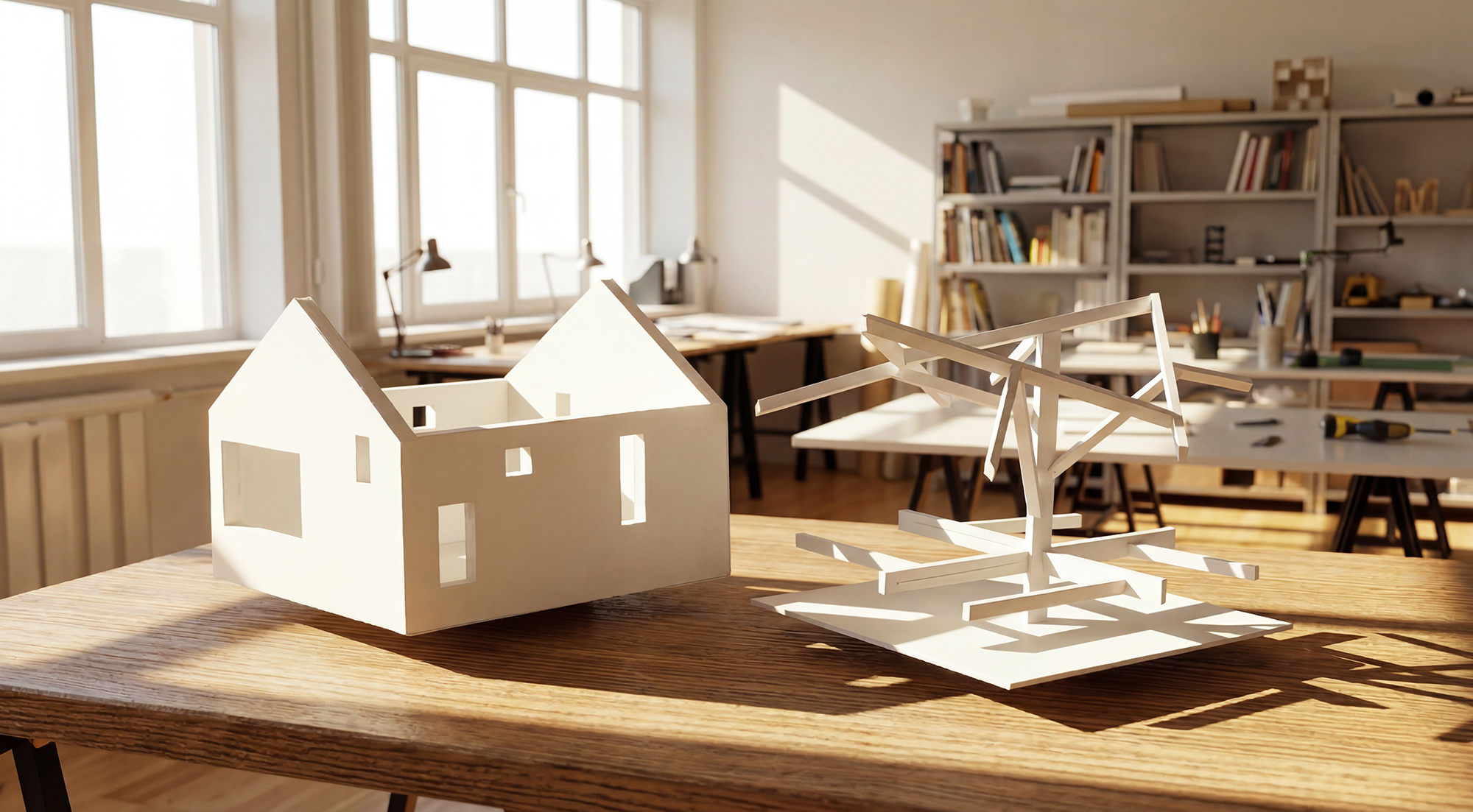
Inside, the construction is simple to understand and demanding to execute. One trunk stands at the center of the house and supports both the roof and the new wooden floor. From it, timber members branch outward, joined with traditional mortise and tenon connections whose precision gives the interior its force. The joinery is not decorative; it is the architecture. To avoid unnecessary cuts into the central support, the floor is divided into four platforms at different heights, organizing the compact plan without partition walls. A kitchenette runs along one wall, a fireplace is built into the outer stone wall near the entrance, and the bathroom and utility room are accessed separately from outside. In photographs by Rohan Strathie, the result reads less like a renovated ruin than a small structural thesis: an old stone boathouse made habitable by a single tree, cut, joined, and set back into the place it came from.