Search






MA Studio channels Beirut’s street‑corner energy into a compact London bakery—kaak on hooks, sesame underfoot, and a warm timber frame that pulls the street inside.
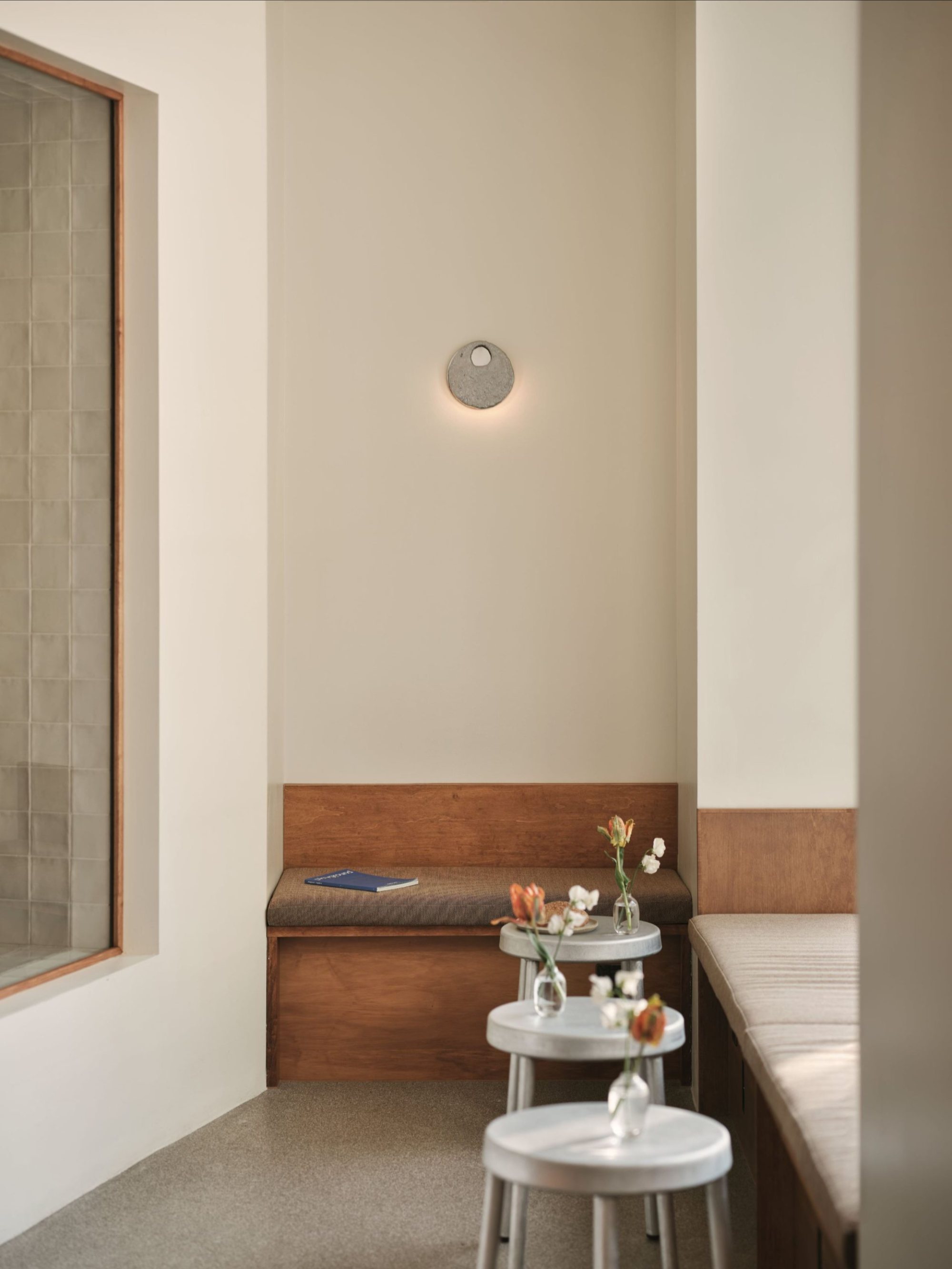
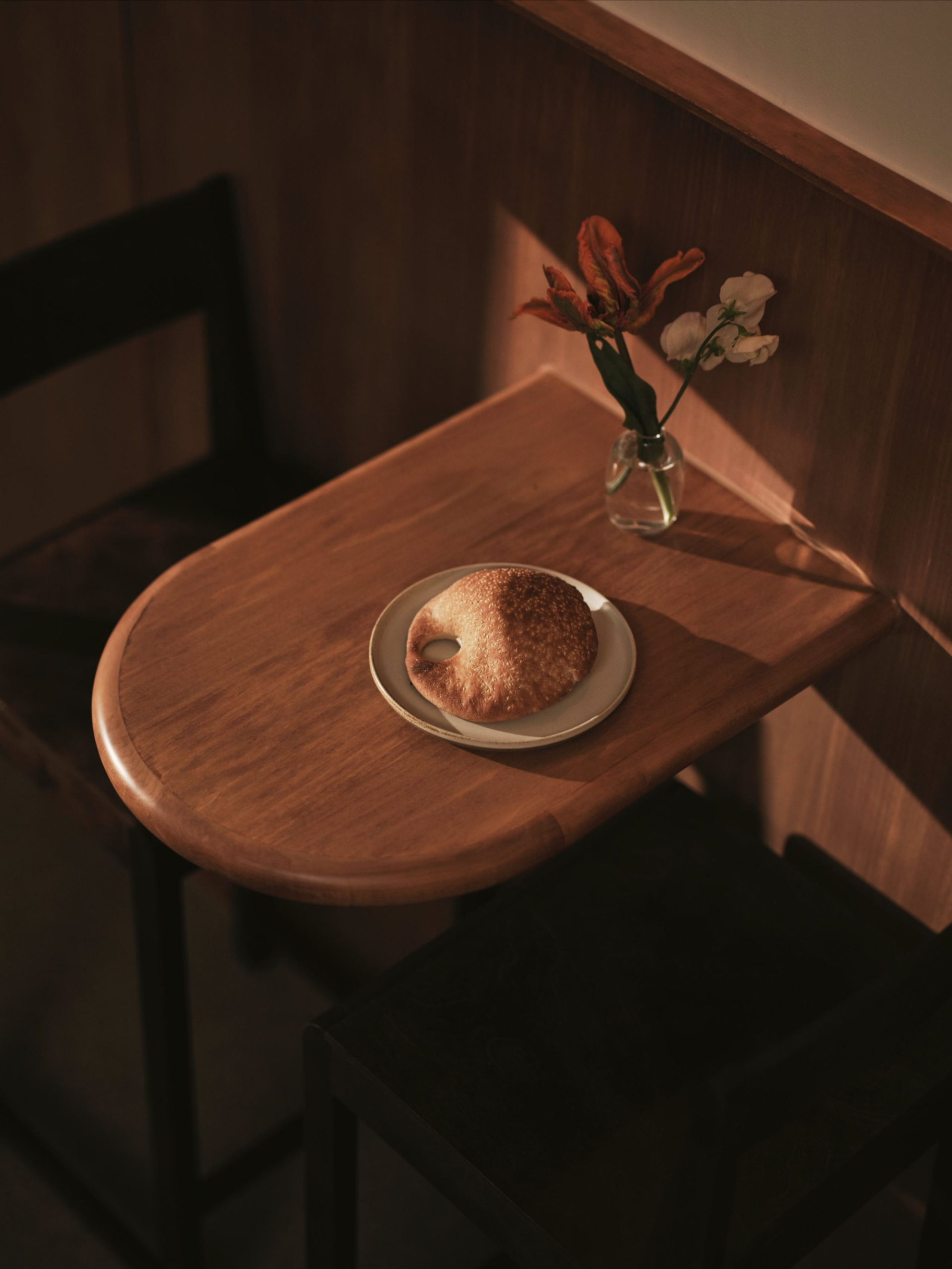
Step off Buckingham Palace Road and the first move is architectural: two reinforced columns and a caramel‑toned timber frame mark the entry, a clear threshold from pavement to pastry. Inside, a speckled poured floor nods to sesame—simsim on kaak—so the surface reads like a quiet echo of what’s being baked. The footprint is tight (about 65 square meters), so MA Studio—led by Rawan Muqaddas and Selma Akkari—keeps everything close and legible: a wood framework that doubles as divider and working furniture, integrating the condiment stand, takeaway counter, and a front‑of‑house display where the bread takes center stage. Large new windows open the frontage to the street; the kitchen remains in view, so you see dough handled, shaped, and fired while the room warms with the smell of toasted sesame. On the walls, Tanya Traboulsi’s photographs anchor the London setting to everyday scenes in Beirut, and custom sconces by Fabraca Studios trace the kaak’s purse‑shaped outline in metal—more signal than theme.
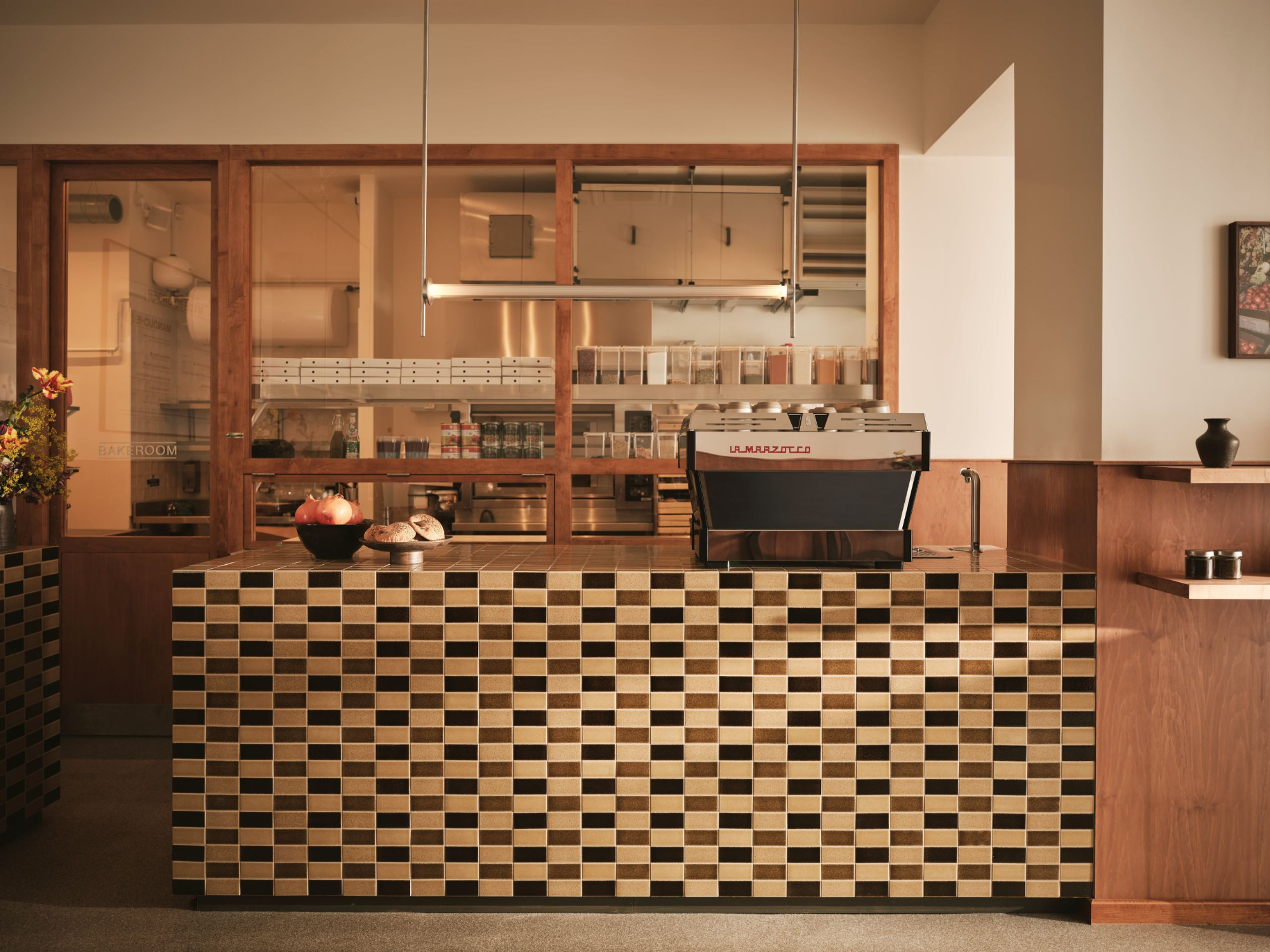
The plan reads like a short sequence. Street to arch; arch to counter; counter to the open kitchen and back out to a small patio when weather allows. Hanging hooks hold fresh kaak at eye level—an unmistakable gesture lifted from vendors’ rigs—and the checkerboard pattern that wraps the counters picks up a familiar pastime: backgammon boards seen in cafés across Lebanon. Materials carry the room without noise: timber at the entrance and wall panels; colorful artisanal tiles across the counter faces; stainless and flame behind the scenes. The palette is warm and direct, and it helps the space do what it needs to do—move people, frame the baking, and keep sightlines clear from the street through to the ovens. Common Breads is small, but the choreography is careful: circulation flows, the display reads from outside, and the working core stays close to the customers who came to watch as much as to eat.

What you notice after a few minutes is pacing. Light falls across the sesame‑flecked floor; a tray comes out; hooks fill and empty; conversation slides between Arabic and English. The design links these simple beats to cultural memory without turning the room into a set. It’s a bakery first, and the references work because they’re folded into use: the lamps cue the bread’s shape without shouting; the photos bring the street downstairs into focus; the timber frame steadies the whole. Just beyond the door, Belgravia hums. Inside, the counter is at the right height for a quick man’oushe and coffee; the kaak display reads like a promise you can smell. It’s an everyday place tuned with care—clear, welcoming, and grounded in the craft that’s happening in plain sight.
Photography, Felix Speller.