Search






The transformation of a plain stable into a bold structure that houses light-filled spaces where creativity can thrive.
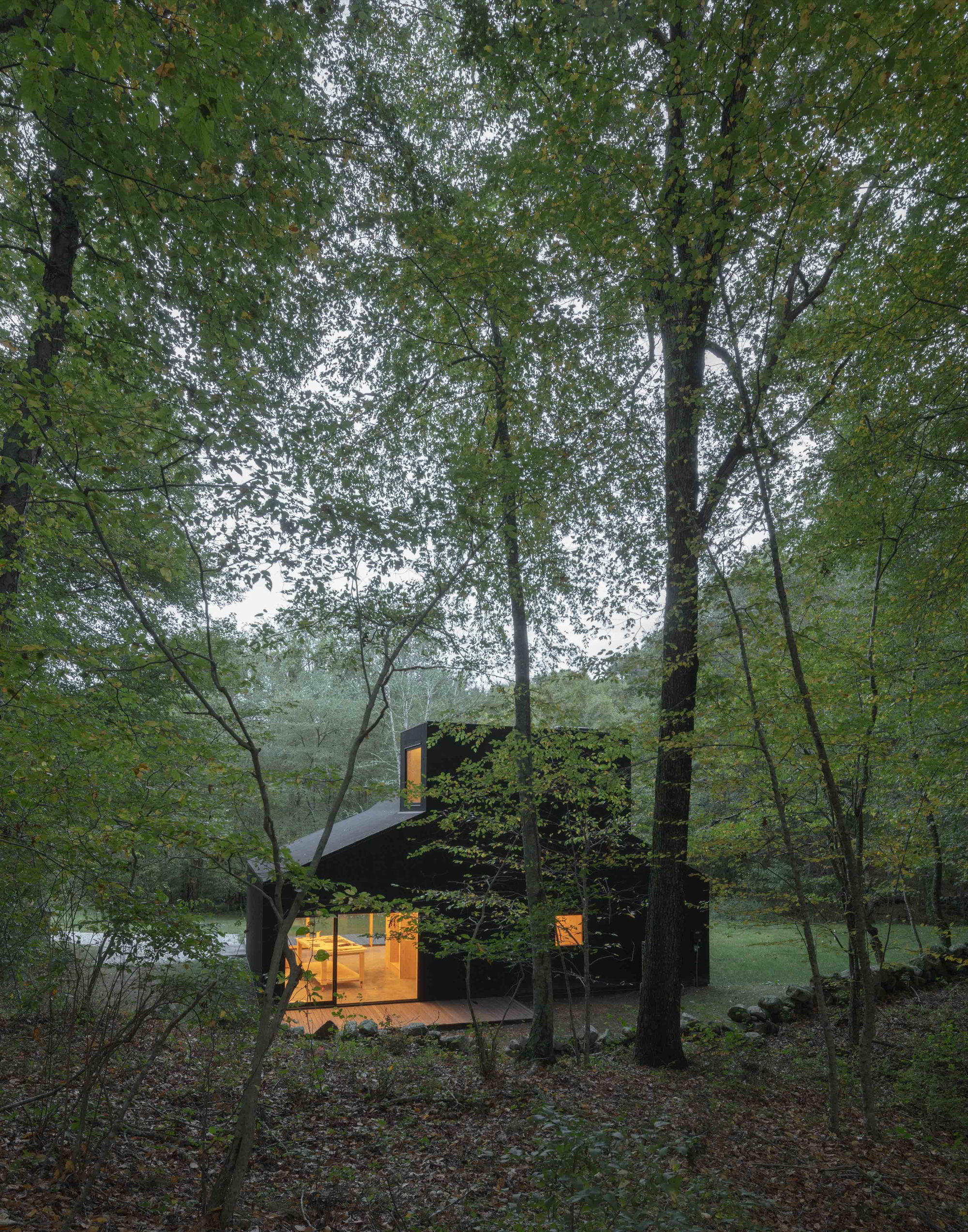
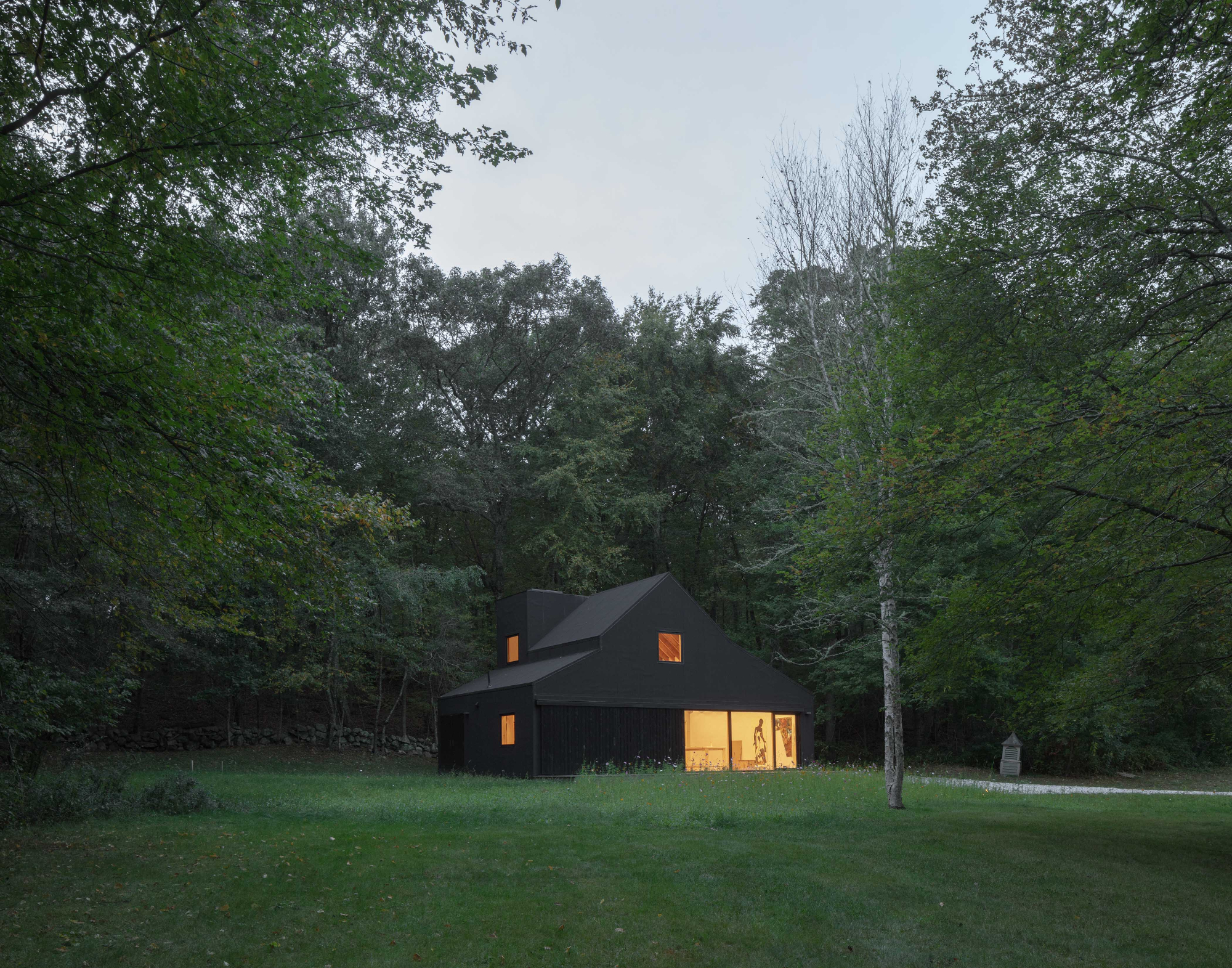
Brooklyn-based practice Worrell Yeung has transformed an unremarkable 1980s stable into Studio Barn, a compact, light‑filled workspace for a renowned artist couple in Rhode Island. Set on a private, wooded site surrounded by rocky outcroppings and natural wetlands, the art studio sits away from the main house—reached by a quiet walk through a meadow that skirts a vernal pool. The separation is intentional: a short, everyday ritual that clears the head before work begins.
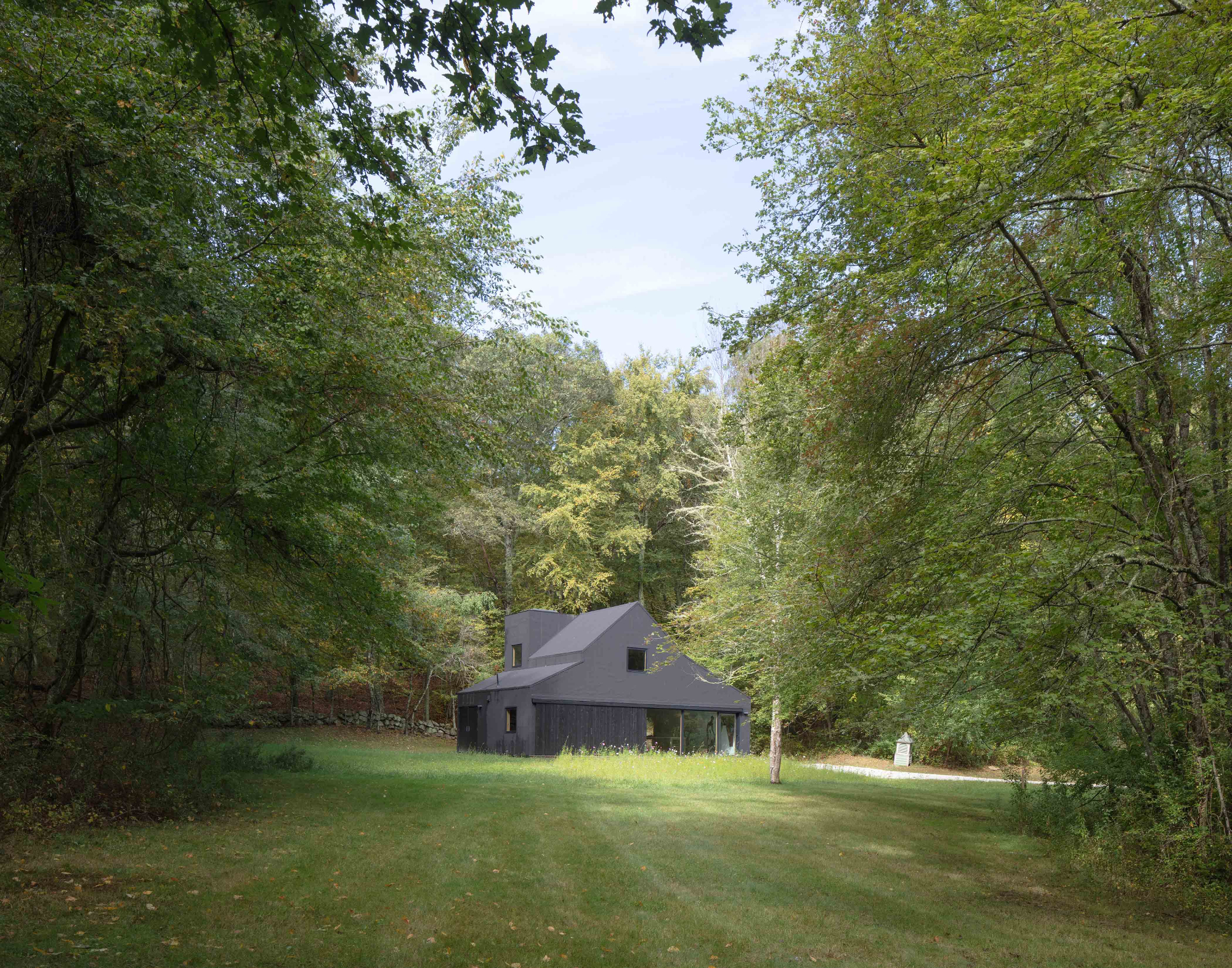
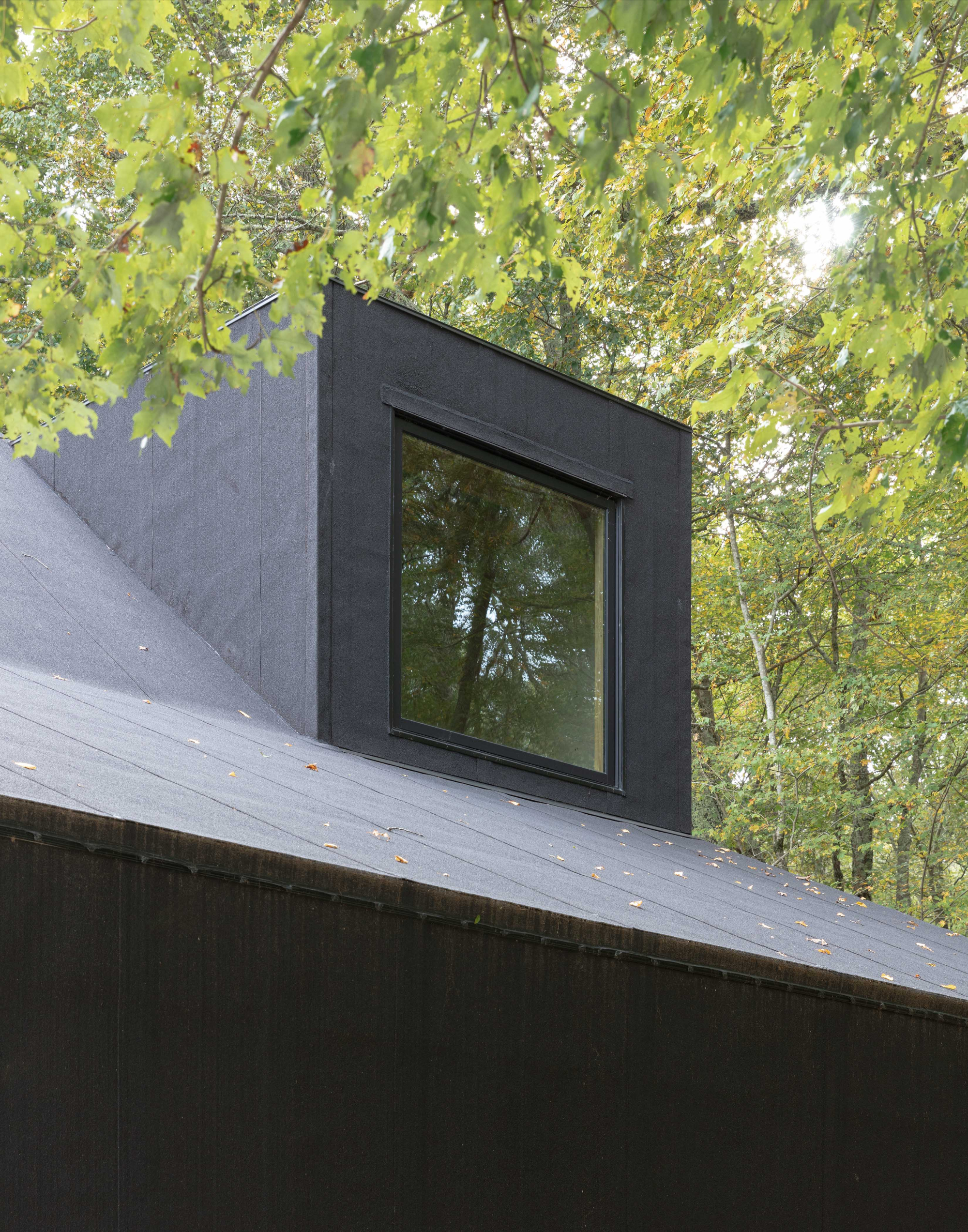
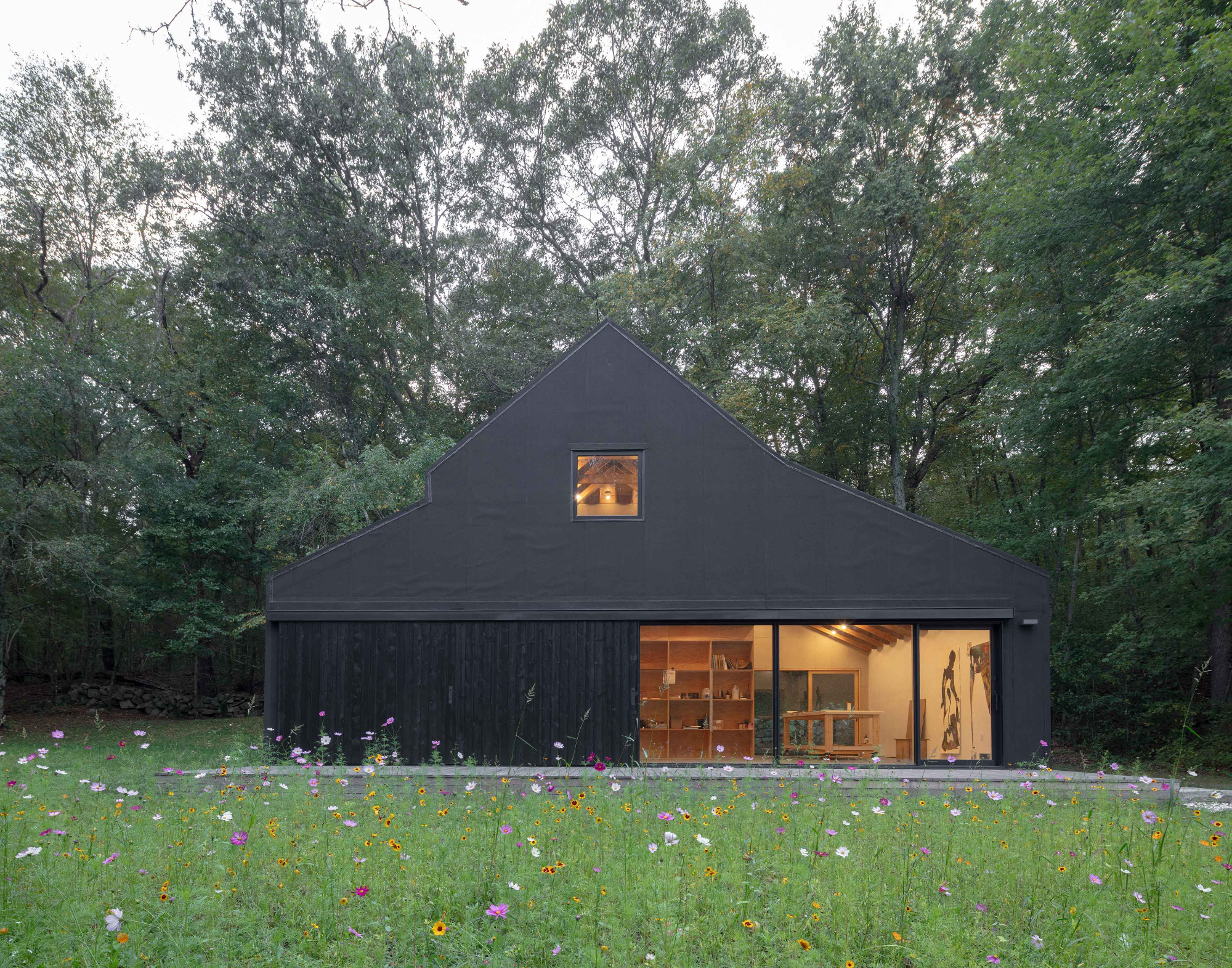
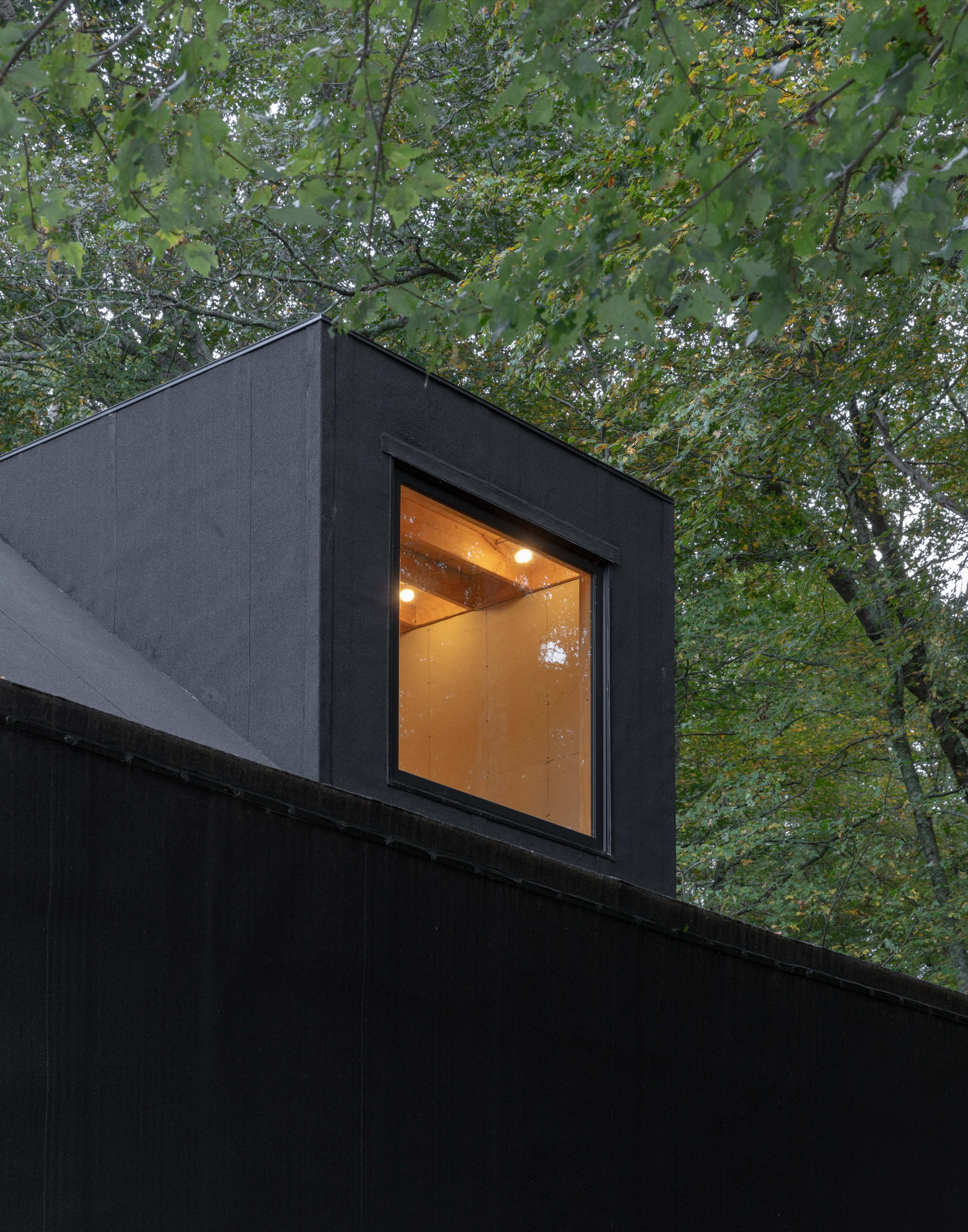
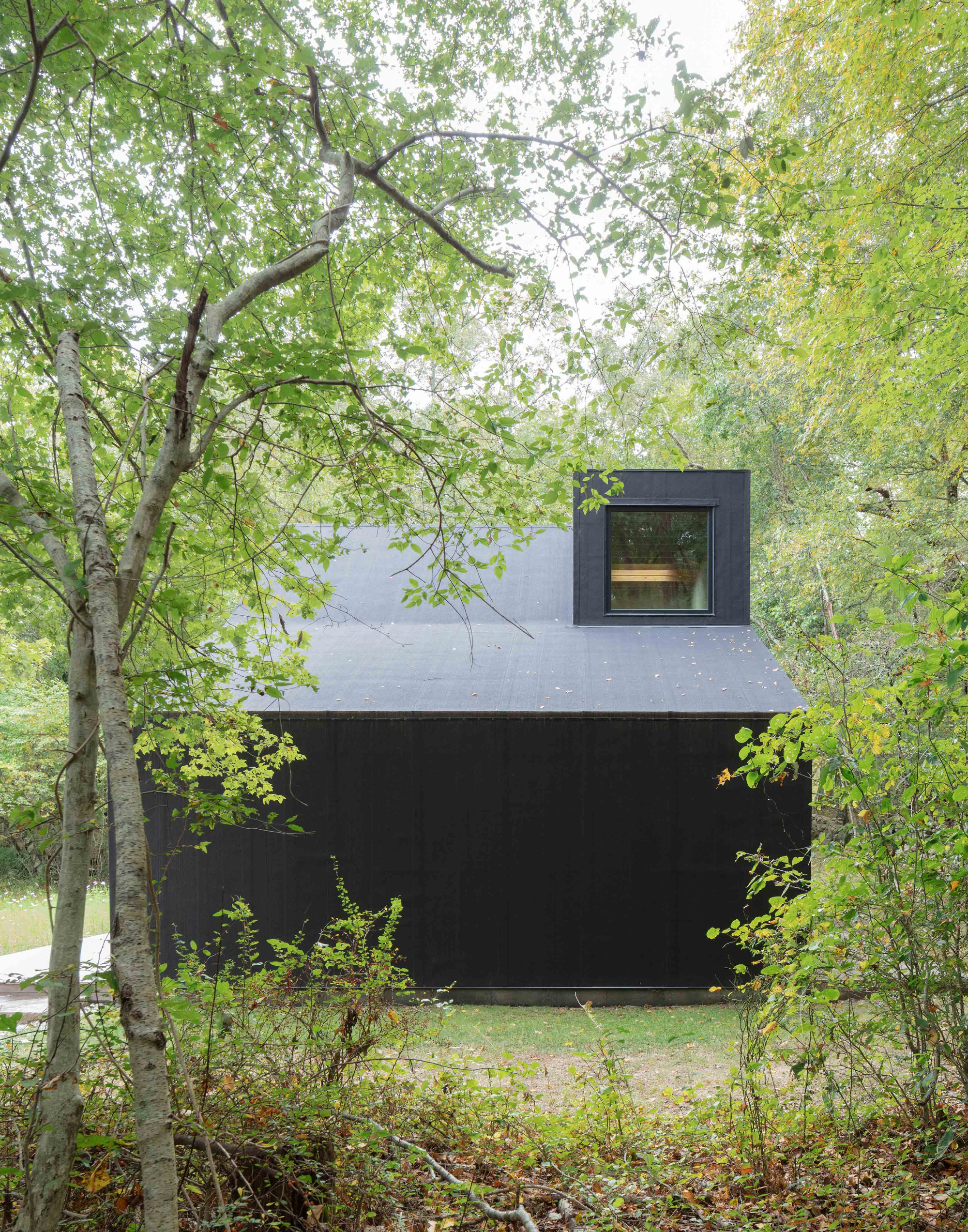
The conversion starts with subtraction. The architects stripped down the building then sharpened the profile with a new dormer. What remains is a taut, slightly asymmetrical gable that reads as one clear shape in the landscape. Rather than lean on farmhouse nostalgia, the team wrapped both roof and walls in commercial‑grade asphalt roofing sheets. It’s a common material used in an uncommon way, and it does three things at once: unifies the envelope, keeps costs in check, and gives the small structure a single, confident expression. From a distance, the building appears uniformly black; up close the surface shows a fine texture that shifts with weather—matte under cloud, a soft sheen after rain.
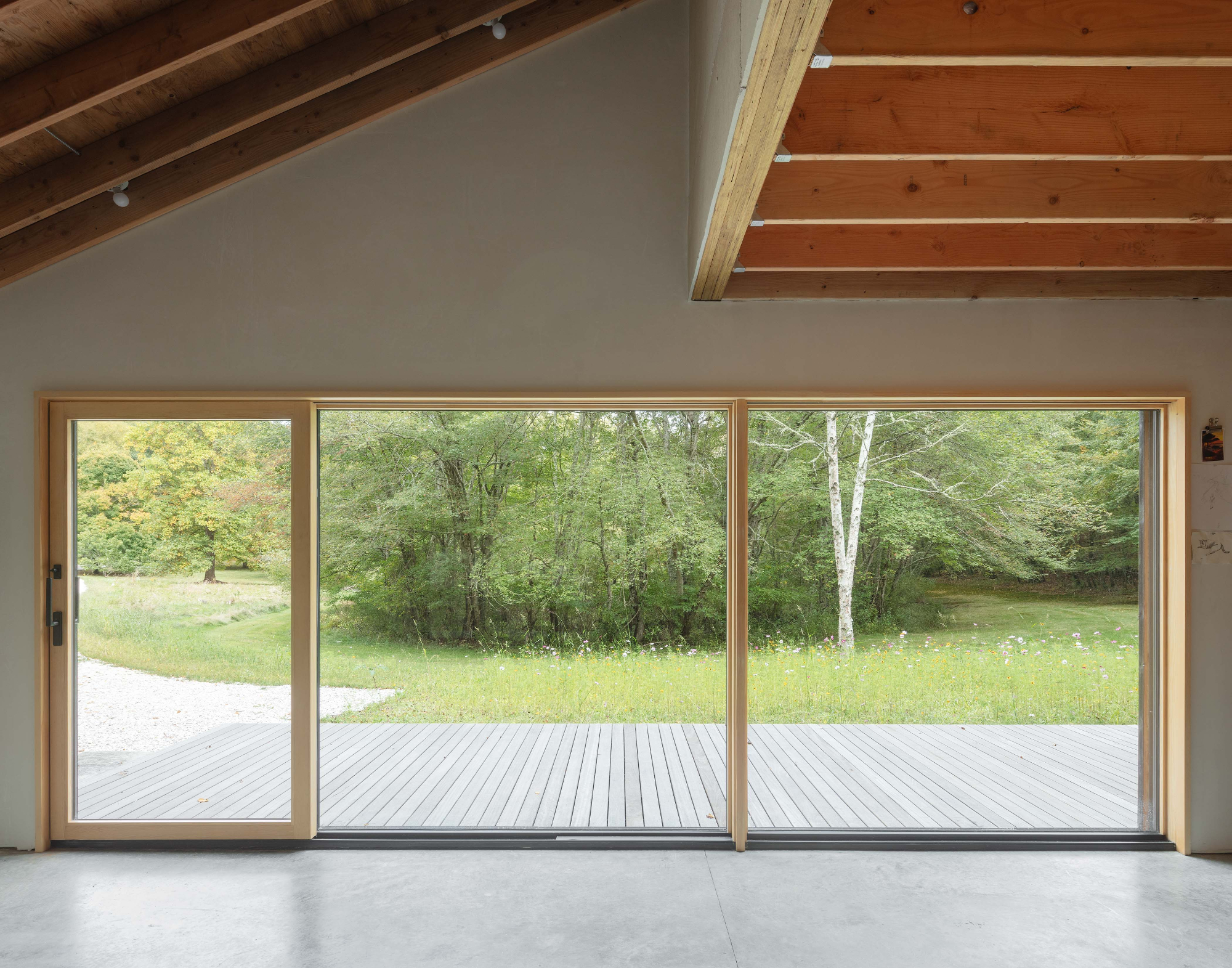
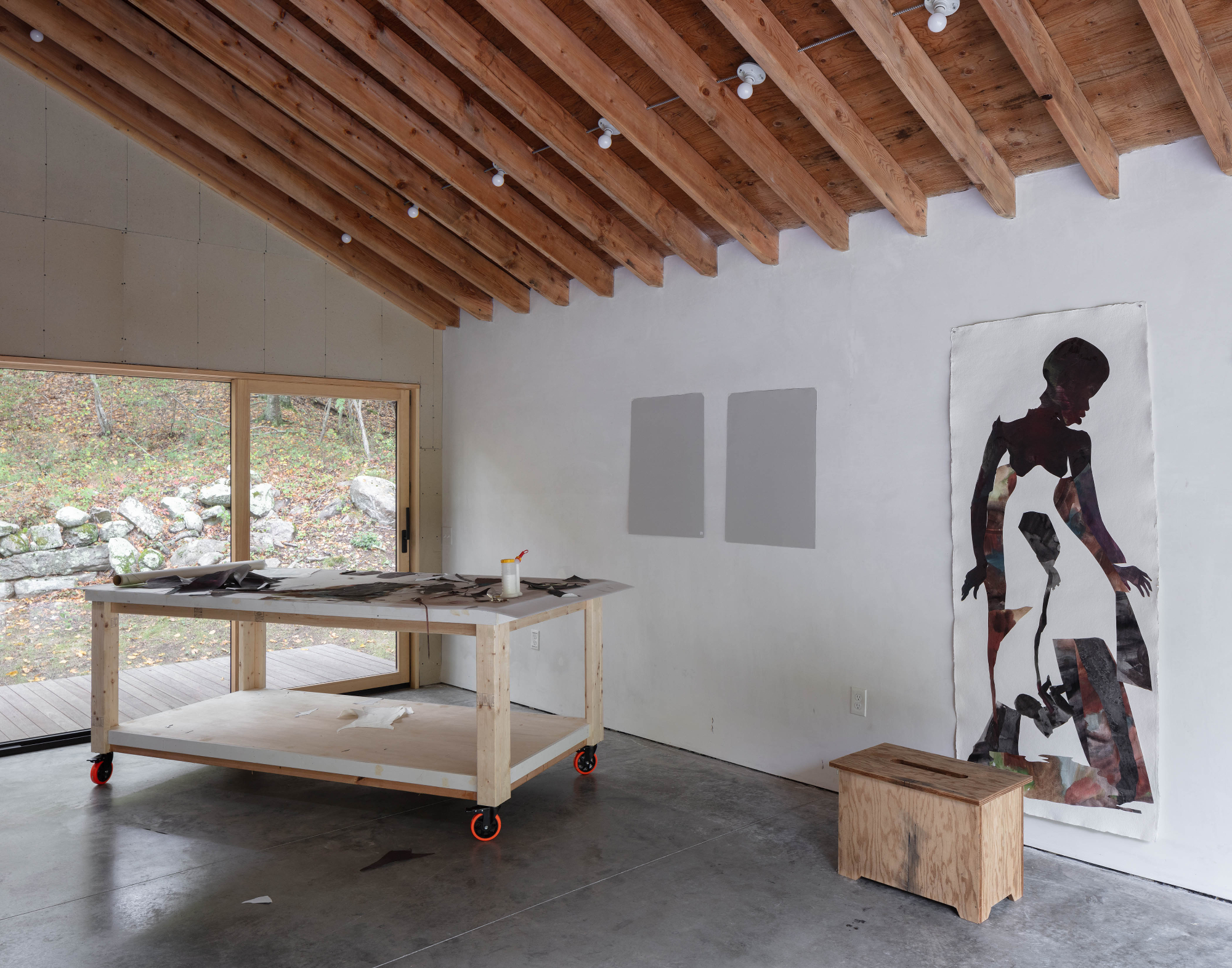
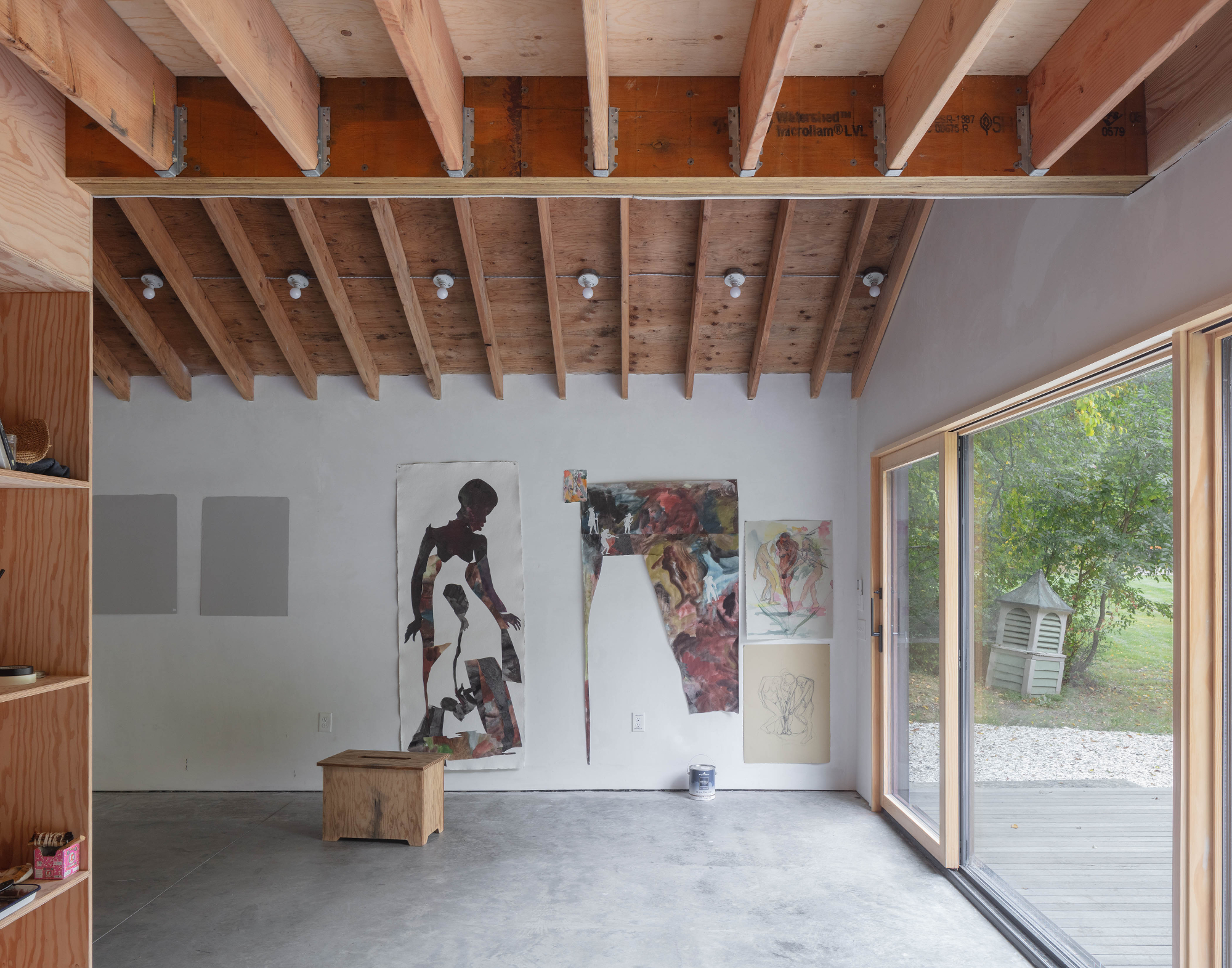
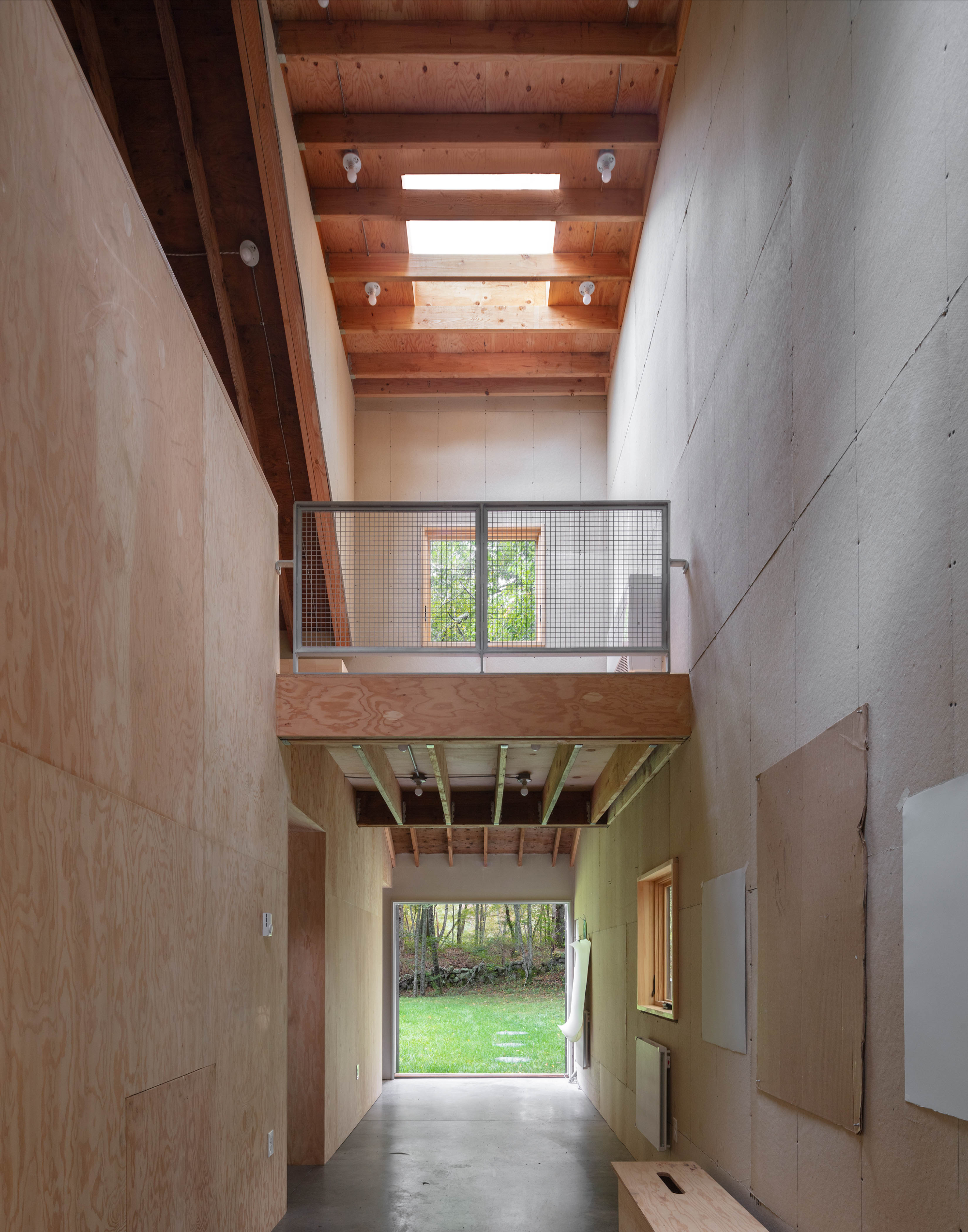
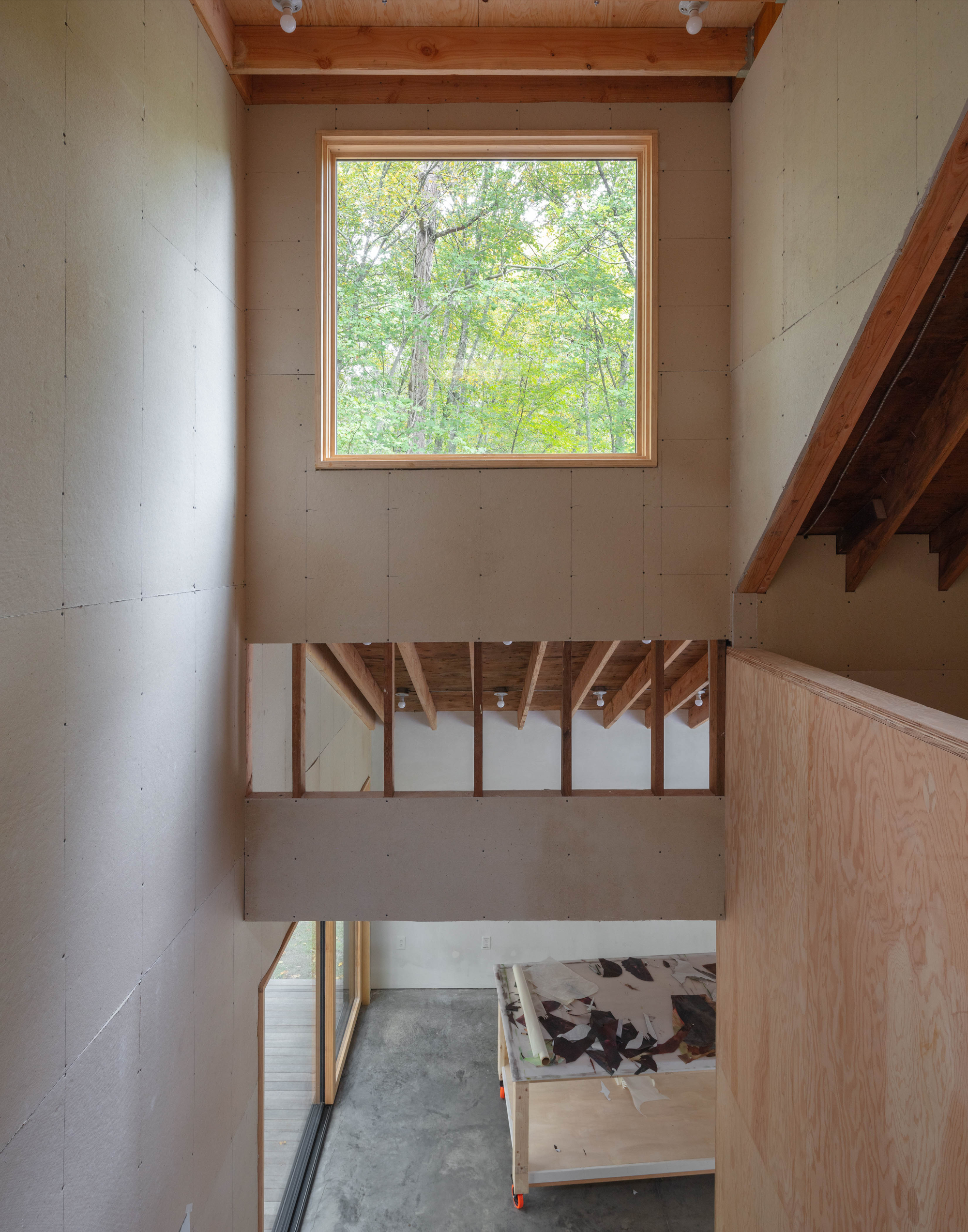
Natural light is the focus of the brief, and the plan takes it seriously. On the east side, a 17‑foot span of glazing brings in steady morning light that’s bright but not harsh. For privacy, a full‑height sliding shutter pulls across the opening—functional first, but also a quiet nod to the agricultural buildings that once stood here. At the rear, the dormer admits north light, which painters and photographers prize for its evenness and color fidelity. Inside, that dormer sets up a double‑height bay with a 21‑foot work wall—room enough for large canvases, pinned studies, and in‑progress pieces without crowding the floor.
A practical layout that maximizes function while allowing flexibility for different art projects.
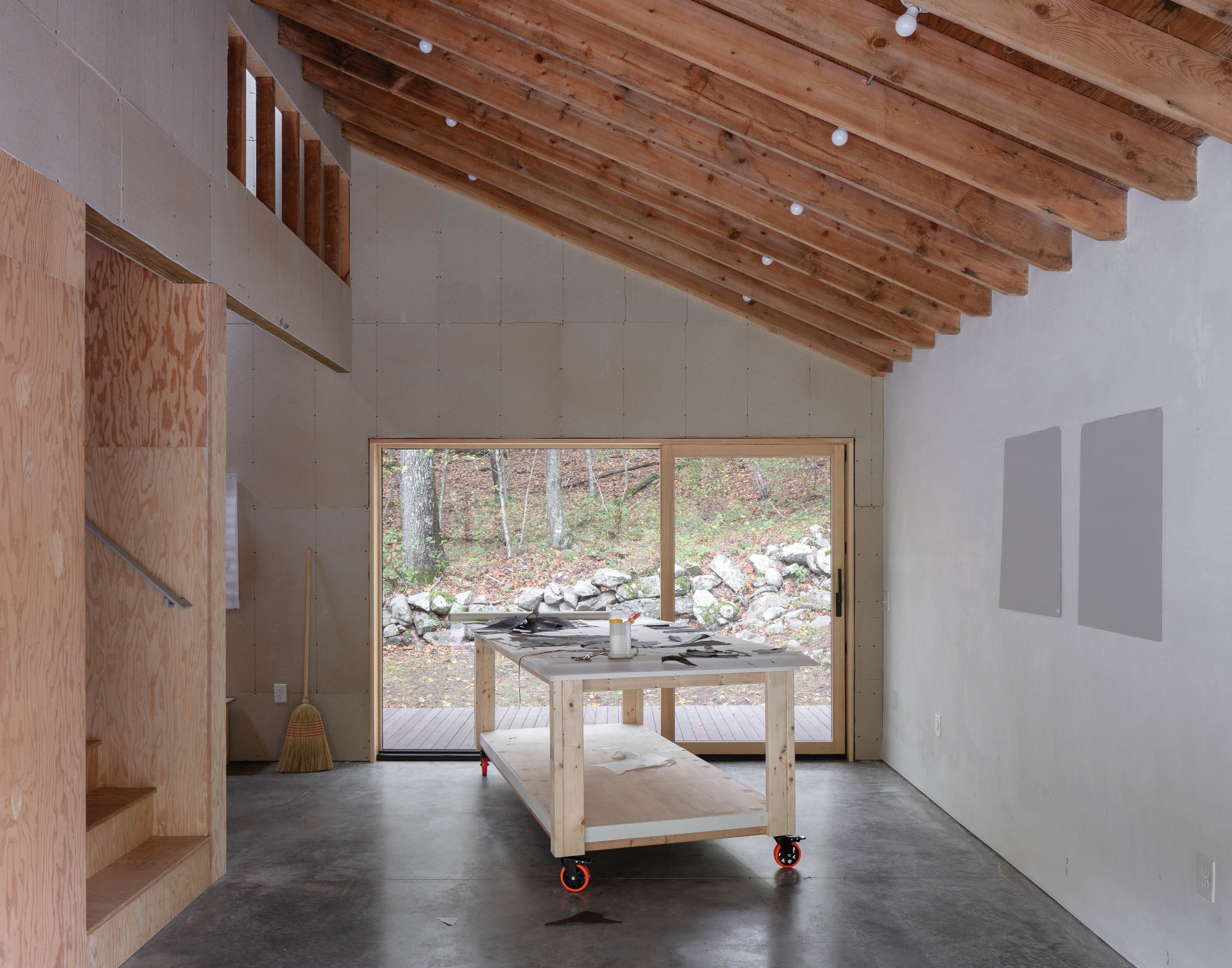
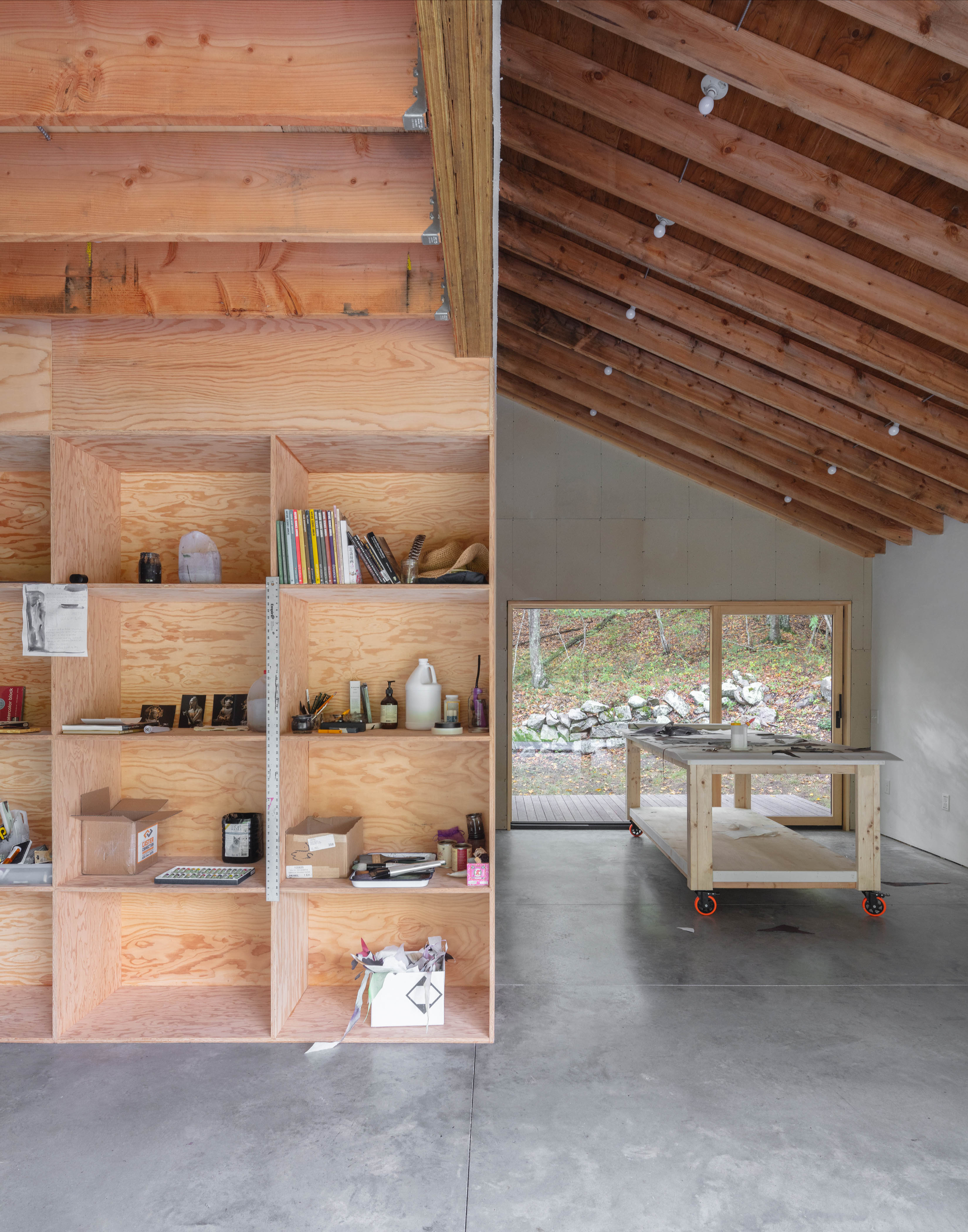
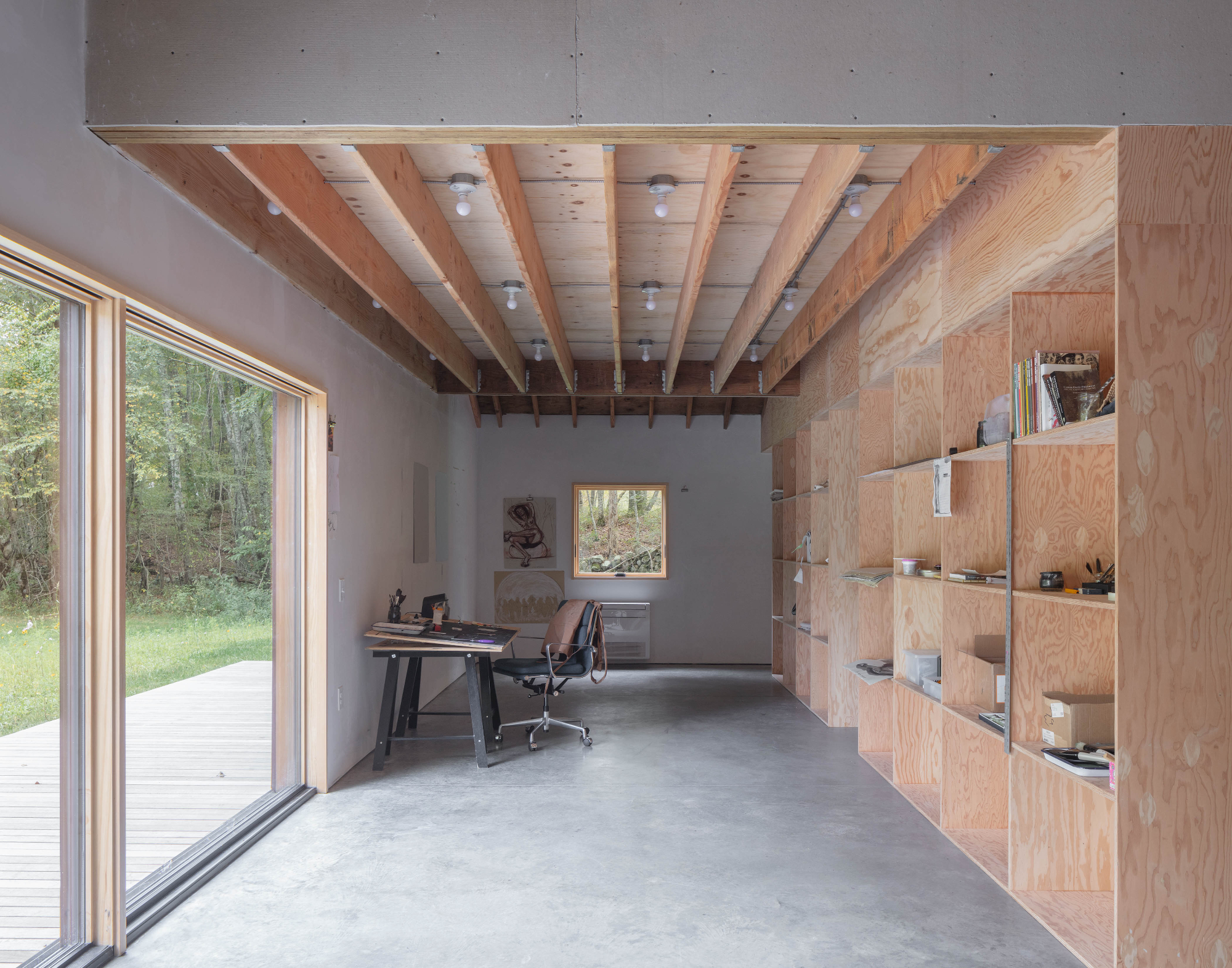
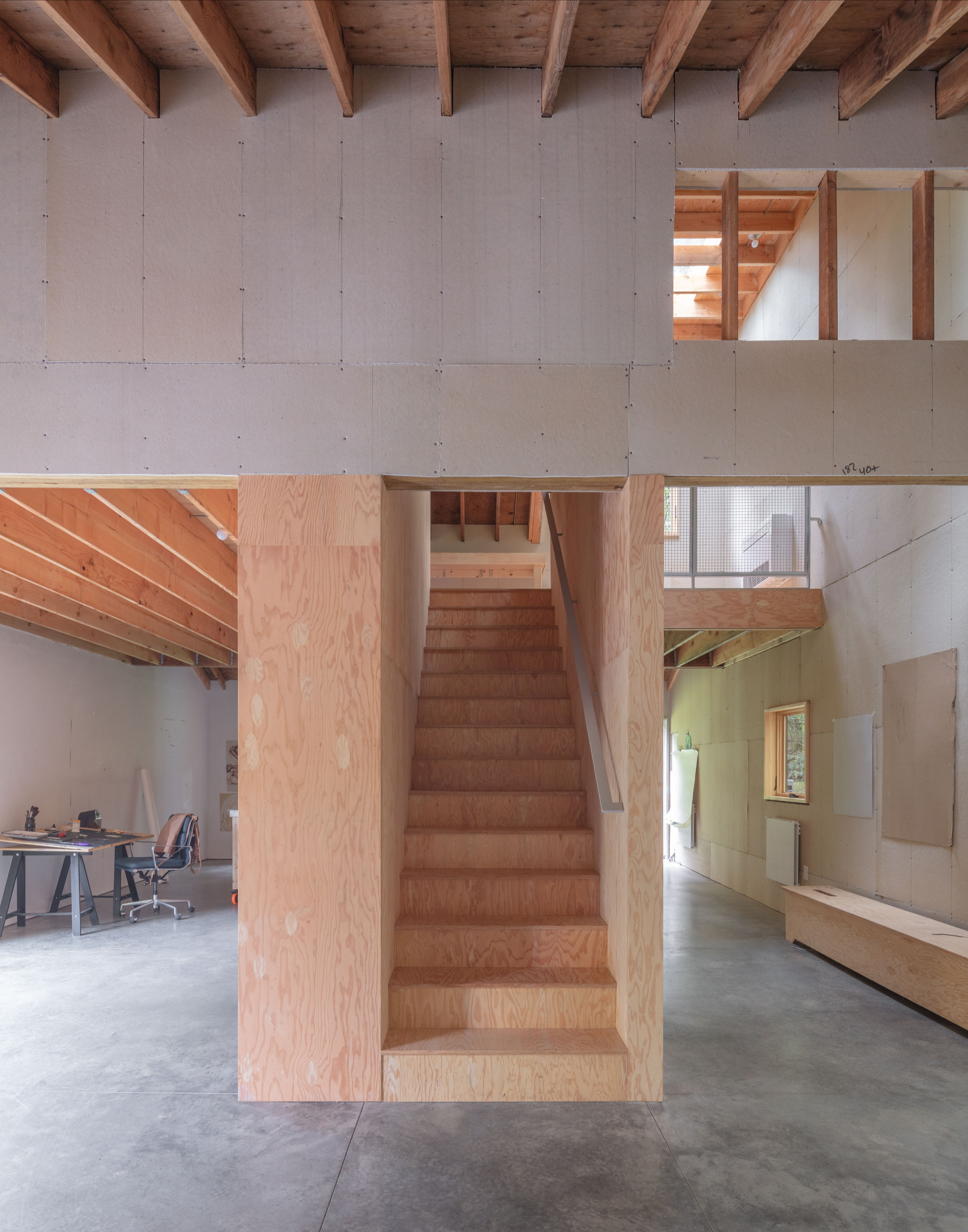
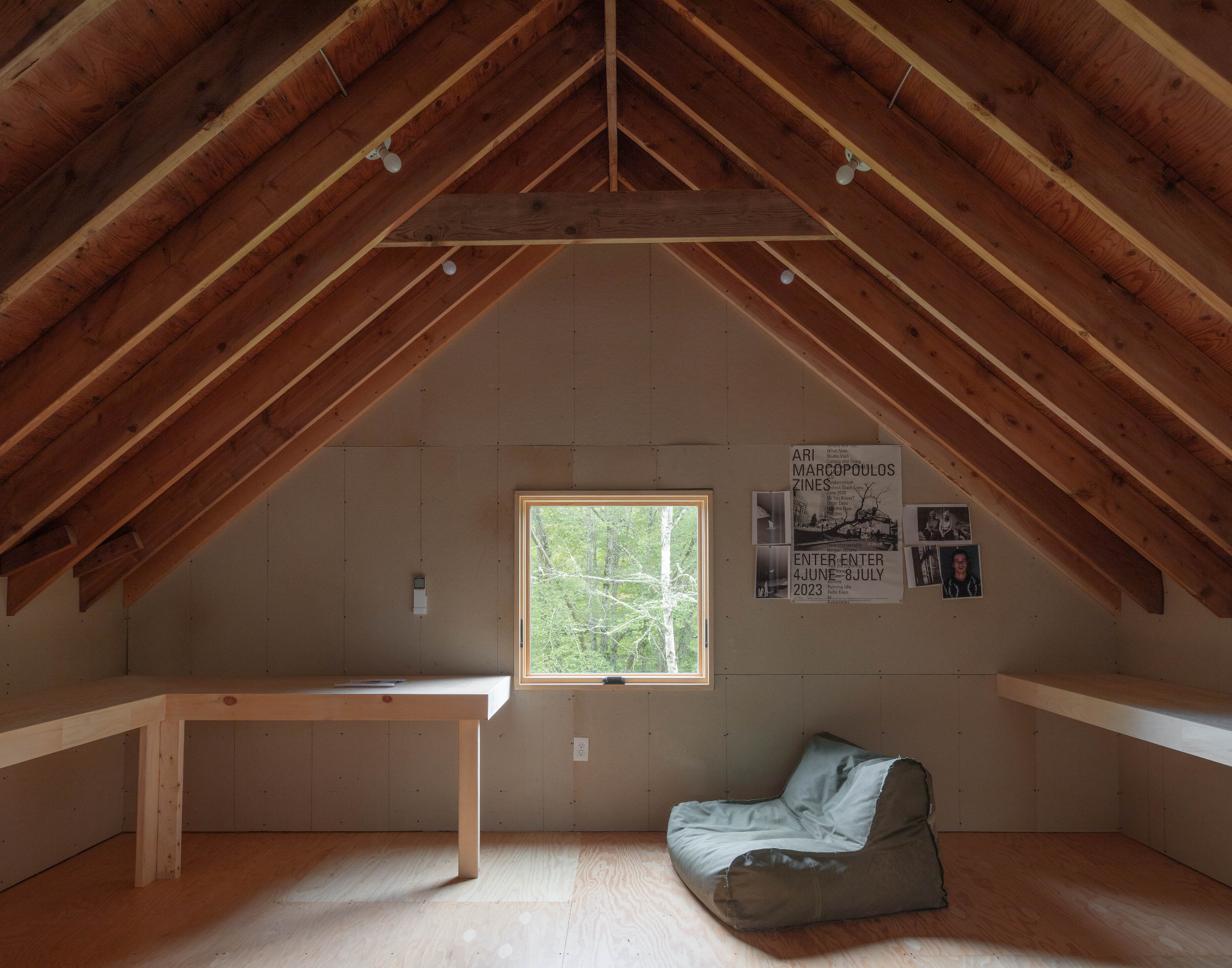
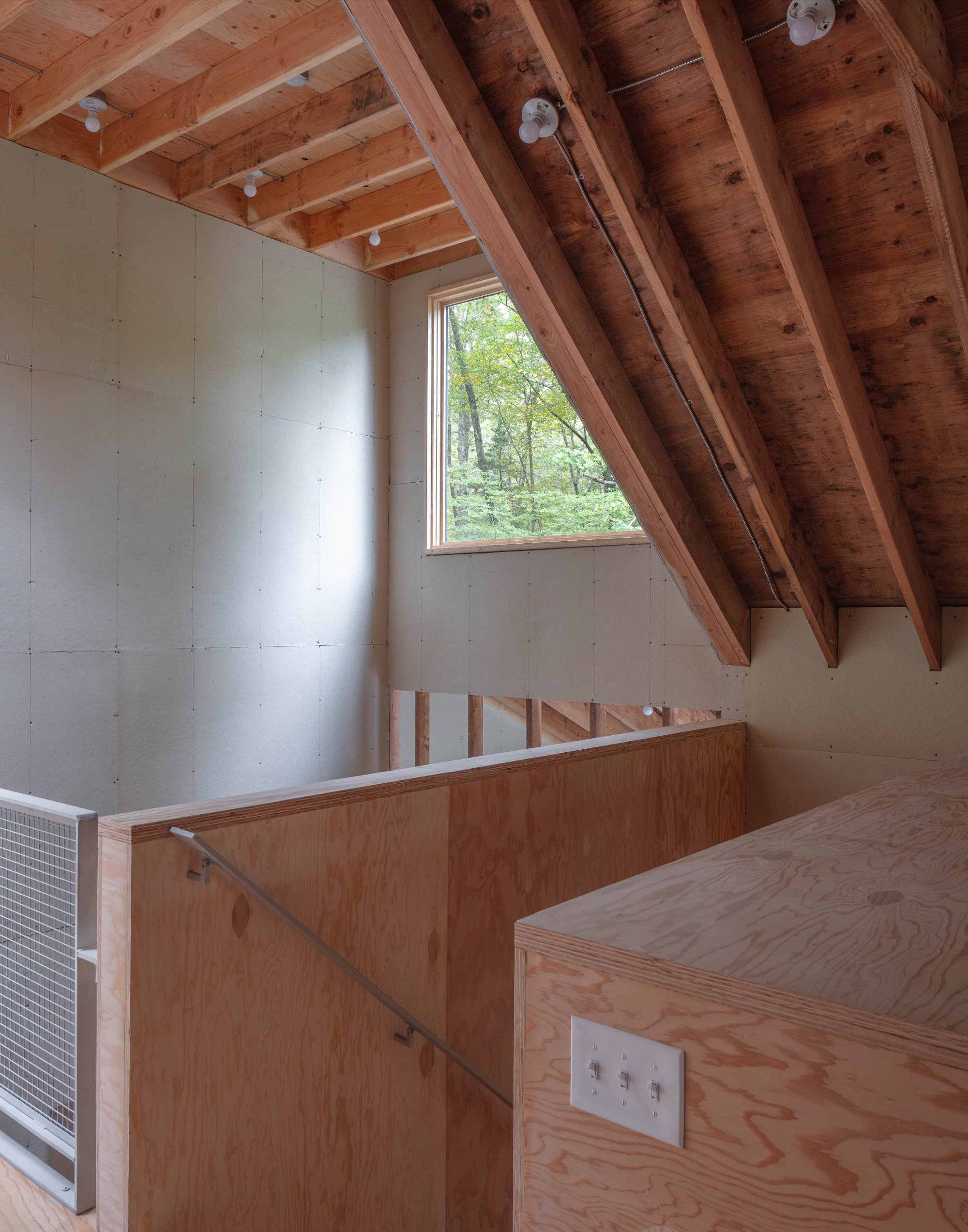
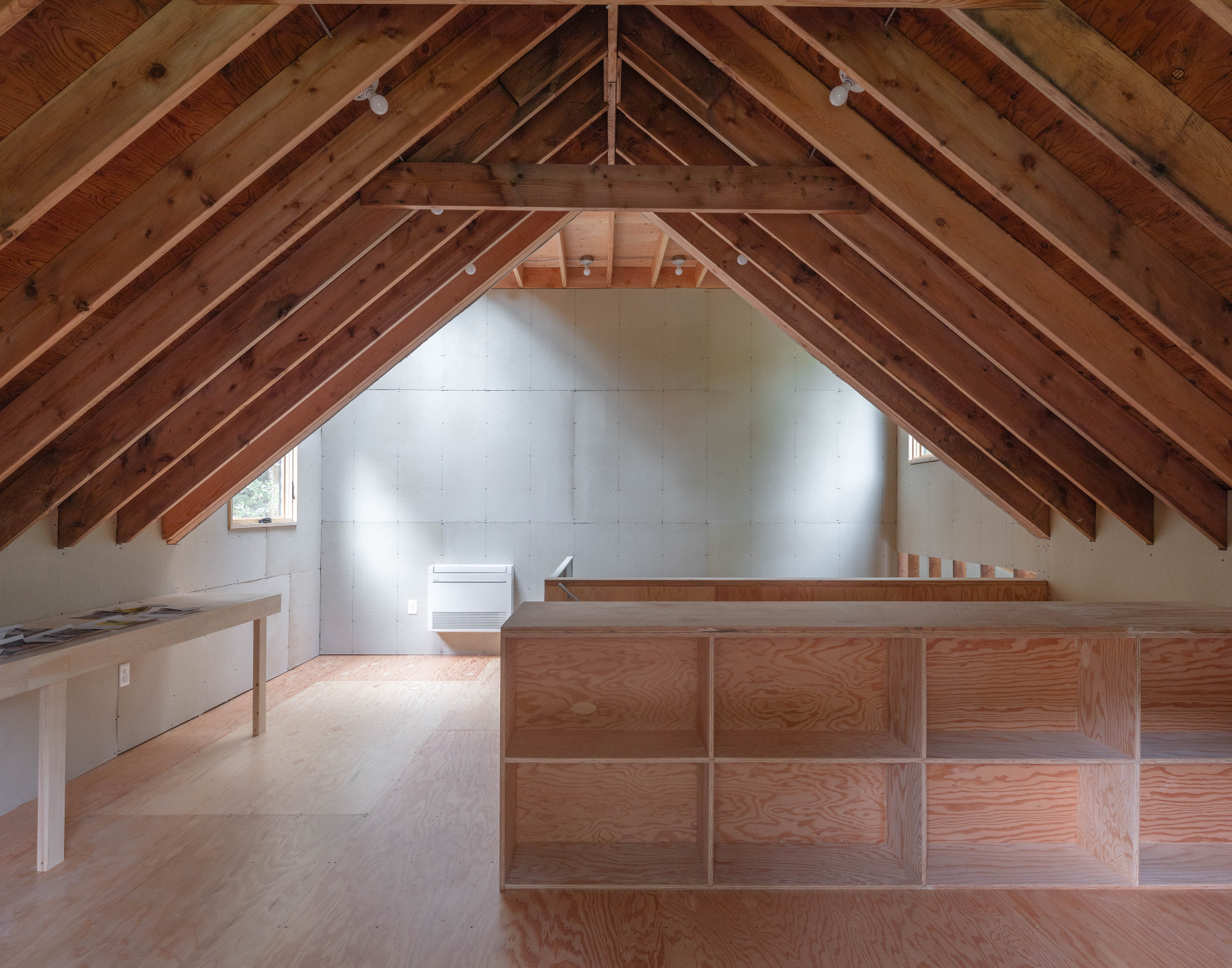
Under 1,300 square feet, the interior has a practical, open layout. A compact core at the center holds the sink and water closet so the perimeter can be devoted to art. Along the south wall, custom Douglas fir cabinetry takes care of storage and adds warmth without feeling precious. Worrell Yeung chose finishes that can handle the demands of an art studio: plaster for sketching or wash tests, and unfinished Homasote—a dense fiberboard—where pin‑ups, tape, and tacks are part of the process. Homasote also dampens sound, which matters in a compact, shared space. Overhead, porcelain light sockets sit in even intervals between exposed joists. It’s a straightforward choice that delivers clean, consistent illumination without visual fuss. An open stair rises through the middle to a loft used as a part‑time office or spillover studio, depending on the project at hand.
The exterior wrap deserves a closer look because it underpins the project’s attitude. Asphalt roofing sheets are rugged, widely available, and usually hidden above ceilings. Here, brought down to the walls, they become the finish—continuous, weather‑tight, and surprisingly refined when detailed carefully. The choice avoids the cost and long lead times of stone, high‑end metals, or specialty woods, which means more of the budget can go to openings, insulation, and the interior fittings that affect daily use. It’s an honest material used with precision, which suits a building meant for real work rather than show. Photography by Naho Kubota.