 Search






A fresh twist on the farm-to-table concept, the emerging greenhouse restaurant design provides an immersive dining experience deeply connected to nature.
As sustainability has become a central focus in contemporary architecture and design, we’ve seen more and more projects that explore eco-friendly concepts, from locally sourced materials and passive house principles that minimize a home’s carbon footprint to future-proof modular designs, or carefully designed retreats that preserve the features of a natural site. The rise of the greenhouse restaurant is the perfect example of sustainable architecture that not only addresses an array of practical concerns, but also redefines the dining experience.
Like the name implies, the design of every greenhouse restaurant draws inspiration from the glasshouses used for plant nurseries and any vegetation that requires a controlled temperature and humidity. This translates to transparent walls that not only bring the outside in, but also fill the dining space with light. Many of these restaurants also feature abundant greenery indoors, surrounding guests with the beauty of nature. And the result? Tranquil, light-filled spaces that offer a rich sensory twist on traditional dining.
More than just immersive, tranquil spaces that connect diners to nature, greenhouse restaurants also follow farm-to-table principles. Often grown on-site, vegetables, fruit and herbs become part of delicious meals that have a low carbon footprint. Furthermore, these restaurants’ menus change with the seasons, keeping the dining experience in sync with the rhythm of nature.
Every greenhouse restaurant is special in some way, with designs varying widely from more traditional glasshouses to modern structures with translucent polycarbonate panels. To exemplify this fascinating diversity, we’ve curated a list of some of the most impressive projects that have caught our eye, from world-famous restaurants to cozy coffee shops.
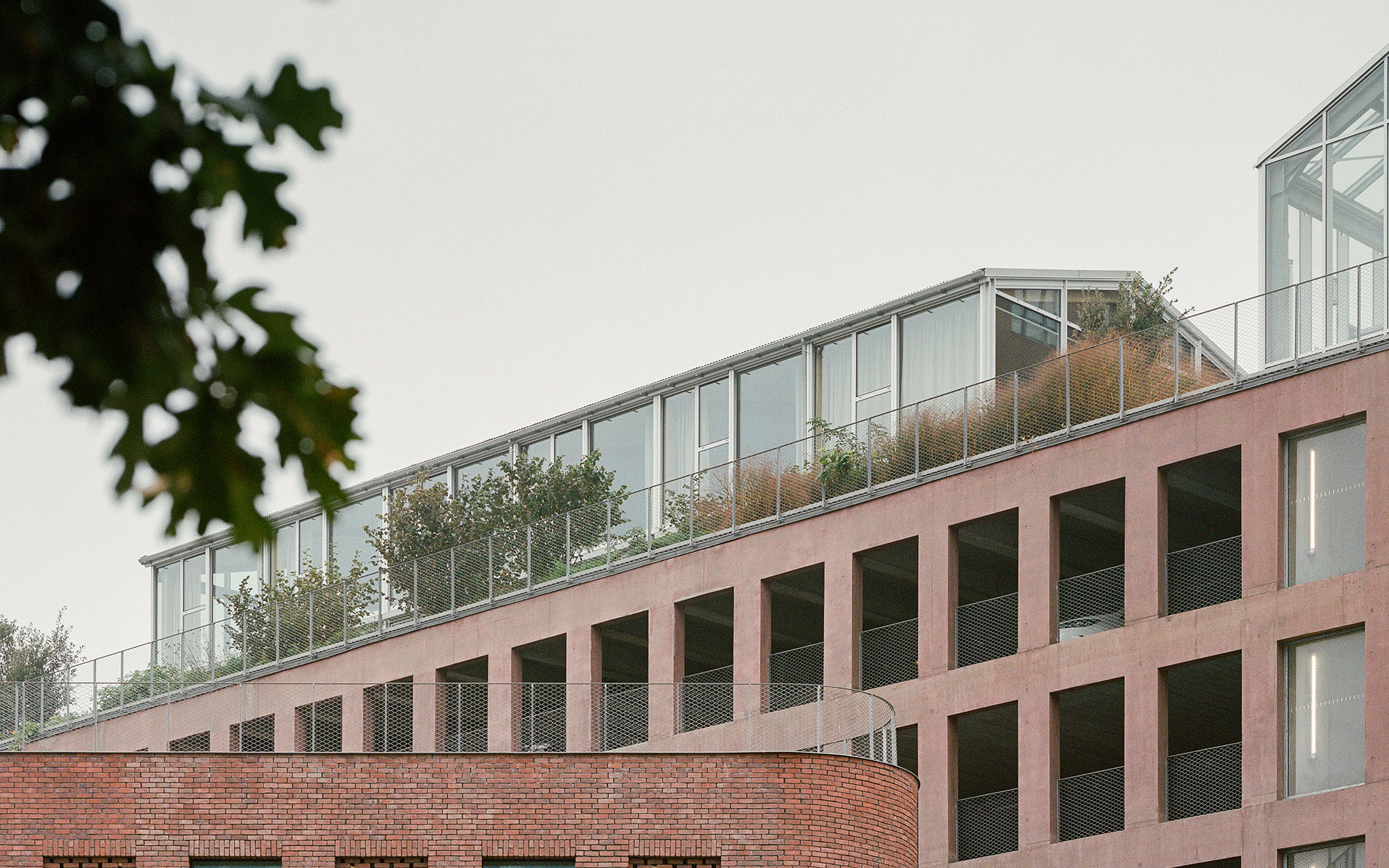
Freia
A rooftop restaurant that establishes a dialogue between nature and an urban setting.
Designed by architecture firm Raum, Freia is a greenhouse restaurant built on the rooftop of a car park building in Nantes, France. The spacious dining space boasts floor-to-ceiling glass walls that offer a great view of the outdoor garden and the city. Inside, another small garden and lush plants immerse guests in nature. To strengthen the connection between the dining space and sustainable design, the studio used natural materials throughout the restaurant. Light wood furniture and shelving create a relaxed atmosphere while brightening and warming up the interior further. Finally, the open kitchen allows diners to observe the cooking process, with meals prepared using ingredients sourced from the gardens.

Granor Greenhouse
A greenhouse restaurant inspired by agricultural buildings.
Located in Three Oaks, Michigan, right next to Granor Farm, the Granor Greenhouse is a huge, 7,336-sf structure that houses a dining space at the center and plant growing areas on the eastern and western sides. Inspired by agricultural architecture, Wheeler Kearns Architects designed the multipurpose building with vernacular cues, including red doors typical of the area. In the restaurant, clear glass walls open up the space to views of the surrounding fields. In the plant growing areas, however, the studio used frosted glass that provides optimal natural light.
The restaurant boasts polished concrete floors and flexible elements that enable the transformation of the area from a food production facility into a dining space. Multi-functional Douglas fir volumes bookend the restaurant, housing an office, mudroom and washrooms while also providing a visual and acoustic barrier between the social and more private spaces. From the restaurant and the farm-to-table kitchen, guests can see the greenhouse’s plant growing areas, bringing together agricultural practices and culinary arts.
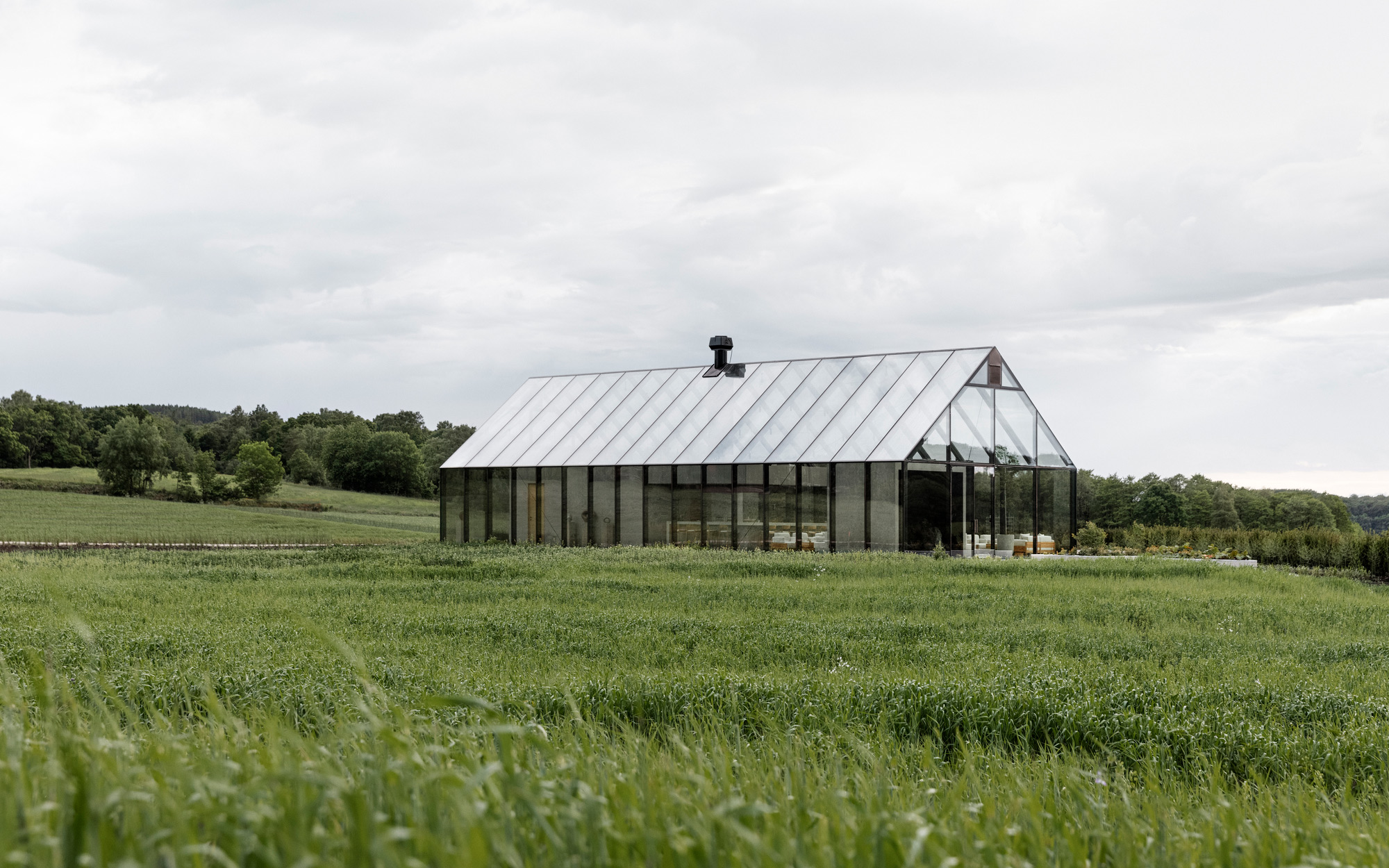
Karimoku Case Study 06, the ÄNG restaurant
A gabled glass structure reminiscent of timber barns.
Architectural expertise and culinary excellence meet in the Karimoku Case Study 06 project. Completed by architecture and design studio Norm Architects, this glass building on the Ästad vineyard estate in Tvååker, Sweden, reminds of traditional timber barns with its clean gabled silhouette. Housing the Michelin-starred ÄNG restaurant, the building provides a magical dining experience, connecting guests to a bucolic landscape thanks to the glass walls and roof. The transparent structure allows diners to feel a part of the natural landscape as they enjoy delicious food. Merging Japanese and Scandinavian design influences, the minimalist interiors boast light wood and solid stone finishes as well as warm, tactile textiles. Organic sculptures and ikebana-style plant arrangements give the ÄNG restaurant a sophisticated ambience. Apart from designing the building, Norm Architects also created several furniture designs, including a geometric table, a club chair and wooden trays.
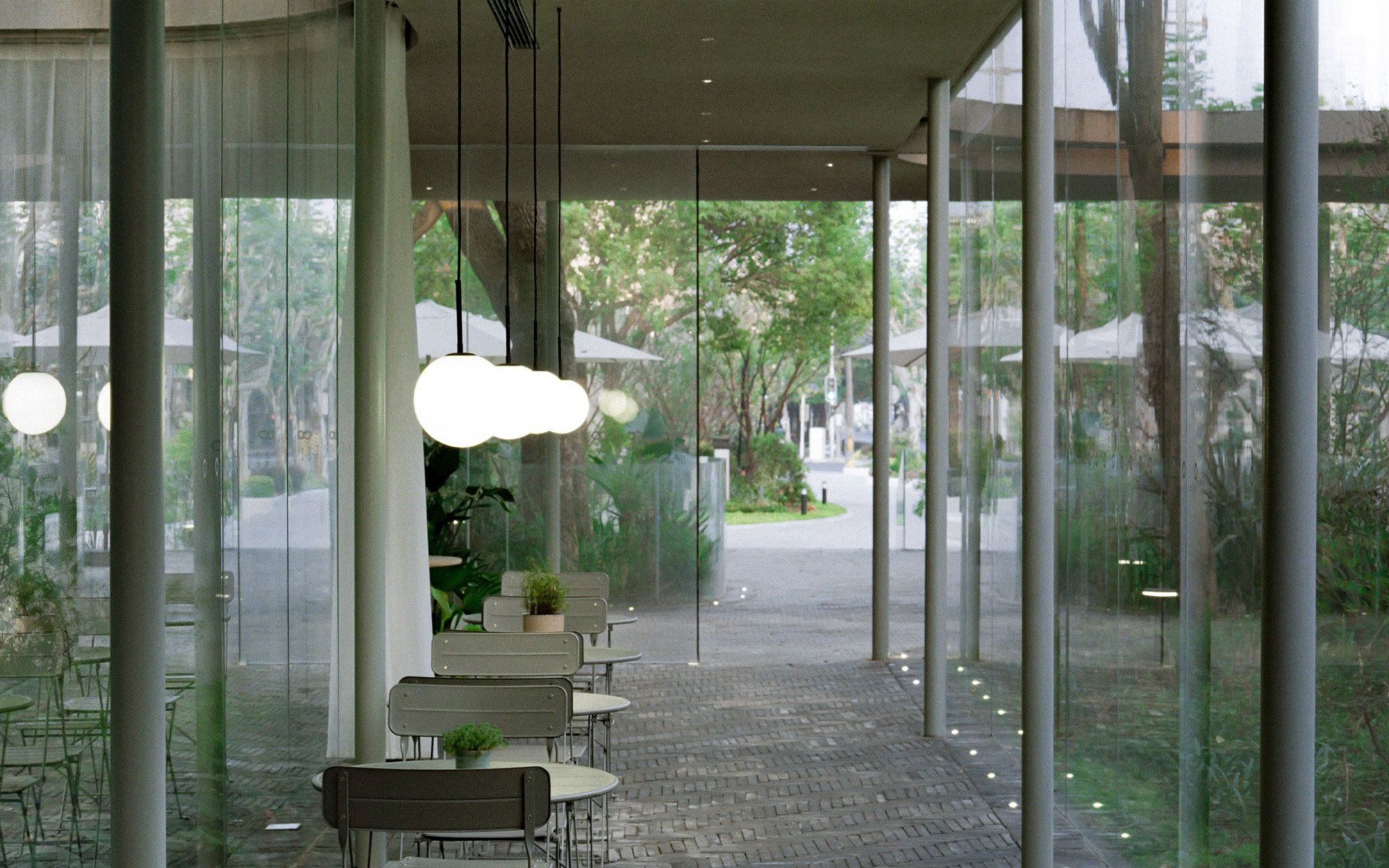
Mei Yuan Café
A cozy coffee shop designed to bring a community together.
Accessibility, community and a connection to nature provide the foundation for the Mei Yuan Café in Shanghai. Offhand Practice designed this cozy space as a nature-immersed pavilion where locals can come together and enjoy a cup of good coffee in a tranquil setting. Located close to Meiyuan Park, the coffee house offers a quiet respite from urban living, welcoming anyone who wants to take a break from the fast pace of the city and relax in a friendly space surrounded by greenery.
The pavilion’s design follows the orientation of trees, bushes and plants, protecting existing vegetation while putting the focus on the beauty of wild nature. At the same time, the architects took the life cycle of local plants and seasonal changes into consideration when completing the project; the planting of mixed perennial flowers and plants that have different blooming stages resulted in a space that allows coffee lovers to always experience Mei Yuan Café anew. Apart from the glazed walls that overlook the lush vegetation, the pavilion also features gray brick walls and flooring that bring exceptional tactility to the indoor and outdoor spaces.
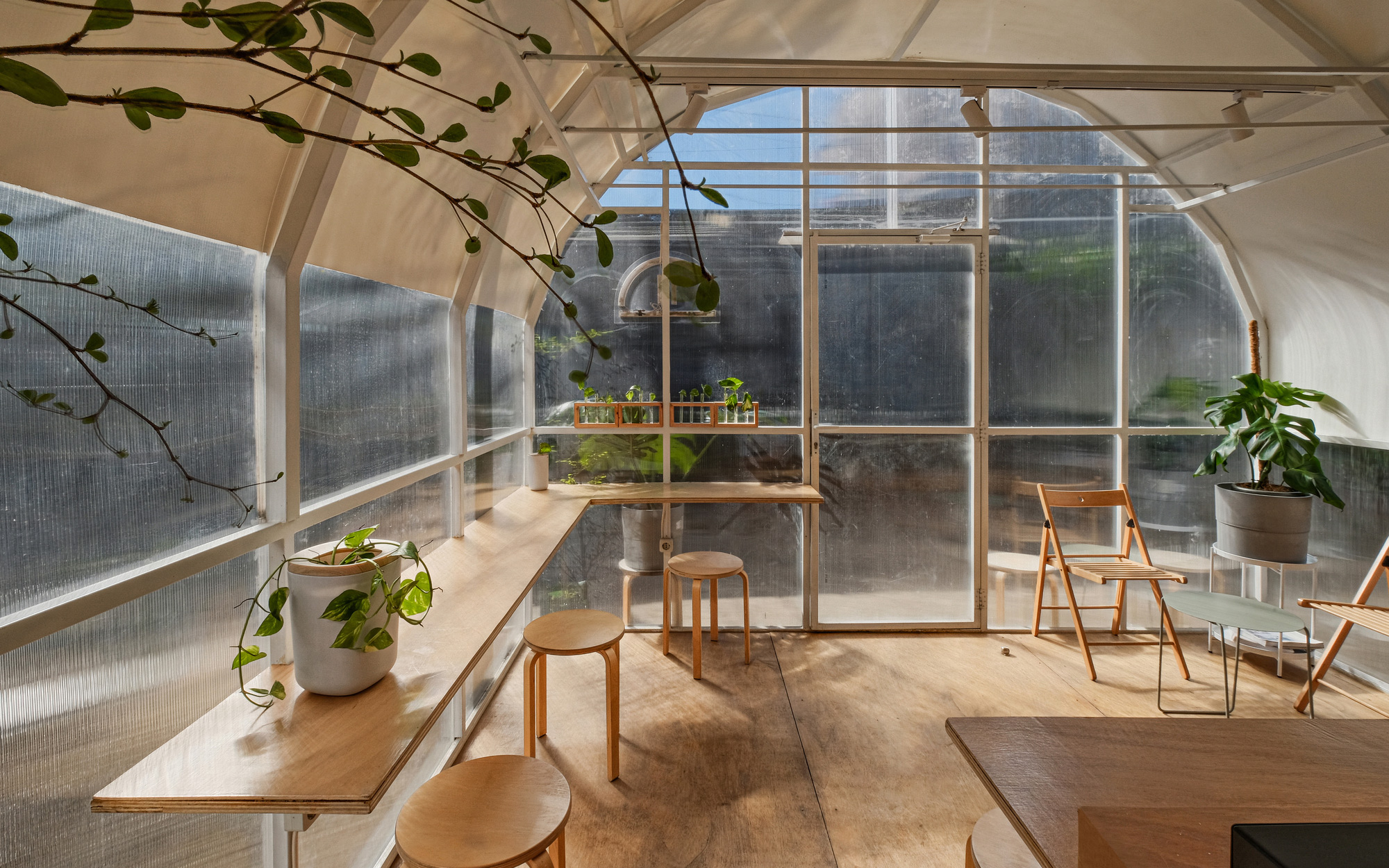
MKO Culture
A greenhouse-style coffee shop designed with a curved roof.
Inspired by the aesthetics and ambience of a greenhouse, INS Studio designed a small café in Makassar, Indonesia, with carefully chosen materials that provide a welcome escape from tropical heat and humidity. The MKO Culture coffee shop stands in front of a residential property, inviting customers to unwind over a cup of fresh coffee in a laid-back, serene space. Following the client’s brief, the studio chose resilient, eco-friendly and cost-effective materials for the compact structure: plywood and polycarbonate. The translucent walls filter the light and ensure the longevity of the building, while the plywood surfaces bring warmth and coziness into the interior. Specially designed and built to handle the site’s weather conditions, MKO Culture features anti-heat paint finishes that minimize solar gain and ensure a comfortable temperature indoors. Outside, customers also have access to tables with chairs where they can enjoy their coffee in fresh air.

De Kas
A 1927 greenhouse transformed into one of the world’s first farm-to-table restaurants.
Situated in the gorgeous Frankendael Park in East Amsterdam, De Kas is located in a 1927 glasshouse that had been slated for demolition until 2000. One year later, renowned chef Gert-Jan Hageman commissioned Studio Piet Boon to create a contemporary restaurant that would have access to its own farmland and plant growing facilities. De Kas embodies the concept of sustainable dining with a seasonal menu that uses over 300 varieties of ingredients grown and harvested on site, from vegetables to fruits and herbs.
Wrapped in glass, the restaurant provides great views of the surrounding park and the nearby gardens. At night, diners can enjoy their food in a magical setting under the starry sky. Inside, cozy seating, solid wood tables and trees planted in oversized planters create a laid-back, warm atmosphere. An outdoor terrace by the gardens invites diners to eat al fresco while also encouraging passers-by to explore the site.
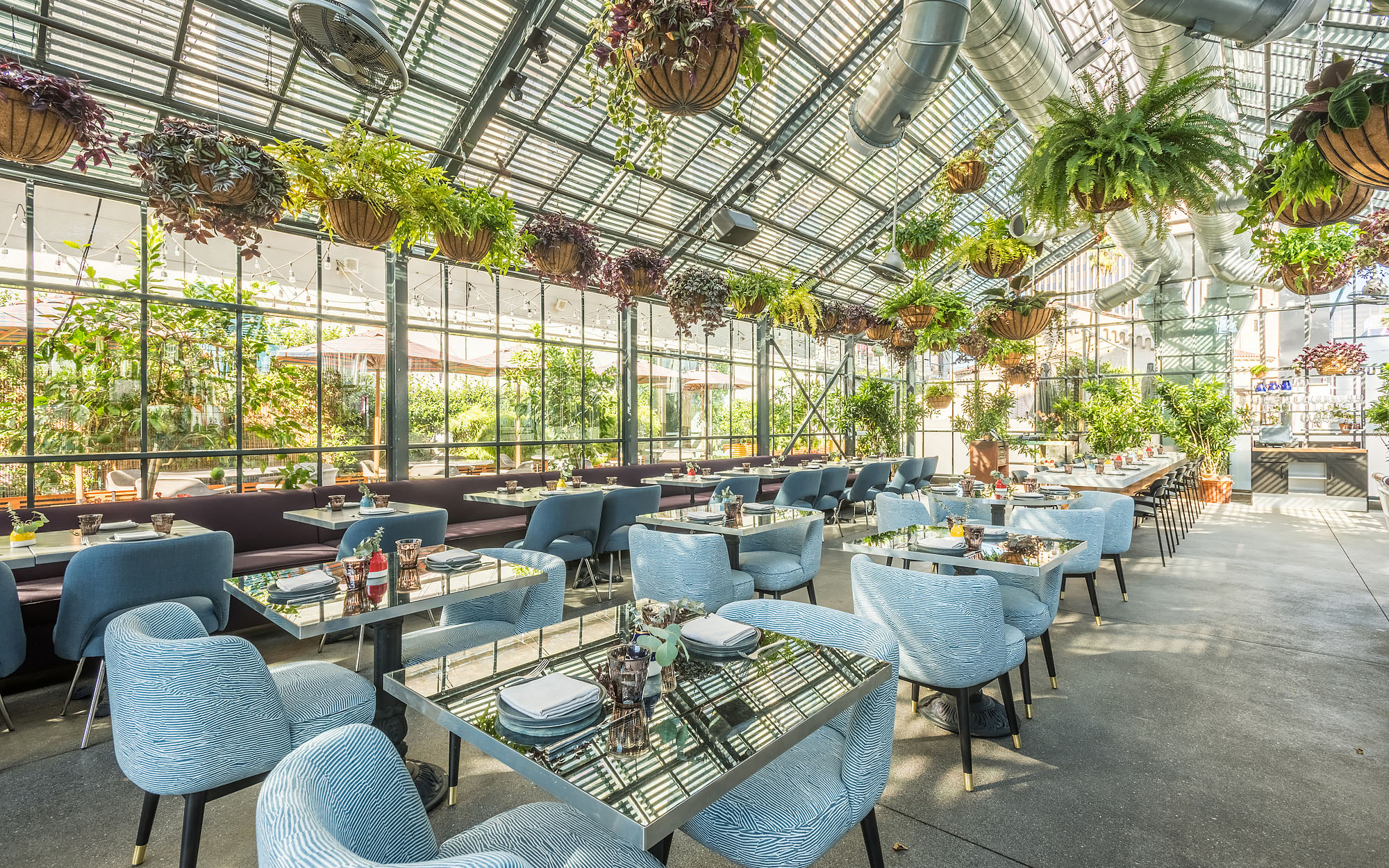
Openaire
An urban greenhouse restaurant in Los Angeles.
A cozy ambience and great food are always a perfect match, which The Line explores beautifully. Located on the second floor of The Line hotel in Koreatown, Los Angeles, the restaurant (formerly the Commissary) has been reimagined by Michelin-starred chef Josiah Citrin, but has remained the same lush oasis that envelops diners in greenery. This restaurant boasts suspended pots with flourishing ferns, cascading plants and succulents, enriching the dining experience with the vibrant atmosphere of a luxuriant greenhouse. Diners can savor the ever-changing dishes indoors or on the terrace, with both spaces offering a view of the hotel’s pool and L.A.’s cityscape. In the evenings, fairy lights ramp up the charm, almost (but not quite) taking the spotlight away from the food.

NoMo Kitchen
A poetic thread linking Nostalgic and Modern.
A destination on its own, NoMo Kitchen is the farm-to-plate restaurant of the NoMo SoHo boutique hotel in New York City. Serving a seasonal, rustic American menu with Mediterranean and other global culinary influences, this restaurant is a must-visit place for foodies who are locals or just visiting the Big Apple. The main restaurant space is located in a greenhouse setting, but diners can also delight in great food and cocktails in the Rose Garden, an enchanted space where trees seem to sprout from the floor and a verdant canopy lets guests forget that they’re in a metropolis. NoMo Kitchen takes the greenhouse restaurant concept further with intricate candelabras, hanging plants and NYC views that accompany the dining experience.


