Search






A 1930s barn in Praz-Pury gains a light-filled family flat—without evicting the hay, the horses, or the everyday rhythm of farm life.
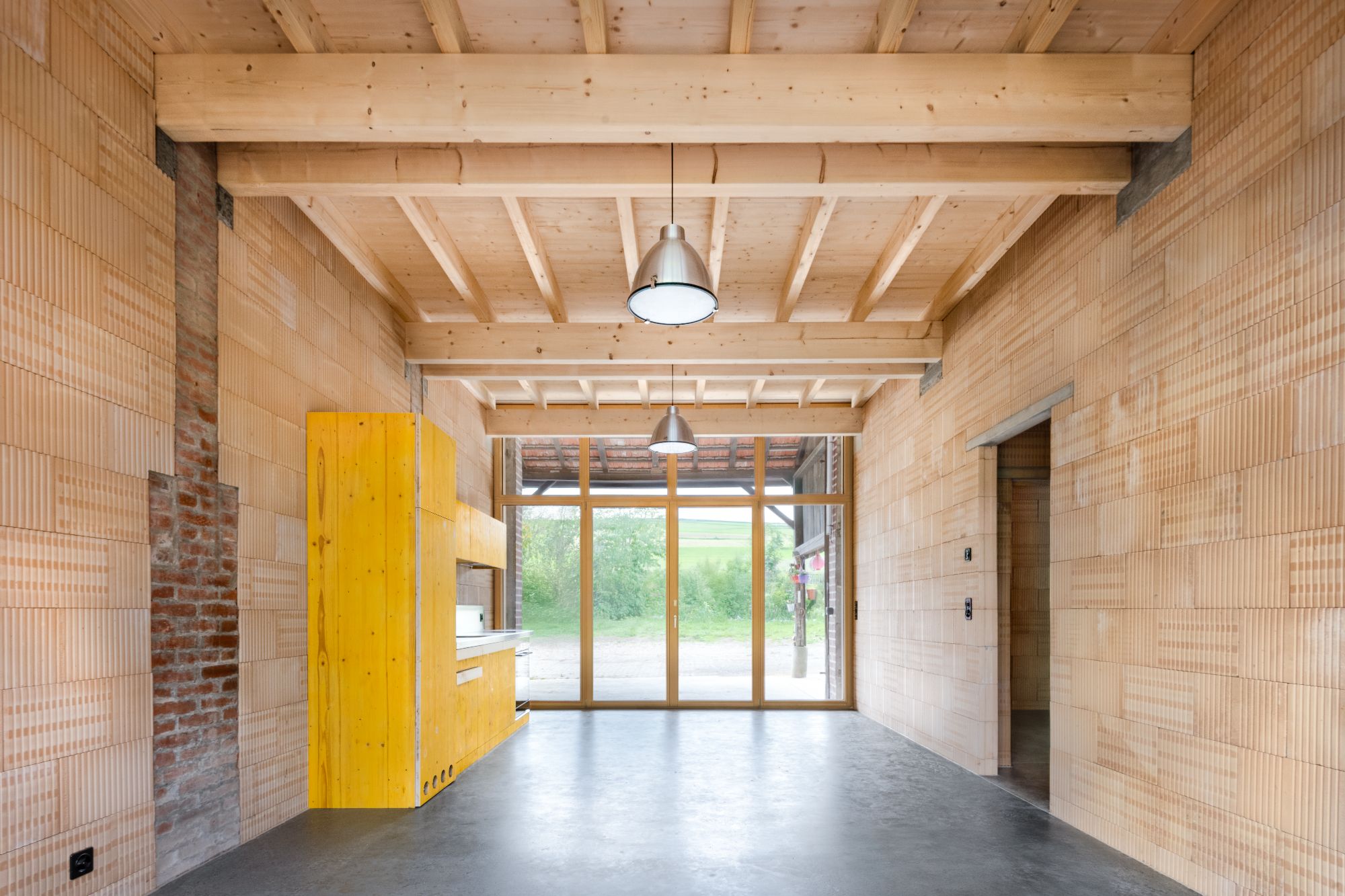
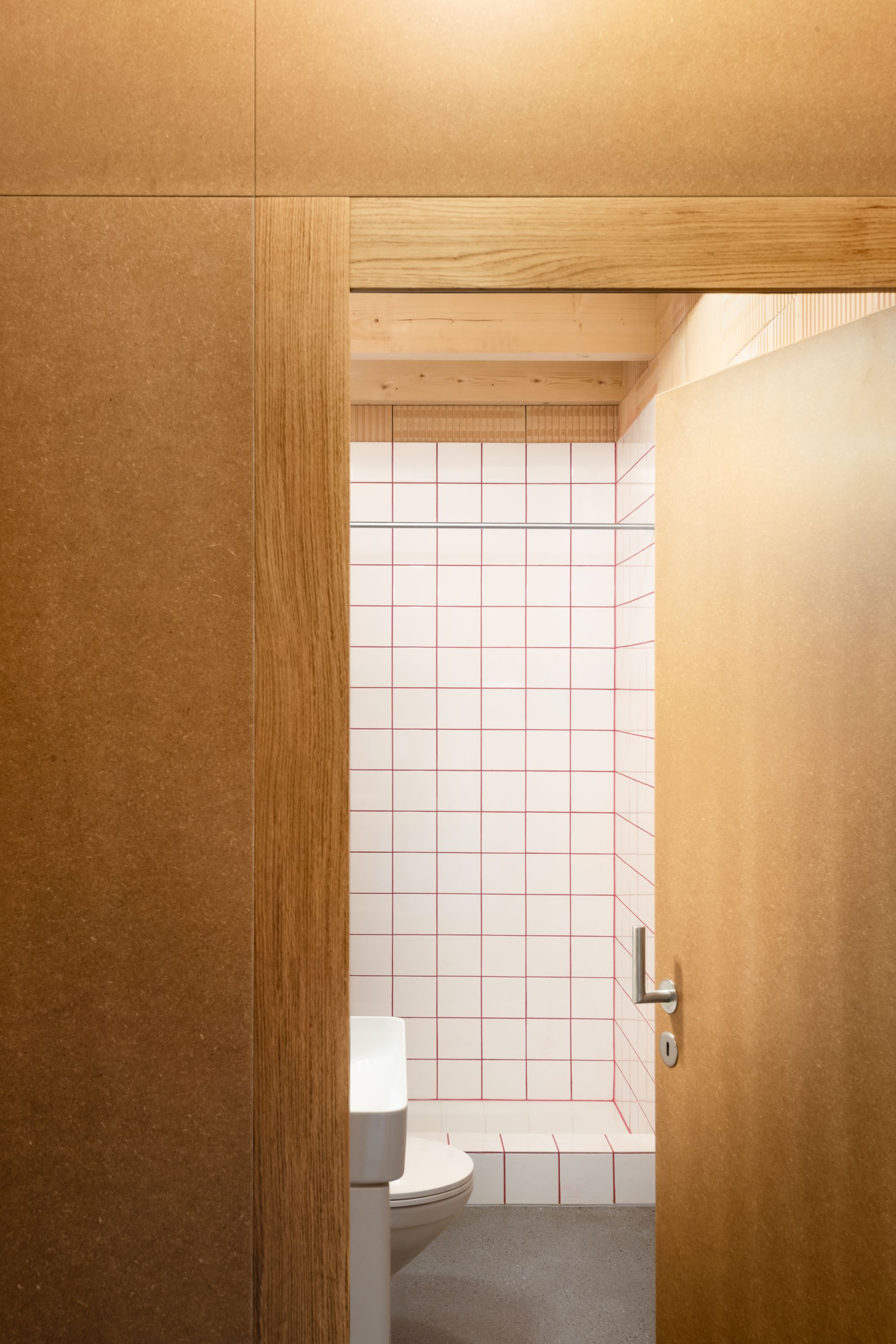
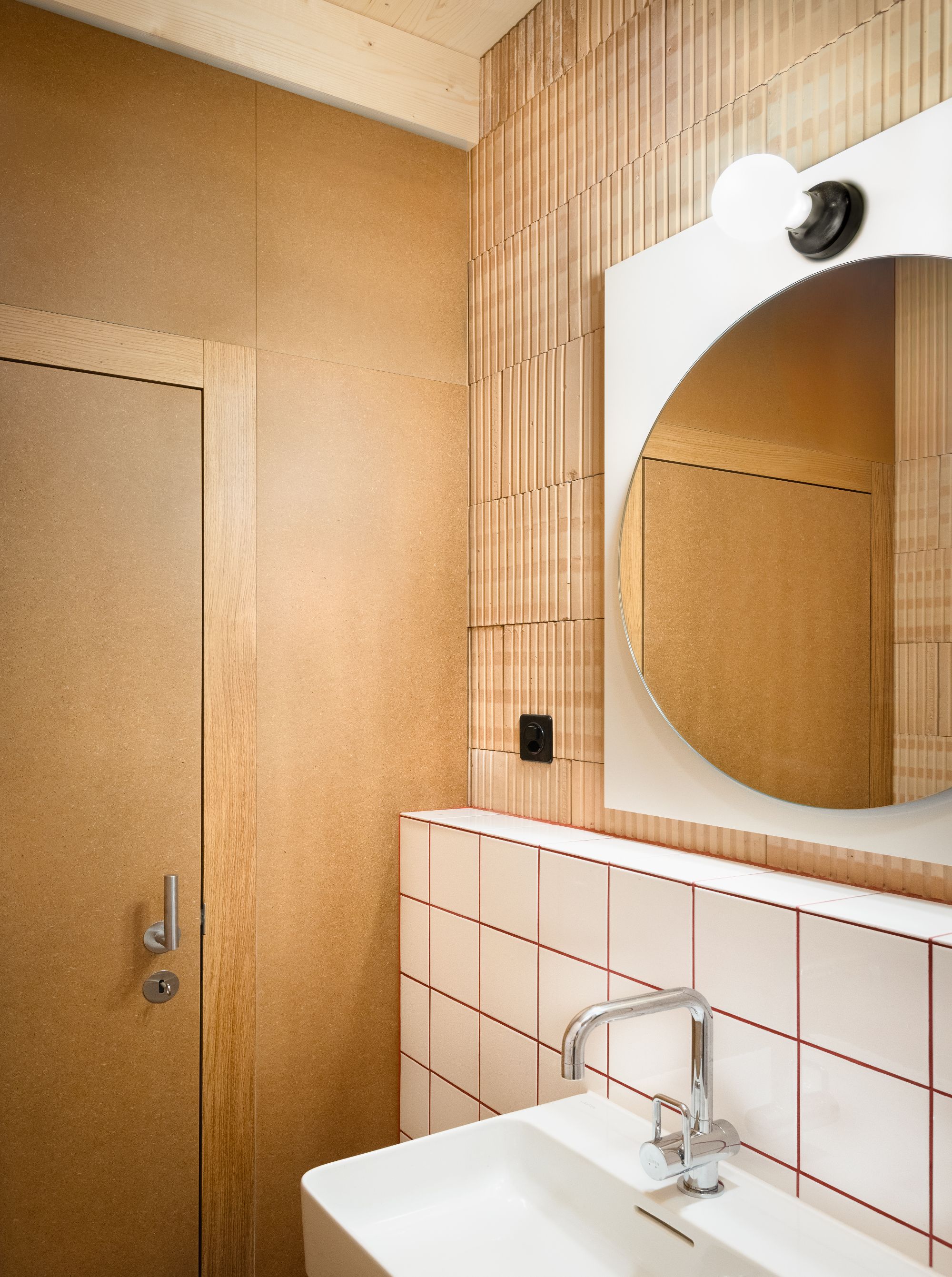
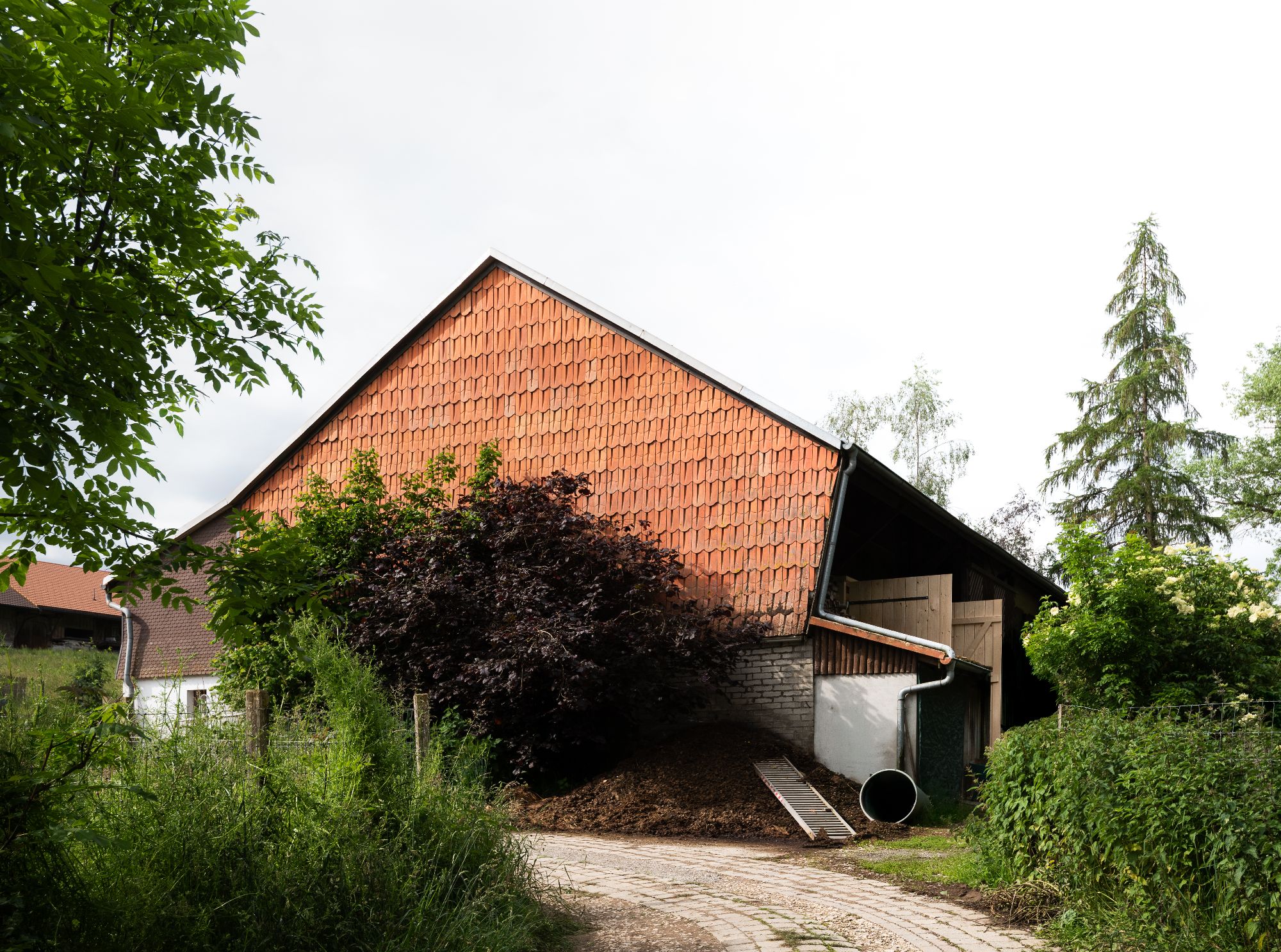
From above, Praz-Pury still looks like postcard country: a patchwork of pastures, hedgerows, and 1930s farmsteads aligned to the roll of the Fribourg hills. One of those barns now holds a surprise. Working for a young family who raise horses, Lausanne-based studio Bard-Yersin has tucked a 90-square-meter apartment into the farm’s disused rural wing without upsetting either daily chores or the long agrarian rhythm of the site. Their strategy is almost archaeological: keep every space doing the job it was born to do, and then insinuate domestic life where the plan itself already invites it. In the original typology, two stables flank a lofty central passage—the fourragère—used for feeding livestock and hoisting hay overhead. Bard-Yersin simply claimed that through-space for living, dining, and cooking; one of the old stalls now holds bedrooms and bath, while the second continues to shelter horses. The hayloft above? Still a hayloft.
New Walls That Admit Their Newness
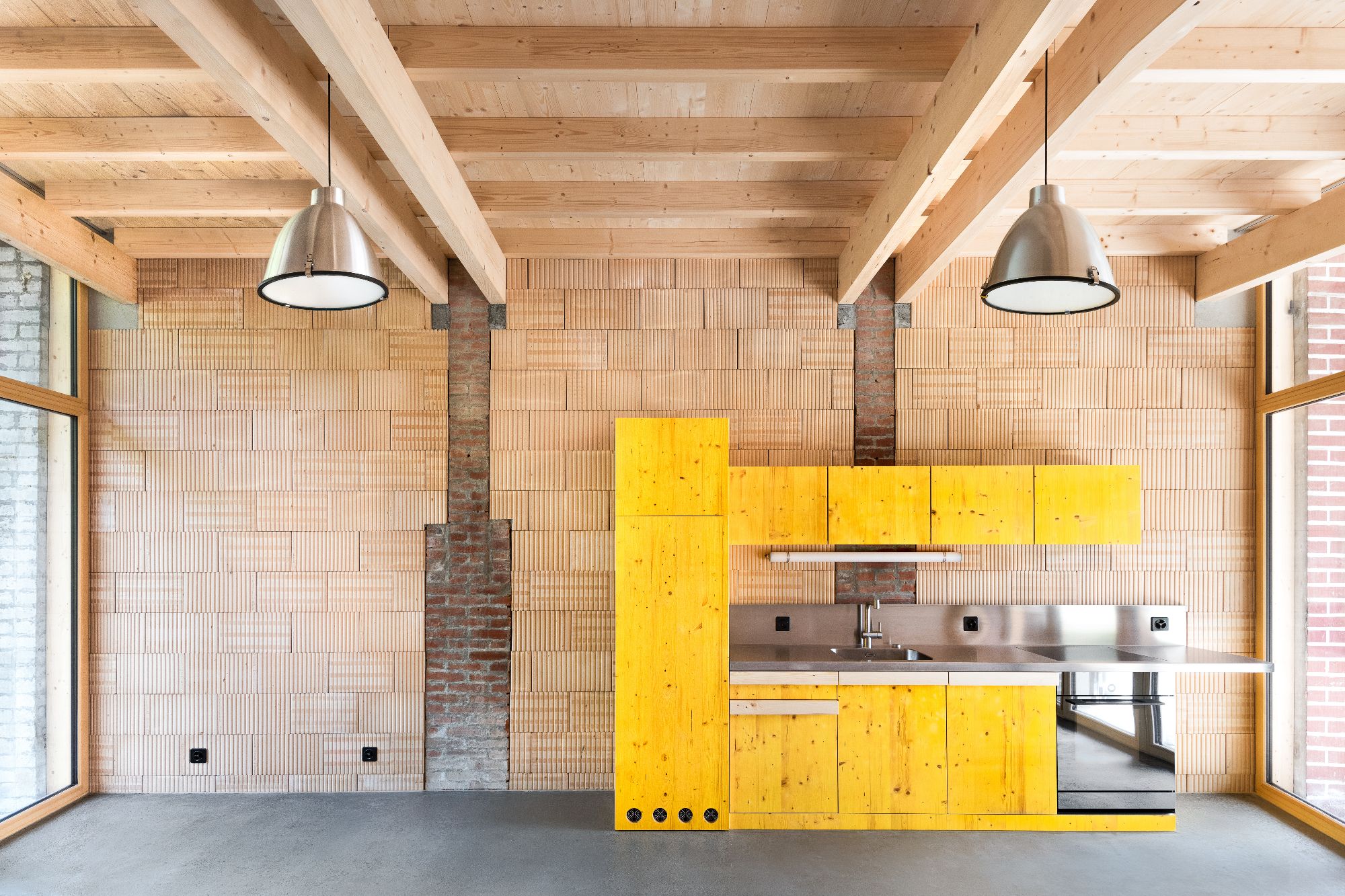
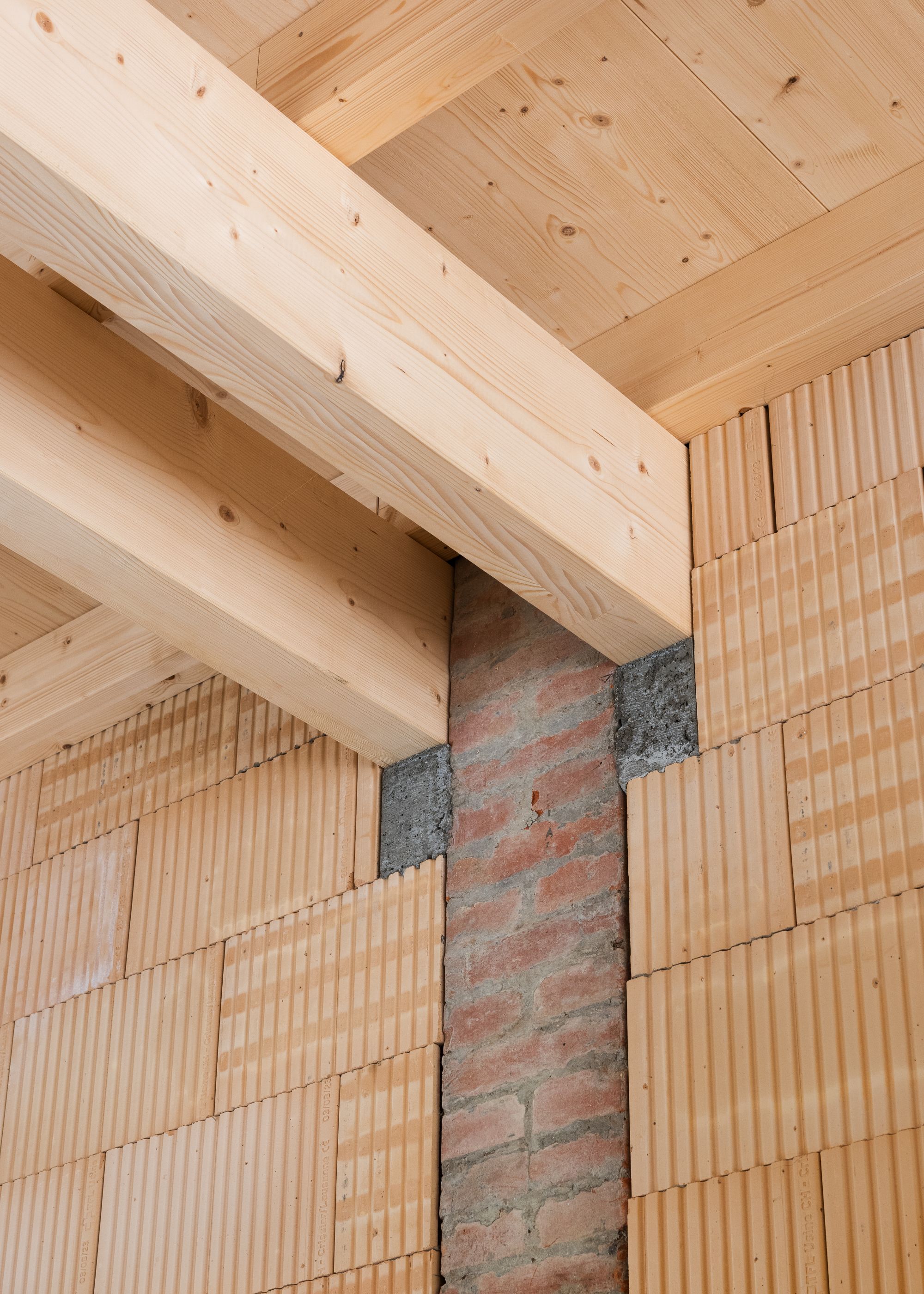
Because nothing was ever demolished, the intervention had to declare itself honestly. The architects rebuilt missing portions of wall in exposed terracotta brick—a direct echo of the 1930s masonry, but cut to a different module so the eye can always read the seam between eras. The tactic nods to Hans Döllgast’s celebrated “critical reconstruction” of Munich’s Alte Pinakothek, keeping the building in what Bard-Yersin call a state of “completeness” while refusing to fake continuity. Material choices elsewhere pursue the same plain-spoken logic. Floors are a hand-trowelled raw screed, tough enough for boots and straw, recalling the stable’s original hard-packed earth. The kitchen is knocked together from rough formwork panels—the kind of improvisation every farm outbuilding knows by heart—yet its tall glazed screens frame the pasture like a gallery window.
Life in Step with Meadow and Stall
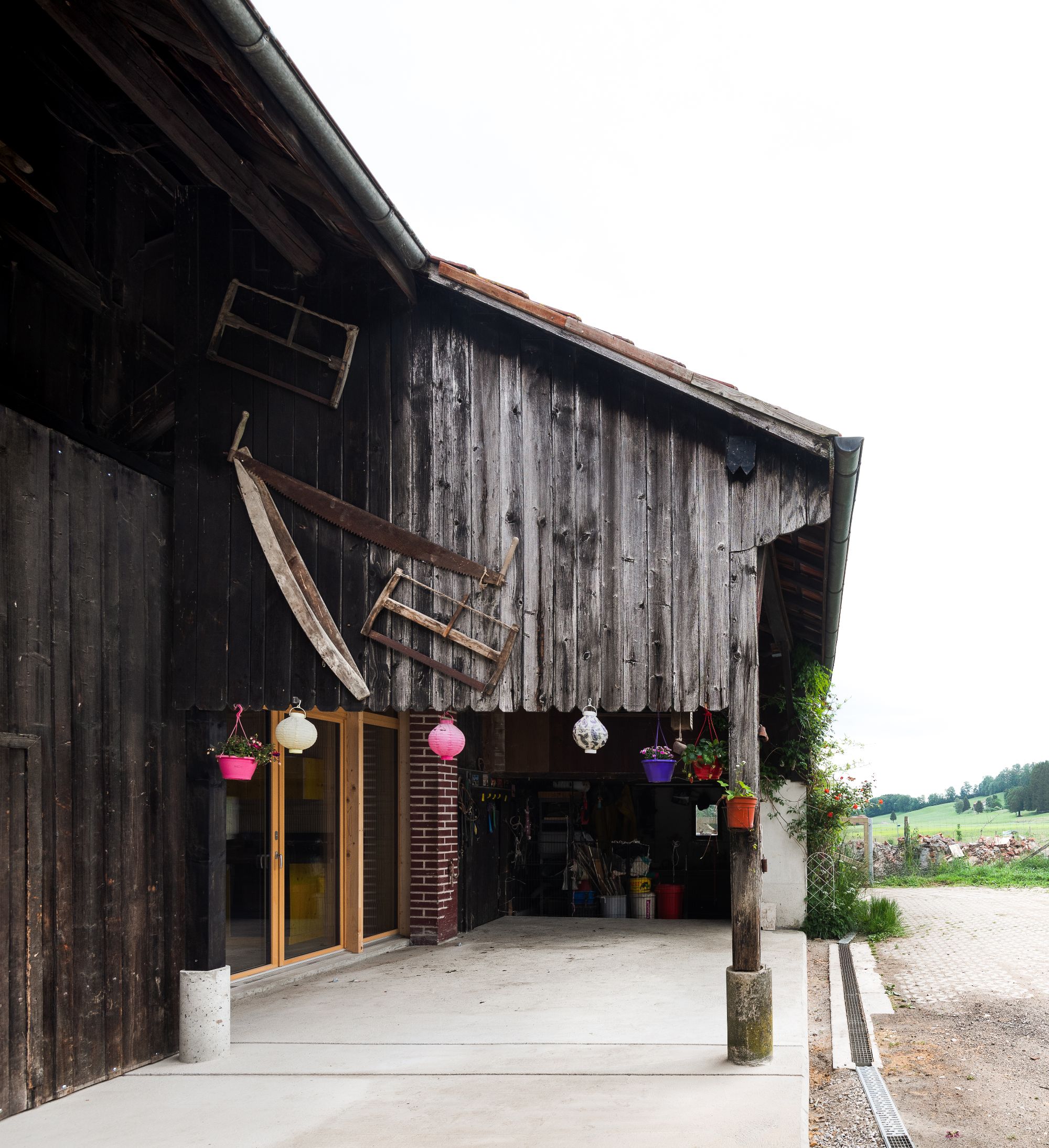
The result is less a rustic makeover than a pact between working farm and quiet dwelling. Morning light filters through the open barn doors, catching brick ribs and raw timber beams; at night, the apartment glows behind its slender yellow-pine mullions while horses shuffle in the adjoining stall. No space was sanitized, no volume sealed off; instead, the architects have written a gentle footnote onto the farmhouse’s ongoing story, one in which hay still dries overhead and the scent of cut grass drifts through the fourragère. By refusing to divorce the rural from the residential, Bard-Yersin offer a modest but persuasive manifesto for adaptive reuse in the countryside: to inhabit the stable is, quite literally, to keep the land in the room.