Search






In the Salento countryside, studio Margine pares a disused masseria back to Lecce-stone arches, adds three quiet inserts, and lets a reed-clad Corten porch pull the dining room out under the sky.
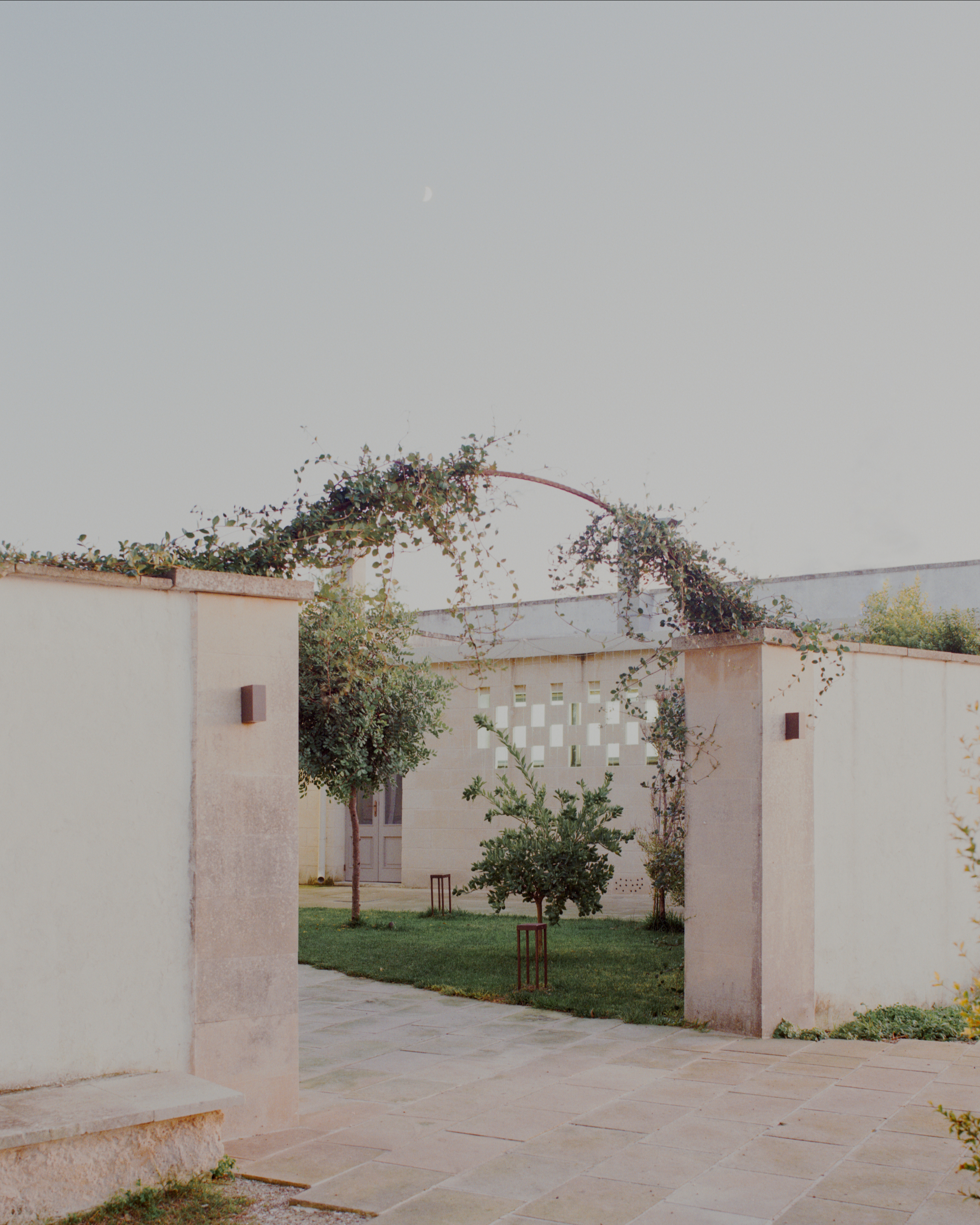
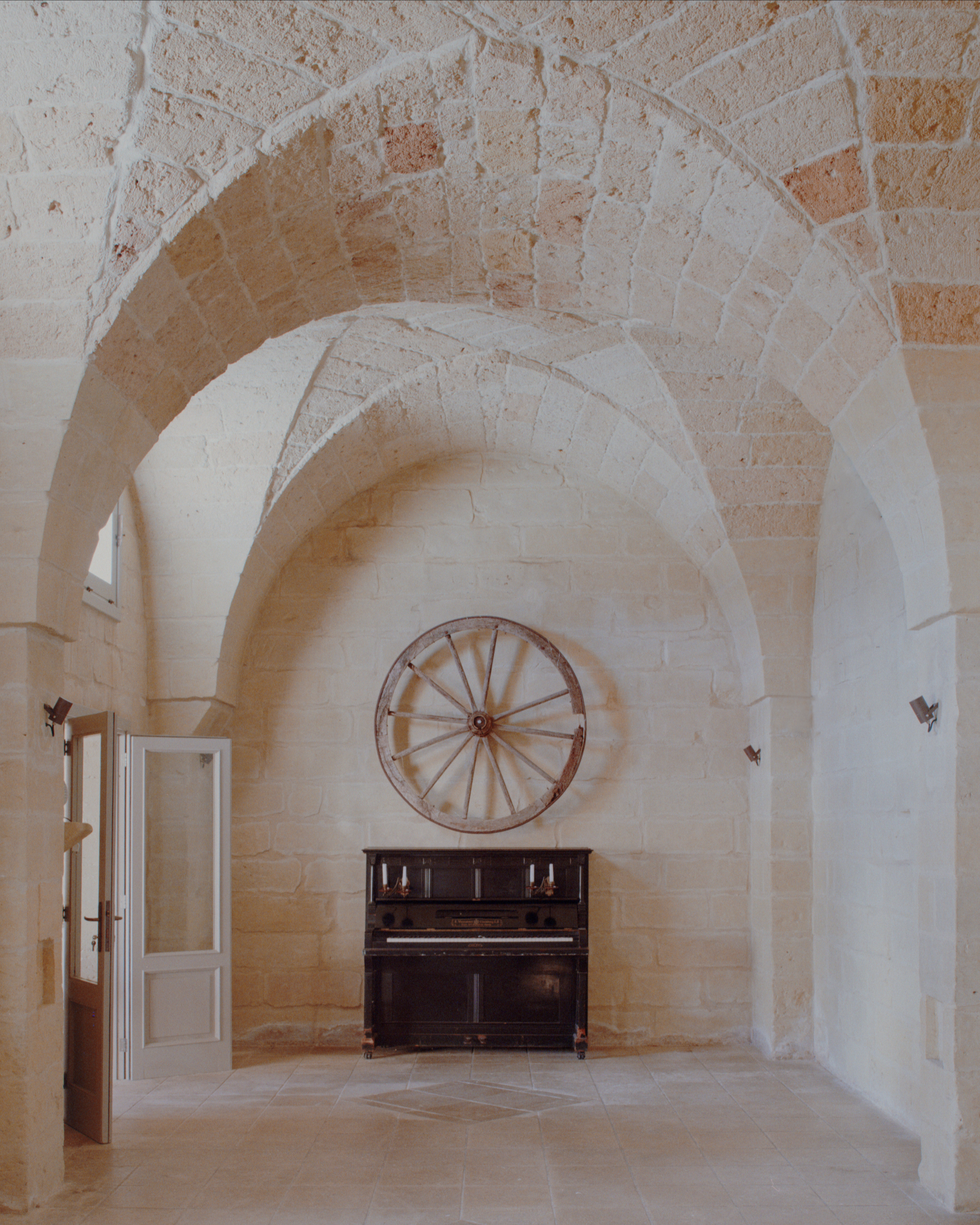
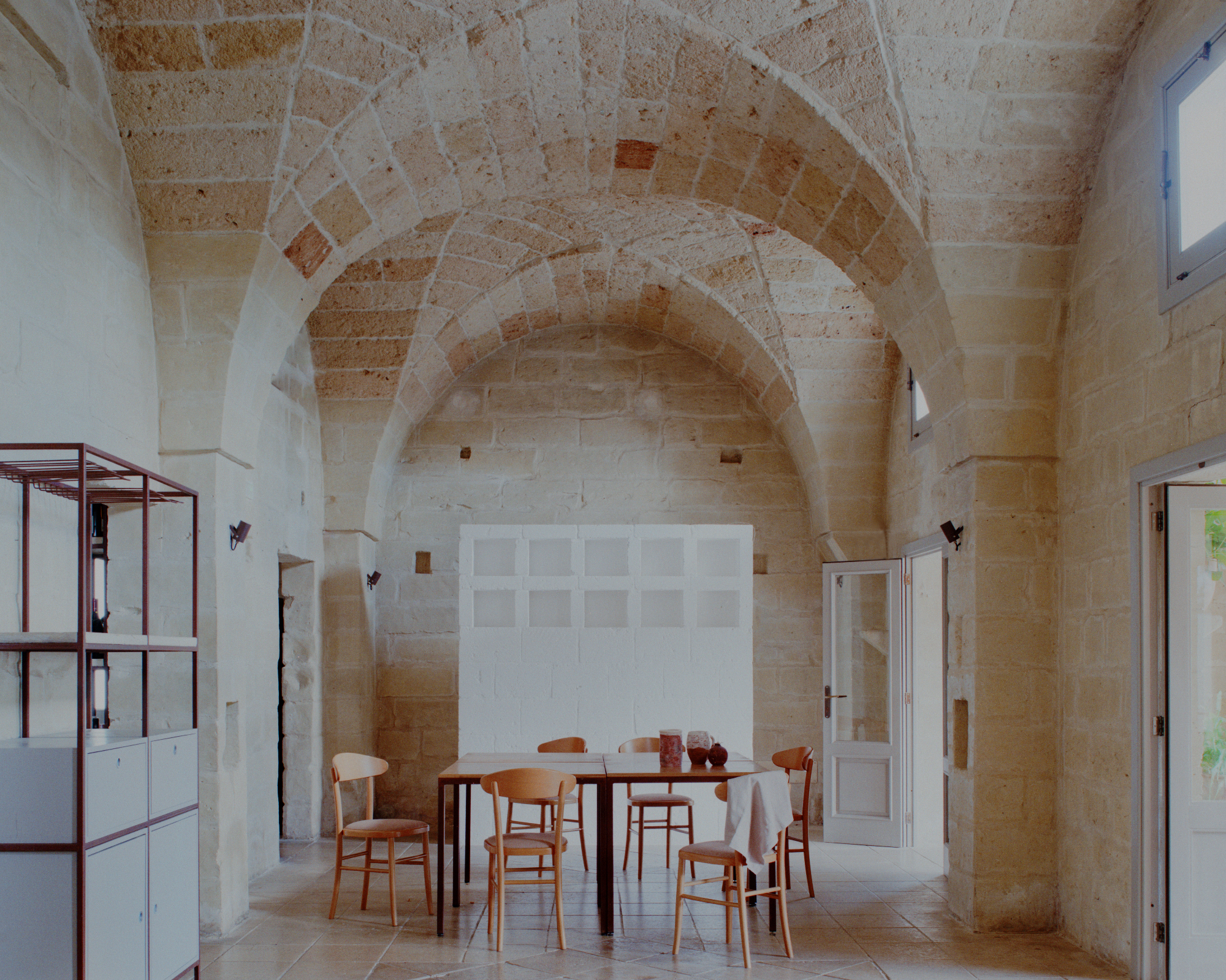
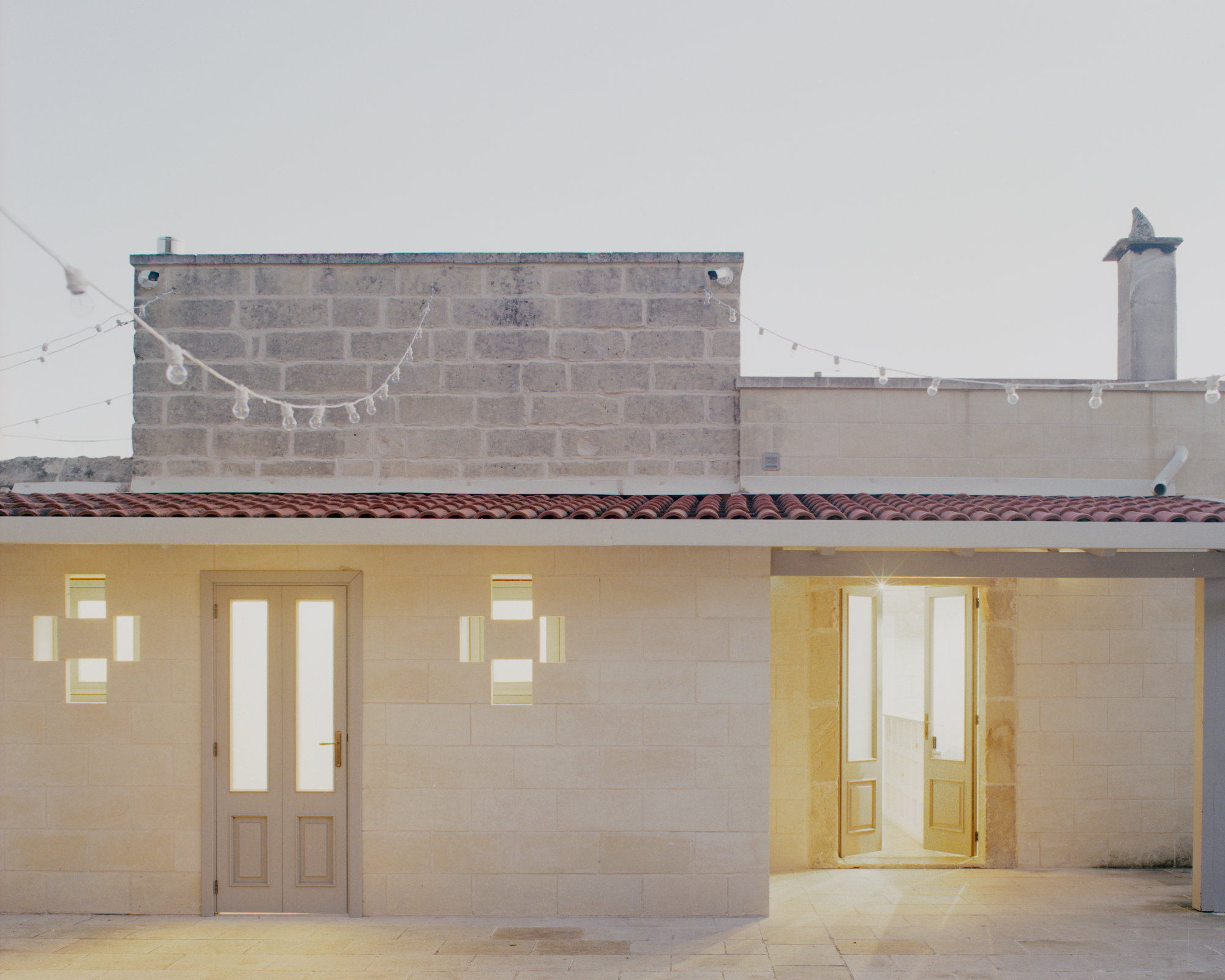
A few kilometers south of Lecce, the 500-square-metre compound once housed sheep and spinning looms. Decades of ad-hoc add-ons left it patched with concrete blocks, false ceilings and collapsed sheds. Margine began by stripping everything that blurred the original profile, exposing the vaulted tuff shell and the square courtyard once fenced for livestock.
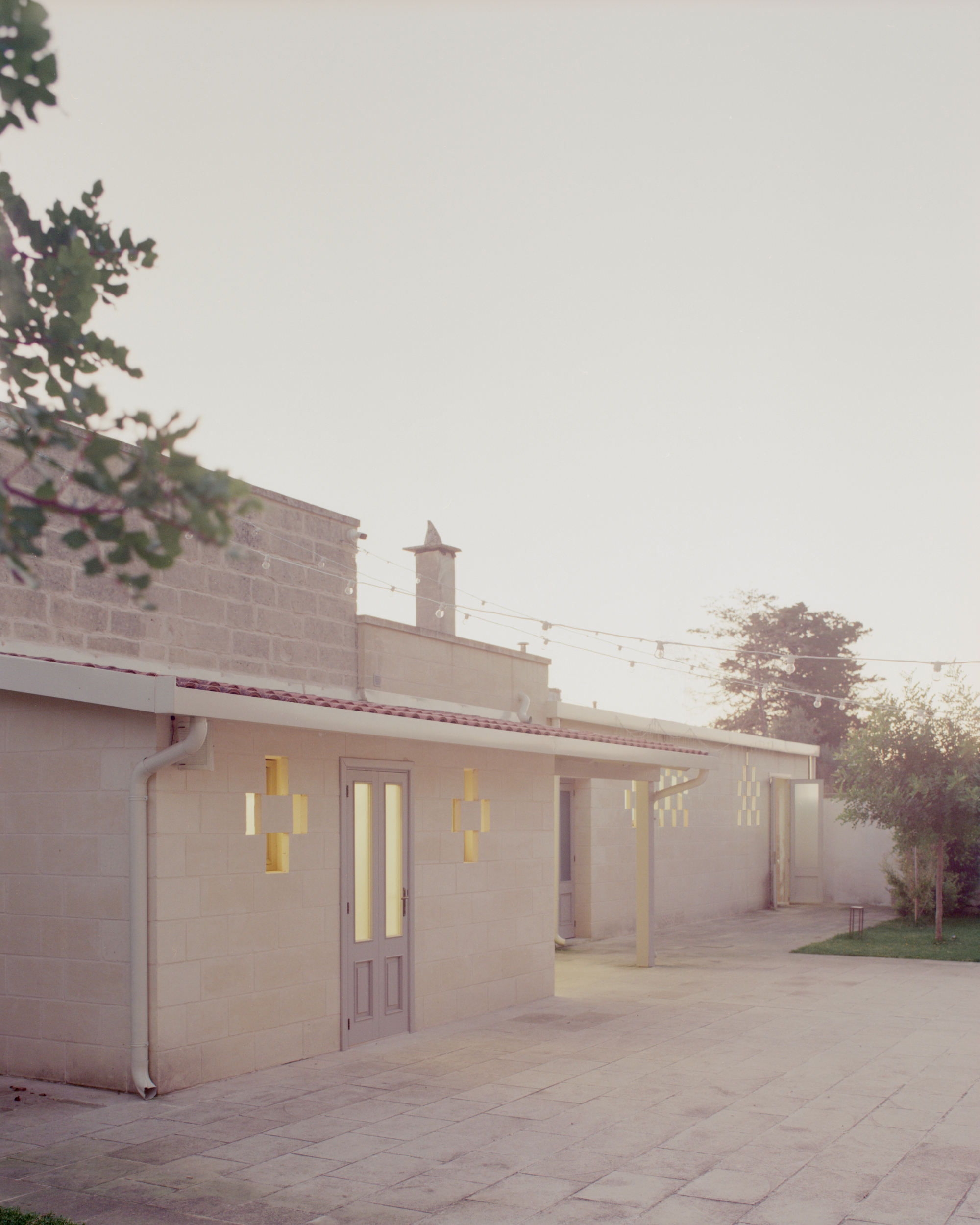
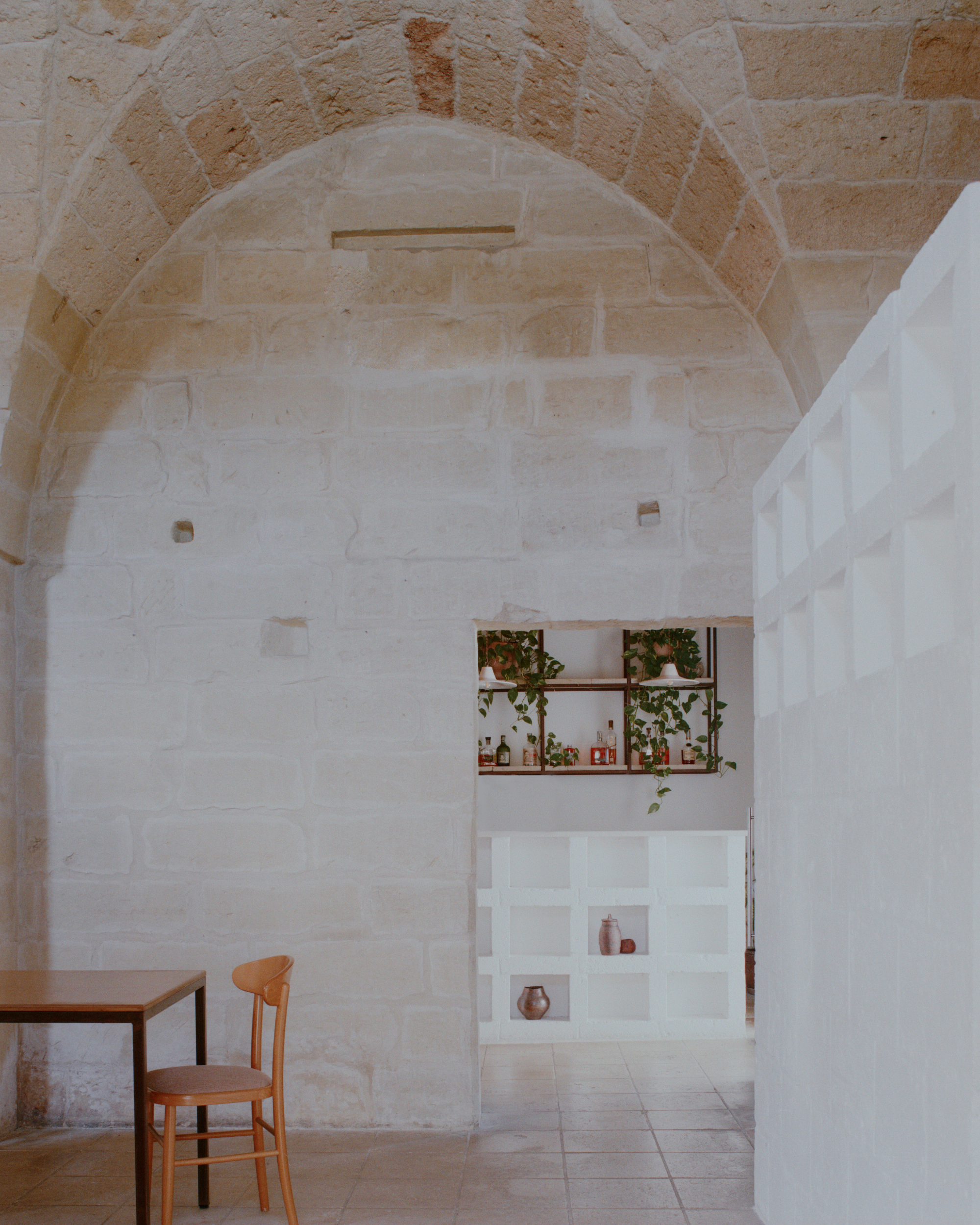
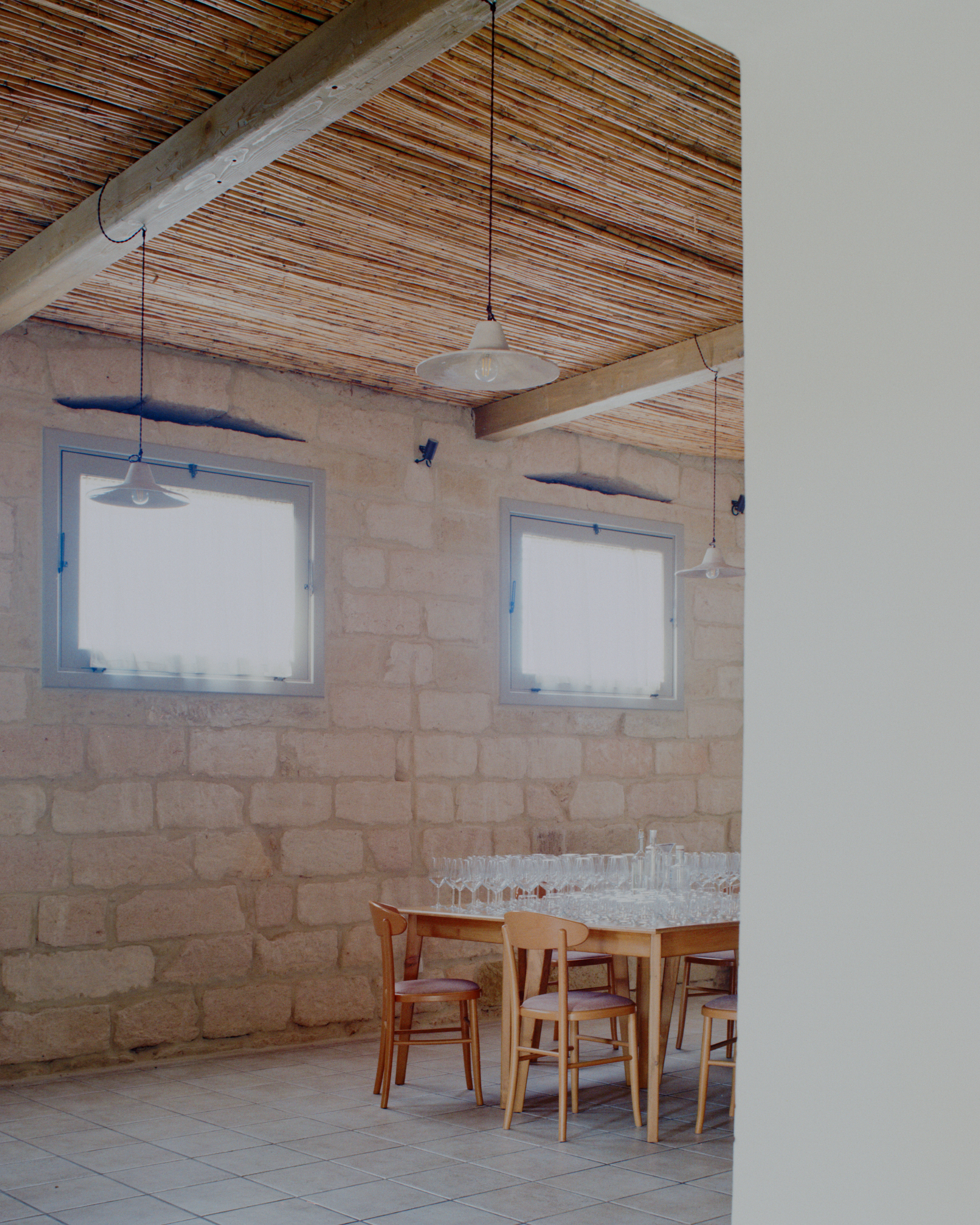
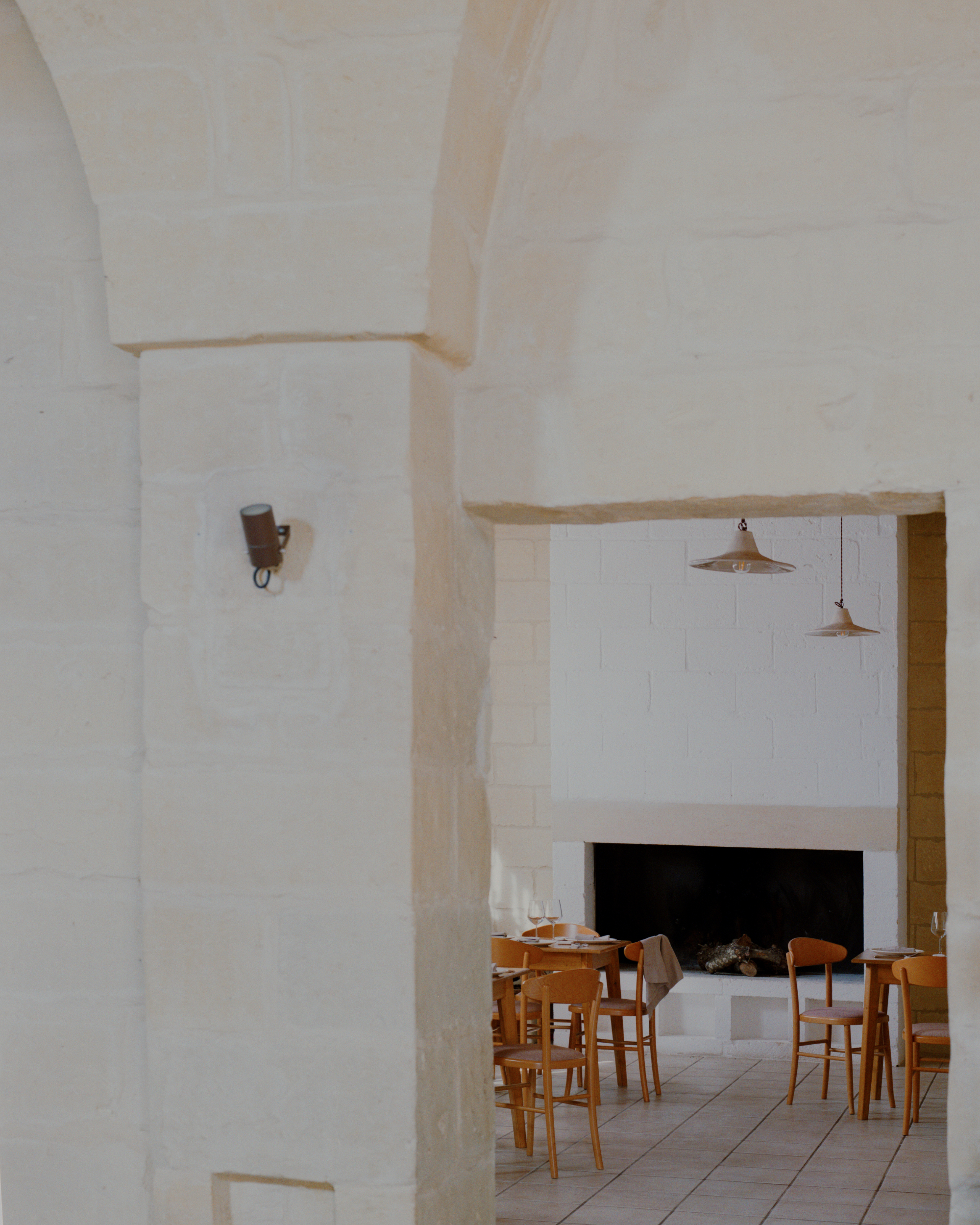
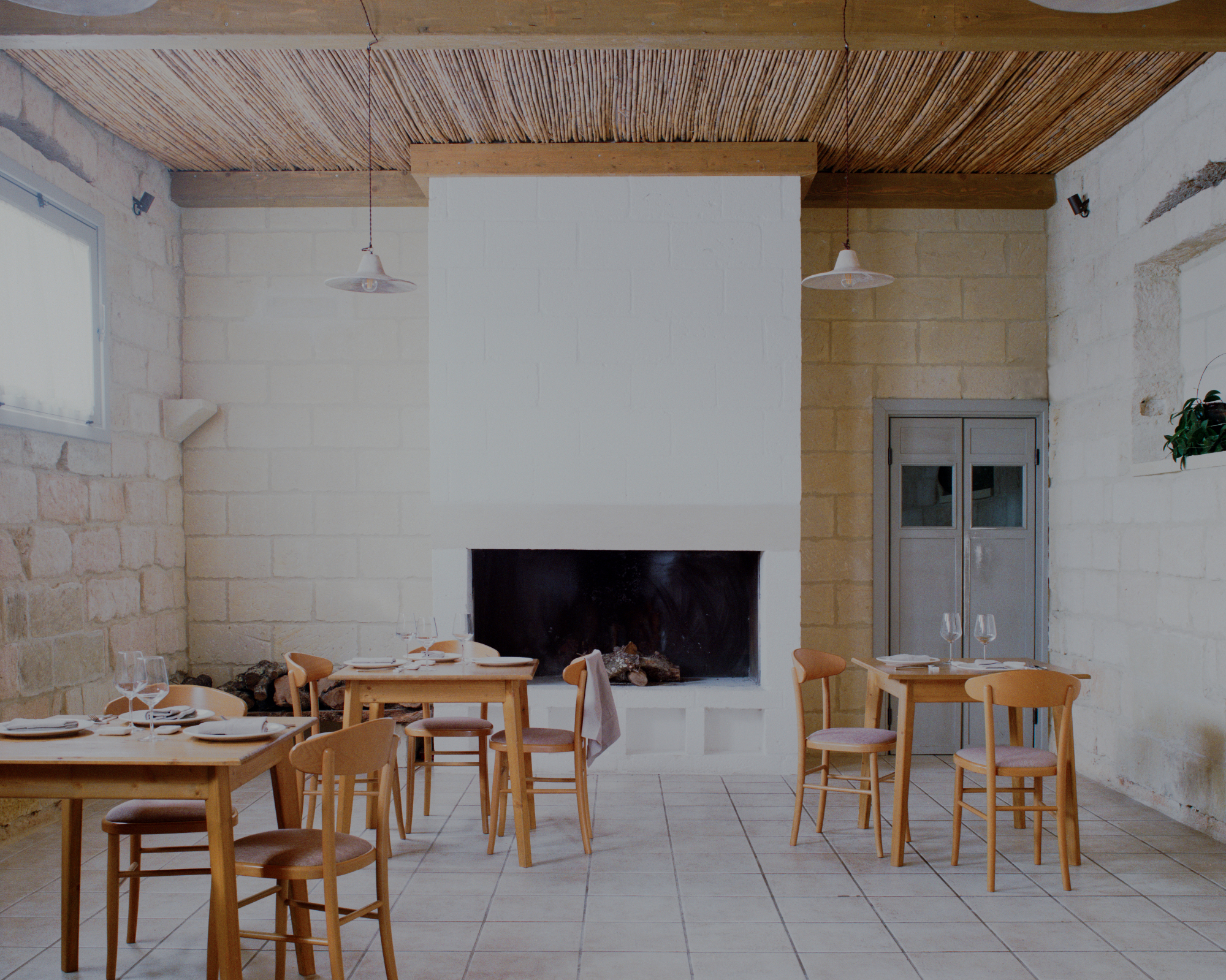
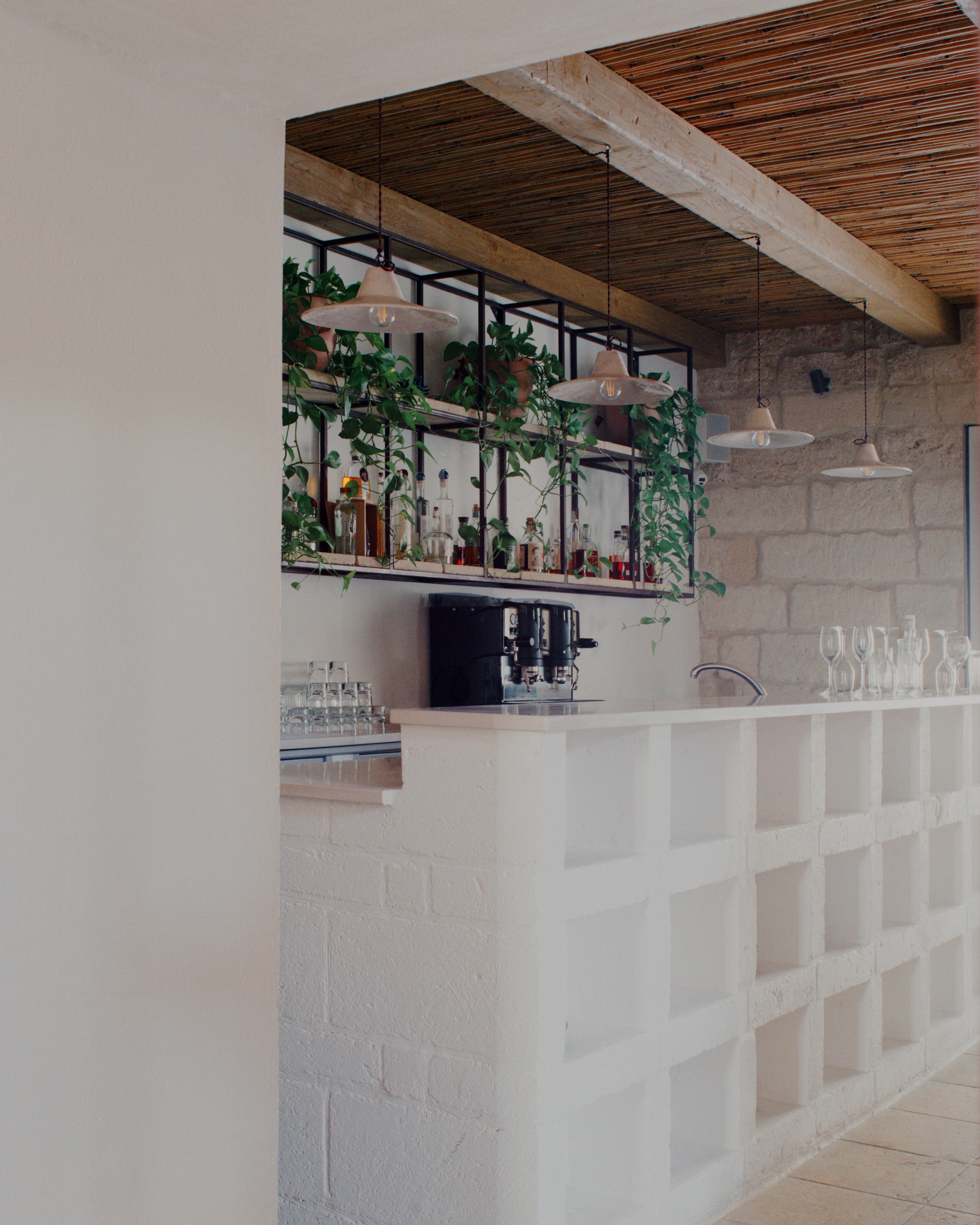
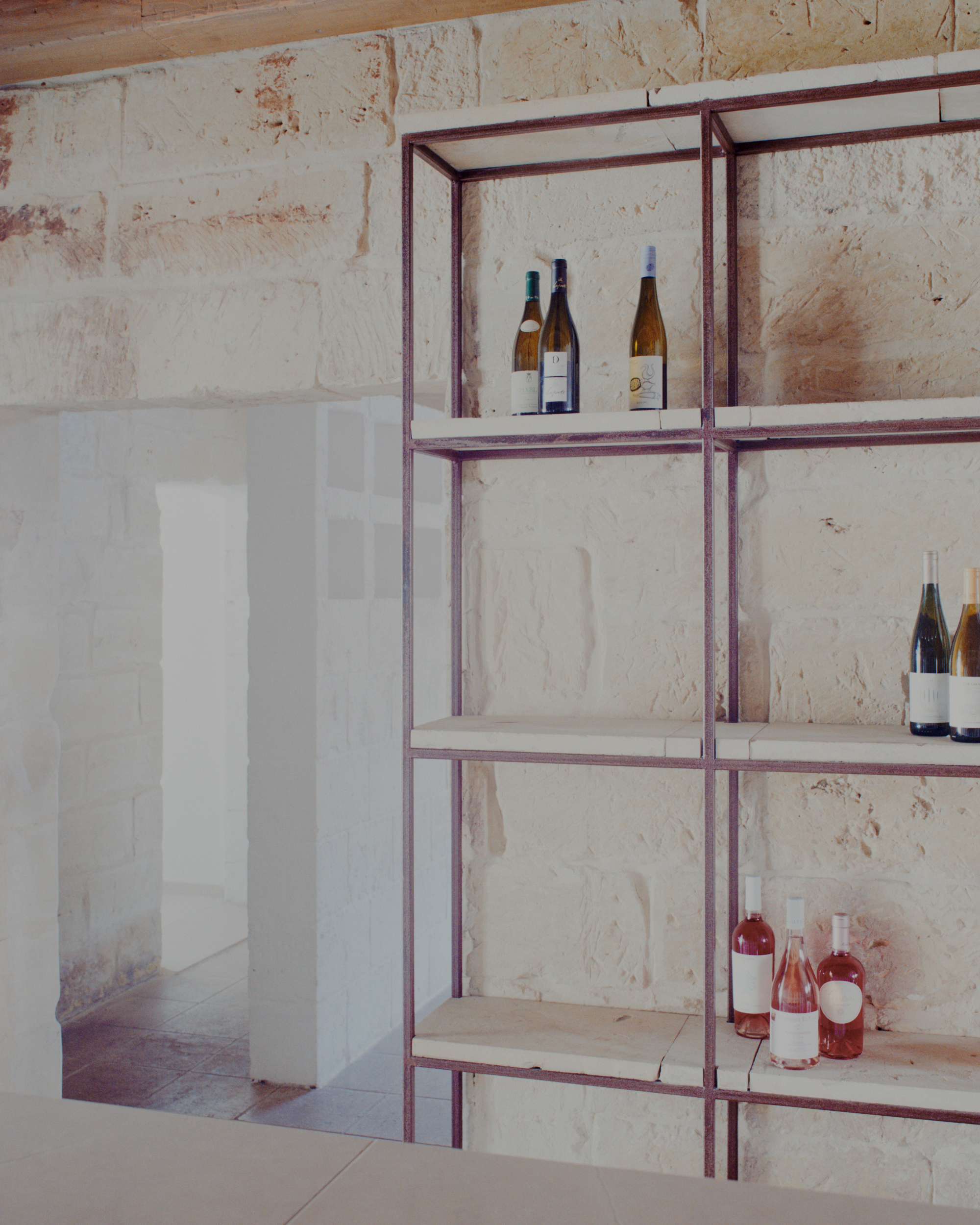
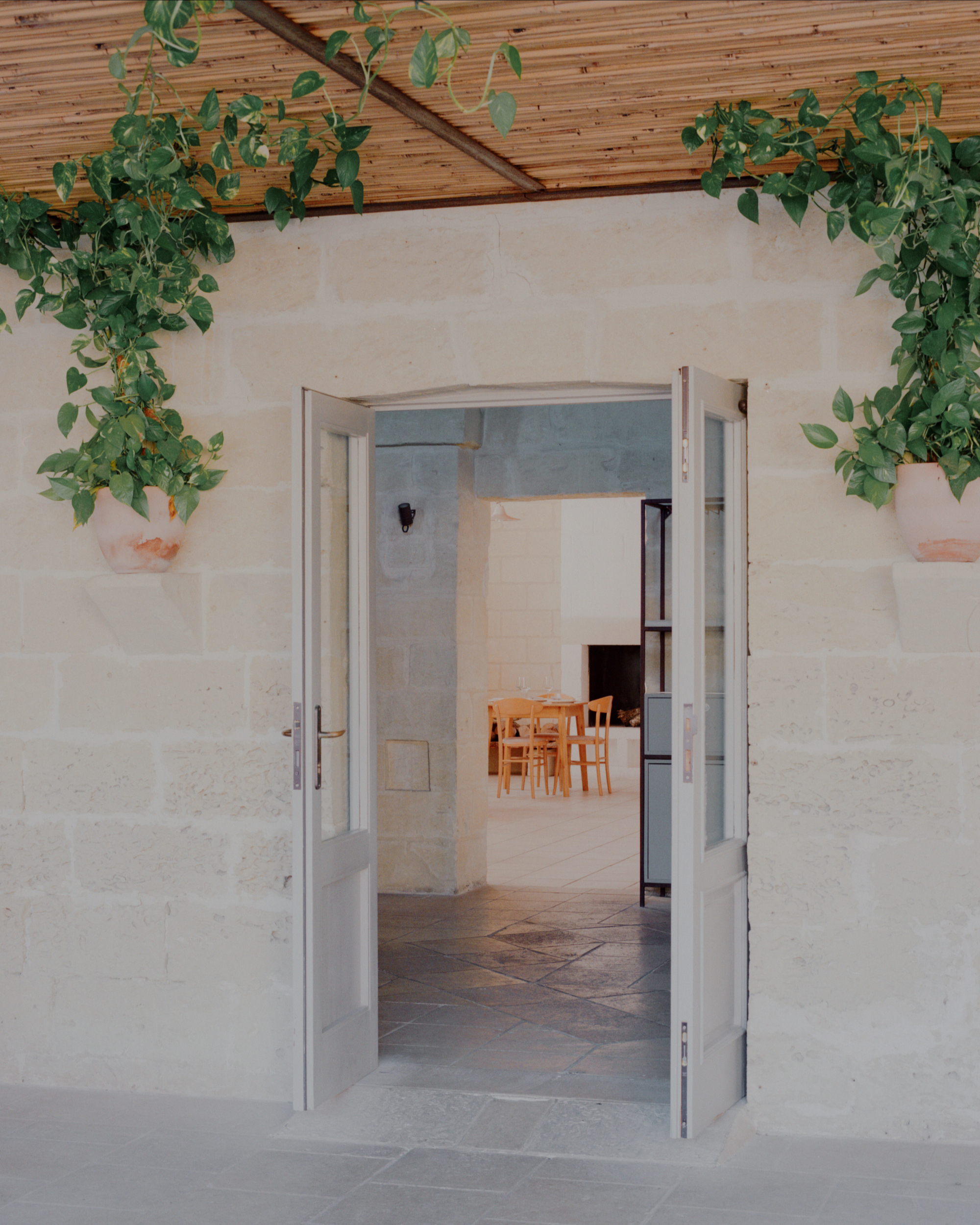
Inside the stone halls the architects introduced just three new pieces—bench-counter, fireplace, and perforated partition—each built from the same tuff, lime-washed so the intervention stays legible against the older fabric. Light sneaks in from clerestory slots, hits the coffered faces of those inserts, and lands on simple elm tables and spindle-back chairs sourced from local makers. The vaulted ceiling holds the room together; the new objects merely set the stage. The approach, described by Margine as “architecture of subtraction,” swaps flourish for clarity .
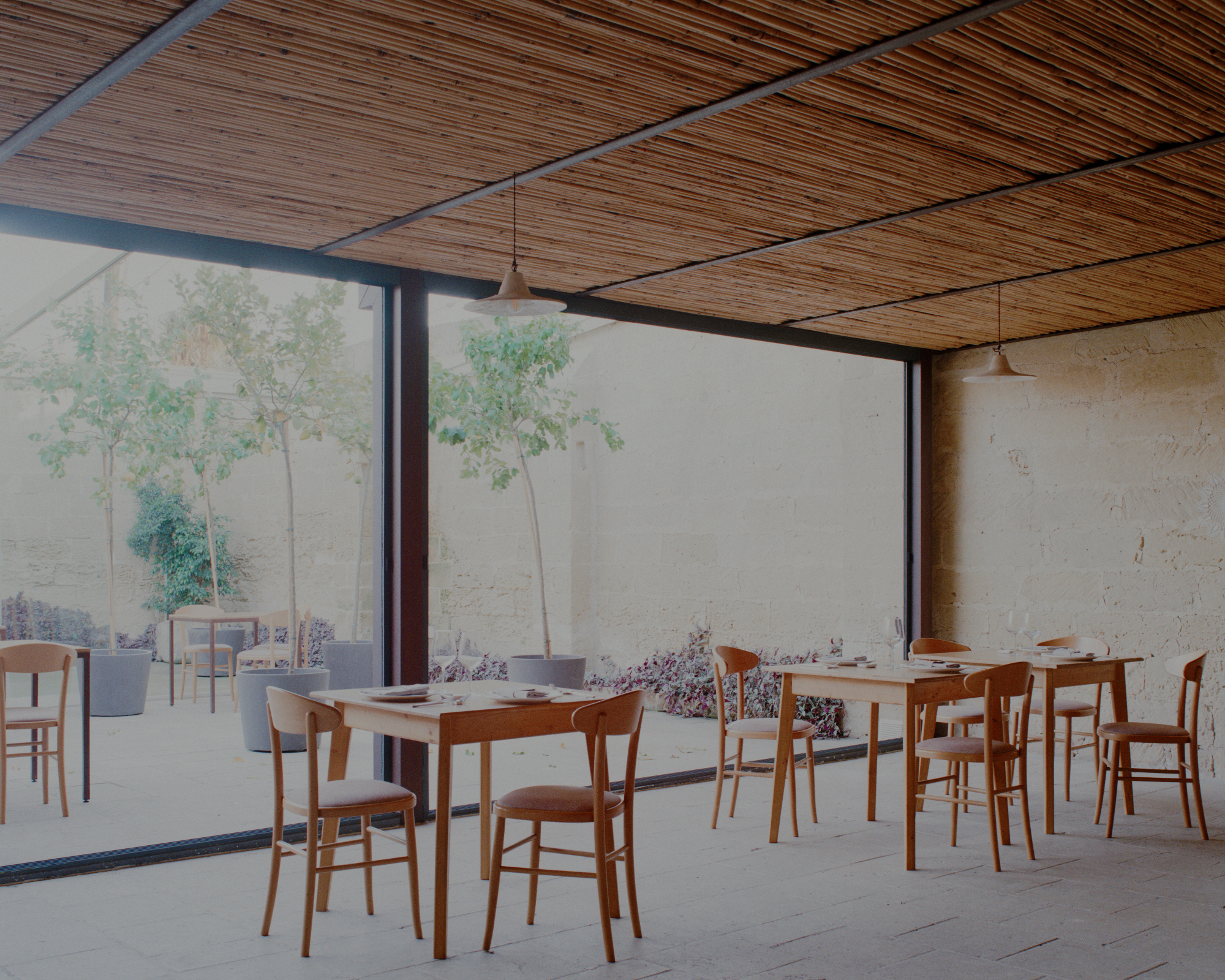
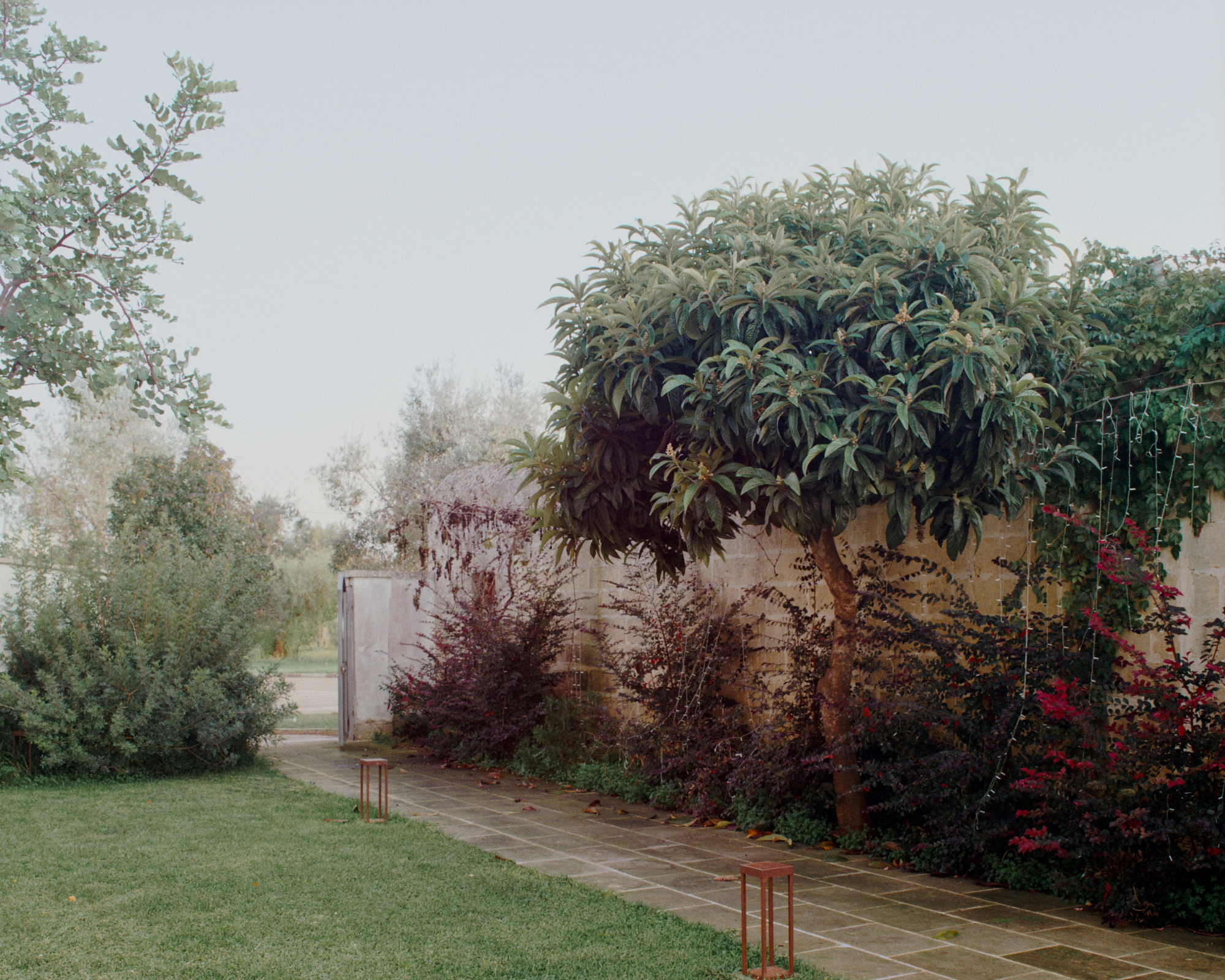
The courtyard regains its sky: a low Corten frame carries a roof of rough cane, dropping striped shade across outdoor tables and terracotta sconces. Gaps in the Lecce-stone wall align with rows of citrus and pomegranate, so the dining room now drifts between masonry coolness and garden air. Masseria Caronte returns to work, not as a farm but as a place to eat, its new life anchored in the same materials that built it two centuries ago.