Search






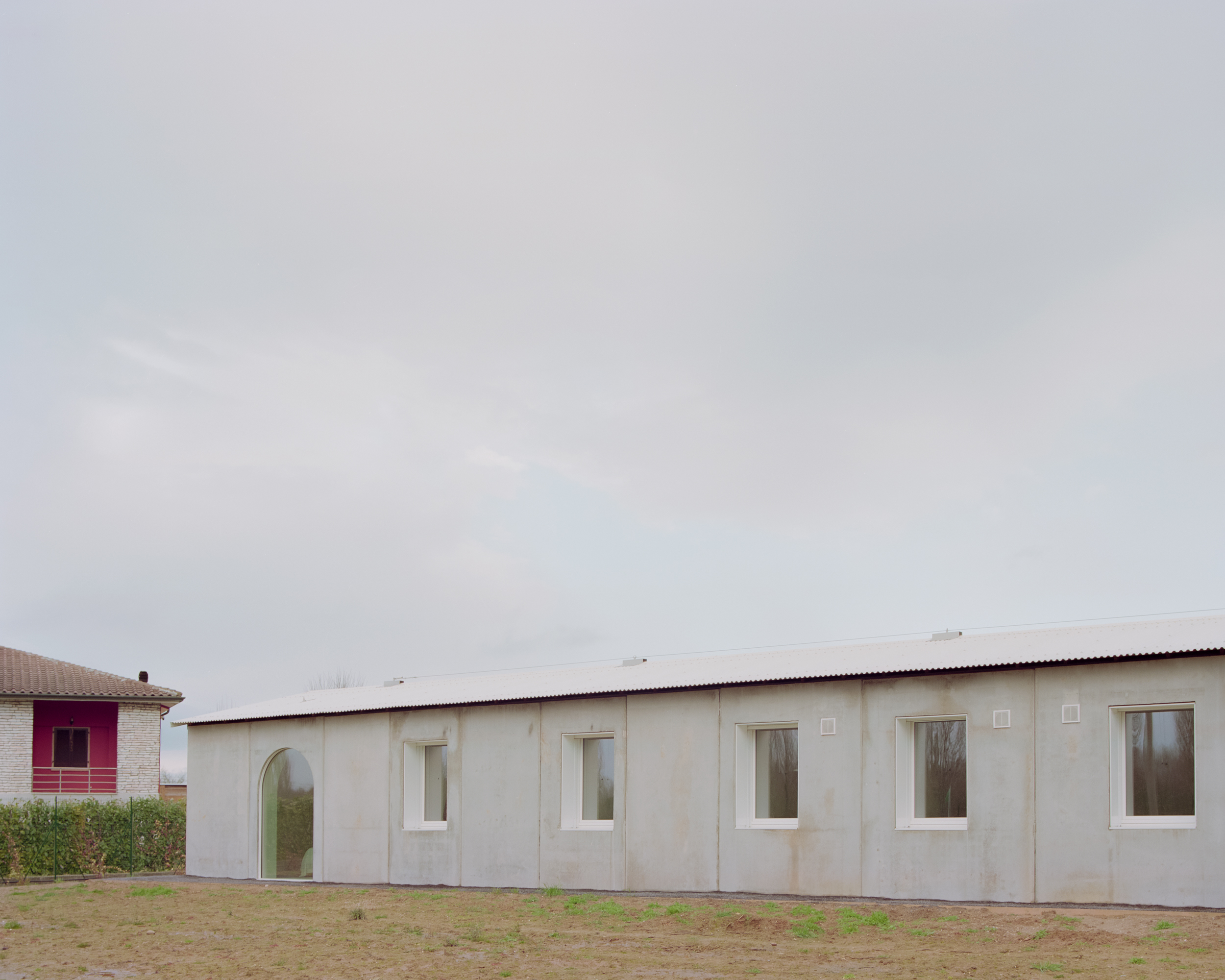
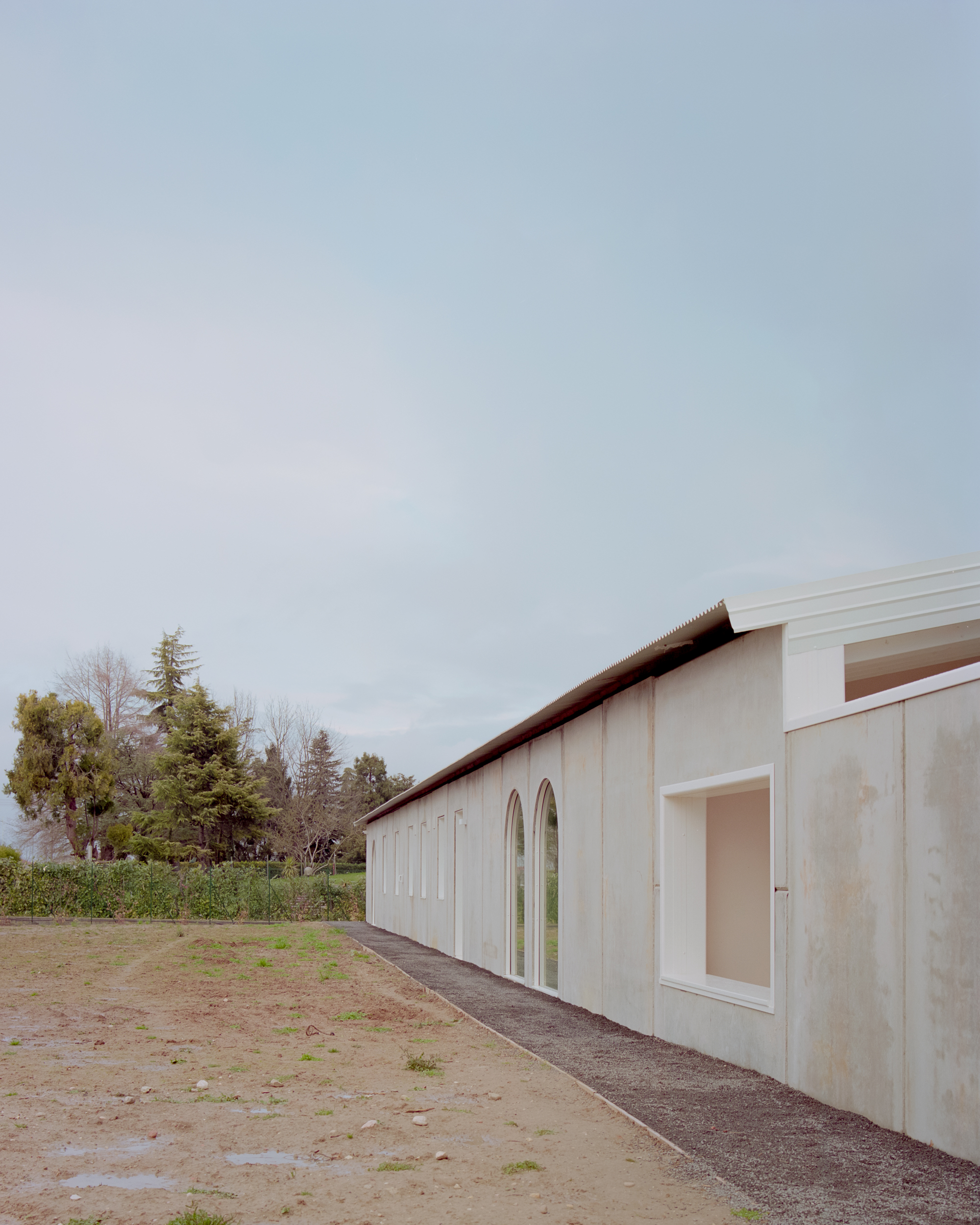
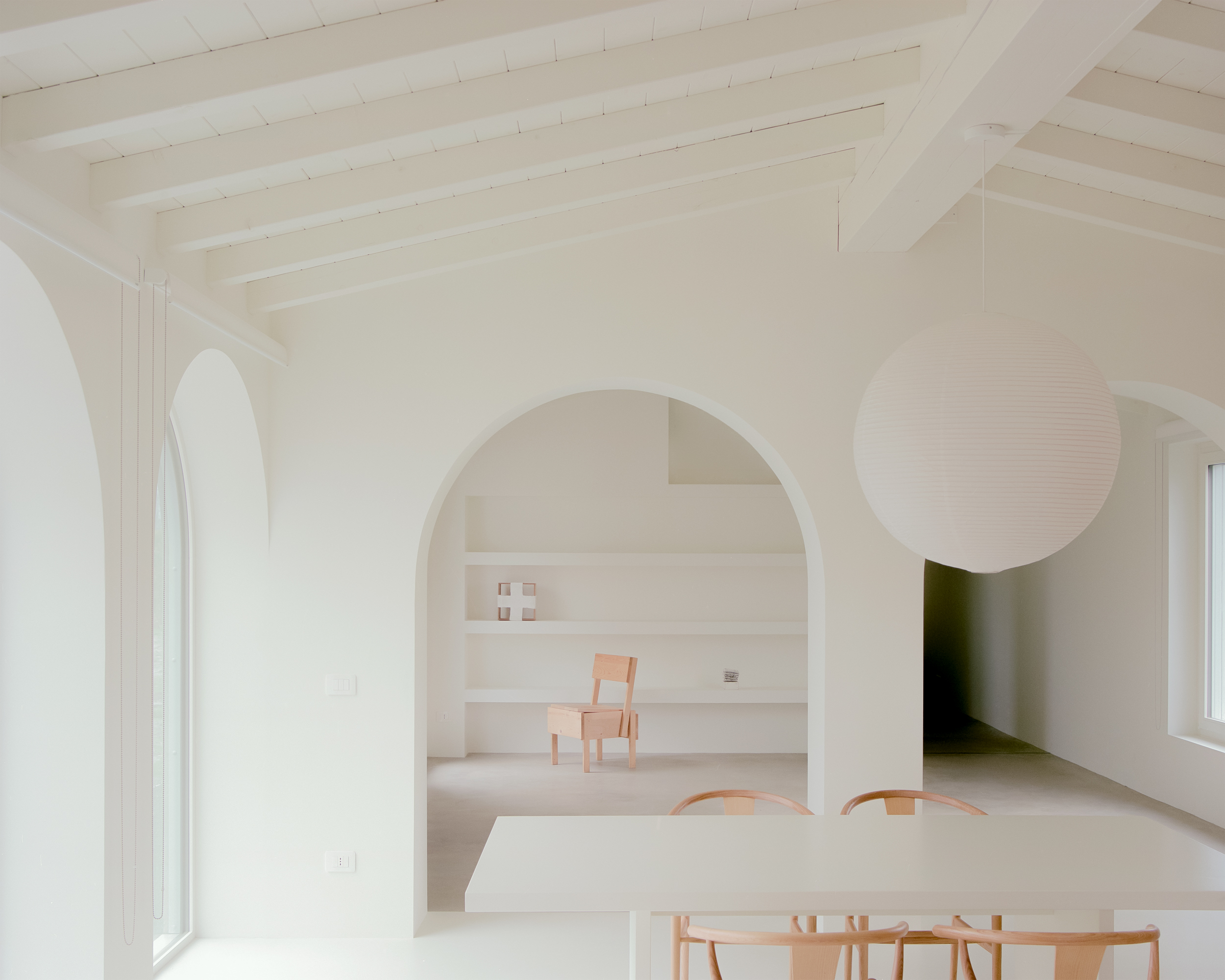
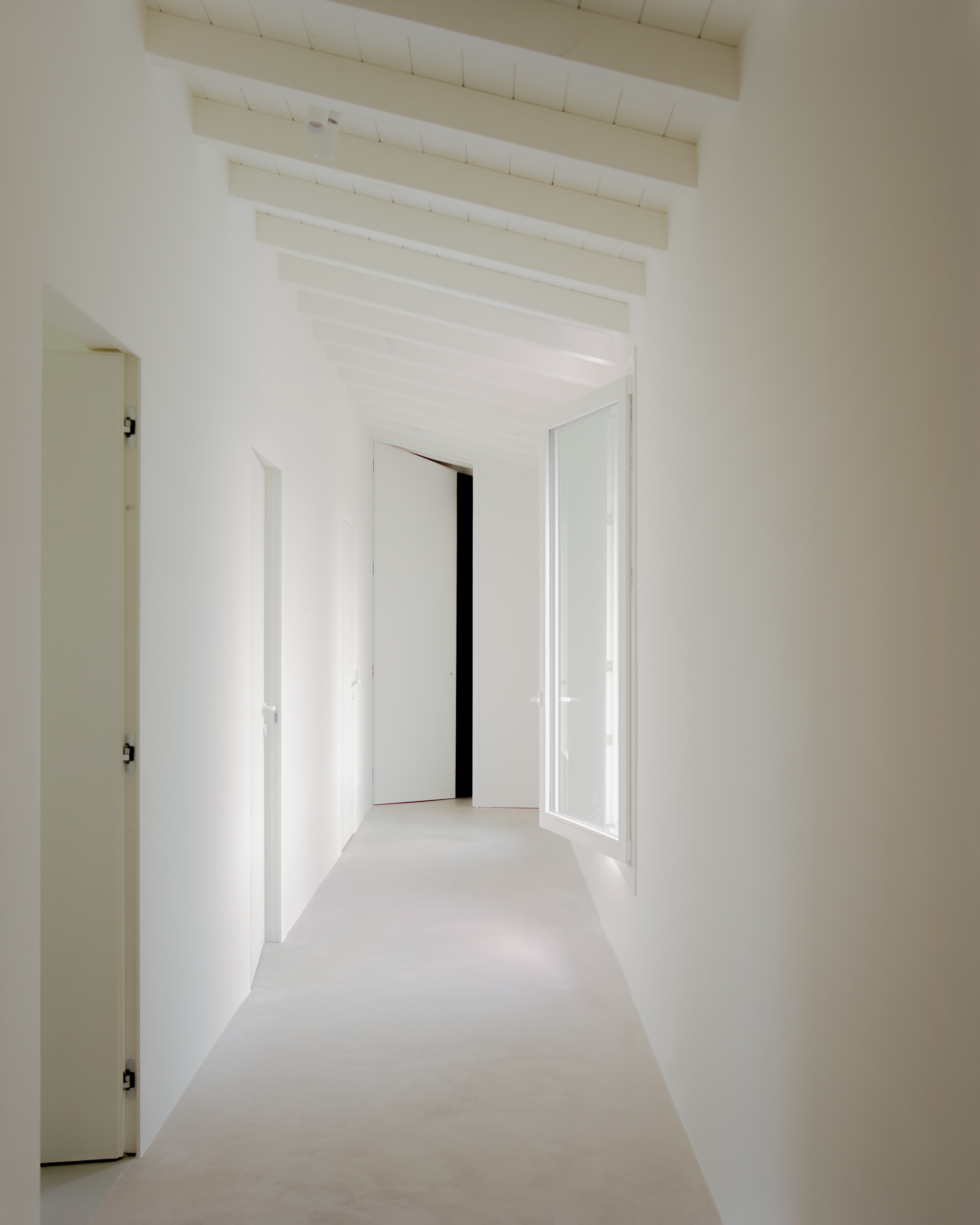
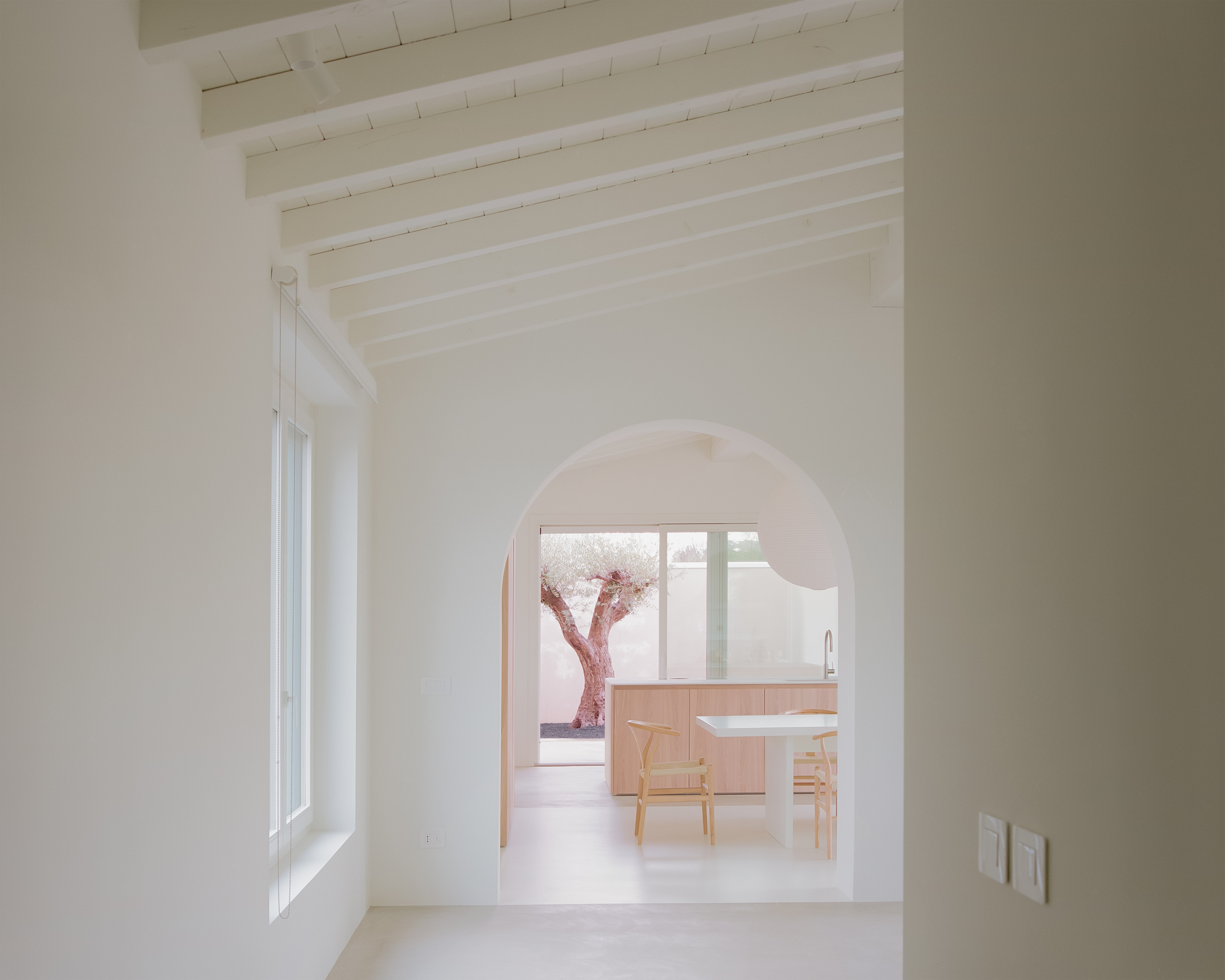
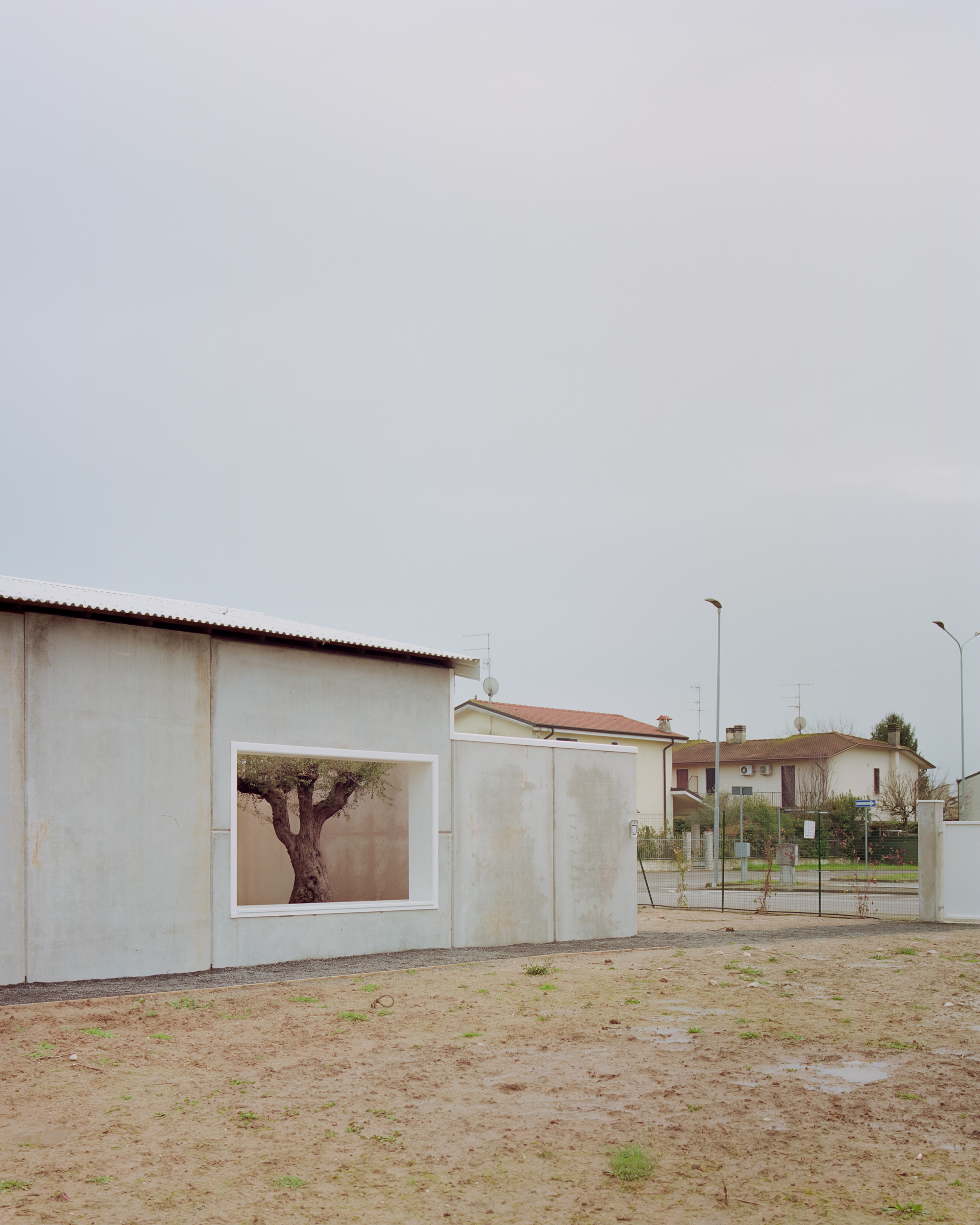
A few miles south-east of Mantua in Italy, the flat fields leading to the Po River still rely on long, low sheds for workaday storage. Casa GA keeps that outline—corrugated roof, precast panels, a disciplined row of windows—so the building settles into its agricultural strip with quiet confidence. A glazed arch marks the entrance; cross the threshold and daylight pours through a sequence of matching openings that guide the eye from foyer to kitchen to bedroom. Each arch sits thick enough to hide services and soften acoustics, turning a structural grid into the house’s chief ornament while giving movement through the plan a steady, almost cinematic pace.
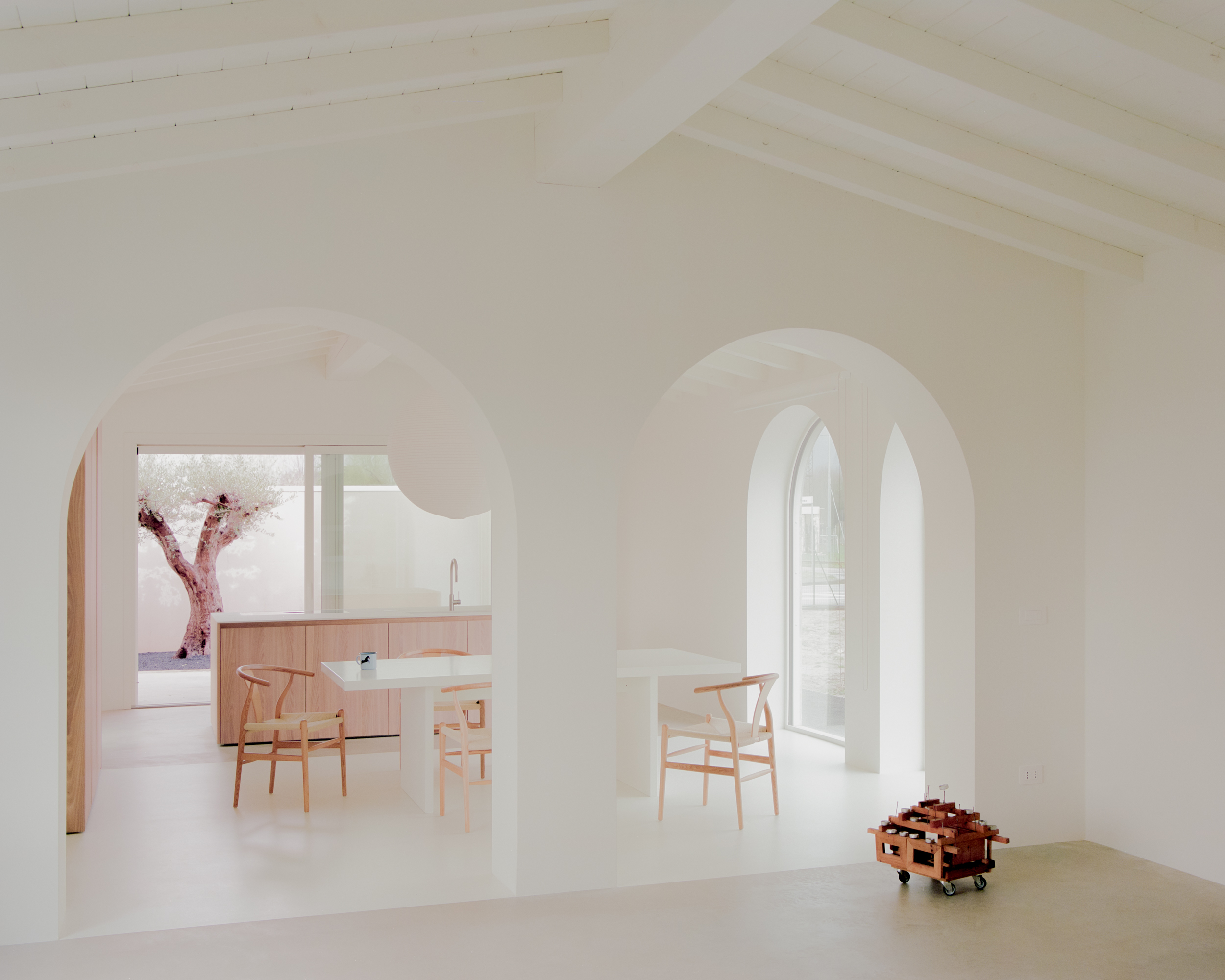
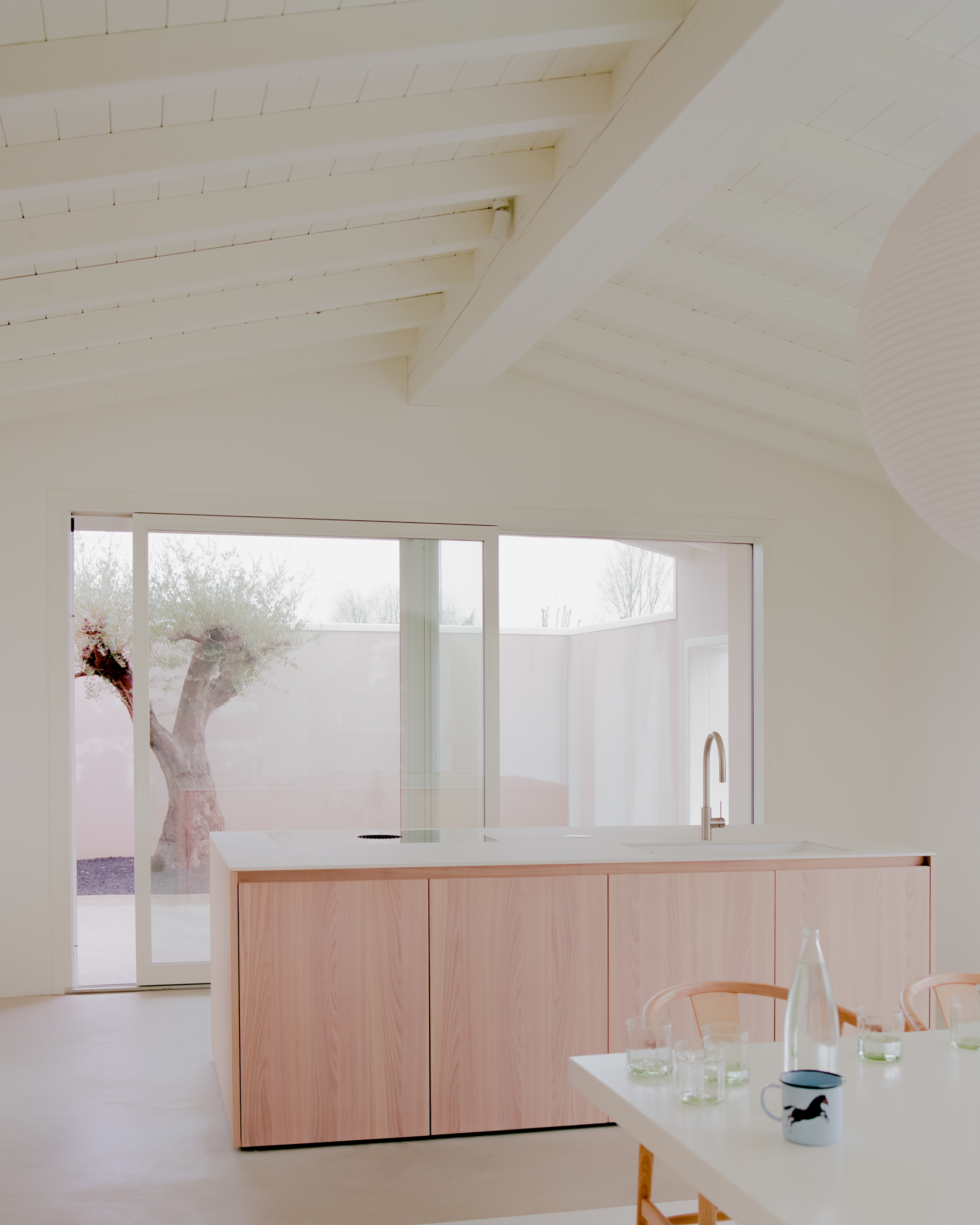
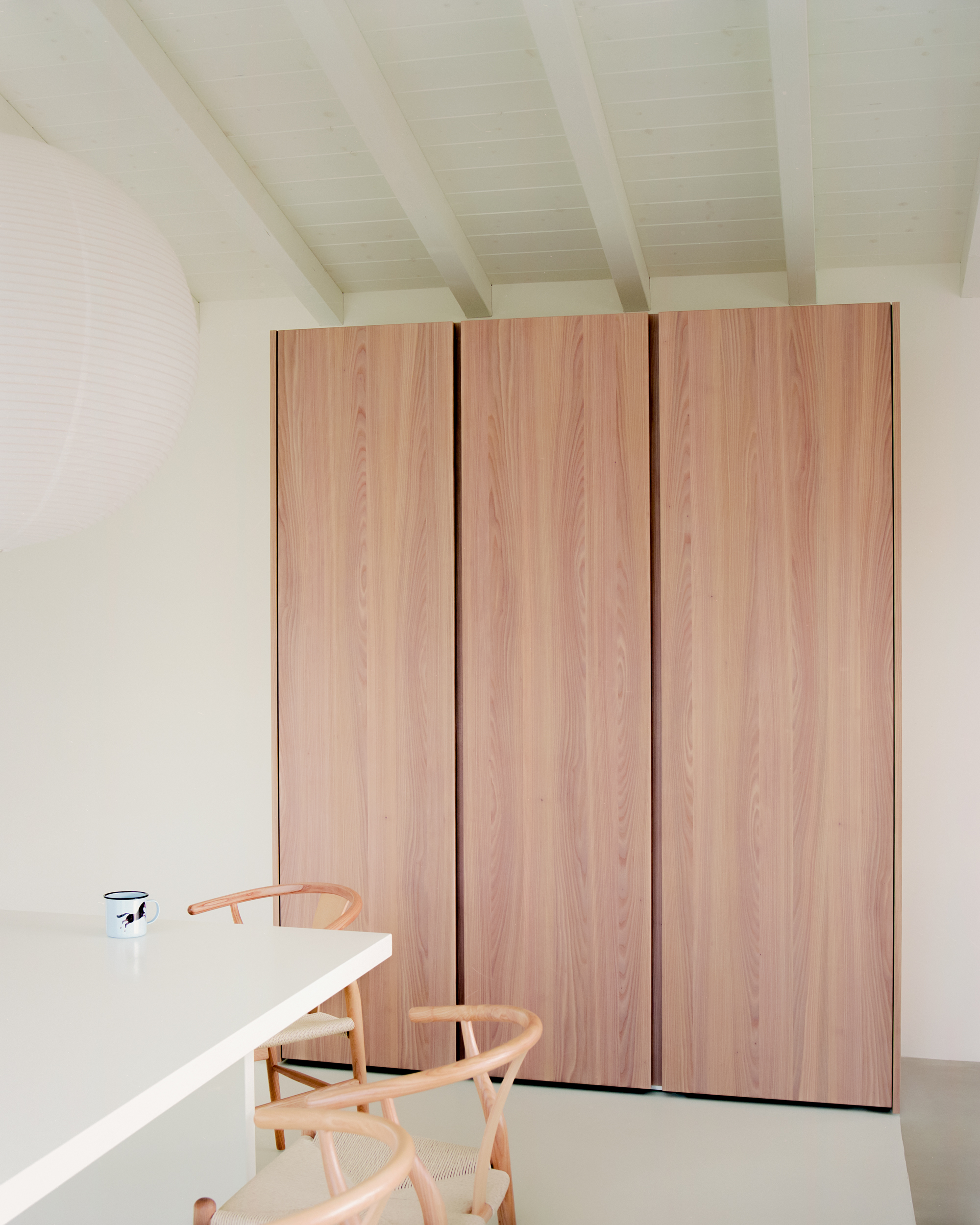
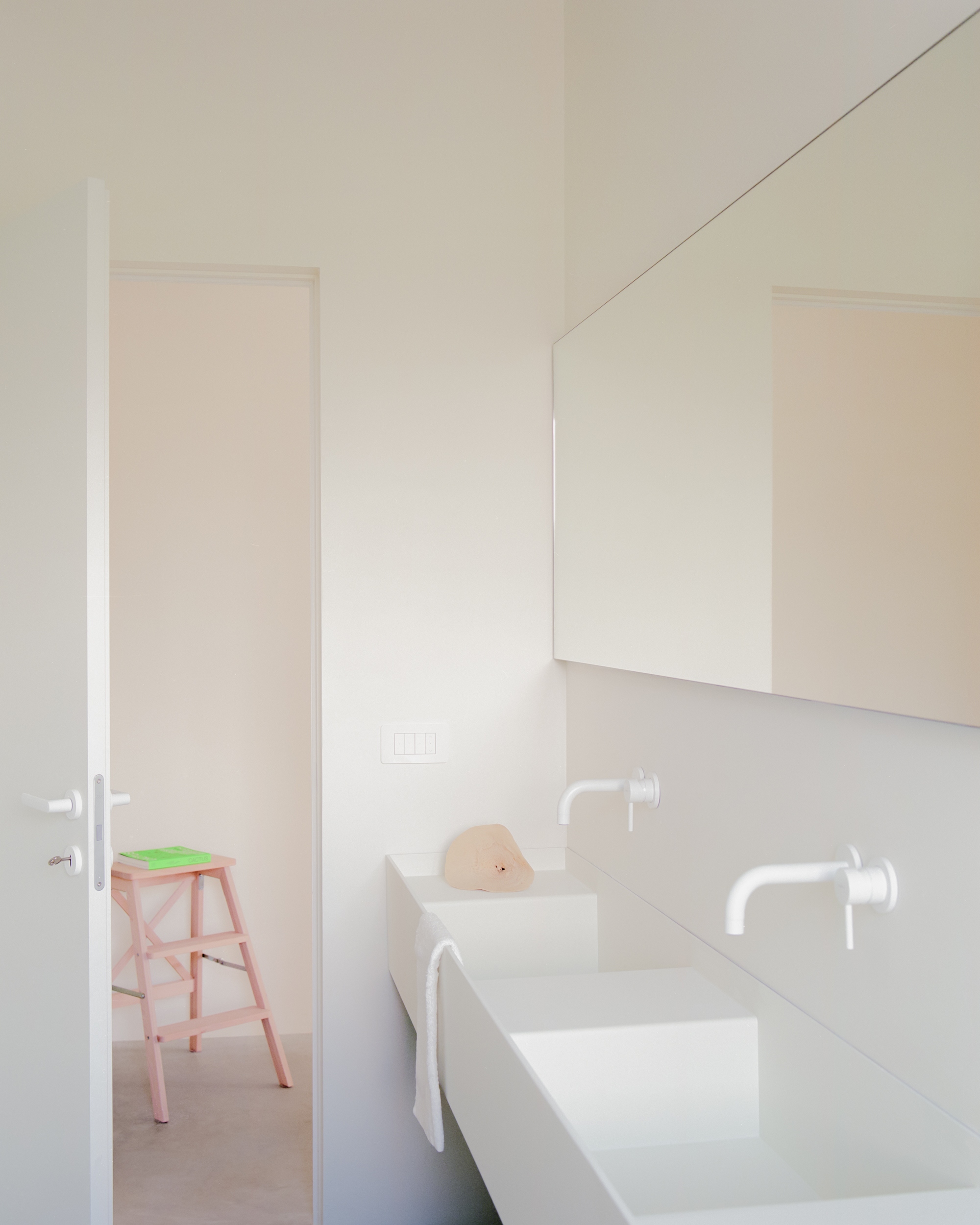
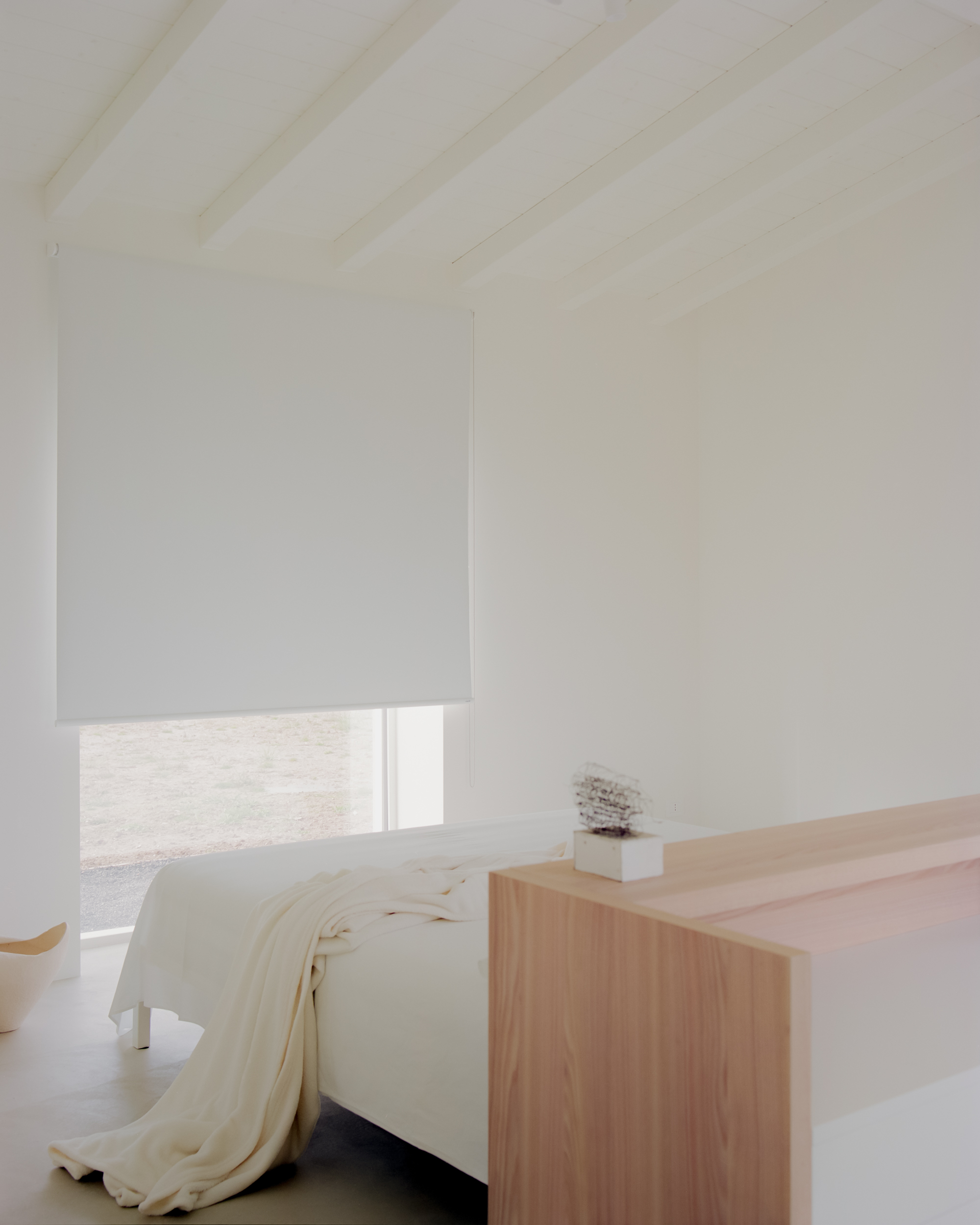
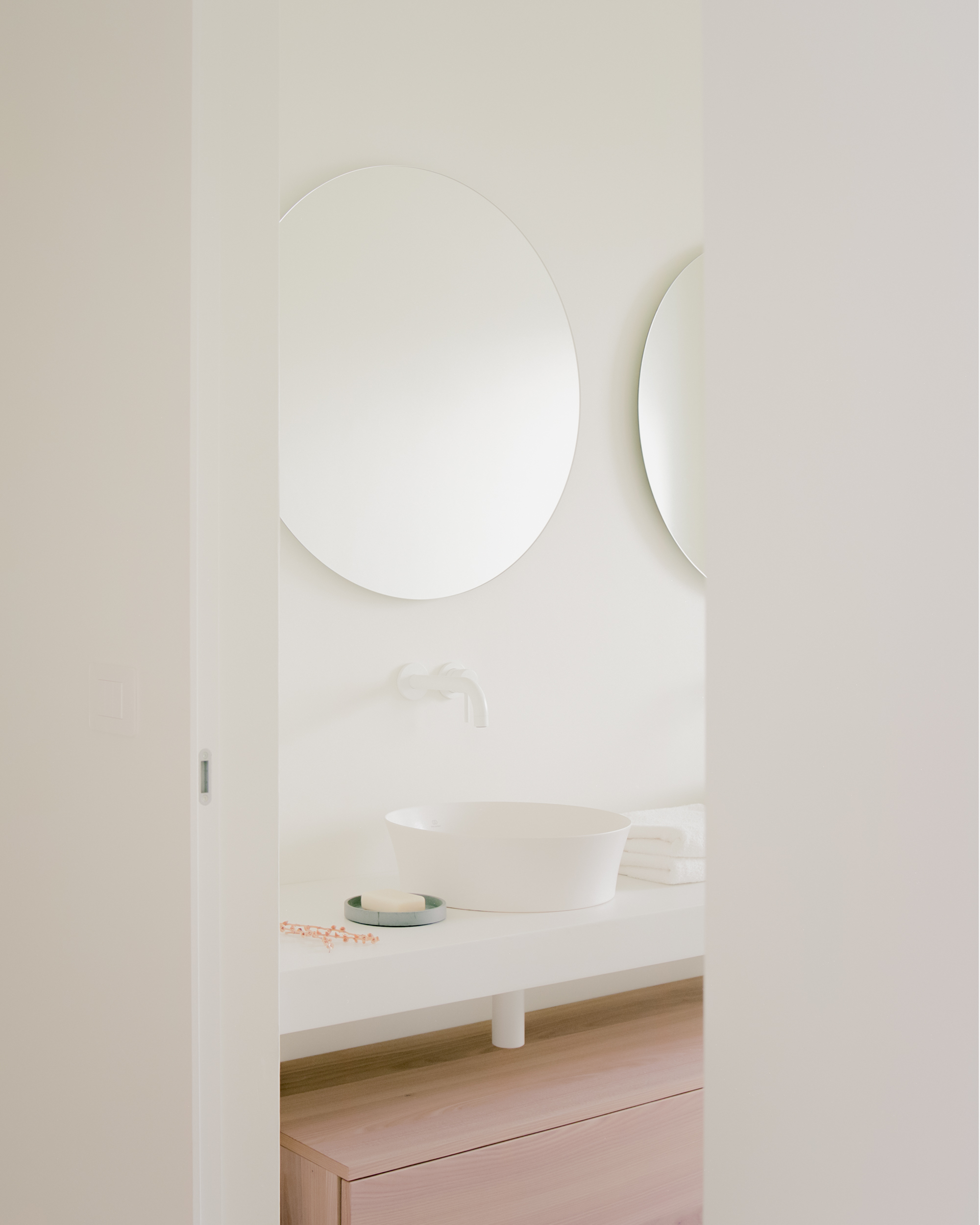
Inside, finishes follow a single idea: let material do the talking. Chalk-white plaster and lime-washed rafters catch the light; kitchen islands and full-height cupboards wear softly pink ash that lifts the palette just a few degrees. Furniture stays sparse by design. Wishbone chairs flank a broad dining table, and a lone Sedia 1 by Enzo Mari claims its own niche—a wink to Mari’s plank-on-plank manifesto and a neat echo of the house’s clear-headed assembly. Every element—arch, cabinet, chair—follows the same rule: straight lines where possible, honest joinery, a calm surface ready for everyday use.
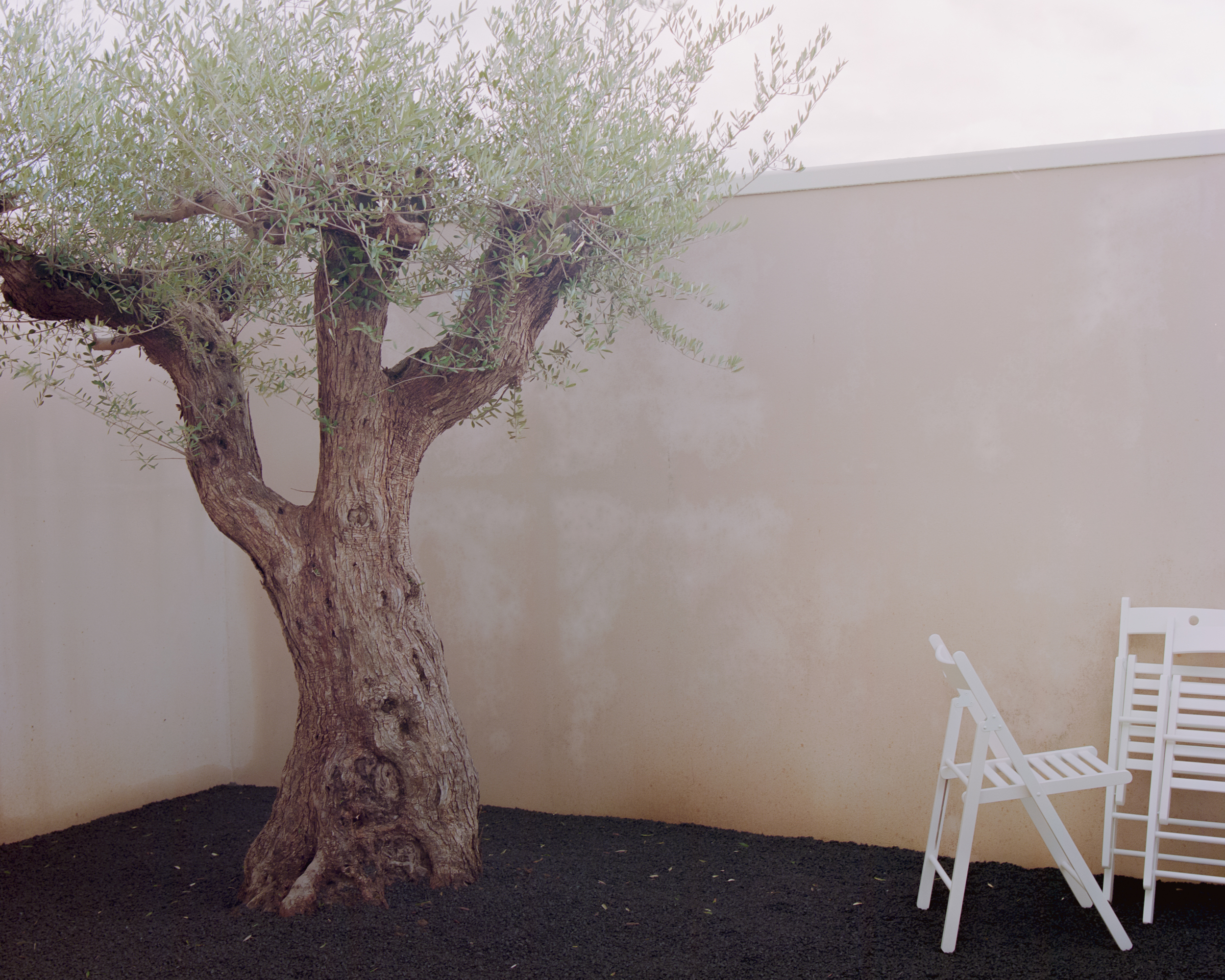
At the heart of the layout, a walled patio frames a centuries-old olive tree rising from dark volcanic gravel. Kitchen sliders capture its trunk like a living column; a hallway view lifts the canopy against open sky. The gesture sounds straight out of Ettore Sottsass, who once quipped that the best answer to indecision is a beautiful tree. Here that advice anchors the entire project—rural shell outside, measured domestic rhythm inside, and a single, time-tested landmark tying it all together.