Search






Rectangles, circles, and a single hit of color
Step through the door of designer Marc Morro’s Barcelona studio and you’ll likely spot mock-ups pinned to the floor rather than the wall: pieces of card trimmed to rectangles, each carrying a single, oversized circle nudged against one edge. Morro has been tinkering with that elemental pairing for years, looking for the moment when a shape stops being “background” and starts shaping the room. Topo, his new rug collection for nanimarquina, captures that search in wool, turning basic geometry into an active piece of space-making.
A circle at the edge, not the center
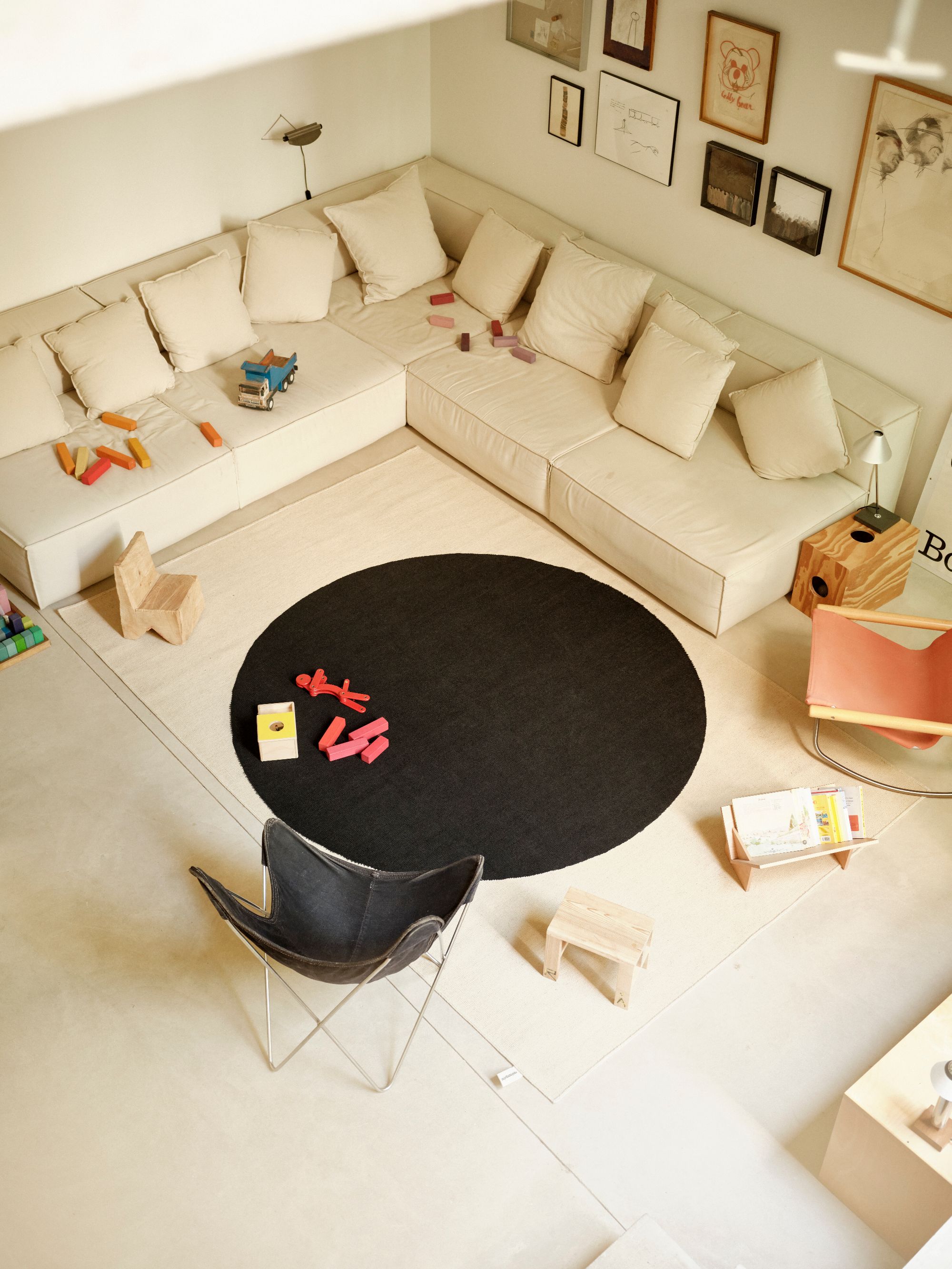
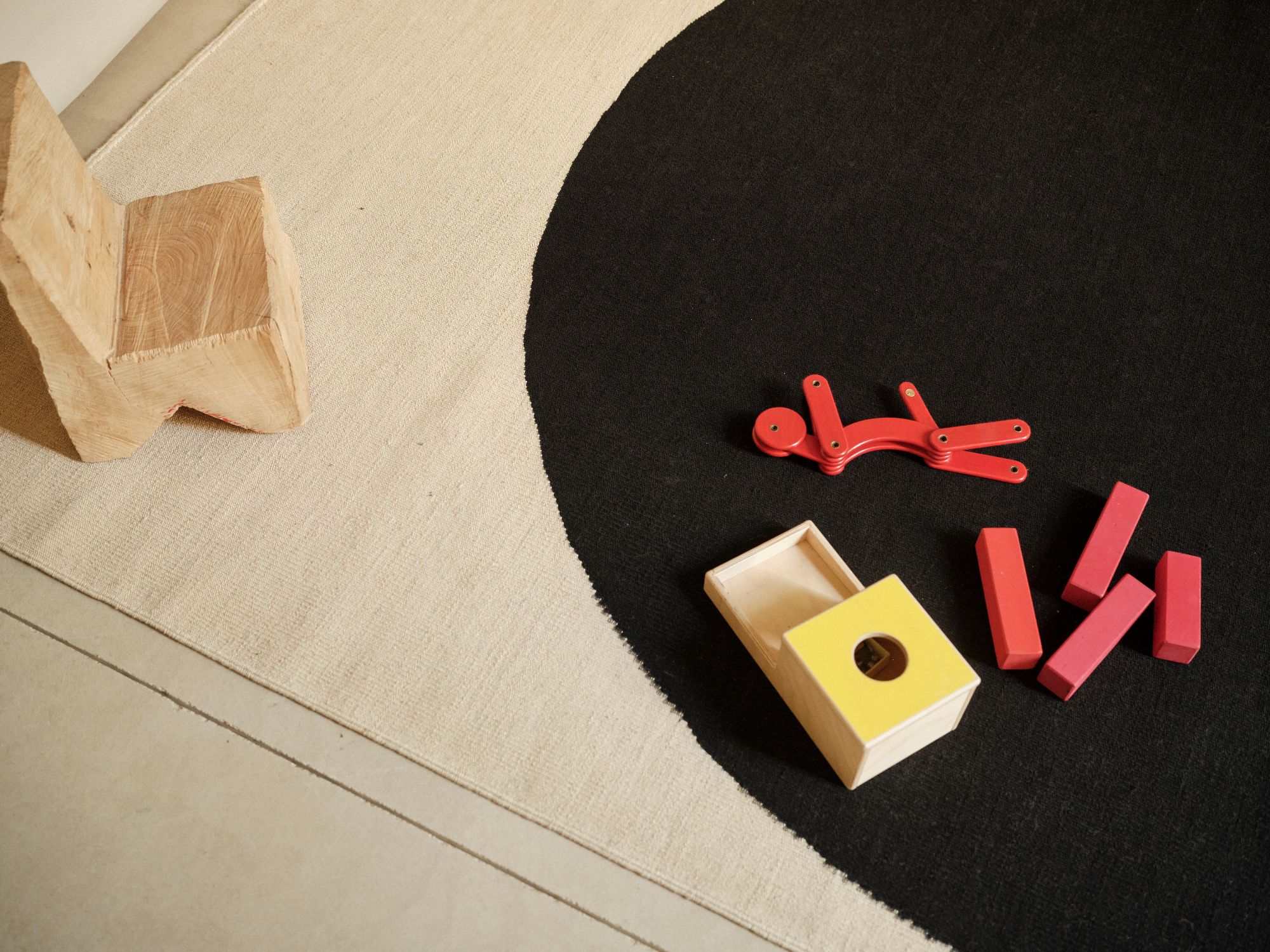
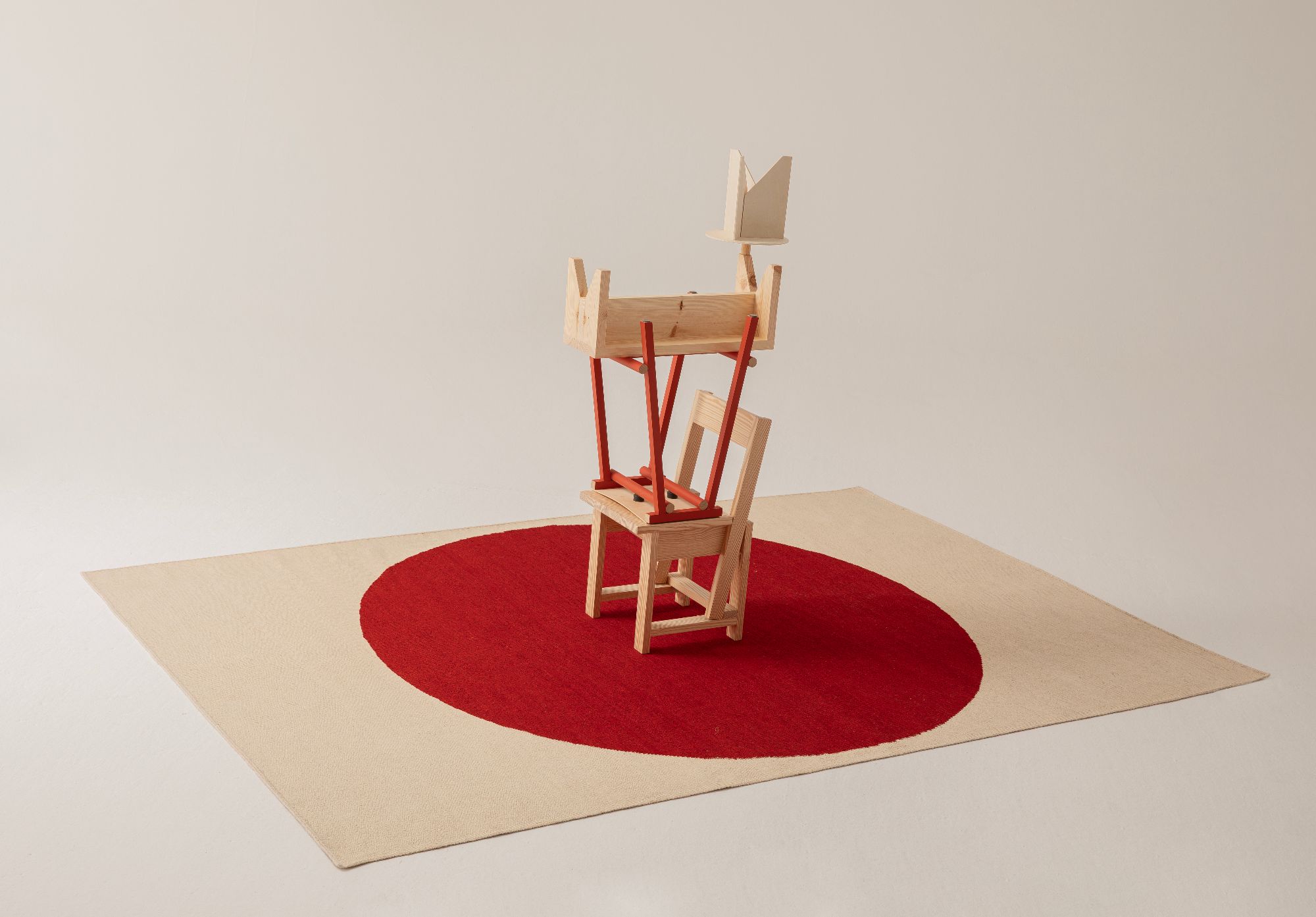
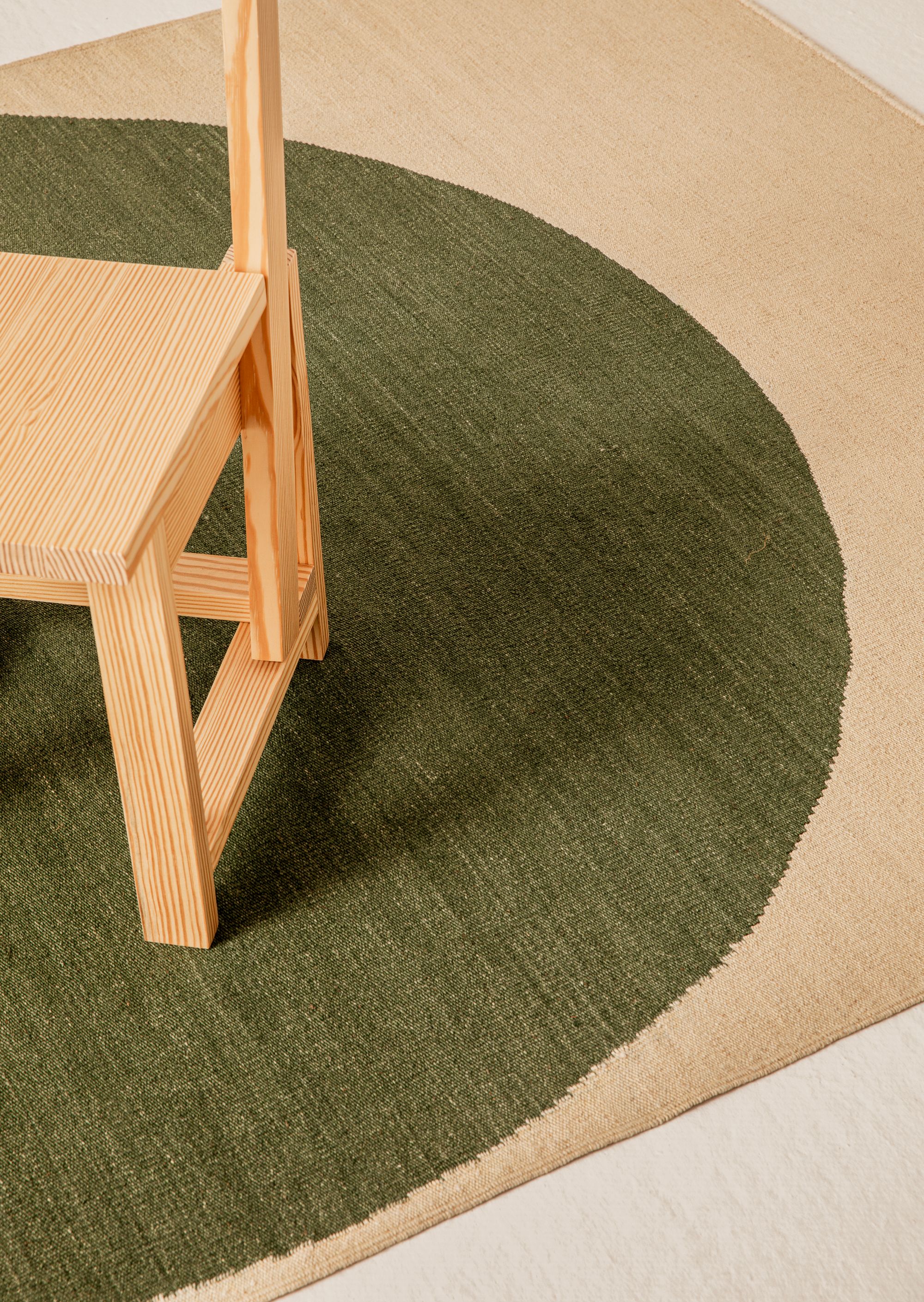
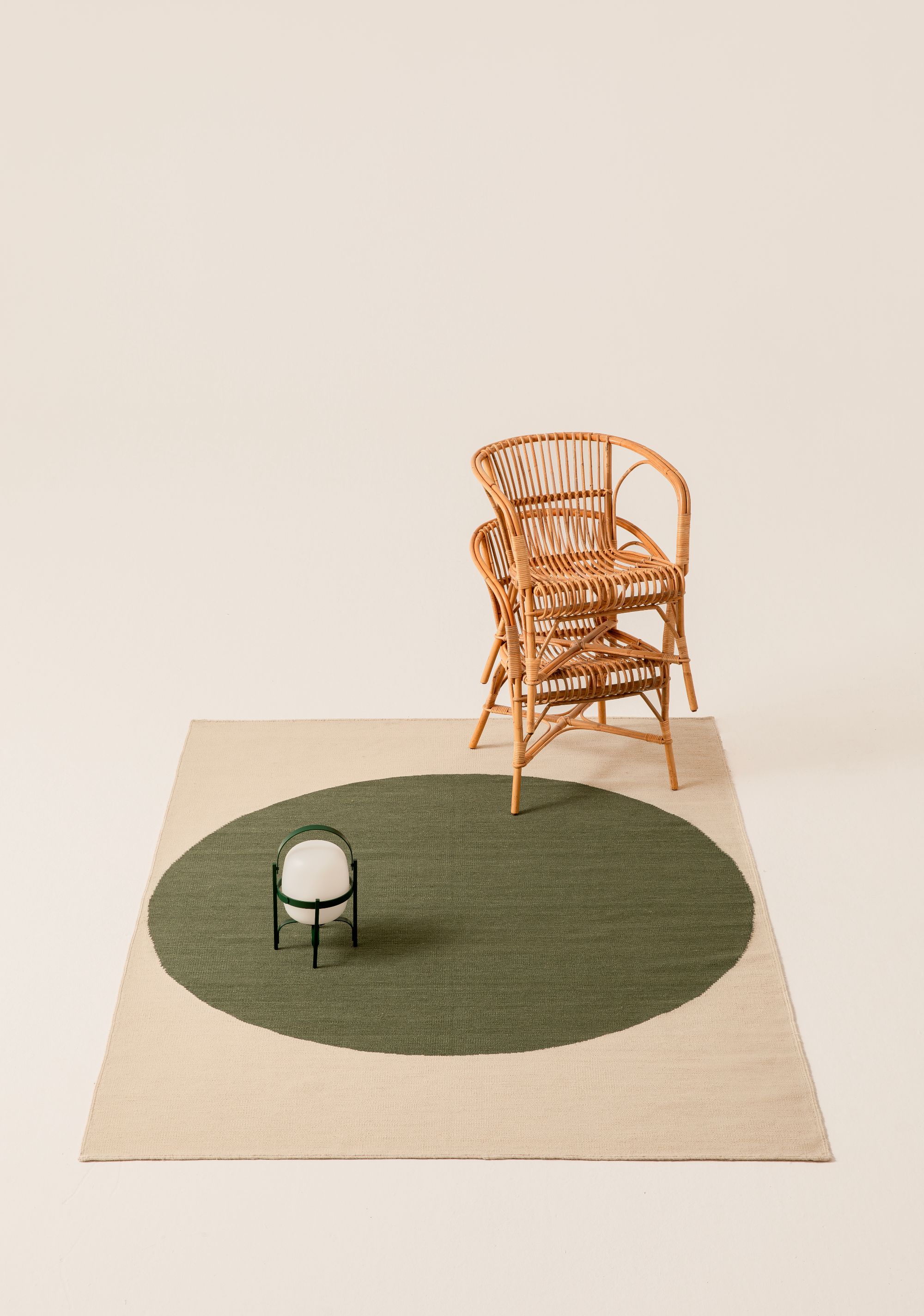
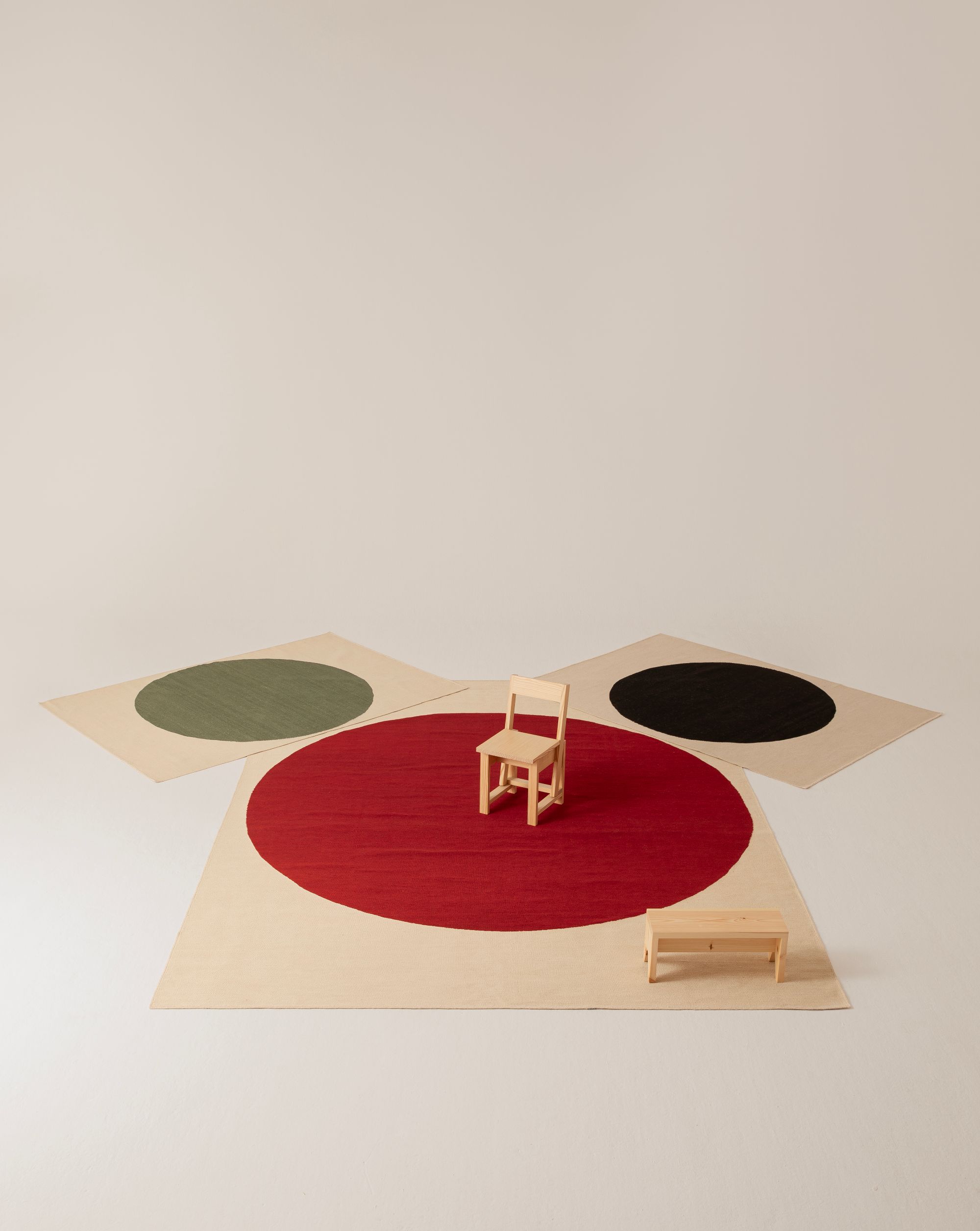
Each Topo rug is a hand-loomed kilim: a flat weave only four millimeters thick, cut to a generous rectangle and woven from undyed Afghan wool the color of raw canvas. Into that field Morro crashes a single disk—black, red, or green—pushed hard against one long side. The circle never sits obediently in the middle; instead it grazes the boundary, creating a tension that feels almost architectural. Slide a sofa so its legs just kiss the disk, and the seating zone suddenly reads like an island inside the larger room. Spin the rug ninety degrees under a dining table and the edge-hugging circle becomes a spotlight for chairs, plates, conversation. Morro calls it “a space within the space,” a simple prompt that encourages you to rearrange the furniture and notice the voids you leave behind.
Hand-spun wool, primary color discipline
Nanimarquina’s mills in northern India translate Morro’s sketch into hand-spun Afghan wool at 48,000 yarns per square meter—a density high enough to keep edges crisp but low enough to preserve the kilim’s natural flex. The fibers pick up dye gently, so the three colorways stay matte and earthy: a brick red that echoes Bauhaus textiles, a midnight black with hints of charcoal, and a green borrowed from chalkboard paint. Against the neutral ground each hue holds its own graphic weight without shouting. Seen from across a living room, the rug reads like a bright field note—clear, direct, and slightly off-center by intent.
Uses beyond the living room
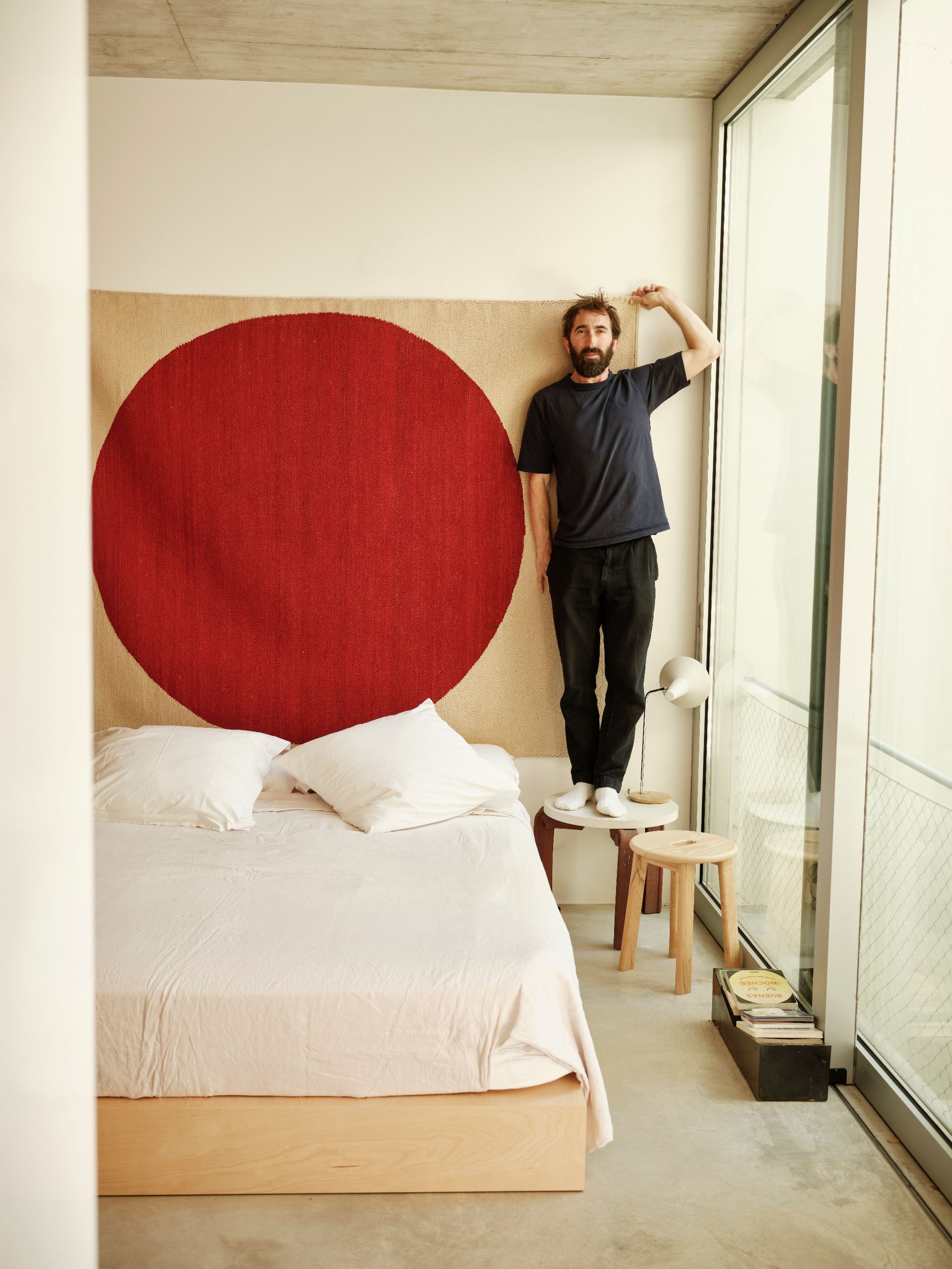
Because the weave is thin and nearly flush to the floor, Topo slides under low coffee tables, open shelving, or a desk chair on castors without catching. In a child’s bedroom, the circle suggests a play zone inside the rectangle of study and sleep; in a gallery-style hallway, it becomes a pause—a spot to stand and contemplate art on the wall. During a recent studio visit, I watched Morro lay prototypes over one another, rotating each to test how the circle shifts perception. “It’s a rug,” he shrugged, “but it’s also a diagram.” The comment sums up Topo’s charm: it offers warmth underfoot while quietly diagramming the room around it.
Topo is available now in three monochrome options, each in multiple sizes, and every piece carries the hand-loom marks—slight variations in wool thickness, faint stripes where two weavers’ rhythms meet—that remind you the geometry here is human, not machine. In a market crowded with loud patterns and digitally printed motifs, Topo returns to first principles: line, field, color, and the subtle nudge that turns floor covering into spatial tool.