Search






A circular cut in Evia’s vine-covered slope invites visitors on an underground journey—cool cellars below, sky-mirrored tastings above.
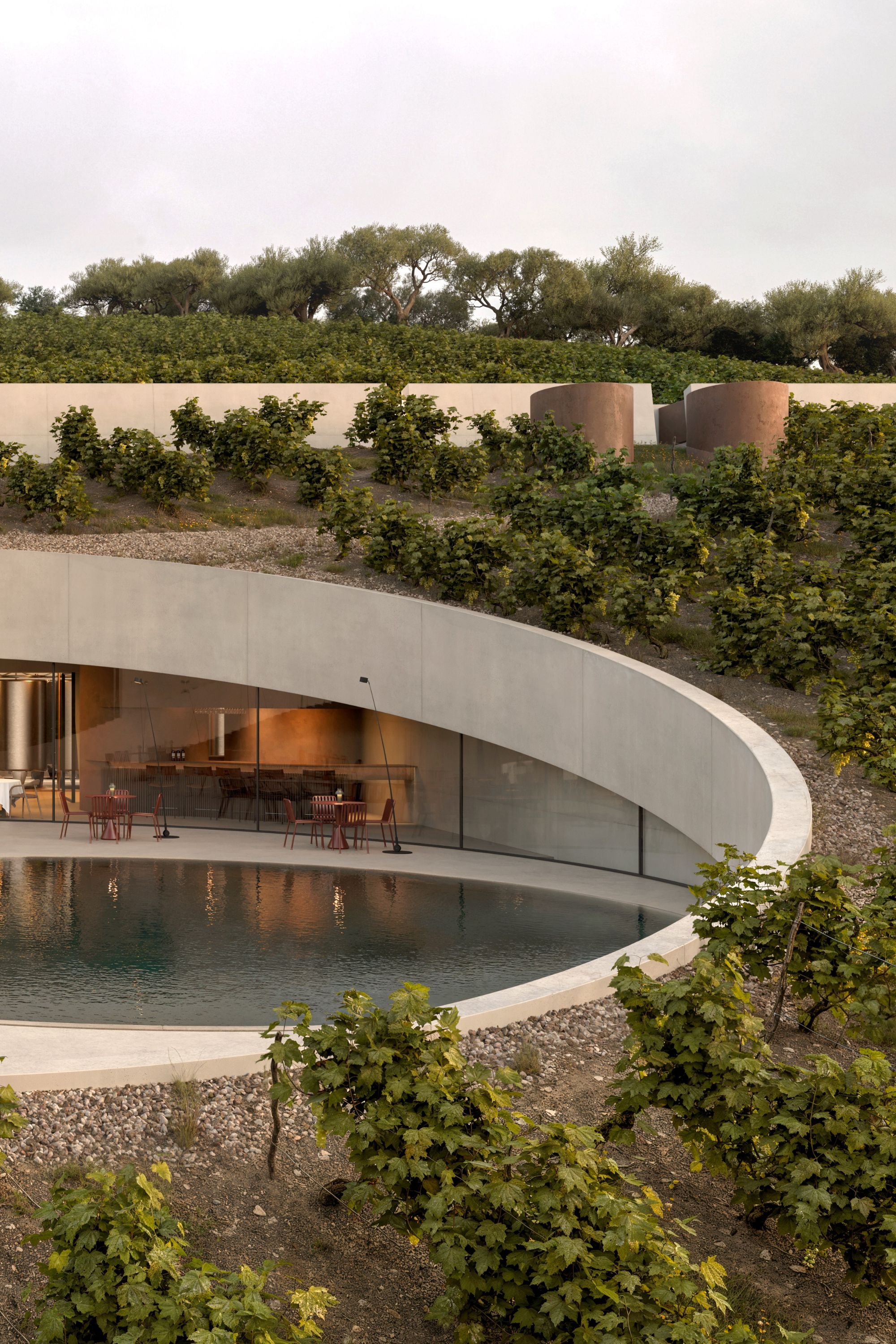
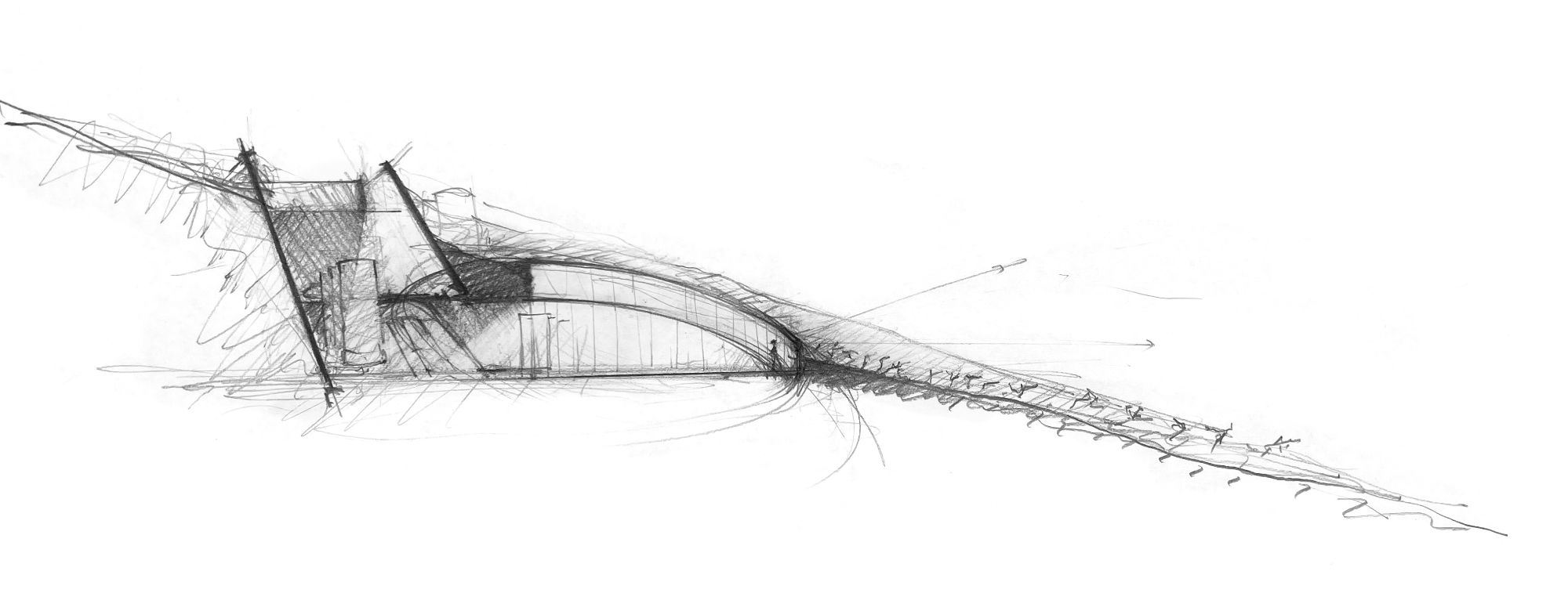
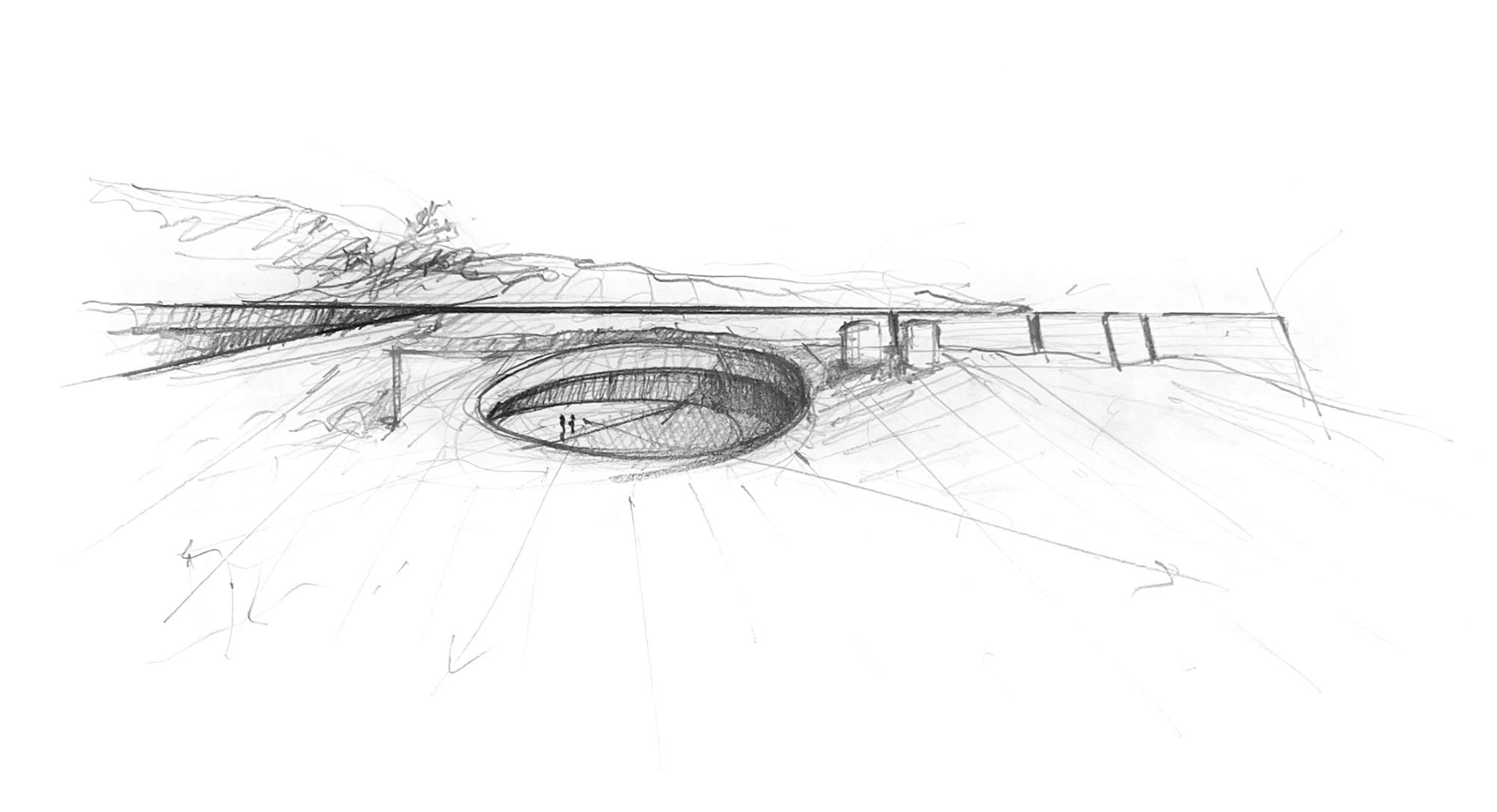
The northern slopes of Evia feel almost untouched until you notice a perfect incision in the vineyard: a clean horizontal slit and, below it, a sunken circle reflecting the sky. Those two gestures—one line, one void—are all that betray the presence of Ktima Aidipsos, a 1,500-square-meter winery conceived by Athens-based architect Fotis Zapantiotis. Faced with both a steep site and the thermodynamic demands of wine production, Zapantiotis chose to drive the entire program underground. The retaining wall of the linear cut hides stainless-steel fermentation tanks, barrel rooms, bottling lines, and every technical space needed for annual harvests. The surrounding soil delivers steady temperatures and natural humidity, eliminating most mechanical cooling while leaving the ridgelines of grape rows visually undisturbed. Above ground, only two rust-colored ventilation drums and the rim of the circular courtyard break the sea of green vines.
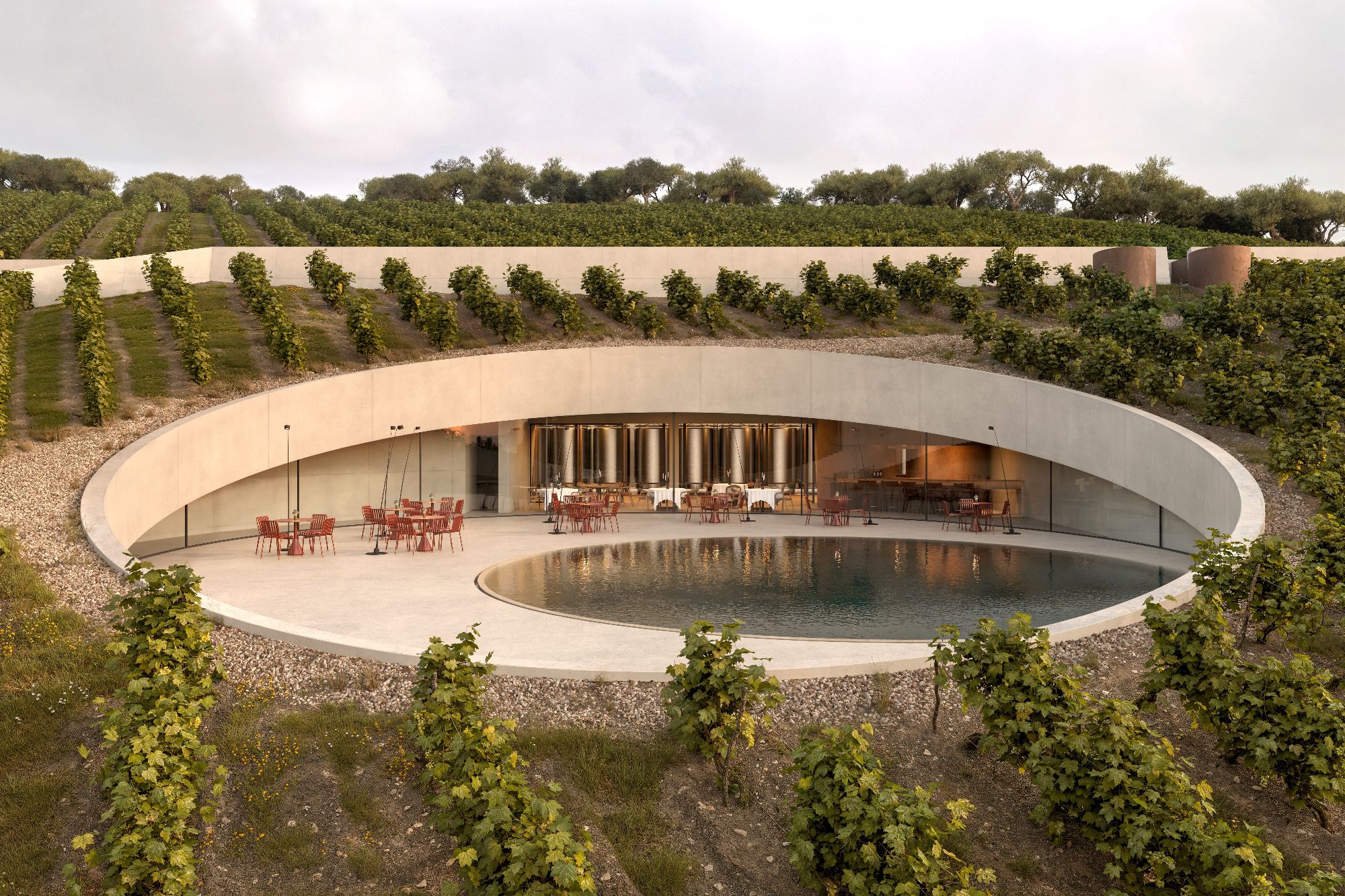
Visitors arrive on foot, tracing the same furrows the tractors do, until the vineyard suddenly drops away to form the crater-like courtyard. A broad disc of cast concrete encircles a reflecting pool that mirrors both sky and trellis; café tables stand ready for post-tour tastings. From this open-air plaza, a glazed lobby leads into the hillside, where a wide oak stair spirals down to production level. The descent is choreographed like a vintner’s opera: past towering fermentation tanks that echo the soft echo of pumps, through a shadowy barrel hall redolent of must and toasted oak, and on to a bottling corridor lit by a razor-thin skylight. Material choices reinforce the choreography. Raw concrete walls keep their quarry marks; patinated steel handrails and copper fittings signal the alchemy of winemaking; soft terrazzo floors absorb the constant drip of humidity. Deep inside, the tasting room reads like a cavernous chapel—vaulted ceiling, diffused uplighting, gravel floor—where the only sound is the crunch beneath your shoes and the swirl of Chardonnay in a glass. The route then loops upward to daylight, re-emerging in the circular courtyard so drinkers face the very vines that filled their glasses.

Zapantiotis calls the project “an underground dialogue between geometry and terroir,” and that dialogue is what makes the design feel timeless rather than novelty driven. The circular cut—equal parts amphitheater and oculus—recalls land-art interventions by Turrell or Heizer, while the linear production wing keeps the operation brutally honest. In that sense Ktima Aidipsos belongs to a growing global family of sculptural, landscape-driven wineries and even to the broader lineage of round houses that use curved voids to negotiate earth, light, and human ritual. Yet its spirit is distinctly Greek: a measured respect for topography, an embrace of raw materials, and a finish that lets the vineyard, not the architecture, claim the horizon. When dusk settles on the hillside and the ring of concrete takes on the color of rosé, the building all but disappears—except for the soft glow of the tasting hall, reminding passersby that the real magic is happening quietly, beneath their feet.