Search






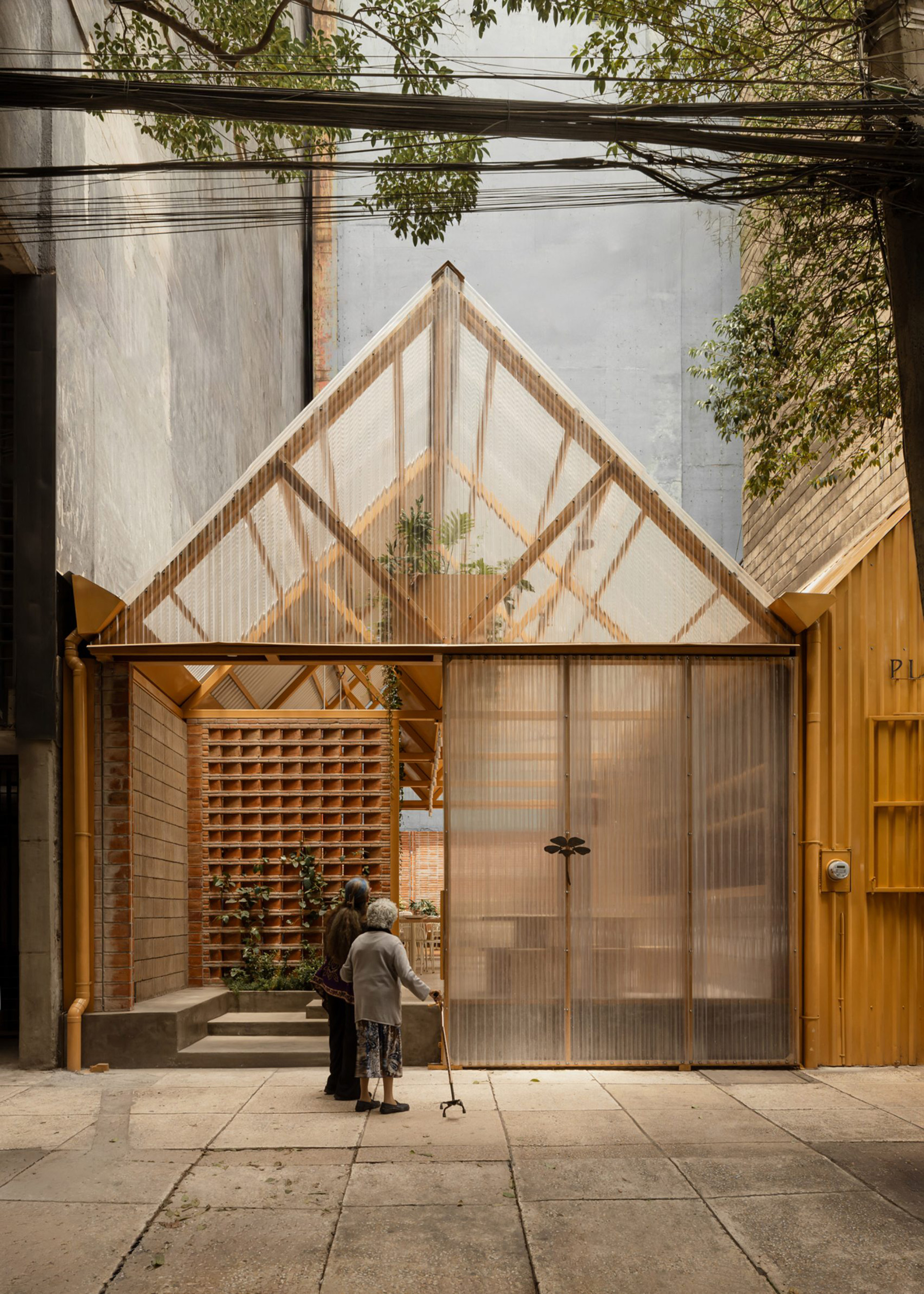
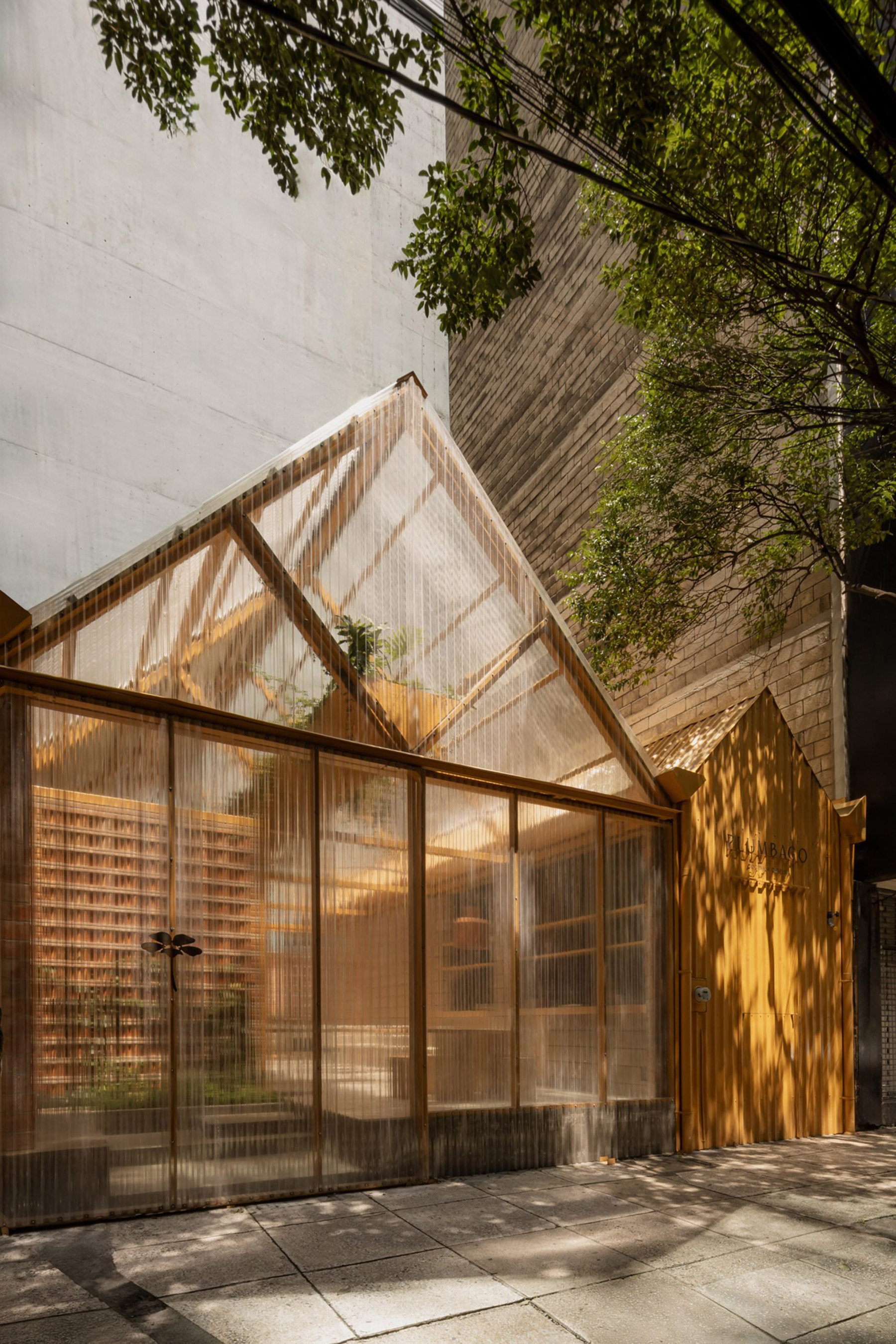
In Mexico City’s Cuauhtémoc neighborhood, Plumbago offers a moment of lightness. Designed by local studio OPA, the restaurant unfolds across two gabled structures on a compact infill site. One volume, clad in translucent corrugated polycarbonate, holds the dining room and bar. The other, wrapped in ochre-toned galvanized steel, houses the kitchen and service areas. Together, they create a space that feels porous and open, balancing the weight of the surrounding multistory buildings.
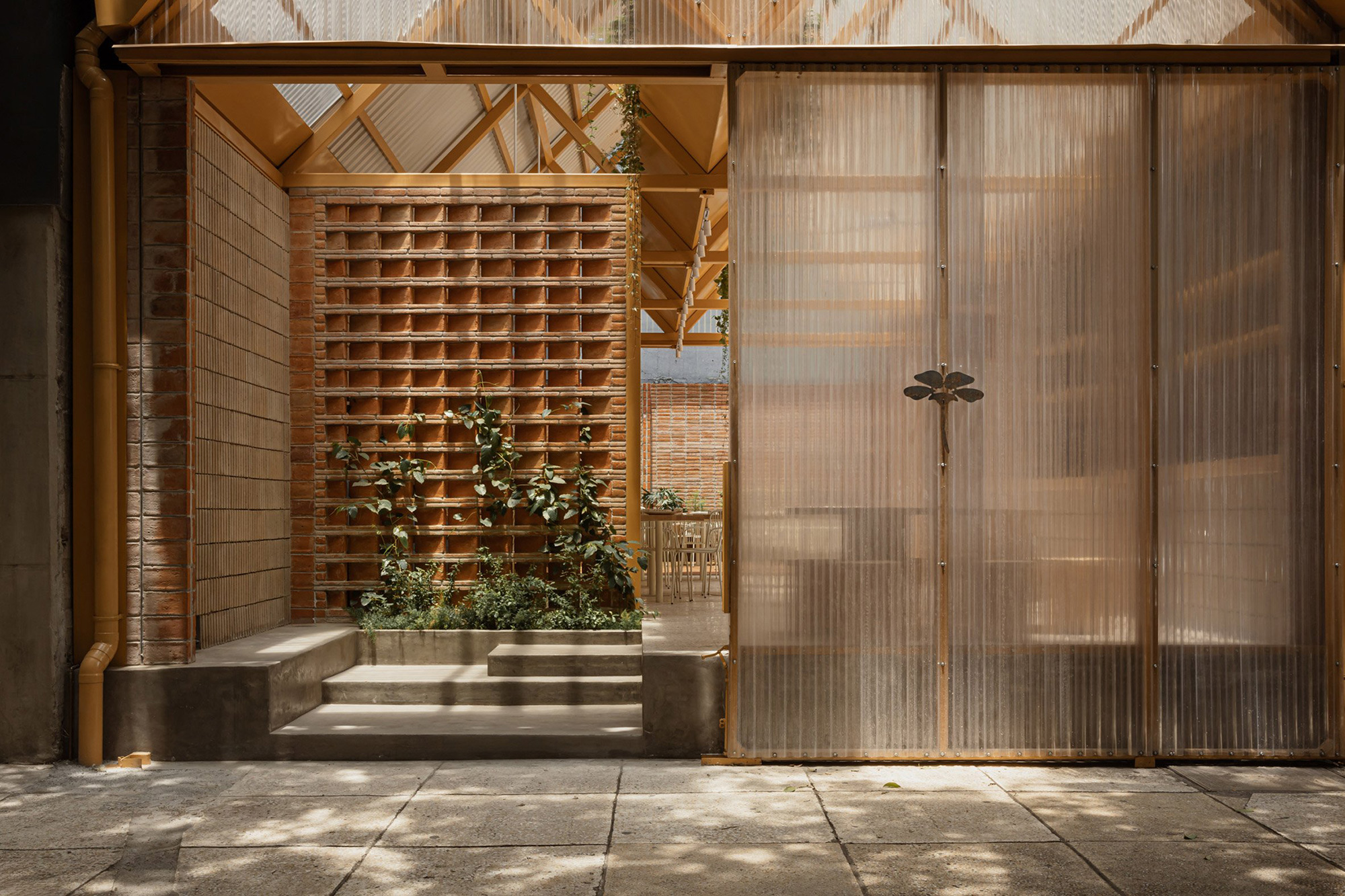
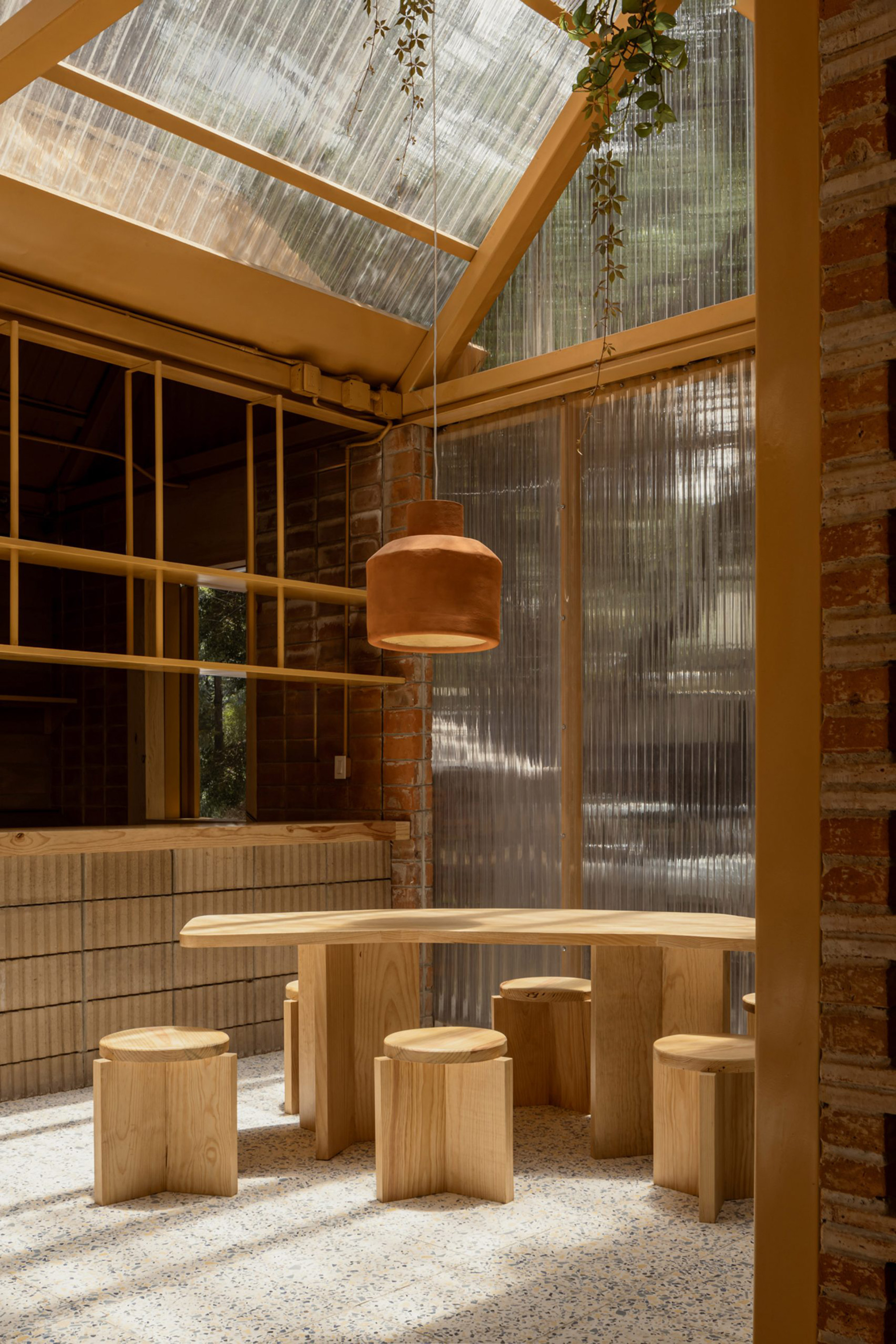
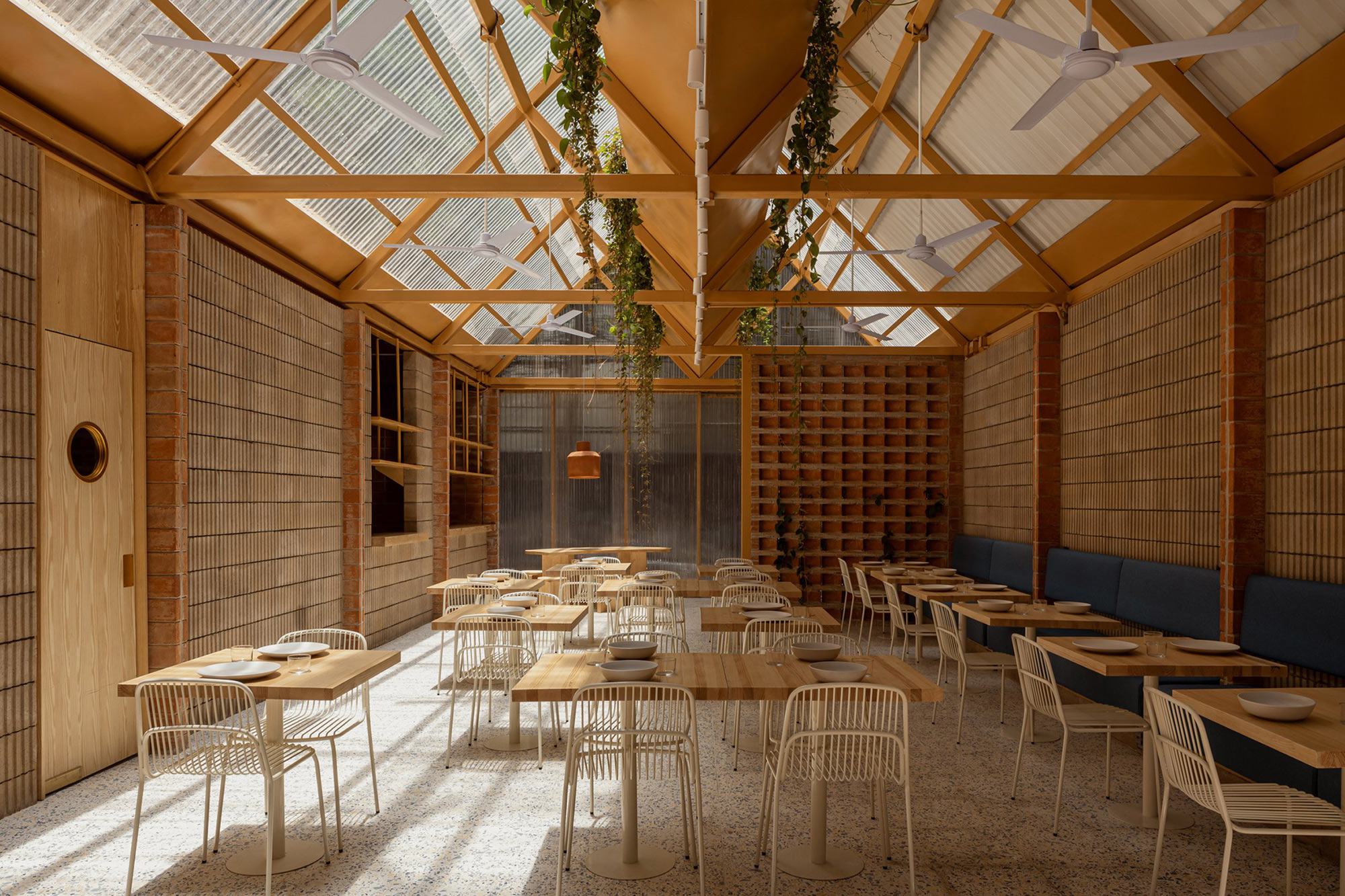
The main dining room captures attention through its use of light and texture. Guests enter through sliding polycarbonate doors, stepping past a lattice wall of perforated red brick. Inside, stacked concrete blocks form the base of the space, animated by sections of intricate brickwork laid in herringbone and openwork patterns. Sunlight filters through the gabled roof, passing between slender timber rafters and shifting across the walls throughout the day. Materials do the work here—no decoration needed.
Furniture is kept simple: wood and steel tables and chairs that echo the structural language of the building itself. Greenery appears in subtle gestures—planters tucked along walls and baskets suspended from the ceiling—reinforcing the restaurant’s original idea as an urban greenhouse. The division between inside and outside stays soft. Passersby catch glimpses of the interior through the translucent walls, while diners remain connected to the life of the street beyond.
Beyond its role as a restaurant, Plumbago becomes a gathering place. Alongside a Mediterranean menu, the space hosts small community events, from comedy nights to local meetups. Throughout it all, the architecture stays focused: light, material, and air creating a setting where activity can shift and change without losing the easy sense of presence that defines it.
Photography: Ariadna Polo