Search






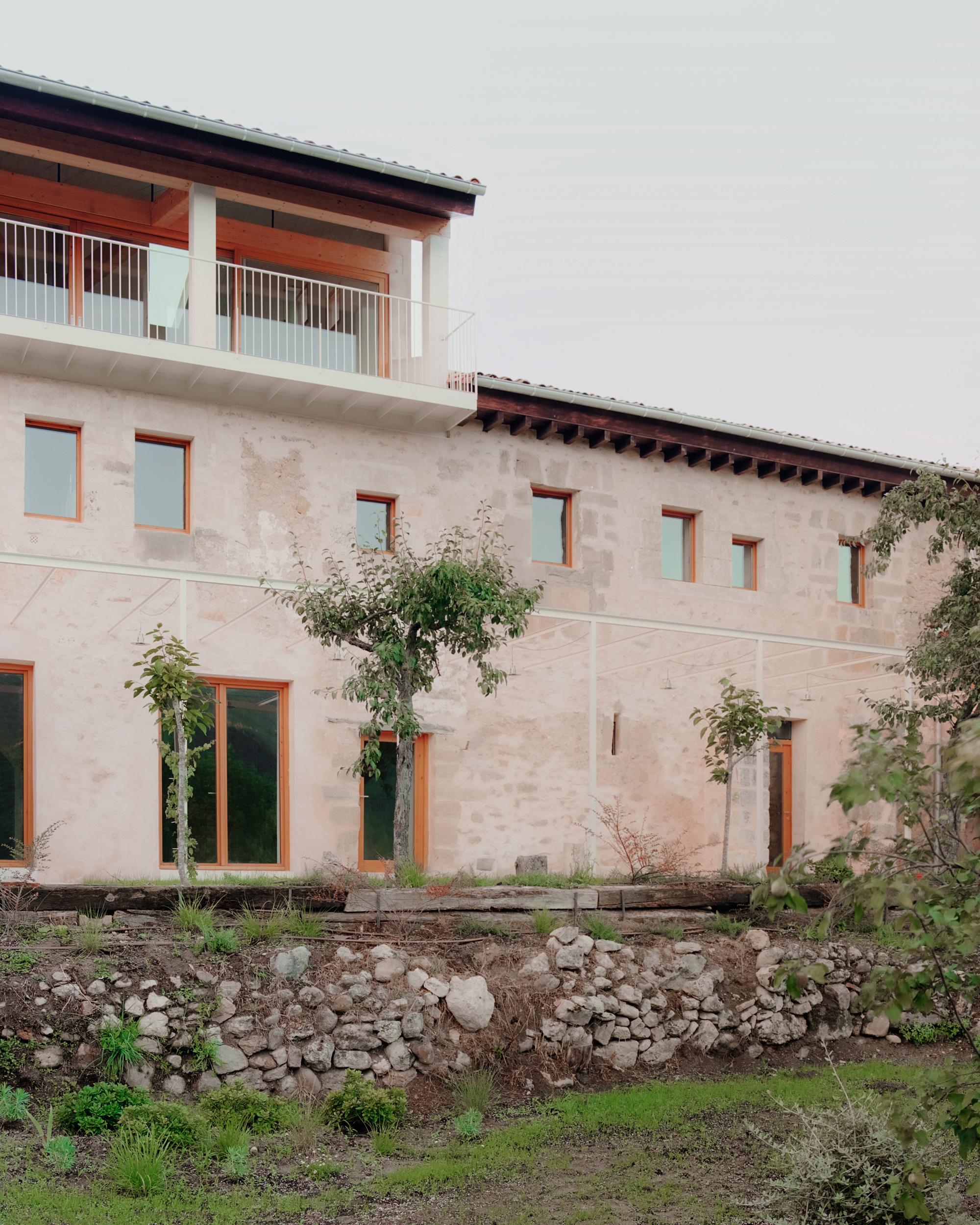
The drive to Trespaderne cuts through ochre farmland before climbing toward the Montes Obarenes. Just off the main road a limestone shell rises from the hillside—thick, ash‑streaked walls, roof long gone, vaults pancaked by fire. That was the scene when Atienza Maure Arquitectos first stepped inside the 16th‑century priory. Rather than replace the ruin, the team decided to work inside it, treating the stone perimeter as a permanent boundary and stitching a new concrete structure into the void.
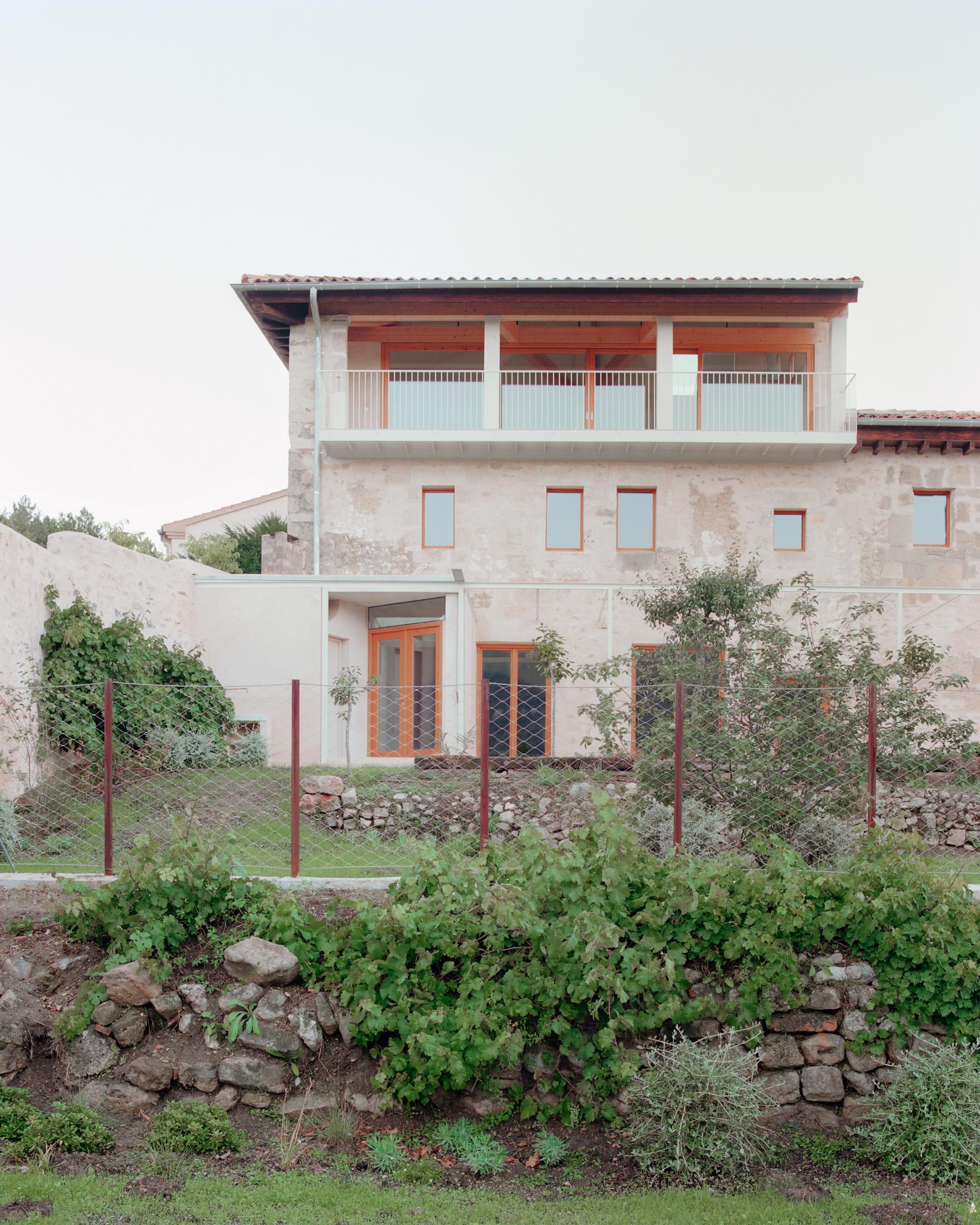
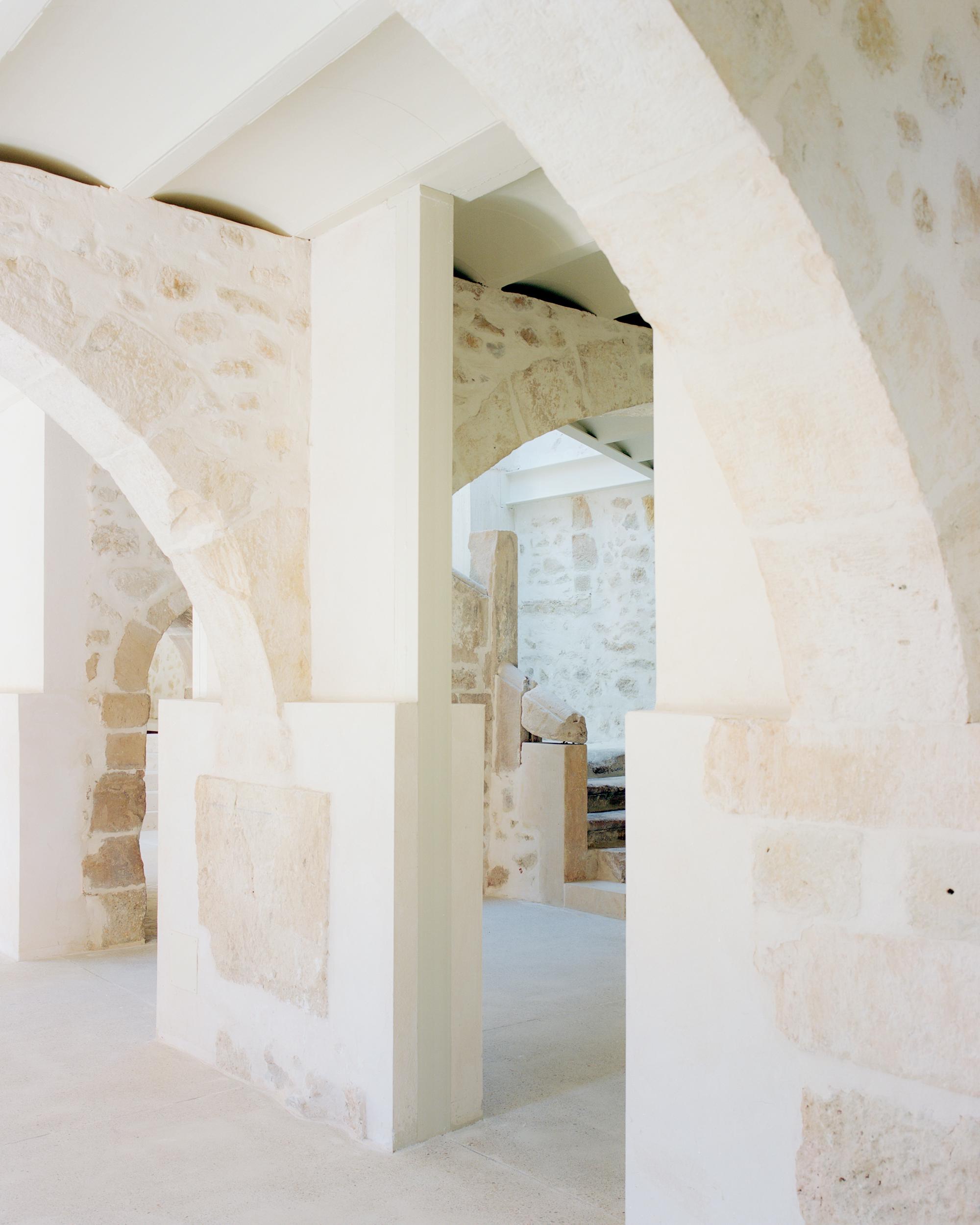
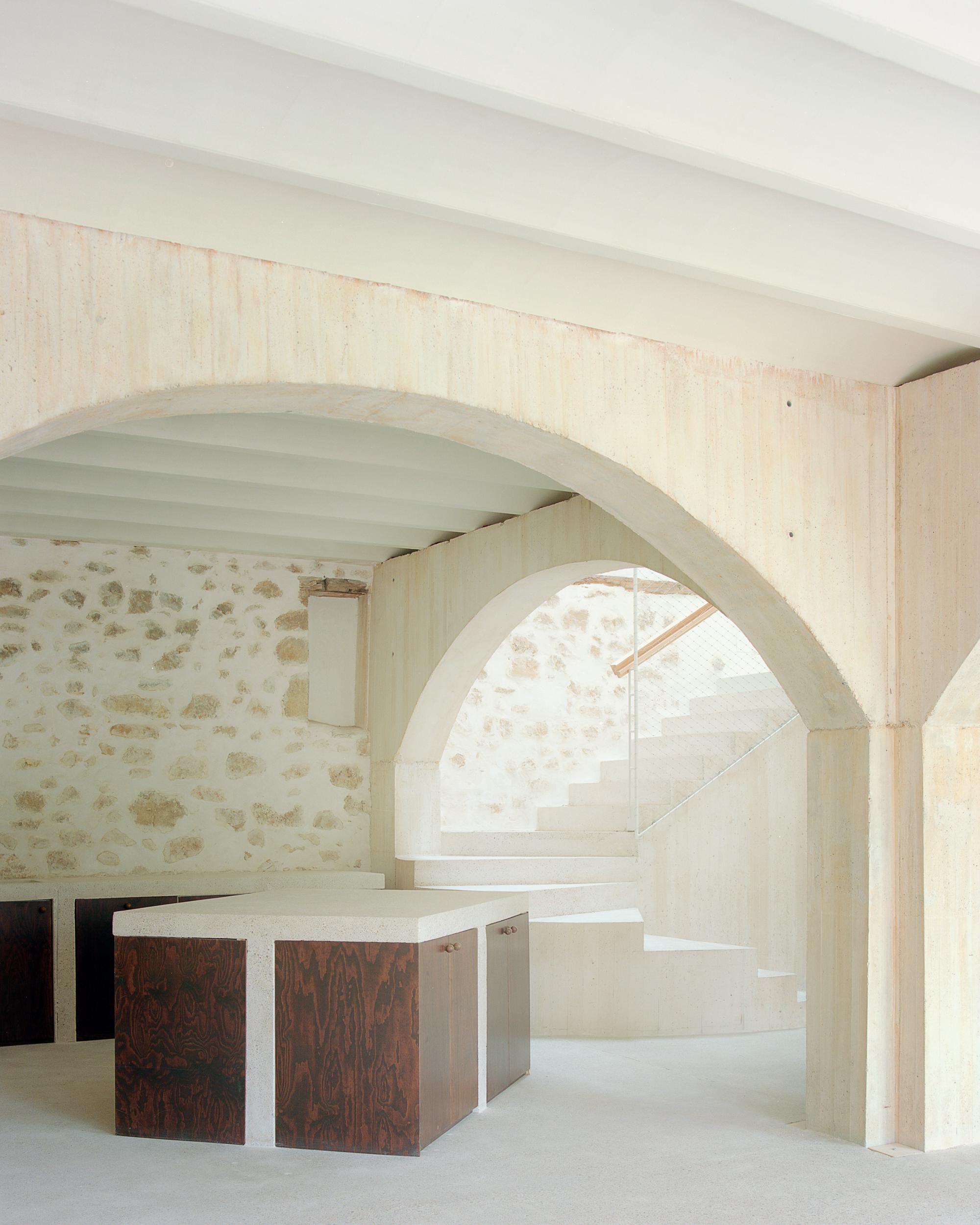
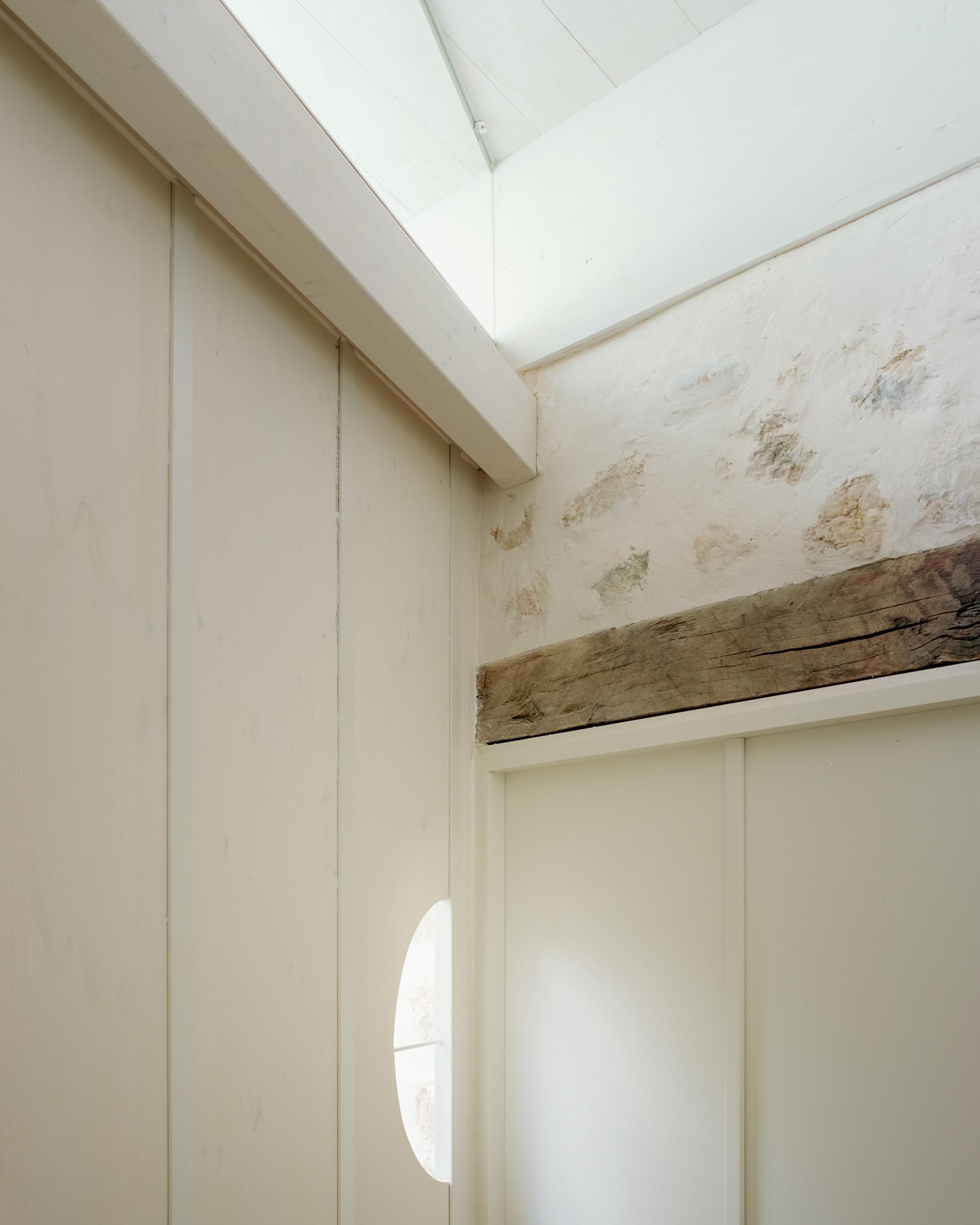
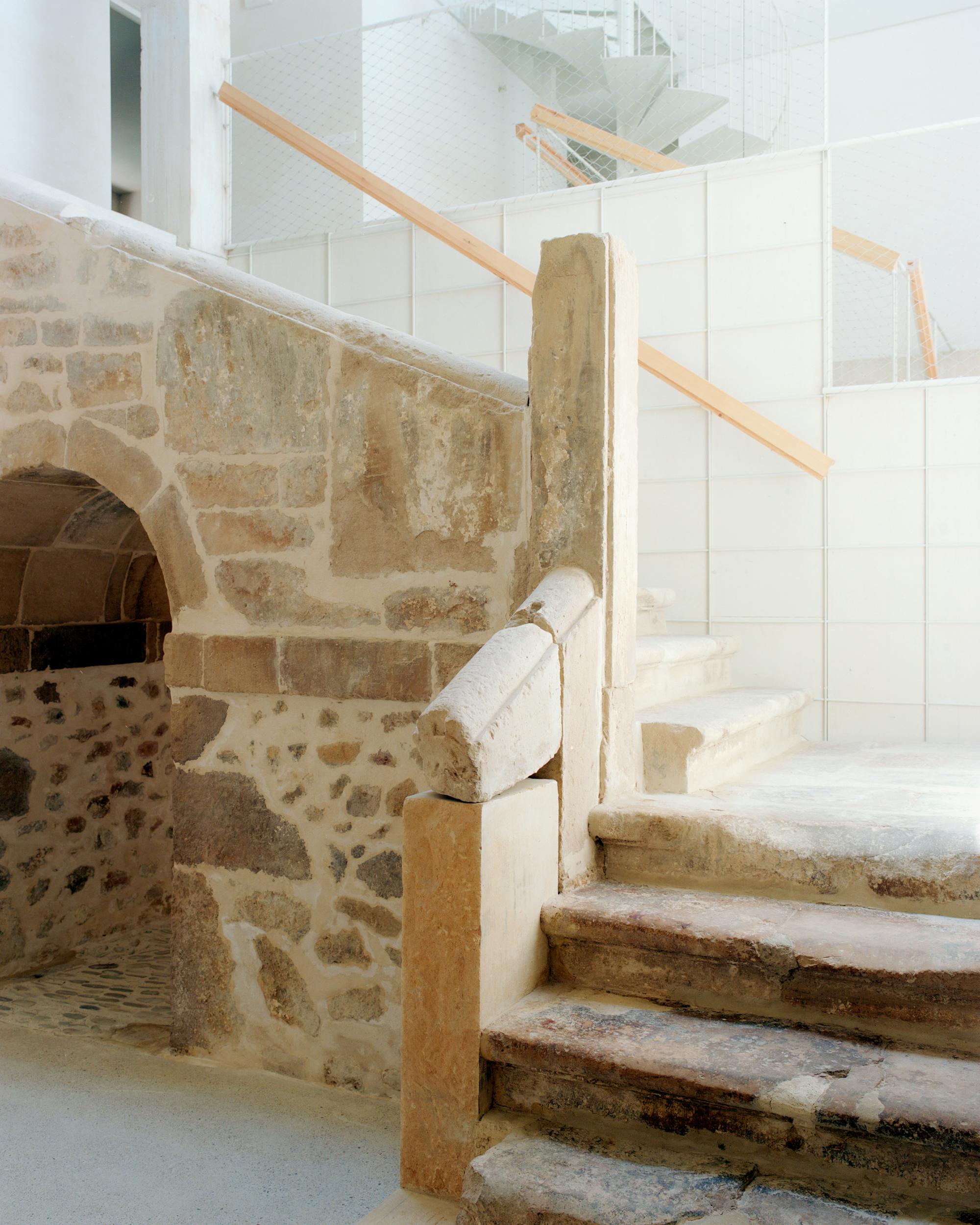
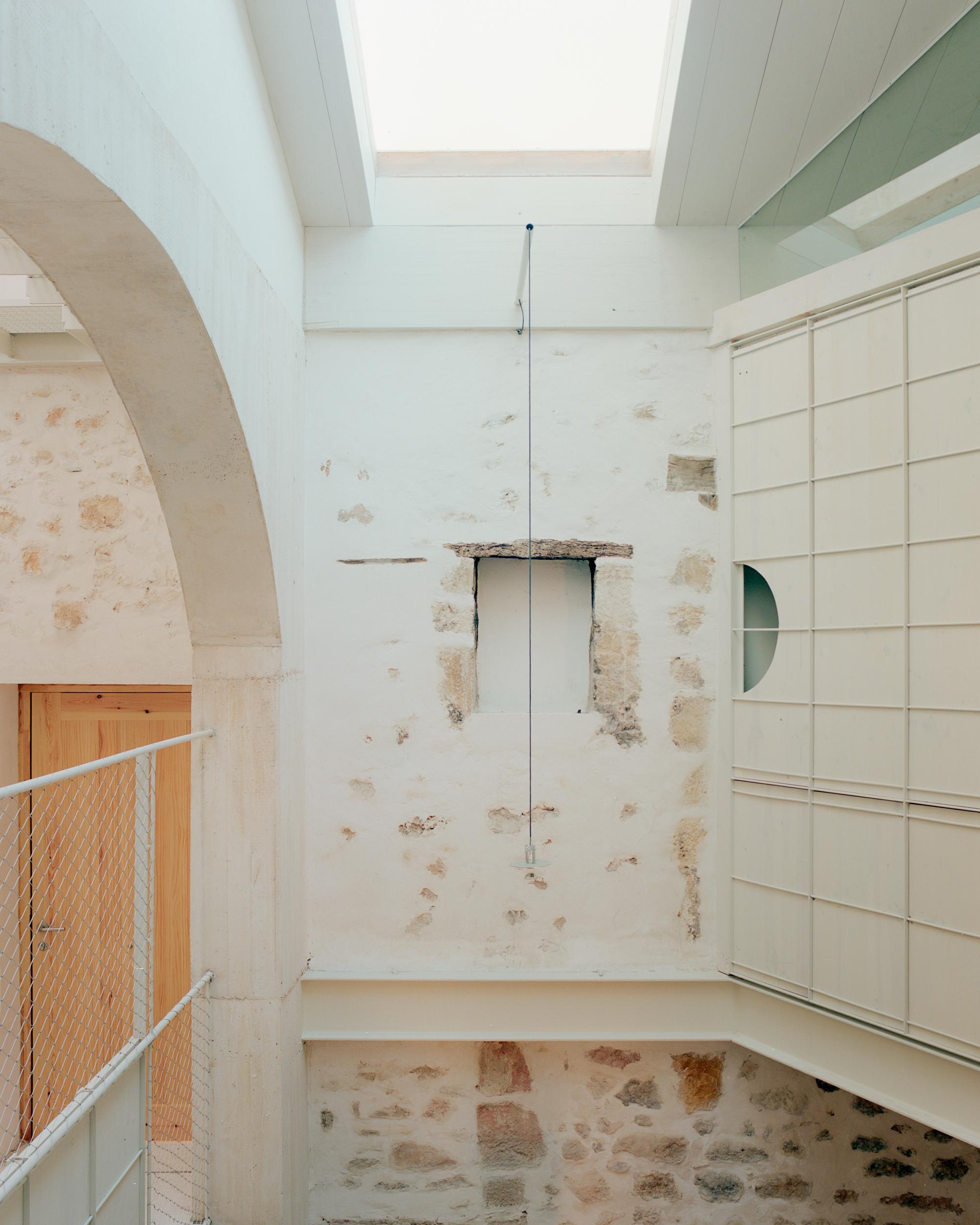
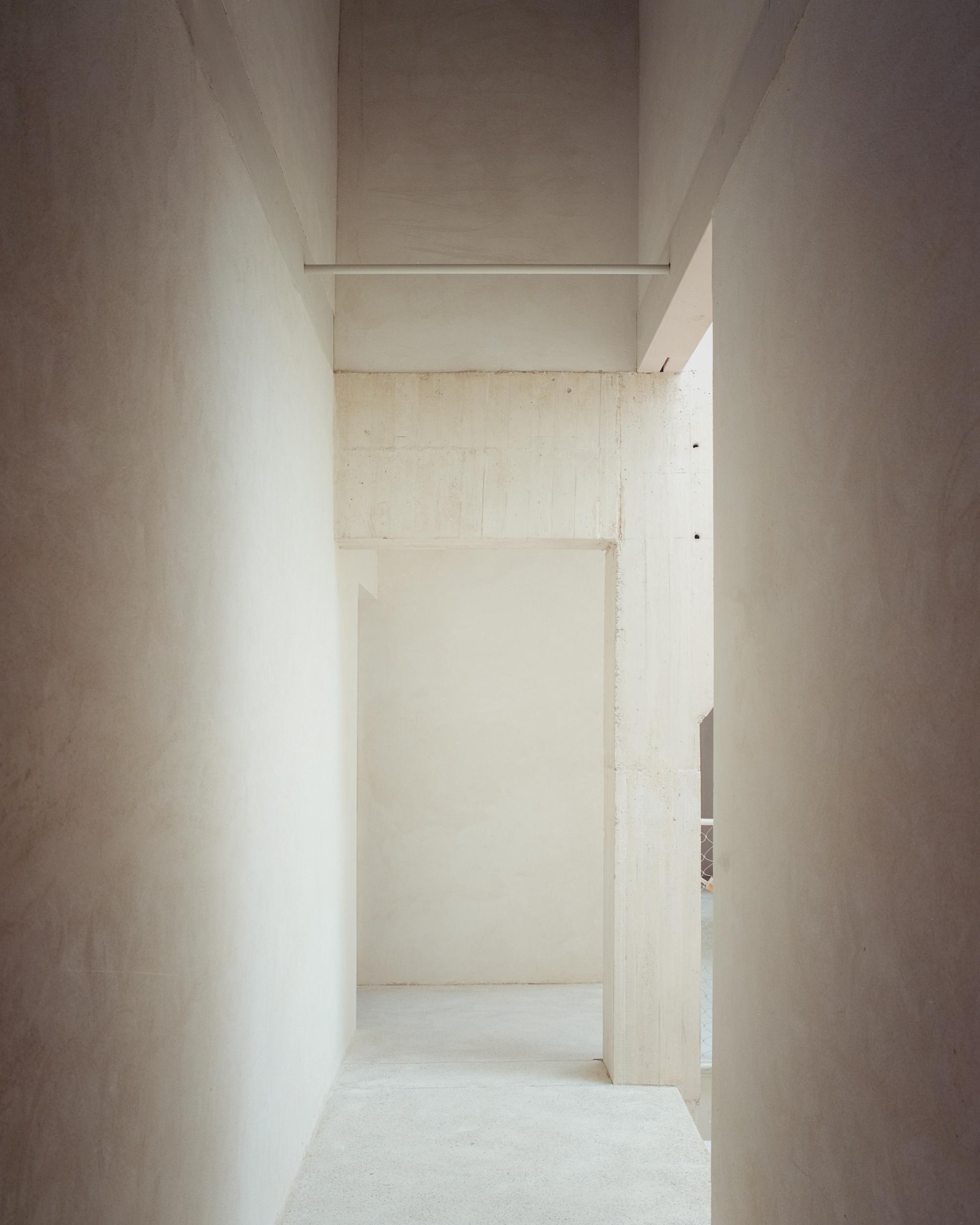
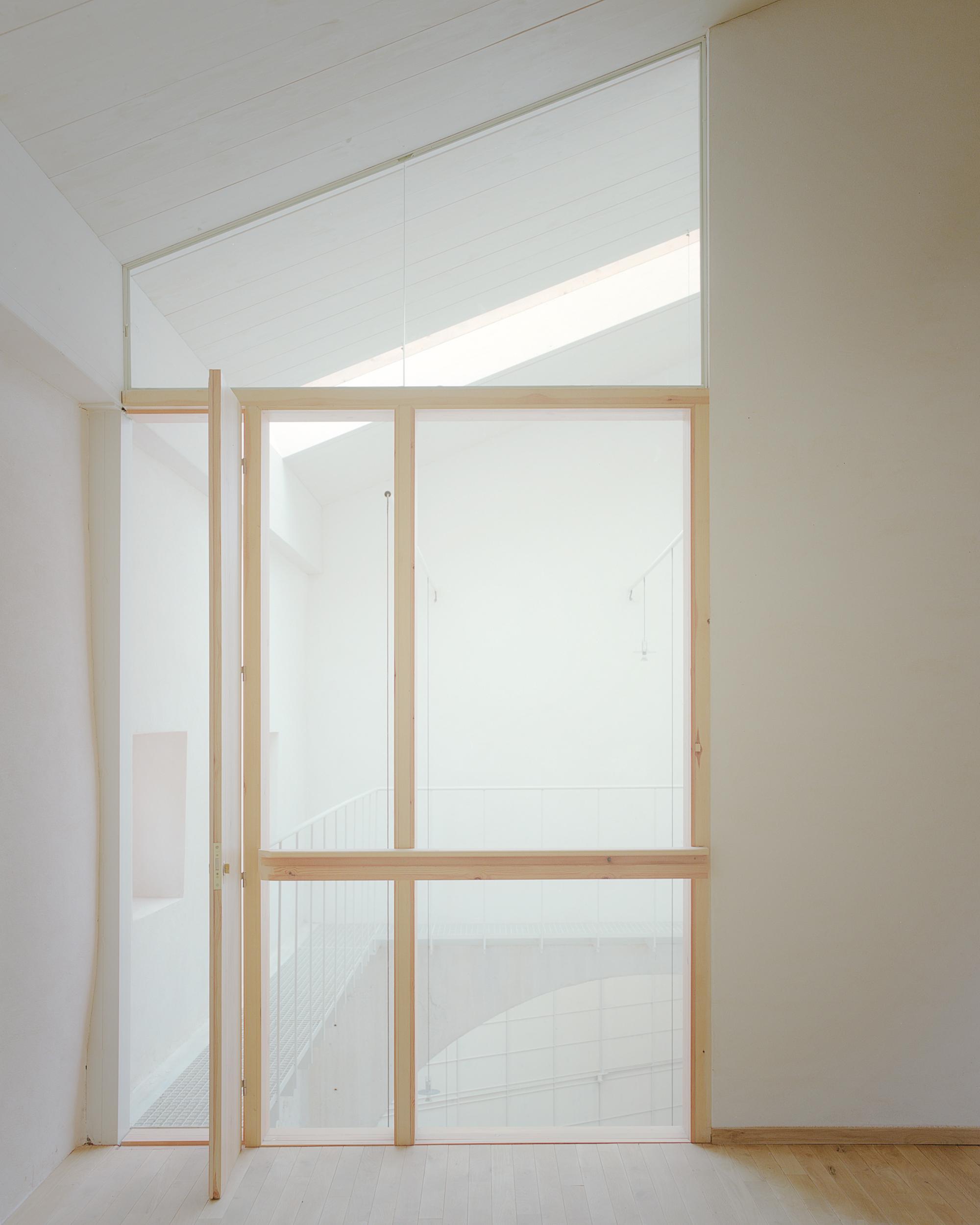
The rebuild starts at the roof. Five skylights punch through a simple timber deck, each feeding a triangular light shaft that drops daylight three stories. Walk‑on glass panels cap the shafts at floor level, so sunlight reaches what was once a storage basement—now the main living floor with kitchen, fireplace, and a run of low doors that step out to the south garden. Original stone arches sit beside freshly poured concrete twins; the pairing is intentional, like reading two chapters of the same story in different fonts.
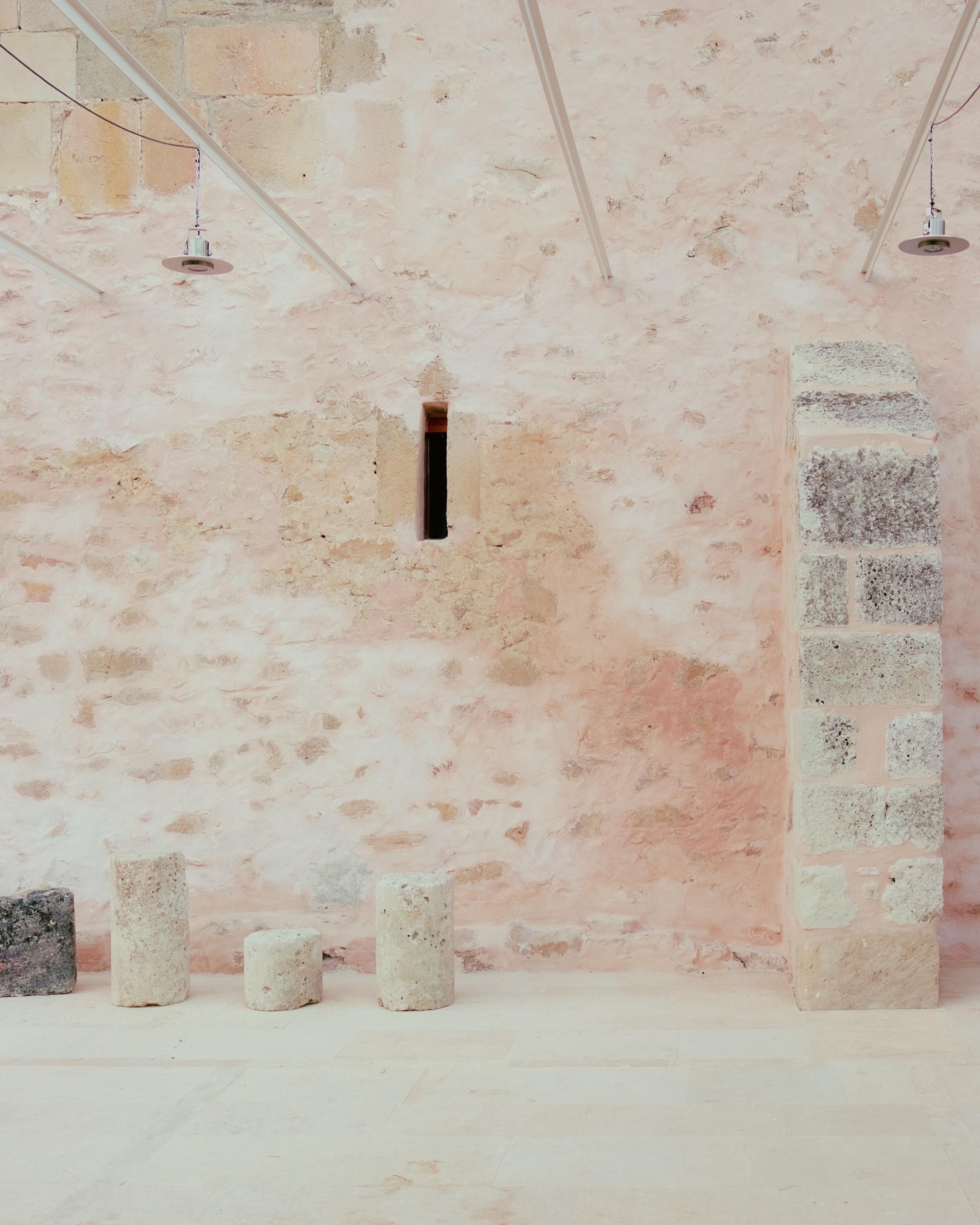
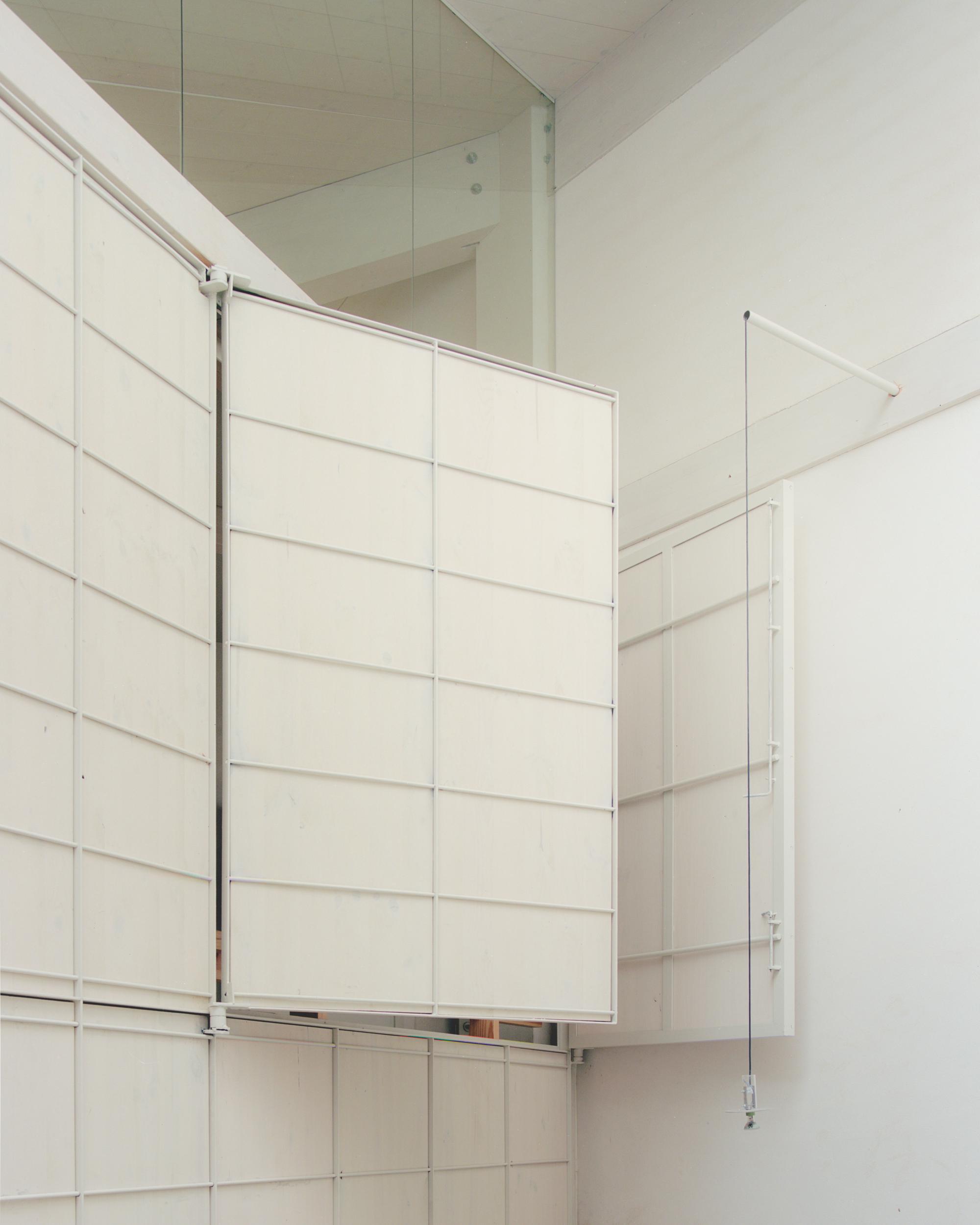
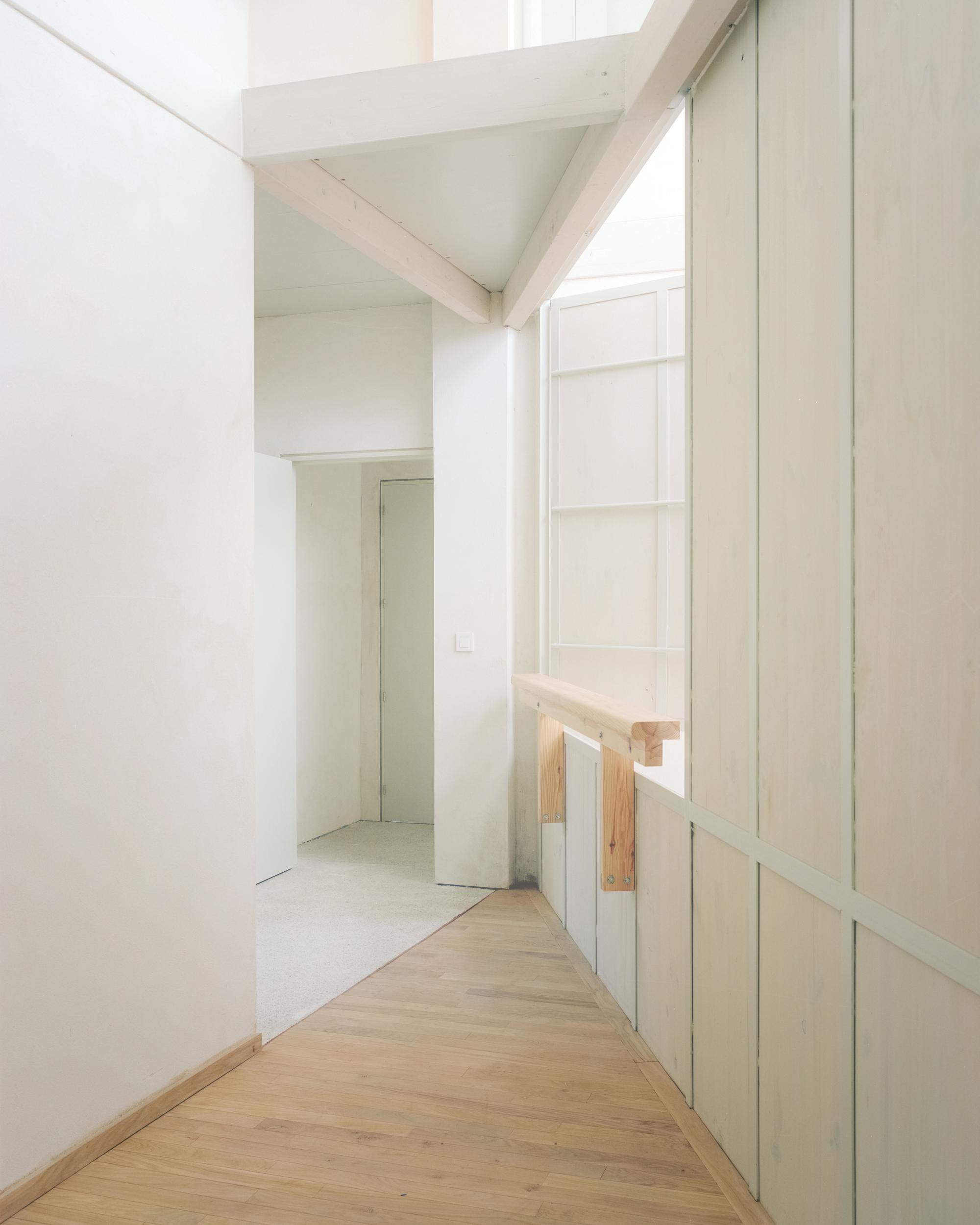
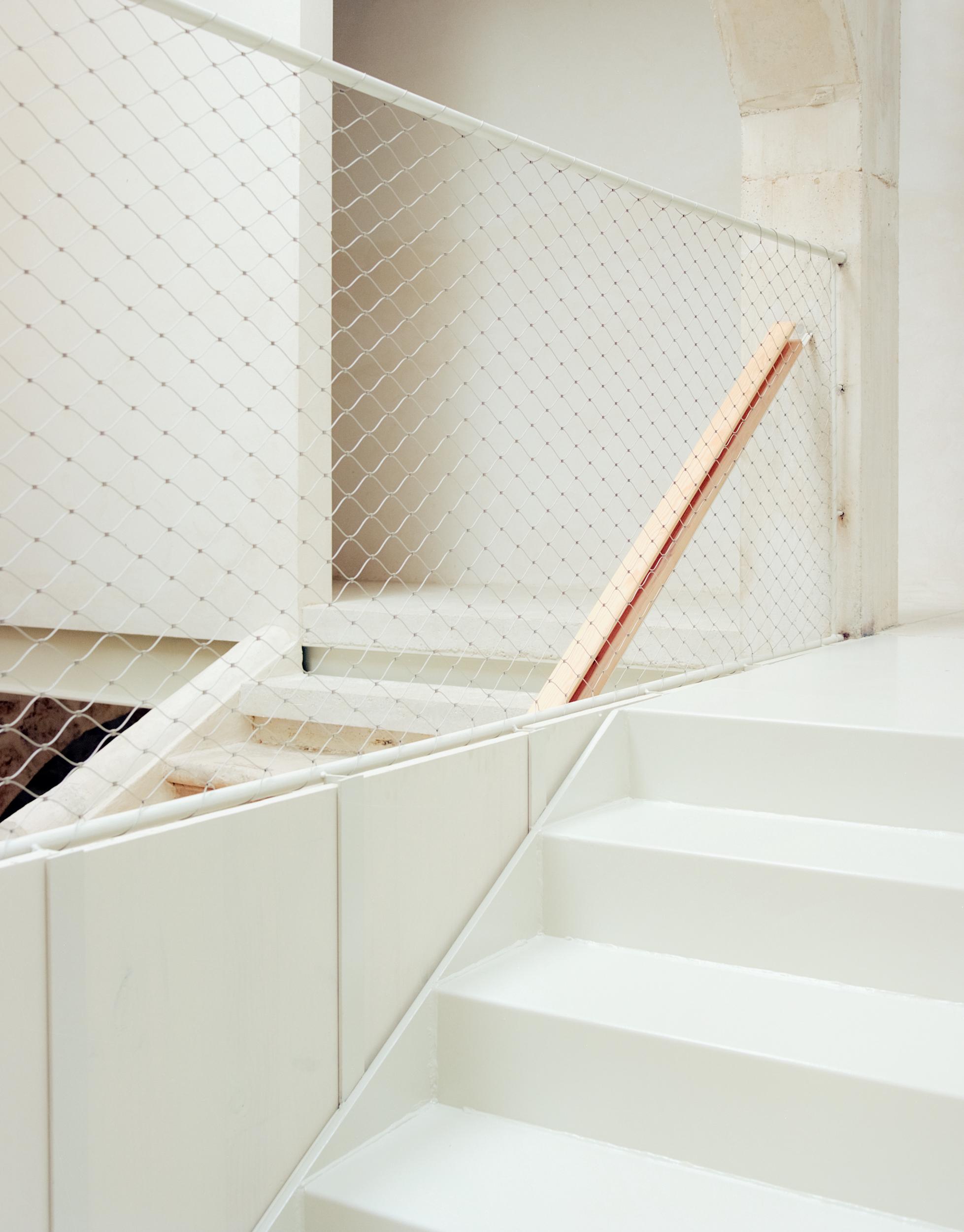
Seven bedrooms occupy the mid‑level. Where the light shafts cut through corners, some receive glass floors; others remain open, forming small internal balconies screened by wooden shutters when guests want privacy. Materials stay blunt and consistent: cotton‑white concrete, lime‑washed stone, weathered timber, and steel mesh rails that fade against the walls. Color comes from the landscape—gold fields in summer, slate clouds in winter—slipping through deep‑set windows.

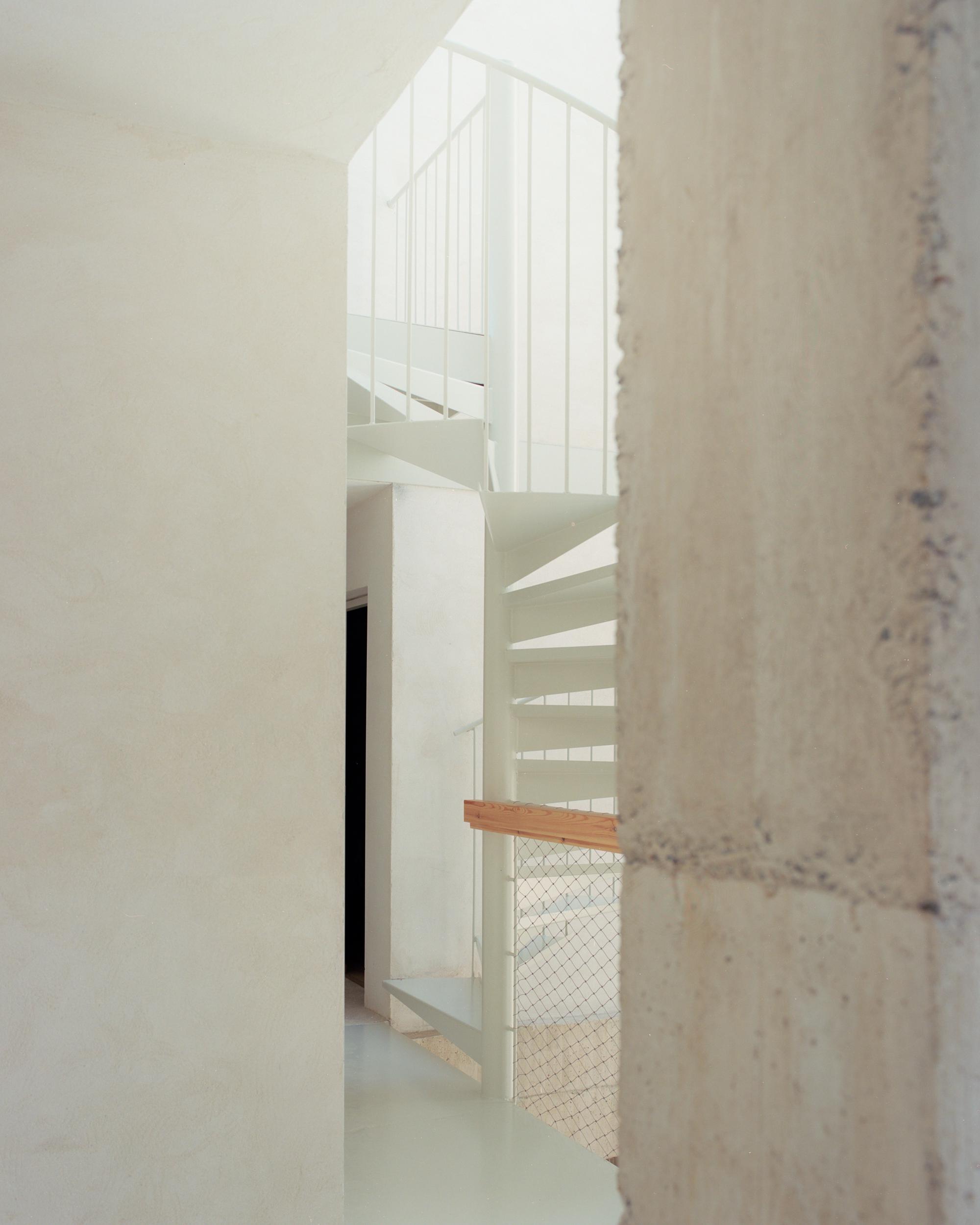
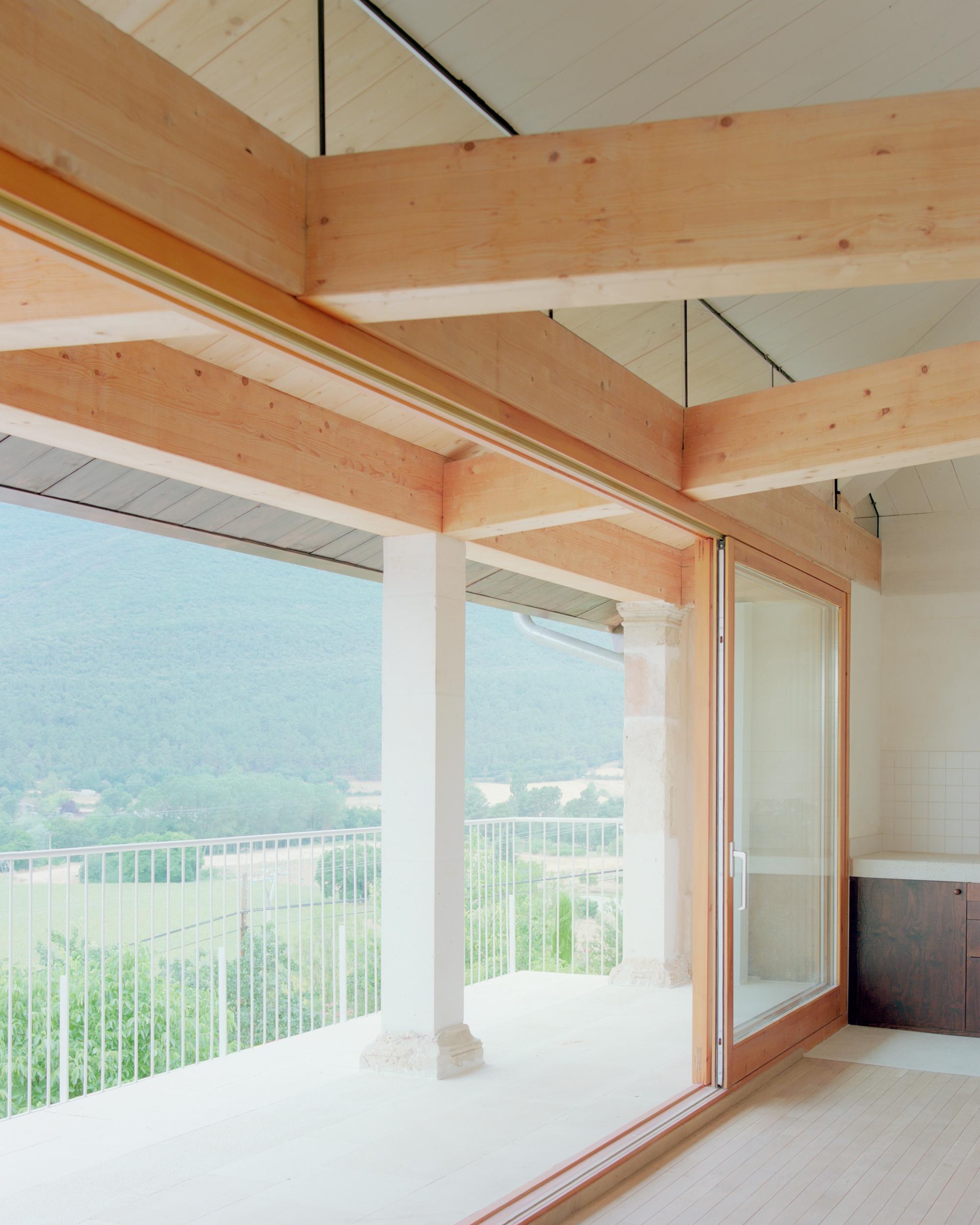
A slender steel spiral leads to the top floor. Up here the roof steps back to make room for a terrace framed by repaired stone pillars; their patchwork joints tell exactly where the fire cracked the limestone. Inside, a second kitchen and lounge open wide to the view. Even on overcast days the space feels bright—the skylights act less like openings and more like vertical lanterns, catching whatever light the sky offers and channeling it downward.
Walk the house from garden to attic and the rhythm stays clear: heavy, rough, timeworn walls anchor the edge; clean concrete arches fill the interior span; daylight knits them together. No ornament competes with the story already written in char marks and chisel scars. Instead, the new work sets a calm backdrop for daily life—breakfast at the long concrete counter, a book in the vaulted alcove where clergy once stored wine, evening drinks under a terrace lintel that survived four hundred years and one catastrophic blaze.