Search






Bush-fire pragmatics meet warm, stone-quiet interiors on the New South Wales coast.
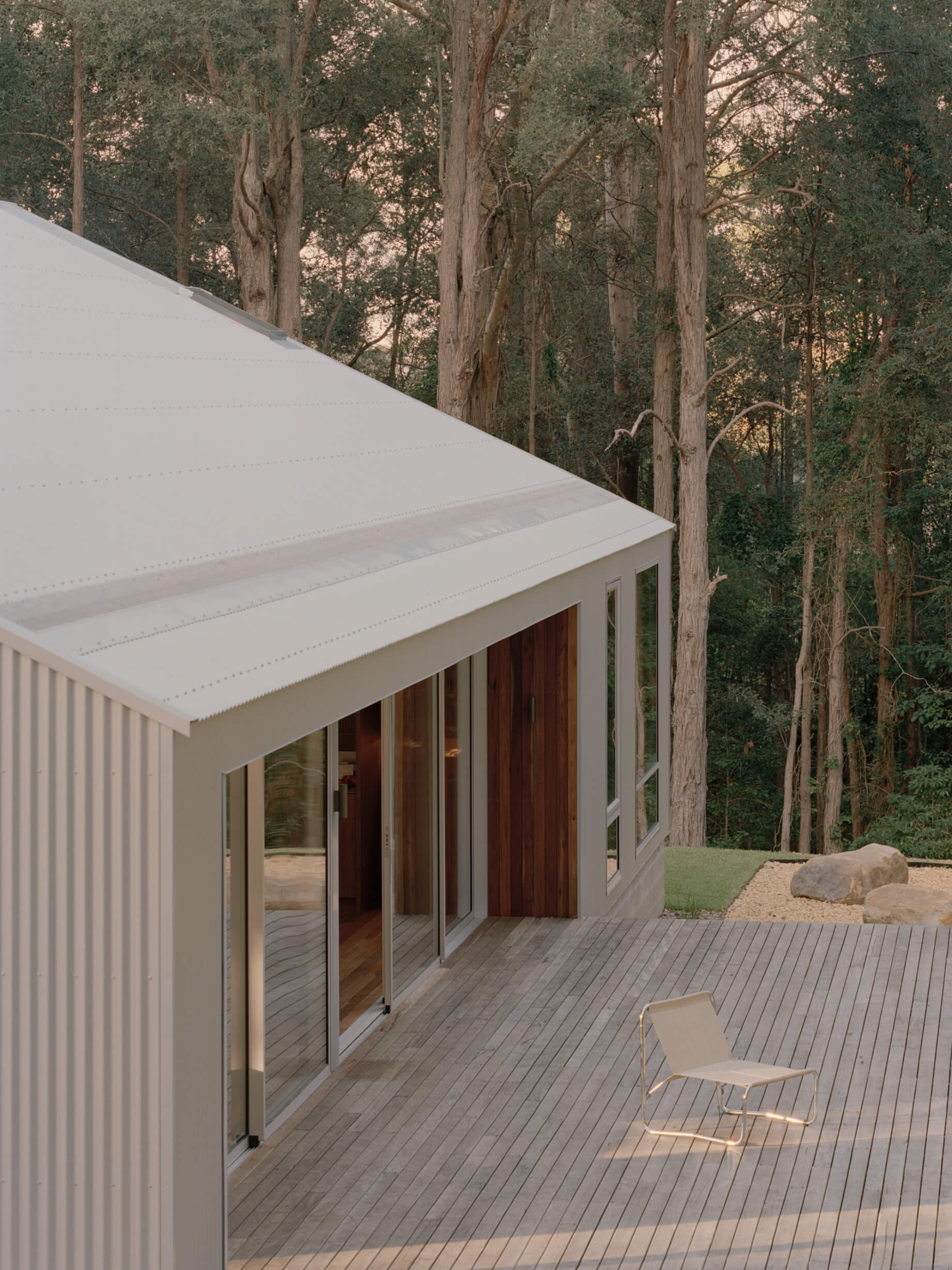
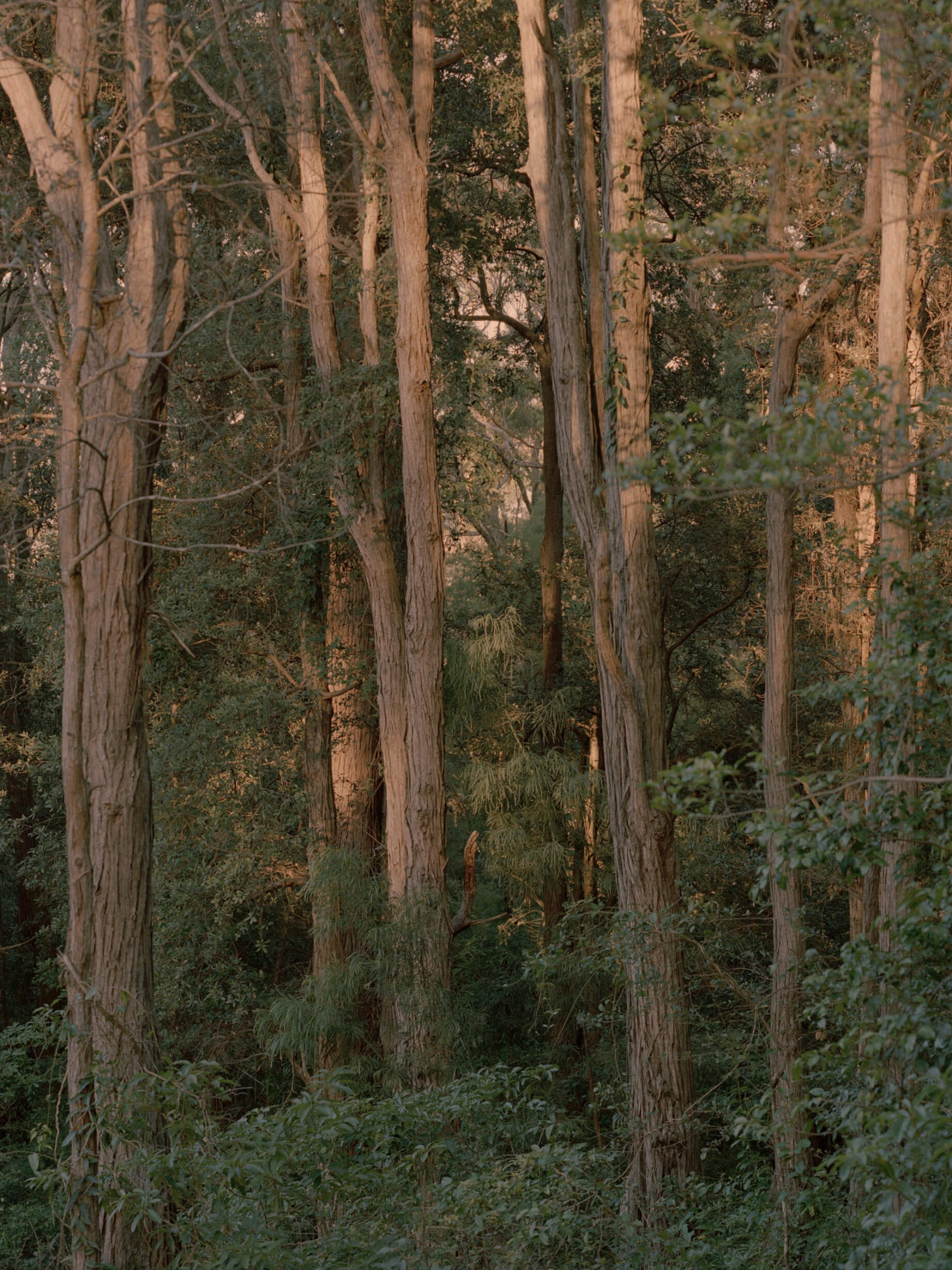
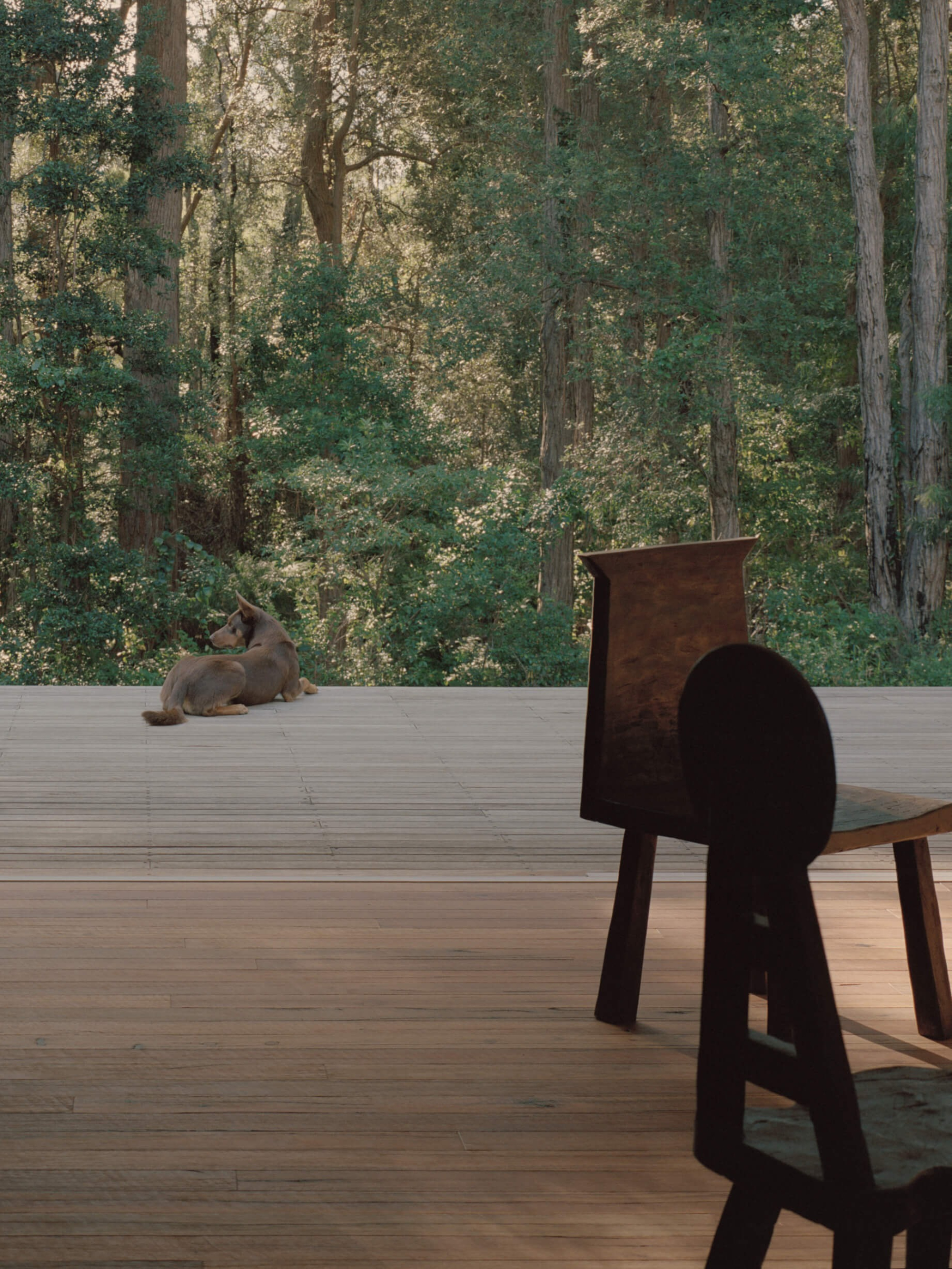
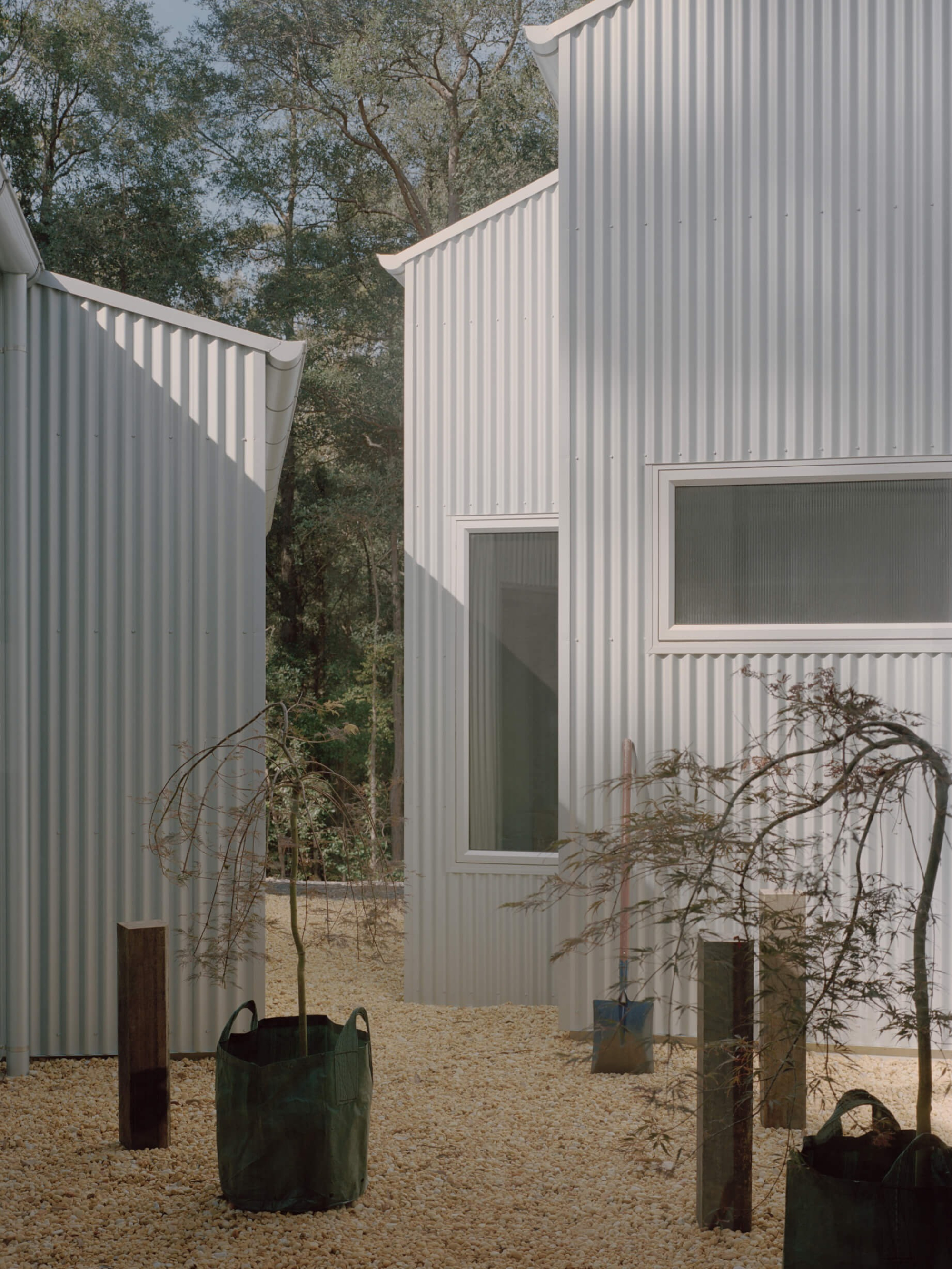
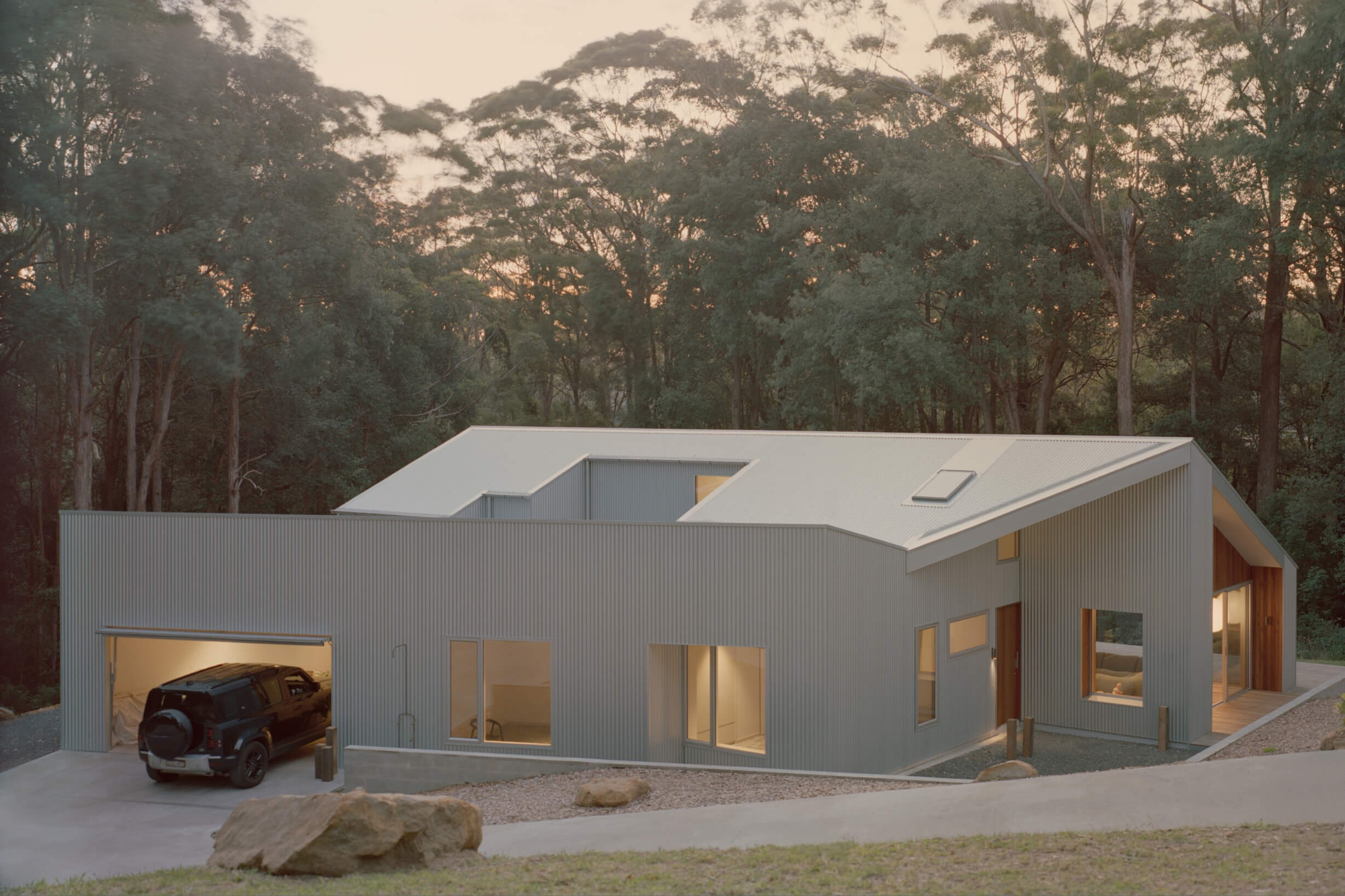
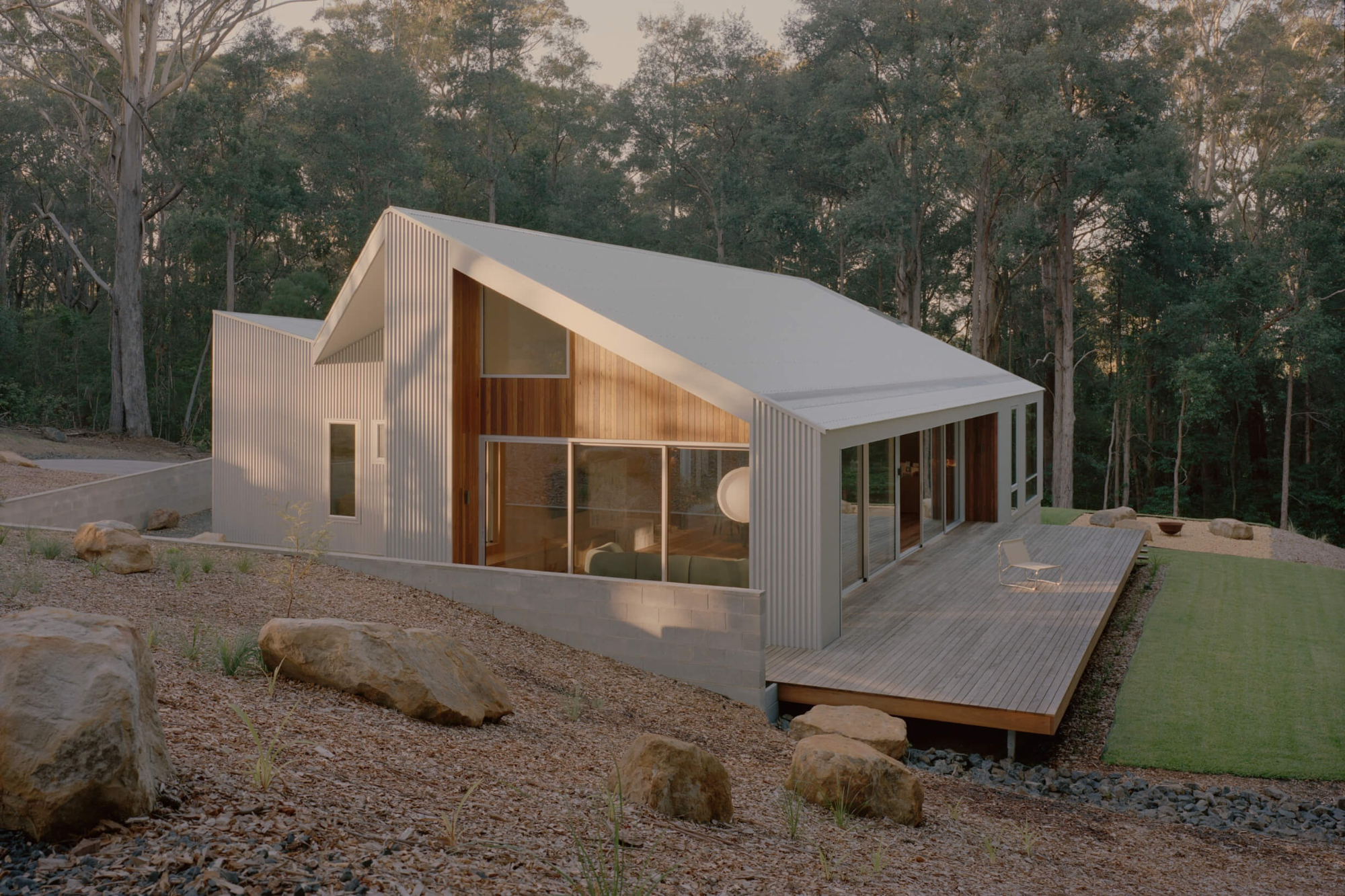
You reach the site by a dirt track that cuts through scribbly gums and ironbark, the understory still scarred from the 2019 fires. Against that backdrop the house reads as a low, corrugated silhouette—Zincalume cladding, deep eaves, and a spotted-gum screen that wraps one corner like a shutter half-drawn. Klaus Carson Studio began with regulation rather than style: BAL-40 ratings demanded non-combustible skins, tight ember seals, and wide overhangs. Instead of letting that code drive the form into bunker territory, the architects slipped the volume into the slope and treated metal, sandstone, and recycled timber as a tonal extension of the bush itself. Sandstone blocks quarried on-site become stepping stones and low retaining walls; the spotted gum, milled locally, registers the same russet streaks as the surrounding trunks.
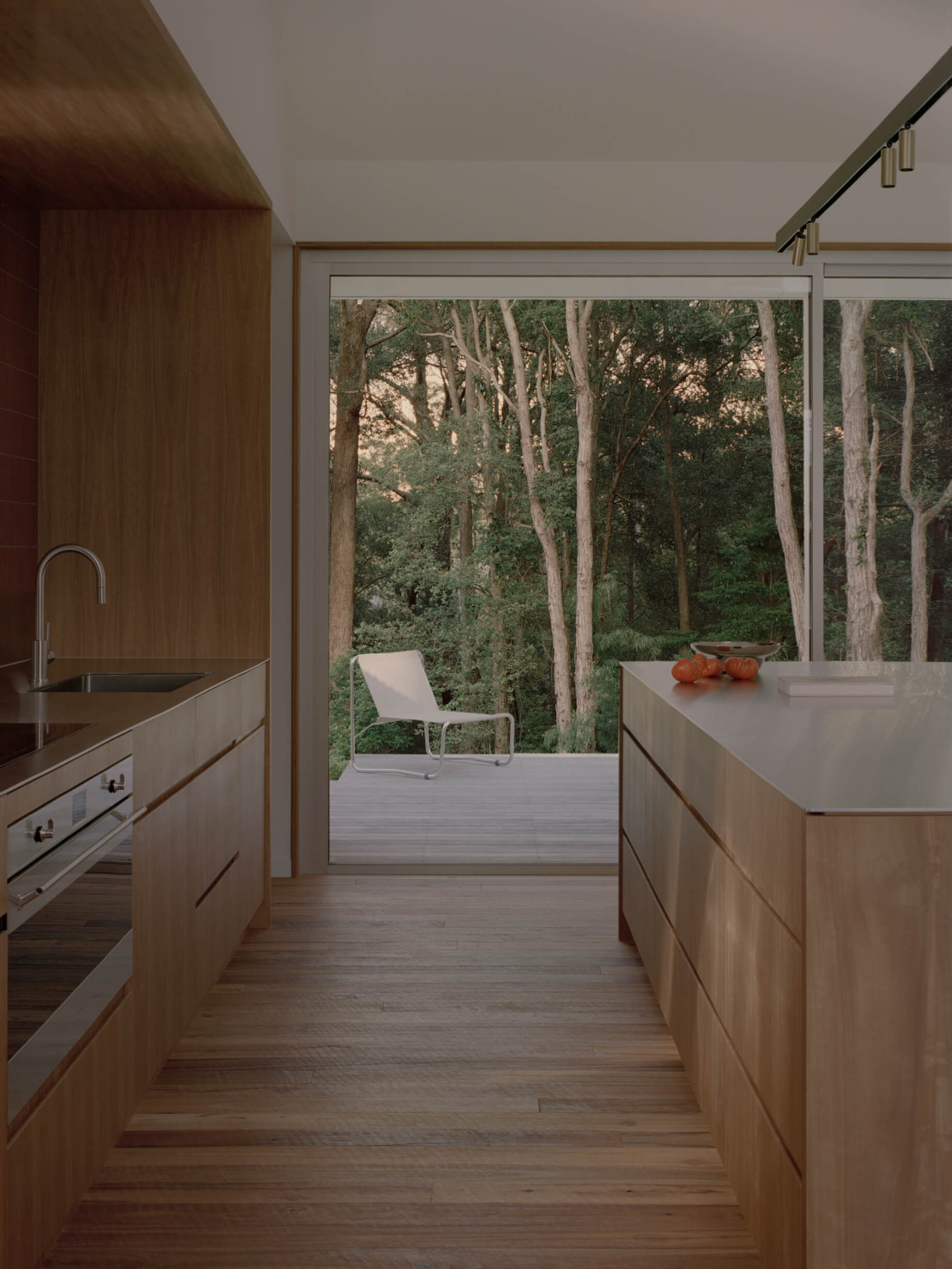
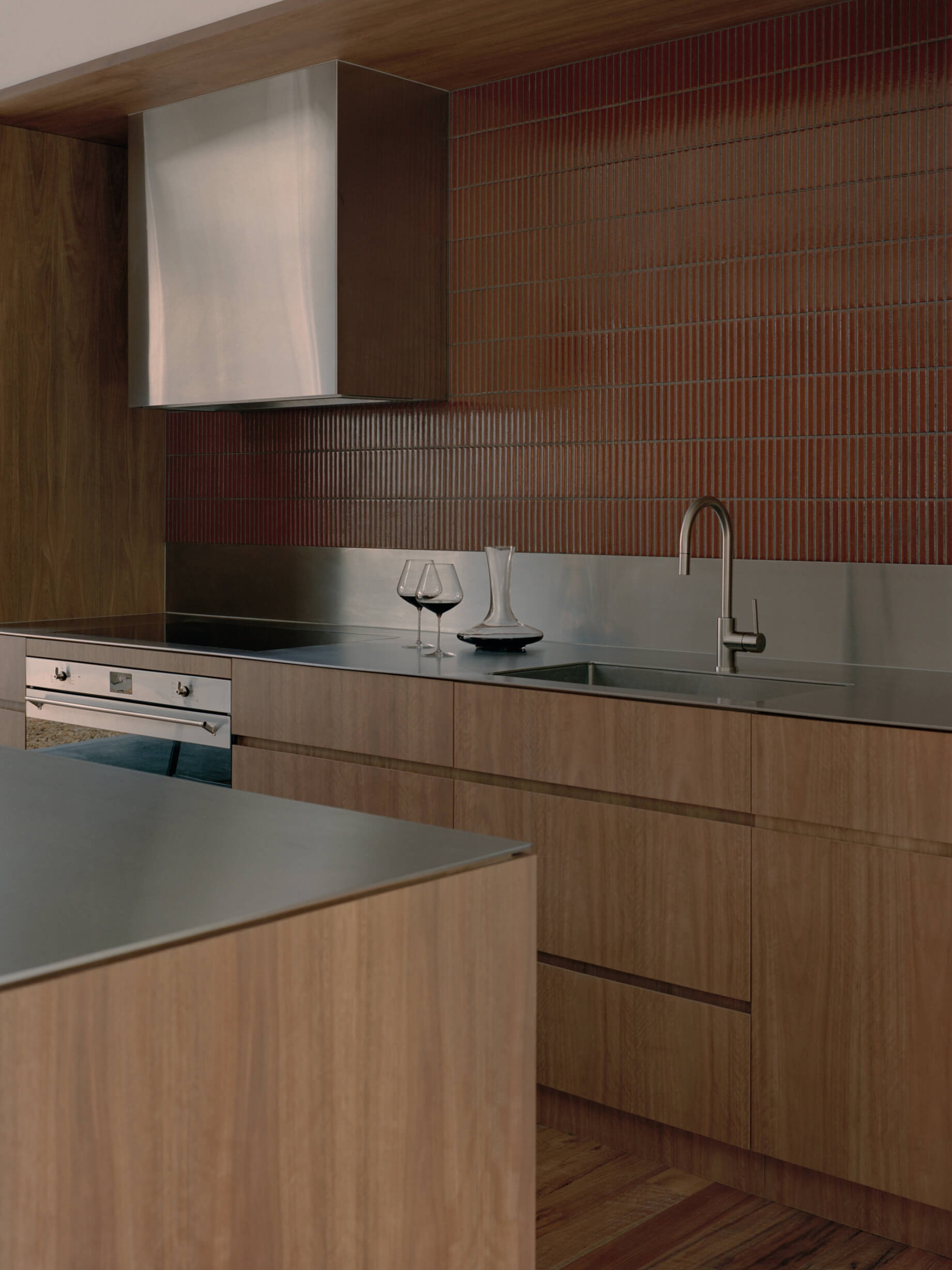
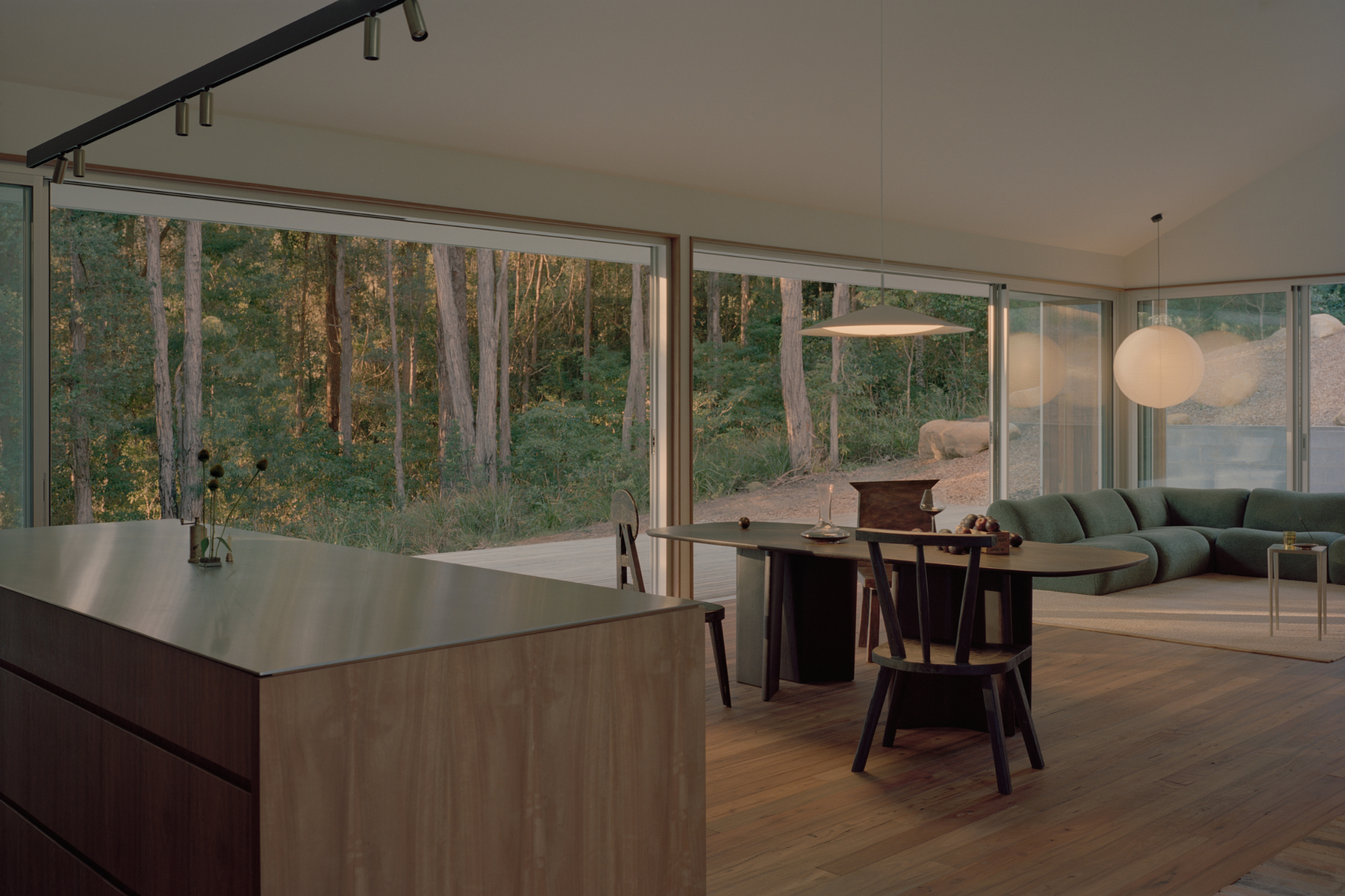
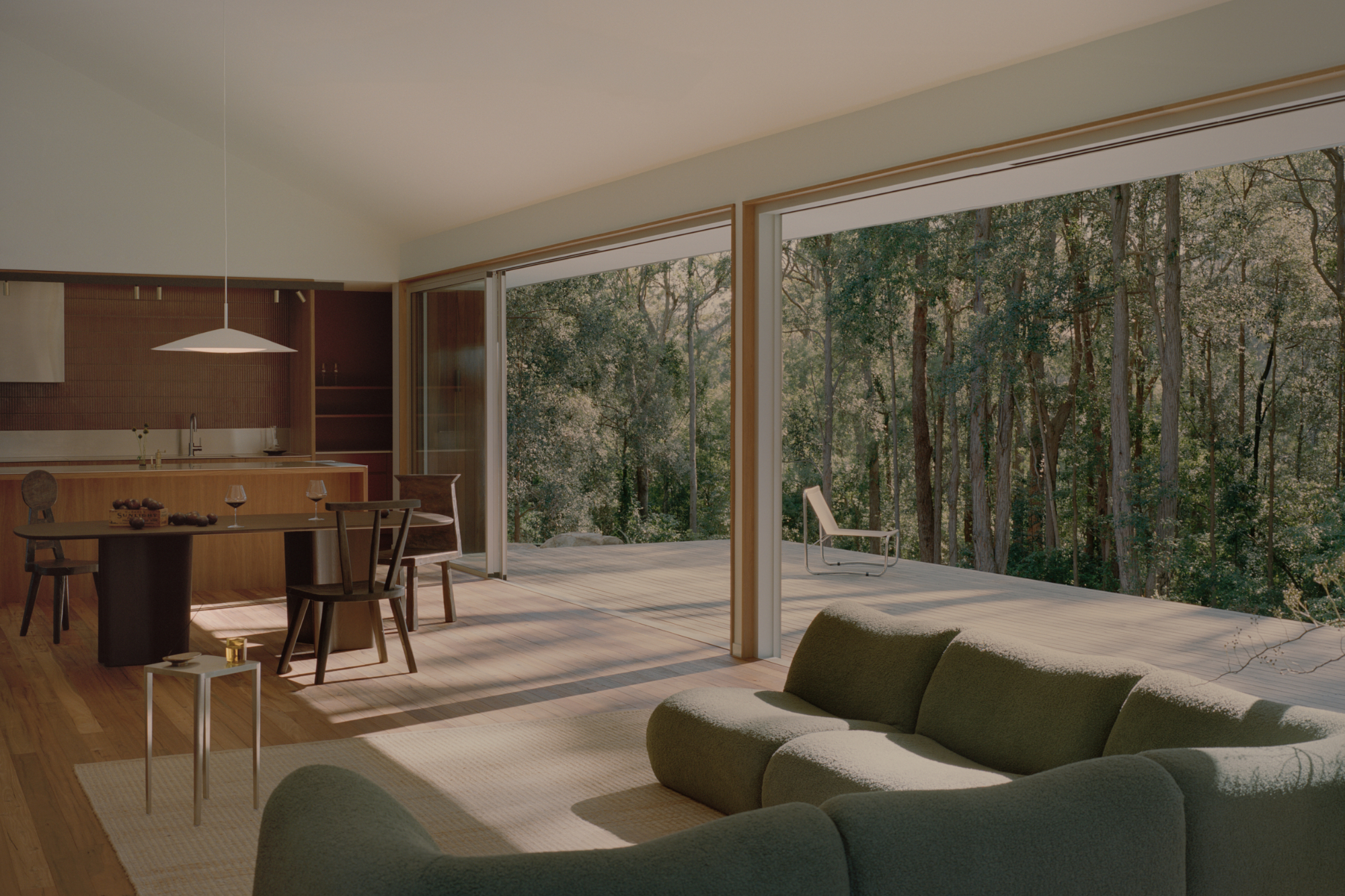
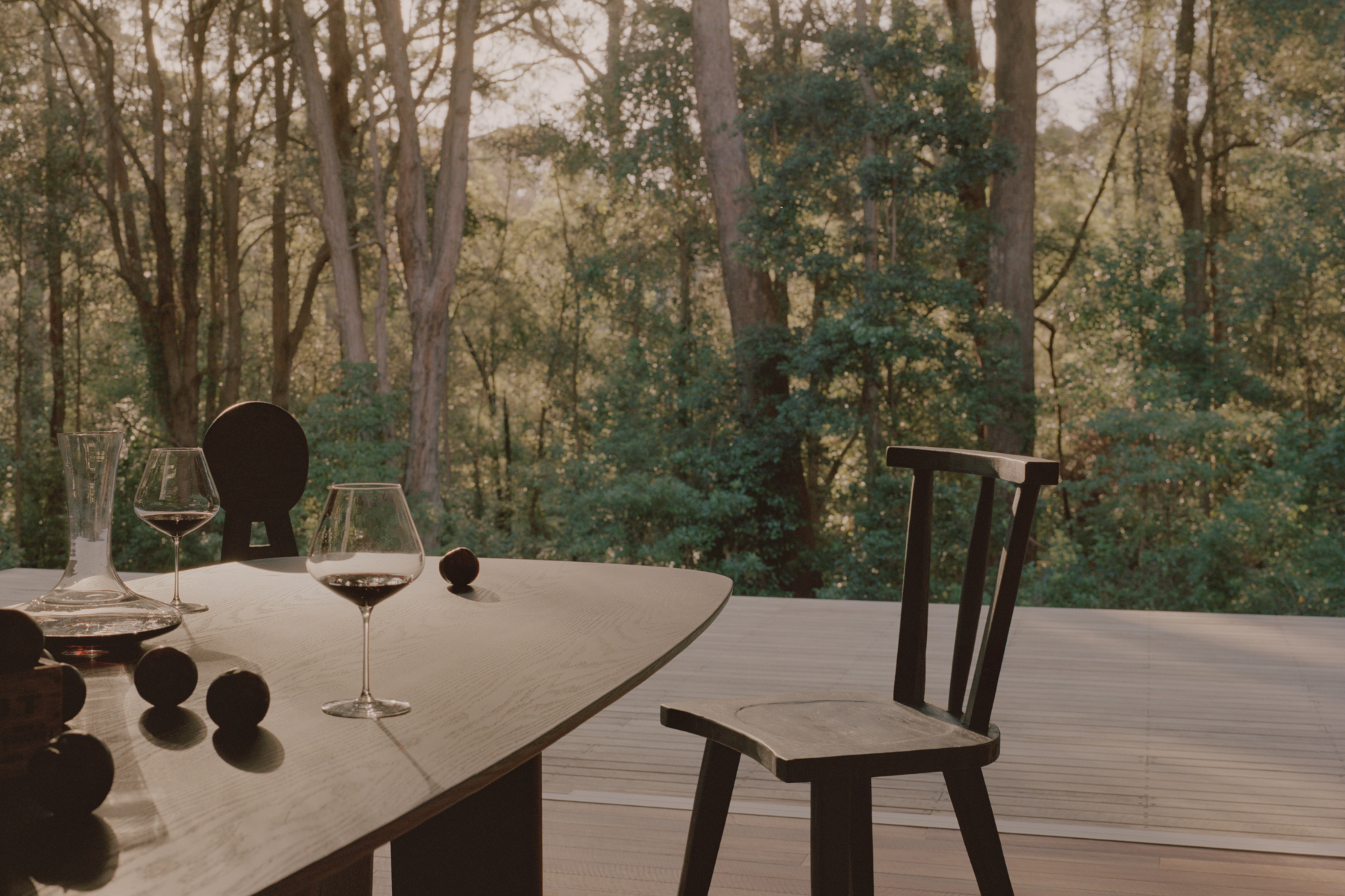
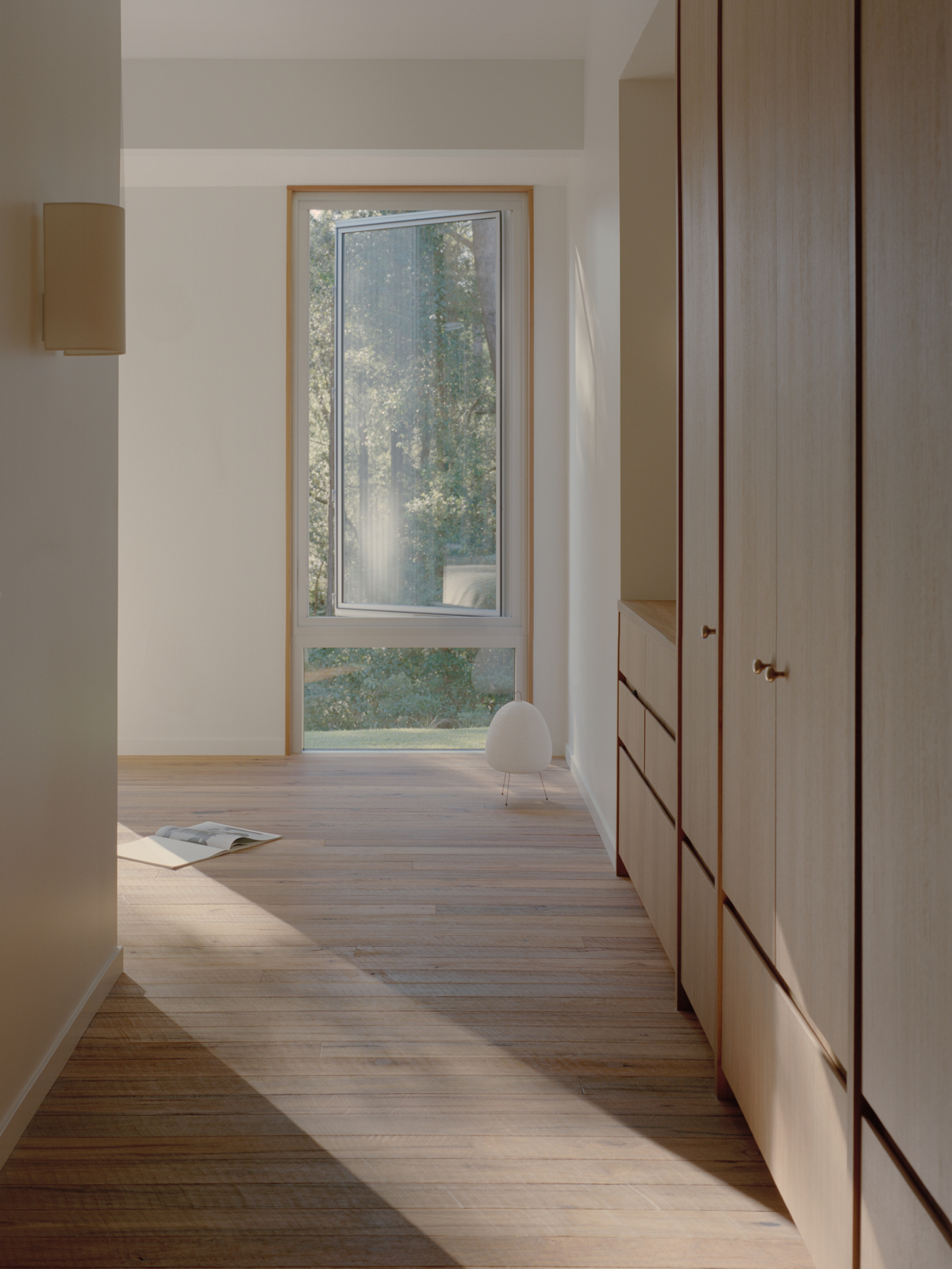
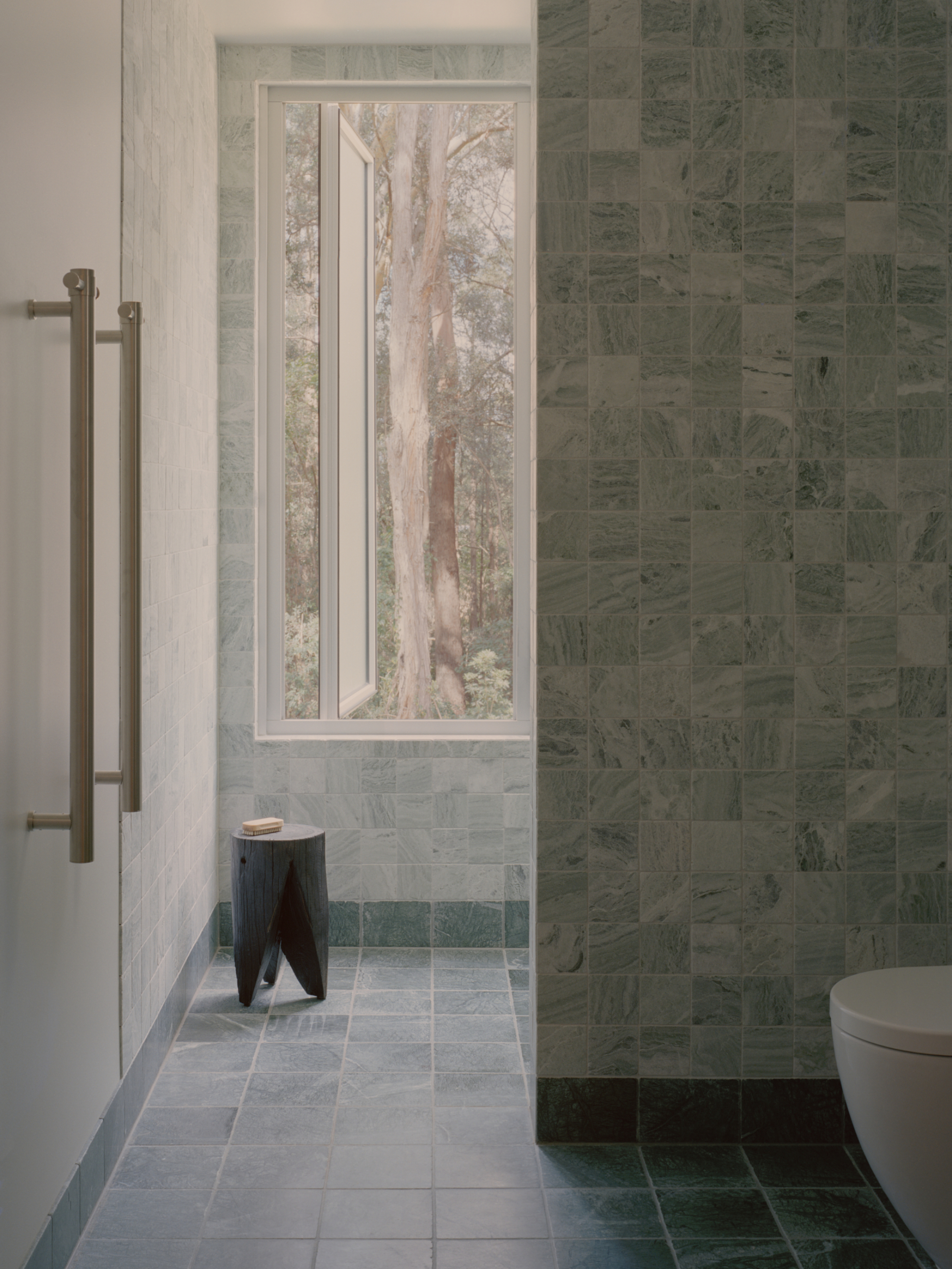
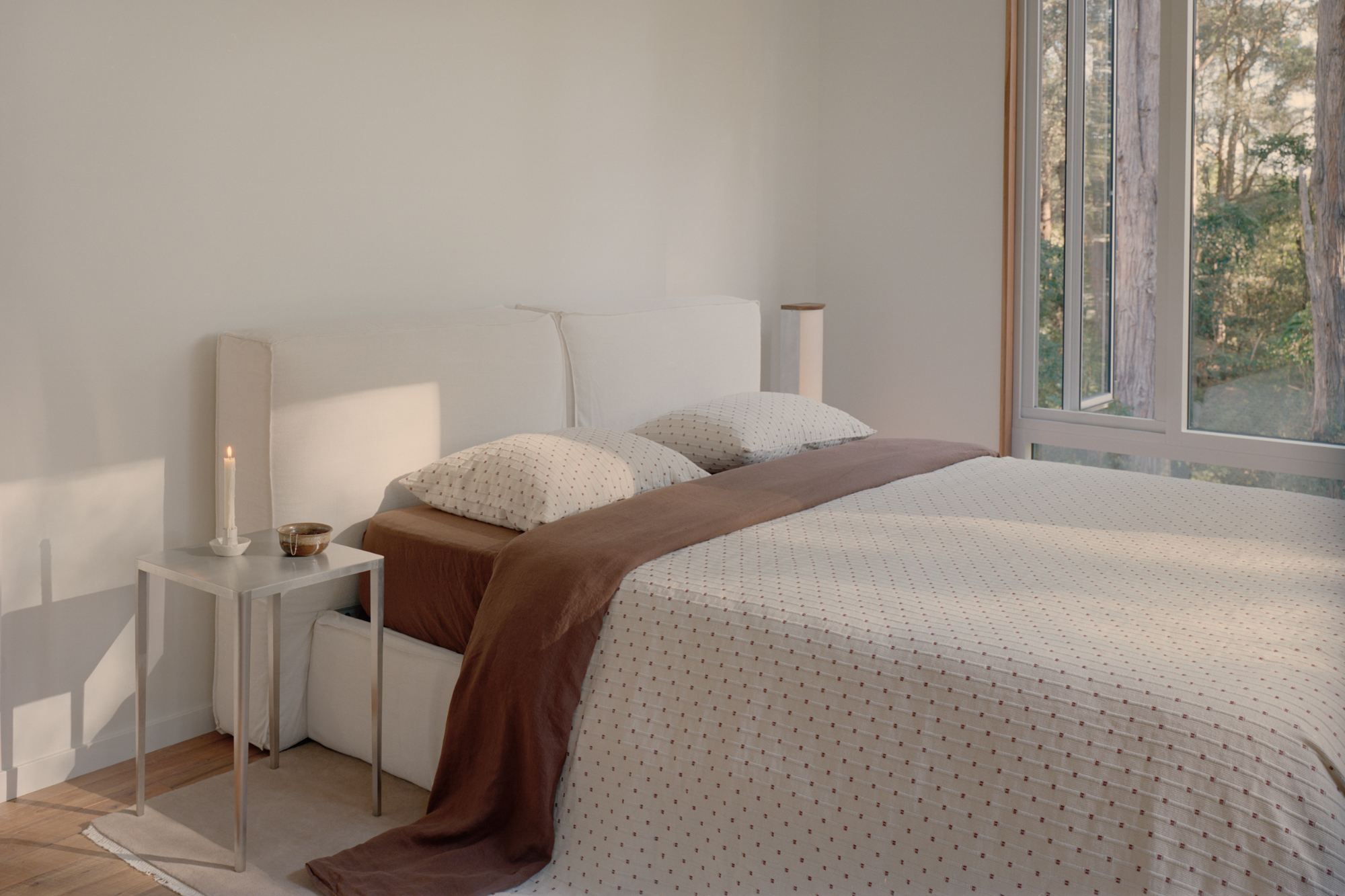
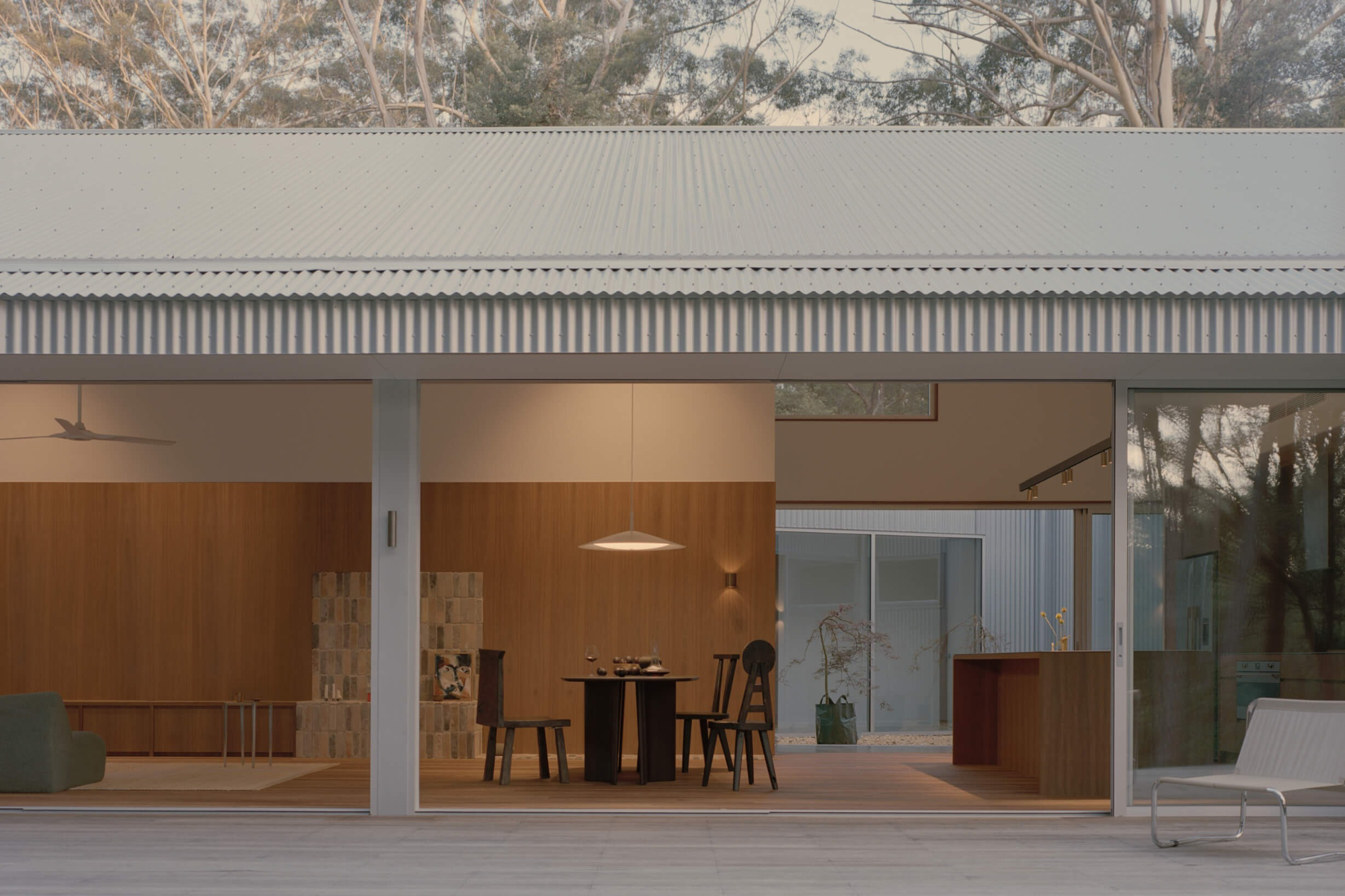
Step inside and the angular shell gives way to soft greys, off-whites, and warm timber panels that fold from wall to ceiling. A stainless-steel kitchen island—its industrial finish tempered by deep red tile and oiled gum cabinetry—anchors an otherwise fluid plan; beyond it, living and dining spill toward a glazed corner that frames the coastal scrub and, on clear days, a pale slice of Pacific sky. The move that makes the interior breathe, though, is the central courtyard: a stone-paved void edged by full-height glazing, planted sparingly with native grasses. It acts as both lung and compass, drawing cross-breezes while pulling morning sun into the heart of the house. From the bedroom wing—a cocoon of honey-toned timber—you catch a different slice of that courtyard: filtered light, the rattle of grasses, the shift of clouds overhead. Even the bathroom continues the quiet discipline: blue-green stone, frameless glass, and a skylight that washes the shower in midday sun.
Throughout, the detailing is almost invisible. Skylight frames are buried in the ceiling build-up; downpipes disappear into shadow gaps; spotted-gum door pulls sit flush with the grain. The result is a house that feels at ease in its bush-fire pragmatism yet never reads as defensive. Instead, Ironbark House registers the rhythms of place—heat, wind, salt spray—and folds them into a lived-in calm. It’s a reminder that robust need not be brutal, and that good detailing can let the landscape set the tempo without ever stealing the scene.