Search






Treehouse cabins in northern Denmark offer a forest stay with views, light, and a sense of stillness high above the ground.
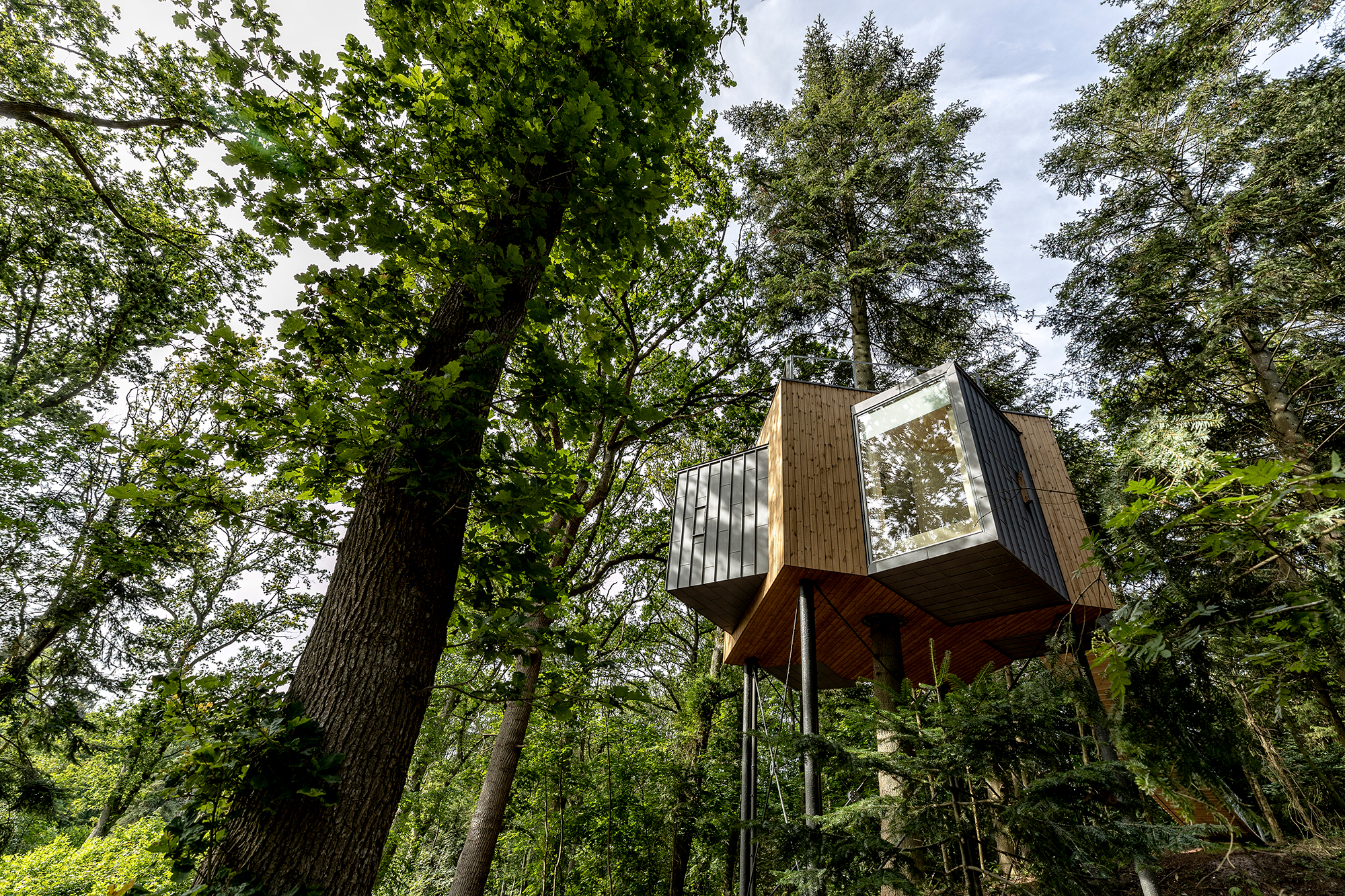
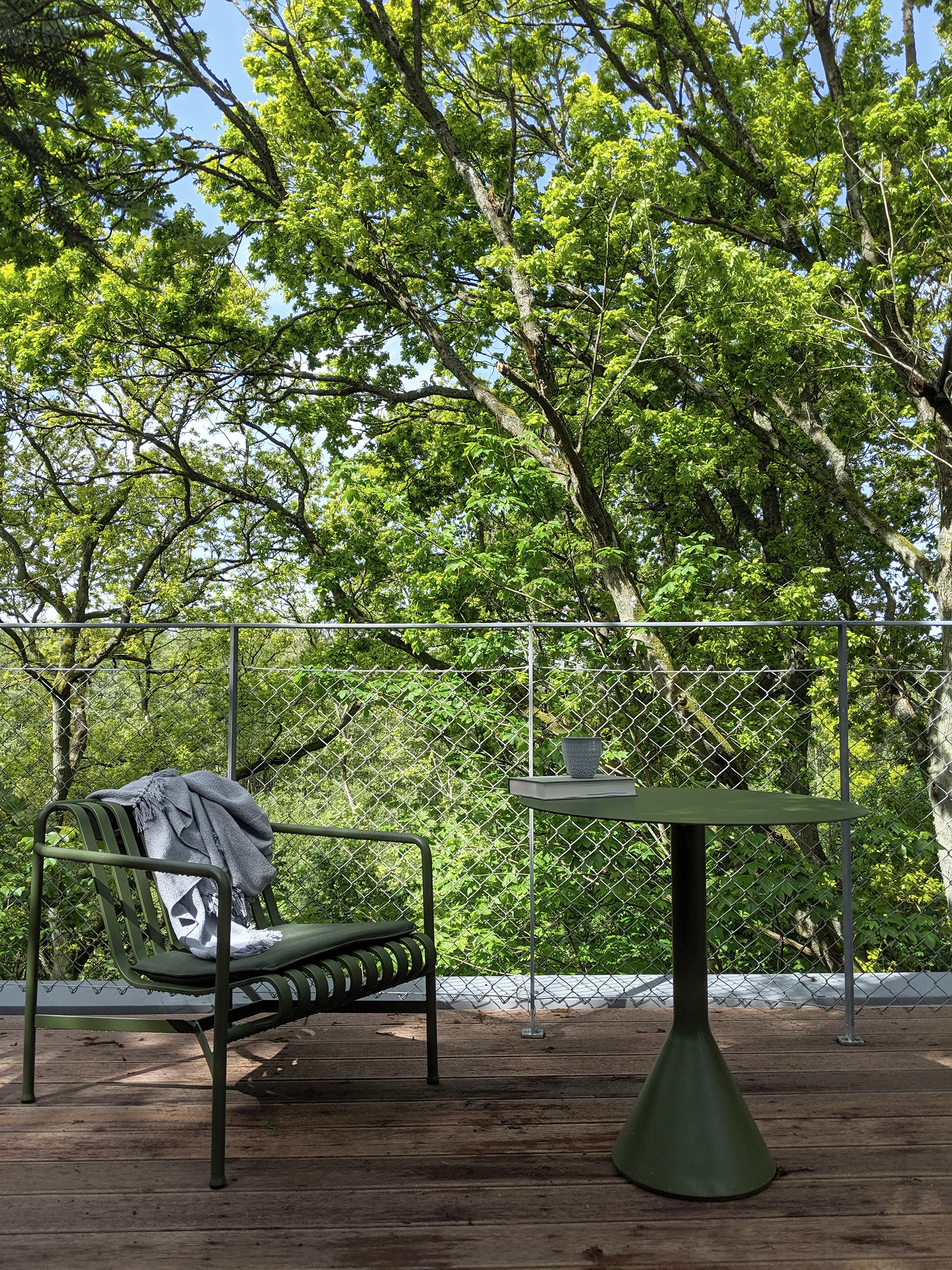
There’s a small forest near the edge of Mariager Fjord, not far from where it opens into the sea. In the middle of it, on a rise between the trees, nine cabins are spaced out across the hillside. They’re built high off the ground—about the height of a second-story window—and each one wraps around a tree that keeps growing right through the roof. You can stand on the deck and look out across the top of the canopy. The branches are close. So is the wind.
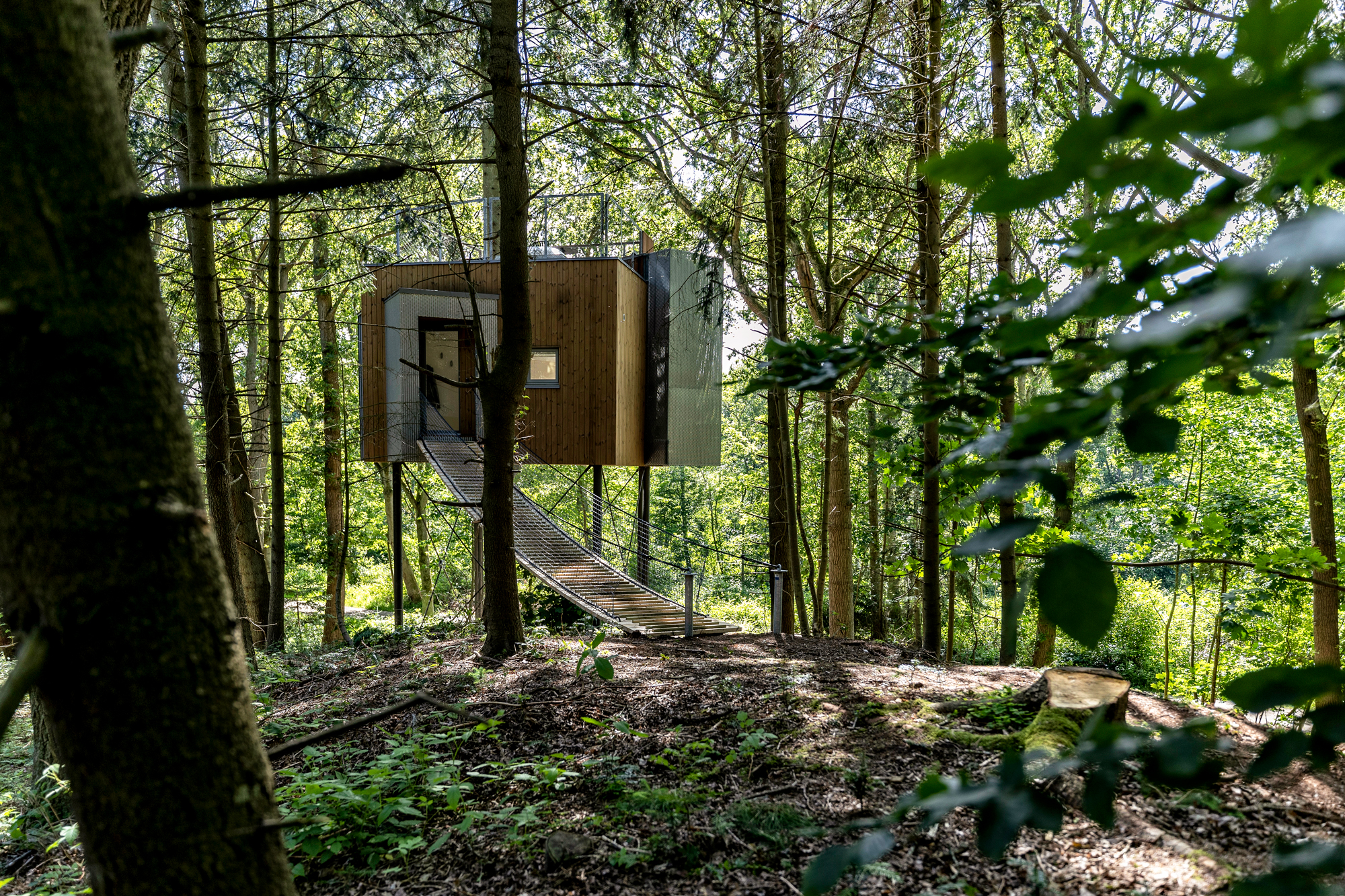
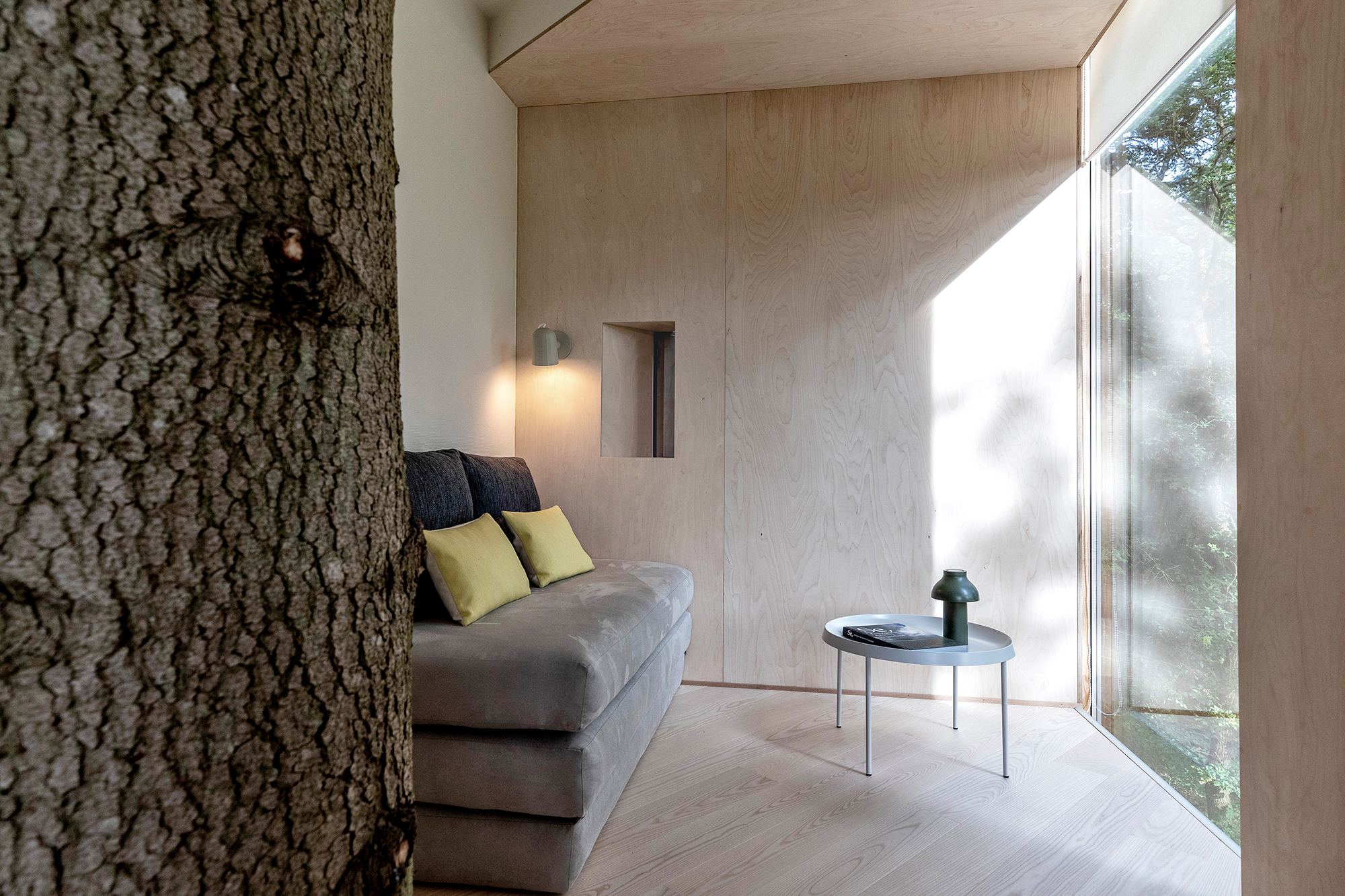
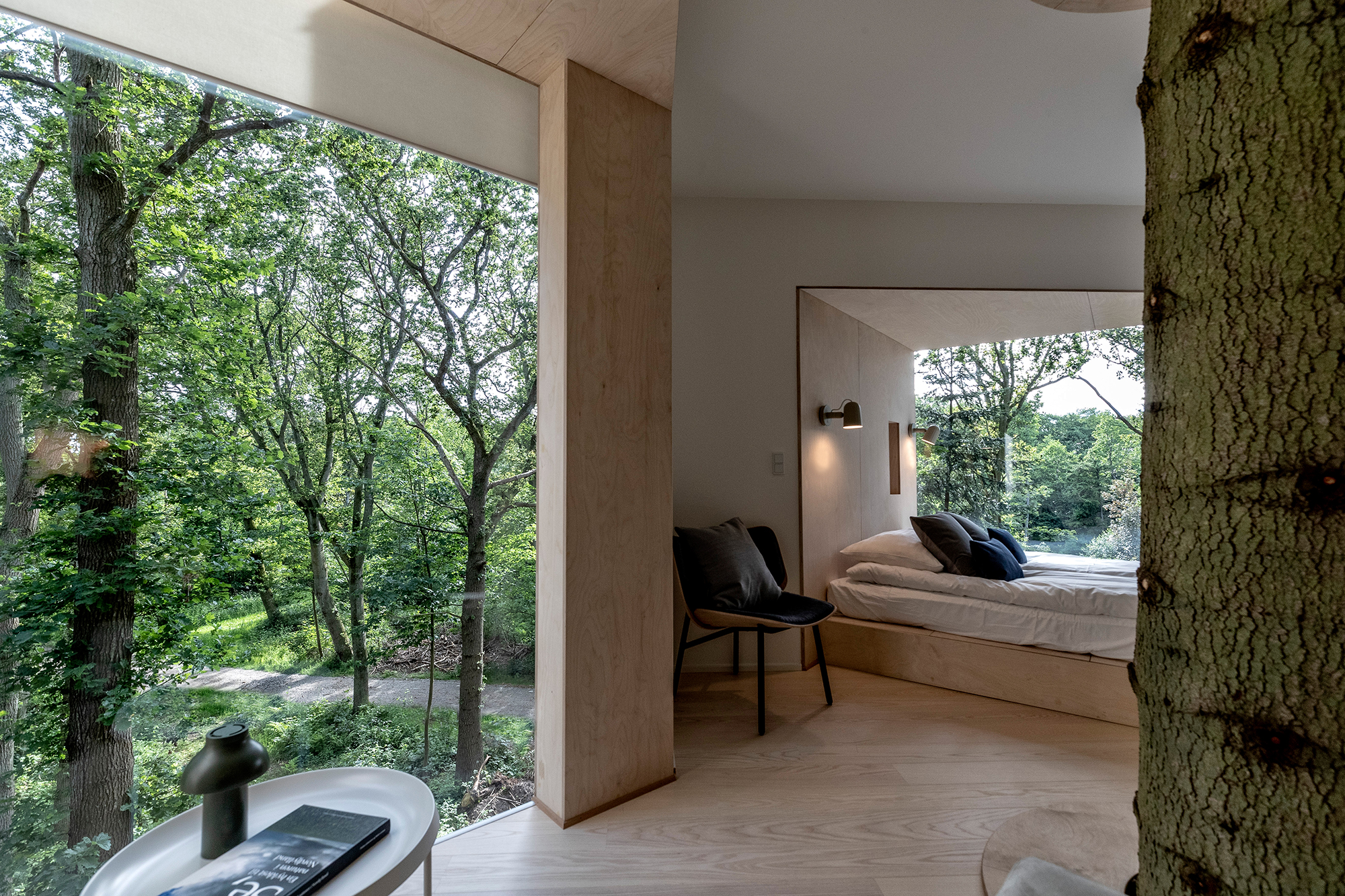
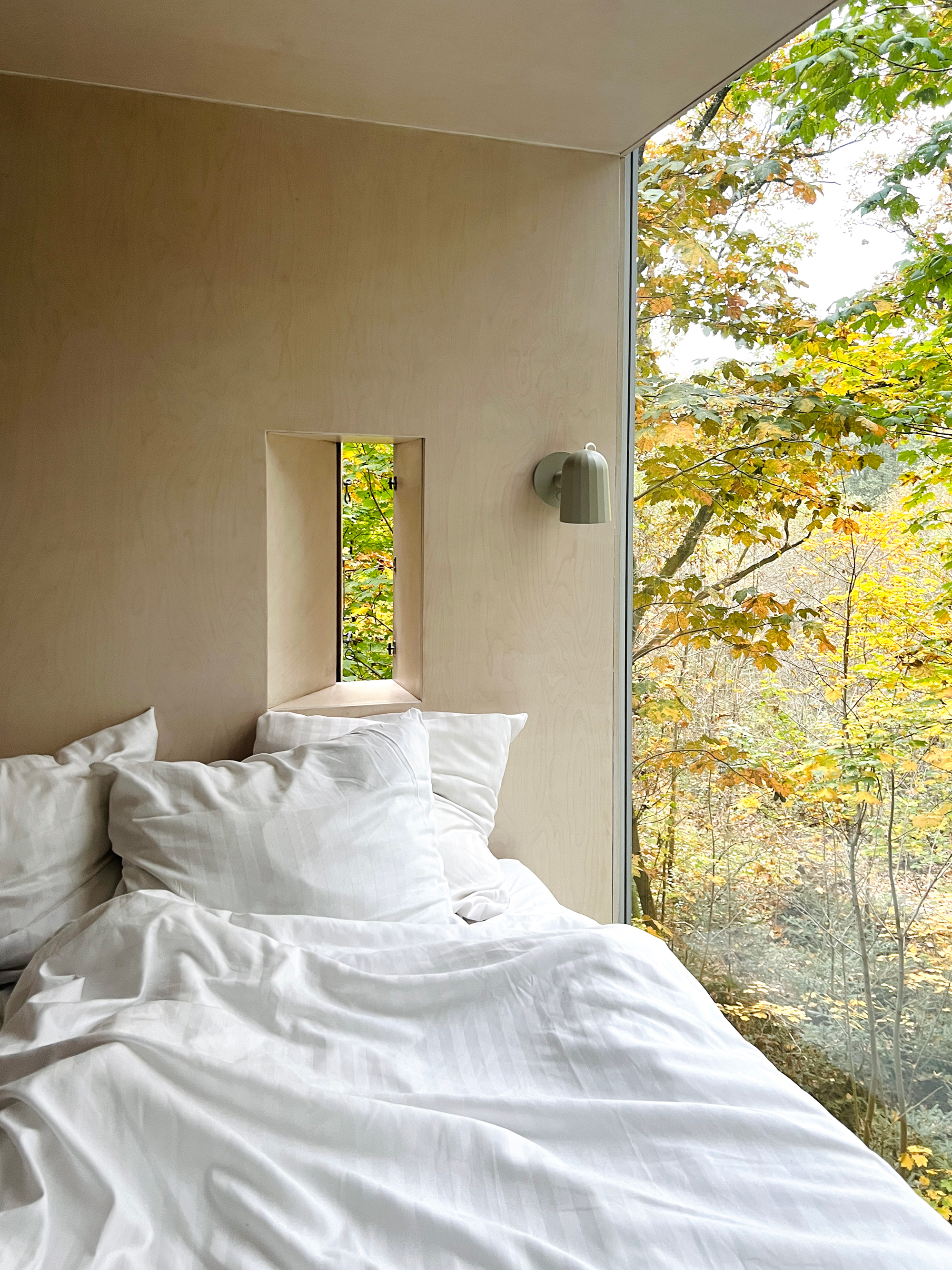
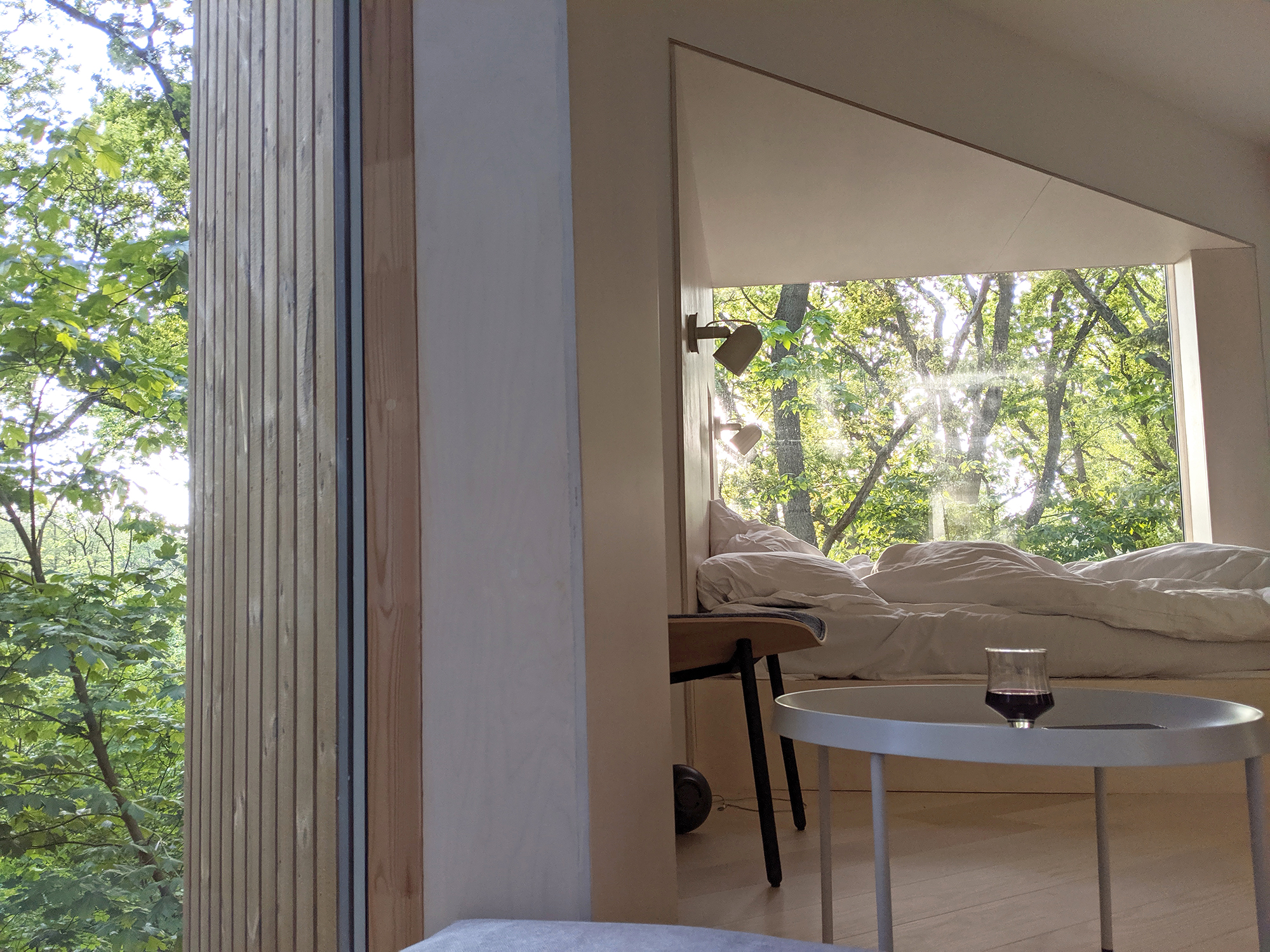
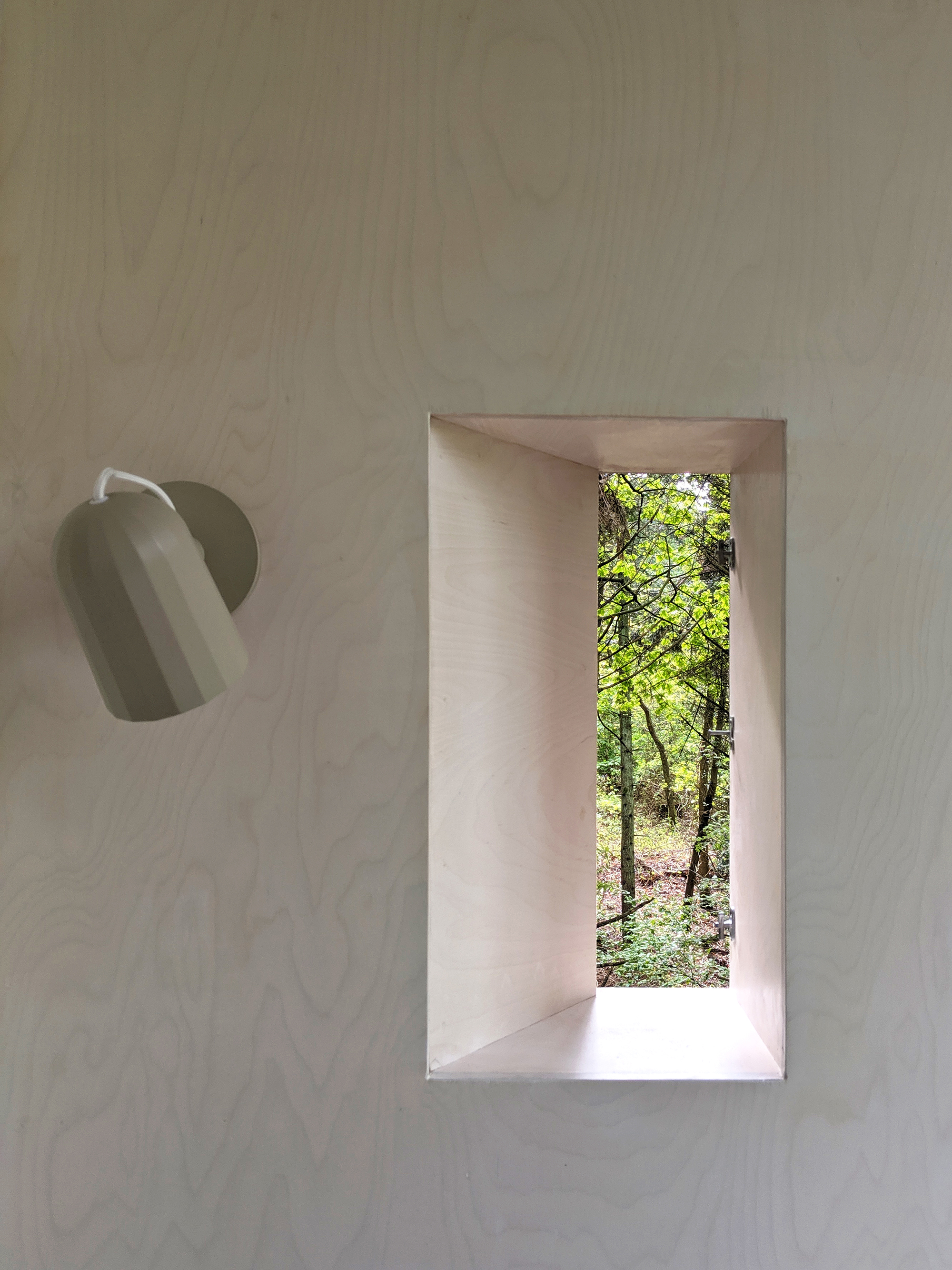
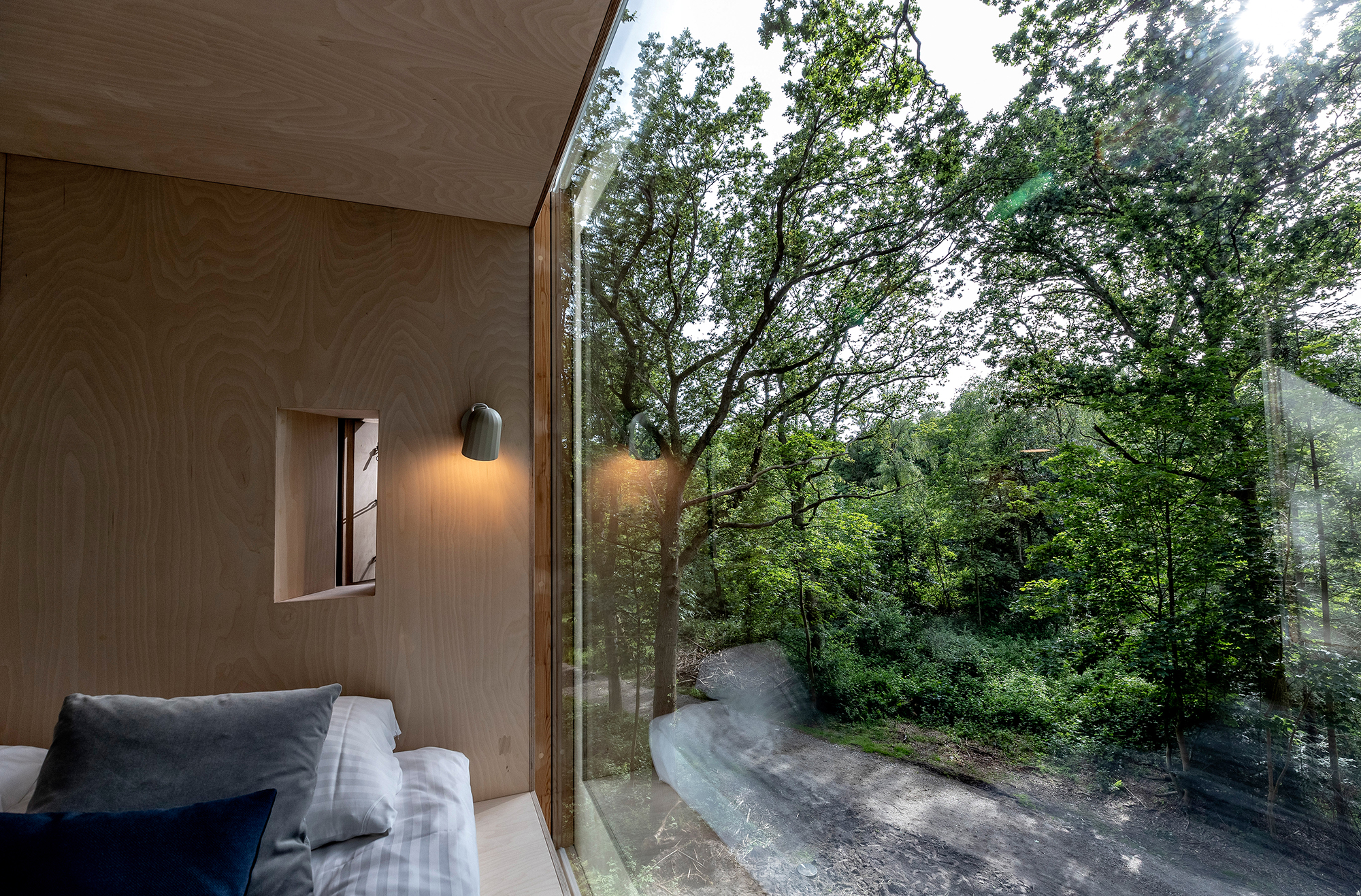
The cabins were designed by Sigurd Larsen. The structure is simple: a wooden volume on stilts, built around a vertical trunk. The plan fits just what’s needed—one bed, a small sofa that pulls out, a kitchen, a toilet, and a shower attached to the outside wall. There’s a stair to the roof, which is where most guests end up with a drink or coffee at some point. Everything inside is lined in pale wood and naturally lit. Nothing decorative. You’re here to be in the trees, and the layout makes that feel natural. What’s unusual is how complete the space feels, even at this scale. You cook, sleep, read, shower outdoors, and leave your shoes by the door. You don’t need more room than what’s there. Light comes in from two sides. If you’re lucky, and you wake up early, you’ll see the fog still sitting at the base of the trees. Or hear deer moving in the brush.
You park nearby, walk a short path in, and the cabins have heat, power, running water. It’s quiet, and you’re lifted off the ground just enough that everything below feels like another zone entirely. The tree running through the center of the cabin isn’t a visual trick—it’s there, part of the structure, part of the room. It’s the kind of thing you don’t think about too much while you’re there, but remember later. Løvtag also works because it doesn’t overreach. The design is resolved, but not over-designed. The cabins sit lightly on the land—screw foundations, no poured concrete, and everything powered by renewables. They’re insulated and fully functional, but not complicated to maintain. There’s no lobby. No gate. You check in with a code and find your own way up. It’s the kind of place you could imagine copying, if the conditions were right. A small piece of land, a few well-built structures, enough trees, and people willing to do it right. The scale makes sense. The mood sticks with you. And even though it’s been photographed and published and passed around, it still feels like a quiet spot in the woods where someone had a good idea—and followed it through.
Photography: Soeren Larsen