Search






A Copenhagen-designed bedside clock pairs an e-paper display with physical controls, offline sounds, and a gradual wake-up light—without a companion app.
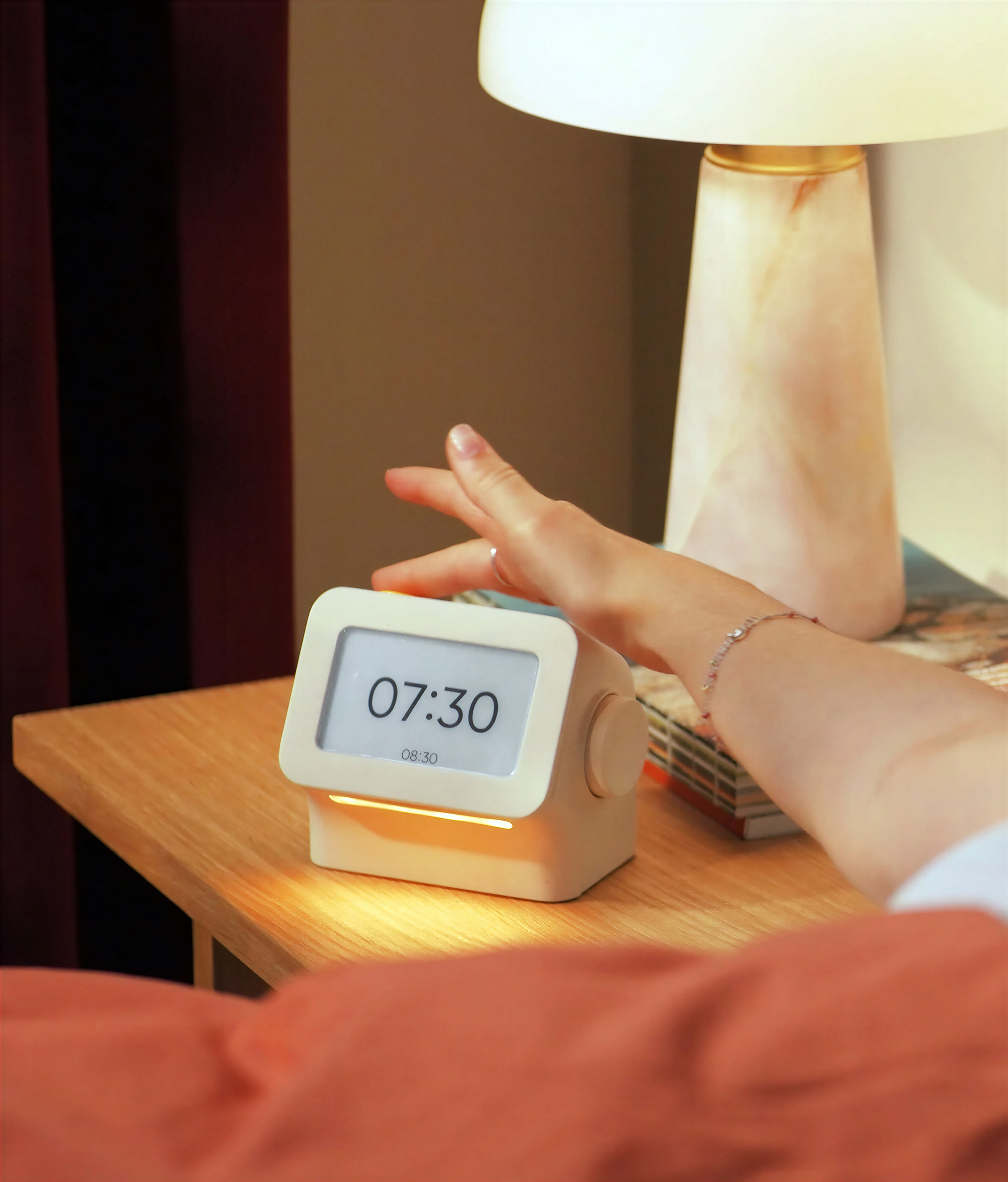
A yellow stop button, a broad snooze key, and a large side dial give Habity the physical vocabulary of a familiar bedside clock. Developed in Copenhagen, this e-paper alarm clock is intended to take over the jobs that keep a phone on the nightstand: the morning alarm, background sounds, and a way to check the time. Its rounded body and slightly tilted face make those functions visible without suggesting there should be many more.
The project was developed by Peter Arvad and Jesper Westendahl. Arvad describes its starting point as an ordinary domestic routine: scrolling through a phone before sleep, then reaching for it again on waking. Habity approaches that habit through a separate object. Rather than replacing a smartphone with a minimalist phone, the proposal is to leave the phone as it is—and put it somewhere else at bedtime.
An e-paper display with physical controls
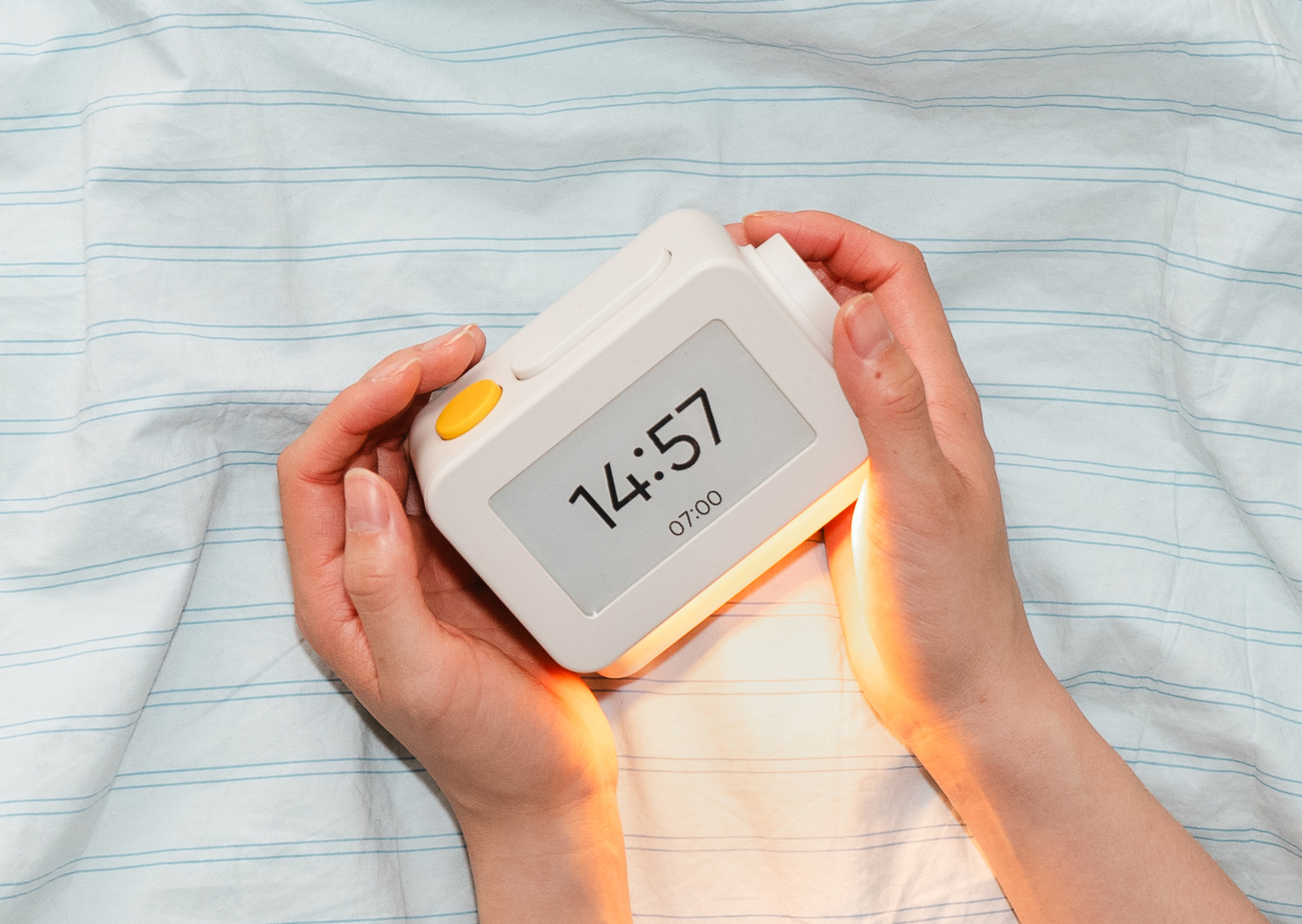
The 3.7-inch e-paper screen has a paper-like appearance rather than a continuously illuminated face. For reading in the dark, a warm frontlight activates when the user interacts with the clock, then switches off after ten seconds. The distinction matters: Habity does not remove the screen, but limits when it needs to light up.
The side dial handles settings and volume through turning and pressing. Separate buttons stop and snooze the alarm, with snooze adding five minutes. When an alarm is not active, the stop button becomes a switch for the built-in nightlight. These controls keep the main interactions on the object itself, rather than moving them to another device.
Offline sounds, from evening to morning
Habity’s evening functions begin with an optional daily wind-down reminder. A message appears at the chosen time, offering the user a soundscape or the option to dismiss it. The reminder does not automatically start a soundtrack; that remains a separate decision.
The sound collection includes rain, ocean waves, and a creek, alongside a sleeping dog and a dishwasher. Those domestic recordings bring a little humor to a familiar feature. The audio is available offline without a subscription, while the separate sleep-sound function offers playback periods of one, two, four, or eight hours. A double press of the snooze button starts playback, and the side dial adjusts the volume.
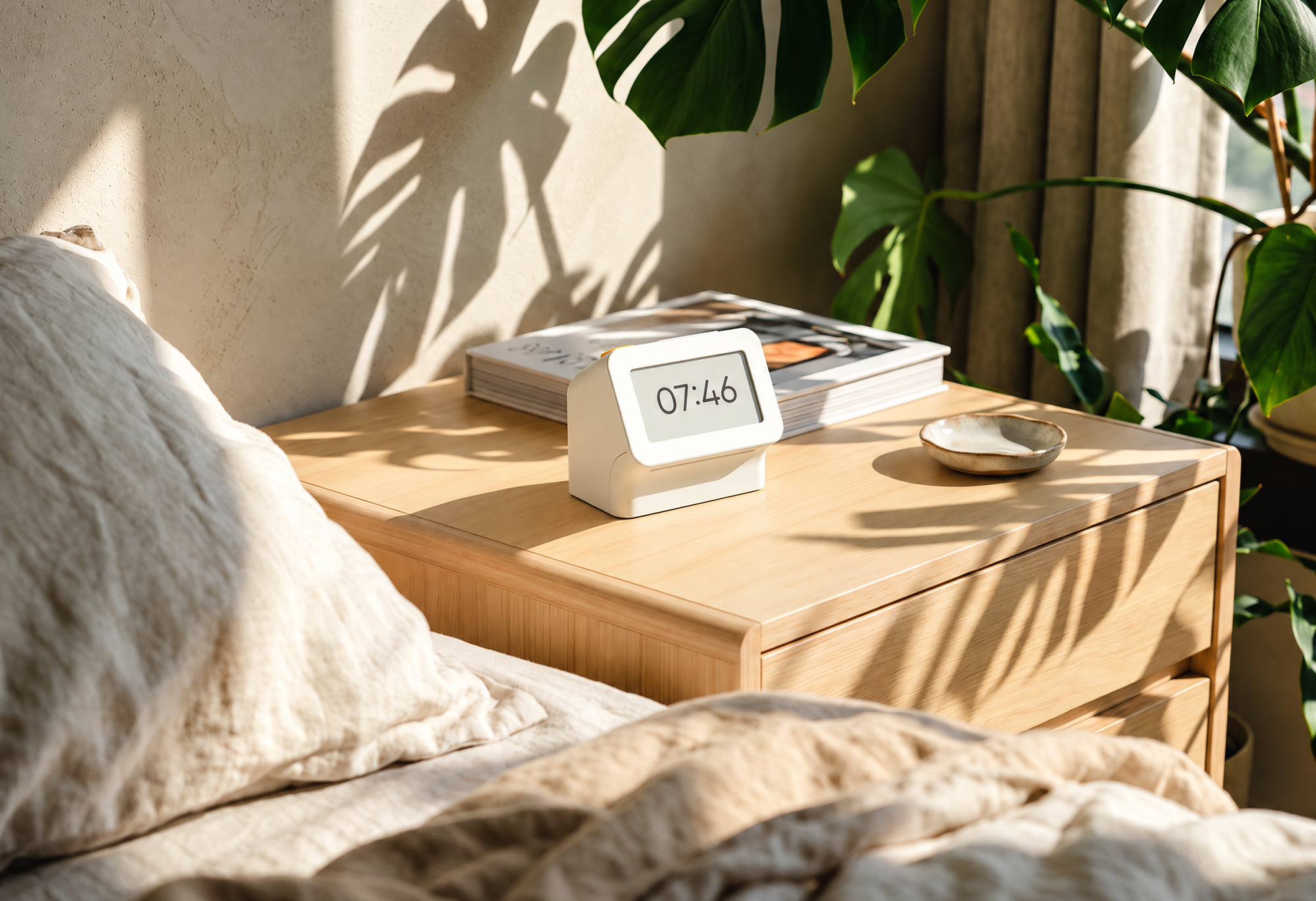
For mornings, the clock supports one wake-up alarm per day. Users can repeat a time daily, restrict it to weekdays, or assign different times to individual days. The built-in wake-up light can gradually brighten before the alarm, with a choice of one, five, ten, or thirty minutes. It is a specific set of options, rather than an open-ended collection of routines to configure.
No app or Wi-Fi connection is required for basic setup and everyday use. Optional connectivity adds automatic time setting, firmware updates, and integrations with Philips Hue Bridge, Home Assistant, and Homey. Those connected functions require USB-C power, leaving a clear distinction between using Habity as a standalone clock and incorporating it into a smart-home setup. Habity
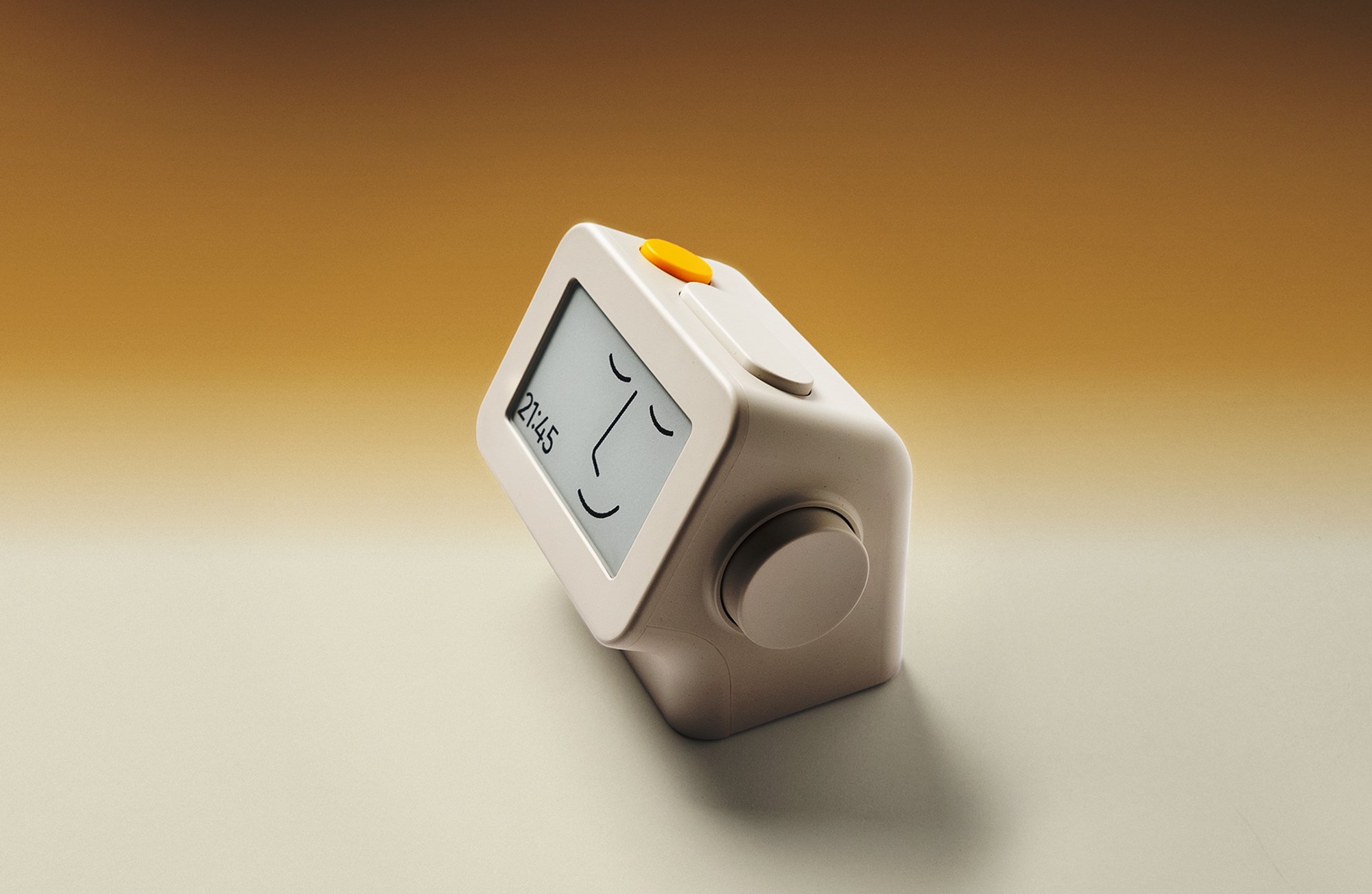
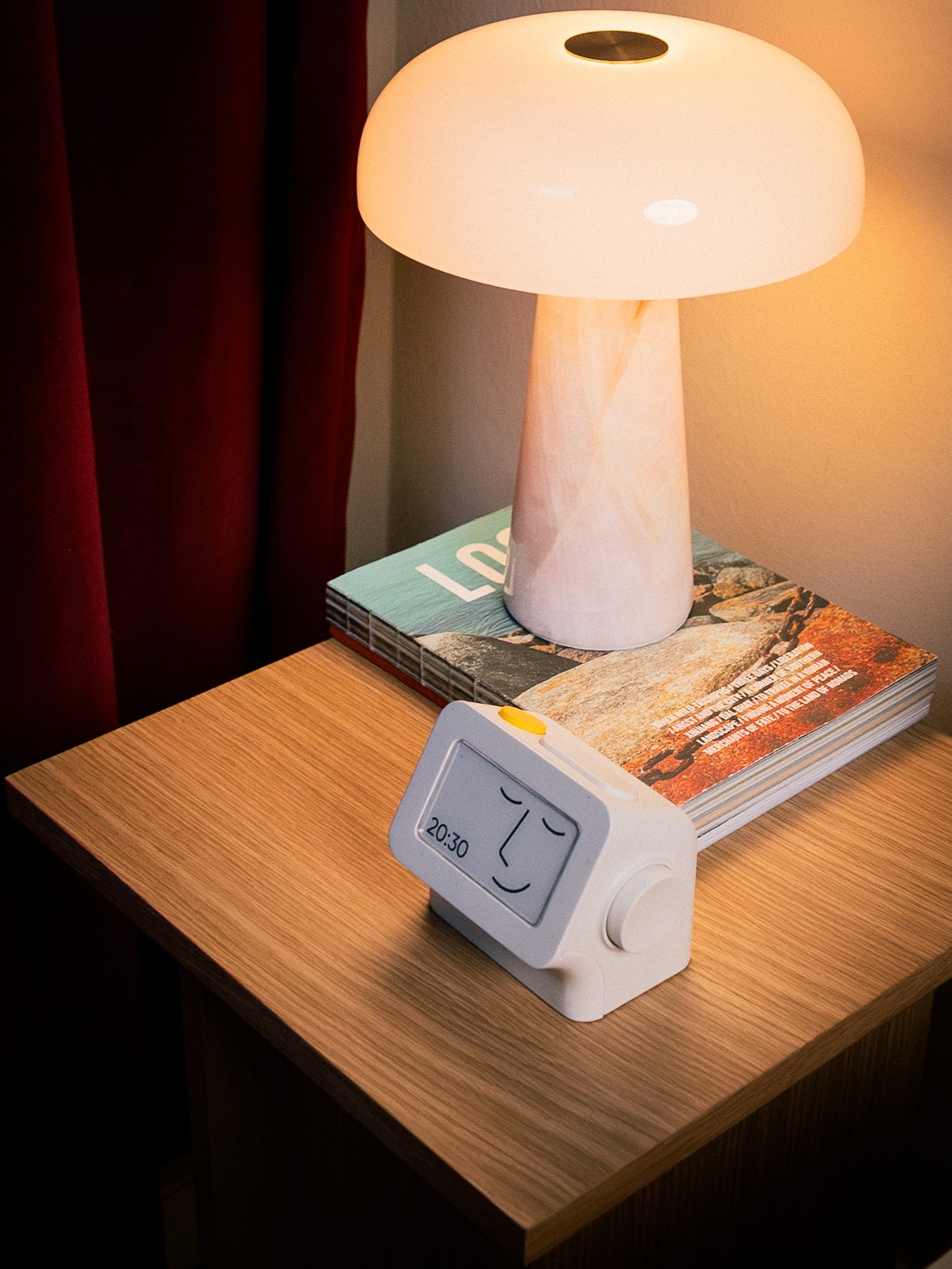
One of the more considered details appears when the clock is left alone. After ten minutes without interaction, an optional idle screen reduces the size of the time and introduces an illustrated face. The hour remains available, but it no longer occupies most of the display. For an object meant to replace the phone beside the bed, that smaller gesture feels appropriate: there is still something to look at, just less reason to keep looking.