Search






A brick shell in Sydney’s inner south becomes a light-filled family house—cars and horses included.
Slip down the laneway that cuts behind Redfern’s Federation cottages and you’ll spot the warehouse by its mural-faded bricks and industrial shutters. From the street, almost nothing has changed since the 1920s: new windows tuck into old openings, and the corner roll-door still hints at past deliveries. Step inside, though, and the volume opens up—roof trusses overhead, a double-height concrete gallery below—setting the scene for a conversion that treats structure as both measure and memory.
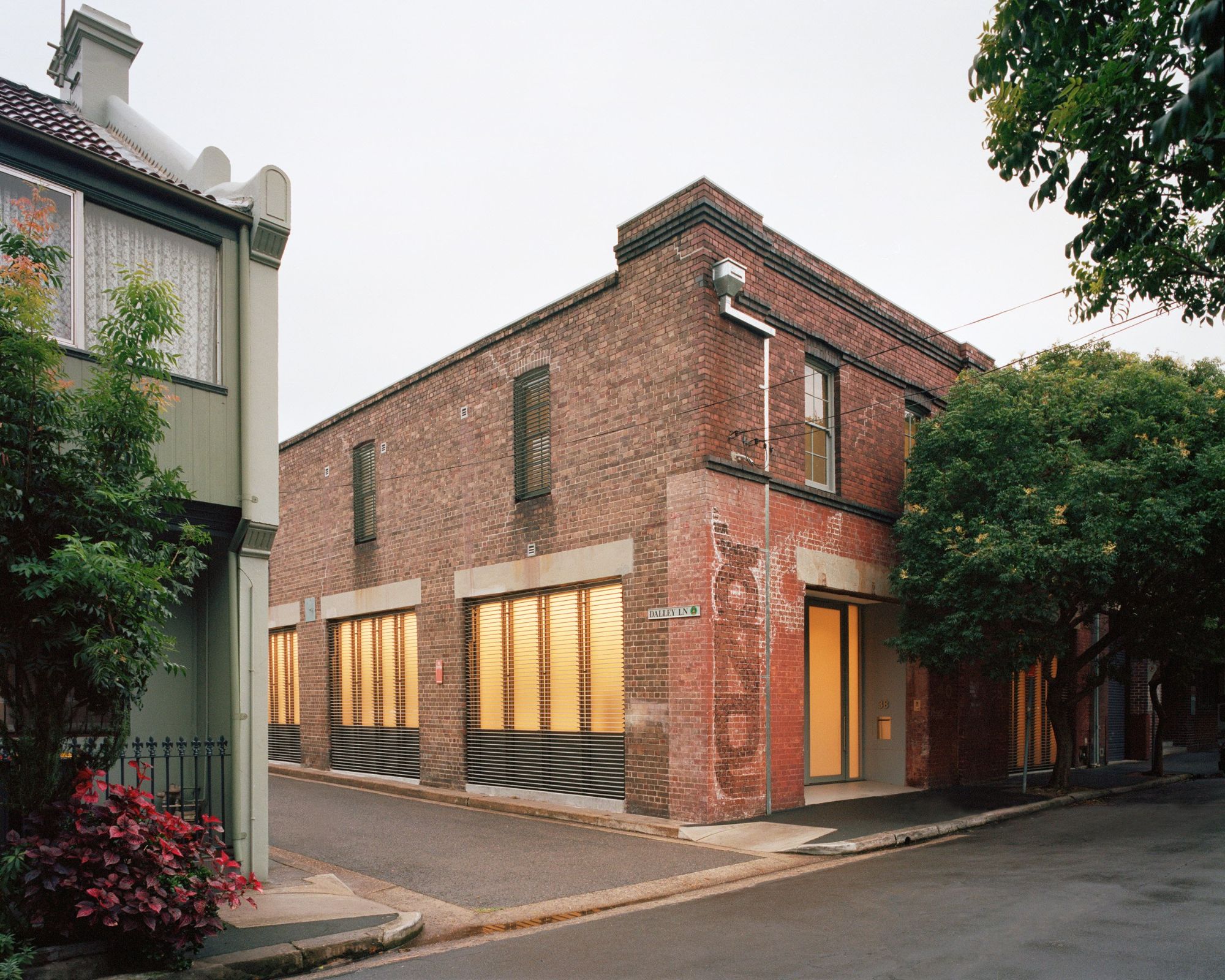
Living above the workshop
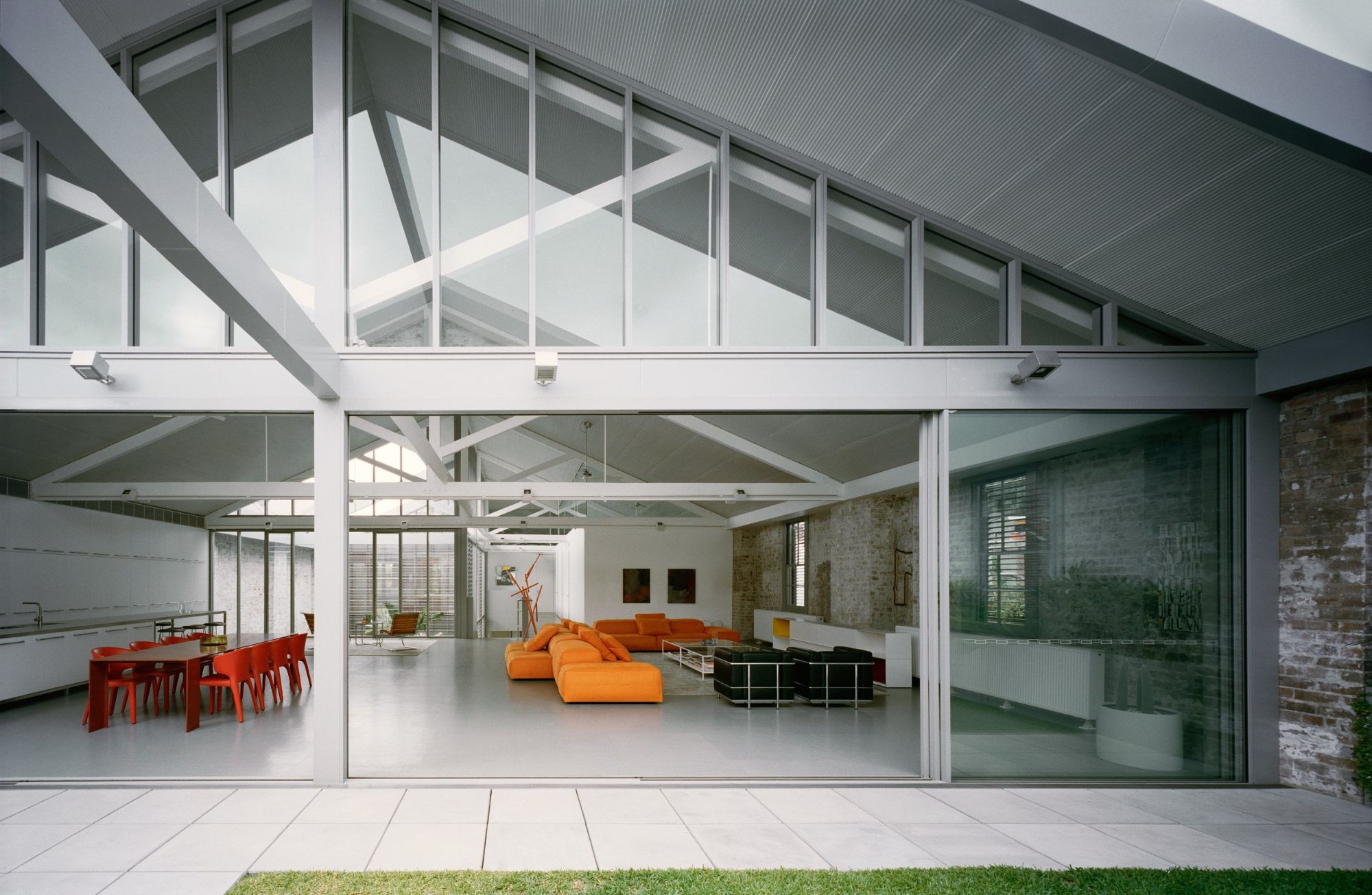
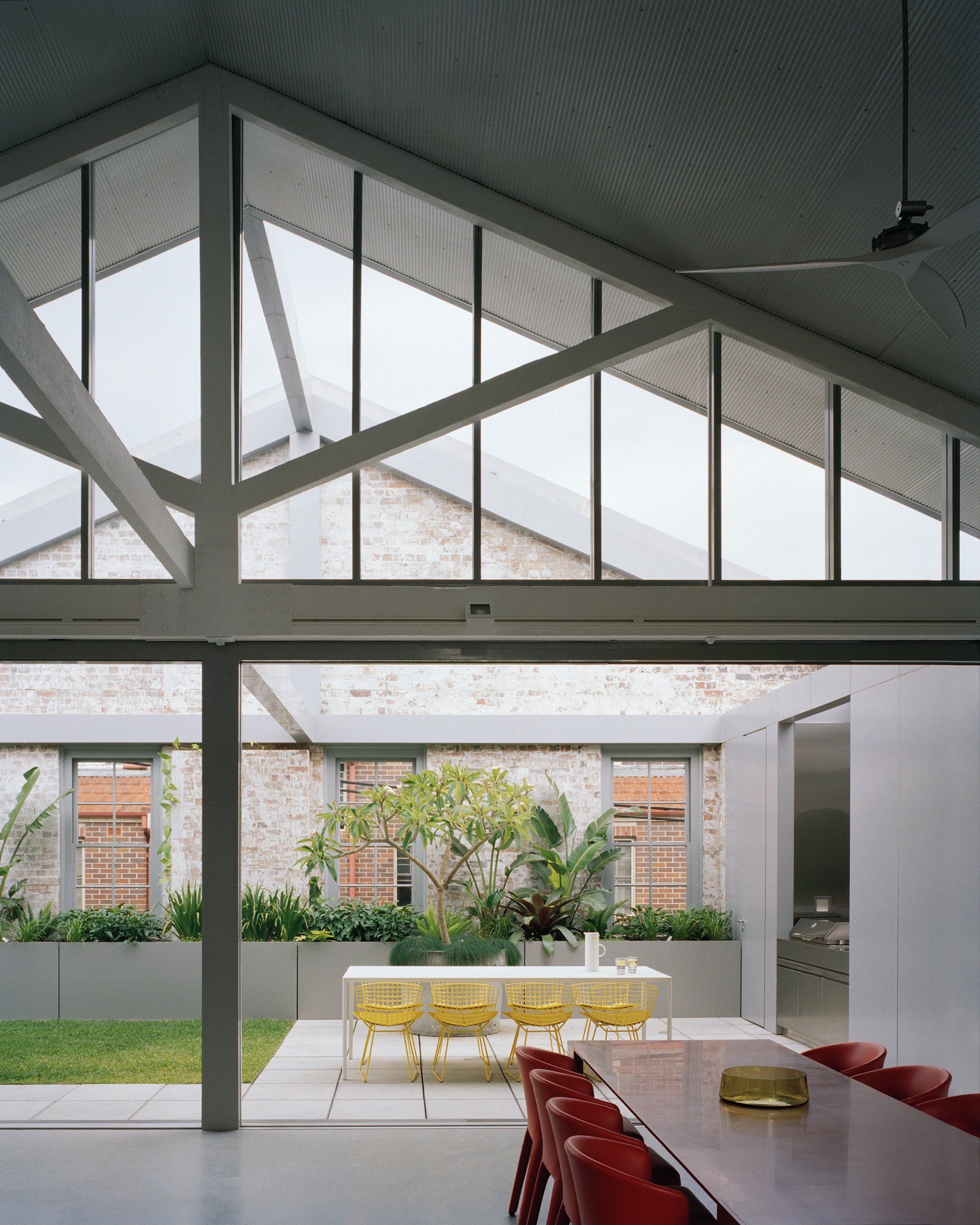
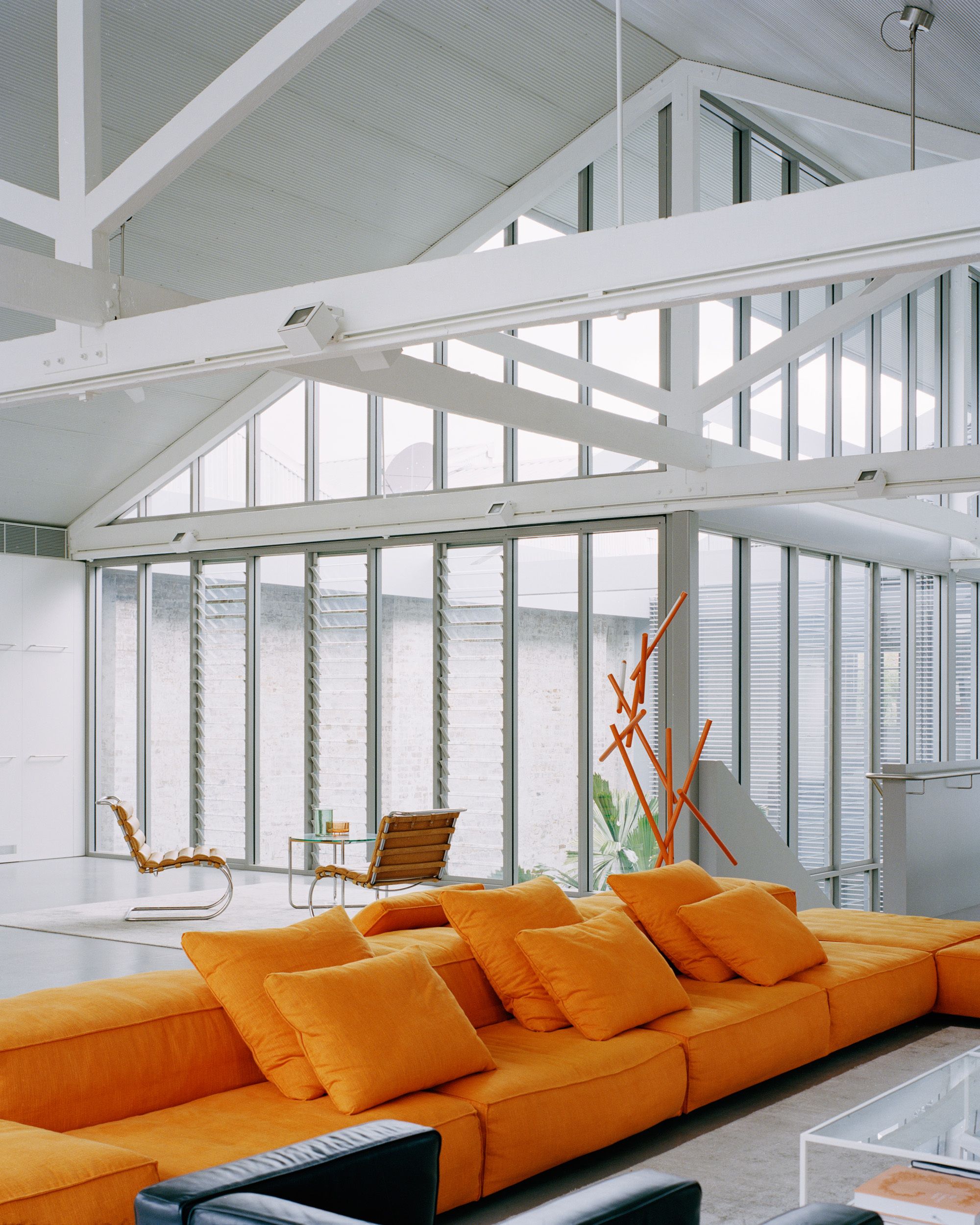
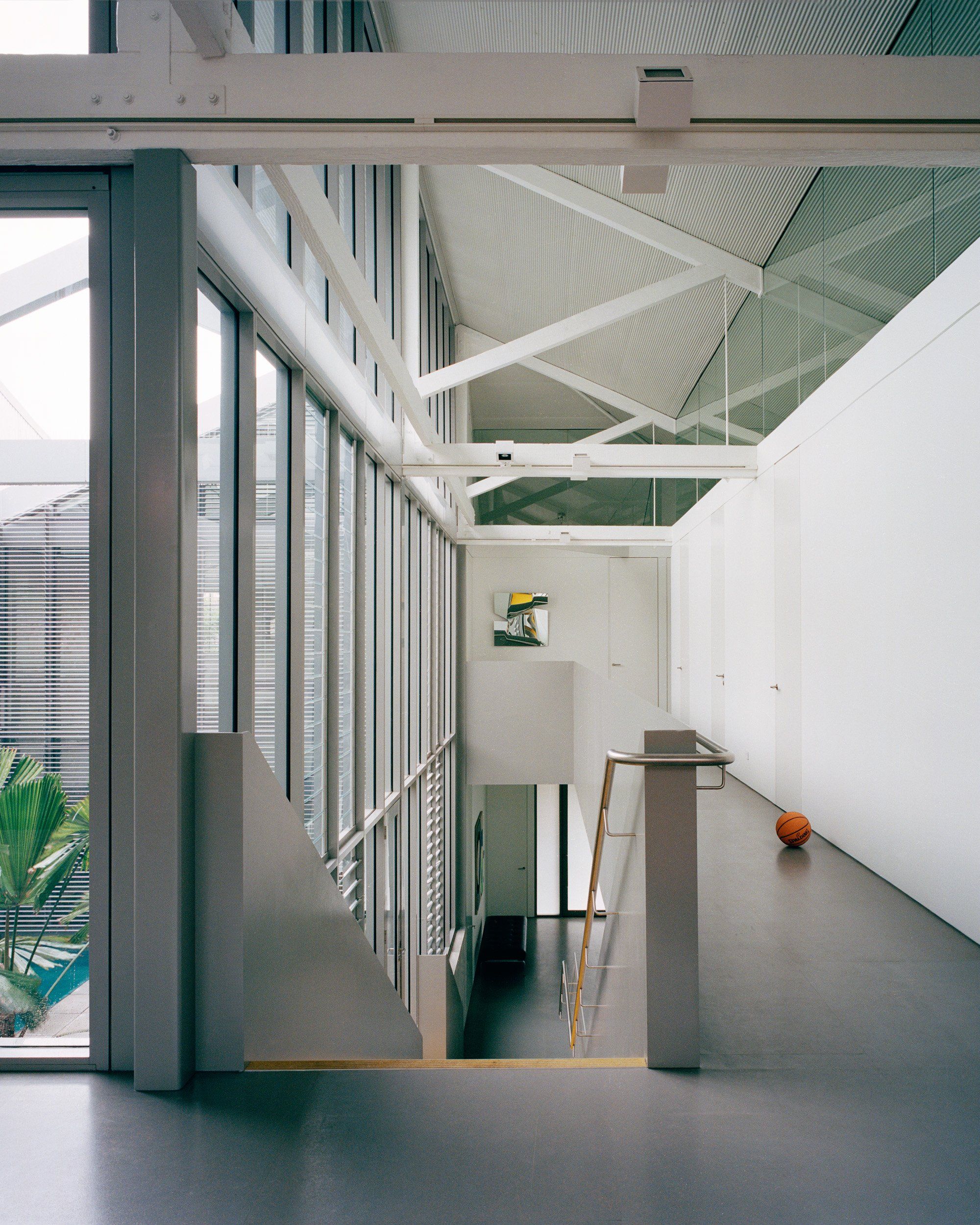
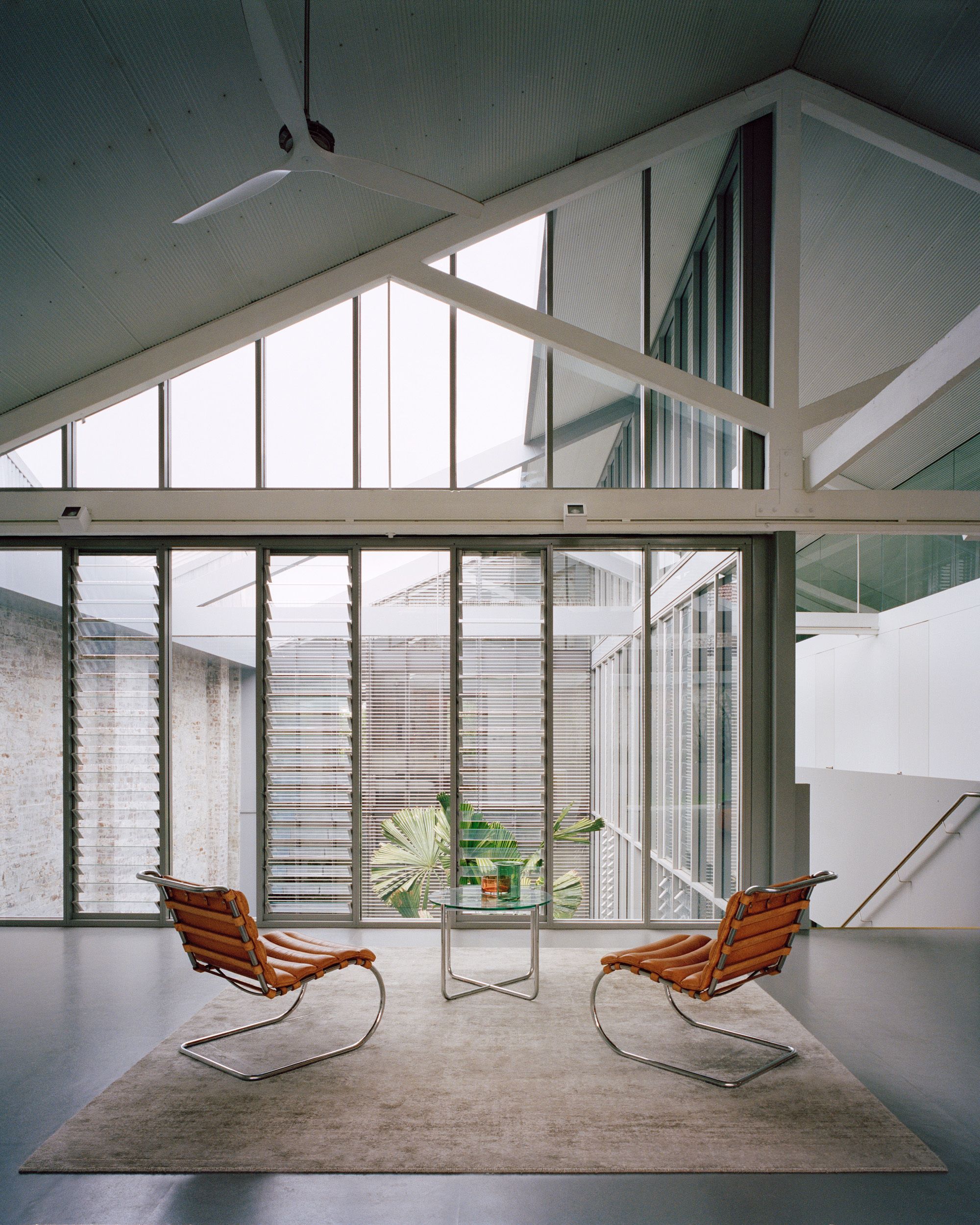
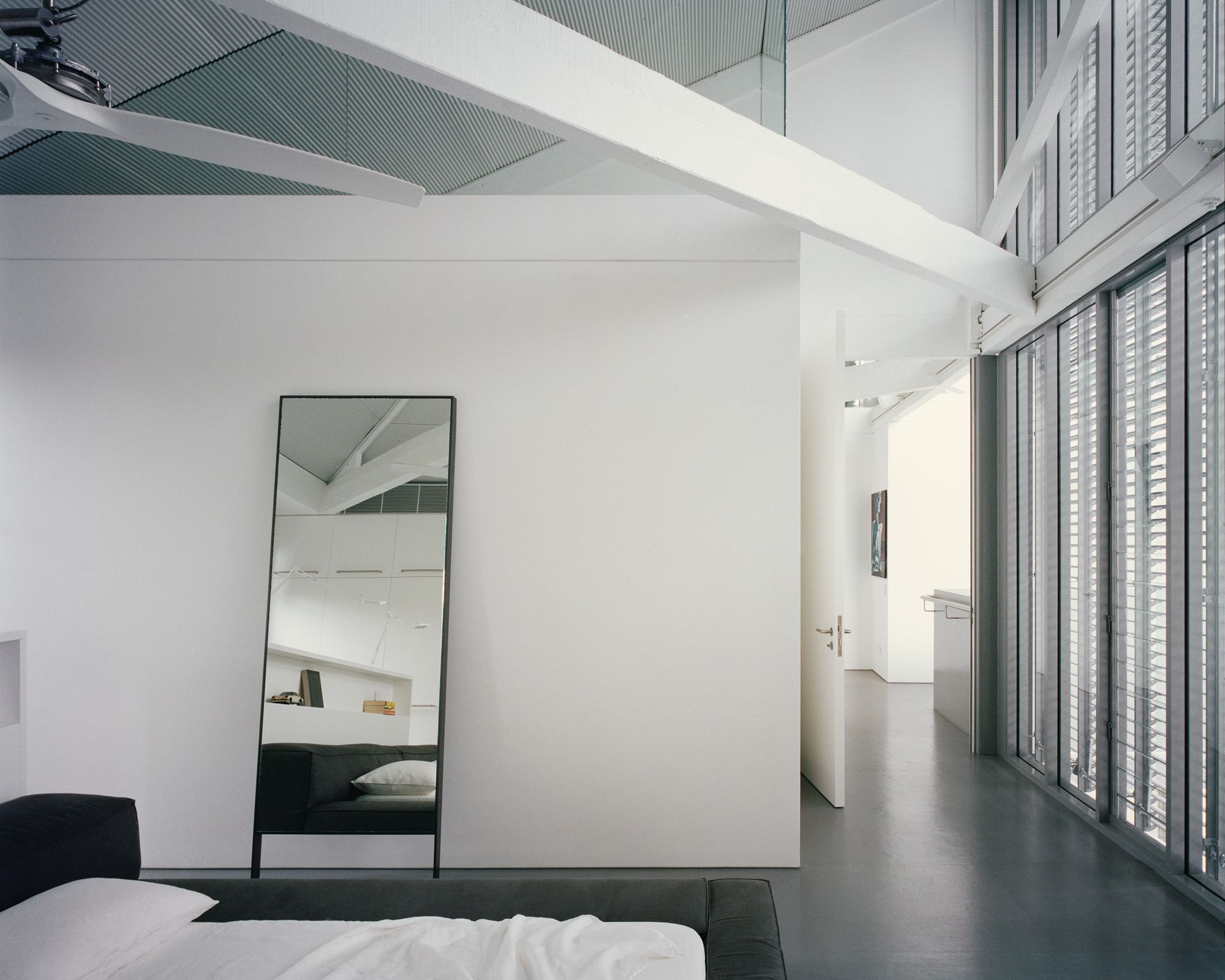
The owners asked for a four-bed home, an equine-genetics lab, guest quarters, and garage space for classic sports cars—all without erasing the building’s working-class DNA. Ian Moore’s answer is surgical: keep every truss, keep every wall, then suspend a single-storey house across the upper level like a mezzanine raft. A datum runs along the bottom chord of each truss; solid walls stop at that line, and clear glazing rises above, so bedrooms read as quiet boxes while the steel still spans uninterrupted from gable to gable.
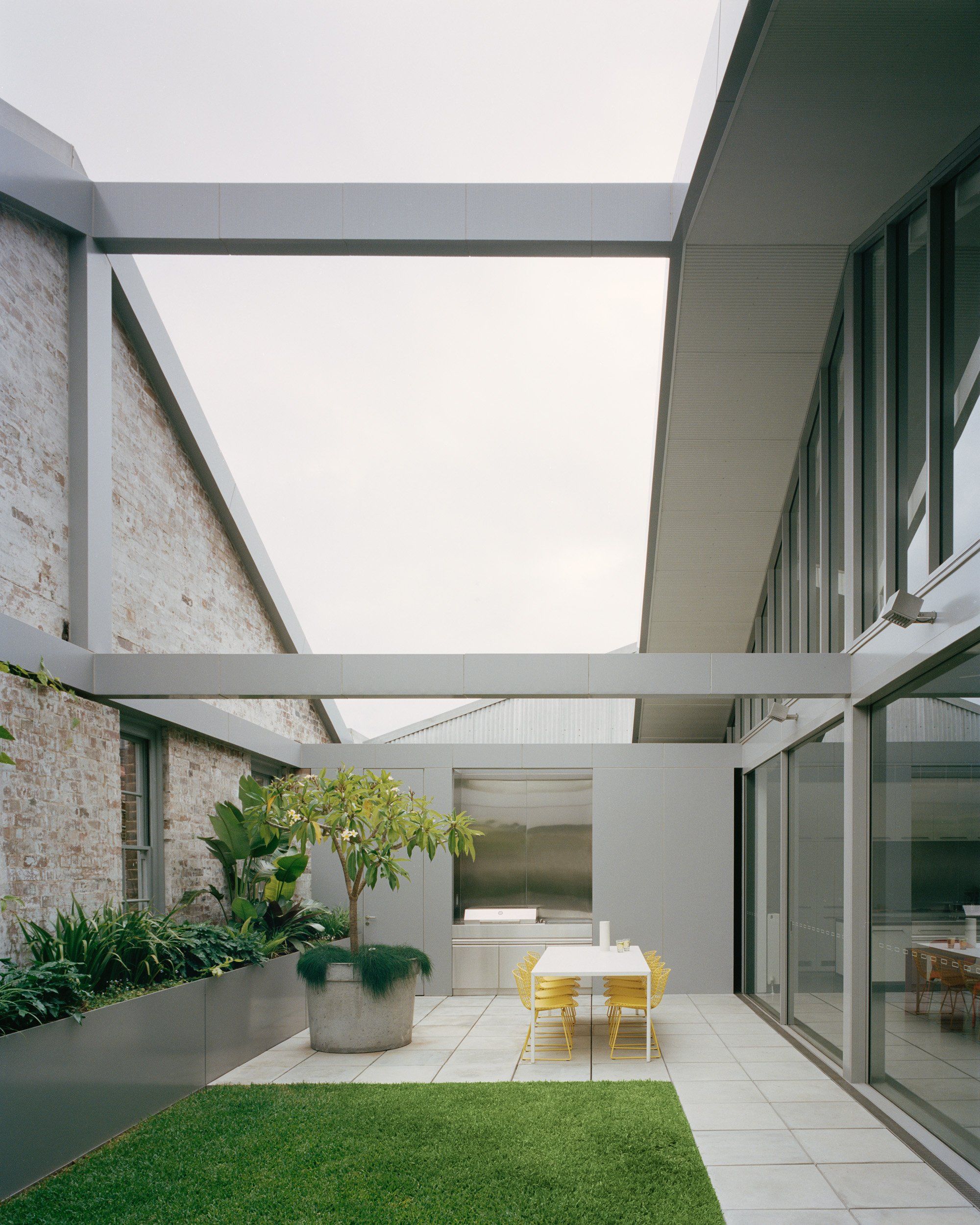
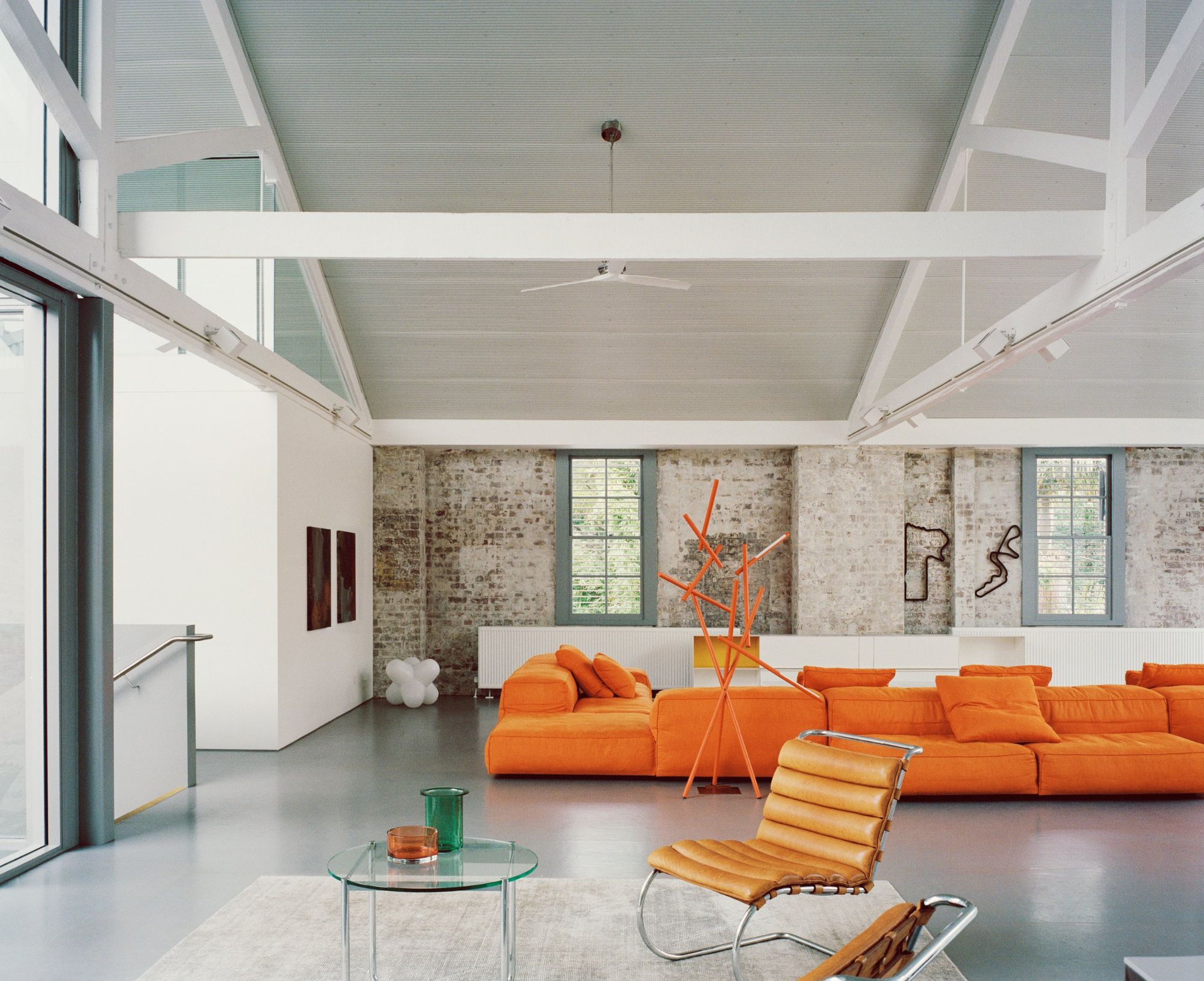
On the lane side, a full-length kitchen, dining, and living zone faces north. Sliding glass pockets away to a roof terrace where citrus pots and a strip of turf give the family dog real grass underfoot—rare in this dense part of the city. Polished concrete floors and powder-coated steel stair treads keep maintenance low; flashes of color—a burnt-orange sofa, tomato-red dining chairs—trade the expected warehouse palette for something warmer.
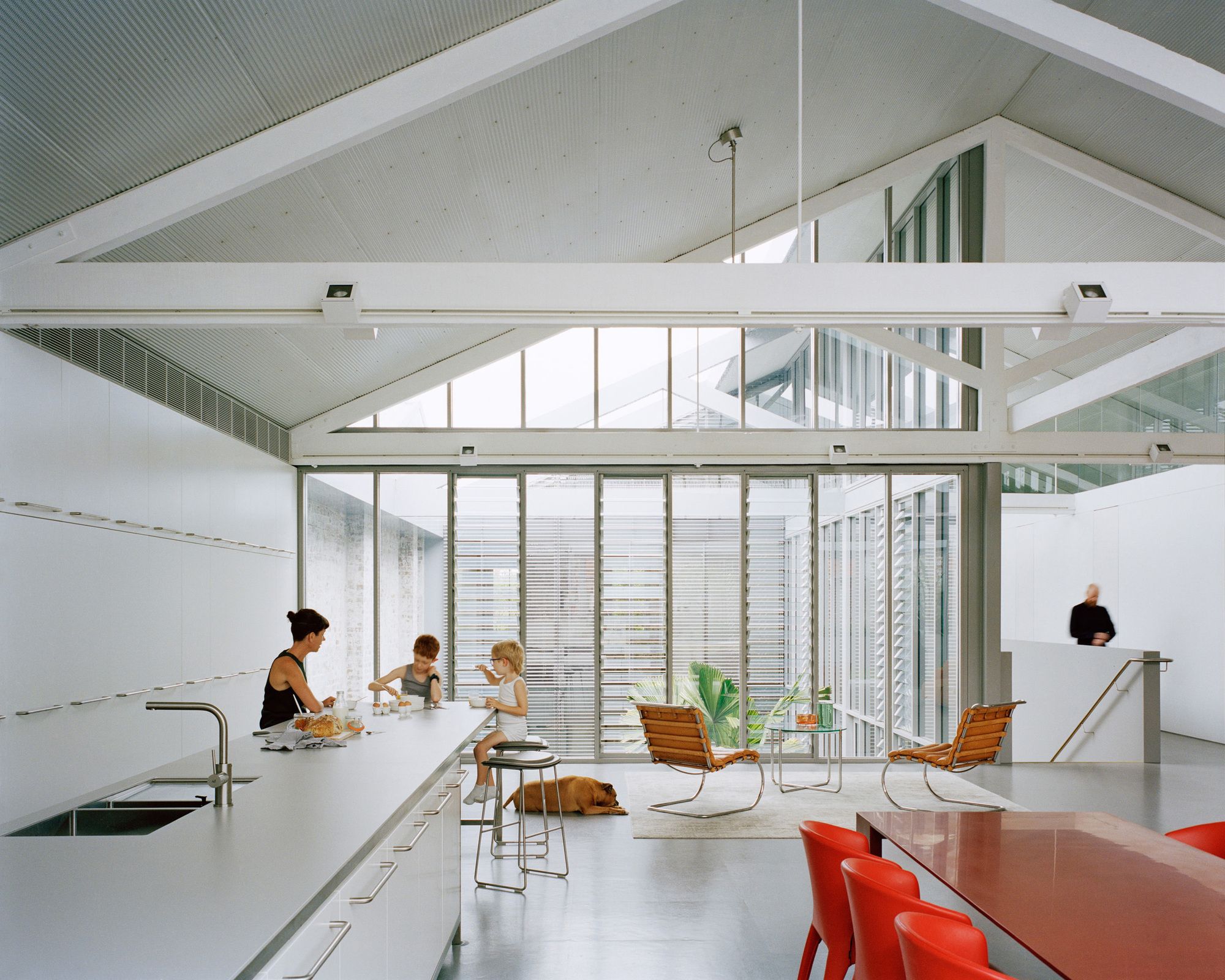
Industrial discipline
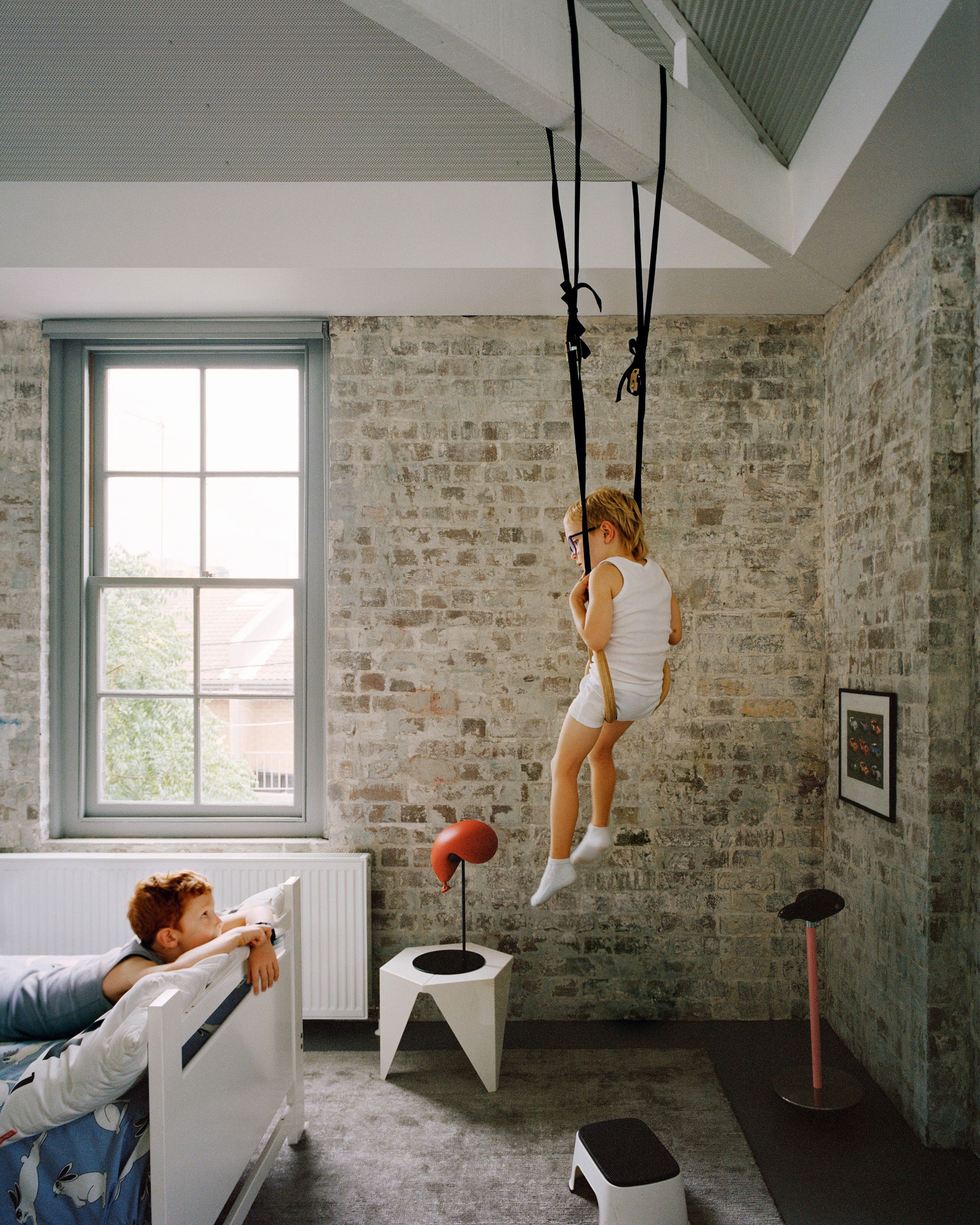
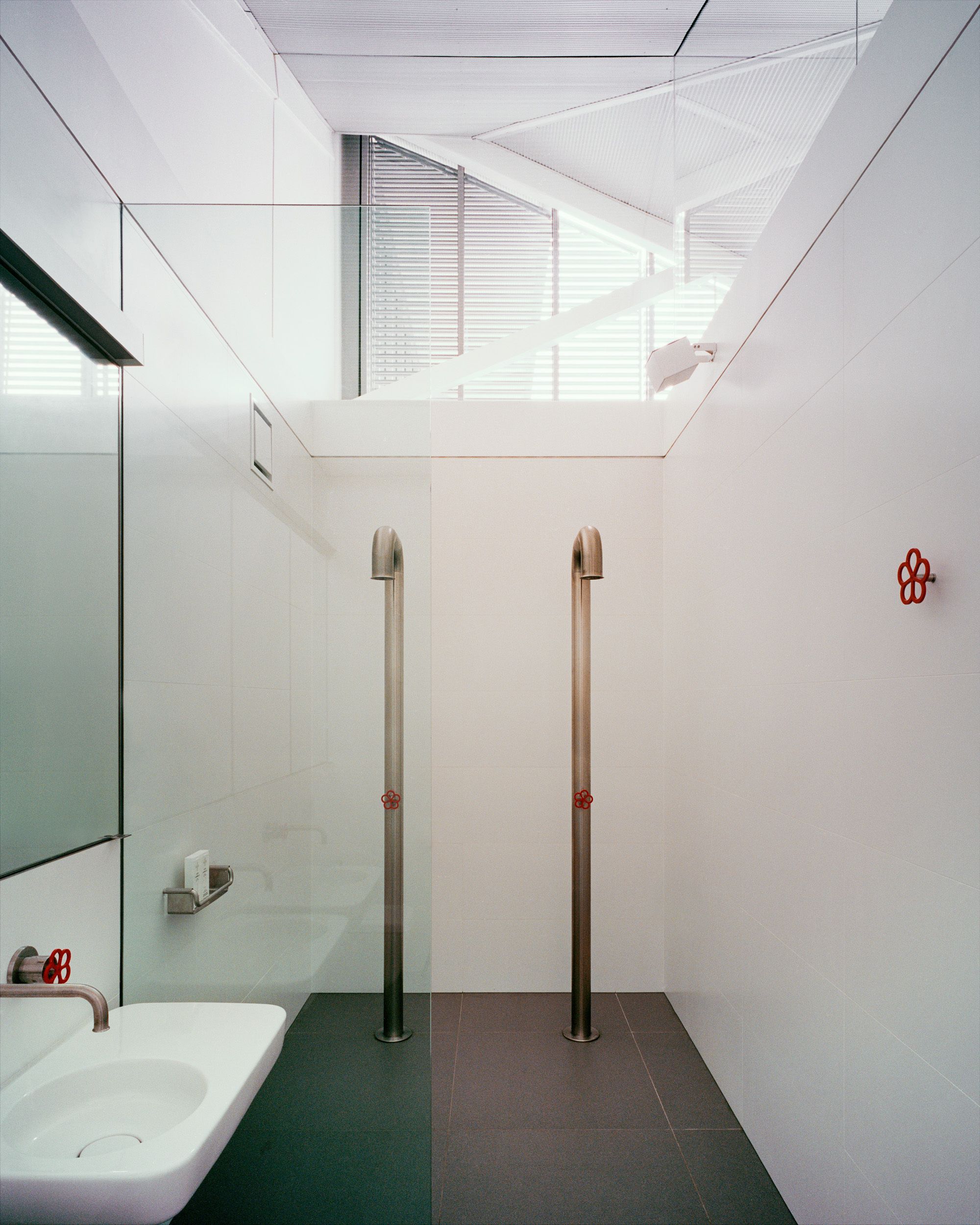
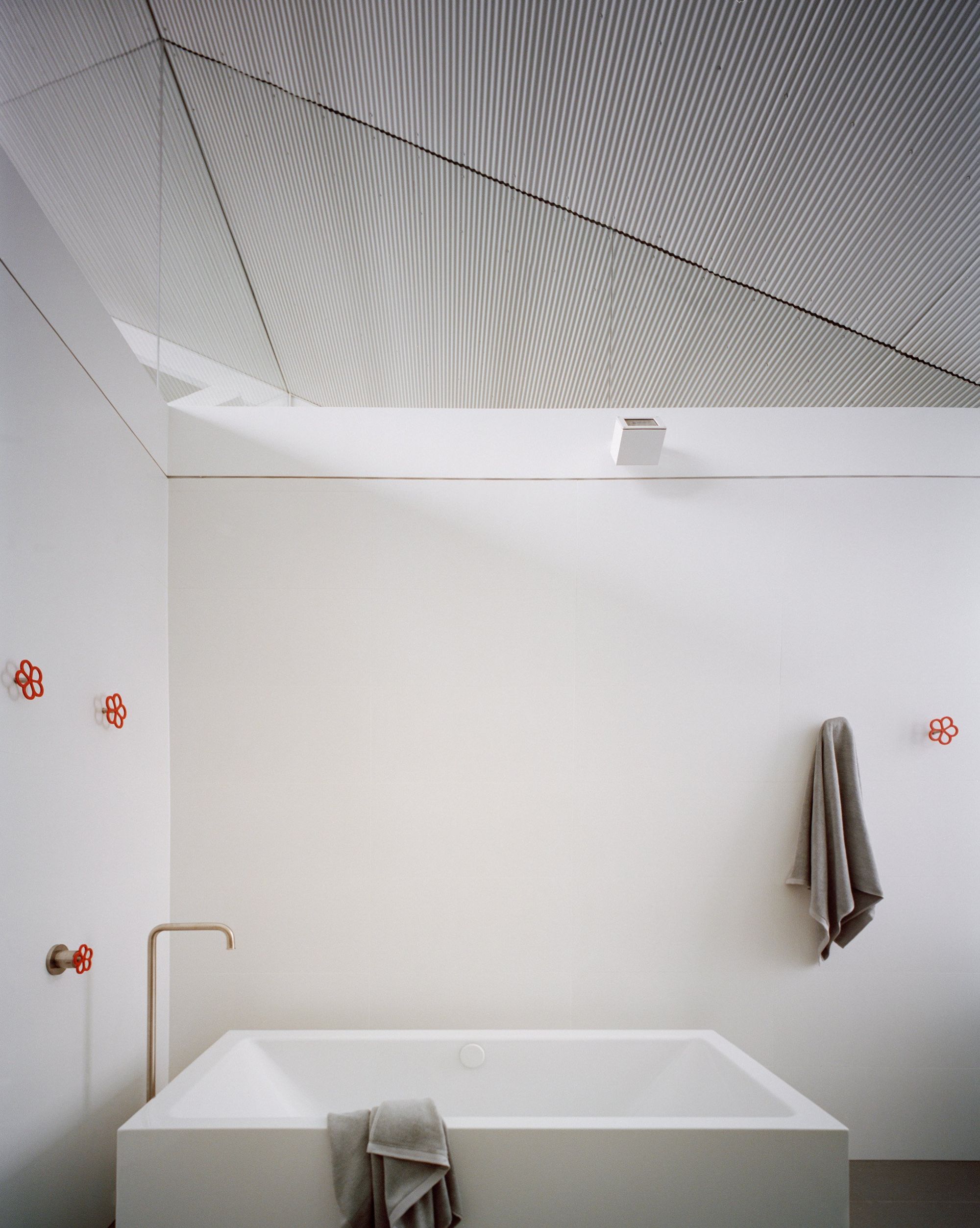
The brief banned timber, marble, and black finishes, so materials stay honest: galvanised balustrades, cement-based panels, brushed aluminium cabinetry. Original brick walls are left raw, their patina amplified by daylight that filters through new louvred panes. At night, concealed strips wash the underside of each truss, turning the ceiling into a quiet graphic of lines and shadows.
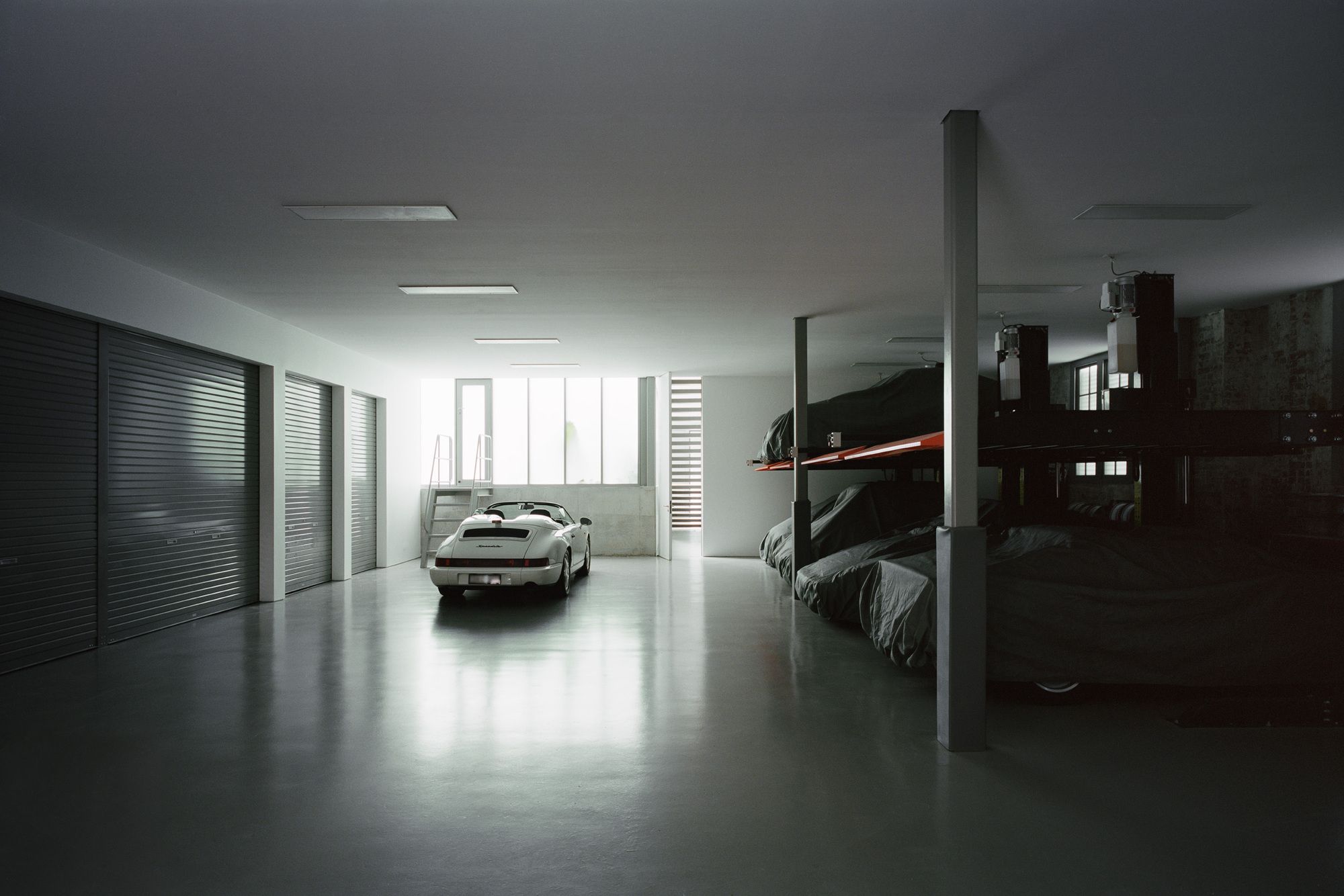
A ground-floor lab hides behind sliding mesh panels, separate from the garage where a handful of mid-century coupés rest alongside workshop benches. Mechanical plant, water tanks, and storage occupy the remaining bays, keeping the upper floor free for living.
Photography by Rory Gardiner
Explore our adaptive-reuse archive for factories turned lofts, churches turned libraries, and other buildings given fresh purpose.