Search






A Liberty-era house in Rome, now lived in differently
Behind a 19th-century building in Trastevere, tucked between gardens and courtyard walls, sits a three-story house that’s easy to miss. It was once used as a caretaker’s home, and maybe later, a doctor’s office. Whatever the history, it hadn’t been touched in years. When the architects at STUDIOTAMAT took on the project, they weren’t starting with a blank slate—but close. The building had good bones and just enough irregularity to make it interesting.
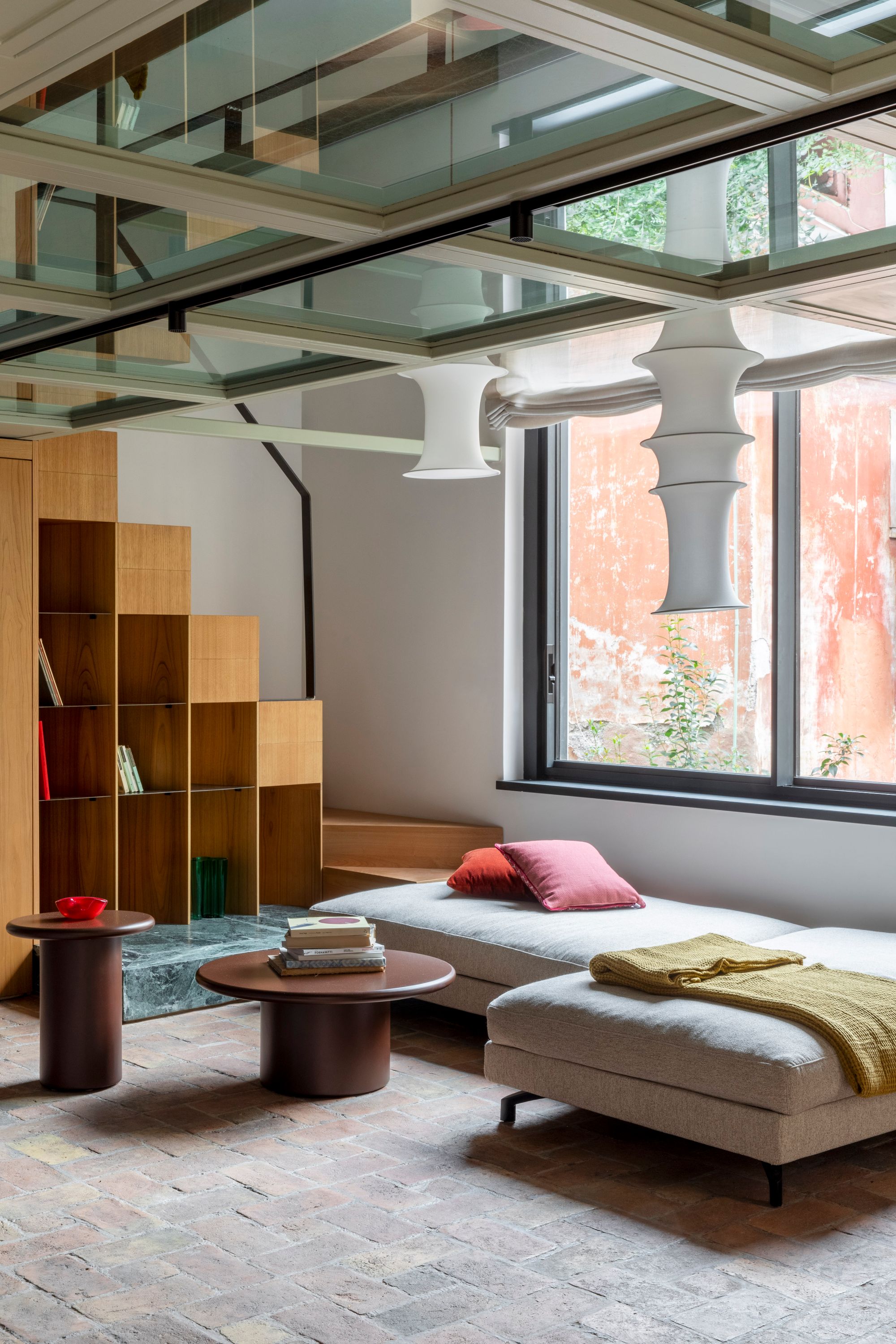
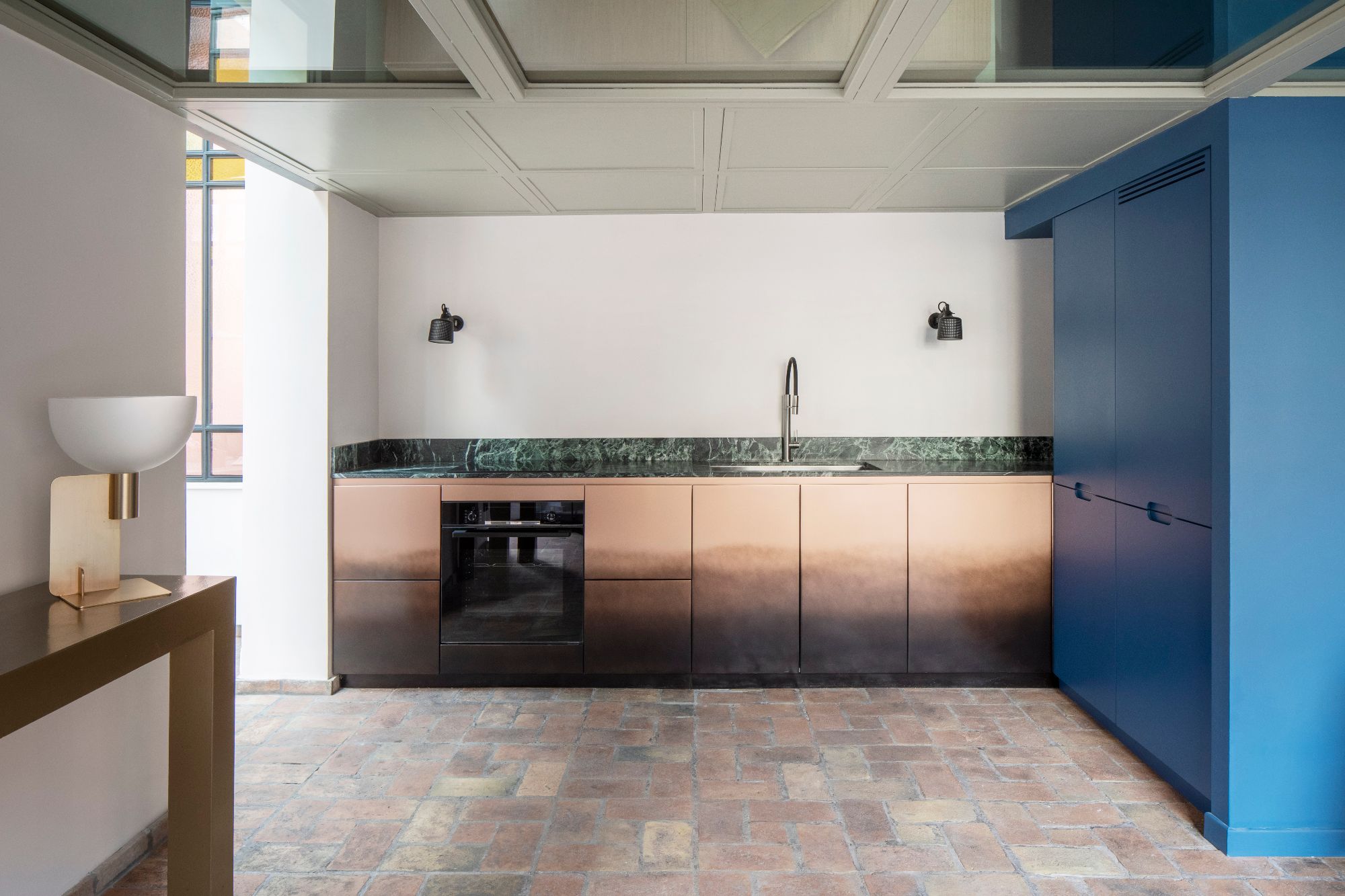
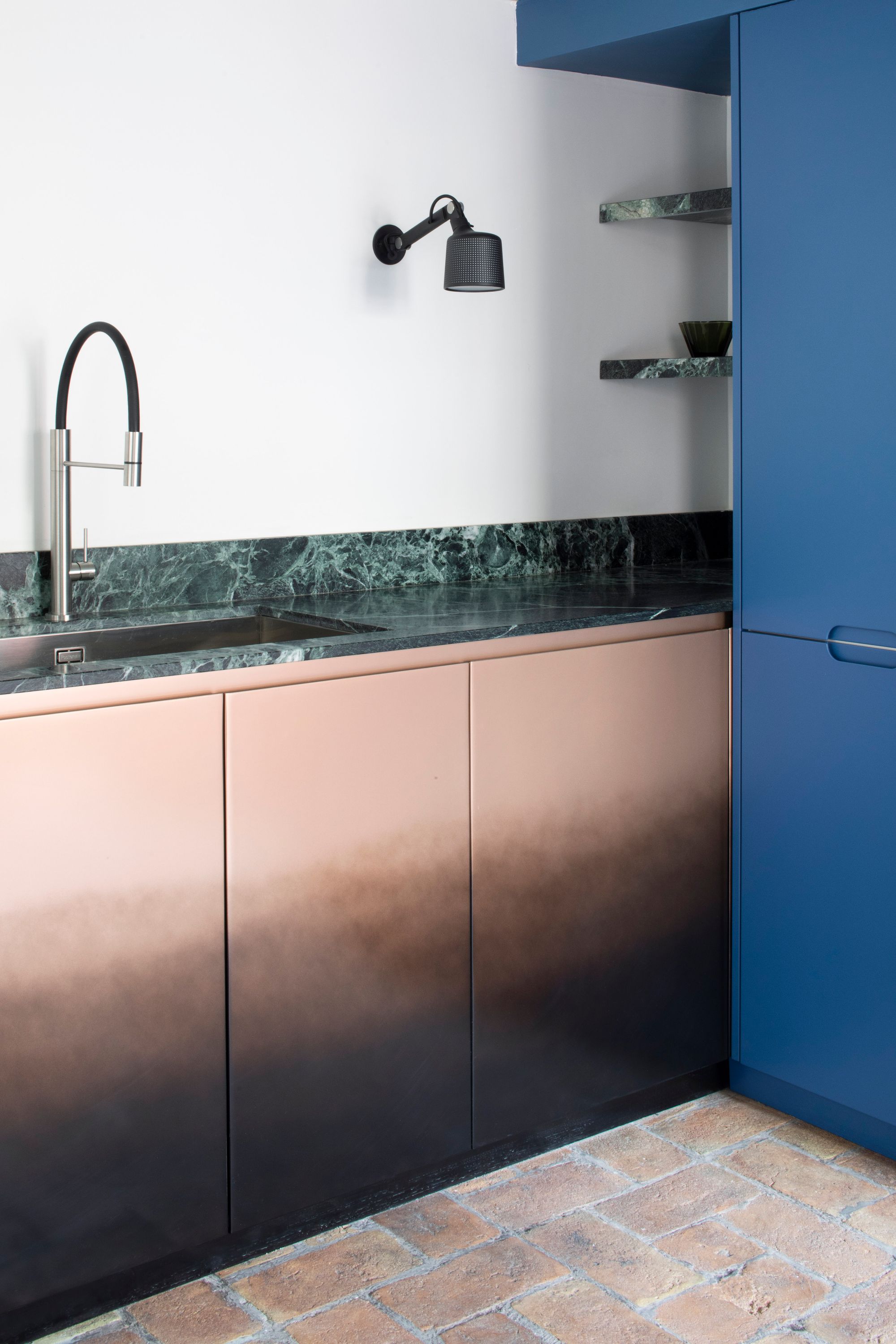
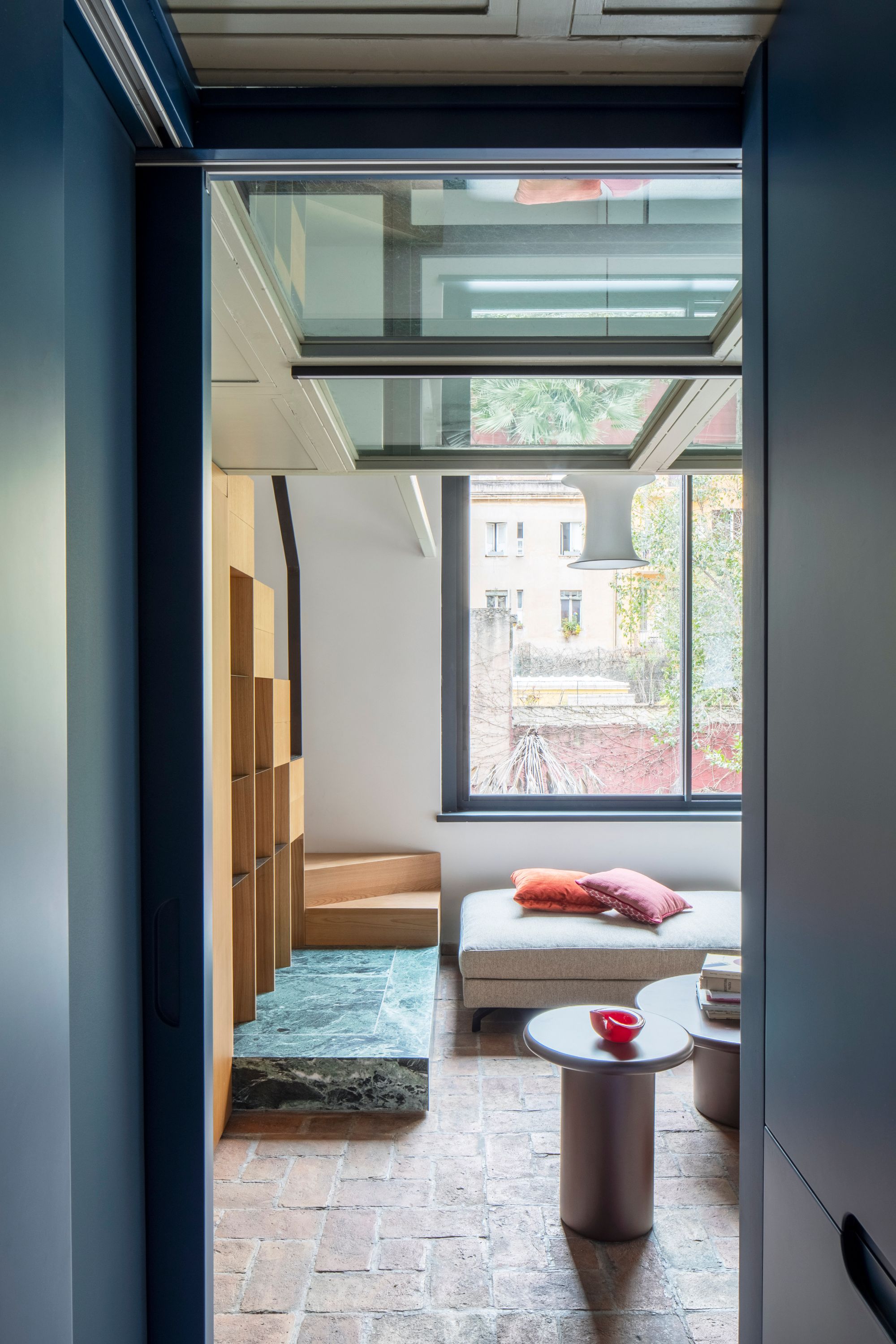
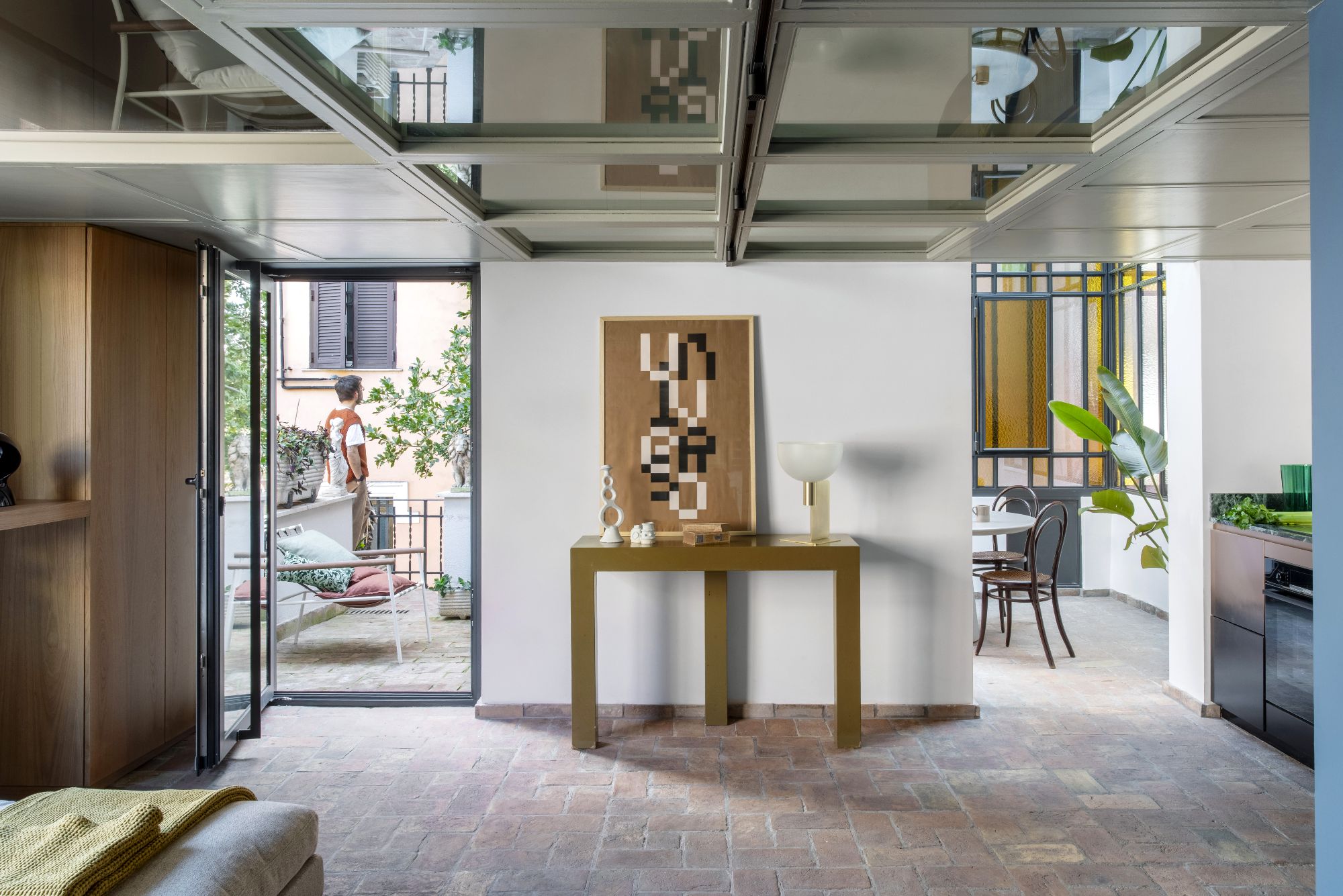
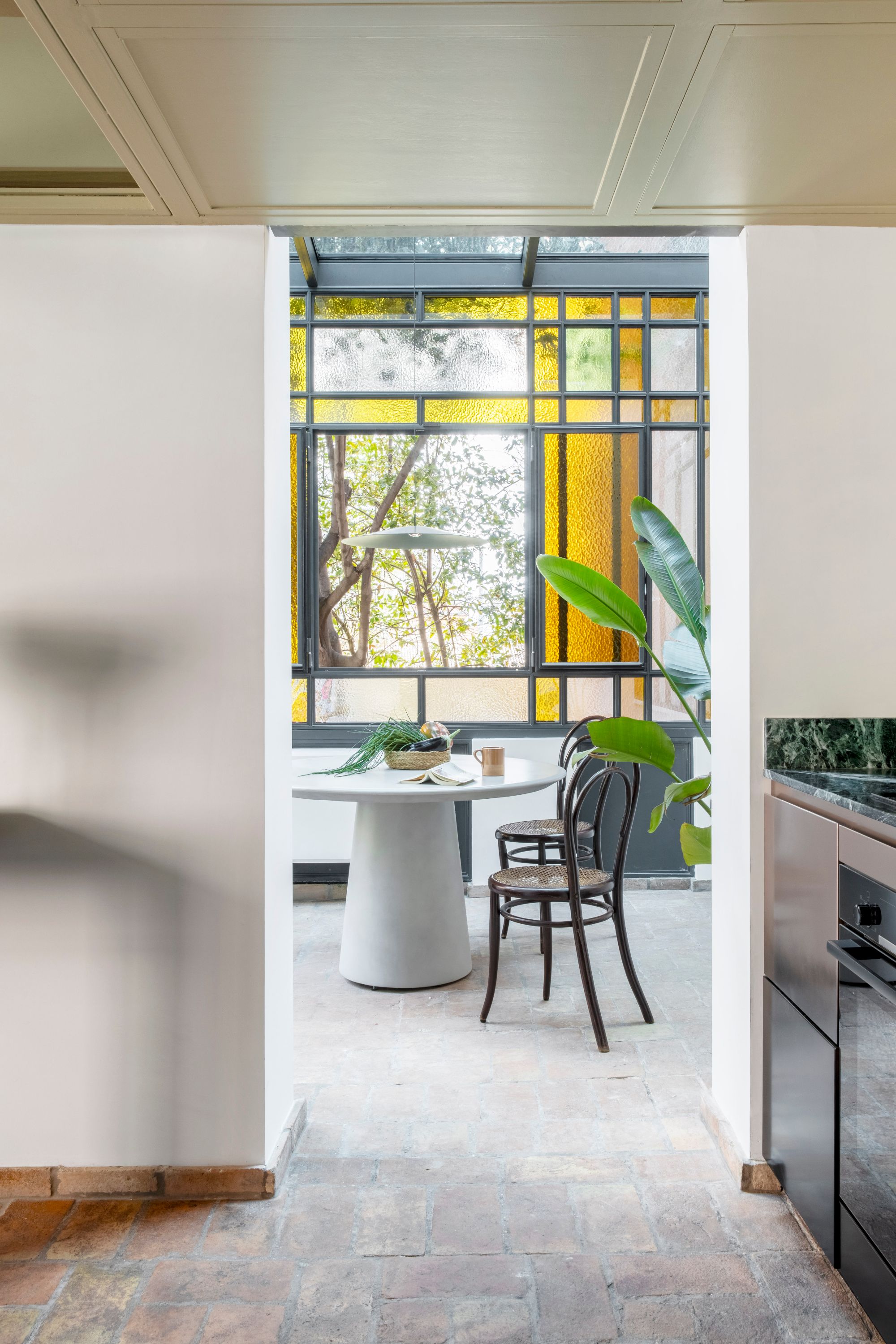
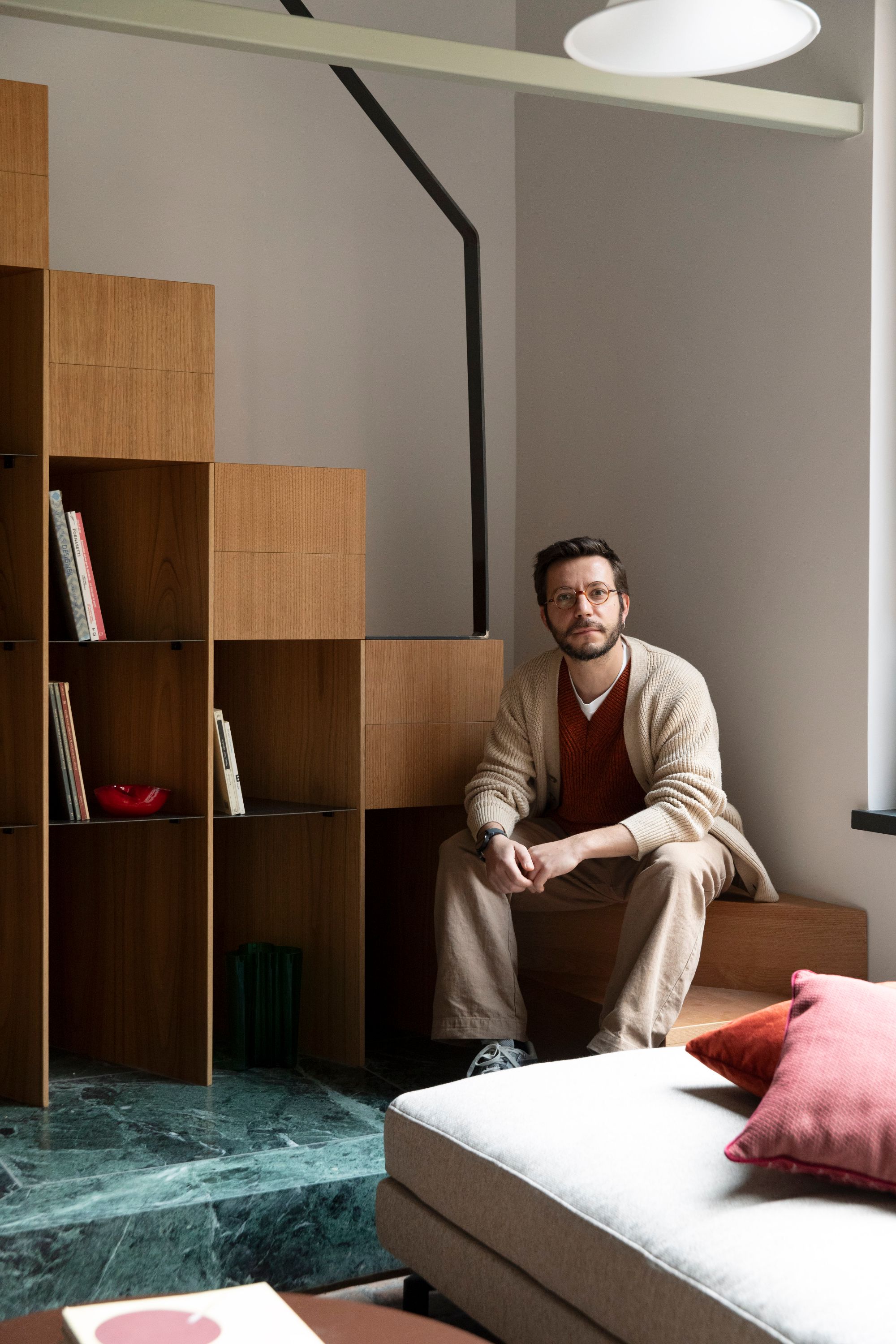
Inside, the layout was broken up and difficult to move through. That changed. The studio opened things up while keeping the structure legible. A veranda at the front—restored with its original glasswork in soft greens, pinks, and yellow—now blends into the main living space, filtering the light and giving the room a quieter atmosphere. A new staircase, designed with alternating treads, connects all three floors. It sits on a base of Verde Alpi marble and threads upward next to built-in shelves and mirrored cabinets. Color is used with purpose. A bold blue volume runs vertically through the house, housing storage and utilities without overwhelming the space. The kitchen is tucked into the corner, low and linear, with finishes that shift from terracotta to black.
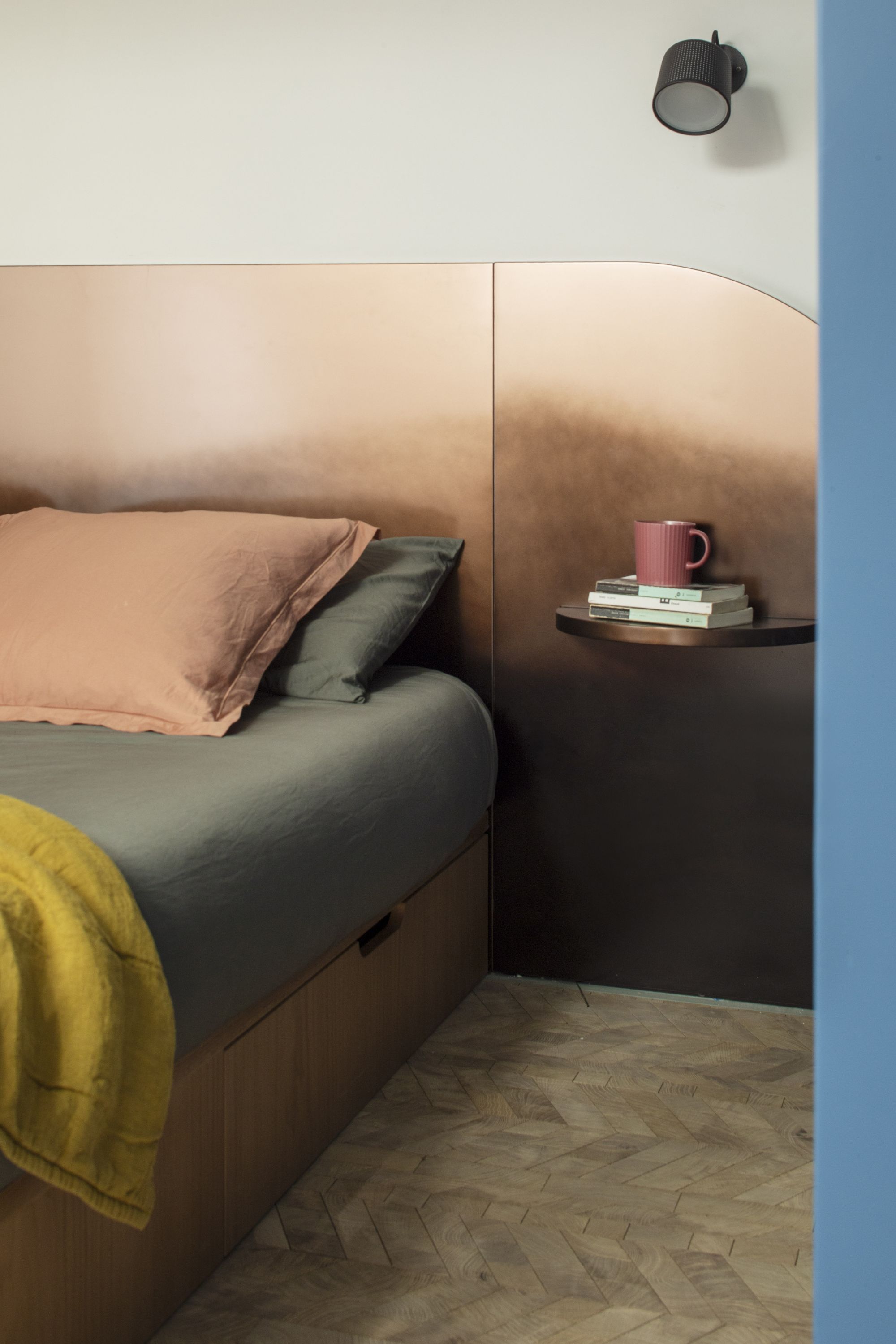
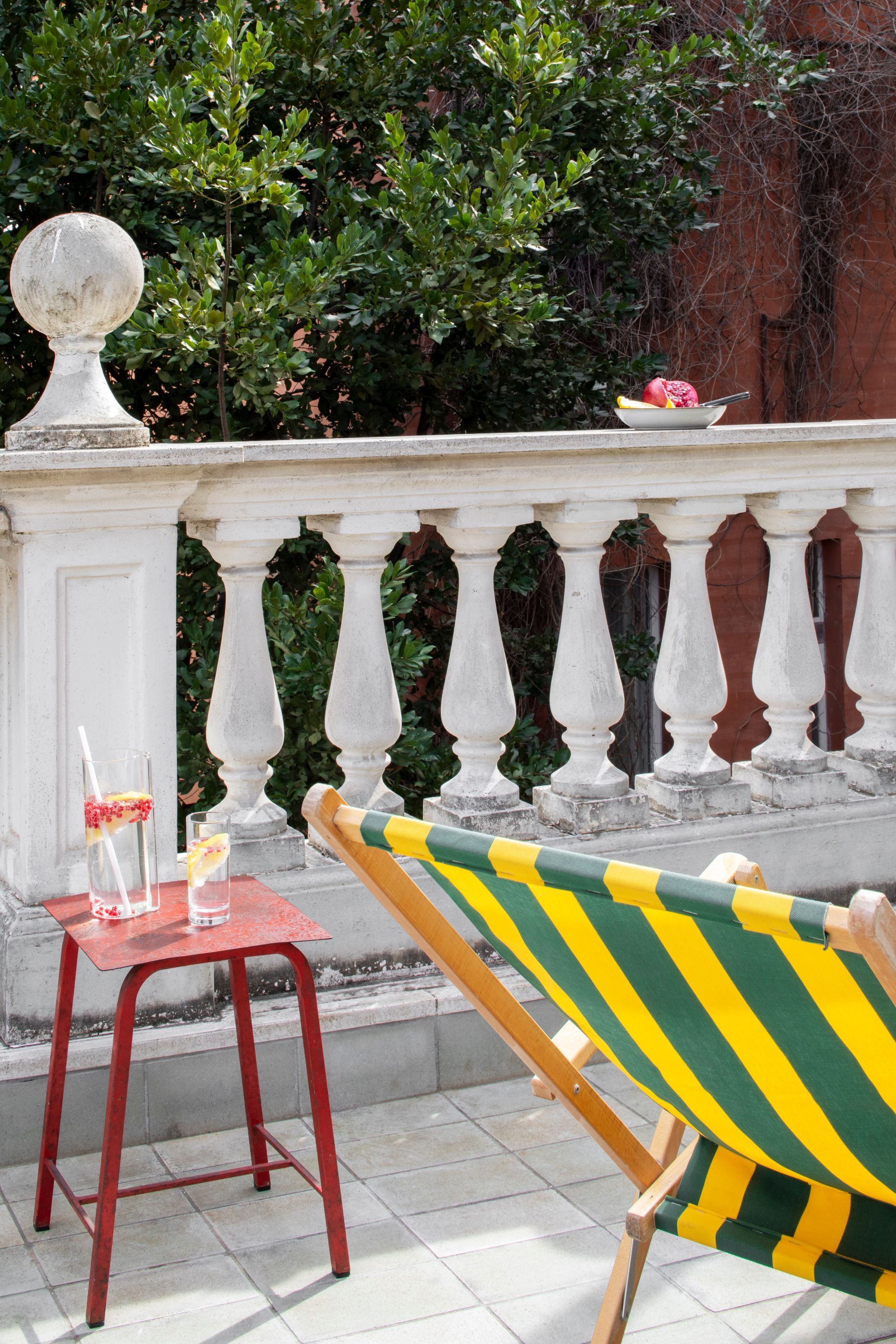
Upstairs, a studio space and bedroom are separated by a soft screen of ribbed and clear glass. Materials repeat and fold into one another: brushed metal fixtures, soft ceramic tiles, chestnut wood floors, mirrored surfaces, marble in small but intentional places. Lighting is quiet and warm—nothing that tries to call attention to itself. A Munari pendant, some low-profile wall lamps. The roof terrace is paved in two shades of green stone, nodding to the garden below and the palette inside the original windows.
Photography Serena Heller