Search






Patchwork Architecture lifts a compact cedar-clad home on slender piles, leaving the native bush and stream undisturbed.
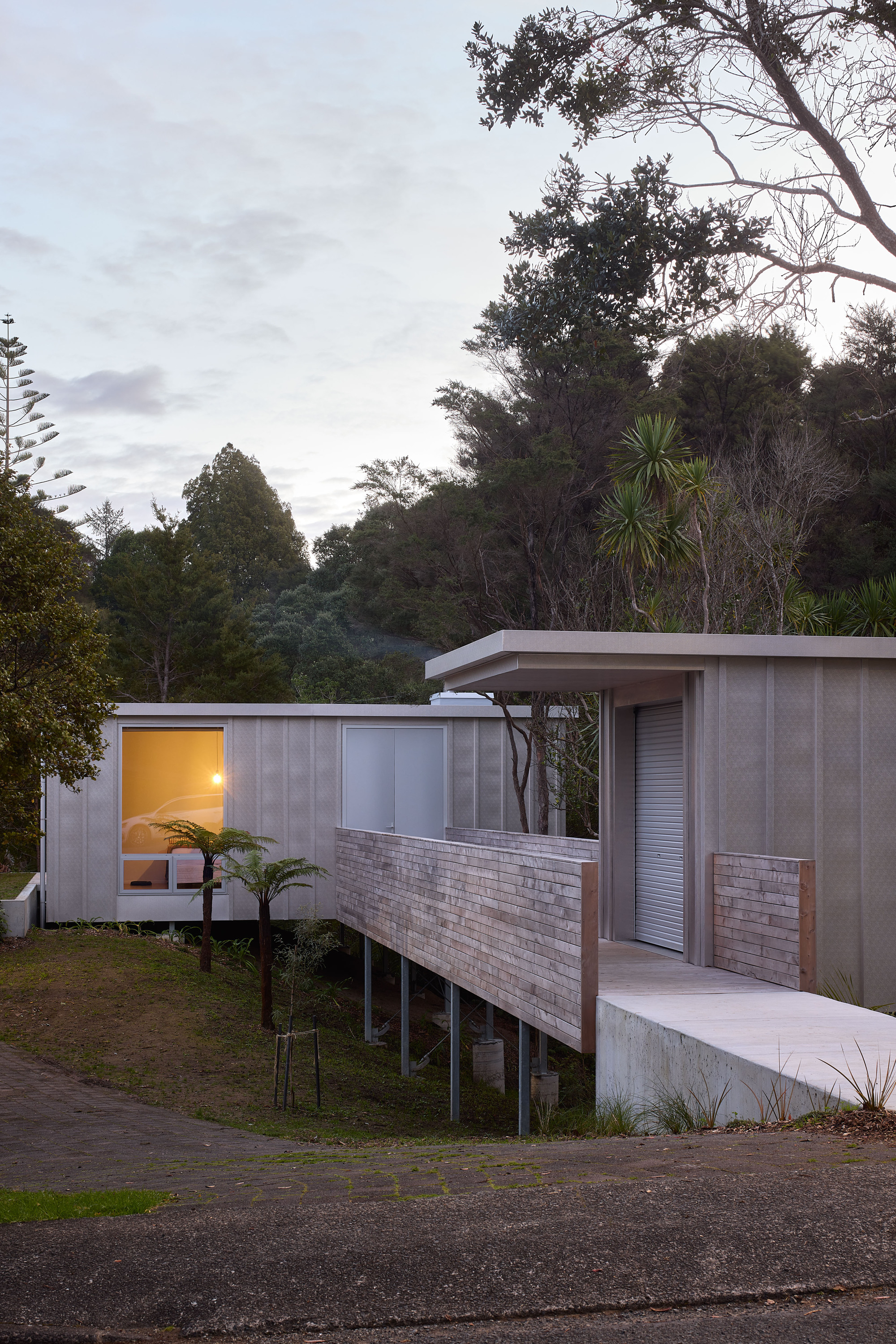
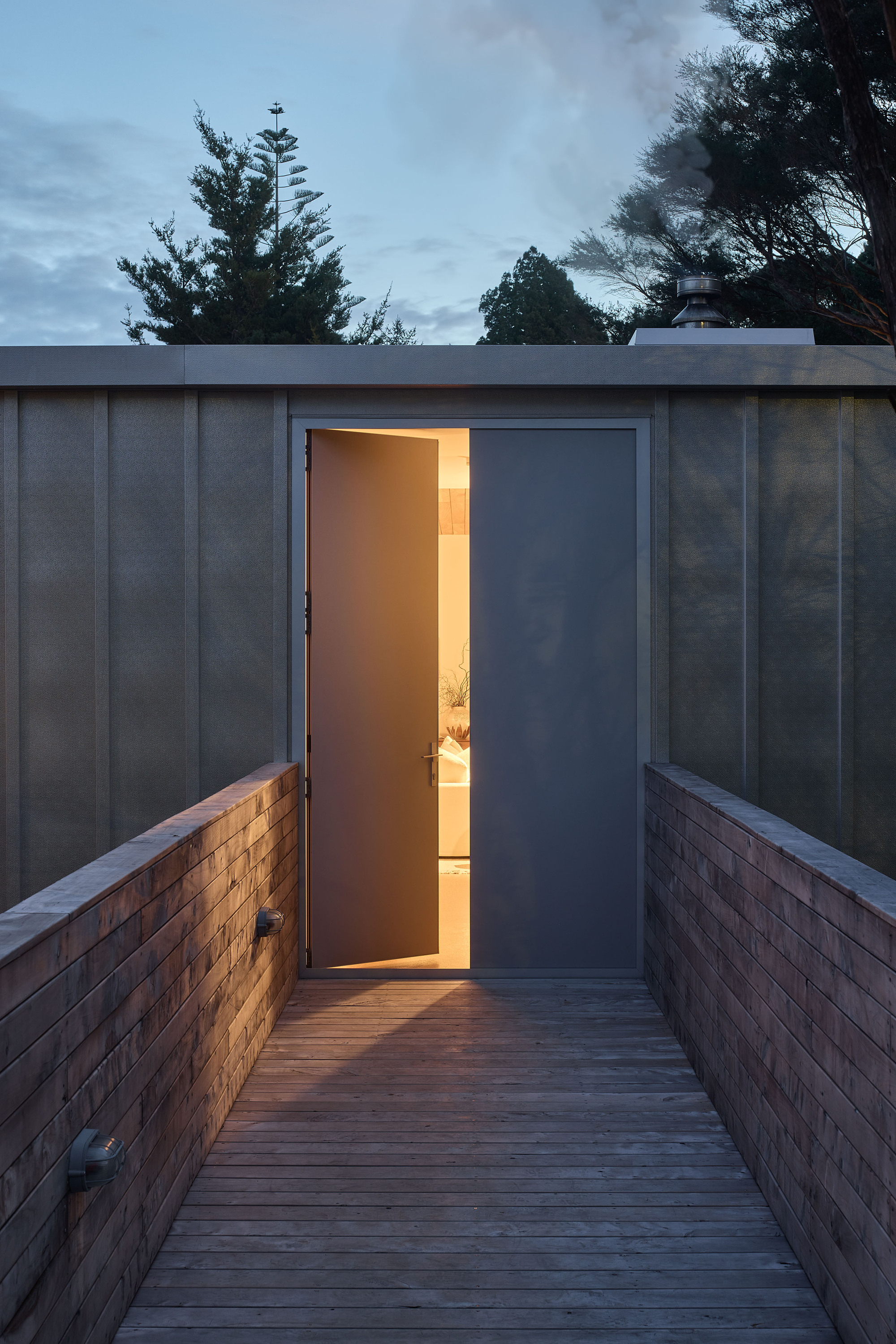
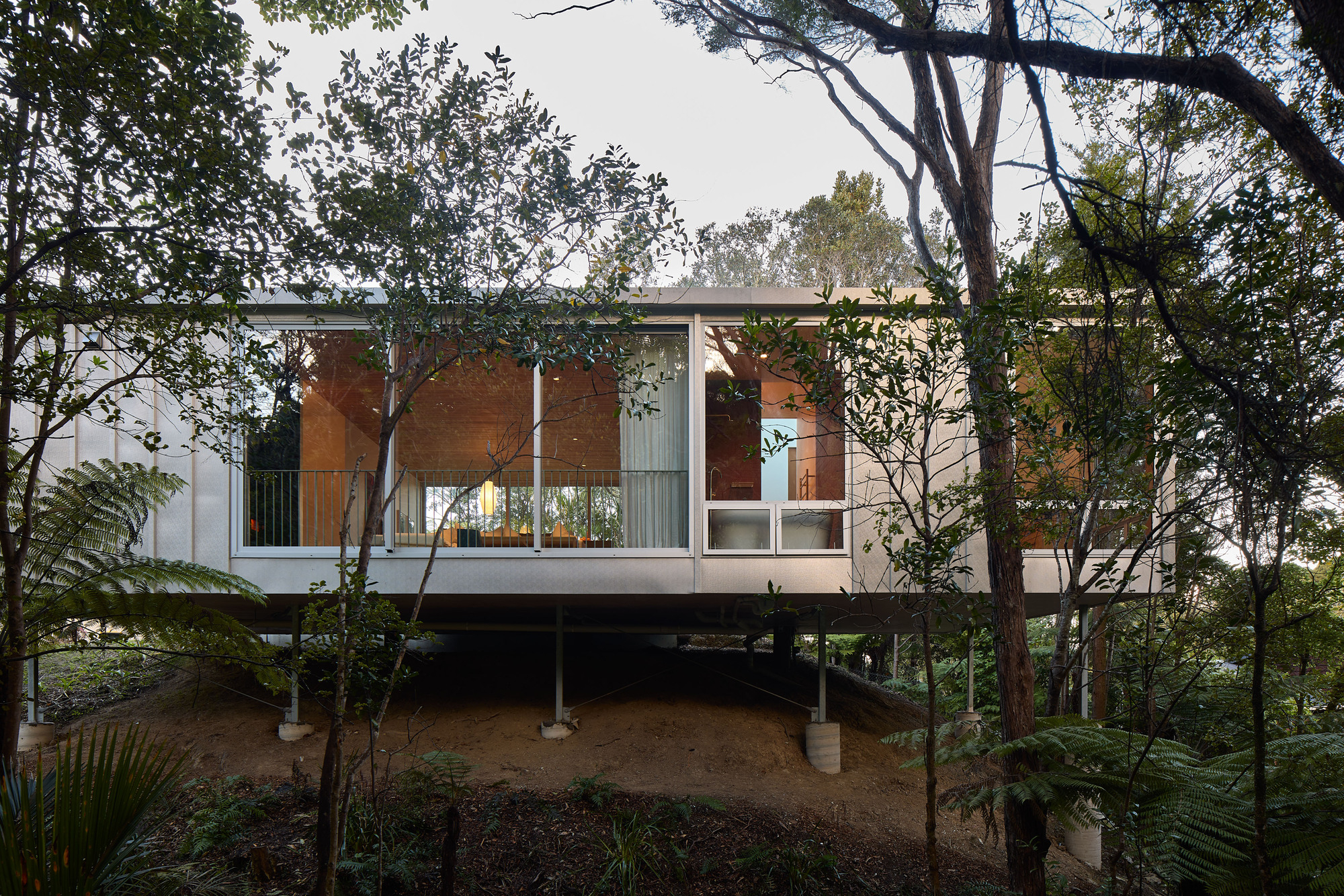
Auckland’s Tītīrangi suburb is thick with pūriri and kauri, so Patchwork Architecture let the trees set the brief. Their Bush Block House is a lifted rectangle—14 by 8 meters, 121 square meters inside—that hovers above the undergrowth on slender piles. From the road you cross a narrow timber bridge, coffee in hand, to reach the front door; below, a stream threads through fern-laden shade.
Finding ground without digging it up
Forgoing a driveway and garage meant leaving the car at street level. Instead, a cedar-clad “bus stop” holds bikes, bins, and muddy boots, keeping the slope intact. The bridge that links storage and house becomes daily ritual: a pause in the morning sun, a balance-beam racetrack for a three-year-old. By letting the house float, the architects avoided heavy excavation and kept storm-season humidity safely beneath the floor.

A plan that wastes nothing
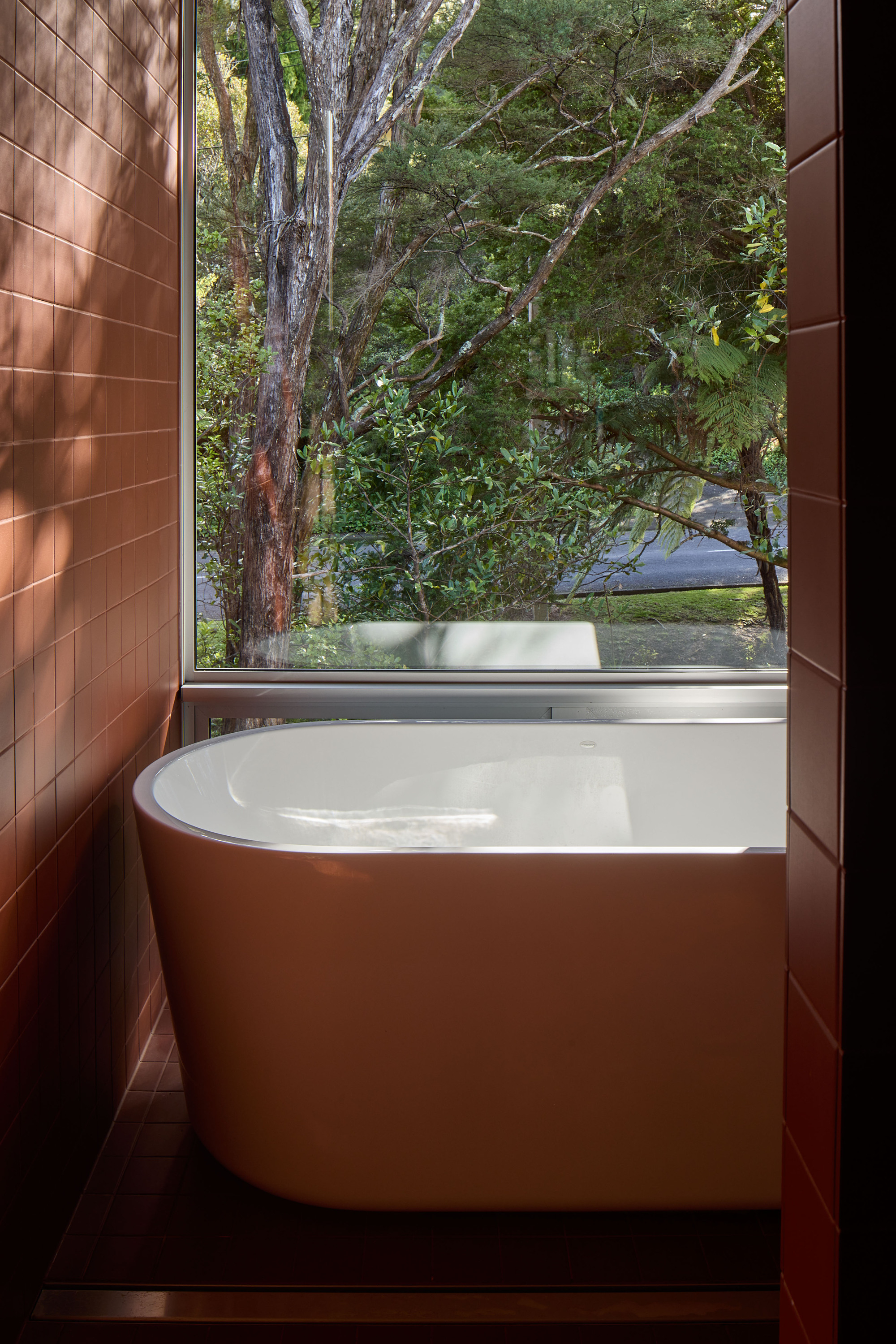
Inside, rooms line up like cabins on a launch. Three bedrooms occupy one long edge; an open living-kitchen zone claims the other, its glazing angled toward patches of sky between canopies. The hallway is compact but never mean: a full-length skylight spills daylight onto matte cork flooring, and a slot window at the far end frames a shard of green. Materials are practical—painted plasterboard, FSC pine, Corkoleum underfoot—but the detailing is tight, almost ship-like. Doors close flush, storage tucks into every spare nook, and a built-in bench runs the length of the dining window, turning bird-watching into an everyday event.
Light, air, and the sound of water
Lifted one full story above the stream, the floor plate benefits from uninterrupted airflow; sliding panels on opposite facades pull in sea breezes from Manukau Harbour. At night, thin aluminium frames disappear, and the bush reads as a black field cut by silver water. The only artificial drama comes from a single pendant over the dining table, its warm cone of light mirrored by a second cone from the skylight when the moon is high.
Cedar weatherboards will silver off in a few seasons, matching the trunks around them. By then, mānuka seedlings disturbed during construction should reclaim the ground beneath the piles, closing the circle between shelter and site.
All images courtesy of Simon Wilson