Search






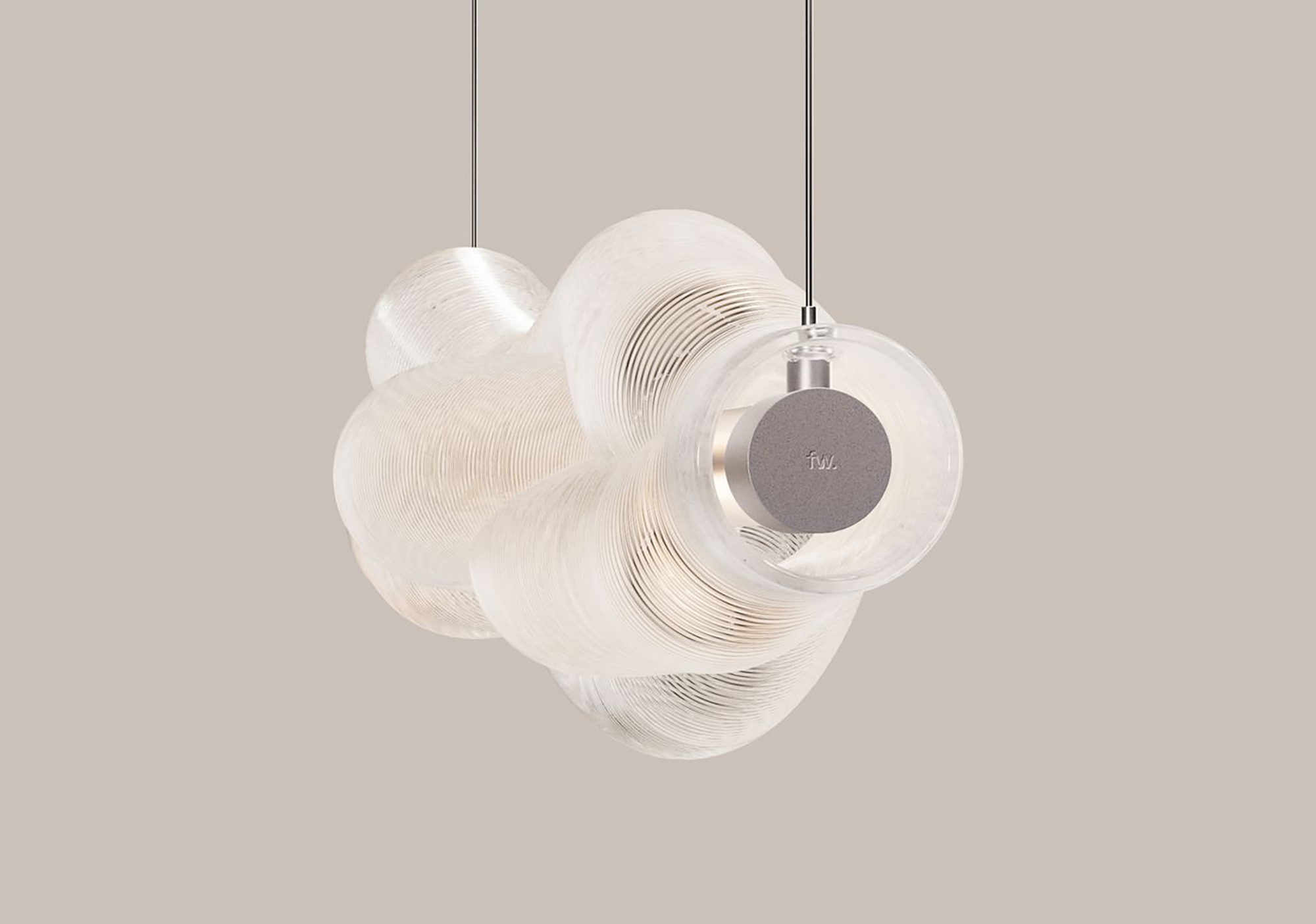
A lighting collection 3D-printed from recycled PET, one continuous, uninterrupted line at a time.
Cut crystal in an old chandelier doesn’t just glow — it vibrates, breaking light into small, shifting fractures as it passes through the facets. That effect stayed with Joachim Froment, co-founder and art director of Belgium-based studio Futurewave, while he was designing Knit, a lighting collection made for FUWA design. His question was simple to state and much harder to answer: could the same kind of refraction be rebuilt out of recycled plastic and a 3D printer, instead of hand-cut crystal?
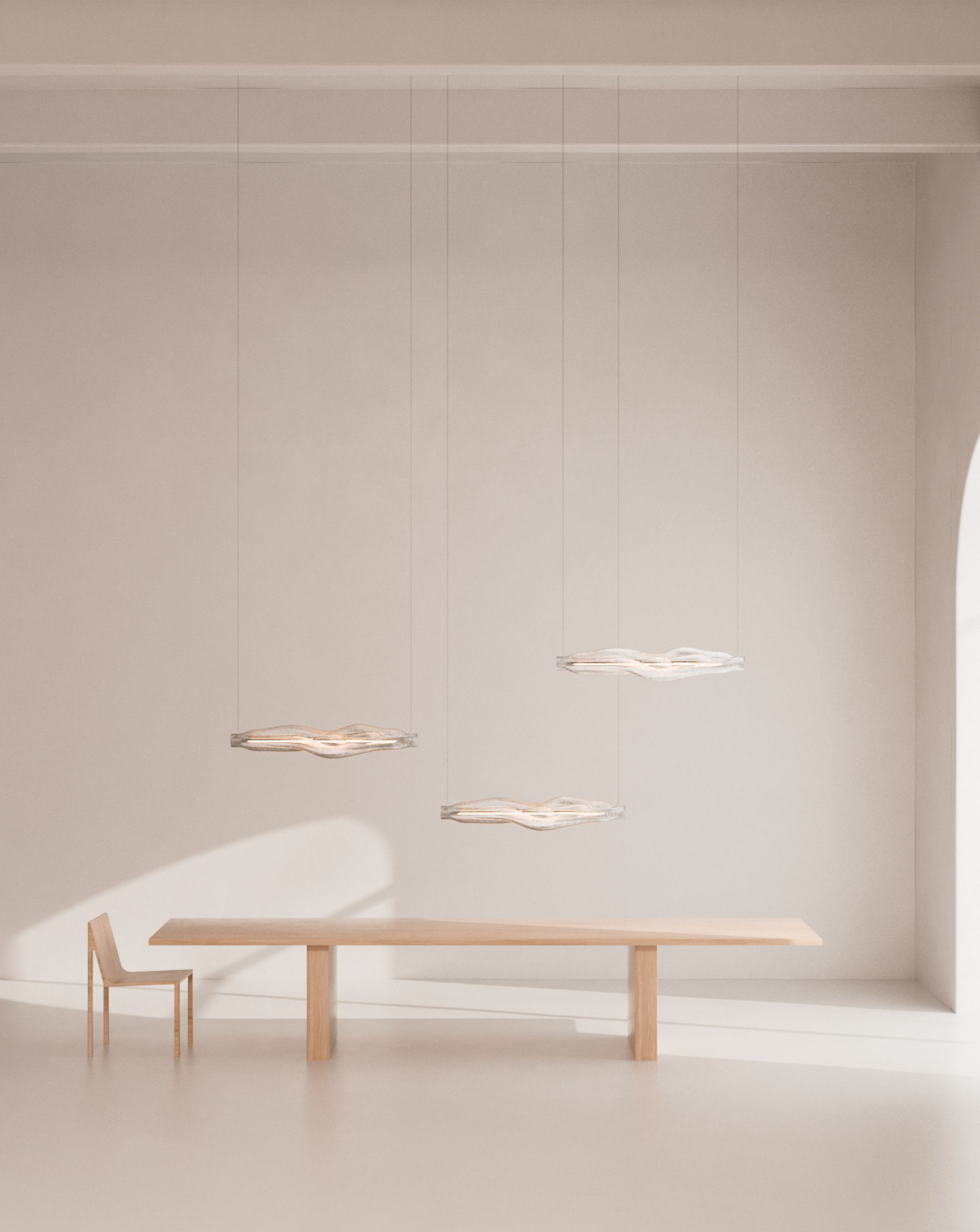
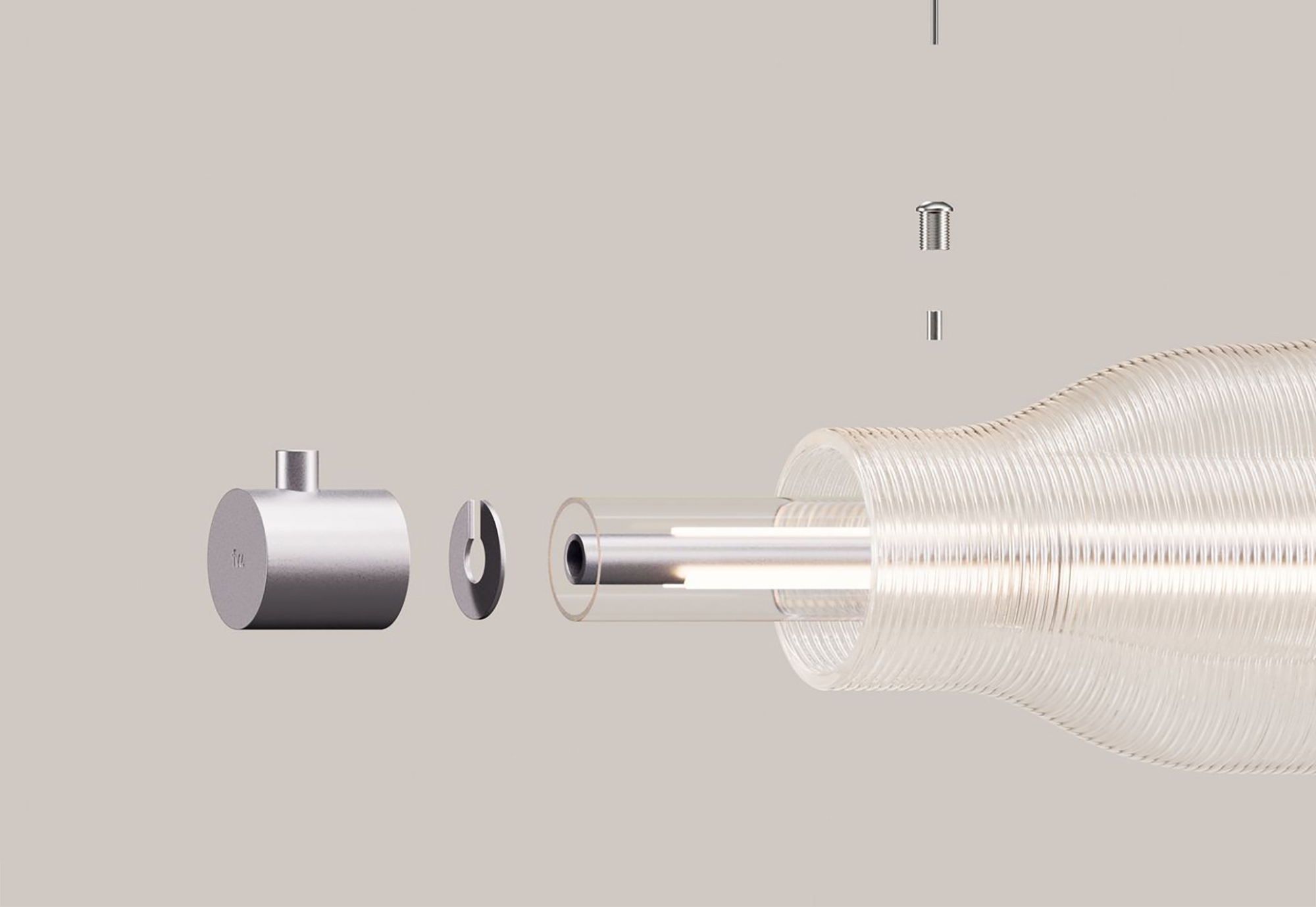
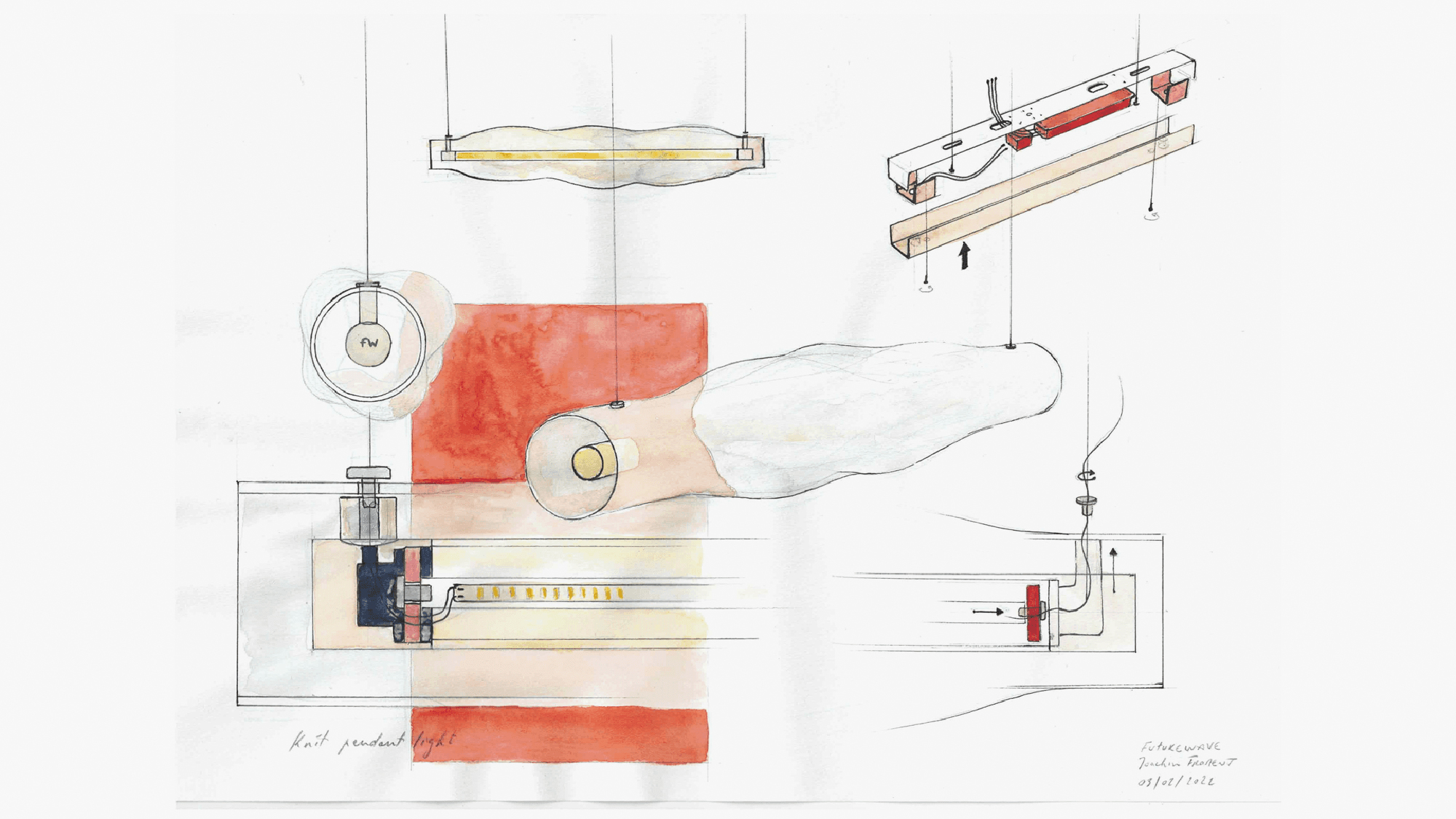
Futurewave works at the intersection of industrial design, electronics, and embedded software, turning emerging technologies into manufacturable physical products from its studio in Zaventem, just outside Brussels. For Knit, that meant designing the entire object around a 3D-printing technique called vase mode, which builds a piece as one unbroken wall instead of stacking and retracing individual layers. Each lamp comes off the printer in a single, continuous pass, made entirely from recycled PET — a process that saves time and energy and produces a closed-loop form built around the printer’s own logic, rather than one that fights against it.
The Printer’s Own Lines Become the Design
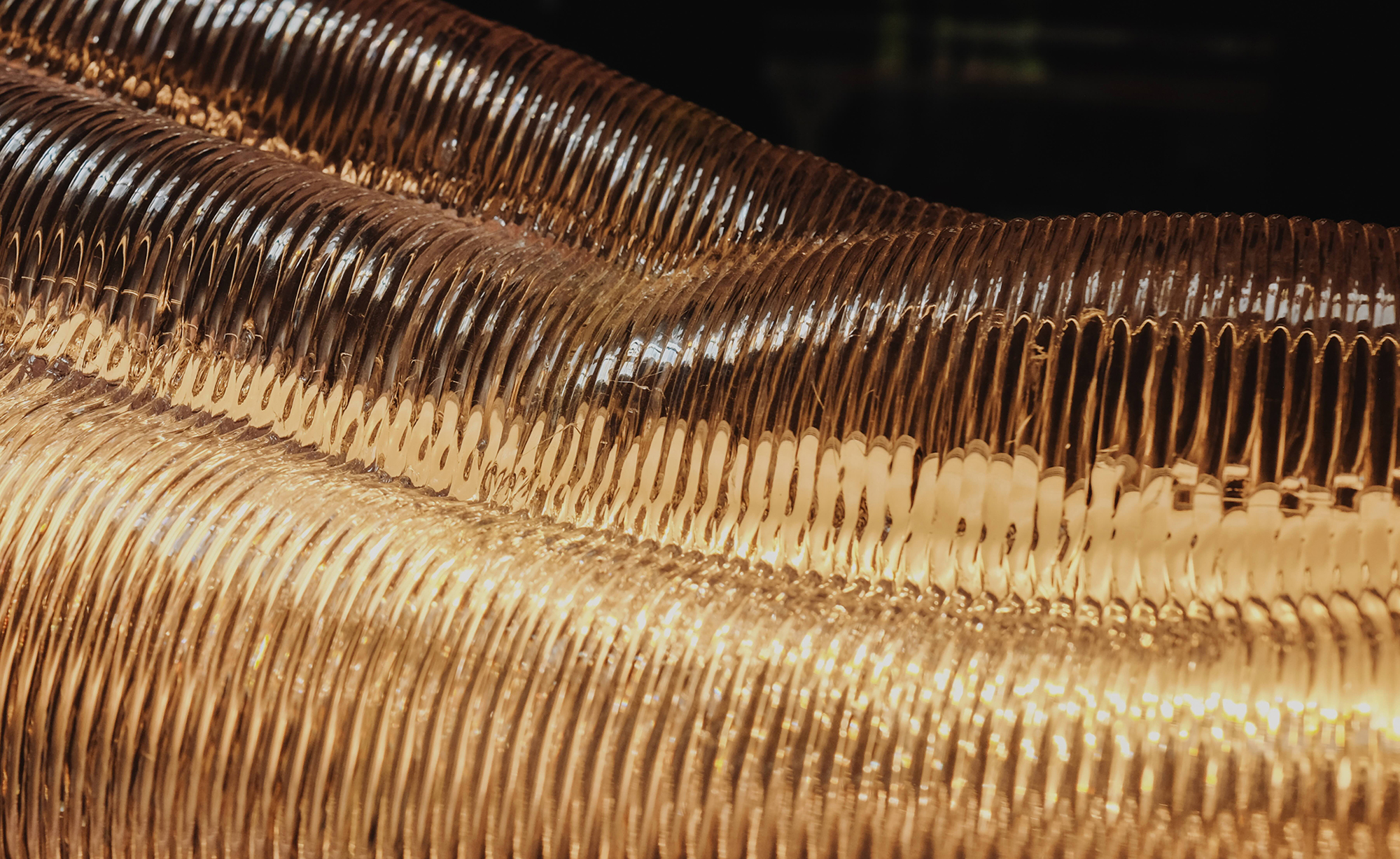
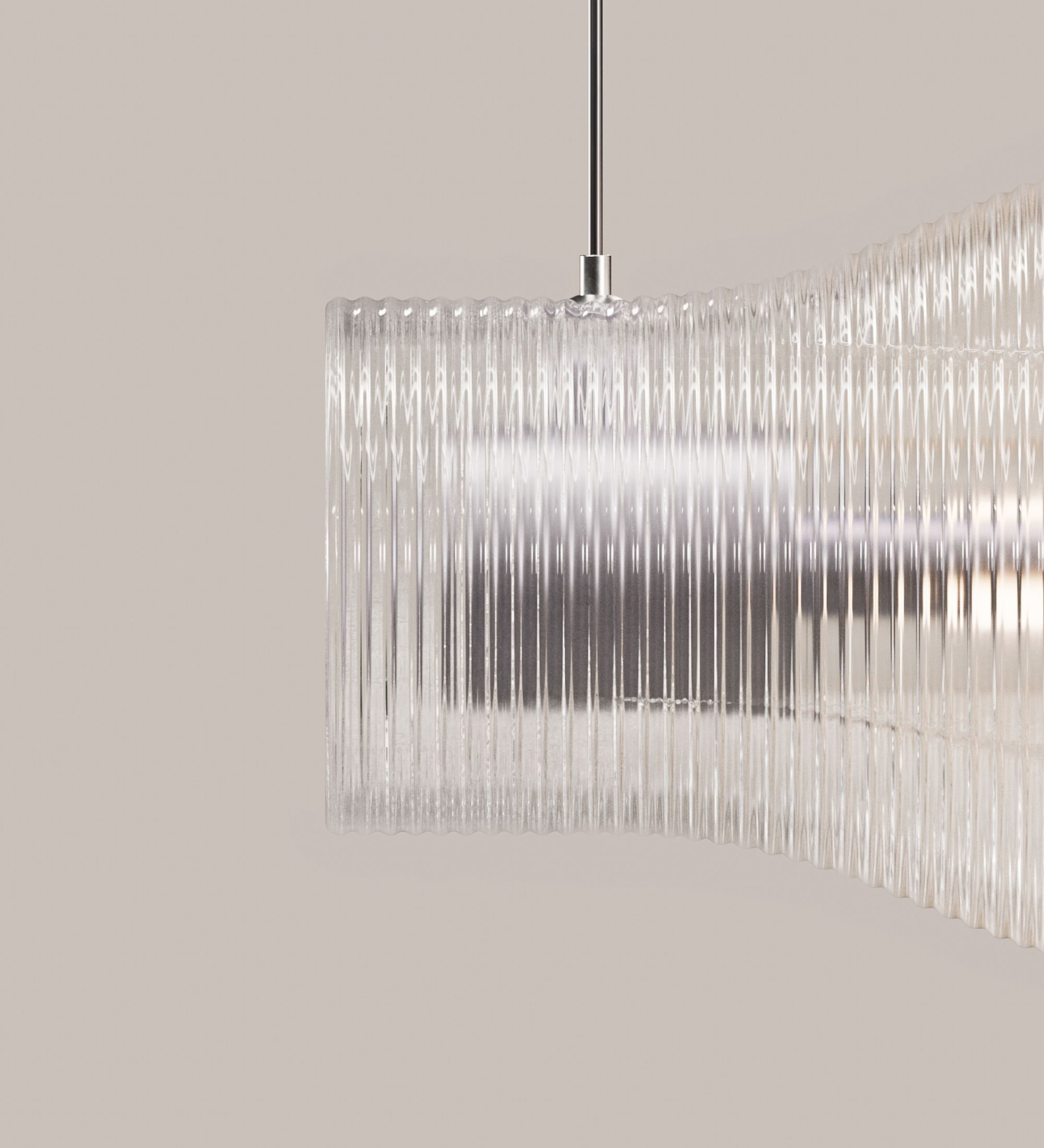
That process leaves a signature on the surface: faint, evenly spaced, perpendicular ridges, the record of the nozzle’s uninterrupted path. Futurewave didn’t sand them away. Set against the soft, organic curve of each shade, those printing lines catch and bend the light passing through them — doing, with a recycled polymer wall, something close to what faceted crystal has always done with a completely different set of tools. The texture reads as a decision, not a leftover of the manufacturing process, which is the point: on Knit, the printer’s own logic is treated as the aesthetic, not something to be designed around after the fact.
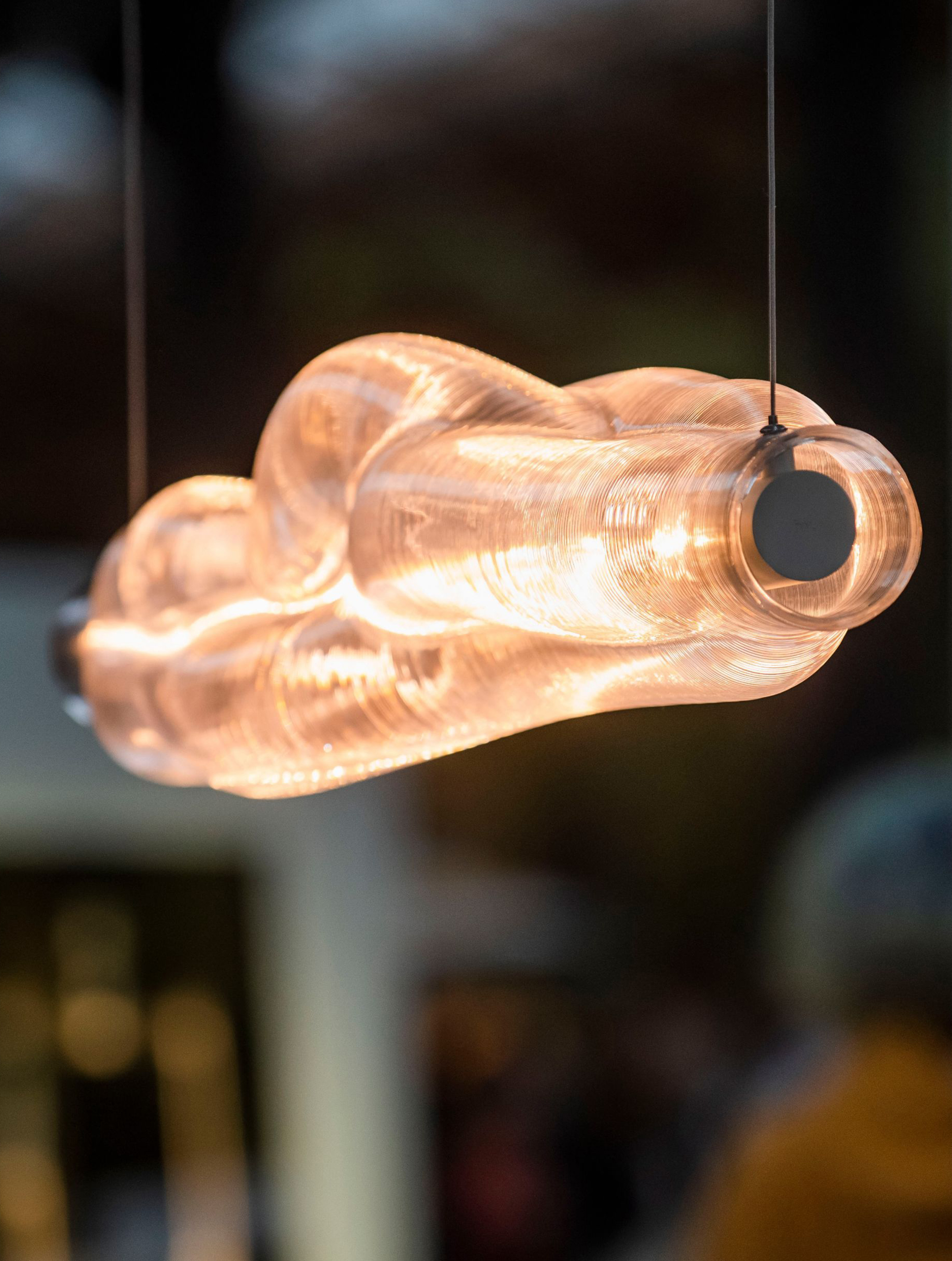
That ordering matters to Futurewave: material honesty and sustainability come first in the process, not as a checklist applied once the form is already settled. Designed and engineered for FUWA design, Knit has since shown up in both quiet residential interiors and restaurant settings, where its warm, faceted glow works as well over a dinner table as it does at home. Images courtesy of Futurewave.