 Search






How Miguel Milá turned a found object into Cesta, Cestita, and a lighting family that has lasted for more than six decades.
At the beginning of the 1960s, while walking through Barcelona, Miguel Milá noticed an abandoned opaline glass globe outside a glass factory. Rather than seeing a discarded component, he recognized an object that could be given another purpose. The history of Cesta did not start with a drawing or the desire to invent a new silhouette, but with the practical question of how to hold, protect, and move this fragile oval form. Disseny Hub Barcelona describes an early solution as a small rattan basket made specifically to accommodate the globe. In this simple union, the central idea of the lamp was already established: a luminous sphere carried within a protective structure.
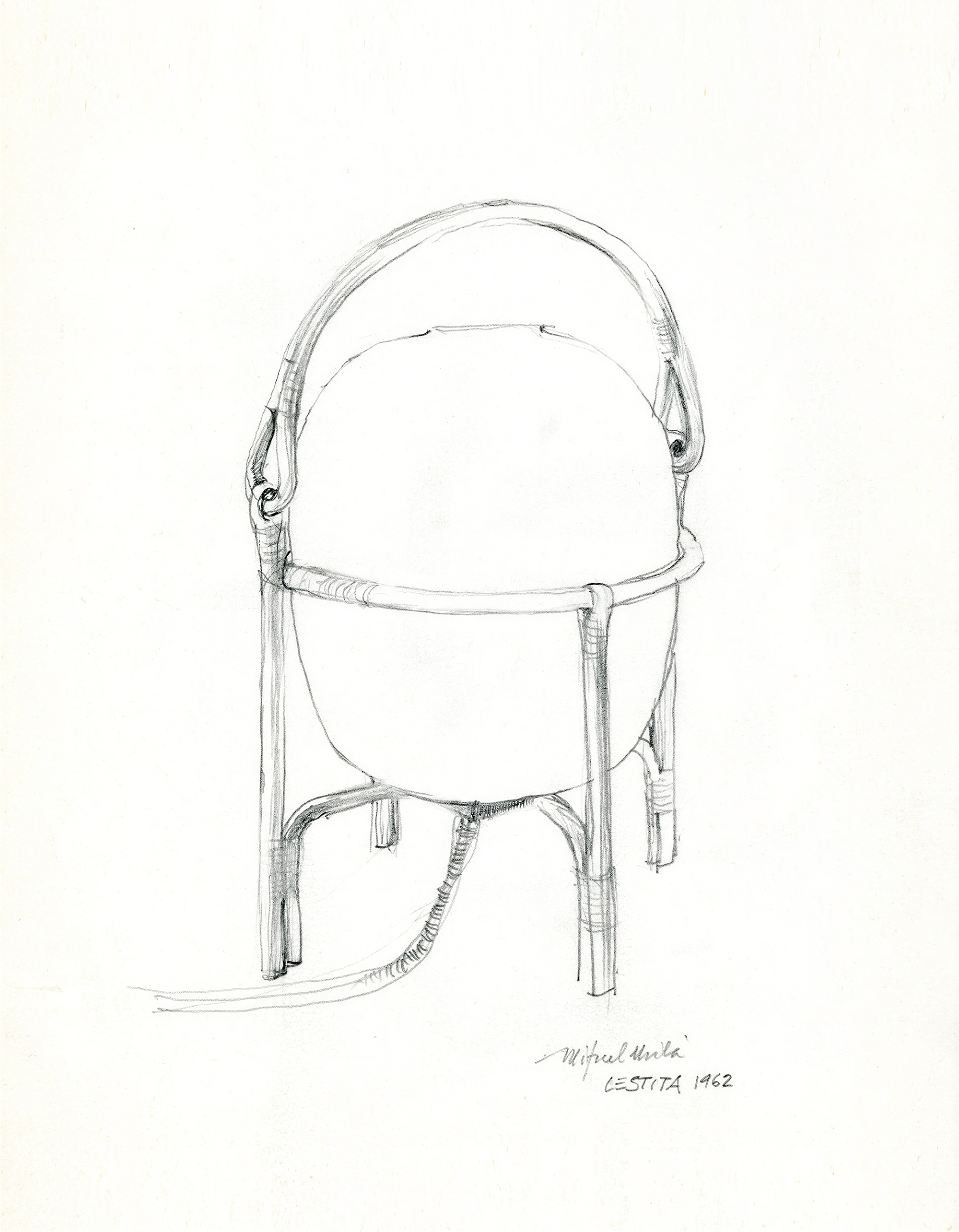
Miguel Milá’s drawing for Cestita, dated 1962, records the lamp’s original basket-like cane structure.
This way of working belonged to both Milá’s character and the circumstances in which his career developed. In 1950s Spain, modern furniture was difficult to find, industrial production was limited, and industrial design had barely established itself as a profession. Milá was then working as an interior designer in the architecture studio shared by his brother Alfonso Milá and Federico Correa. When their interiors required lamps, tables, or other furnishings that were unavailable, he began designing them himself. Scarcity encouraged an approach based on observation, economy, and direct contact with workshops, where ideas could be tested and corrected as objects took shape.
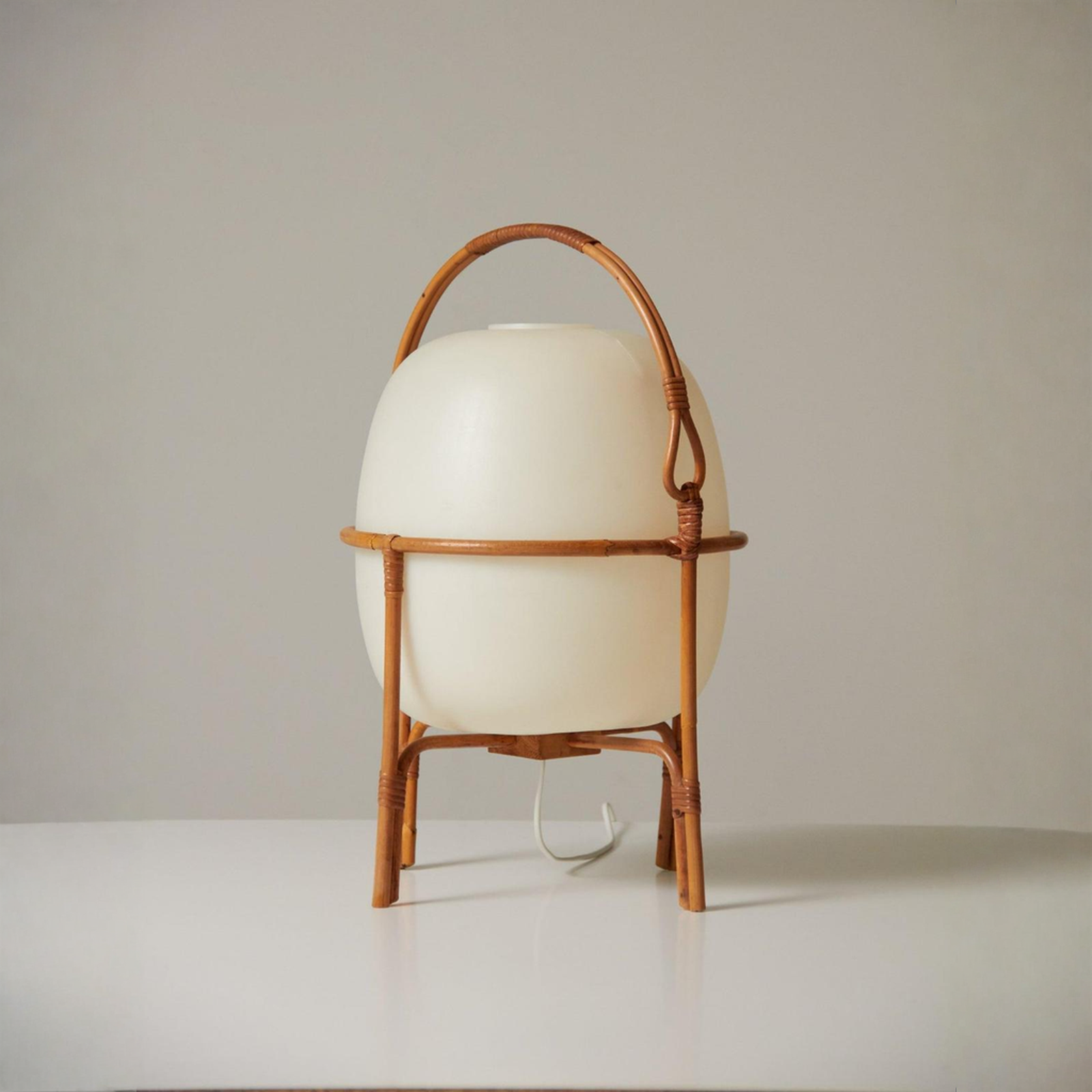
Seen unlit, a vintage cane Cesta reveals its frame, wrapped joints and handle as clearly as the globe itself.
Milá later described himself as a “pre-industrial designer,” a phrase that distinguished his process from the standardized systems of mass production. He preferred materials and methods that allowed him to remain involved, experiment during production, and revise anything that did not work. A prototype was not treated as a finished declaration but as something that could be handled, examined, and improved. The process continued until the object performed its task with the least possible complication.
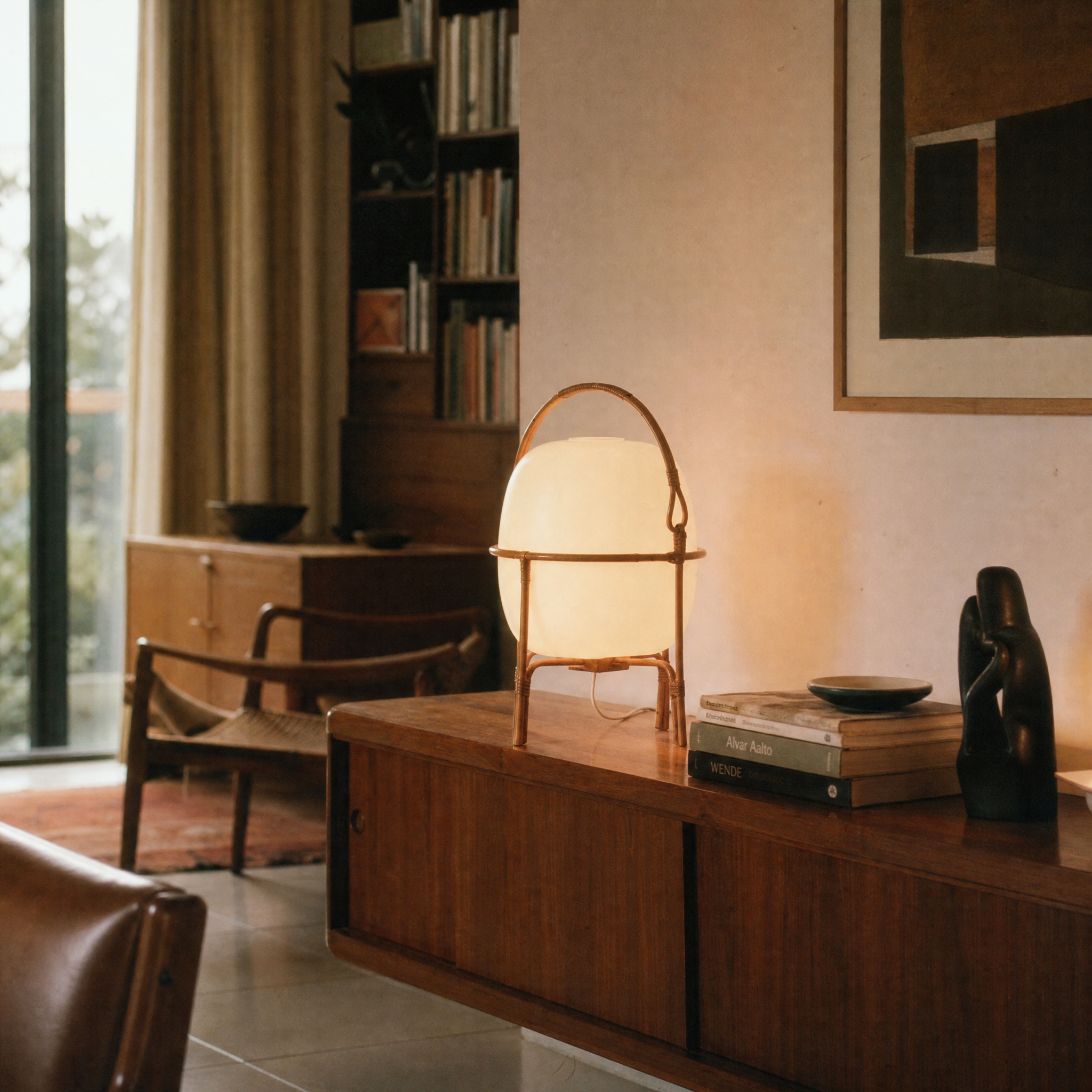
A vintage cane-framed Cesta in a domestic interior, showing the basket-like construction behind its name.
His instinct for usefulness had appeared much earlier. At around eight years old, Milá created a domestic enterprise called TRAMO, an acronym for Trabajos Molestos—the annoying jobs nobody wanted to do. He charged his siblings to buy stamps, refill a lighter, clean shoes, and take care of other tedious errands. The young entrepreneur even devised a rhyming slogan: La agencia Tramo corre como un gamo—the Tramo agency runs like a deer. Years later, he revived the name for the company he formed to put his furniture and lighting into production. Beneath the humor of the childhood story is a surprisingly accurate description of his approach to design: identify an inconvenience, understand what is required, and find the most direct way to resolve it.
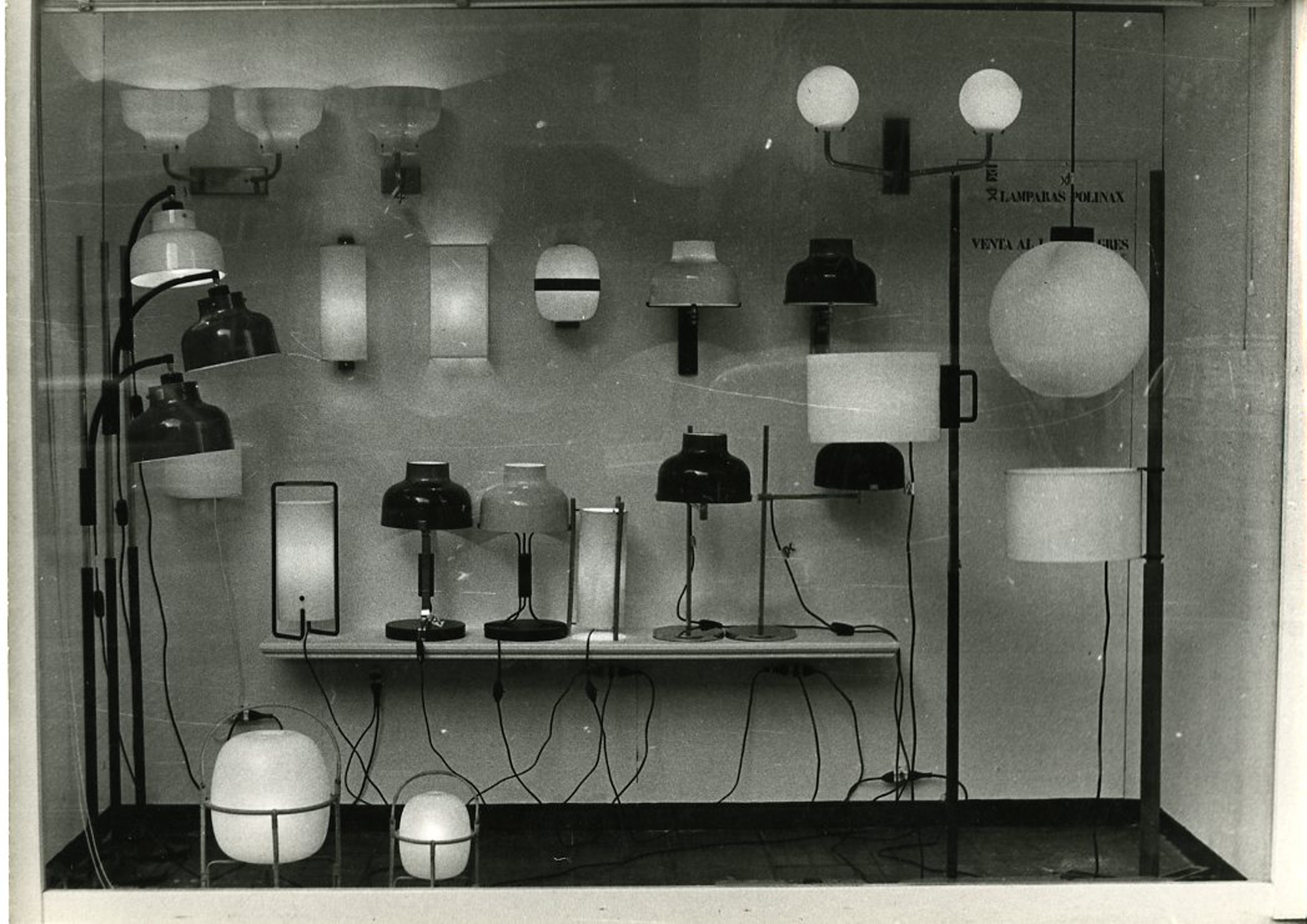
Cesta and Cestita appear at floor level among Polinax lamps in an undated view of the Gres shop window in Barcelona.
The abandoned globe offered precisely this kind of problem. The early rattan holder made the idea of a basket explicit, but the structure would eventually develop into the open cherry wood frame associated with Cesta today. Its curved members rise around the opal glass to form both a protective enclosure and a handle, allowing the lamp to be lifted and moved without hiding the object at its center. The current wooden structure is still produced with traditional steam-bending techniques, then polished and assembled by hand. This craftsmanship is not an ornamental addition to the design; it is what makes the design possible. Steam allows the cherry wood to bend, the curved wood forms the handle, and the handle gives the lamp its mobility.
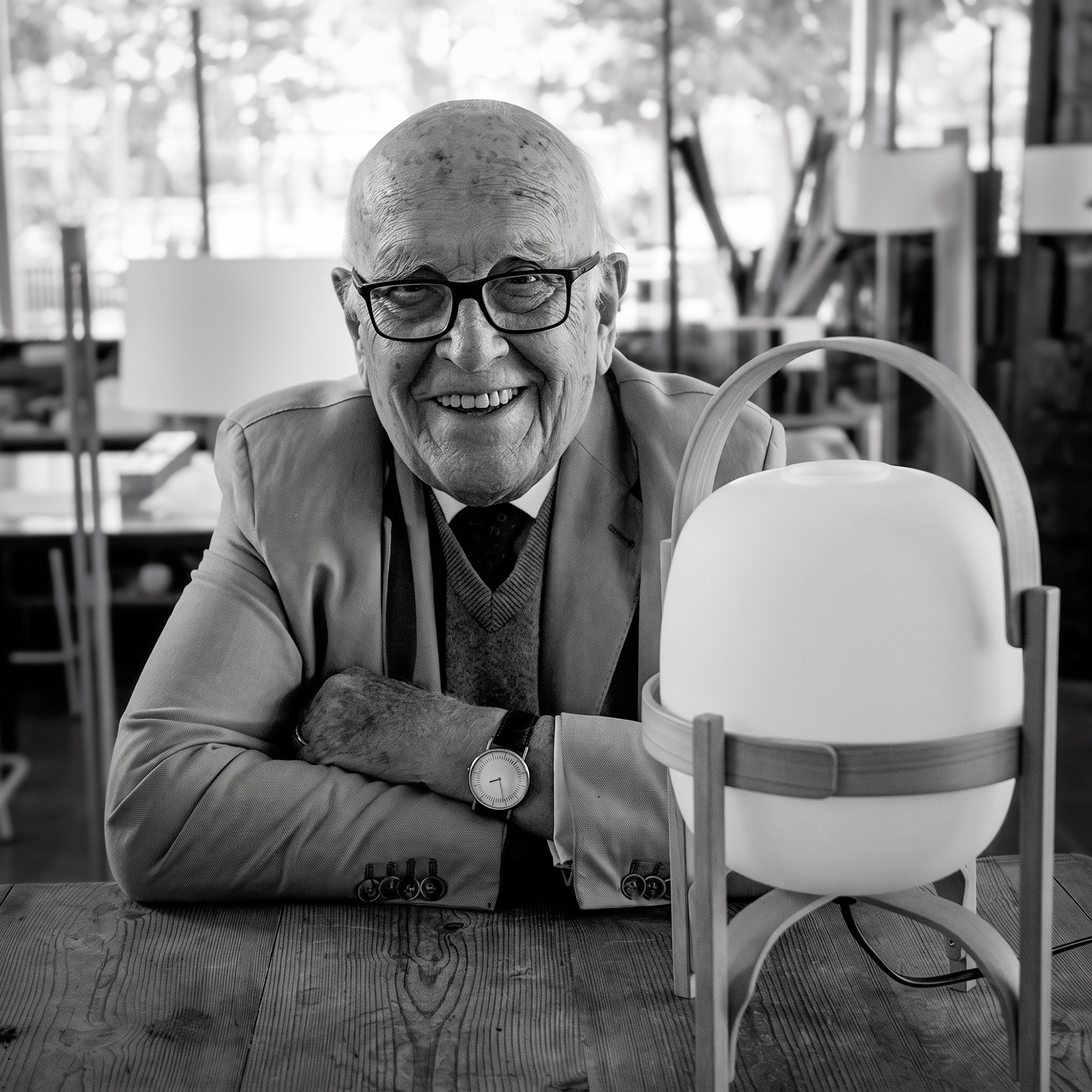
Miguel Milá with Cestita at Belloch, 2018. Photograph by Adrià Cañameras.
The name emerged naturally from the construction. Cesta means basket in Spanish, while Cestita—the “small basket”—applies the same relationship between globe and frame at a more compact scale. Dated to 1962, Cestita retains the materials and essential structure of the larger lamp while adapting them to smaller tables, shelves, and bedside spaces. It does not feel like a reduced copy or an afterthought, but like the same idea expressed at another domestic scale.
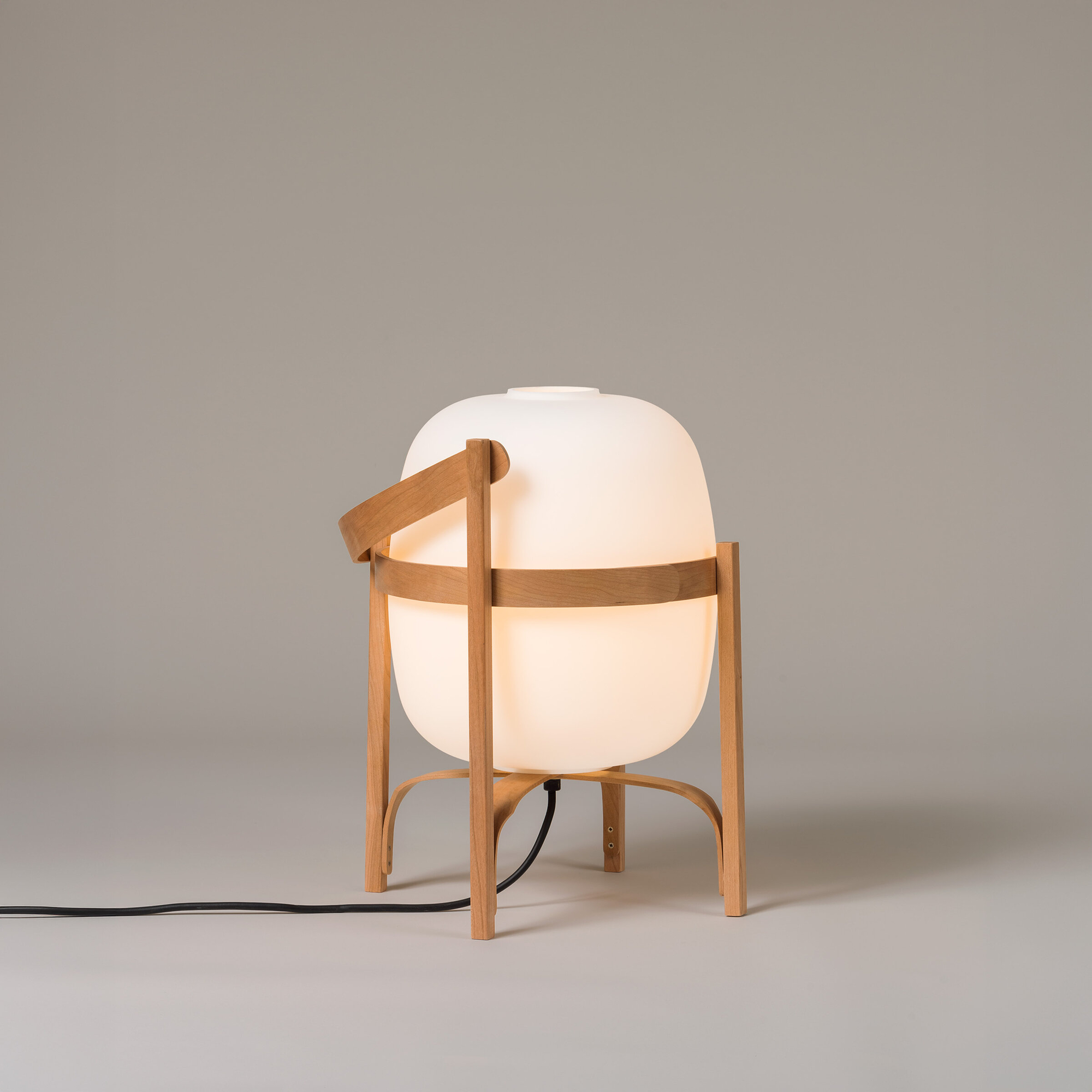
The current Cesta pairs a hand-assembled cherry wood structure with a white opal glass globe. Photograph by Enric Badrinas, 2018.
Cesta and Cestita also recall the traditional lanterns that illuminated Mediterranean coastal houses, country estates, and open terraces. The reference is visible in the milky globe, the protective frame, and especially the handle, which was always meant to be used. The original lamps could be picked up and repositioned from a table to the floor or from one part of a room to another, although their movement remained limited by an electrical cord. In this sense, their design anticipated the rechargeable portable lamps that would become a distinct category many decades later. The intention to move was already present; only the necessary technology was missing.

A detail of Cesta’s steam-bent cherry wood frame and wooden fastening pin. Photograph by Carme Masia, 2013.
Cestita predates its current editor, Santa & Cole, by more than twenty years. Founded in 1985, the Barcelona company deliberately describes itself as an editor rather than simply a manufacturer. As with a publishing house, its role involves selecting, producing, protecting, and distributing the work of its authors. Through this process, the relationship between Milá’s globe and its supporting basket has been preserved without freezing the lamp in its original period. New versions have addressed practical limitations while leaving its fundamental character intact.
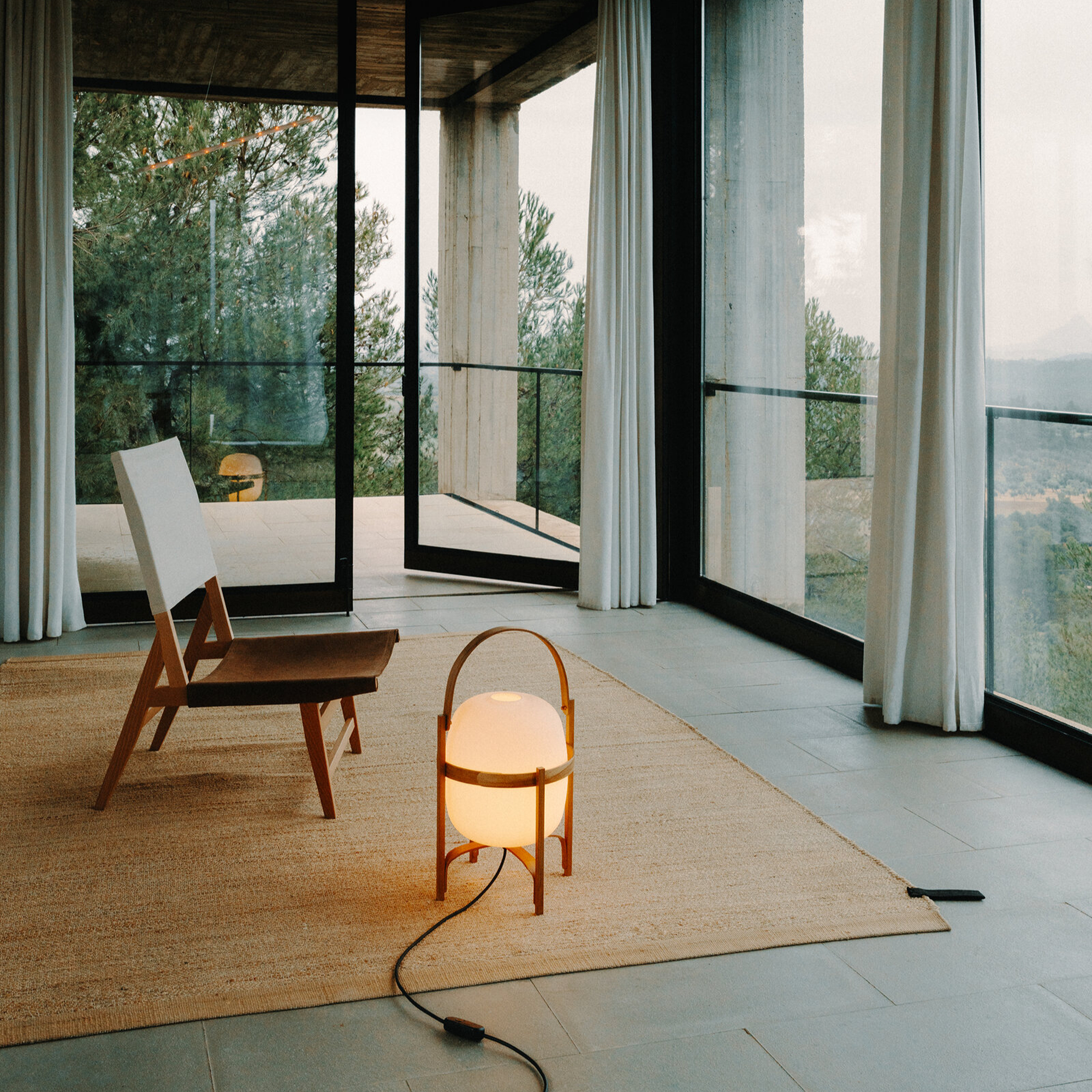
Cesta beside Miguel Milá’s Barceloneta chair, with its handle and cord both visible. Photograph by Yosigo for Santa & Cole, 2024.
In 2017, Cestita Batería finally removed the cord. The rechargeable lamp retained the cherry wood structure and opal glass globe of the original, but the handle could now fulfill its purpose without the restriction of an electrical outlet. Three years later, Cestita Alubat extended the idea outdoors, replacing the wooden frame with aluminum and using a sealed polyethylene globe better suited to exposure. The progression forms a logical arc: first the lamp could be moved around a room, then carried freely away from an outlet, and finally taken onto a terrace or into a garden. Each version expanded its range while preserving the image that had defined the family from the start.
The easy word for a design that remains relevant after more than six decades is “timeless,” but the endurance of the Cesta family has a more specific explanation. Milá understood that a lamp exists in two separate conditions, only one of which involves producing light. “A lamp spends more time off than on,” he observed, arguing that its physical form must continue to contribute to a room when it is not illuminated.
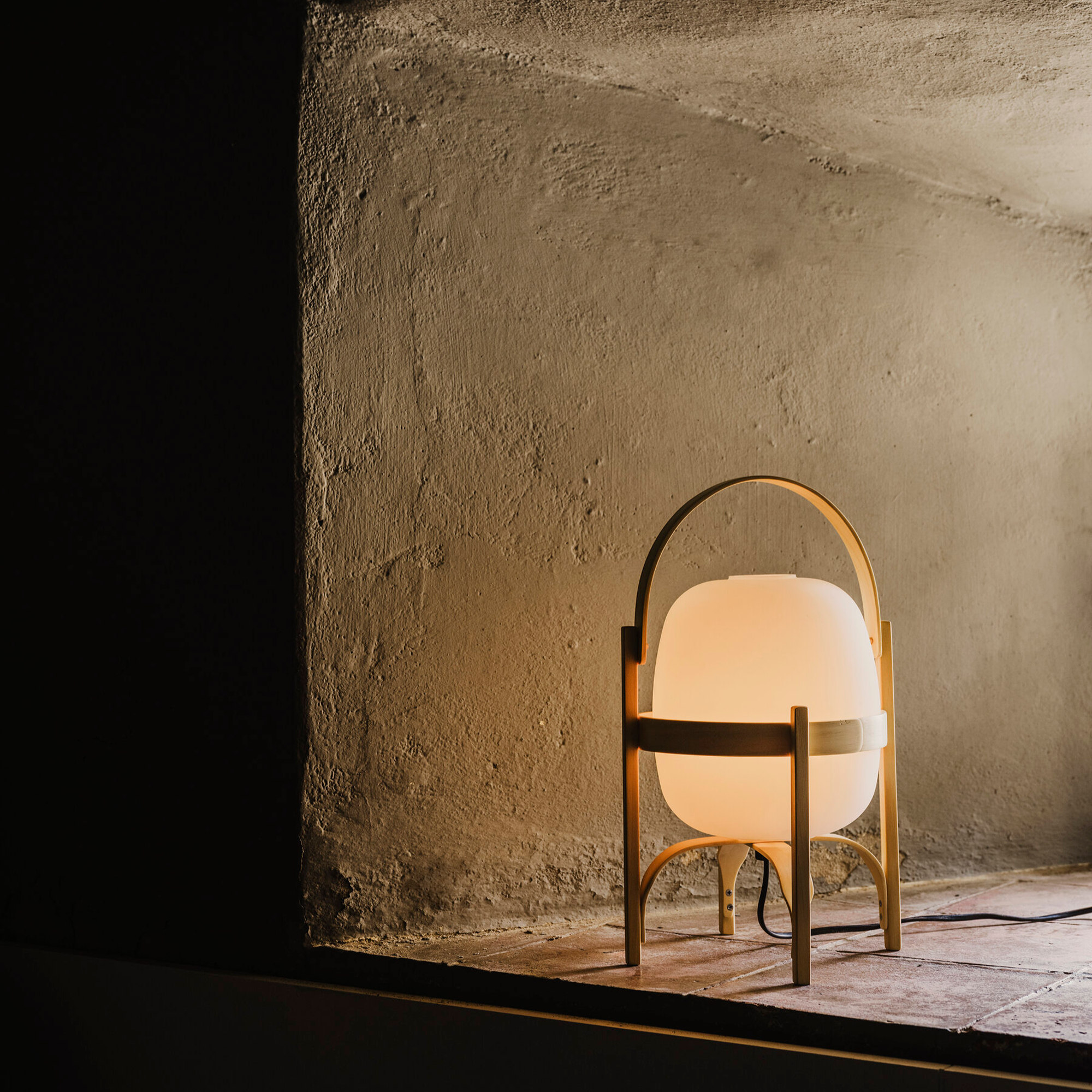
The corded Cesta remains at the center of a lighting family later expanded with rechargeable and outdoor editions. Courtesy of Santa & Cole.


