Search






A tent that floats above the ground, combining a suspended triangular sleeping space with the gentle movement of a hammock.
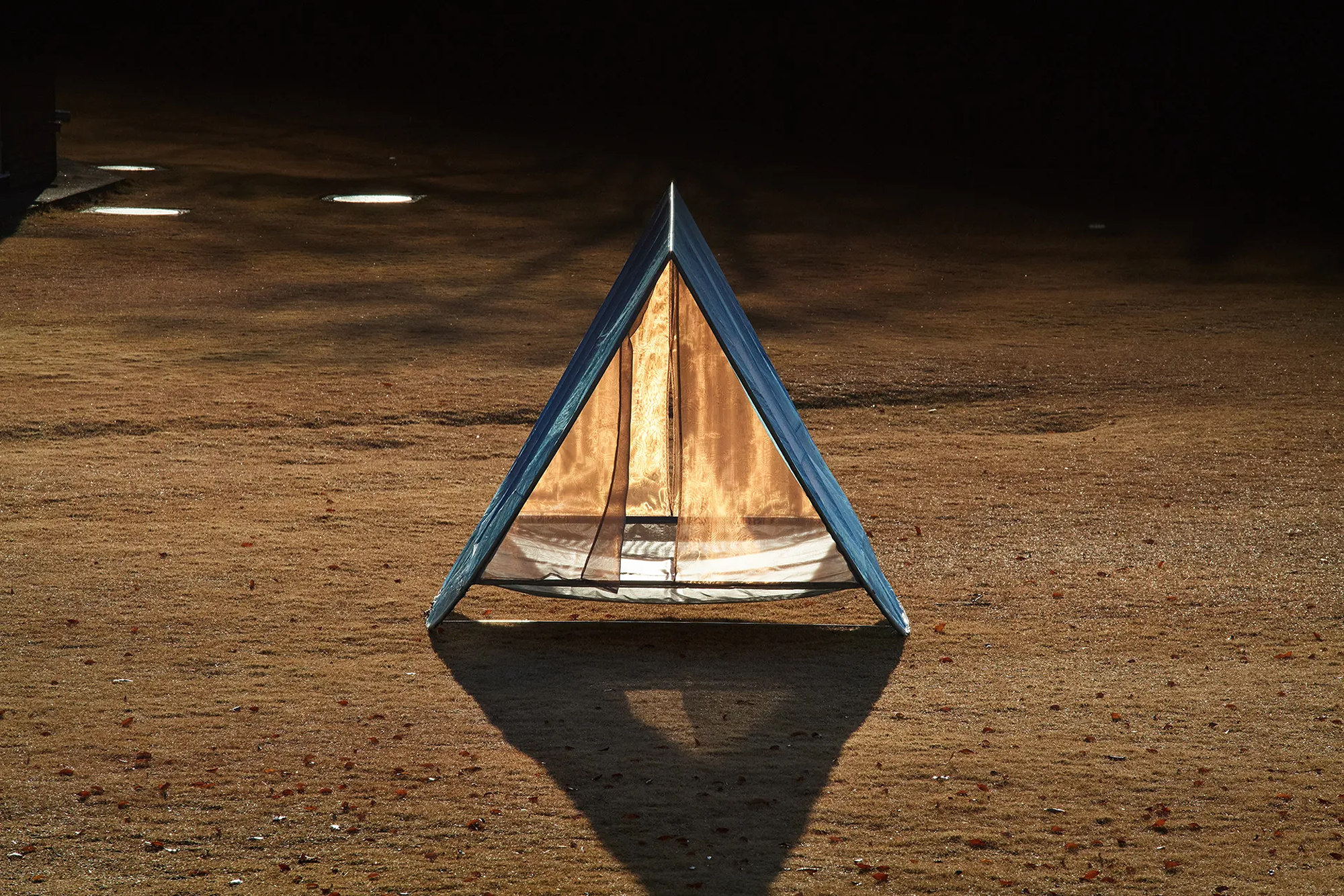
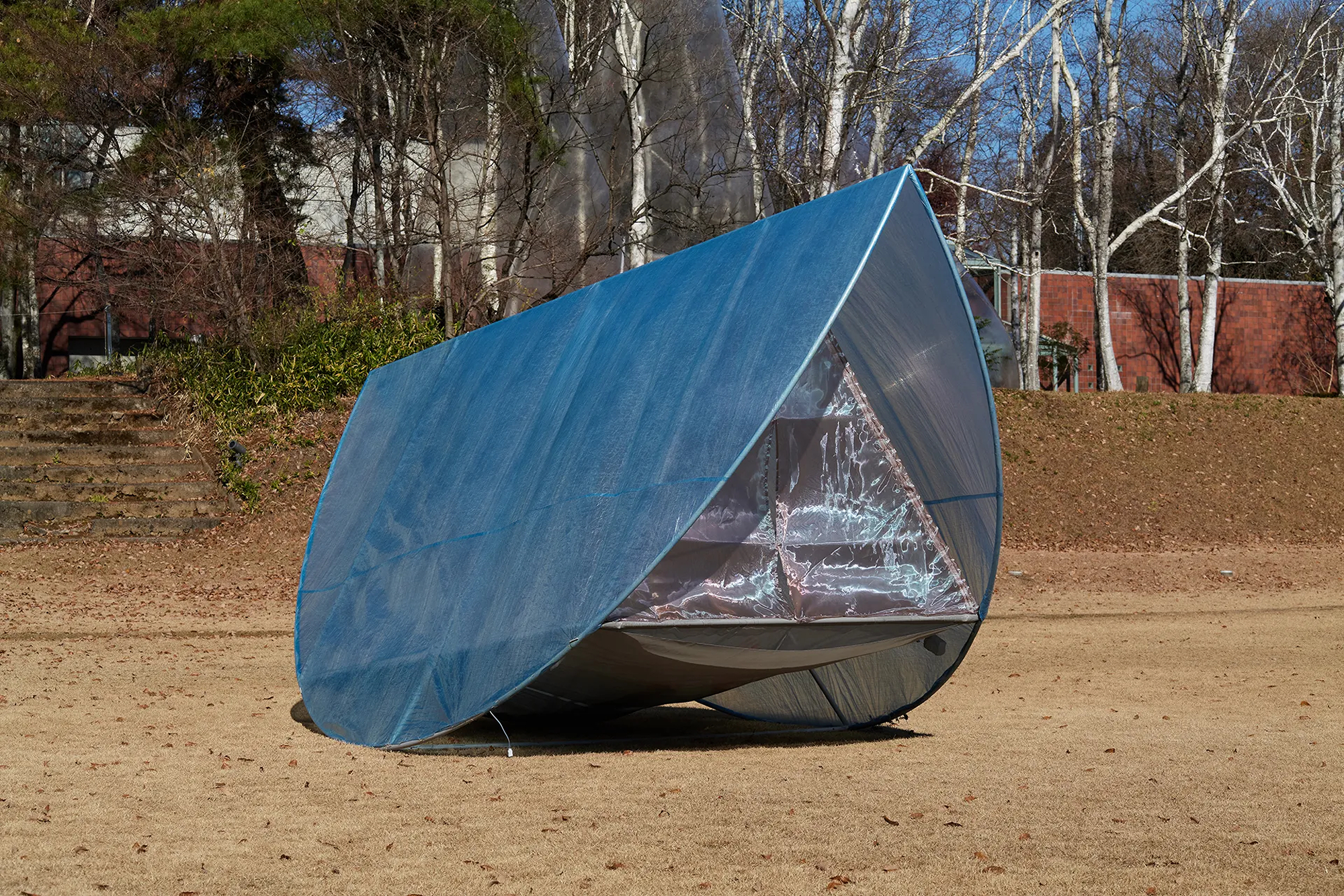
Japanese architecture studio Tato Architects rethinks one of the most basic pieces of outdoor equipment with Arc Tent, a lightweight shelter that does not actually sit on the ground. Instead, the sleeping area hangs inside a larger circular frame, creating a raised space that can adapt to rocks, roots, damp soil, and uneven terrain. Designed by Yo Shimada and installed at Kiyoharu Art Colony in Hokuto, Yamanashi, the project sits somewhere between camping equipment and a small piece of temporary architecture.
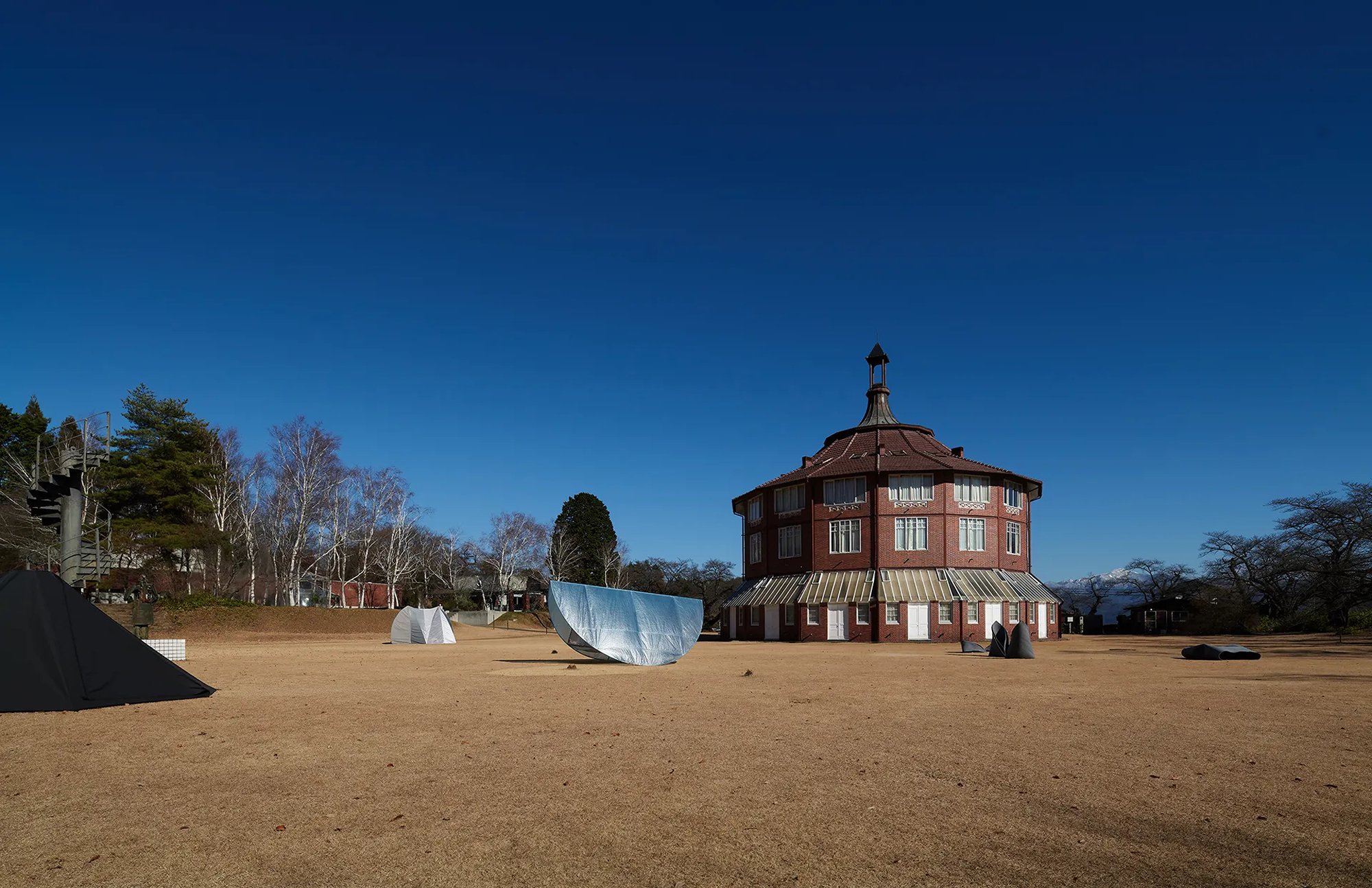
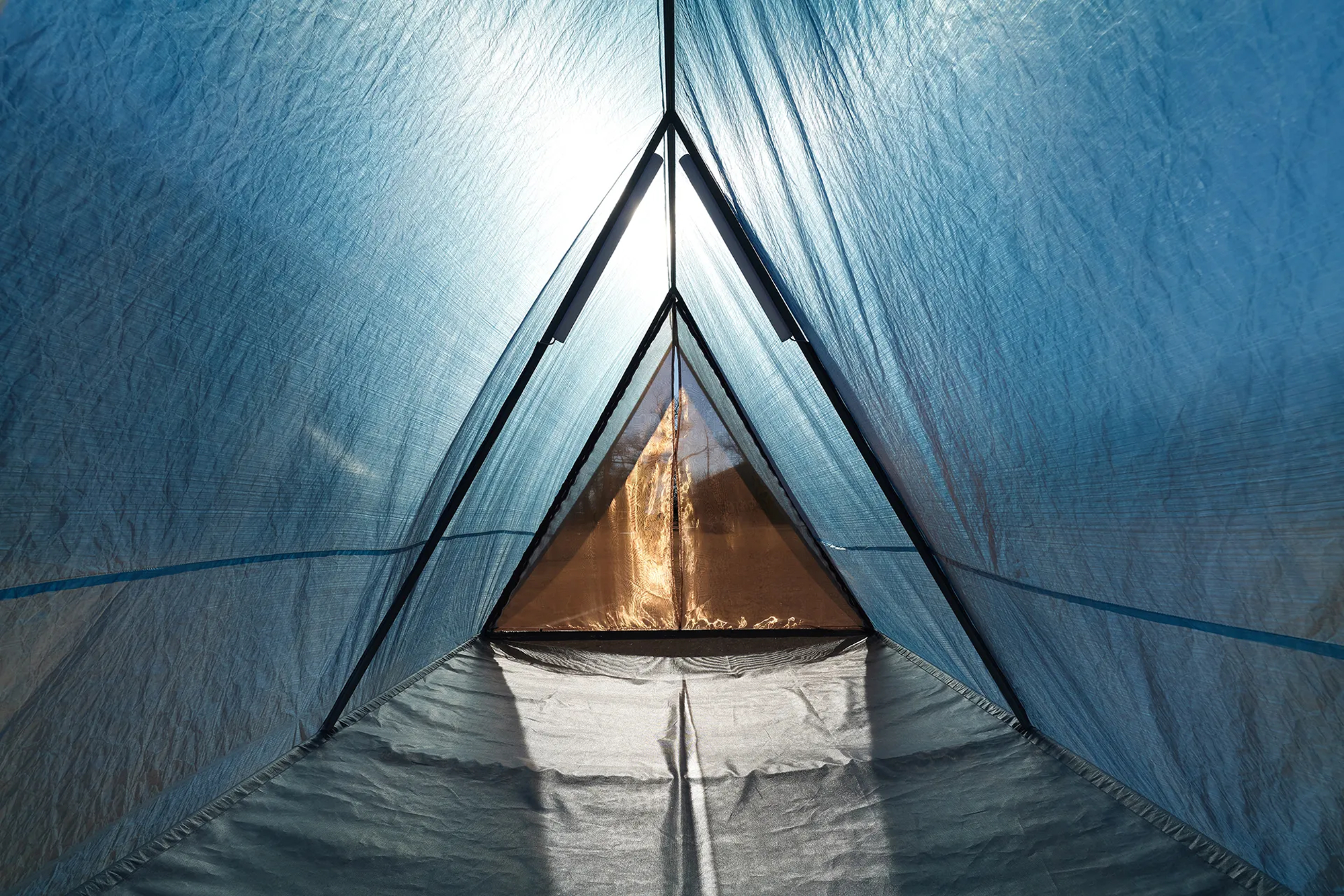
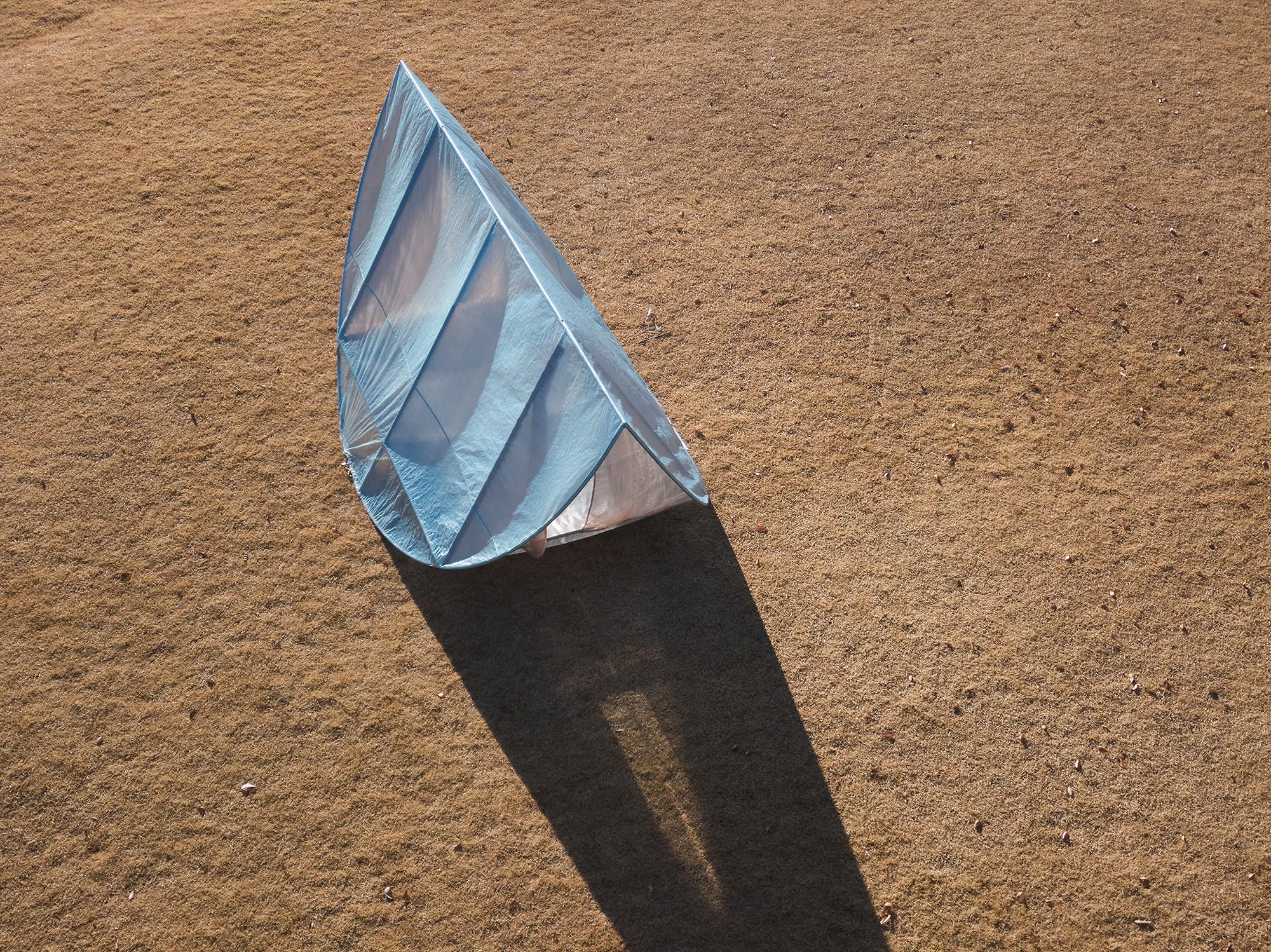
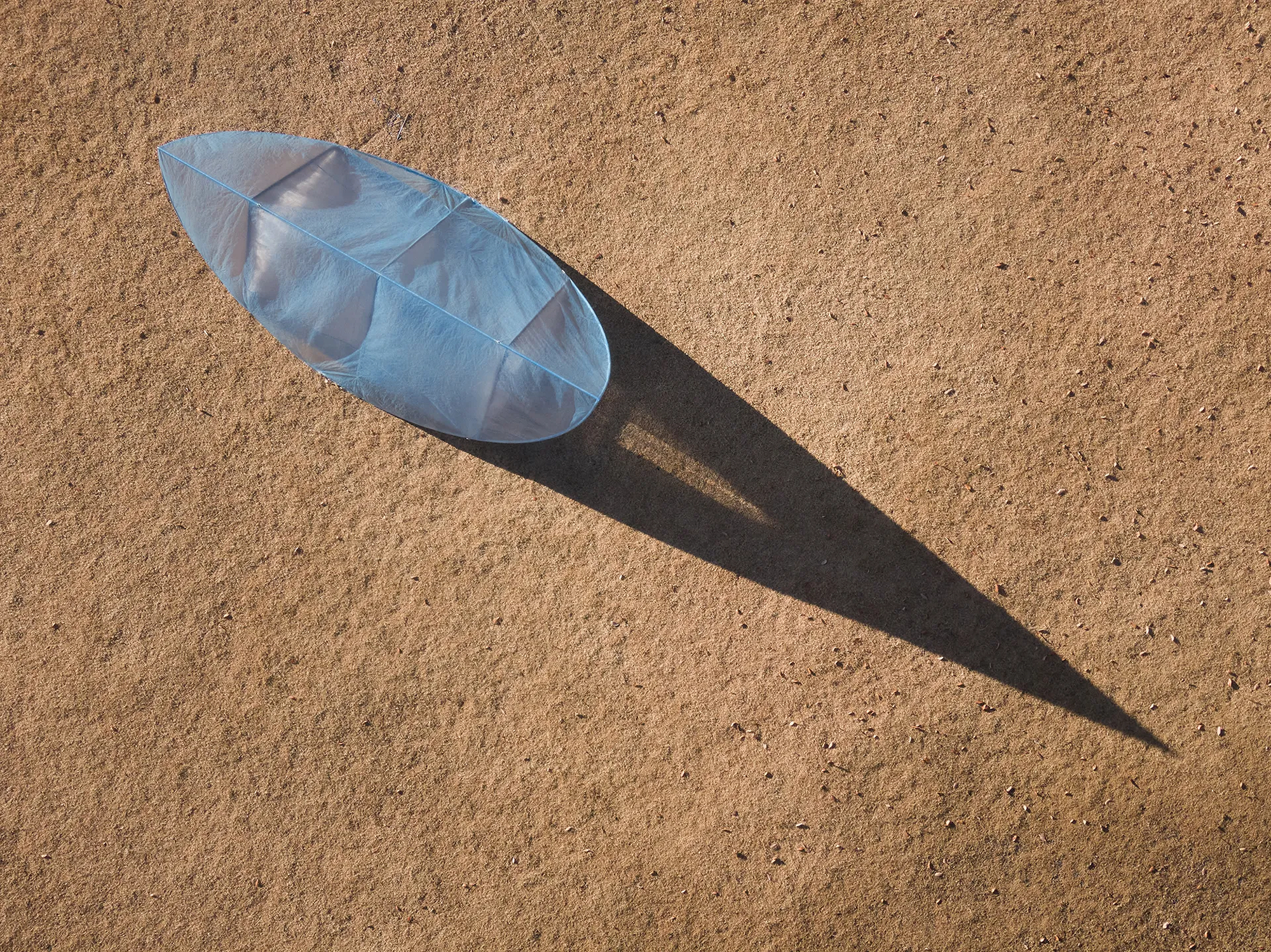
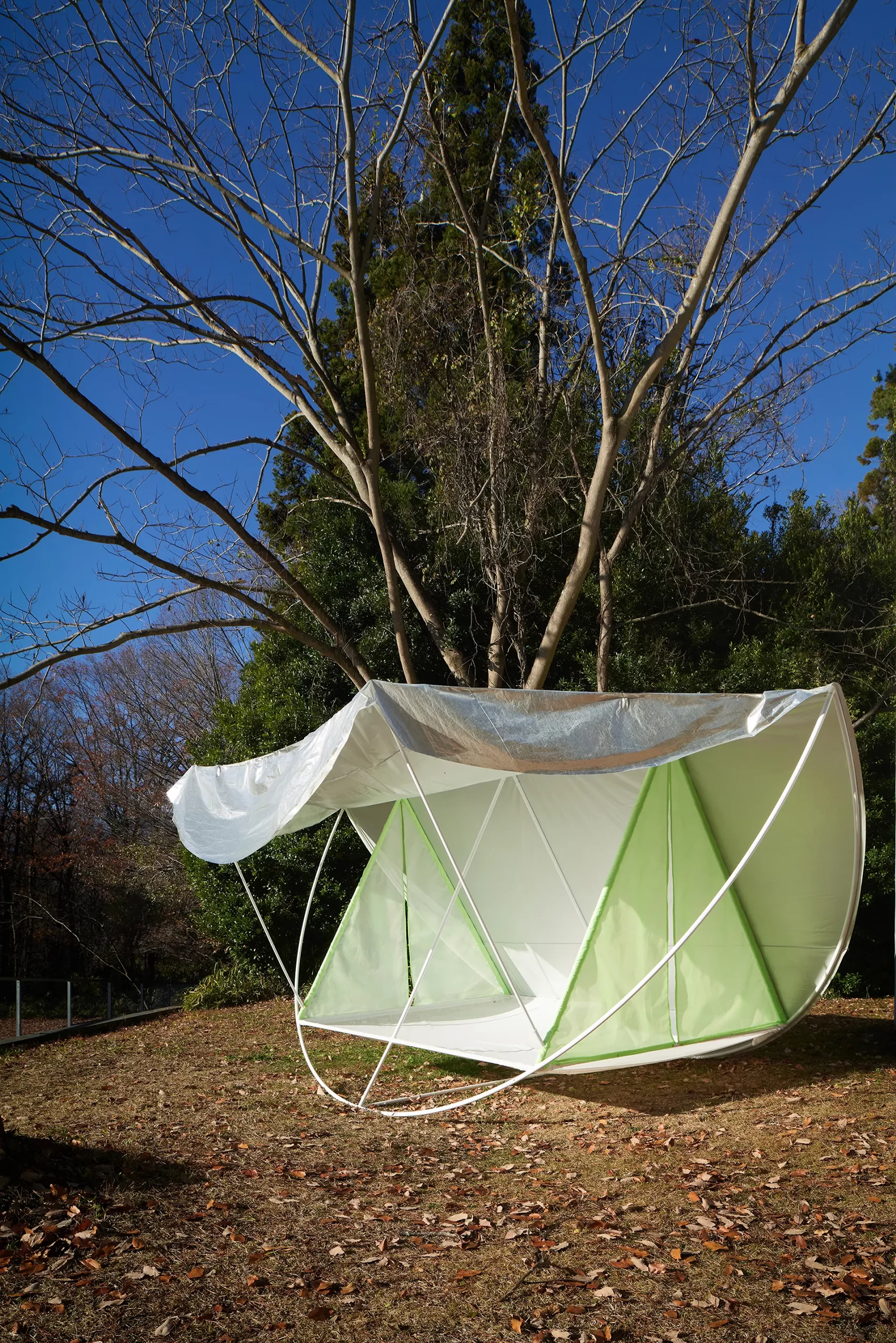
The structure is built around two simple geometric forms. A tubular frame with an equilateral triangular section is suspended inside a folded circular frame, which is secured to the ground with ropes and pegs. The inner floor consequently hovers a short distance above the landscape rather than resting directly on it. Just as importantly, it moves. When someone climbs inside, the suspended structure responds with a gentle swing, giving the shelter some of the physical character of a hammock. Rather than trying to make the tent completely rigid, Tato Architects uses that movement as part of the experience.
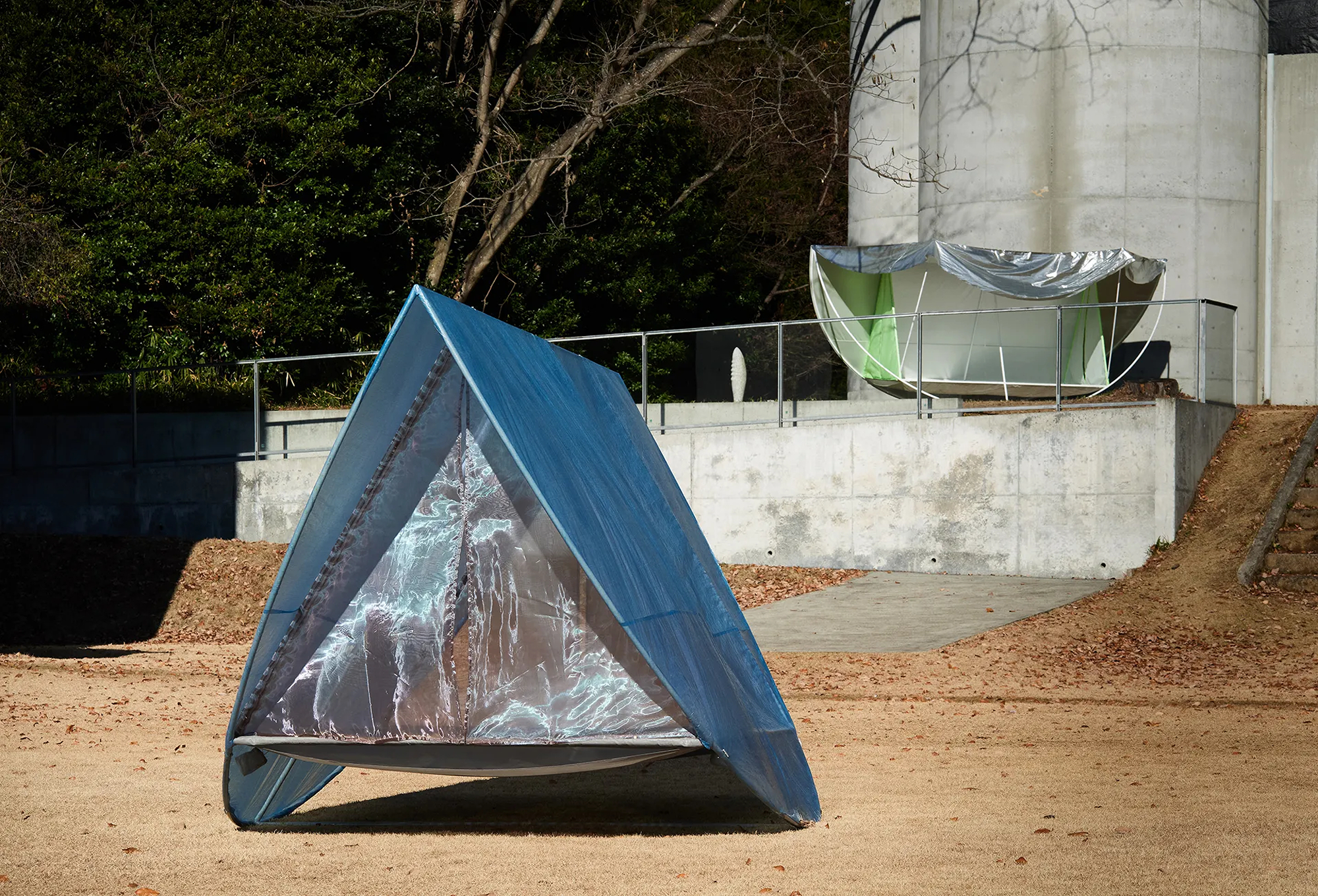
The outer enclosure comes in two material versions. A pale blue model uses Dyneema Composite Fabric, a lightweight material made with ultra-high-molecular-weight polyethylene fibers and valued for its high strength-to-weight ratio. The silver version uses polyethylene fabric that reflects infrared radiation. Inside, a mesh enclosure provides ventilation while keeping insects out. The outer layer can also be opened, leaving the raised interior exposed to the surrounding landscape. Like Paloma Cañizares’ Armed Fabrics, Arc Tent explores how lightweight textiles can move beyond coverings to become an integral part of a structure.
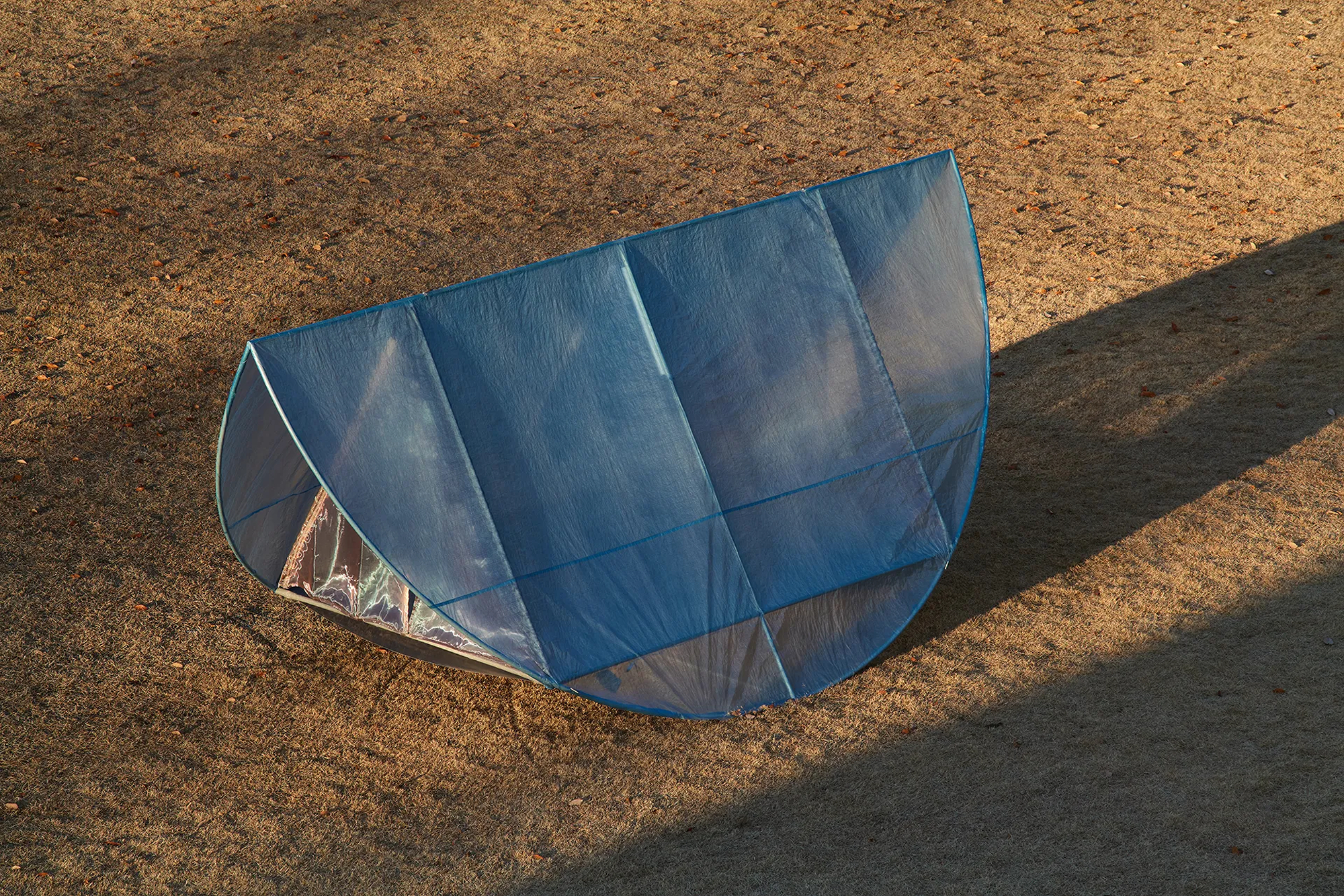
Despite its unusual geometry, Arc Tent remains relatively simple in construction. The frame, fabric enclosure, ropes, and suspended interior remain visually legible, with no attempt to hide how the shelter works. Photographs of the installation show two people carrying the structure through the site, while other images reveal how dramatically its character changes once the translucent outer fabric catches sunlight or glows after dark.
Part tent, part hammock, Arc Tent changes the camping experience through one surprisingly small move: separating the sleeping space from the ground. Instead of demanding a perfectly flat patch of land, the design simply floats above whatever happens to be underneath.
Photography © Daici Ano.